










































































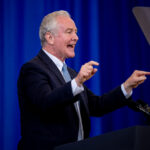

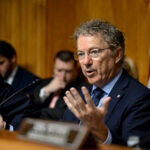

Rep. Brad Knott said he’s seen the rise in incidents targeting houses of worship accompanied by a ‘partisan application of laws from the prosecutor’s office’

Tom Williams/CQ-Roll Call, Inc via Getty Images
Rep. Brad Knott (R-NC) during a House Judiciary Committee hearing on Jan. 22, 2026.


 Add JewishInsider on Google
Rep. Brad Knott (R-NC), the lead House Republican sponsor of the Right to Worship Act, a federal buffer zone bill to protect religious institutions from disruptive and threatening protests, said on Wednesday that the bill aims to give targeted worshipers a recourse particularly where prosecutors fail to step in or take action.
Knott, a former federal prosecutor, said in an interview with Jewish Insider that he got involved with the effort because of a spate of incidents targeting houses of worship of various religions around the country. “There’s really no secret that places of worship, especially traditional faith, have come under attack,” Knott said, pointing to incidents targeting Catholic, Christian and Jewish institutions.
He made repeated reference to demonstrations that have disrupted religious services at synagogues across the country, as well as to an incident in Minnesota where a group of anti-Immigration and Customs Enforcement demonstrators disrupted a church service, accompanied by journalist Don Lemon, who has been federally charged in the incident.
The North Carolina congressman said that he’s seen the rise in incidents targeting houses of worship accompanied by a “partisan application of laws from the prosecutor’s office” — leaving those targeted with little recourse if local and federal prosecutors declined to press charges.
The new bill would provide victims a recourse to sue those who disrupted their services in civil court, as well as provide prosecutors the option to file suit.
“When you look at the needs of the country, and the increasing partisanship of local prosecutors, this bill is needed for people who want to worship as they have for years and years and years in this country,” Knott said.
He offered the example of the Minnesota church case, where state officials declined to file charges, “strictly for political and partisan reasons. I don’t care if they’re on the right. I don’t care if they’re on the left. That is fully, fully inappropriate.”
He described such disruptions as a problem on both sides of the aisle, but also said that he sees more active and aggressive demonstrators from the anti-Israel and Black Lives Matter movement willing to disrupt sacred spaces.
The North Carolina congressman said he got involved with the issue to help protect both the rights to free speech and freedom of religion.
“If we lose those rights, if people become apathetic, if we allow the people who are disruptive to intimidate folks away from churches, away from cathedrals, away from synagogues, that’s a real problem and we start to lose the fabric of who we are as Americans,” Knott said. “Why else would I be in Congress but for trying to protect innocent people, trying to ensure that the constitutional standards and privileges we have are protected and maintained and to ensure that people who are bad actors are dealt with appropriately.”
Time is short to pass the bill before the end of the congressional session, particularly with many big-ticket items on the House’s agenda and almost no time remaining in session before the election. But Knott expressed optimism that the bill can rally strong support and pass this year, particularly as it is moving through the House and Senate in parallel.
Knott acknowledged that colleagues have approached the legislation with skepticism and concerns about potentially infringing upon the First Amendment but said that once it has fully been explained to them, each of the colleagues with whom he’s discussed the bill, particularly those with backgrounds in the law, have been onboard.
“If we have time to deliberate and explain it, I believe this bill could be very, very bipartisan and, if not unanimous, close to unanimous passage in both houses,” he said. “Every conversation I have had, people have gotten it. They’ve agreed … that makes sense.”
He emphasized that the bill contains robust protections for the First Amendment, specifically allows for peaceful protest within the buffer zone, does not address any specific content or faith, only addresses conduct that isn’t already covered by the First Amendment and involves civil penalties and requires proof of a “substantial disruption” with “specific intent” in order to win damages from a jury.
There are no immediate plans to move the bill forward in the House Judiciary Committee — although the Senate could also take the bill up first — but Knott said that House Speaker Mike Johnson (R-LA) is strongly supportive of the bill, and that he has discussed it with other members of GOP leadership, who have also been supportive and in some cases interested in joining as cosponsors.
“Whenever it’s explained, it gets momentum as a bill that meets the need of the day. And whenever that sentiment accrues, it should pass,” Knott said. “We’re working on it, and as soon as there’s an opening, again, whether it’s through suspension or the traditional committee markup, I think that we’ll do it.”
Knott was the initial House sponsor of the bill, and, in collaboration with outside advocates, came together with Rep. Tom Suozzi (D-NY), who was working on a separate buffer zone bill. In a recent Fox News interview, Knott praised Suozzi’s work on and contributions to the bill, as well as his help in securing Senate cosponsors, Sens. Ted Cruz (R-TX) and Elissa Slotkin (D-MI).
The bipartisan and bicameral bill would ban activity that knowingly disrupts or impedes access to scheduled religious services within 100 feet of the entrance to a house of worship
Andrew Lichtenstein/Corbis via Getty Images
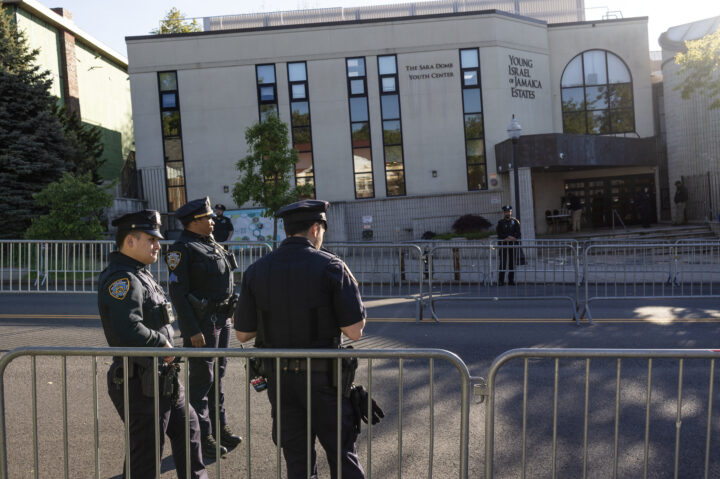
New York City police officers fence off and guard the Jewish Orthodox synagogue Young Israel of Jamaica Estates on May 12, 2026, in the borough of Queens, New York City.
Sen. Elissa Slotkin (D-MI) joined Sen. Ted Cruz (R-TX) and Reps. Brad Knott (R-NC) and Tom Suozzi (D-NY) on Thursday in introducing the Right to Worship Act, a federal bill that would ban activity that knowingly disrupts or impedes access to scheduled religious services within 100 feet of the entrance to a house of worship during that time.
The bill is the product of months of negotiations among lawmakers and outside supporters. Cruz, Knott and Suozzi’s involvement, as well as the outlines of the bill, were first reported by Jewish Insider earlier this week. The legislation comes in part in response to a series of incidents of violence and harassment around Jewish institutions across the country.
The bill would ban activity that “meaningfully interferes with the ability of people to participate in the scheduled religious service, to the extent that the conduct causes a substantial interruption to the service’s normal operation” or “unreasonably hinders or deters a person from entering a house of worship, or threatens or intimidates a person, in a manner that prevents participation at a scheduled religious service.”
The legislation would bar such activities both during and in a one-hour period before and after any scheduled religious service.
The bill would carry escalating civil fines for repeated offenses, as well as allow impacted individuals, the U.S. attorney general or a state attorney general to commence a civil suit under the law.
It would include specific protections to permit demonstrations subject to federal, state or local permits and under reasonable time, place and manner restrictions.
Though it restricts conduct specifically during scheduled religious services, the bill does not require religious institutions to publicize their worship schedules.
It instead defines scheduled services as ones that are “observably underway or imminently beginning or concluding, as evidenced by the gathering or dispersing of congregants,” as well as any regularly occurring service “of which the defendant had actual knowledge” or any service about which the defendant was otherwise notified beforehand.
“Today, many Americans are unable to worship without fear of harassment, assault, or other forms of intimidation. The right to worship freely is foundational to our nation and was one of the motivations for its founding. No American should ever feel that their choice is between worshiping in fear and not worshiping at all,” Knott said in a statement. “The Right to Worship Act protects peaceful speech while restoring essential protections for Americans by empowering worshippers against those who seek to intimidate them.”
“I look forward to this bill becoming law and appreciate the many contributions made through bipartisan, bicameral work,” Knott, who became involved with the process at the recommendation of House Speaker Mike Johnson (R-LA), continued.
Slotkin, in a statement to JI, highlighted rising attacks on religious institutions in her state and nationwide.
“No one should ever fear going to their house of worship. Period,” Slotkin said. “The Right to Worship Act prohibits disruptive conduct, within 100 feet of a religious institution, that’s used to threaten or impede access. I look forward to working with my colleagues on getting this important piece of bipartisan legislation passed.”
Suozzi said in an interview with JI after announcing the bill, “I don’t think that a person should have to show particular courage just to pass a gauntlet to attend a religious service.”
”I don’t want to discourage protest, and I don’t want to discourage people from speaking out, but I don’t want to encourage a protest such that it makes it uncomfortable for someone to walk into their religious service or to bring their children to a religious service. It shouldn’t be that you [have to] stand up to this type of either threatening or intimidating behavior [to go to a religious institution],” he continued.
Suozzi said the bill would build upon the SACRED Act, an alternative and more limited version of a federal buffer zone bill he introduced earlier this year, as he looks to garner further bipartisan support. Suozzi engaged in extensive negotiations over the legislation, ultimately yielding a bipartisan compromise agreement.
“The First Amendment guarantees every American the right to freely exercise their faith, and Congress has a duty to ensure that guarantee is met,” Cruz said in a statement to JI earlier this week. “In recent years, we have seen organized acts of hate meant to disrupt and deny that right, which have been untenably defended as speech. That is why I am introducing the Right to Worship Act, and I urge my colleagues to support it.”
The bill is also being cosponsored by Reps. Josh Gottheimer (D-NJ) and Mike Lawler (R-NY).
The bill was developed in large part by Hudson Bay Capital CEO Sander Gerber, previously an architect of the Taylor Force Act, and Moshe Davis, who led the New York City Mayor’s Office to Combat Antisemitism under Eric Adams. Some Jewish groups — including the Orthodox Union, Combat Antisemitism Movement and Anti-Defamation League — have been working behind the scenes to support the bill and, ahead of its introduction, additional Jewish groups coalesced behind it.
The issue is a personal one for Gerber, whose father’s Ann Arbor synagogue has for more than two decades faced weekly antisemitic demonstrations during Shabbat services. His father has pursued various legal avenues to stop the incidents, including appealing the issue to the Supreme Court, to no avail.
“This issue’s been plaguing my father and the family for many years, and it’s a start — the Congress taking action to correct problems that local municipalities don’t have the infrastructure to deal with,” Gerber told JI.
Davis, who previously worked on the issue in the New York City government, told JI, “I am proud of Senators Cruz and Slotkin and Representatives Knott and Suozzi, who stepped up today to protect the right to worship.”
“The Right to Worship Act is the product of serious thought and deliberation, and it is the right way to address the disruptions and intimidation we have seen outside houses of worship across the country,” Davis continued. “I urge everyone to join this effort. No American should be afraid to walk into their house of worship.”
Suozzi said he thought the bill strikes a compromise that protects both freedom of speech and freedom of religion. He described it as the result of “very good, fair, but hard negotiating of people who really just want to get something done.”
The legislation leans on standards of reasonableness — barring conduct that “unreasonably hinders or deters” entrance to a house of worship when the perpetrator “reasonably should be aware” that their conduct “will cause such disruption or impediment” to religious services.
“This is not about people who are standing nearby and holding a sign, standing there quietly,” Suozzi said. “This is about people yelling and screaming or people who are doing it week after week after week after week only at the religious service.”
He said the negotiations were geared toward finding a standard that would be able to hold up if challenged in court and said that various lawyers were involved in crafting the bill. He said he’s also open to amendments and other viewpoints.
Gerber said that Suozzi had been a “great partner” and “worked hard to find a text to make this truly bipartisan, at the same time ensuring that it would address the Ann Arbor synagogue situation, which was my primary concern.” He said Suozzi “really cares about this situation.”
He also praised Cruz’s “courage … to be the lead introducer” in the Senate, which required significant legal knowledge and expertise to navigate the free speech issues involved. He praised Knott for taking a leading role in the issue as well.
Despite the short time remaining in the current congressional session, Suozzi said he feels fairly confident that the legislation can pass this year, noting the bipartisan support for and significant interest in the legislation.
Gerber put the chances of passing the bill before the end of the year at an optimistic 70%.
“It’s strongly bipartisan, it makes a lot of sense. The challenge will be if people on the fringe try to slow down the procedural process, and I hope there will not be amendments that might slow down the process,” Gerber continued. He urged the Senate and House Judiciary Committees to take the bill up.
The bill is supported by the Anti-Defamation League, Agudath Israel of America, American Jewish Committee, BAPS Swaminarayan Sanstha, Coalition of Hindus of North America, Hadassah, Hindu American Foundation, Islamic Society of North America, Jewish Federations of North America, UJA-Federation of New York, Orthodox Union, United Sikhs, Combat Antisemitism Movement and the American Muslim & Multifaith Women’s Empowerment Council (AMMWEC).
In a press release, the ADL said that the bill “builds on a framework the ADL helped develop” as part of the SACRED Act, Suozzi’s previous bill. The group said it documented more than 530 incidents of harassment at synagogues last year.
“No one should have to push through a hostile crowd or shout over a bullhorn in an attempt to pray,” ADL CEO Jonathan Greenblatt said in a statement. “ADL has championed safe worship zone legislation from the beginning, working hand in hand with lawmakers and other key stakeholders to build support and consensus around a critical bipartisan solution. The Right to Worship Act is the product of that work. We are grateful to Senators Cruz and Slotkin and Representatives Knott and Suozzi for their commitment to ensuring everyone, regardless of their faith, can worship freely and safely.”
The ADL said in the release that the bill strikes “the right balance” between protecting worship and protecting speech.
“Freedom of religion is not just the freedom to believe as your faith instructs. It must include the right to practice one’s religion without fear of harassment or violence,” said Nathan Diament, executive director of the Orthodox Union Advocacy Center, who was also deeply involved in negotiations and crafting the bill. “No one in America — be they Jewish, Christian, Muslim, or of another faith — should have to choose between their religion and their safety.”
The OU also emphasized that the bill “carefully strikes the balance” between free speech and protecting the freedom of religion.
“Every community deserves to gather safely in their house of worship,” Eric Fingerhut, CEO of JFNA, said in a statement. “Too often, we’ve seen Jewish Americans and other faith communities targeted or intimidated simply for practicing their faith. The Right to Worship Act gives law enforcement and communities the tools they need to prevent these disruptions before they escalate, while still respecting every American’s First Amendment rights. Safety and religious freedom aren’t in tension; this bill shows how we can protect both.”
AJC highlighted that more than a quarter of Jews said in an AJC survey last year that institutions with which they were affiliated had been targeted by vandalism, threats or attacks in the past five years.
“Every American should be able to gather and practice their faith without fear of intimidation, harassment, or violence,” AJC said in a statement. “Safeguarding the right to worship freely is fundamental to protecting religious liberty — one of our nation’s founding principles. We thank Senators Cruz and Slotkin and Representatives Knott and Suozzi for introducing this bipartisan bill and urge all of their colleagues to support it.”
Rabbi A.D. Motzen, the national director of government affairs at Agudath Israel of America, said that recent incidents outside synagogues nationwide demonstrate the need for the legislation.
“Houses of worship are sacred spaces. The Right to Worship Act helps protect Americans of all faiths by creating a 100-foot buffer zone around houses of worship and imposes civil penalties on those trying to disrupt or impede those gathering for religious services. Unfortunately, recent incidents in front of synagogues around the country highlight the need for additional protections,” Motzen said.
Alyza Lewin, president of U.S. affairs for CAM, said that the bill “answers the need for urgent national-level action to protect houses of prayer at a time of rising antisemitism across the United States.”
“For far too long, and particularly in the aftermath of Oct. 7, Jews have had to endure violent threats and intimidating harassment just to enter synagogues to practice their faith and gather as a community,” Lewin said. “This bill protects two First Amendment rights — to speech and the free exercise of religion. By balancing the two, the law will ensure that Jews, and members of all faiths, are able to worship and study in peace.”
Anila Ali, president of AMMWEC, said, “Every American should be able to enter a mosque, church, synagogue, temple, or any other house of worship without fear, intimidation, or harassment. Religious freedom is one of our nation’s most fundamental liberties, and protecting the right to worship peacefully strengthens — not weakens — our democracy. AMMWEC is proud to support the Right to Worship Act because every faith community deserves equal protection under the law.”
Plus, Cruz champions bipartisan buffer zone bill
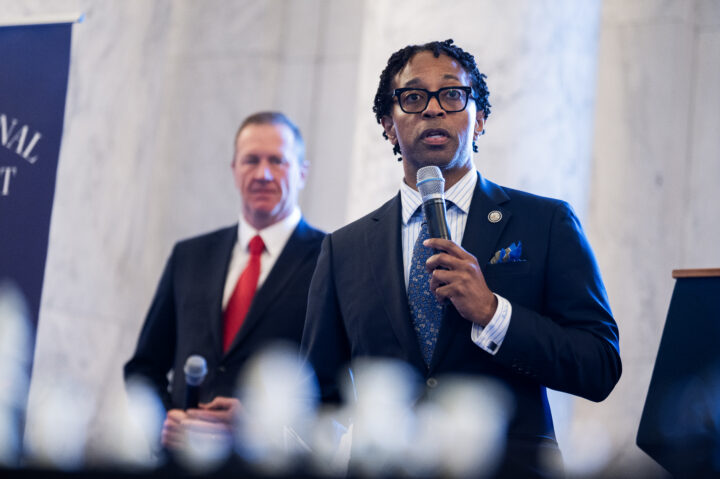
UNITED STATES - JUNE 3: Rep. Wesley Bell, D-Mo., right, and Sen. Eric Schmitt, R-Mo., attend the Congressional Chess Tournament hosted with the St. Louis Chess Club in Russell building on Wednesday, June 3, 2026. (Tom Williams/CQ-Roll Call, Inc via Getty Images)
In today’s Daily Kickoff, we look at the state of play in Michigan’s Democratic Senate primary in the final days of the race, and have the scoop on plans by Sen. Ted Cruz and Reps. Brad Knott and Tom Suozzi to introduce federal buffer zone legislation. We talk to Israeli officials and regional experts about the Trump administration’s newly released Gaza disarmament roadmap, and report from the Israel on Campus Coalition’s National Leadership Summit in Washington. Also in today’s Daily Kickoff: Dean Kremer, Alex Ryvchin and Balaji Srinivasan.
We also have a new on-demand Live Briefing that you can access throughout the day via our new app (on Apple and Android) and on our website.
Today’s Daily Kickoff was curated by JI Executive Editor Melissa Weiss and Israel Editor Tamara Zieve, with an assist from Marc Rod. Have a tip? Email us here.
What We’re Watching
- The Middle East remains on edge after President Donald Trump called off plans to launch “the biggest attack since World War II” targeting Iran, saying on Sunday that he was persuaded by Qatar, the United Arab Emirates and Saudi Arabia to again attempt to reach a diplomatic solution with Tehran. Trump said that talks with Iran are slated to restart today, while the Islamic Republic denied that talks were set to take place.
- Jay Clayton assumes his role today as director of national intelligence, following his confirmation vote last week to replace ODNI interim head Bill Pulte, who briefly served as acting director following Tulsi Gabbard‘s resignation.
- The Israel on Campus Coalition is holding its annual National Leadership Summit in Washington. More below.
What You Should Know
A QUICK WORD WITH JI’S JOSH KRAUSHAAR
Michigan will take center stage this week as it holds its marquee Senate primary and consequential down-ballot races that showcase the divide between the Democratic mainstream and its left-wing, anti-Israel activists.
But Missouri is playing the role of the must-watch undercard, with the rematch between Rep. Wesley Bell (D-MO) and Democratic Socialists of America-aligned former Rep. Cori Bush (D-MO) marking another significant bellwether contest between the center and the left.
Bell, a stalwart supporter of Israel who was championed by AIPAC in both of his congressional campaigns, is facing a changed political environment within the Democratic Party with public opinion turning against the Jewish state.
Bell defeated Bush by five points in 2024, but the race could end up being closer this time around given the ascendance of socialist candidates in urban, deep-blue districts like Missouri’s First District.
Bush, however, has myriad other vulnerabilities beyond her far-left policy views, from missed votes during her time in Congress to ethical questions surrounding her handling of campaign funds.
Bell is also being boosted by outside groups, led by the AIPAC-affiliated United Democracy Project super PAC, which has spent over $2.6 million in the race hitting Bush, along with the New Democrat Coalition-affiliated super PAC, which has poured in just over $1 million on Bell’s behalf. Bell has also outspent Bush on the airwaves by about a ten-to-one margin, according to the Cook Political Report.
MICHIGAN MOVES
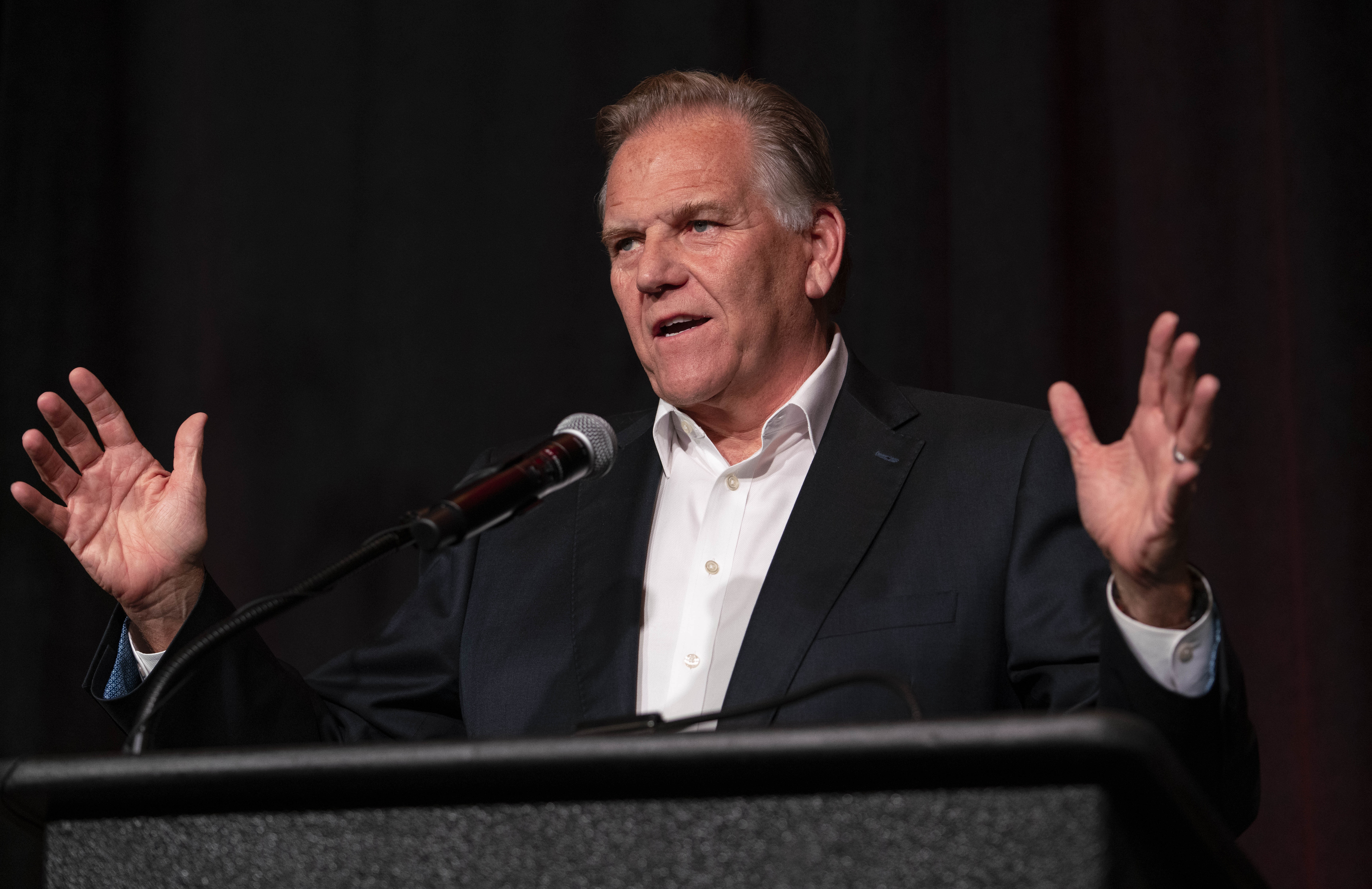
As Abdul El-Sayed pulls ahead in the final days of Michigan’s bitter Democratic Senate primary race, Republicans are eyeing a chance, in the general election, to peel support from disaffected Jewish Democrats anxious about their party’s sharp turn to the left on Israel and its tolerance for actions they view as antisemitic. If Rep. Haley Stevens (D-MI) loses, Republicans are eager to present former Rep. Mike Rogers (R-MI), the GOP’s presumptive nominee, as a safe alternative to El-Sayed for Jewish Democrats in the general election who may not be able to stomach voting along party lines,Jewish Insider’s Matthew Kassel reports.
Shifting tide: “I think that Jewish voters and many Democrats in general feel” the party “has moved away from them,” Bobby Schostak, a former chairman of the Michigan Republican Party who sits on the Republican Jewish Coalition’s board, told JI, calling Rogers “unconditionally and unapologetically pro-Israel and part of the fight against antisemitism in America.”
Called out: In a late-night tweet five days before Michigan’s high-stakes Democratic Senate primary, Stevens explicitly accused her opponent, El-Sayed, of trafficking in antisemitism, JI’s Gabby Deutch reports. Despite that, Stevens said, when asked in an MS NOW interview if she could commit to backing El-Sayed if he wins Tuesday’s primary: “You bet … I am on the team, alright. And I am gonna link arms and do whatever’s needed.”
SCOOP
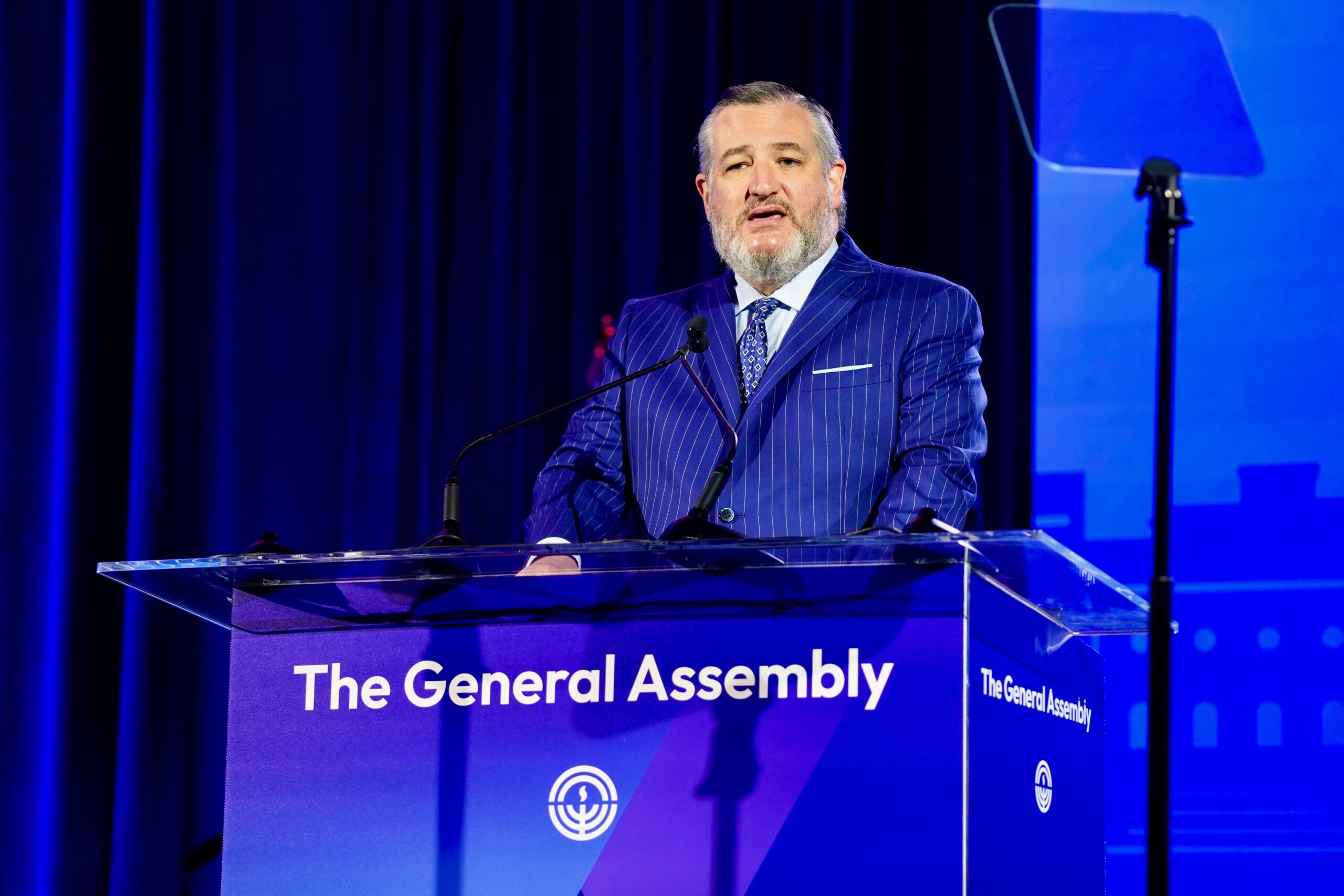
Sen. Ted Cruz (R-TX), Rep. Brad Knott (R-NC) and Rep. Tom Suozzi (D-NY) are preparing to introduce federal legislation that would establish a 100-foot buffer zone around religious institutions, within which conduct that disrupts religious services or interrupts access to the place of worship would be banned during religious services, Jewish Insider’s Emily Jacobs and Marc Rod report.
Negotiations: The Right to Worship Act aims to address demonstrations around synagogues and other houses of worship that have become a growing concern for the Jewish community following anti-Israel and antisemitic protests outside synagogues that have turned violent. Several states have pursued similar legislation. Cruz and Knott have been working on the bill for some time, and two sources familiar with the situation said that “intense negotiations” had been ongoing between Cruz and Suozzi’s teams to reach a bipartisan compromise balancing the desire to protect religious worship and free speech rights. A source said a deal was reached on Sunday evening.
PEACE PROSPECTS

Israeli officials and regional experts are expressing deep skepticism over the Trump administration’s newly unveiled Gaza disarmament roadmap, warning that public disagreements between Israel and Hamas over the timing of weapon surrenders and troop withdrawals threaten to unravel the agreement before it even begins, Jewish Insider’s Matthew Shea reports.
Israeli concern: Doron Spielman, a spokesman for the Israeli Prime Minister’s Office, told JI that Jerusalem conveyed to Washington that the plan “does not reflect Israel’s concerns.” Spielman said that Israeli intelligence has shown that Hamas “has been regrouping, digging additional tunnels, rearming and resupplying and have plans to attack Israel again.” For that reason, he said it is difficult for Israeli leaders to justify any decision to withdraw prior to Hamas’ complete disarmament.
BOILING POINT
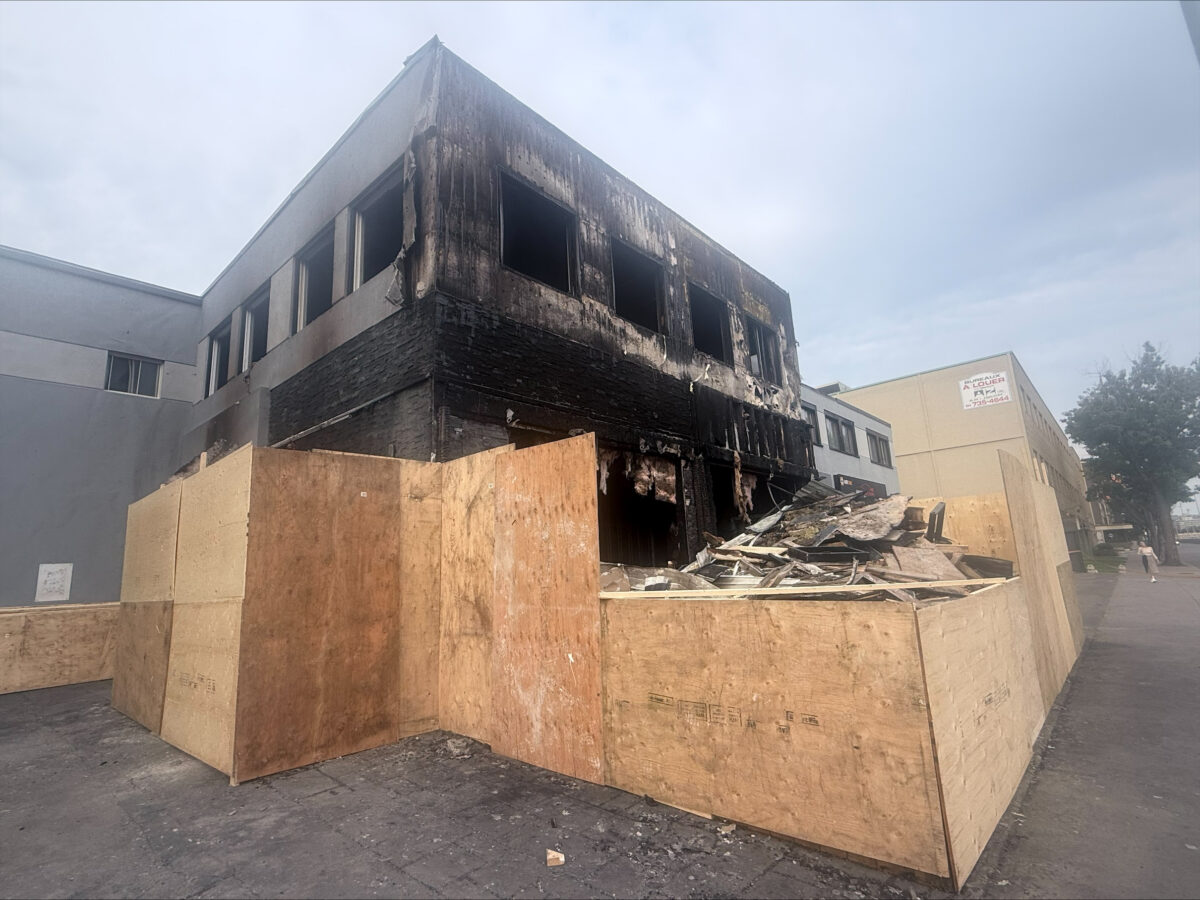
A popular Montreal kosher restaurant was destroyed in what police are investigating as a possible arson attack early Saturday morning, the latest in a worsening pattern of antisemitic attacks across the city and throughout Jewish communities in Canada, Jewish Insider’s Haley Cohen reports.
Caught on camera: First responders were called to Nöam Restaurant in the Côte-des-Neiges neighborhood around 3:15 a.m. Saturday to find the building engulfed in flames. Despite the efforts of roughly 80 firefighters, the two-story building suffered extensive damage. No injuries were reported, and no arrests had been made as of Sunday afternoon. The Montreal Gazette reported that the blaze was set by a single individual who appeared to be a young man, perhaps in his early 20s, according to video footage of the incident.
On the soccer pitch: Amid chants of “Death to Israel,” Israeli striker Dor Turgeman scored a goal for his New England Revolution team during a Saturday night Major League Soccer match against CF Montréal.
CAMPUS CLIMATE
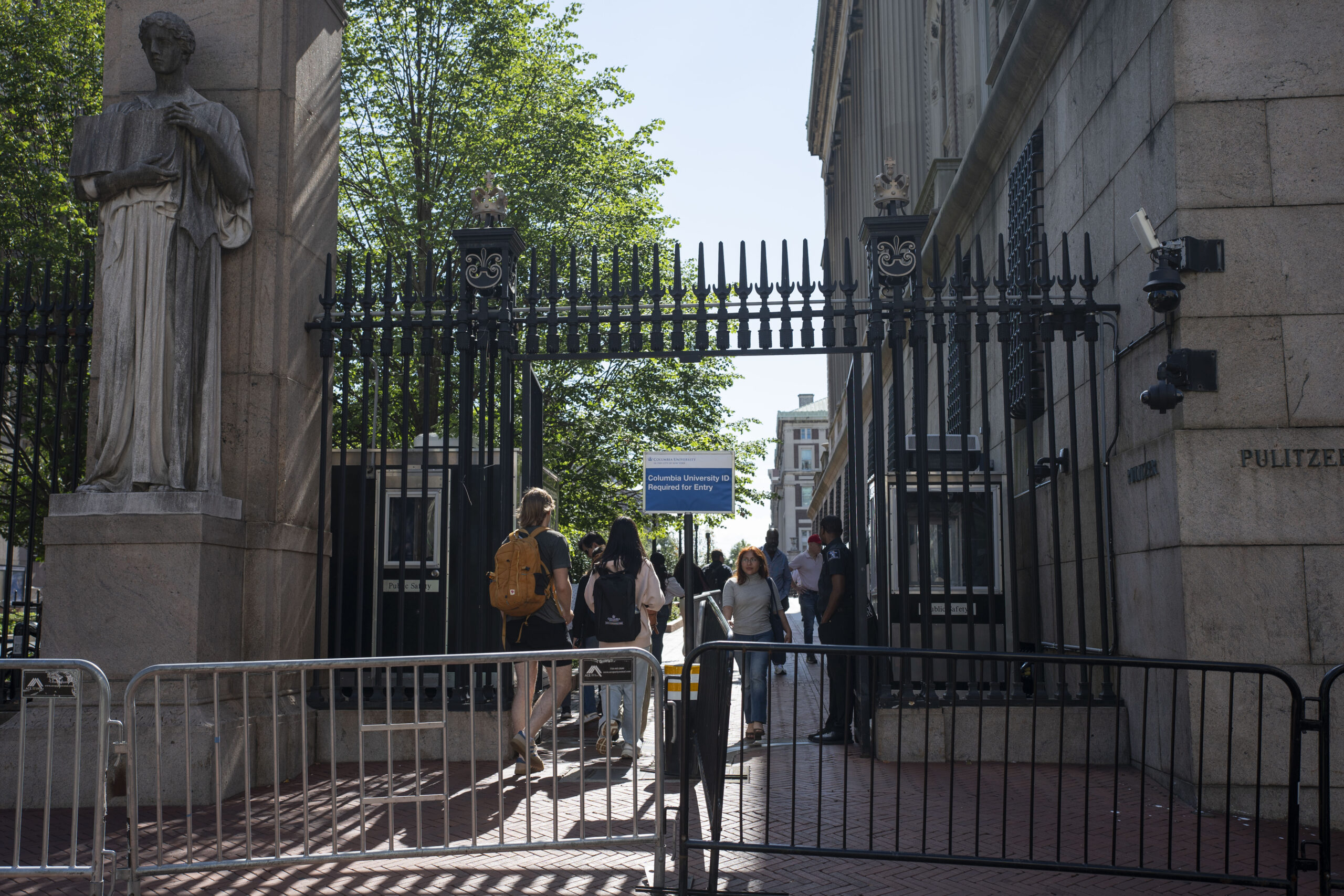
As close to 1,000 pro-Israel students from around the country gather in the nation’s capital for the Israel on Campus Coalition’s annual National Leadership Summit, they’ll do so against a backdrop of seemingly quieter campus antisemitism than in the years immediately following the Oct. 7, 2023, terrorist attacks in Israel. But students are still seeking tools to navigate a campus climate they’ve come to see as permanently changed, Jewish Insider’s Haley Cohen reports.
Campus concerns: “My main concern [on campus today] is every time I sit down with a classmate I have to wonder whether the person next to me was at the [anti-Israel] encampment,” Noah Lederman, an incoming senior at Columbia University majoring in philosophy and Jewish ethics, told JI. In February 2024, Lederman said he was shoved and pinned against a wall by an anti-Israel protester as he donned a shirt with an Israeli flag on it during a pro-Israel demonstration right outside of the Morningside Heights campus. More than two years later, Lederman still feels wary on campus.
ON SECOND THOUGHT
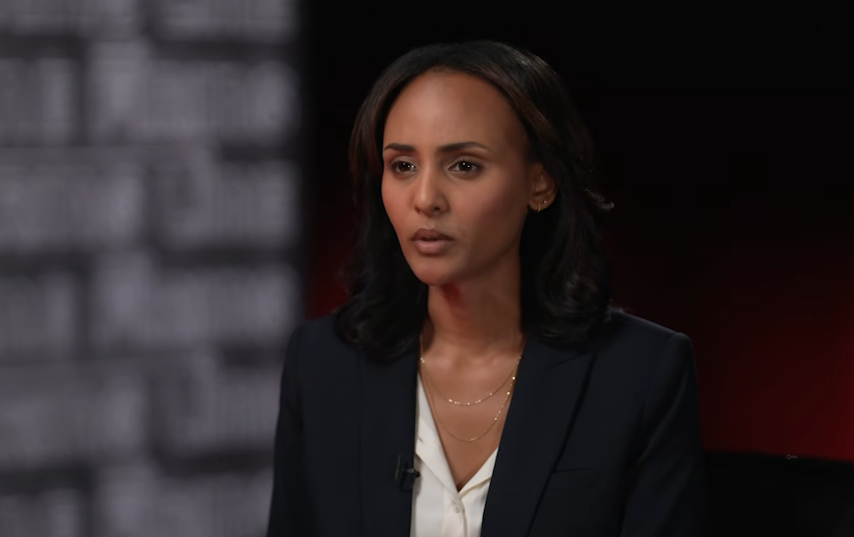
Far-left Colorado congressional candidate Melat Kiros backtracked on Sunday from her conciliatory tone in a PBS interview on the need for progressives to formulate a policy on Israel that does not engage in antisemitism, Jewish Insider’s Danielle Cohen-Kanik reports.
U-turn: Appearing on “Firing Line with Margaret Hoover” on Saturday morning, Kiros said her “greatest concern right now is that the State of Israel is losing support all across the political spectrum” and that progressives are “leaving a vacuum” for far-right commentators like Tucker Carlson and Candace Owens to fill by “pretending to care about Palestinian safety when really it’s just masking their overt hatred for Jewish people.” The 29-year-old doctoral student, who was backed by the Democratic Socialists of America in her campaign, quickly reversed course after the interview aired. Responding on Sunday to criticism on X from Al Jazeera producer Sana Saeed, Kiros said she “fumbled this line, plain and simple.”
Mounting pressure: Sen. Bernie Moreno (R-OH) publicly accused Rep. Max Miller (R-OH), his former son-in-law, of domestic abuse on Sunday and said Miller is unfit for office. Moreno’s comments came in response to a video address by Miller denying wrongdoing amid growing scrutiny of the allegations of domestic violence and abuse by his ex-wife Emily Moreno, the senator’s daughter, JI’s Emily Jacobs and Marc Rod report.
Worthy Reads
History Lesson: In The New York Times, Mehrzad Boroujerdi reflects on his father’s 1978 killing by Iranian revolutionaries, some of whom are now among the Islamic Republic’s top officials. “The United States and Israel have yet to learn that the Iranian regime is not made of papier-mâché, and the Islamic republic’s confrontational ideology is unlikely to dissipate anytime soon. The men in uniform showed no hesitation in killing thousands of their compatriots in January — a national trauma that Iranian society has yet to fully process. They will continue to practice a politics of performance for domestic audiences even as they recognize that the regime’s social contract is both morally bankrupt and fiscally unsustainable.” [NYTimes]
Threat to the West: In The Wall Street Journal, Lorenzo Vidino, the head of The George Washington University’s Program on Extremism, warns of the dangers of political Islam’s impact that have largely been misunderstood by successive U.S. presidential administrations. “Save for the years immediately after Sept. 11, 2001, there has been no concerted effort within U.S. law-enforcement and policy communities to acquire a deep institutional understanding of Islamist networks worldwide. A particular lack of understanding exists on how Islamists are using the American political and educational systems to advance their aims — dynamics that have become apparent in the past few years.” [WSJ]
Rise of the Far Right: Politico’s Kathy Gilsinan does a deep dive into concerns among Republicans over the rise of “groypers” in the party, who are beginning to gain professional footholds in Washington and in the conservative space. “If, as the adage goes, personnel is policy, the stakes are significantly higher than intergenerational trash talk, given the degree to which government staffers, across branches, effectively run the country. Student government types become interns become policy aides become senior advisers, chiefs of staff and even heads of agencies. If the conservative personnel pipeline is changing, Republican government will change with it.” [Politico]
Find more Worthy Reads in our Live Briefing via our new app (on Apple and Android) and website.
Word on the Street
A new survey of K Street leaders from Punchbowl News focused on the war with Iran and memorandum of understanding between Washington and Tehran found that 65% of respondents believed that Israel’s involvement in the war with Iran had a negative impact on its outcome…
The New York Times looks at the cyberattacks targeting water facilities in at least seven states, finding that evidence indicates potential Iranian involvement…
Sens. Marsha Blackburn (R-TN), Tim Sheehy (R-MT) and Dave McCormick (R-PA) introduced a resolution condemning the Iranian government’s human rights abuses…
Senate Appropriations Committee leaders finalized a stopgap funding bill that would, at least temporarily, prevent the Trump administration from putting political appointees in charge of approving federal grants, a plan that had raised concerns on both sides of the aisle…
A district court judge dismissed a complaint filed against The George Washington University by alumni of the school alleging that the school allowed “pervasive and severe” antisemitism on campus, citing the length of the complaint; the judge gave the plaintiffs until the end of August to refile an amended complaint…
The New York Times reports from a national meeting of the Democratic Socialists of America, finding an invigorated activist base that struggled at times to find consensus on issues regarding policy and organizing…
Boy George split from his manager, Paul Kemsley, after the latter pulled the performer from a two-week West End run of “Jesus Christ Superstar” after Boy George posted a reggae song with pro-Israel lyrics…
The Minnesota Twins acquired starting pitcher Dean Kremer, the first Israeli player drafted by a Major League Baseball team and a great-nephew of Haim Saban, from the Baltimore Orioles…
FIFA President Gianni Infantino is facing mounting criticism from the governing bodies of European, North American and Central American football leagues following his proposal to privatize FIFA — which originated last year with secret talks between Infantino and Josh Kushner; Bloomberg reports that Nasser Al-Khelaifi, the chairman of Qatar Sports Investments and president of the Paris Saint-Germain team, has the backing of some European sports officials…
The New York Times reports on the Metropolitan Museum of Art’s decision to feature an exhibition on designer John Galliano and honor him at its annual Met Gala despite a 2011 outburst in which he proclaimed, “I love Hitler”; the Times notes that Galliano participated in a May meeting with former Vogue Editor-in-Chief Anna Wintour and New York City Jewish leaders over the decisions…
The Washington Post follows up on a May story about a trove of WWII-era love letters written by a Jewish soldier Louis “Speedy” Weber to his eventual wife, Frances, after finding the couple’s nephew…
The people’s choice award of the Archibald Prize, Australia’s top portraiture honor, was given to artist Michael Zavros for his portrait of Australian Jewish leader Alex Ryvchin following the December 2025 terror attack at a Hanukkah celebration at Sydney’s Bondi Beach…
The Wall Street Journal spotlights tech entrepreneur Balaji Srinivasan’s effort to create an incubator for new countries in a sparsely inhabited Malaysian city that fell apart after the project faced government scrutiny following a social media post alleging that the incubator included participants with Israeli citizenship in violation of Malaysian laws…
CNN does a deep dive into increasing incitement in Israel against journalists, who accuse Israeli Prime Minister Benjamin Netanyahu and his political allies of stoking animus toward reporters in the country…
Ugandan officials unveiled a statue of Yonatan Netanyahu, the older brother of the Israeli prime minister, at the airport in Entebbe where the elder Netanyahu was killed during the 1976 hostage-rescue operation following the hijacking of a passenger plane by members of the Popular Front for the Liberation of Palestine…
Former Rep. Kay Granger (R-TX), the first Republican woman from Texas elected to serve in the House, died on Sunday at 83…
Find on-demand Live Briefing updates throughout the day via our new app (on Apple and Android) and website.
Pic of the Day

Members of Israel’s lacrosse team celebrated on Sunday after scoring a goal during the bronze medal match between Israel and Haudenosaunee, made up of Native American nations, during the 2026 World Lacrosse Women’s Championship in Tokyo. Israel came in third in the tournament overall after its win over Haudenosaunee.
Birthdays
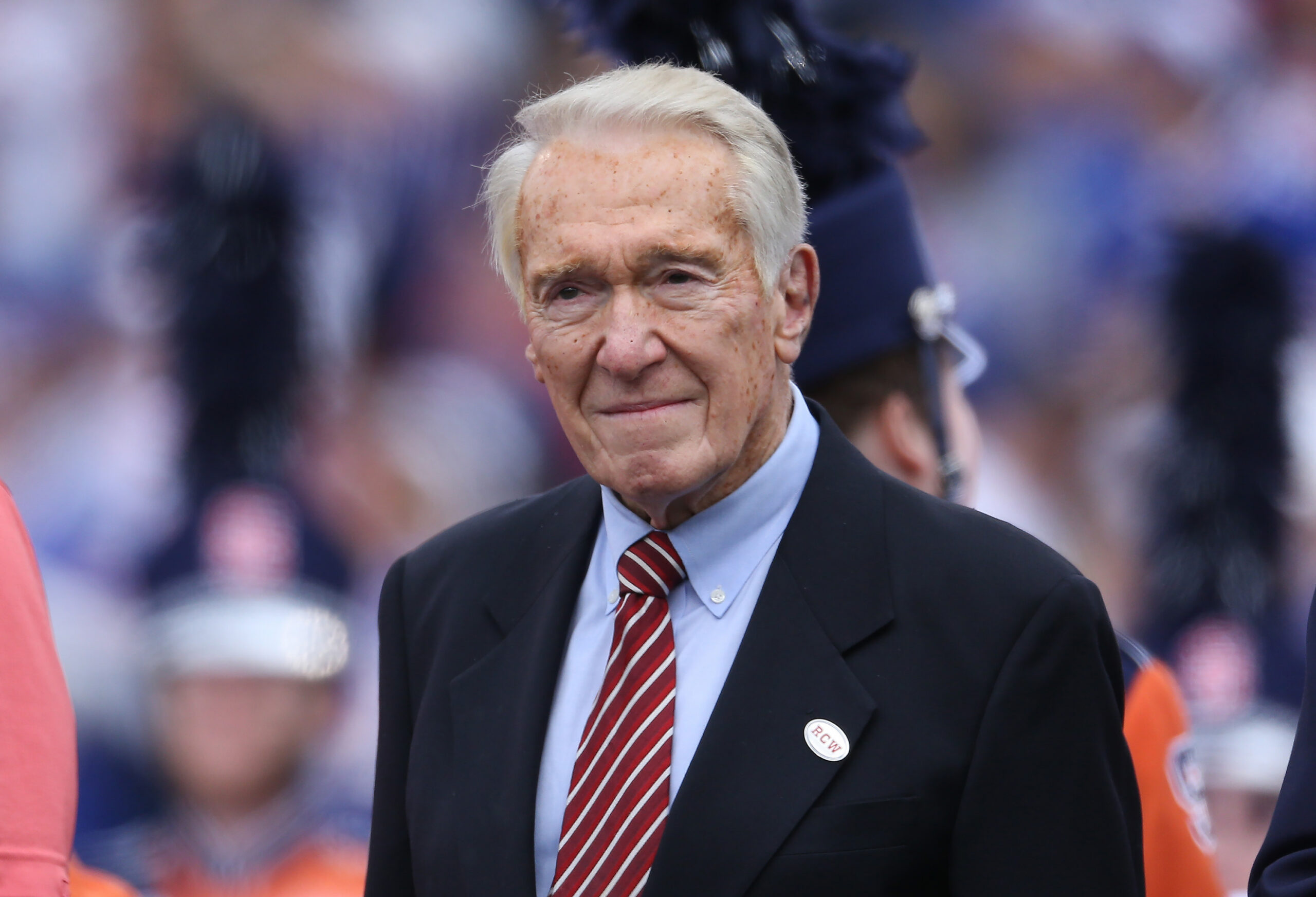
Retired head coach of both the NFL’s KC Chiefs and the Buffalo Bills, the oldest-ever living member of the Pro Football Hall of Fame, Marv Levy turns 101…
English actor, author, playwright and theatre director, known for his roles as the villain in both “James Bond” and “Rambo” films, Steven Berkoff turns 89… EVP emeritus of the UJA-Federation of New York, John S. Ruskay turns 80… Retired regional director in the Cleveland office of the ADL, she serves on the board of trustees of the Cleveland Federation, Anita Gray… Former chairman and CEO of the North America office of commercial real estate brokerage firm Savills, he is a past member of AIPAC’s Real Estate Division Executive Council, Mitchell S. Steir turns 71… Voice actor in dozens of Disney films, video games and television programs, known professionally as Corey Burton, Corey Gregg Weinberg turns 71… Former chair of the board of the Jewish Federation of Los Angeles and board member of JFNA, Orna Amir Wolens… CEO and co-founder of D.C.-based Freedman Consulting, LLC, Thomas Z. Freedman turns 63… Co-founder of Pushkin Industries, a podcast company, Jacob Weisberg… Israeli filmmaker, producer and director, Ilan Moskovitch turns 60… Canadian entrepreneur and former commodities trader, Alexander Shnaider turns 58… Executive director of public affairs at the Jewish Federation of Broward County (Florida), Evan Goldman… Emmy Award-winning sportscaster, she sometimes serves as a fill-in for her husband, Rich Eisen, Suzy Shuster turns 54… Managing editor of Vital City, Josh Greenman… U.S. senator (D-CT), Chris Murphy turns 53… Chief advancement and communications officer at the National September 11 Memorial & Museum, Joshua Cherwin… Senior vice president of public policy at Riot Platforms, Brian Morgenstern… Senior editor of Commentary magazine, Seth A. Mandel turns 44… Managing partner and head of global government affairs at SoftBank Group International, Jeffrey A. Dressler turns 42… Director of strategic partnerships and senior development officer at JDC (the “Joint”), Erica Greenblatt… Caroline “Carrie” Keller-Lynn… Director of member engagement at Christians United For Israel, she was born in Lutsk, Ukraine and raised in Sacramento, California, Liliya Maskovcevs… Executive director of The Natan Fund, Adina Poupko … Executive director of the Reducetarian Foundation (a non-profit organization dedicated to reducing meat consumption), Brian Kateman… Fashion model and entrepreneur, founder of the “Kode with Klossy” nonprofit and founder and CEO of Bedford Media, Karlie Kloss turns 34… U.S. news editor at the Financial Times, Emily Goldberg… First-round pick of MLB’s Atlanta Braves in the 2020 draft, he made his MLB debut in 2023, now in the St. Louis Cardinals organization, Jared Shuster turns 28… Ariana Kaufman… Founder-director of Meeting Your Mission, Leslie Rosen Stern… Leigh Bonner Levine… Co-founder and editor-in-chief of the Washington Reporter, Matthew Foldi…
Please log in if you already have a subscription, or subscribe to access the latest updates.
 Continue with Google

 Continue with Apple