

















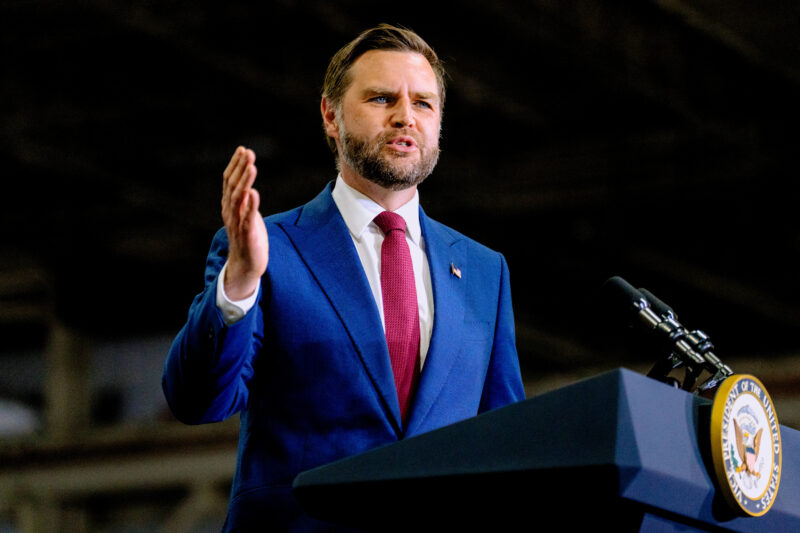










Frustration has grown in pro-Israel conservative circles over Vance's refusal to condemn Tucker Carlson by name, particularly after his RJC summit appearance
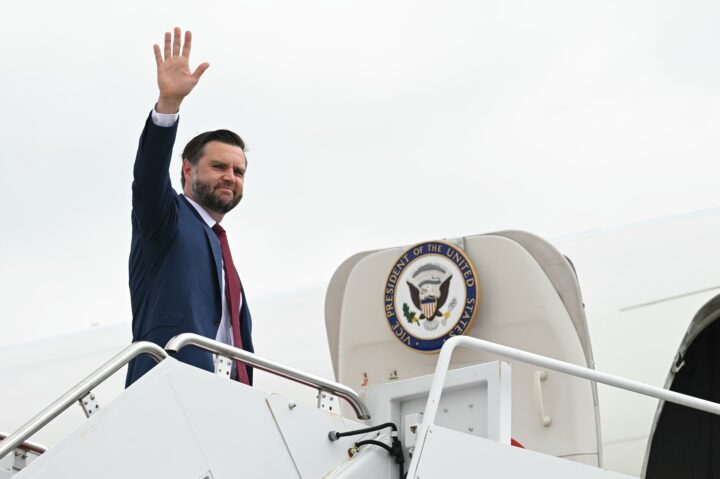
Saul Loeb-Pool/Getty Images
Vice President JD Vance boards Air Force Two on August 31, 2026, at Joint Base Andrews, Maryland.


 Add JewishInsider on Google
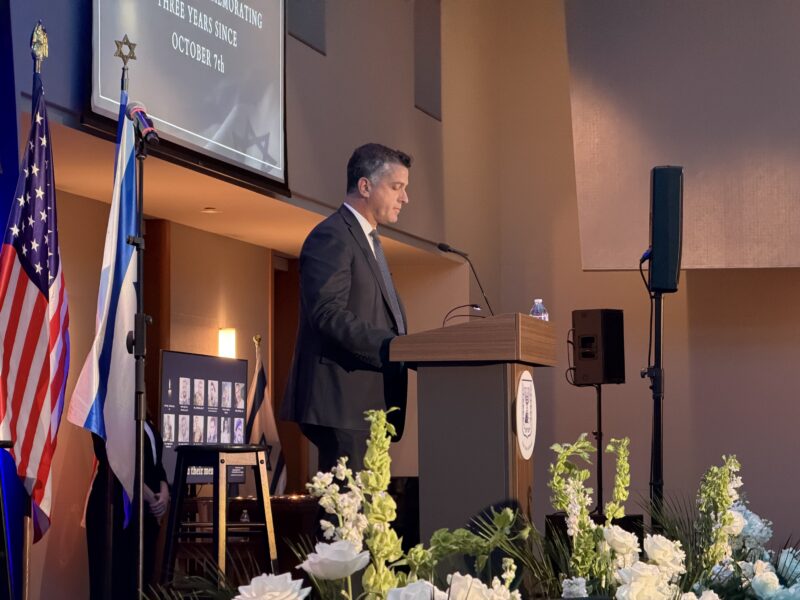
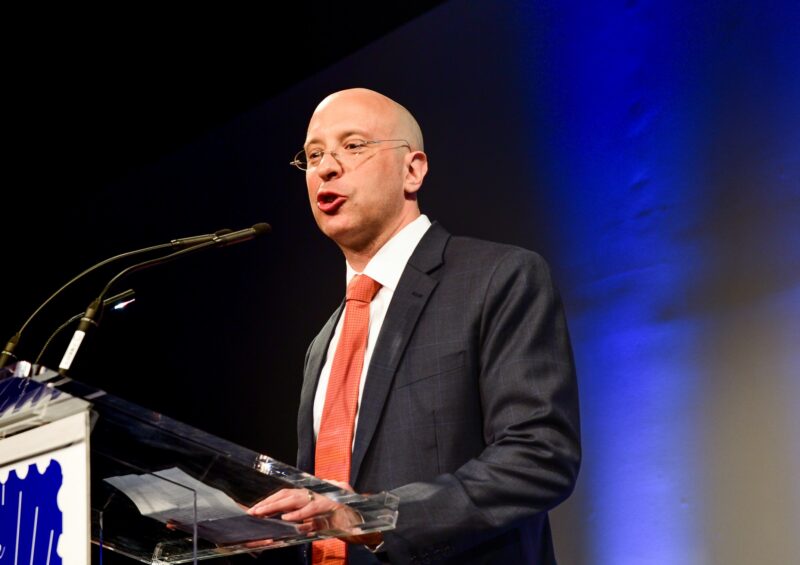
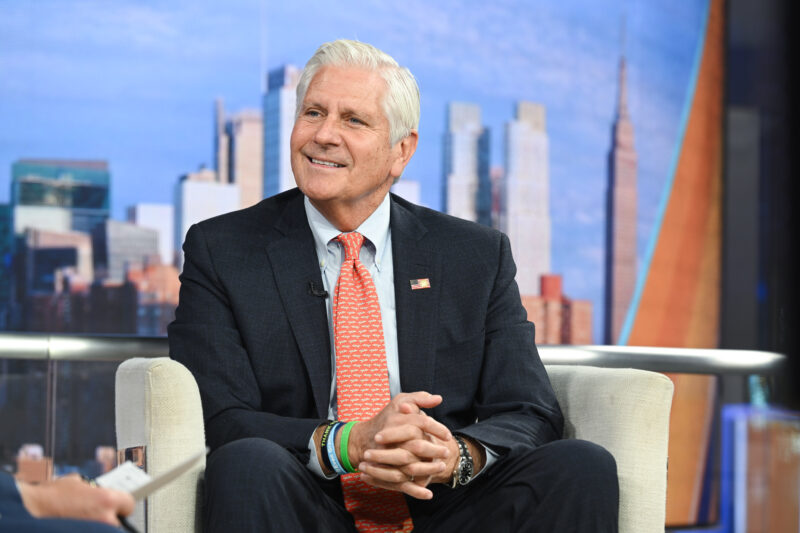
Vice President JD Vance’s fireside chat with Republican Jewish Coalition Chairman Norm Coleman was met with a largely positive response in its immediate aftermath, with RJC board members largely agreeing that the event had helped Vance alleviate concerns among top Jewish Republicans, particularly about where he stands on Israel and antisemitism.
Several board members came out of the speech, which took place on Monday night at the RJC’s leadership summit in Las Vegas, saying they’d be prepared to support Vance if he runs in the 2028 presidential election.
Yet even shortly after the conversation, some observers, including some who were otherwise broadly supportive of Vance’s remarks, said that his comments — or lack thereof — on one issue had disappointed members of the crowd: Tucker Carlson.
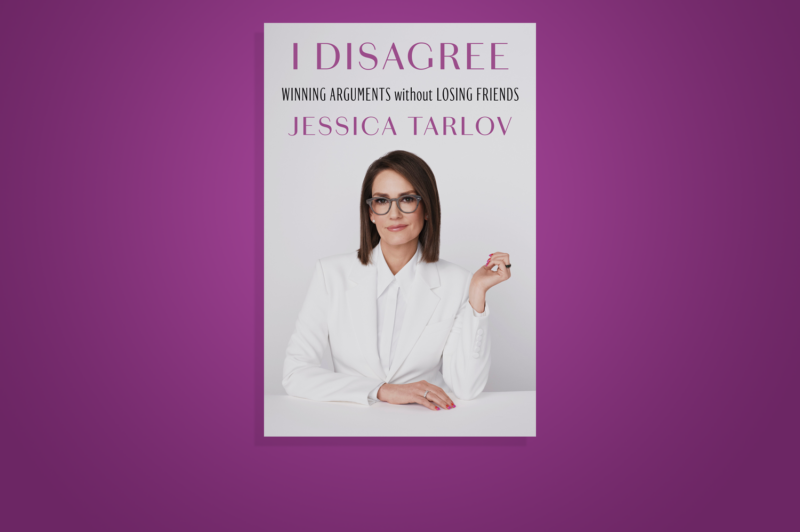
Coleman posed a broad question to Vance about a range of right-wing commentators including Carlson, Joe Rogan, Megyn Kelly and Nick Fuentes, asking how he decides whether to engage with them.
Vance focused his answer on drawing a spectrum between the often-apolitical Rogan and the white nationalist, neo-Nazi Fuentes. He said he believes in most cases, like Rogan, that it’s better to engage and use their platform to get his message out. But he said that there are other figures like Fuentes — whom Vance proactively condemned even before Coleman posed the question — whose views and comments are so abhorrent that he won’t engage with them.
He acknowledged that many in the room might disagree with comments by Carlson or Kelly but did not say anything specific about Carlson’s antisemitic turn or whether he remains willing to engage with him.
There’s been intense focus on Vance’s relationship with Carlson in light of his past defense of the commentator as a “friend of mine” who should not be expelled from the conservative movement and whom he would not throw “under the bus” — even as Carlson’s podcast has become a platform for virulently antisemitic rhetoric and Holocaust-denying content. In 2024, Carlson was reportedly a key advocate for Vance to get the VP slot.
More recently, Carlson has withdrawn his support for President Donald Trump, a break that was made clear after Trump’s declaration of war against Iran earlier this year — an aspect of their relationship Vance hasn’t yet addressed.
In the days since Vance’s appearance at the RJC, frustration and concern has grown in Jewish and pro-Israel conservative circles about Vance not directly addressing Carlson in his answer.
“If you truly oppose antisemitism say, ‘I reject and condemn antisemitism in all its forms and in every way.’ That wasn’t too tough,” conservative talk show host Mark Levin wrote on X on Tuesday. “And this, ‘I will not tolerate those who say antisemitic things and promote Jew-hatred, and that includes Tucker Carlson and his ilk.’ Very easy. Simple. Clear. Straightforward. Is that expecting too much from any Republican official? I think not.”
Vance’s office did not provide comment on those criticisms.
Vance’s remarks, including during his answer about the podcasters, also raised some eyebrows for the way he used the terms “blood libel” and “blood guilt” interchangeably, referring to, as he described it, punishing individuals for their heritage or ancestry.
Blood libel, particularly in the context of antisemitism, refers specifically to the centuries-old myth of Jews murdering non-Jewish children to use their blood in religious ceremonies.
Carlson, meanwhile, leveled a broadside against the RJC in response to an inquiry from Politico. “An organization that promotes and defends genocide is continuing to insist that they’re the real victims? I can’t imagine who buys this nonsense anymore,” he told the outlet.
JI asked Vance’s office for the vice president’s response to Carlson’s attack against the organization in front of which he just spoke, but did not receive a response.
The members say the Vermont senator hasn’t attended council meetings and that his rhetoric, accusing Israel of committing genocide, runs counter to the museum’s mission

Kevin Dietsch/Getty Images
Sen. Bernie Sanders (I-VT), joined by fellow senator Sen. Jeff Merkley (D-OR) (R), speaks at a news conference on restricting arms sales to Israel at the U.S. Capitol on November 19, 2024 in Washington, DC.
Several Trump appointees to the board of the United States Holocaust Memorial Museum are pushing for the ouster of Sen. Bernie Sanders (I-VT), alleging that he has rarely attended meetings and that his accusations of genocide against Israel run counter to the museum’s mission.
Sanders has served on the council for nearly two decades.
The board, formally known as the Holocaust Memorial Council, is mostly made up of presidential appointees who serve for five-year terms, joined by a handful of members from the House and Senate chosen by congressional leadership. Sanders was appointed in 2007. Lawmakers are technically subject to the same five-year term limits but in practice have often served until a successor is appointed or they leave office.
Jonathan Burkan, who was appointed to the council twice by President Donald Trump, said he’s never seen Sanders at any meetings of the council — which he said has not been the case for other lawmakers, both Democrats and Republicans.
“Everything that’s happened after Oct. 7, everything that has been going on with antisemitism, with the Holocaust — I do feel that if someone is a Jewish elected official, they should at least attend one meeting in over a 20-year period of time,” Burkan said. “They should find someone else besides Bernie just to be on the council.”
Each of the council members who spoke to Jewish Insider spoke in their personal capacities, not as representatives of the council as a whole.
Burkan added that “Bernie Sanders accusing Israel of genocide downplays the Holocaust, which actually hurts the museum which he serves.”
Stuart Eizenstat, the chair of the council, has pushed back on accusations of genocide against Israel and has argued that extreme anti-Israel rhetoric is fueling violent antisemitism. The museum’s director has also condemned comparisons between the war in Gaza and the Holocaust.
Daniel Huff, who was appointed to the board during Trump’s first administration, said that it’s “important that the museum be a bipartisan effort,” emphasizing that other Democratic lawmakers on the council have been frequent and active participants in its meetings.
“That’s the type of representation that we want,” Huff said. “My observation, simply, is that Sanders has not shown up to any meeting, as far as I can tell.”
“The problem is that he’s publicly out there advocating positions that are really at odds with some of the fundamental things that the museum does, and one of them is making sure that the word ‘genocide’ is carefully safeguarded, and deployed only when necessary, so as not to diminish the memory of those who died in the Holocaust,” Huff said.
Huff argued that, in a time of rising antisemitism, the Holocaust Museum has an important role to play, and it’s “important that everybody who’s in a leadership position there is focused on the importance of the moment, the urgency of the moment.”
“We’re living in a dangerous moment and everyone ought to be paying attention,” Huff said. “We need people who understand the fierce urgency of the moment we’re in, and the need to act wisely and decisively.”
He said that there are many Democrats who would be strong candidates and members of the board, but that Sanders does not fit that bill.
“It’s not a political statement … the ask is just, find someone who’s aligned and involved — that’s it, very simple,” Huff said.
Rob Garson, the president of the American Association of Jewish Lawyers and Jurists, who was recently appointed to the board for the first time, said that he was surprised to find out that Sanders was a member.
“It’s not as if they have that many [meetings] in any given year, and it’s not as if it’s in an inconvenient place for him to come to. He clearly just either doesn’t care or doesn’t want to care,” Garson said.
He added that Sanders’ public rhetoric is “diametrically opposed to the message of the Holocaust Memorial Council.”
“It should be people that actually are aligned with what the Holocaust Museum stands for, and Sanders just isn’t that,” Garson said.
Tila Falic, another recent Trump appointee, said that people selected for the board “represent Holocaust education, and it represents combating antisemitism for Jews and for non-Jews in the United States … people that are appointed should take their job seriously by, first of all, showing up.”
If Sanders is unable to attend or is not aligned with the Museum’s mission, “then he should be removed and give that seat to somebody who wants to take an active role and make a difference.”
Sanders did not respond to a request for comment. Nor did Eizenstat, the chair of the council. The museum also did not provide comment on the effort to remove Sanders or confirm how many meetings the senator has attended during his tenure.
Trump stirred controversy early this year when he removed a slew of Biden appointees from the board, replacing them with several of his own picks.
Please log in if you already have a subscription, or subscribe to access the latest updates.
 Continue with Google

 Continue with Apple