



















































Plus, IHRA gains traction in LATAM

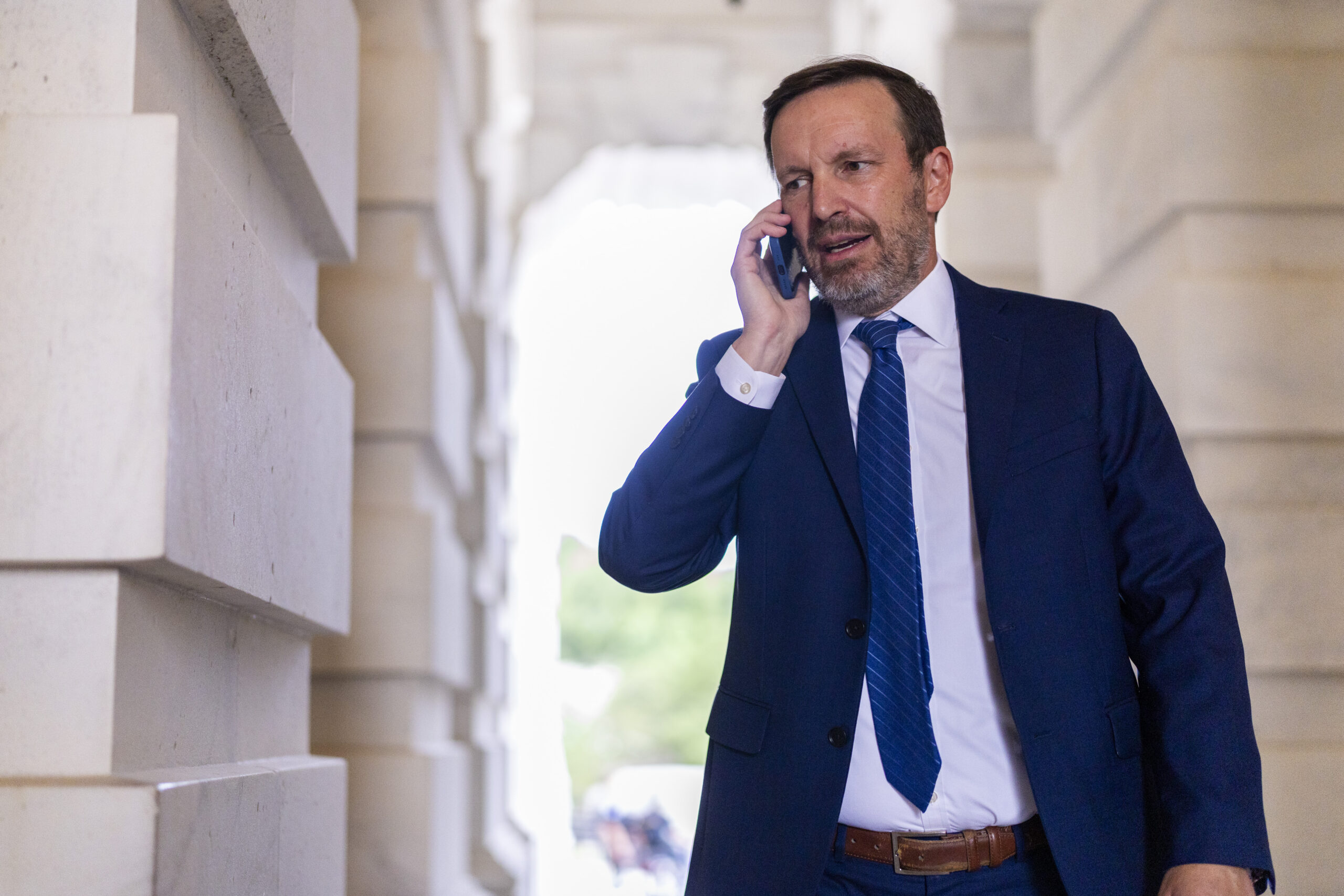
Anna Moneymaker/Getty Images
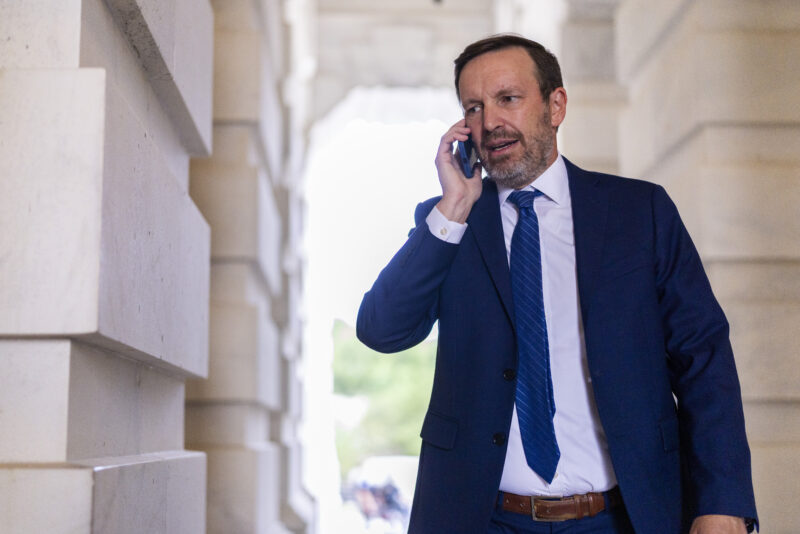
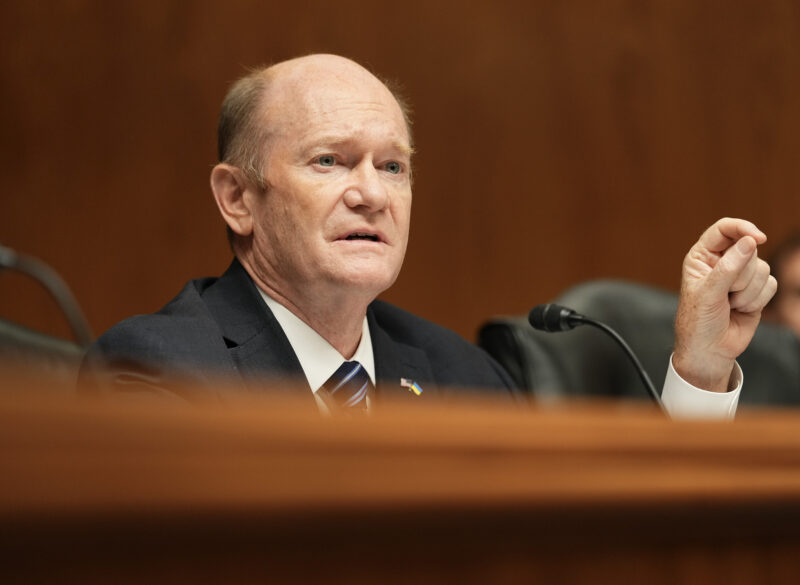
Sen. Chris Murphy (D-CT) speaks during a news conference following the weekly Senate Democratic policy luncheon meeting at the U.S. Capitol Building on September 19, 2023, in Washington, DC.


 Add JewishInsider on Google
Good Tuesday morning.
In today’s Daily Kickoff, we cover yesterday’s Israeli Embassy commemoration of the Oct. 7, 2023, Hamas terror attacks, report on new Department of Justice charges against a Gaza-based Hamas commander accused of funneling money from the U.S. to the terror group, and report on State Department antisemitism envoy Yehuda Kaploun’s announcement that more Latin American countries are set to adopt the International Holocaust Remembrance Alliance’s working definition of antisemitism. Also in today’s Daily Kickoff: David Zini, Jonathan Powell and Zach Kessel.
Today’s Daily Kickoff was curated by JI Executive Editor Melissa Weiss, with assists from Tamara Zieve and Danielle Cohen-Kanik.
Today’s Agenda
The Israeli military is on high alert ahead of the anniversary tomorrow of the Oct. 7, 2023, Hamas-led terror attacks, the country’s defense minister, Israel Katz, said this morning. Katz cited intelligence that suggested that Hamas was planning to carry out attacks on IDF forces operating in Gaza.
Shin Bet officials are in the United Arab Emirates today and participating in the interrogation of the FlyDubai co-pilot who attacked the aircraft’s captain and planned to crash the plane.
The three-day National Conservatism Conference kicks off today in Jerusalem. Speakers include the White House’s Seb Gorka, Israeli Foreign Minister Gideon Sa’ar, Finance Minister Bezalel Smotrich, Diaspora Affairs Minister Amichai Chikli, former Polish President Andrzej Duda and former Israeli National Security Advisor Meir Ben-Shabbat. Smotrich spoke this morning on the topic of U.S.-Israel relations, calling for a transition from “a relationship of dependence to a partnership between two independent nations.”
Former White House coordinator for the Middle East Brett McGurk is out today with Brink: Inside the Race to Free the October 7th Hostages, about his efforts while serving in the Biden administration, where he held a number of counterterror and national security roles, to secure the release of the hostages held in Gaza.
One Thing To Know
ANALYSIS
By Marc Rod
Sen. Chris Murphy (D-CT) has made a name for himself as a progressive leader on the national stage who has often spoken out against Middle East allies — including Israel, over its war against Hamas in Gaza, and Saudi Arabia, over its human rights record.
But Murphy, in the middle of a trip across the Middle East that included meetings in Qatar earlier this week, made no mention of Doha’s checkered human rights record — never mind its role, in the eyes of its detractors, as a leading backer of anti-Israel propaganda, funder of antisemitic activity on college campuses and a supporter of terrorism — even as he offered criticisms of Saudi Arabia on a later leg of the same trip.
Murphy instead spent his trip lavishing praise on the gas-rich country, speaking of Qatar as an essential ally of the United States.
The Big Reads
embassy commemoration
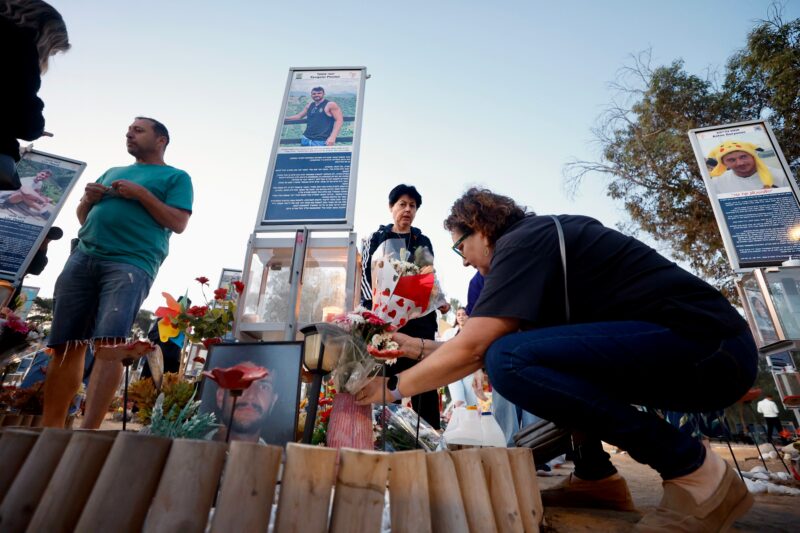
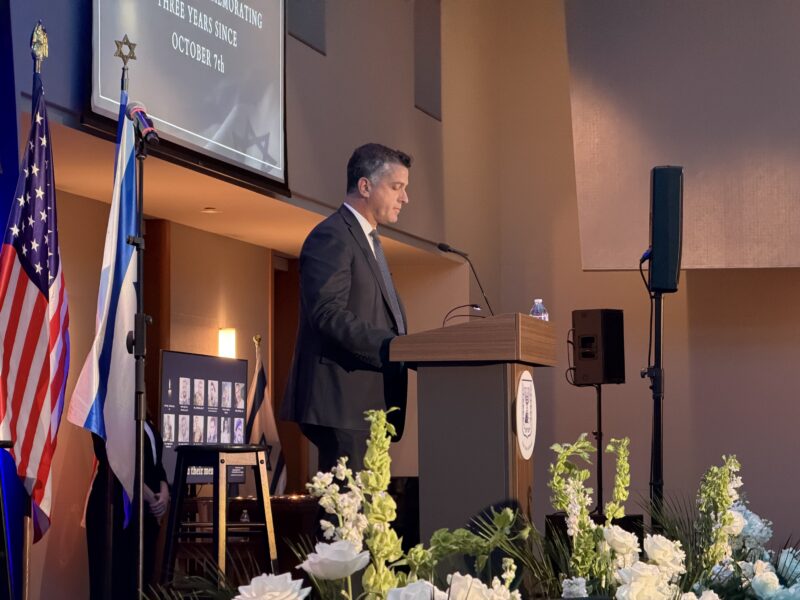
Michael Needham, the deputy U.S. national security advisor, said on Monday that the Oct. 7, 2023, Hamas-led attacks on Israel and their aftermath are part of a shared civilizational war pitting the United States, Israel and other allies against enemies of the West. The Oct. 7 attacks were met with praise and “gleeful celebration of inhuman barbarism, savagery and death” both in Gaza and around the world, Needham said in remarks at an event organized by the Israeli Embassy in Washington to commemorate the third anniversary of the attack, Jewish Insider’s Marc Rod reports. “What was clear then is that each of our countries is locked in a battle between civilization and barbarism,” Needham said. “That the war between the people of Israel and the terrorists of Hamas is a war that is playing out in various forms, here in the United States and in Europe and across the whole of the Western world.”
gaza grift?
The Department of Justice on Friday announced charges against a Gaza-based Hamas commander as well as the arrests of three U.S.-based affiliates for allegedly funneling money from the U.S. to Hamas, under the guise of charitable humanitarian fundraising. Three others were also arrested in France as part of the investigation, Jewish Insider’s Marc Rod reports. The lynchpin of the alleged conspiracy is Gaza-based Hamas official Saleem Alzaq, a member of Hamas’ Al-Qassam Brigades and one of its propaganda offices, who promotes the terror group’s fighters on various social media platforms. According to the indictment, Alzaq operated an international fundraising network for Hamas, which he promoted through social media campaigns under the guise of humanitarian aid to people in Gaza.
regional shift
Ambassador Yehuda Kaploun, the State Department’s antisemitism envoy, revealed on Monday that the U.S. expects several Latin American countries to adopt the International Holocaust Remembrance Alliance’s working definition of antisemitism in the coming months, Jewish Insider’s Emily Jacobs reports. Kaploun made the comments at a press conference about the Trump administration’s efforts to combat antisemitism ahead of the third anniversary of Hamas’ Oct. 7, 2023, attacks on Israel, after being asked to analyze how regional leaders have responded to the rise in anti-Jewish hate. “There’s a conference in November where we expect to have more Latin American countries to join the IHRA Accords,” Kaploun said. “The Dominican Republic just announced that they’re joining the IHRA Accords. Colombia is revisiting that. Guatemala, Paraguay, Costa Rica, Chile are all in discussions.”
The Rundown
EXCLUSIVE
seeds of peace
obama boost
campaign trail
On Our Radar
● The Live Briefing. Word on the street, clips, podcasts and quick updates — the items we’re tracking all day in our Live Briefing on the app (on Apple and Android) and website.
The U.S.’ weekend withdrawal of a dozen B-1 bomber jets from the U.K.’s RAF Fairford base was prompted by concerns of a potential Iranian drone attack on the facility and the servicemembers based there…
The U.S., Argentina, Canada, Colombia, Costa Rica, the Dominican Republic, Guyana, Paraguay, Peru and Trinidad and Tobago condemned Iranian and Iran-backed terrorist activity in the Western Hemisphere on Monday, citing lethal plots, illicit fundraising, political interference and efforts to bolster terrorist networks…
Israeli officials told CBS News that Israel had temporarily closed its airspace, scrambled fighter jets and was prepared to shoot down the FlyDubai plane had passengers not retaken control of the cockpit minutes after the flight’s Omani co-pilot attempted to incapacitate his captain.
The Wall Street Journal does a deep dive into the security failures that led to the in-flight attack, finding that co-pilot Hamam al-Hammami had been previously assigned to a desk job and banned from flying at Oman Air over concerns about his extremist beliefs, which had prompted the airline to send him to a deradicalization program…
Senate Majority Leader John Thune (R-SD) said there was “no clear path forward or consensus” on a bill that would establish permanent daylight saving time; the legislation, which has been strongly opposed by Orthodox Jewish groups, has been the subject of clashes between some GOP senators, including Sen. Tom Cotton (R-AR) and President Donald Trump, the latter of whom supports the change…
The Senate Leadership Fund super PAC is putting $5 million into Sen. Darline Graham’s (R-SC) bid for a full term as an “insurance policy” amid polls that show Democratic Senate candidates gaining ground in a number of red-state races…
The U.K. chair of Amnesty International resigned from the country’s Green Party over its vote this week to adopt a resolution equating Zionism and racism, alleging that the party is “failing to confront prejudice” in its ranks…
U.K. National Security Advisor Jonathan Powell quietly visited Israel last week in an effort to intercede in the planned Israeli closure of the U.K. consulate in east Jerusalem, which had been prompted by London’s decision last month to block the sale of West Bank settlement products…
A Kuwaiti man who attempted to attack the Israeli Embassy in London last year was sentenced to life in prison with a minimum term of 20 years after being convicted of preparing a terrorist act…
Shin Bet head David Zini threatened during this week’s Israeli Cabinet meeting to seek administrative detention for Jewish extremists who engage in settler violence in the West Bank; Zini reportedly clashed with Orit Strock, the country’s settlements and national projects minister, over the uptick in violence…
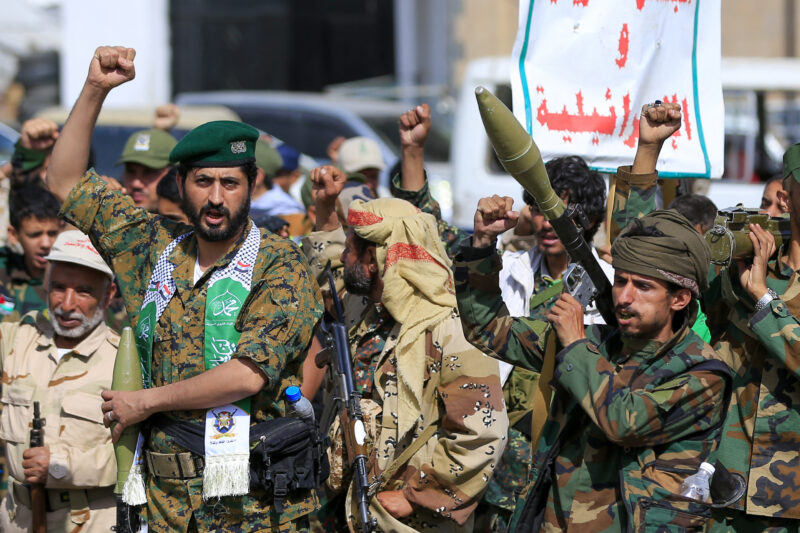
Yemeni forces backed by Saudi Arabia on Monday recaptured several areas near the Bab el-Mandeb Strait from the Iran-backed Houthis, including the Red Sea city of Mocha, while a Houthi official claimed that the terror group attacked a Saudi oil refinery…
Arielle Pardes is joining Business Insider’s Discourse team as a senior correspondent…
Zach Kessel is joining The Wall Street Journal’s opinion desk as the assistant editor of the publication’s “Free Expression” newsletter…
Worthy Reads
Find more Worthy Reads in our Live Briefing via our app (on Apple and Android) and website.
The Choice Israelis Face: The New York Times’ Bret Stephens considers how Israelis can address the challenges of the current domestic political situation as well as the country’s global standing. “For Israelis to surmount the formidable challenges they face, in pursuit of both victory and peace, the spirit of service — of giving yourself, doing it yourself, taking possession of your destiny against daunting odds — must win out over the spirit of entitlement. And for Israel’s genuine well-wishers, including the good-faith critics, to push that spirit forward, they need to draw a firm moral line against those who simply want Israel gone.” [NYTimes]
Pod Squad: In The Free Press, Peter Savodnik argues that the hosts of “Pod Save America” — former Obama aides Jon Favreau, Jon Lovett and Tommy Vietor and their Crooked Media network — have used their platform to boost the far left of the party, becoming unofficial kingmakers of a largely leaderless Democratic Party. “There was a new rage on the left [after President Donald Trump 2024 election win], and it built on the old rage, and it was fueled by Harris’s loss and the perceived haplessness and venality and limp-wristedness of whatever was left of the Democratic establishment. The Pod Bros were quick to tap into that — weaving together their frustrations with the old guard and their mounting anger with Israel over Gaza, an anger that now felt more justified, more white-hot with the pro-Israel Trump returning to the White House.” [FreePress]
Picture of the Day
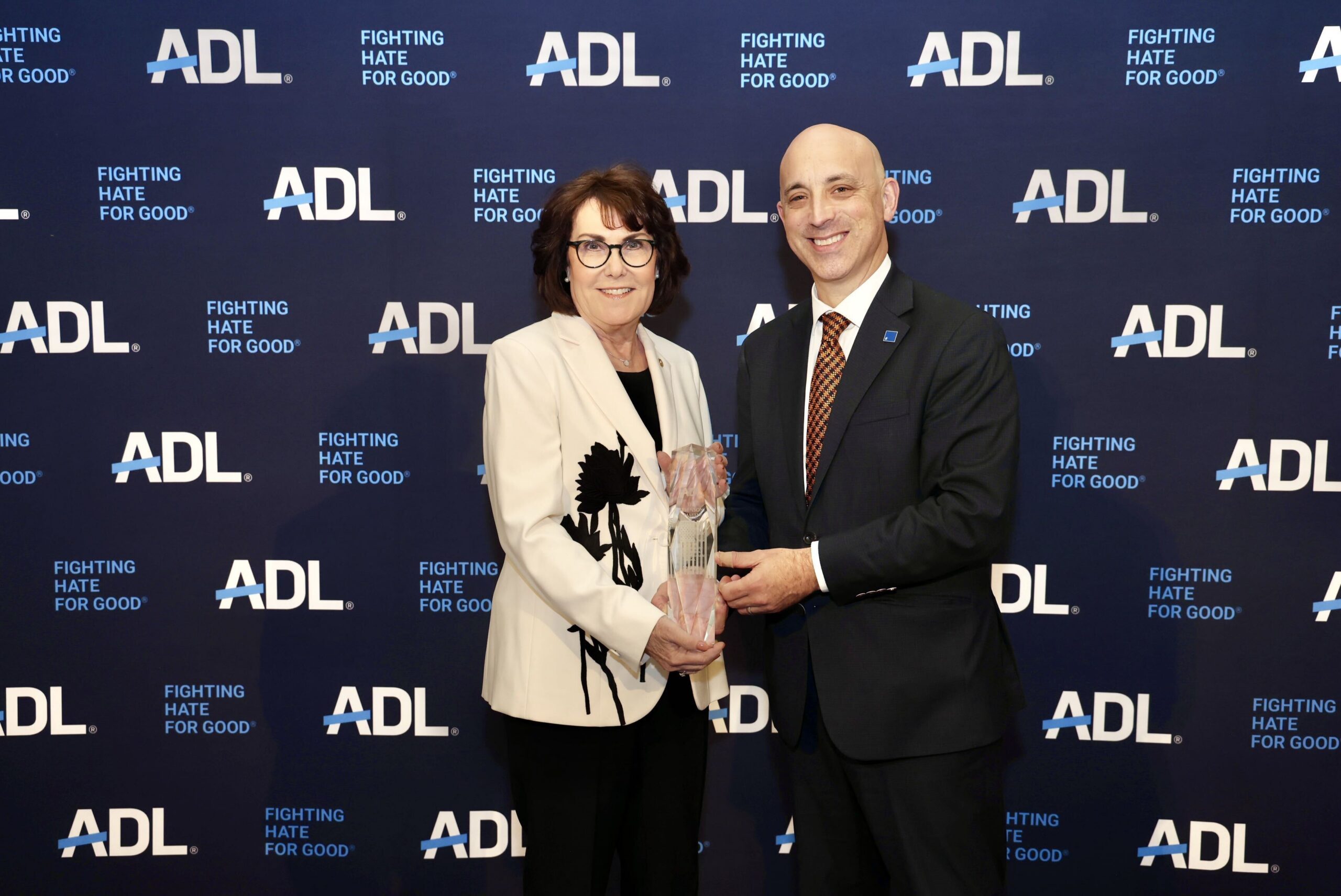
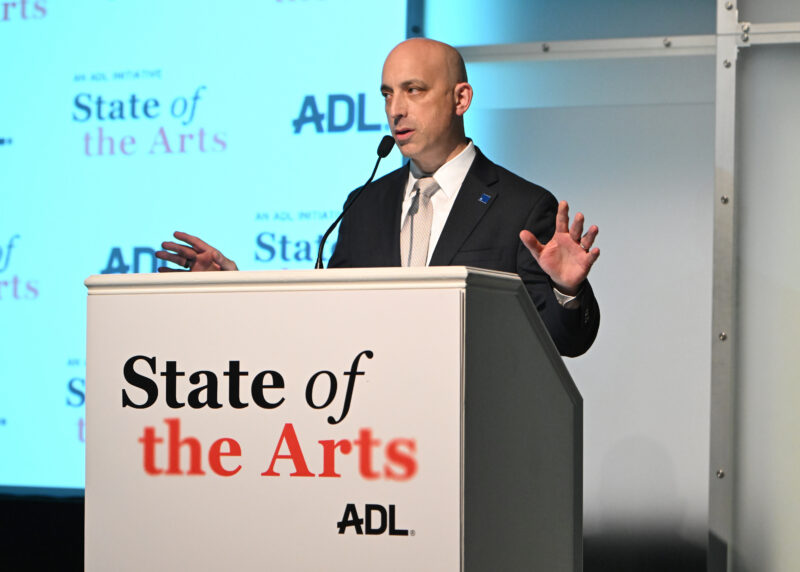
On behalf of herself and Sen. James Lankford (R-OK), Sen. Jacky Rosen (D-NV) accepted the Anti-Defamation League’s Levenson Family Defender of Democracy Award from CEO Jonathan Greenblatt at the group’s Spotlight on Hope event in Washington this week, in honor of their work combating antisemitism, including their leadership of the Senate antisemitism task force and leadership on the Jewish American Security Act. Courtesy
Birthdays

Brett Gelman, actor and comedian, turns 50
RICH POLK/GETTY IMAGES FOR UNIVERSAL STUDIOS HOLLYWOOD
Rosanne Selfon, owner of Lancaster, Pa.-based industrial supplier Samuel Miller & Son, she is a past president of Women of Reform Judaism
Leslie Moonves, former chairman and CEO of CBS, he is a great-nephew of David Ben-Gurion, turns 77
David Brin, awarded a Ph.D. at UCSD in space science, consultant to NASA and author of many science fiction novels, turns 76
Uzi Vogelman, retired justice of the Supreme Court of Israel, turns 72
Elliot Karp, former director of philanthropy at Temple Emanu-El of Westfield (N.J.)
Jan Kanas, Bexley, Ohio-based real estate agent
Jonathan Alter, correspondent on the networks of NBC and author of best-selling books on Presidents Obama, FDR and Jimmy Carter, turns 69
Sanford Akselrad, spiritual leader emeritus of Congregation Ner Tamid in the Las Vegas suburbs since 1988
Joel Weingarten, former member of the New Jersey General Assembly, he is now the managing director of Quest Associates, turns 67
Moshe Lion, mayor of Jerusalem since 2018, turns 65
Jeffrey Mendelsohn, founder and CEO of Coalition Strategy Group and associate VP of advocacy and civic engagement at the Jewish Federations of North America
Samuel Zev Brown, attorney in Lakewood, N.J., where he is active on the boards of many local businesses, civic organizations and charitable institutions
Rabbi Raymond Jasen, board member and lecturer at the Museum at Eldridge Street, board chair of the Queens Botanical Garden, and former partner-in-charge of KPMG LLP’s NY Financial Services Tax Practice, turns 60…
Julie Menin, speaker of the New York City Council, the first Jewish person to hold that role, turns 59
Kevin Rader, member of the Florida Senate until 2020, now an insurance agent, turns 58
Aaron Lieberman, former member of the Arizona House of Representatives, now founder and CEO of Buzze, turns 55
Sean “Shmop” Weisbord, director of sales at Convergence Workforce
Evan R. Bernstein, newly minted CEO of B’nai B’rith International after serving as VP of community relations at JFNA and CEO of Community Security Service, turns 52
Hindy Poupko Galena, EVP of community strategy and external relations at UJA-Federation of New York
Deena Eisenberg Pulitzer, Jerusalem-based senior advisor for Israel Strategies at the William Davidson Foundation
And her twin sister, Elisheva Goldman, global event planner
Olivia Thirlby, actor best known for her role in “Juno” and more recently in “Oppenheimer,” turns 40
Madeline Burak, legislative director for the governor of Nevada
The Dermer Consulting Group will work with clients with a focus on the U.S., Israel and the Middle East
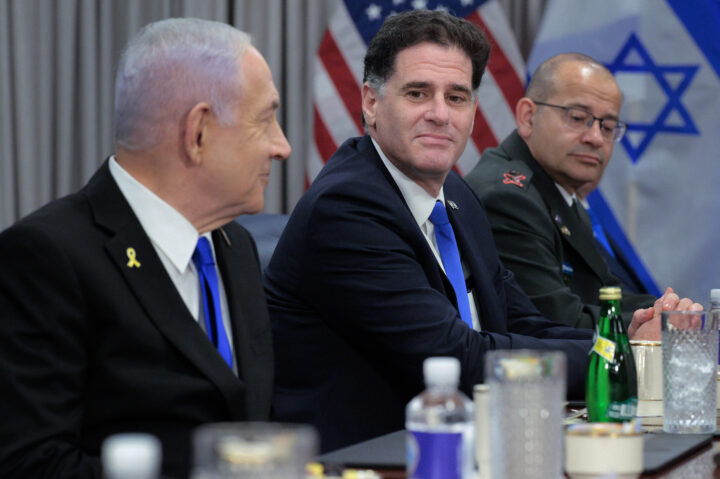
Chip Somodevilla/Getty Images
Israeli Prime Minister Benjamin Netanyahu (L) is joined by Israeli Minister of Strategic Affairs Ron Dermer and other officials for a meeting with U.S. Secretary of Defense Pete Hegseth at the Pentagon on July 09, 2025 in Arlington, Virginia.
Former Israeli Strategic Affairs Minister Ron Dermer is launching the Dermer Consulting Group (DCG), a Jerusalem-based strategic advisory firm focusing on the U.S., Israel and the Middle East, Jewish Insider has learned.
Dermer, who has long been a part of Israeli Prime Minister Benjamin Netanyahu’s inner circle, officially departed the Israeli government in November, after twice extending his tenure. He returned earlier this year for what one official in the Prime Minister’s Office described as “reserve duty” amid the renewed fighting between Israel and Iran that began in late February.
Dermer previously served as Israel’s ambassador to the U.S., leaving the posting in 2021 after eight years. He was named strategic affairs minister the following year.
Yarden Golan, who previously served as Dermer’s chief of staff, is a cofounder of the firm and will serve as managing director. Golan, who is based in New York, has his own consulting firm, Golan Consulting, and joined deep-tech investment firm Deep33 Ventures as a venture partner earlier this year.
Steinberg, who led the group for 25 years, is set to step down in January
Yehoshua Halevi
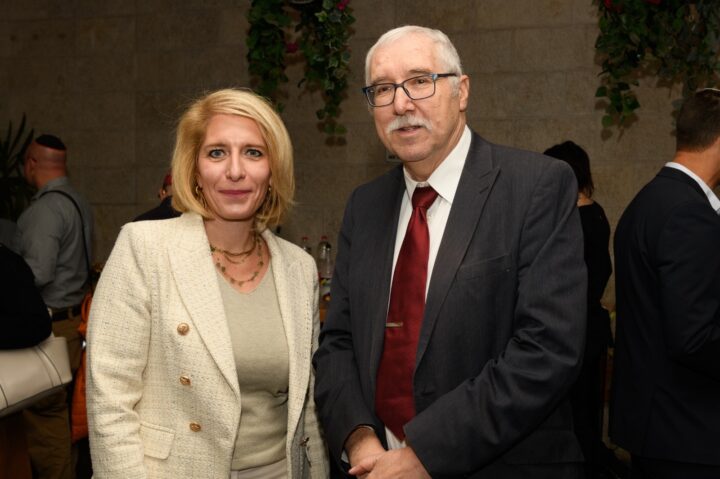
NGO Monitor President Gerald Steinberg and NGO Monitor Vice President Olga Deutsch
NGO Monitor President Gerald Steinberg is set to step down in January, 25 years after founding the Jerusalem-based watchdog group focused on scrutinizing nonprofit organizations critical of Israel and their funding sources, Jewish Insider has learned.
Olga Deutsch, 47, currently NGO Monitor’s vice president, will succeed Steinberg following a months-long transition process at the organization, which since its inception has been closely associated with its founder.
Steinberg, 74, who resigned from his position as a professor of political science at Bar-Ilan University seven years ago, told JI, “There is a point in one’s life where one has to decide the different priorities. And I’ve done this long enough, and other people can have more energy and can take over.”
Deutsch joined NGO Monitor more than a decade ago, heading the Europe department before becoming VP seven years ago. Deutsch told JI that she hopes to “open the next exciting chapter,” while preserving the “character of the organization that Gerald created, which is serving as pioneers and continuing to flag the new fronts through which the Jewish state and the Jewish people are being attacked or put in danger.”
“No one can step into [Steinberg’s] shoes — I would not dare try that,” Deutsch told JI, describing Steinberg as a trailblazer who “identified 25 years ago what will be — and are — the tactics and the method in which the Jewish state and the Jewish people are being attacked, and that is weaponization and abuse of the language of human rights.”
Steinberg had previously been set on a purely academic career path. But the World Conference against Racism in Durban, South Africa, in 2001, which he said was “hijacked months or even years before as a platform for revitalizing the ‘Zionism as racism’ theme,” changed his trajectory, particularly as he observed the role of NGOs in that drive.
Reflecting on the achievements of the organization he subsequently built, Steinberg said, “I can certainly look back and say that both in the academic realm and in the political realm, NGOs are now recognized as important political actors.”
Steinberg argued that there is greater understanding that NGOs can have malign impacts and can contribute to conflict and antisemitism, despite presenting themselves as human rights organizations.
When he started working on the subject, Steinberg recounted, “People said to me, ‘Why are you bothering with this? They are so unimportant in international politics.’ That’s no longer the case.”
Steinberg said that a challenge for the team going forward “is this tremendous increase in antisemitism as it’s reflected in and fueled by NGOs in a broad sense and how do you prioritize … in the activities of NGO Monitor? I think that that’s a very difficult challenge, because there’s a temptation to be everywhere.”
The group has long drawn criticism from human rights organizations and left-leaning activists who accuse it of seeking to delegitimize NGOs critical of Israeli policy and disproportionately targeting left-wing, pro-Palestinian groups, while aligning itself with Israeli government positions and broader pro-Israel advocacy efforts.
Deutsch rejected those accusations, telling JI, “We have a very, very clear definition of what it is that we research: We focus on NGOs that define themselves as human rights and humanitarian NGOs.”
Deutsch was born in Serbia and lived in Germany and Belgium before moving to Israel. She brought to NGO Monitor expertise in Europe and the European Union, which she highlights as “the single largest aid donor in the world.”
“We try to follow the money, because we understand that understanding the financial streams and who’s behind these organizations can be — and oftentimes is — quite telling,” Deutsch said. She argued that many of the organizations scrutinized by NGO Monitor receive European government funding and that some Palestinian NGOs highlighted in the group’s reports have ties to the Popular Front for the Liberation of Palestine, which is designated as a terrorist organization by the U.S. and the EU.
Last month, the Defense for Children International – Palestine (DCIP) closed its doors, citing “Israel’s targeted criminalization of Palestinian human rights organizations.”
Steinberg said NGO Monitor’s research into alleged ties between DCIP officials and the PFLP led to increased scrutiny of the group and subsequent funding cuts. “We are blamed for that,” he said.
NGO Monitor research has regularly been presented in parliaments in Europe and offers specific policy recommendations in the region, as well as North America and Australia. Deutsch said the group seeks to “inspire that policy conversation with elected officials in how do you prevent aid going directly and indirectly to Hamas again” — a pertinent consideration in the rebuilding of postwar Gaza.
Most recently, the European Parliament in April passed a budgetary resolution citing an NGO Monitor report on internal suspected Hamas documents that “allegedly indicate attempts of Hamas’ infiltration and monitoring through so-called ‘guarantors’ of international NGOs including within Union-funded humanitarian projects in the Gaza Strip.”
The resolution “urges the Commission to investigate all allegations of any type of undue infiltration and influence within Union-funded humanitarian projects and to suspend or recover Union funding where breaches are confirmed.”
“Before Oct. 7, [2023,] it was not always easy to explain why the activities of these non-governmental organizations are dangerous,” Deutsch said. “But after Oct. 7, I think the magnitude and the volume and how publicly it was displayed, of the hatred done in the name of human rights, has made everyone understand why the work that NGO Monitor does is crucial.”
After Steinberg passes the mantle to Deutsch, he will remain involved with the organization’s 20-person team as president emeritus and continue leading its academic activities and research initiatives.
The organizations cited the ‘unprecedented and escalating threat environment’ facing religious communities
Emily Elconin/Getty Images
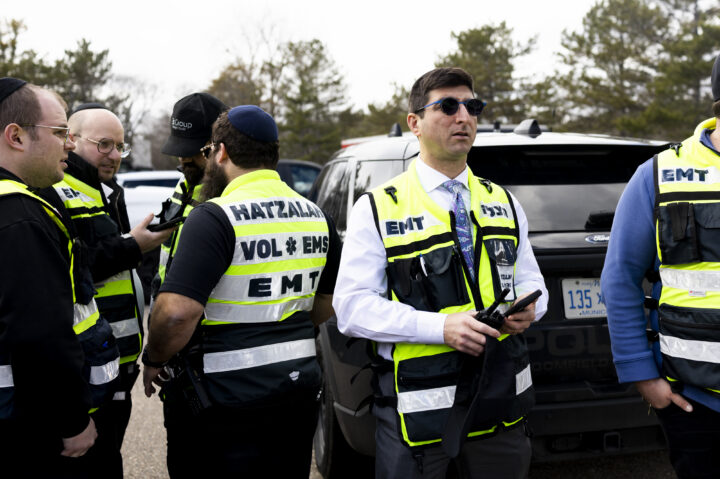
Members of Hatzalah of Michigan, a Jewish volunteer emergency medical service survey the area near Temple Israel following reports of an active shooter on March 12, 2026 in West Bloomfield, Michigan.
Citing an “unprecedented and escalating threat environment facing religious communities and institutions” across the country, a coalition of Jewish groups, joined by organizations representing a range of other faiths, is urging Senate and House leaders to significantly expand funding for the Nonprofit Security Grant Program.
“We write as a broad coalition of faith-based and cultural organizations to express our deep concern about the unprecedented and escalating threat environment facing religious communities and institutions across the United States. This threat is not abstract; it is very real and felt by the communities we represent on a daily basis,” the groups wrote in a letter, led by the American Jewish Committee, to the top leaders of each chamber.
They said that faith-based institutions “should be able to solely focus on serving and strengthening their communities, but in this heightened threat environment, they instead must also worry about the next attack and whether they have the resources to stay safe,” and that members of targeted religious communities are forced to “weigh the risk of violence against the act of worship.”
The letter urges Congress to provide “up to $1 billion” for the NSGP — a significant expansion of funding from its 2025 funding level of $274.5 million, and the proposed 2026 funding level of $300 million.
“Previous funding has not kept pace with demand,” the groups wrote. “More must be done to bolster this program; therefore, we encourage you to engage with communities in your district and to encourage the same of your respective caucuses. We have no doubt you’ll hear about the fear and threats our communities are facing at this moment, and therefore, we urge you to allocate appropriate resources to address this threat.”
The religious organizations also urged swift passage of the long-gestating Pray Safe Act, which would create a centralized federal clearinghouse to provide security guidance to religious institutions, including training resources and information about available grant opportunities.
Additional Jewish organizational signatories included the Anti-Defamation League, the Conference of Presidents of Major American Jewish Organizations, Hillel International, the JCC Association of North America, the Jewish Federations of North America, the Rabbinical Assembly, the Union for Reform Judaism, the Orthodox Union and the United Synagogue of Conservative Judaism.
They were joined by groups representing the Muslim, Lutheran, Greek Orthodox, Hindu, Evangelical, Seventh-day Adventist, Sikh and Catholic communities.
An anti-Israel tech founder and far-right online subcultures are unexpectedly embracing Rabbi Shalom Landau’s Torah videos

Rabbi Shalom Landau
Facebook/Rabbi Shalom Landau
Rabbi Shalom Landau, a Satmar Hasidic leader who posts online videos offering practical, Torah-based advice, has found unlikely supporters in a prominent Jordanian-American tech founder who is outspokenly critical of Israel and within white nationalist online subcultures.
“Rabbi putting out the best self-help content on the internet rn,” tweeted Amjad Masad, the Dubai-based founder and CEO of Replit, an AI-powered platform for building, coding and deploying web applications. Masad shared one of Landau’s latest videos on Tuesday, which offers advice for dealing with abuse by quoting the Book of Jeremiah: “Cursed is a man who puts his trust in people.”
Masad has frequently smeared Israel in online posts. On Jerusalem Day last year, he accused Israelis celebrating as “go[ing] around Jerusalem hunting Palestinians to torture and abuse. Think Spanish ‘running the bull’ with all its cruelty but directed at humans. This event is supported by their government and police (and of course US taxpayer).” After Israel carried out strikes on Iran’s nuclear facilities in June, Masad called the Jewish state “the single most destabilizing force in the world.”
Landau’s approach of providing Jewish wisdom without mentioning Israel has elicited praise from male-dominated, right-wing Internet subcultures as well, where white nationalist ideology and antisemitism are typically rampant. Comments from anonymous accounts on his posts state, “say what you want about them [Jews], but they have a good track record with marriages lasting” and “Why are Christian pastors unwilling to speak this way?”
Some comments are supportive but still carry antisemitic undertones, “When a guy called rabbi shalom gives you money advice, you just listen.” Others have scrutinized Landau’s videos for sexist ideology, such as one about marriage that states, “No woman wants to speak to a husband who gets as weak as she is when she speaks to him… sure she wants empathy but the one that comes from you[r] logic not you[r] feelings.”
Landau, whose videos on marriage, responsibility and financial stability are widely circulated on X and TikTok (where he has 34 thousand followers), was condemned by some Jewish communities when — just weeks before the New York City mayoral election — he hosted then-candidate Zohran Mamdani in his Williamsburg sukkah.
The meeting was part of the mayor-elect’s bid to win over Orthodox Jewish support amid his frequent criticism of Israel. At the time, Landau defended his ties to Mamdani by saying, “We think our voices decide who wins. That’s wrong. God does. We have a mission in exile to live among the nations. Our strength in exile isn’t protest. It’s the Torah.”
The Satmar sect of Judaism, to which Landau belongs, is typically anti-Zionist, believing only the Messiah is supposed to bring about a Jewish state.
Still, Landau’s Torah videos have also inspired a prominent pro-Israel and modern Orthodox rabbi, Mark Wildes, the founder and director of Manhattan Jewish Experience.
Wildes wrote in a Dec. 2 post, “Every so often, something unexpected happens online that reveals a larger truth about who we are meant to be. Recently, a rabbi named Shalom Landau has become an unlikely voice within corners of the internet that are anything but friendly to Jews.”
“His Torah videos have received widespread praise among young men from the ‘groyper’ and ‘manosphere’ movements — subcultures laced with grievance and overt antisemitism. People who have spent years resenting Jews are suddenly listening to a Jew, a rabbi no less, teach Torah because they sense wisdom there,” continued Wildes.
“They are responding not to the endless Hasbara that Israel is ‘just like every Western democracy,’ but to Torah messages about building a life of meaning and responsibility. If we want to be a ‘light unto the nations,’ we must first reclaim our own light and resist becoming defined by whatever the algorithm rewards. We must speak from our Torah tradition, not from insecurity. When we share a message grounded in confidence rather than defensiveness, even the most unlikely audiences notice.”
“With Chanukah on the horizon, maybe that’s the beginning of understanding what it truly means to be a nation that carries light.”
Please log in if you already have a subscription, or subscribe to access the latest updates.
 Continue with Google

 Continue with Apple