














































































CENTCOM head Brad Cooper said he has carried with him a replica of the dog tags of slain hostage Itay Chen
Kevin Koski
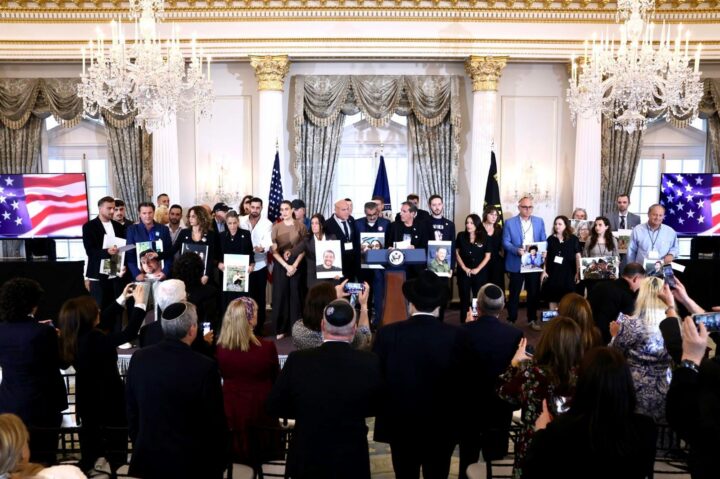
State Department memorial event for American victims of Oct. 7.


 Add JewishInsider on Google
Secretary of State Marco Rubio, Secretary of Commerce Howard Lutnick and his wife, Allison, CENTCOM Commander Adm. Brad Cooper, State Department antisemitism envoy Rabbi Yehuda Kaploun and other administration officials joined the families of former hostages and victims of the Oct. 7, 2023, Hamas attacks on Israel for a commemoration event on Wednesday at the State Department.
The commemoration took place a week after the third anniversary of the attacks.
Rubio and Lutnick played a central role in organizing the event to honor the 46 Americans killed in the Oct. 7 attacks, following advocacy by Ruby Chen — father of Itay Chen, an American who served in the IDF and was killed on Oct. 7 — and other bereaved families, several of whom delivered remarks.
Others in attendance included Director of National Intelligence Jay Clayton, Sen. Bill Hagerty (R-TN) and Sebastian Gorka, the senior director of counterterrorism at the National Security Council.
Rubio spoke about the U.S.’ commitment to foreign engagement and the need to fight for Western civilization, according to Doug Maguire, policy director at Brownstein Hyatt Farber Schreck, which helped support the event, which was closed to the press. Rubio was joined by Lutnick, who spoke about his feeling of personal connection to the Oct. 7 attacks, having lost his brother, friends and co-workers in the 9/11 attacks, which destroyed his firm’s New York office.
Lutnick was heavily involved in advocacy for the hostages and has spoken previously about how his experience during 9/11 has brought him closer to the hostage families.
Cooper spoke about CENTCOM’s efforts as well as offered praise for the U.S. citizens who have enlisted in the Israeli Defense Forces and lost their lives protecting Israeli civilians on Oct. 7 and in the subsequent war in Gaza, describing that level of commitment as an uncommon bond that the U.S. cannot take for granted.
Cooper, who said he has attended dozens of memorial services in connection to the Oct. 7 attacks, also displayed a replica of the dog tags worn by Itay Chen — an IDF tank commander and U.S. citizen killed on Oct. 7 whose body was held by Hamas for more than two years — which Ruby Chen gave to Cooper at Itay’s funeral.
Cooper said he has carried them daily and kept them close to his heart.
Lutnick credited Chen and Allison Lutnick as the driving force behind bringing the memorial ceremony together. Maguire also credited Kaploun as playing a critical role in steering and advocating for it.
Chen recounted his son’s upbringing and life story, and his decision to enlist in the IDF instead of going off to college. He said he still struggles to speak about Hamas’ decision to hold his son’s body for more than two years as a “bargaining chip,” denying him the “most basic human dignity” of being laid to rest by his family.
“We could not even begin to grieve. Every night we went to sleep waiting for a call from the White House telling us Itay was coming home. It was the call we prayed for every night, and disappointed when that call did not happen,” Chen said. “I tell you this not because our story is unique, but because it is not. On Oct. 7, 12 American citizens were taken hostage into Gaza. Close to 50 were killed by Hamas. In this room are family members like ours who have lived their own version of those days.”
He said that the memorial event sends an important message to the families.
“This recognition, here in Washington, in the shadow of Oct. 7, tells our families something we needed to hear: Your loved ones were Americans. The United States remembers them,” Chen said.
But he added that the ceremony must be the start, not the end.
He called on Congress to launch its own investigation into the attacks to find the facts for the Americans killed and their families, with the Israeli government refusing to appoint its own commission.
He urged the federal government to make the memorial event an annual one, and to create a formal memorial in Washington displaying the names of the American citizens killed.
And he said that the U.S. must seek justice and consequences for those responsible for the attacks, including the financiers living abroad, who he said should be brought to trial in the United States.
“Itay chose to stand guard. Now it is our turn to stand guard: over their memory, over the truth, and over the promise we make in this room today,” Chen said.
Before leaving for its October recess, the Senate passed a resolution led by Sens. Rick Scott (R-FL) and Jacky Rosen (D-NV) honoring the 46 Americans killed and held hostage by Hamas, and urging continued engagement with the families and legal accountability for those responsible for the attacks.
Abbey Onn, the cousin of Carmela Dan — an 80-year-old grandmother taken hostage and killed alongside her 13-year-old granddaughter — said in a statement, “October 7 was not only a tragedy for Israel. Nearly 50 American citizens were murdered, and dozens more were injured. These were our loved ones—people with families who loved them and futures that were stolen from them. We are here to make sure their stories are heard, their memories are honored, and those responsible for their murders are brought to justice.”
Lutnick, Kaploun and the families of the victims are also set to attend a dinner on Wednesday evening hosted by the Jewish Federations of North America.
In a statement, the families also offered thanks to the government, the Lutnick family, the American Jewish Committee, Brownstein Hyatt Barber Schreck, Jeff Miller and his firm Miller Strategies for helping to bring the event together.
Kaploun said countries including the Dominican Republican, Colombia, Guatemala, Paraguay, Costa Rica and Chile are all considering adopting the definition
Emily Jacobs
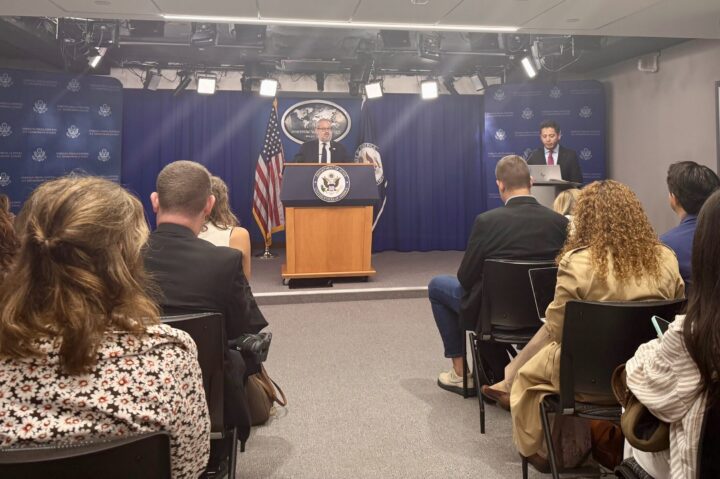
Amb. Yehuda Kaploun speaks to the press at the State Departmnet on Oct. 5, 2026.
Ambassador Yehuda Kaploun, the State Department’s antisemitism envoy, revealed on Monday that the U.S. expects several Latin American countries to adopt the International Holocaust Remembrance Alliance’s working definition of antisemitism in the coming months.
Kaploun made the comments at a press conference about the Trump administration’s efforts to combat antisemitism ahead of the third anniversary of Hamas’ Oct. 7, 2023, attacks on Israel, after being asked to analyze how regional leaders have responded to the rise in anti-Jewish hate.
“There’s a conference in November where we expect to have more Latin American countries to join the IHRA Accords,” Kaploun said. “The Dominican Republic just announced that they’re joining the IHRA Accords. Colombia is revisiting that. Guatemala, Paraguay, Costa Rica, Chile are all in discussions. This is a chance to have a transformative region where people are united against hate.”
“As we say in our office, and we say this often, a country is judged by how it makes citizens feel welcome, how it protects its citizens,” he added. “That’s the first and foremost duty of every single country: Protect your own citizens. That includes the Jewish community, and some countries are failing miserably in that.”
Critics of the IHRA definition say it stifles political speech by designating it as antisemitism.
Kaploun pointed to Argentina’s embrace of Israel under President Javier Milei, noting that the Argentine leader spearheaded the Isaac Accords initiative with Israeli Prime Minister Benjamin Netanyahu earlier this year aimed at boosting ties between Israel and Latin American countries. He also mentioned the pro-Israel shift taking place in Colombia after President Abelardo de la Espriella, a conservative, was sworn in last month.
“You see how a country can transform itself to positive actions. You see how a country, with the right leadership, is able to stand up and confront hatred,” Kaploun said. “Latin America is transforming right before our eyes.”
“You see a country like Argentina, that 32 years ago had bombings that were done by Iranian terrorists to the Israeli Embassy and a Jewish community center, and now you see Jews have no fear in the street and people are walking with respect and dignity,” he continued, referring to the AMIA bombing, the deadliest terror attack in Argentine history.
“Colombia, just two months ago, changed their leadership. At the same time, they’ve restored relations with Israel. They’ve restored much better relations within the Jewish community there in Colombia. They’ve made it very, very clear that Colombian Jewish community members are welcome, which wasn’t always the case in the previous administration.”
Nineteen Jewish House Democrats urged Secretary of State Marco Rubio not to allow a push to merge the two offices proceed and to keep Holocaust issues distinct

AP Photo/Luis M. Alvarez
State Department in Washington
Nineteen Jewish House Democrats, writing under the auspices of the Congressional Jewish Caucus, sent a letter to Secretary of State Marco Rubio on Wednesday opposing a reported plan to merge the offices of the State Department’s special envoy for Holocaust issues (SEHI) and special envoy to monitor and combat antisemitism (SEAS).
Longtime Holocaust envoy Ellen Germain recently retired from her post, and antisemitism envoy Ambassador Yehuda Kaploun has been pushing to merge the two posts, a prospect that has received mixed reactions from Jewish communal organizations.
In their letter, the Jewish Democrats urged Rubio to “immediately appoint” a new Holocaust envoy and maintain the office “as a distinct, permanent office led by a dedicated career State Department official” and expressed concern about reports that the offices might be merged.
Reps. Brad Sherman (D-CA) and Seth Magaziner (D-RI) were the only two members of the caucus not to join the letter.
The lawmakers noted bipartisan support for SEHI and argued that its work on restitution issues is increasingly urgent as the number of living Holocaust survivors shrinks, and that survivors and their families need a “dedicated advocate within our government.”
“SEHI and SEAS have clearly distinct mandates and responsibilities,” they said, adding that the Holocaust envoy’s work has historically been aided by their status as an experienced career official, rather than a presidential appointee.
“Both are full-time responsibilities that require full-time principals with unique areas of focus and full-time staff with unique expertise,” the lawmakers continued. “Combining them would not streamline efficiency or eliminate any meaningful duplication; it would risk diminishing the focus, experience, and institutional capacity necessary for each.”
The letter suggests that the potential merger is being driven, at least in part, by “a desire to expand the influence of certain personnel within the State Department,” seemingly a reference to Kaploun.
The lawmakers warned that any delay in appointing a new envoy “risks losing opportunities for restitution, accountability, and historical preservation that may never return.”
Though under discussion for months, the merger efforts have not yet been formalized inside the department.
Jewish groups have come down on both sides of the issue. The American Jewish Committee, American Joint Distribution Committee, Agudath Israel of America, Anti-Defamation League, B’nai B’rith International, Conference on Jewish Material Claims Against Germany, the National Coalition Supporting Eurasian Jewry, the World Jewish Restitution Organization and the USC Shoah Foundation called for Rubio to appoint a new full-time Holocaust envoy.
But others including the Combat Antisemitism Movement, American Association of Jewish Lawyers and Jurists, Chabad-Lubavitch World Headquarters, Coalition for Jewish Values, Institute for the Study of Global Antisemitism and Policy, Orthodox Union, World Jewish Congress, Zionist Organization of America, Simon Wiesenthal Center, former U.S. Ambassador to Israel David Friedman, former antisemitism envoy Elan Carr, former deputy antisemitism envoy Ellie Cohanim and former deputy antisemitism envoy Karen Paikin Barall wrote to Rubio urging him to merge the two positions.
Proponents of a merger said that Holocaust denial and revisionism is inextricably linked to rising antisemitism today, that the current division hampers U.S. efforts and that the shrinking number of Holocaust survivors makes Holocaust memory and antisemitism a more core part of the Holocaust envoy’s work, overlapping with the antisemitism envoy’s duties. They said that consolidating the responsibilities under an ambassador-rank official would elevate Holocaust issues.
Kaploun has claimed behind closed doors that, given his unique connections to the White House and world leaders, he would be able to resolve all remaining Holocaust restitution issues before the end of President Donald Trump’s time in office — a difficult task that requires reaching agreements with international partners that have resisted providing restitution for decades.
The comments, made last month at the annual board meeting of the Claims Conference, have left experts in the field dubious, given complex diplomatic hurdles
Marc Rod
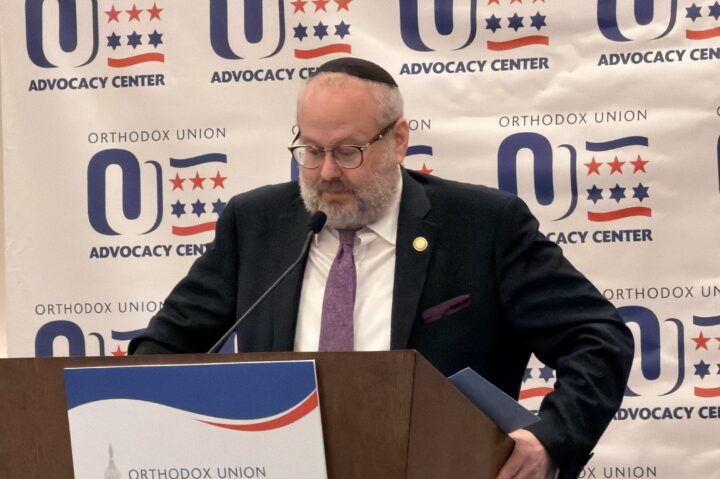
Ambassador Yehuda Kaploun, the Trump administration’s special envoy to monitor and combat antisemitism, speaks at an Orthodox Union conference, June 22, 2026
Ambassador Yehuda Kaploun, the State Department’s antisemitism envoy, said last month that he would be able to resolve all remaining Holocaust restitution issues within the next two and a half years, before the end of the Trump administration, two sources with knowledge of the remarks told Jewish Insider.
The assertion — made during the July annual meeting of the board of the Conference on Jewish Material Claims Against Germany, better known as the Claims Conference, in New York last month — has left experts in the field skeptical. The U.S. has been pursuing Holocaust restitution issues for decades.
The comments also come amid deliberations inside the State Department over the potential merger of the office of the State Department’s special envoy for Holocaust issues, who has historically been the U.S. lead on Holocaust restitution matters into Kaploun’s office. Those efforts at consolidation have divided Jewish community organizations.
Kaploun, in a speech, told attendees at the Claims Conference meeting that because of his contacts and connections, he personally, in cooperation with others in the Trump administration, would be able to resolve the long-standing diplomatic struggles that have hampered restitution efforts.
A State Department spokesperson emphasized the administration’s commitment to Holocaust-related issues.
“The Administration is committed to holding governments accountable for failures to return or provide restitution or compensation for Nazi-stolen assets,” the spokesperson said. “The Administration continues to advance this commitment, including through efforts to combat antisemitism and address Holocaust-era issues.”
The spokesperson noted that Kaploun, since taking office, had secured Armenia and several Latin American governments’ willingness to join the International Holocaust Remembrance Alliance, attended memorials at the Jasenovac concentration camp and Donja Gradina memorial and spoke at the March of the Living.
“Secretary Rubio has been clear: 81 years is too long to achieve a measure of justice for the victims and their families,” the spokesperson continued. “Around the world, Ambassador Kaploun continues to reiterate [the] unprecedented commitment of the Trump Administration to these issues.”
But in the room, the comments were met with skepticism.
“The tone … was basically, ‘I’m coming in, and I know what needs to be done, and I’m going to do it my way despite whatever anybody else feels or does because I have the backing of the administration,’” one source, granted anonymity to speak candidly about the meeting, explained.
The individual said that the comment “surprised” many people present.
“These are thorny issues that people have been working on for decades. We all wish that progress would be very fast, but there are complicated political, legal, economic and moral issues that sometimes require a lot of negotiation, a lot of research,” the source said, “not necessarily things that could be done in a matter of months.”
A second individual, also granted anonymity, said that the comments were met by the Claims Conference meeting attendees with “a large amount of eye-rolling,” skepticism and general dismissal.
In a statement to JI, Mark Weitzman, chief operating officer of the World Jewish Restitution Organization, the leading organization in the Jewish world overseeing restitution issues, thanked the administration for its focus on Holocaust restitution issues.
“We very much welcome the continued commitment from the US Administration to treat Holocaust restitution as a top and urgent priority. As survivors pass away, time is not on our side,” Weitzman said.
Claims Conference President Gideon Taylor offered similar sentiments.
“The renewed commitment from the Administration to put its full weight behind outstanding restitution issues is critically important,” said Claims Conference President Gideon Taylor.
Michael Bazyler, a law professor focused on Holocaust and human rights at Chapman University who has worked for years on Holocaust restitution issues, explained to JI that Poland has been the biggest remaining obstacle to such efforts, as it is the only EU country that hasn’t passed a law setting out procedures for restitution, despite facing pressure to do so.
Survivors have sought restitution through the Polish court system but have been consistently rejected, Bazyler said, even when providing comprehensive documentation.
During President Donald Trump’s first term, Secretary of State Mike Pompeo raised the issue while in Poland and Congress passed the Justice for Uncompensated Survivors Today Act, leading to a State Department report that spotlighted issues with Poland.
Secretary of State Marco Rubio, who at the time was serving in the Senate, was one of the lead sponsors of the JUST Act and a prominent advocate on the subject of Holocaust restitution while he was on the Hill. He also led a letter while in the Senate calling on Poland to pass legislation to create a restitution mechanism.
The State Department spokesperson highlighted Rubio’s work and focus on the issue, noting that he has said in the past, “We must fight for justice and restitution and ensure that the truth of the Holocaust is taught to every generation.”
The U.S. has sought for years, under successive administrations, to exert diplomatic pressure on Poland to create a restitution process, but Poland has had “absolutely no interest” in doing so and sees no “reason … to do this right now,” Bazyler said.
“Let me just say this: When Ambassador Kaploun says, ‘I can solve this,’ I have no idea what he’s talking about,” Bazyler said.
“This is incredibly delicate, incredibly sensitive,” Menachem Rosensaft, a Cornell University adjunct law professor involved for years in post-Holocaust issues, told JI. “You can’t go with a sledgehammer on countries like Poland, like Lithuania, that have been reluctant or unwilling to provide restitution for all kinds of reasons, and the effort is one of diplomatic subtlety, diplomatic finesse.”
Rosensaft said that the notion that such issues could be resolved in a year or two is “illusory.”
“I concede to his good intentions. I don’t question his sincerity,” Rosensaft said. “But I … don’t think anybody can deliver in that framework.”
The exact amount of restitution Poland owes is undefined, but could total in the billions of dollars, Bazyler said, given that, in Warsaw alone, major urban development is taking place in an area once owned primarily by Jews. He said there’s also no central database or registry of outstanding restitution claims, either for Poland or globally.
Plus, an interview with Yehuda Kaploun

Salah Malkawi/Getty Images
Syrian President Ahmad al-Sharaa arrives at Marka airport on Feb. 26, 2025 in Amman, Jordan.
👋 Good Thursday morning!
In today’s Daily Kickoff, we interview Rabbi Yehuda Kaploun, the Trump administration’s nominee to be antisemitism envoy, about how he hopes to shape the role once confirmed, and look at Israeli concerns over the U.S. push for a Syria-Israel security agreement. We talk to Merrill Eisenhower about carrying on his great-grandfather’s legacy, and spotlight new bipartisan legislation seeking to address Chinese circumvention of Iran sanctions. Also in today’s Daily Kickoff: Rep. James Walkinshaw, Sen. David McCormick and Daniel Freedman.
Today’s Daily Kickoff was curated by Jewish Insider Executive Editor Melissa Weiss and Israel editor Tamara Zieve with assists from Danielle Cohen-Kanik and Marc Rod. Have a tip? Email us here.
What We’re Watching
- Secretary of Homeland Security Kristi Noem is testifying before the House Homeland Security Committee this morning during a hearing on “Worldwide Threats to the Homeland.”
- The House Foreign Affairs Committee’s subcommittee on Africa is holding a hearing this afternoon on the humanitarian crisis in Sudan.
- Elsewhere in Washington, historians Pamela Nadell and James Loeffler will speak about modern-day antisemitism at an event at the Capital Jewish Museum.
What You Should Know
A QUICK WORD WITH JI’S Lahav harkov
Tensions escalated between Washington and Jerusalem this week over Israel’s handling of Syria and negotiations for a possible agreement to renew the 1974 ceasefire between the two neighboring countries, with adjustments.
Speaking at The Jerusalem Post conference in Washington on Wednesday, U.S. Ambassador to Turkey Tom Barrack, who also serves as the Trump administration’s Syria envoy, said the time is ripe for Israel and Syria to reach an agreement: “It’s the easiest place to show the world a soft hand and bridge grievances.”
In Barrack’s telling, an agreement between Syria and Israel will only be possible with an immediate, complete Israeli withdrawal from the buffer zone between the countries. The IDF has held the 155-square-mile area since the fall of Syrian President Bashar Assad a year ago, and Israel has sought to withdraw incrementally and remain at the peak of Mount Hermon.
Instead, Barrack said, “Let’s not fight over geography. What we’re concerned about is we’re not going to let Oct. 7 happen ever again,” so the focus should be on demilitarizing the area south of Damascus. “Syria knows its future depends on a security and border agreement with Israel. Their incentive is non-aggressive toward Israel,” Barrack said. However, he added, “After Oct. 7, Israel doesn’t trust anybody. … The Syrians have been unbelievably cooperative.”
Israeli Foreign Minister Gideon Sa’ar, however, was skeptical in his remarks at the same event: “The gaps between us and Syria have widened. They have new demands. Of course, we want an agreement, but we are further from one now than we were a few weeks ago.”
“In [Israel’s] perspective, the problem is mistrust as well as hard security indicators,” Ahmad Sharawi, a research analyst at the Foundation for Defense of Democracies, told Jewish Insider’s Matthew Shea. “Southern Syria is awash with weapons, weapon trafficking routes and Iran-backed networks. At the same time, Israel is being asked to make concessions to a government led by a former Al-Qaida emir whose coalition still includes figures that praised the Oct.7 attacks and openly endorse armed resistance against Israel.” Read more here.
Since Syrian President Ahmad al-Sharaa toppled and replaced Assad, Israel has been extremely skeptical about the former leader of Syria’s branch of Al-Qaida, whom Sa’ar and others have branded a “terrorist in a suit.” The concerns have not dissipated over the course of the last year, even as President Donald Trump embraced al-Sharaa as a “young, attractive guy” with a “tough past” and dropped sanctions, Europe moved towards lifting sanctions, as well, and Abraham Accords countries have accepted him.
“The train has left the station; the whole world accepts al-Sharaa as the legitimate leader of Syria and is ignoring his jihadi background as well as that of the people heading his military – but we can’t ignore it,” Sarit Zehavi, founder and president of the Alma Research and Education Center, which focuses on Israel’s north, told JI.
Shira Efron, distinguished Israel policy chair and senior fellow at RAND, told JI that “the hilltops Israel is holding now in Syria, especially the Hermon, are really strategic, security-wise, and it doesn’t make sense to withdraw when you have a neighbor who is still unstable.”
THE FACTS FIGHT
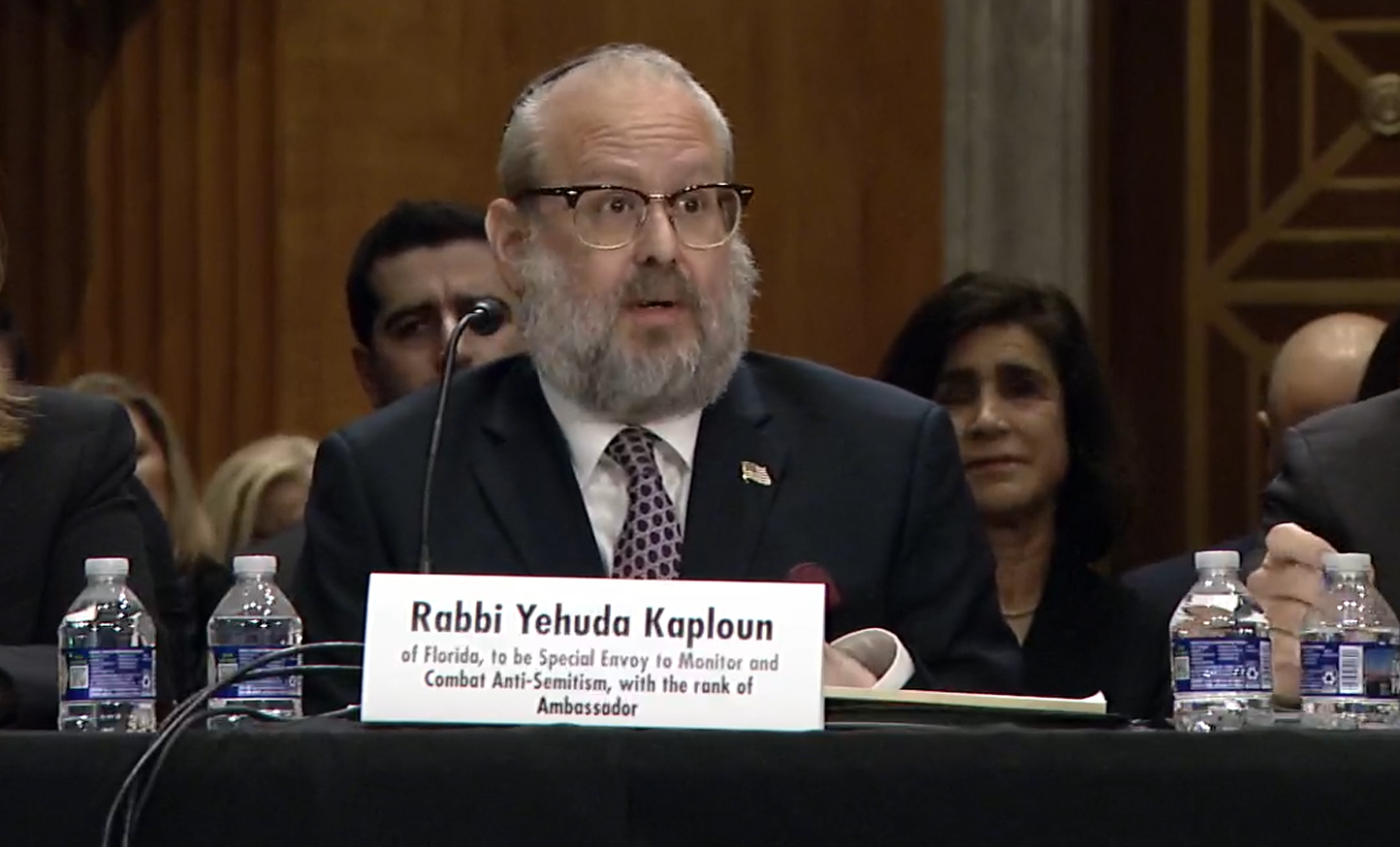
Rabbi Yehuda Kaploun, President Donald Trump’s nominee to serve as U.S. antisemitism special envoy, warned in an interview with Jewish Insider’s Gabby Deutch that inaccurate, inflammatory content is being allowed to spread on social media, and pledged to work with social networks to curb the spread of antisemitic falsehoods online. Kaploun spoke to JI on Wednesday, with his Senate confirmation vote for the State Department role expected this month before the holiday recess.
What he said: “The ideal outcome is, I want to continue America’s tradition of free speech and allowing free speech anywhere and everywhere, freedom of expression,” Kaploun said. “But I would like the platforms — because of the advent of AI and those technologies, you have the ability to recognize when something is not factually correct and it should be labeled as such. I think that’s something that we’d like to target.” His comments about working with social media platforms to label misinformation contradict the approach of the Trump administration, which has urged the major platforms not to “censor” information.
TERRITORY TALK
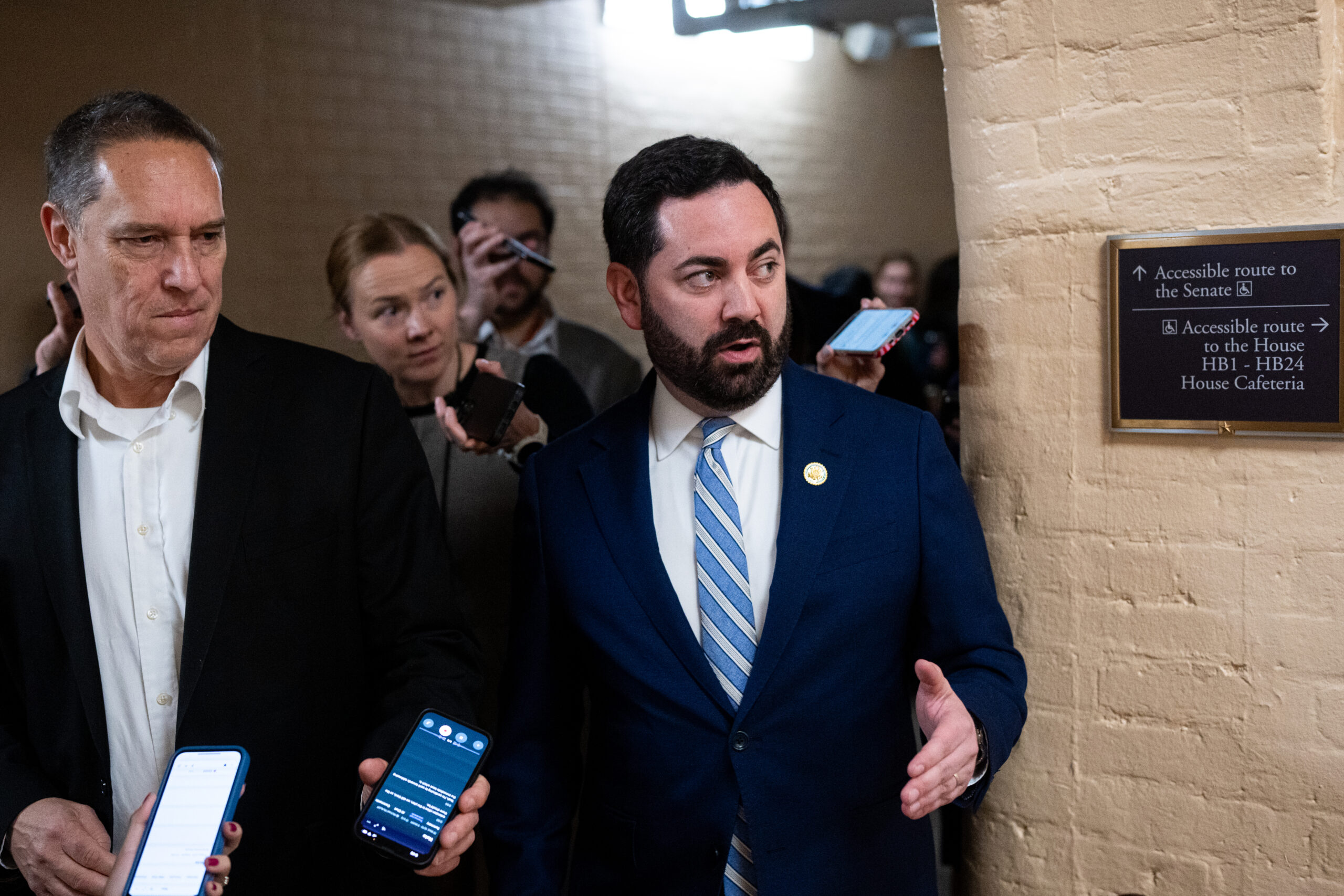
Members of the House Foreign Affairs Committee and expert witnesses on Wednesday debated the meaning and significance of President Donald Trump’s edict in September that he “will not allow Israel to annex the West Bank,” which came amid a reported effort earlier this year by the Israeli government to assert sovereignty over all or part of the territory, Jewish Insider’s Marc Rod reports.
Lay of the land: The at-times contentious hearing focused on “Understanding Judea and Samaria: historical, strategic and political dynamics in U.S.-Israel Relations,” referring to the biblical term for the West Bank preferred by members of the Israeli government and also used by Republicans on the Foreign Affairs Committee. Rep. Mike Lawler (R-NY), the chairman of the Foreign Affairs subcommittee on the Middle East, which hosted the hearing, asserted that Trump was only expressing his opposition to the annexation of territory not currently controlled by Israel. “When the president is talking about annexing, again, I think it’s important to actually look at the map,” Lawler said. “Sixty percent of the West Bank is under Israeli control.”
ON THE HILL

A new bipartisan and bicameral bill is pushing for greater accountability and transparency on China’s violations of the U.S.’ oil sanctions on Iran, Jewish Insider’s Marc Rod reports. Recent reports by the Foundation for Defense of Democracies have found that Iran oil exports, primarily to China, have remained near their peak level in spite of U.S. sanctions, which FDD has attributed to a “failure of U.S. sanctions enforcement.”
What it does: The new bill, led by Sens. Richard Blumenthal (D-CT) and Lindsey Graham (R-SC) and Reps. Raja Krishnamoorthi (D-IL) and Ben Cline (R-VA), requires the administration, within a year of the bill’s passage, to determine whether the People’s Republic of China is conducting sanctionable activities with regard to Iran. In advance of that determination, the bill requires the administration to report to Congress within 180 days on China’s purchases of Iranian oil as well as on Chinese efforts to sell or transfer chemical precursors to Iran to support its ballistic missile program.
virginia vows

Rep. James Walkinshaw (D-VA) touted his history with local Jewish organizations and vowed to make combating antisemitism a priority in Congress while speaking to members of Northern Virginia’s Jewish community on Wednesday, Jewish Insider’s Emily Jacobs reports. Walkinshaw appeared at the Jewish Community Relations Council of Greater Washington’s “Lox and Legislators” breakfast in Falls Church, Va., where he lauded attendees for helping to “build communities in ways that make our communities better and stronger for all of us,” recounted his visits to the Fairfax community’s eruv and highlighted his relationships with Congregation Olam Tikvah and the JCRC.
Fighting antisemitism: Walkinshaw expressed concern about the rise in antisemitism nationally and in Virginia, vowing to fight for an increase in Nonprofit Security Grant Program funding for the next fiscal year and to urge the House Education and Workforce Committee to “take a holistic look at antisemitic incidents in school districts across the country,” something he penned a letter to Committee Chairman Tim Walberg (R-MI) about last month. “We have to be united. We have to be firm in our opposition to hatred in any form or opposition to antisemitism,” Walkinshaw said. “We can’t allow antisemitism to be a partisan issue. We have to stand against it, Democrats and Republicans, no matter where it takes place.”
LEGACY IN ACTION
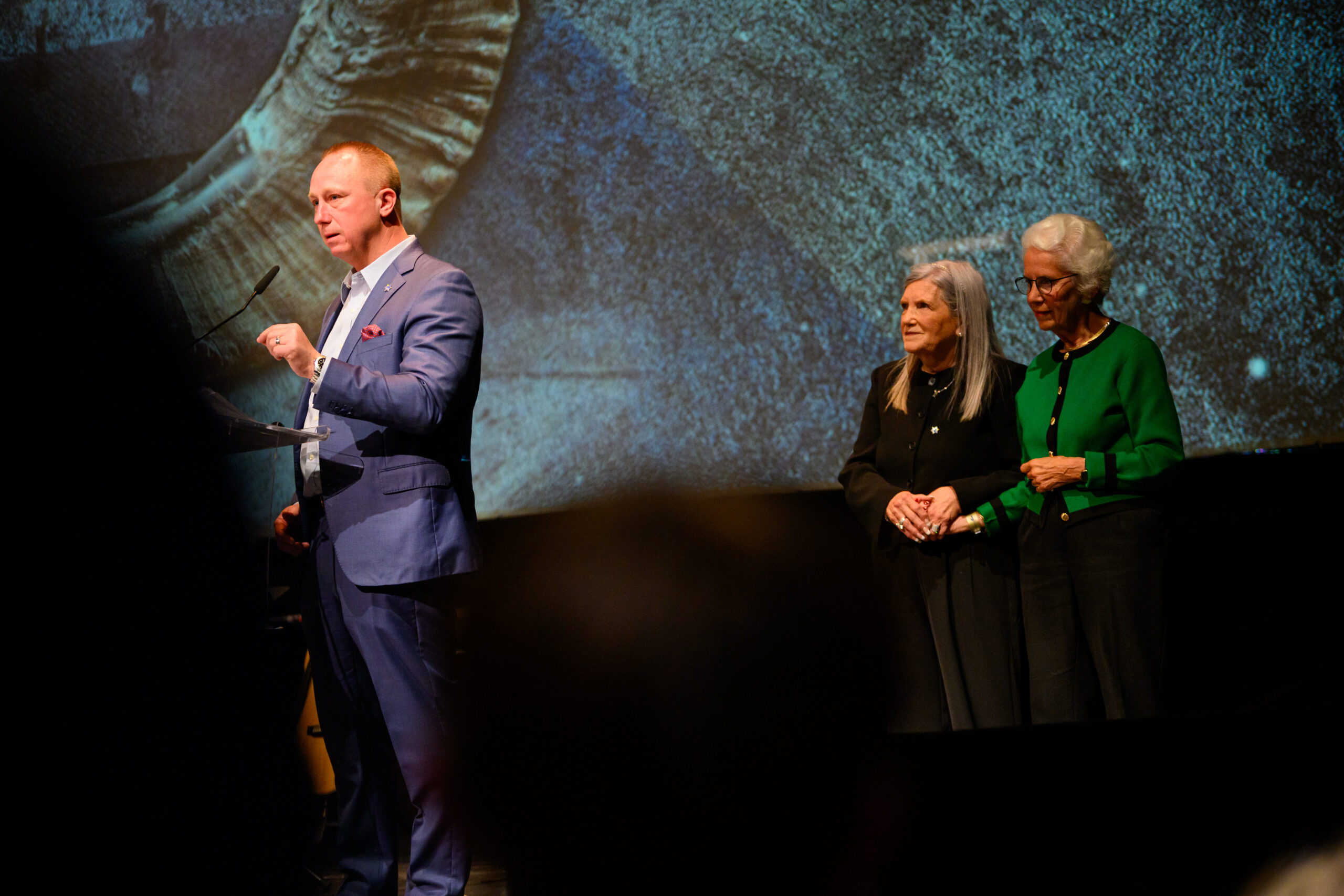
When he arrived at a Buchenwald subcamp in April 1945, Gen. Dwight D. Eisenhower was appalled by what he saw. The first to be liberated by U.S. troops, the camp was strewn with the decomposing remains of hundreds of prisoners murdered by the SS. Three days later, Eisenhower, the supreme commander of the Allied Expeditionary Force in Europe, wrote to U.S. Army Chief of Staff George C. Marshall saying, “I made the visit deliberately in order to be in a position to give first hand evidence of these things if ever, in the future, there develops a tendency to charge these allegations merely to ‘propaganda.’” Eighty years later, Eisenhower’s great-grandson, Merrill Eisenhower, the CEO of People to People International, is carrying the torch for Holocaust remembrance, as he seeks to ensure the world never forgets, Lianne Kolirin reports from London for Jewish Insider.
Predicting the future: “When my great-grandfather arrived at his first camp, he said directly to my grandfather: ‘Make sure you document this, take photos. Bring Congress, bring the press. One day there’s going to be some bastard that says this never happened.’” Sadly those words proved prophetic. Holocaust denial and distortion are surging around the world, including in the U.S. The haunting images are part of what motivates Eisenhower. “Those photos that he [his grandfather] was taking, some of those still sit in my house and some are in the National Archives and some are in the Eisenhower Presidential Library in Kansas,” he said.
Worthy Reads
🕎 The Billings Beacon: In The Wall Street Journal, Daniel Freedman ties the upcoming Hanukkah holiday to the lessons learned from an antisemitic incident in Billings, Mont., more than three decades ago in which the community showed solidarity with a Jewish family whose home, which displayed a menorah, was attacked. “This solidarity cuts to the heart of Hanukkah. … The Maccabee warriors fought to worship God freely — a right that underpins the American experiment. When the non-Jews of Billings put up their menorahs, they were standing for religious liberty for all. The Talmud records a debate among rabbis after the Romans destroyed the holy Temple in the year 70: Should Hanukkah still be celebrated even though its physical center was gone? Their answer was yes. Hanukkah’s celebration of faith’s victory against even the mightiest adversary was central to its message and would inspire generations. It inspired the people of Billings more than 30 years ago, and it has inspired the Jewish people through some of their most trying times in history — from the Spanish Inquisition to the Holocaust.” [WSJ]
📢 Lessons in Leadership: In his Substack “Vahaviyotim,” Daniel Swartz reflects on the state of modern leadership and public service. “I often hear suggestions about how we might improve the quality of public sector leadership: Pay people more — like they do in Singapore. These well-intentioned ideas aren’t bad ones. But they won’t really do anything because they simply don’t change the incentive structure for a would-be leader. Currently, the value proposition for a well-intentioned public servant is this: Your kids’ lives will be a living hell. You’ll be hounded by self-righteous mobs — they’ll camp outside your home and house of worship and shout slogans at you at all hours. You’ll get credible death threats and actual attempts on your life. … The only way that we’ll be able to crowd out the masochists and the grifters is if we make it such that leadership doesn’t entail martyrdom — if we make it possible for critical masses of good people to go into public service, live their lives while in office, and then ride off peacefully into the sunset.” [Vahaviyotim]
Word on the Street
President Donald Trump is planning to appoint a two-star U.S. general to lead the International Stabilization Force in Gaza; the president said on Wednesday that he will announce the members of the newly created Gaza Board of Peace early next year…
Sen. David McCormick (R-PA) said at yesterday’s Aspen Security Forum event in Washington that he’s “hopeful” that the next phase of the ceasefire agreement between Israel and Hamas will proceed, arguing that Trump has “unique credibility” with both Israel and the Gulf states…
Following outgoing New York City Comptroller Brad Lander’s launch of a primary challenge to Rep. Dan Goldman (D-NY), J Street, which had previously endorsed Goldman, indicated it was unlikely to get involved in the primary, saying the organization “deeply value[s Goldman’s] pro-Israel, pro-peace and pro-democracy leadership in Congress,” while calling Lander “a vocal leader for our values”…
A group of Democrats from Colorado’s congressional delegation wrote to Secretary of Homeland Security Kristi Noem questioning the implementation and execution of the Nonprofit Security Grant Program, Jewish Insider’s Marc Rod reports…
Pomona College settled a Title VI complaint filed by a range of Jewish groups, including Hillel International, the Anti-Defamation League and the Brandeis Center for Human Rights Under Law, in which the school will adopt the International Holocaust Remembrance Alliance’s working definition of antisemitism, appoint a coordinator to ensure implementation of Title VI and update school policies related to speech and demonstrations…
The father of deceased Israeli hostage Noa Marciano said that the family received a video of Marciano allegedly being killed by a Palestinian doctor in Gaza’s Shifa hospital who injected air into her veins…
The Times of Israel reports that Palestinian American teenager Mohammed Ibrahim, who had been detained since February by Israeli authorities who alleged that he was throwing rocks at Israeli soldiers, was freed due to the intervention of Jared Kushner, who reached out to senior Israeli officials…
Taiwanese Deputy Foreign Minister Francois Wu reportedly quietly visited Israel, where the territory has an economic and cultural office, in recent months, as Taiwanese leaders concerned about a potential invasion by Beijing look to deepen defense partnerships…
Iceland became the fifth country to boycott next year’s Eurovision Song Contest, citing the decision to allow Israel to participate in the annual competition…
The leader of Yemen’s Southern Transitional Council separatist group, which is backed by the United Arab Emirates, said amid a deepening rift with Yemen’s Saudi-backed Presidential Leadership Council that the STC’s next goal should be the capital of Sana’a…
Pic of the Day
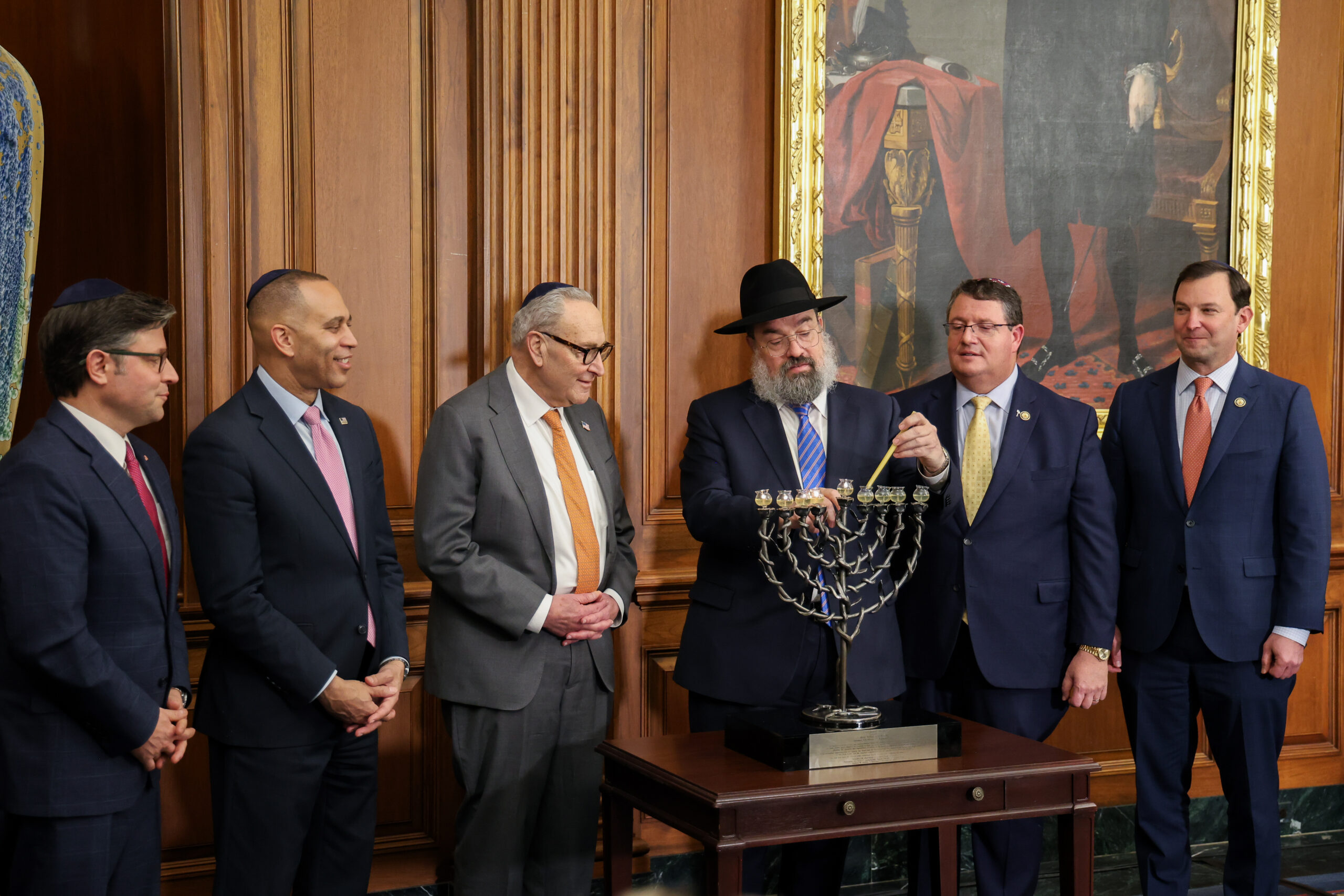
House Speaker Mike Johnson (R-LA), Senate Minority Leader Chuck Schumer (D-NY) and House Minority Leader Hakeem Jeffries (D-NY) hosted a pre-Hanukkah menorah lighting ceremony yesterday on Capitol Hill alongside Chabad Rabbi Levi Shemtov, the executive vice president of American Friends of Lubavitch (Chabad), Jewish Insider’s Emily Jacobs reports. Pictured with the congressional leaders are Reps. Randy Fine (R-FL) and Craig Goldman (R-TX).
Birthdays
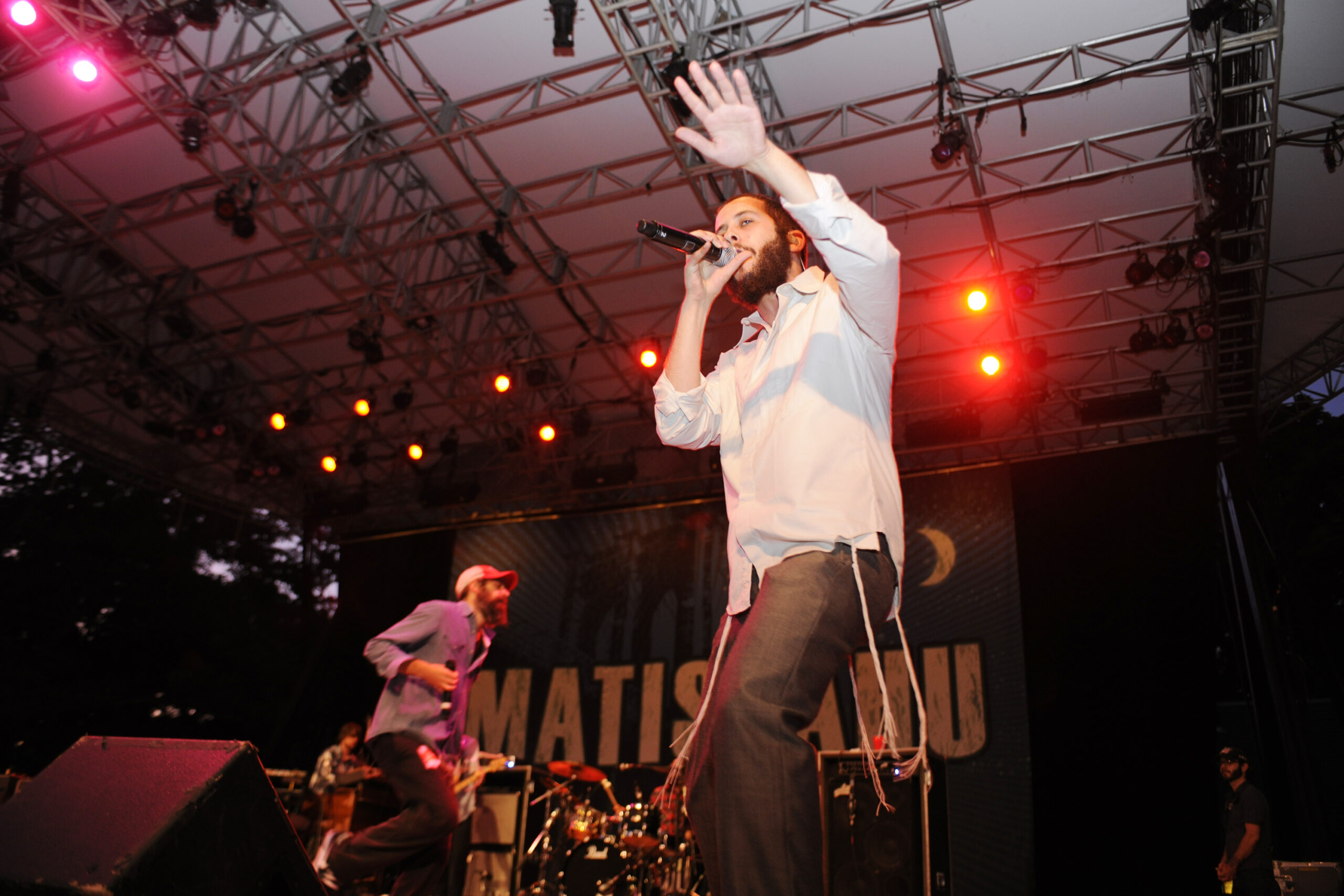
Hasidic rapper from Boston, known as Nosson, Nathan Isaac Zand turns 44…
U.S. secretary of state in the Obama administration and former U.S. senator, John Kerry turns 82… Lumber and wood products executive in Bethany, Conn., Stuart Paley… University professor of Jewish history and Jewish thought at Yeshiva University, Rabbi Jacob J. Schacter turns 75… Digital media expert and entrepreneur, he serves as chair emeritus of the UJA-New York of New York’s marketing communications committee, Michael E. Kassan turns 75… Professor of international economics at Princeton University, Gene Grossman turns 70… Former senior attorney in the environmental and natural resources division of the U.S. Department of Justice, Perry Rosen turns 70… Best-selling author, she has published 11 novels including seven books in The Mommy-Track Mysteries series, Ayelet Waldman turns 61… Beverly Hills-based cosmetic surgeon for many celebrities, Dr. Simon Ourian turns 59… Partner in Pomerantz LLP where he leads the corporate governance litigation practice, he serves as a trustee of Manhattan’s Beit Rabban Day School, Gustavo F. Bruckner… Senior director of Middle East programs at the Atlantic Council, William F. Wechsler… Former member of the Knesset for the Labor party and then the Independence party, she just launched the Oz party, Einat Wilf… Distinguished Israel policy chair and senior fellow at RAND, Shira Efron… Israeli poet and founder of the cultural group Ars Poetica, Adi Keissar turns 45… Israeli actor, director, playwright, rapper and singer, known by his stage name Pedro Grass, Amit Ulman turns 40… Head of people and communications at Constellation, Michael Chananie… CEO at D.C.-based Brown Strategy, Josh Brown… Sports editor for Apple News until 2024, now a freelance content strategist for FanDuel, Kelly Cohen… National political reporter at The Washington Post, Marianne LeVine… Managing director of alternative investments at CAIS, Judah Schulman… Senior editor at Apple News, Gideon Resnick… Actress and singer, Hailee Steinfeld turns 29… Associate at Gordon Rees Scully Mansukhani, Segev David Kanik…
All the committee’s Republicans and two Democrats — Sens. Jeanne Shaheen and Jacky Rosen — voted in favor
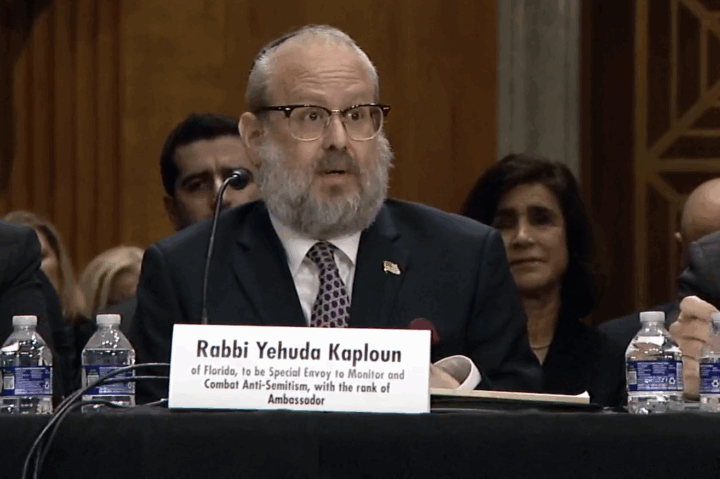
Screenshot
Rabbi Yehuda Kaploun, the Trump administration's nominee to be special envoy to monitor and combat antisemitism
The Senate Foreign Relations Committee voted on Wednesday to advance Rabbi Yehuda Kaploun’s nomination to be the Trump administration’s antisemitism envoy, clearing the way for a full Senate vote on his confirmation.
All 12 Republicans on the committee voted in favor, while eight of the 10 Democrats on the panel were opposed. The two Democrats who voted to support Kaploun were the committee’s ranking Democrat, Sen. Jeanne Shaheen (D-NH), and Sen. Jacky Rosen (D-NV), a close ally of the Jewish community.
Kaploun, an Orthodox Jewish businessman and Chabad rabbi, was a campaign surrogate for President Donald Trump’s 2024 bid and has, since he was first nominated for the post in April, become a fixture at D.C.-area events focused on combating antisemitism.
The leaders of various mainstream Jewish organizations — including the Jewish Federations of North America, the Conference of Presidents of Major American Jewish Organizations, the Anti-Defamation League and the American Jewish Committee — have urged Senate leaders to move ahead with the confirmation process and act swiftly to fill the post.
The 14-8 vote, which came two weeks after Kaploun’s confirmation hearing, offers a preview of how senators on both sides of the aisle could land on his nomination when it comes before the full Senate. Sen. Rand Paul’s (R-KY) decision to vote to advance Kaploun’s nomination, given his record of bucking the president’s choice of Cabinet nominees and legislative matters, suggests Republicans are likely to be unified in supporting Kaploun on the floor.
Shaheen and Rosen’s support for Kaploun’s nomination indicates that he could secure a handful of Democratic votes as well. Sen. John Fetterman (D-PA), who has not said where he stands on Kaploun’s nomination, has crossed party lines to support several of Trump’s Cabinet picks, including U.S. Ambassador to Israel Mike Huckabee.
Shaheen said during Wednesday’s vote that she had reservations about prior comments Kaploun had made about lawmakers, including statements she described as “very partisan.” Still, she planned to support his confirmation and said she hoped Kaploun would approach the role in a nonpartisan way.
“I’m going to vote for Mr. Kaploun, but I continue to be concerned about his past statements that he’s made, particularly about members of Congress. They have been very partisan. I think partisanship weakens the collective effort to combat antisemitism,” Shaheen said. “I agree with the past special envoy [Deborah Lipstadt], who has been supporting Mr. Kaploun, that this position should be above partisanship.”
“I hope that he will recognize that once he assumes this position, that he should be above partisanship and focus on combating antisemitism,” she added.
Kaploun, who was nominated in April for the role, will appear before the Senate Foreign Relations Committee on Wednesday

Joe Raedle/Getty Images
President Donald Trump and Rabbi Yehuda Kaploun light a candle during an Oct. 7th remembrance event at the Trump National Doral Golf Club on Oct. 7, 2024 in Doral, Florida.
Rabbi Yehuda Kaploun is scheduled for a confirmation hearing to be the Trump administration’s antisemitism envoy on Wednesday, a last-minute addition to the Senate Foreign Relations Committee schedule.
Kaploun, an Orthodox Jewish businessman and Chabad rabbi, was a Trump campaign surrogate during the 2024 campaign and, though he has not yet been confirmed, has been a frequent fixture at D.C.-area events focused on combating antisemitism since he was first nominated for the post in April and has met with other Trump administration officials.
The previous special envoy to monitor and combat antisemitism, Ambassador Deborah Lipstadt, told Jewish Insider on Tuesday, “I wish him great good luck, for his sake and for ours. He has a challenging task in front of him as we witness antisemitism emanating from all ends of the political spectrum. Irrespective of one’s politics, we should all hope for his success.”
Kaploun co-authored an op-ed in the Jewish Telegraphic Agency in May with his two predecessors, Lipstadt and Elan Carr, following the killing of two Israeli Embassy staffers outside the Capital Jewish Museum in Washington — a show of bipartisan alignment on the issue of combating antisemitism.
“Above all, irrespective of where you stand on the political spectrum — left, right, center — do not use antisemitism as a political weapon to achieve other goals. That will only serve to debase and weaken our fight against this terrible scourge. This fight must be bipartisan and non-political,” the piece reads. “Now is the time for all to rise to the occasion in the face of a grave threat to us all. Our collective future depends on our success.”
The op-ed endorses the Global Guidelines to Counter Antisemitism, an international compact promulgated under Lipstadt’s leadership, and indicates that the current administration plans to continue that effort.
It goes on to describe antisemitism as a threat to the rule of law, security and society, and raises concerns about the “normalization of antisemitic rhetoric” on both sides of the aisle, and in anti-Israel activism.
The leaders of various mainstream Jewish organizations including the Jewish Federations of North America, the Conference of Presidents of Major American Jewish Organizations, the Anti-Defamation League and the American Jewish Committee have urged Senate leaders to move ahead with the confirmation process and move quickly to fill the post.
But Kaploun’s nomination is likely to encounter at least some resistance among Democrats: Rep. Jerry Nadler (D-NY), a co-chair of the Congressional Jewish Caucus, urged Senate Democrats not to support Kaploun earlier this year, describing him as “divisive.”
State Department civil servants have continued to operate the office during the time that the ambassador role has been vacant, since the end of the Biden administration.
Several other nominees are also scheduled to appear at the hearing, including State Department spokesperson Tammy Bruce, nominated to be the deputy U.S. representative to the United Nations.
Please log in if you already have a subscription, or subscribe to access the latest updates.
 Continue with Google

 Continue with Apple