












































































Matsui is seeking reelection against another Democrat in the Sacramento-based district, where Republicans make up the undecided vote
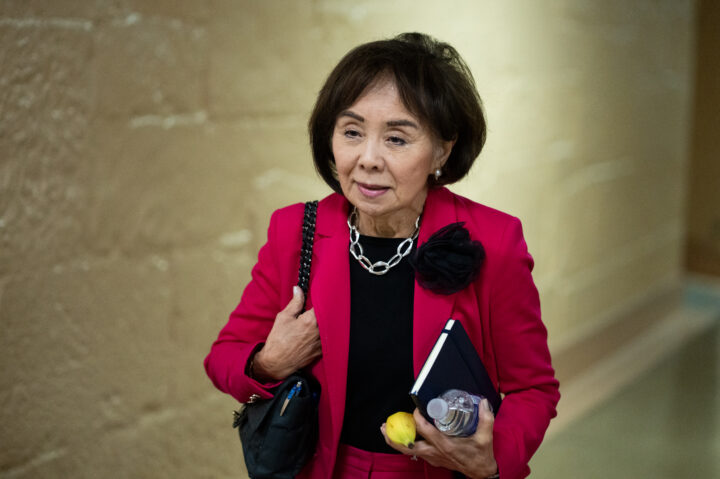
(Bill Clark/CQ-Roll Call, Inc via Getty Images)
Rep. Doris Matsui, D-Calif., leaves the House Democrats' caucus meeting in the U.S. Capitol on Tuesday, September 1, 2026.


 Add JewishInsider on Google
As the general election race approaches between Rep. Doris Matsui (D-CA) and her far-left opponent, Sacramento City Councilmember Mai Vang, Matsui is continuing to lean into attacks linking Vang to far-left streamer Hasan Piker, running ads highlighting that Vang campaigned with Piker.
A new ad by Matsui’s campaign highlights Piker’s past comments that America deserved 9/11 and cursing out a refugee. “We can’t send Mai Vang to Congress,” the ad says.
Vang participated in a fundraising livestream with Piker.
Matsui had previously demanded that local female Democrats and women’s groups pull their endorsements of Vang in light of misogynistic comments by Piker in the past. The ad is at least the second Piker-related spot by Matsui’s campaign.
The two are running in California’s 7th Congressional District, which includes much of Sacramento and its suburbs, stretching out into more rural areas. Matsui’s best hope for victory likely lies in winning over some of the more conservative voters redrawn into the district in the outlying areas.
Vang narrowly bested Matsui in the all-party primary in July, picking up 31% of the vote to Matsui’s 29%. But Republicans picked up a combined 37% of the vote.
The most recent polling —an August survey from the Justice Democrats and other left-wing groups backing Vang — showed Vang leading by four points, with 40% of voters still undecided.
The incumbent Matsui substantially outraised Vang, but entered the final month of the campaign with less cash remaining on hand — Matsui had $180,000 left as of the end of September to Vang’s $374,000, despite having raised more than three times what Vang brought in.
A series of groups, including a nursing union PAC, the Justice Democrats and the Working Families Party have spent heavily to boost Vang and attack Matsui, though the congresswoman has also benefited from outside spending on her behalf.
Matsui has leaned into her long tenure and experience in Congress, while Vang has made an argument for generational change.
Among other issues, the two have butted heads on the campaign trail over U.S. policy toward Israel, with Vang calling its war in Gaza a genocide, while Matsui has rejected the term.
“This is a place where we have to understand we can say that word over and over again. It doesn’t bring us to a solution here,” Matsui said. “When you start pointing fingers, people go into a corner.”
Rep. Wesley Hunt, made a series of inflammatory remarks about Saudi Arabia during his military service and failed Senate bid that could complicate his confirmation
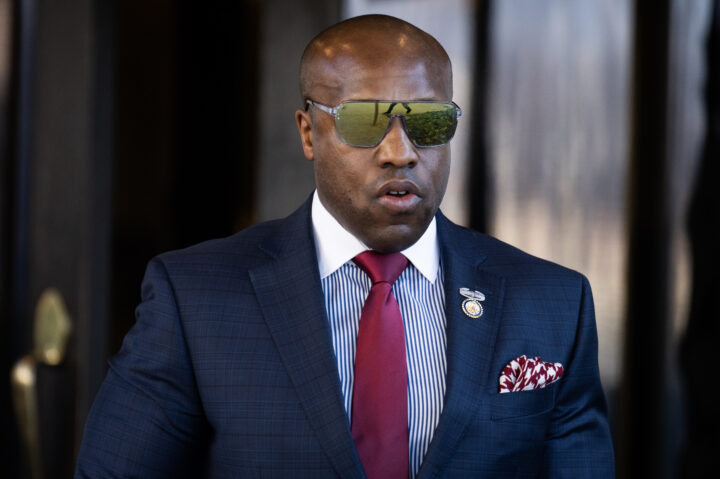
Tom Williams/CQ-Roll Call, Inc via Getty Images
Rep. Wesley Hunt (R-TX) leaves a meeting of the House Republican Conference at the Capitol Hill Club on Wednesday, January 22, 2025.
Before being nominated to be U.S. ambassador to Saudi Arabia earlier this week, Rep. Wesley Hunt (R-TX) pointed to his experience serving as a military diplomatic liaison to Saudi Arabia to offer strident criticisms of the U.S. ally.
The past comments could prove to be an issue in his confirmation process, or lead to a frosty reception if he is confirmed, a prospect that currently appears uncertain.
As previously reported by Jewish Insider, in 2022, Hunt suggested that he did not view Saudi Arabia as a “true ally” and highlighted the Saudi nationality of many involved in the 9/11 attacks.
“I learned a lot about what our interests need to be and who we need to be in the business of supporting for the future, because [Israel is] our one true ally in the region,” Hunt said during a virtual event with AIPAC.
He added that the U.S. “cannot let our guard down” with Middle East partners generally because “some of these countries are bad actors. They’re rogue nations, some of them.”
During his failed Senate campaign, Hunt — along with many other Texas Republicans — made his opposition to Islamic Sharia law a central element of his campaign, repeatedly pointing to his own experience in Saudi Arabia and Iraq as an example of its dangers.
“People who dismiss Sharia law as fear-mongering have never lived under it,” Hunt said. “I lived in Saudi Arabia. I lived in Iraq. I’ve seen what that system looks like in real life, not on cable news. Public beheadings happened there not long ago. Women couldn’t even drive when I was stationed there.”
Hunt also said, of Sen. John Cornyn (R-TX), “He’s been soft on this because he’s never faced what I’ve seen. He’s never stood face-to-face with evil in its purest form. He’s never witnessed the public beheadings, the brutal treatment of women, or the barbaric enforcement of Sharia law.”
He said that Sharia law “should be banned in America” and joined the Sharia-Free America Caucus, warning that Sharia law is on the rise in America, though no U.S. jurisdiction enforces the Muslim legal code.
Other U.S. officials have historically been critical of Saudi Arabia’s restrictive laws for women and other elements of the country’s judicial system, which have since been loosened.
Also during the Senate campaign, Hunt said he had not felt safe, during his time living in Saudi Arabia, from jihadi sympathizers following the killing of Osama bin Laden.
“These are our allies that we are working with every single day, and we were actually fearful of our lives,” Hunt said at the time. “Now, imagine letting people, with that mindset, come to our country, and you wonder why we are waking up to having dead national guardsmen … the mentality of these people never ended. It never stops. The jihad never ends. We are the infidel.”
Semafor reported on Thursday that some Republican senators harbor concerns about Hunt’s nomination and are unlikely to allow it to move forward quickly.
Nearly three-quarters of respondents told the Association for the Study of the Middle East and Africa that American universities are less equipped to pursue truth than they were 25 years ago

Marcus Brandt/picture alliance via Getty Images
View of the large lecture hall on April 1, 2026.
A new survey of 470 Middle East scholars finds that nearly three-quarters believe American academia is less equipped to pursue truth than it was at the time of the 9/11 attacks, while two-thirds lack confidence that their students understand the attacks and say American academia has provided cover for ideologies, regimes or groups hostile to the United States.
The findings, released this week by the Association for the Study of the Middle East and Africa ahead of the 25th anniversary of 9/11, reflect what ASMEA’s executive director, Asaf Romirowsky, described as a broader failure by American universities to maintain objectivity and intellectual rigor in the quarter century since the attacks.
“American universities have allowed their Middle East scholars to abandon any pretense of objectivity, exchanging the free and unfettered pursuit of ideas for an increasingly dogmatic worldview that praises and supports not America but its deadliest opponents and their murderous ideologies,” Romirowsky told Jewish Insider.
The survey, conducted Aug. 6-28, found that 71% of respondents believe American academia is either “much worse equipped” or “somewhat worse equipped” today than it was 25 years ago to pursue truth-seeking as its central mission.
Romirowsky said the findings were particularly notable because they cut across different types of institutions and levels of seniority, “from public and private universities alike, from junior faculty to professors emeritus.”
The survey also asked scholars about their students’ understanding of 9/11. Sixty-six percent either strongly or somewhat disagreed with the statement that they were confident their current students had a firm understanding of the events leading up to the attacks and could correctly identify the core reasons for the attack and its perpetrators.
For Romirowsky, the findings are particularly concerning given the role Middle East scholars were expected to play in helping Americans and policymakers understand the region after 9/11.
“In the 25 years since 9/11, we desperately needed scholars to help us make sense of the Middle East and guide us towards policies that best serve America’s interests and national security concerns,” Romirowsky said in a statement accompanying the survey. “Instead, we were met with zealotry that discarded facts and observable reality in favor of anti-American sentiments and commitments.”
The survey also found that 65% of respondents agreed that scholarly or public commentary within academia since 9/11 has sometimes provided “intellectual cover or legitimacy” for ideologies, regimes or groups hostile to the United States.
The concerns extended to scholars’ own experiences in academia. Respondents who had spent fewer than 10 years in academia were significantly more likely than those with 40 or more years of experience to report recent self-censorship and the existence of a departmental orthodoxy. Younger scholars were also significantly less likely to believe academic decisions were based on merit.
Romirowsky said the findings should prompt a broader effort to restore confidence in higher education. “We need to rebuild trust with our institutions,” he said, arguing that universities should focus on their traditional academic mission rather than positioning themselves as institutions responsible for directly solving political and societal problems.
“Universities are not governments or NGOs in the business of directly solving problems,” Romirowsky said. “Academia cannot and should not ‘improve the world’ as such but rather preserve, critique and expand knowledge.”
“The ultimate tasks are cultivating civility, character, and citizenship among students, making them mindful of their responsibilities towards one another and the republic,” he added.
Rabbi Ronald Kaplan, who volunteered as a spiritual first responder after 9/11, was diagnosed with laryngeal cancer traced to his time on the pile — a battle he’s still fighting on the 25th anniversary of the attacks
Jonah and Ronald Kaplan
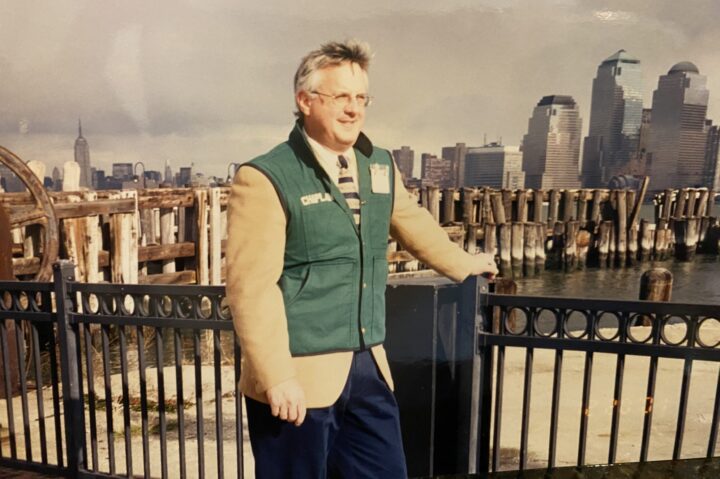
Rabbi Ronald Kaplan on Dec. 20, 2001, at Liberty State Park, NJ, before boarding the ferry to Lower Manhattan.
For more than four decades, Rabbi Ronald Kaplan’s primary tool for his work was his voice. It was the instrument he relied on every Shabbat and holiday on the bimah, in the classroom, under the chuppah, at the cemetery and in the hospital — guiding congregants through both moments of celebration and grief. As he puts it, a rabbi’s task is to “pray, to teach, to inspire, to counsel and to lead” — and the voice is the means to do it.
But this year, as the nation marks the 25th anniversary of the 9/11 attacks — a commemoration that falls as the major Jewish holiday of Rosh Hashanah begins on Friday night — that work of speaking and remembering holds particular resonance for Kaplan, whose service as a spiritual first responder at Ground Zero during the aftermath of the attacks ultimately cost him his “greatest sacrifice” — his voice.
In the late 1990s, the American Red Cross and the National Association of Jewish Chaplains sought to prepare clergy for disasters that were not acts of nature. In the wake of the 1997 crash of TWA Flight 800 off Long Island, they piloted a program for “spiritual first responders” to support survivors, bereaved families and recovery workers. Kaplan, then a congregational rabbi living in northern New Jersey, enrolled in what became known as the Spiritual Air Disaster Intervention Response (SAIR) program in the fall of 2000.
“When the program was offered, I was energized by its content and thought it would add to my chaplaincy skills,” Kaplan wrote in a recollection to Jewish Insider. “I never assumed nor expected to be mobilized so quickly.”
Kaplan said the call to serve at Ground Zero came just days after the attacks. “It was nearly as startling as the attacks themselves, for I felt so ill-prepared and inadequate with any experience,” he said. His instructor’s chilling hypothetical — what if a plane hit the World Trade Center? — “immediately came to mind.”
Starting on Sept. 19, 2001, Kaplan began making regular journeys from New Jersey to Lower Manhattan, returning weekly through the spring of 2002. At the staging area at Liberty State Park, he donned a green vest emblazoned with the word “CHAPLAIN” and introduced himself to grieving families and exhausted rescue workers.
“Who would I meet? Who or what would be recovered? What will I say, what will I learn, and where could we see any source of light in this darkness,” Kaplan recalled in a personal reflection he wrote this week titled “Pain in the Neck: Speaking Up Without the Voice 9/11 Took From Me.”
“I was tasked with meeting with many of the grieving family members and rescue workers, identifying myself as a chaplain,” Kaplan told JI. “I explained what they would witness, encouraged them to hold on to each other and gain strength as a group.”
From there, he joined New Jersey state troopers and families on the ferry across the Hudson, heading toward an elevated wooden platform overlooking the ruins that recovery workers called simply “The Pile.”
Kaplan describes the scene as “ancient liturgy for modern horror”: the acrid air, pulverized concrete, twisted steel and battered office furniture strewn amid the rubble, punctuated by sudden cries when recovery teams found human remains or fragments of clothing.
“I can vividly picture the walk to the pile, seeing the flames, feeling the intense heat and hearing the deafening noise from the machinery,” Kaplan said. “The horrific scene was incomprehensible. I could not process what my eyes were seeing and my ears were hearing.”
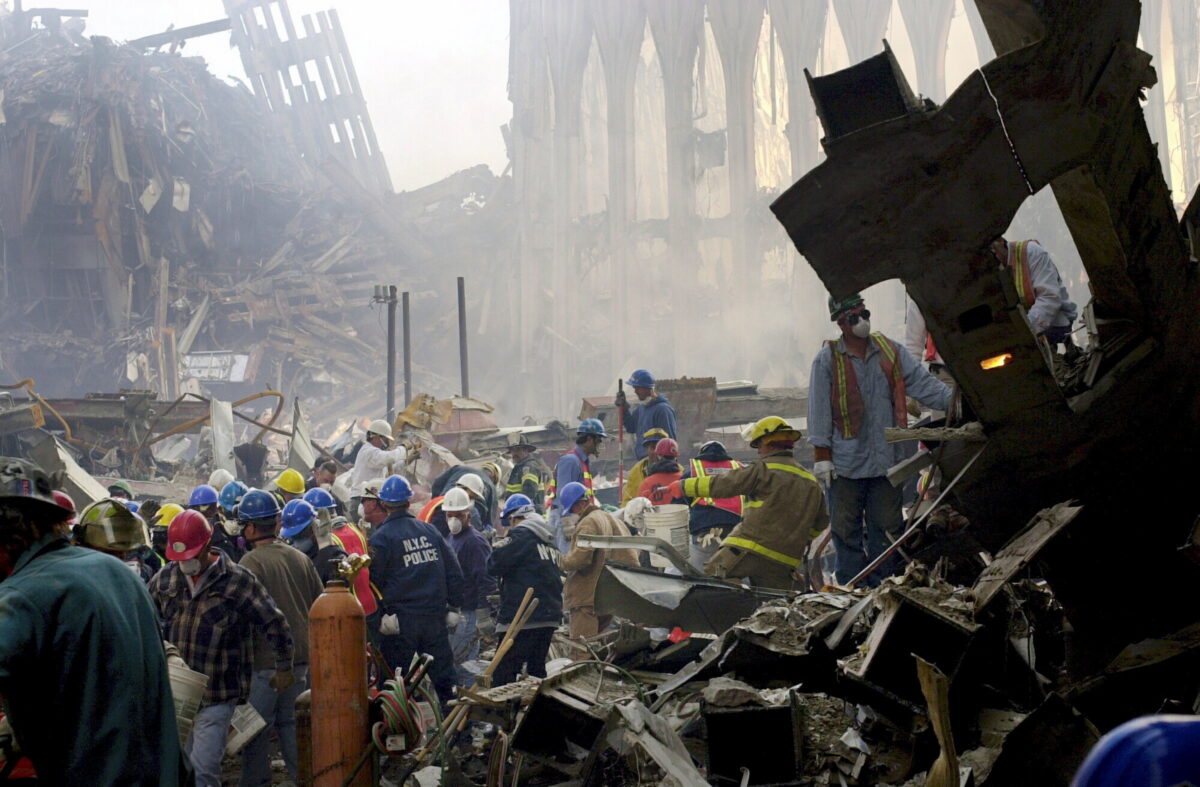
Many of those he accompanied instinctively covered their mouths and noses because “it was so difficult to breathe,” he added. “There were no masks, nor equipment for protection. There were no hard hats and no protective gear. Just my kippah served as my protection.”
Kaplan’s training as a congregational rabbi and chaplain — decades spent at hospital bedsides, cemeteries and shiva houses — shaped how he approached those walks to the platform and the moments of stunned silence that followed.
“As a congregational rabbi, a chaplain and a spiritual leader, I learned how to listen, knowing that I was there to reflect their stories and focus on others,” he said. “My personal feelings needed to be bracketed. I needed to be directed and focused on those who needed my presence.”
Many of the people who poured out their grief to him “spoke to me not wanting nor waiting for an answer,” he added. “My presence was their support. This is a lesson I carry to this day. What I represented to them as a clergy with a connection to God and faith was more important than any words I could offer.”
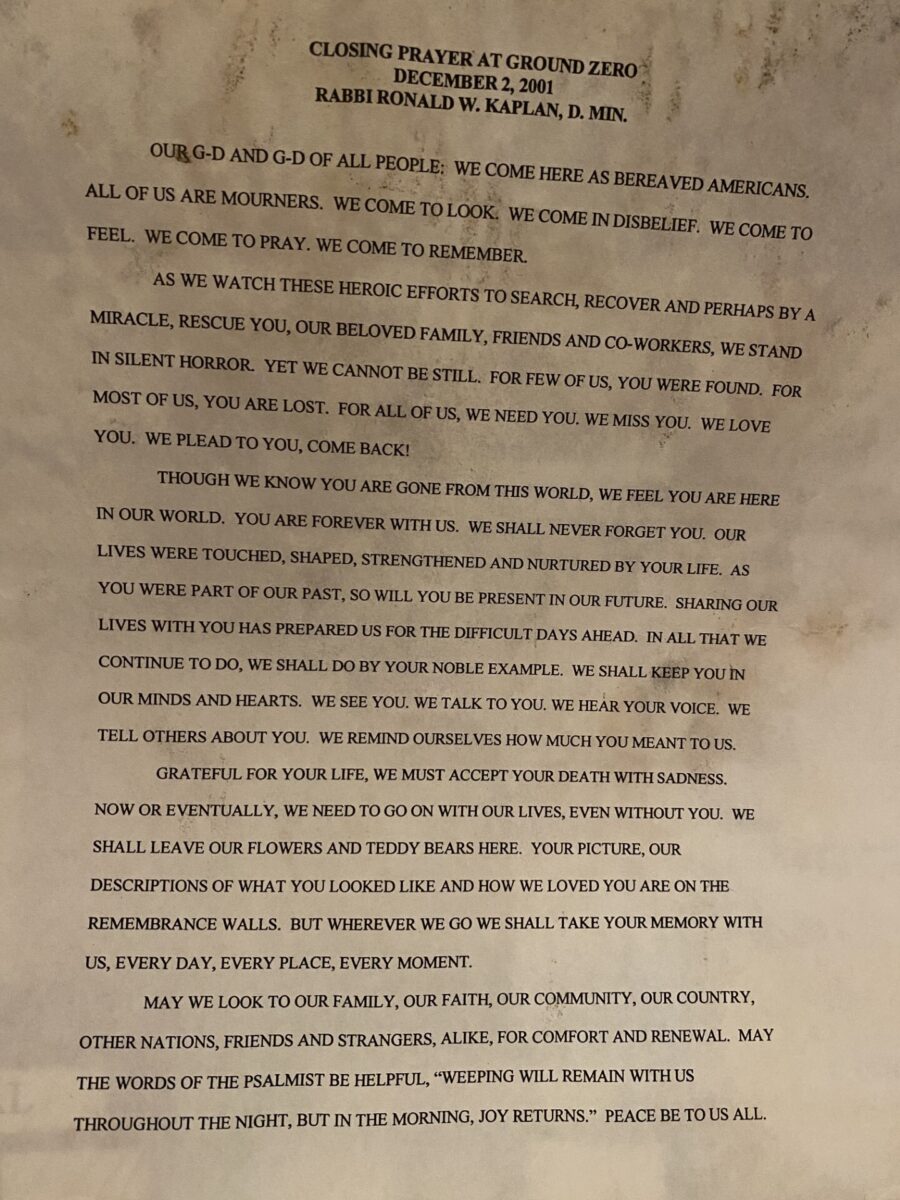
When recovery operations abruptly halted upon the discovery of human remains, Kaplan broke the stillness with an ecumenical prayer in English and Hebrew — “a tribute to the loss of one life, nearly three thousand times,” as he wrote. In his files from that period, he still keeps a sheet of paper he used on Dec. 2, 2001, titled “Closing Prayer at Ground Zero,” still stained with World Trade Center soot. When he rubs his thumb along the page, the dust still smudges his skin — “the same dust of history,” he writes, “and the dust of my voice’s demise.”
For years after 9/11, Kaplan did not directly connect his Ground Zero service to his health. He first began experiencing symptoms — “a persistent deep cough and hoarse voice” — in late 2019. He was diagnosed with laryngeal cancer in 2020.
“I never made the connection,” he said. During an early consultation, Kaplan’s physician ran through the usual risk factors — smoking, heavy drinking and HPV. “When my answers were all in the negative, he looked at me and asked: ‘Did you ever work at Ground Zero?’” Kaplan recalled. “He immediately connected my rare cancer to my exposure on the pile.”
New York City Mayor Zohran Mamdani this week released more than 170,000 pages of previously undisclosed documents indicating that city officials misled the public about air quality at Ground Zero — assuring people the fallout was harmless even as they knew it was unsafe to inhale. Asked whether these efforts to hold the city accountable distract from the terrorists’ responsibility for his suffering, Kaplan said both “can be done simultaneously, and both need the attention.”
“At first I did not fully comprehend [the cancer’s] ramifications and only wanted to know if [it] was treatable and curable,” he said. What followed was a long journey back to health “as chaotic and unpredictable as my work on the pile”: nine full rounds of chemotherapy, 35 sessions of radiation and, in 2023, a 12-hour throat reconstruction surgery, along with a total laryngectomy.
“My greatest challenge is my frustration and difficulty in communicating verbally with people since my laryngectomy,” Kaplan said. “This has isolated me from my family and community in deep and profound ways.” Yet even so, he insists, “it has not lessened my faith and I do not question why.”
Today, a quarter-century after his weekly journeys to Lower Manhattan, Kaplan’s sacrifice remains an active, daily reality. Following his diagnosis and years of treatment, the cancer has returned and he is once again undergoing treatment at Memorial Sloan Kettering’s satellite clinic in Basking Ridge, with another major surgery scheduled for next month.
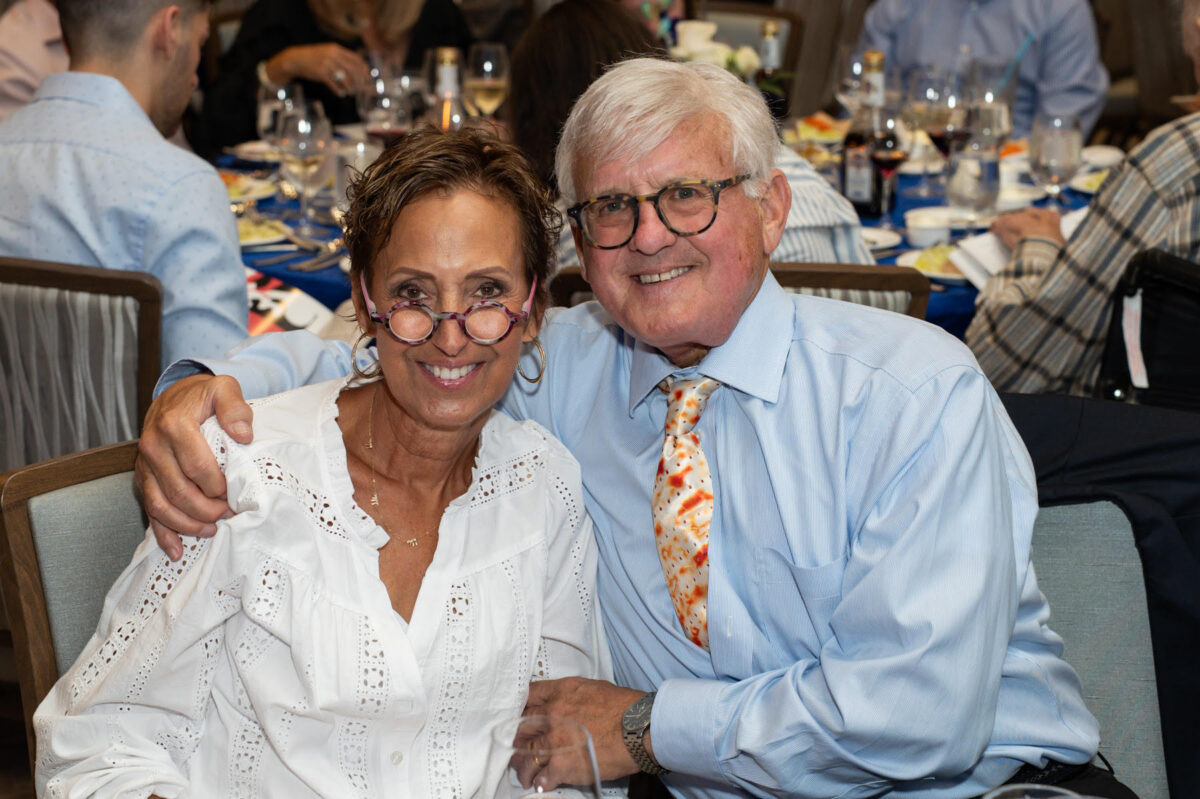
“I don’t ask why,” Kaplan wrote. “I just say thank you — for my wife, for my sons and daughter-in-law, for my grandchildren, and to my Creator, for the ultimate gift of life.”
As the 9/11 generation ages, Kaplan worries about how the story of that day — and the moral obligations it created — will be remembered by those who were not yet born.
“Fortunately, the annual memorial commemoration at the reflecting pools and in large and small communities throughout the nation help us all to remember,” Kaplan said. “But with each passing year the crowds diminish and a new generation has not yet been taught the story and the ramifications of this singular event. Our world is as broken today as it was on 9/11.”
This year, as the anniversary of the 9/11 attacks coincides with erev Rosh Hashanah, Kaplan said he hopes synagogues and Jewish communities will lean into the calendar convergence.
“I deeply hope that congregations will add appropriate mention through liturgy and ritual in marking 9/11 on erev Rosh Hashanah,” he said. “After all, Rosh Hashanah is also known as Yom Hazikaron, the day of Remembrance. The kesher (the bond) is too obvious to ignore!”
Please log in if you already have a subscription, or subscribe to access the latest updates.
 Continue with Google

 Continue with Apple