


































In Michigan Senate primary, McMorrow balances Jewish fears and Arab outreach after attack
In an interview with JI, the state senator described herself as someone who supports the U.S.-Israel relationship, but not unconditionally
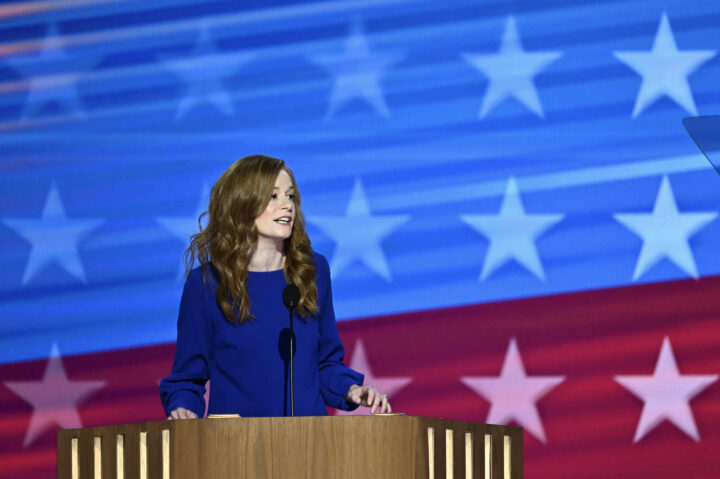
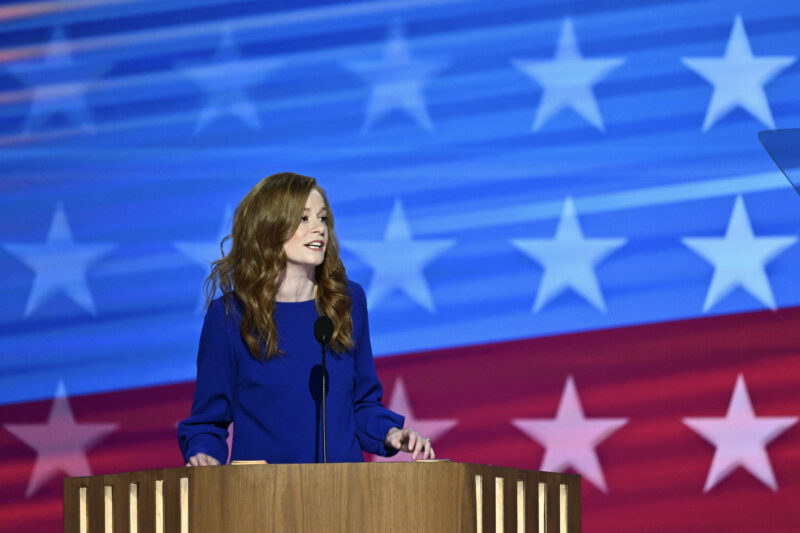
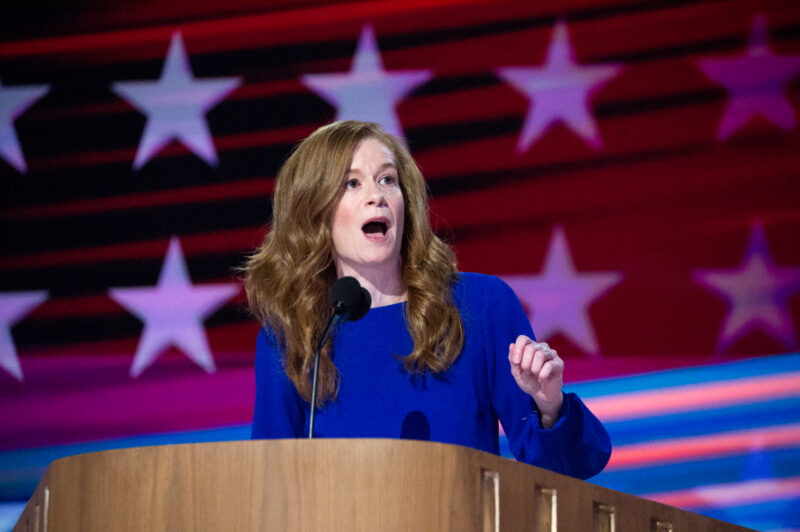
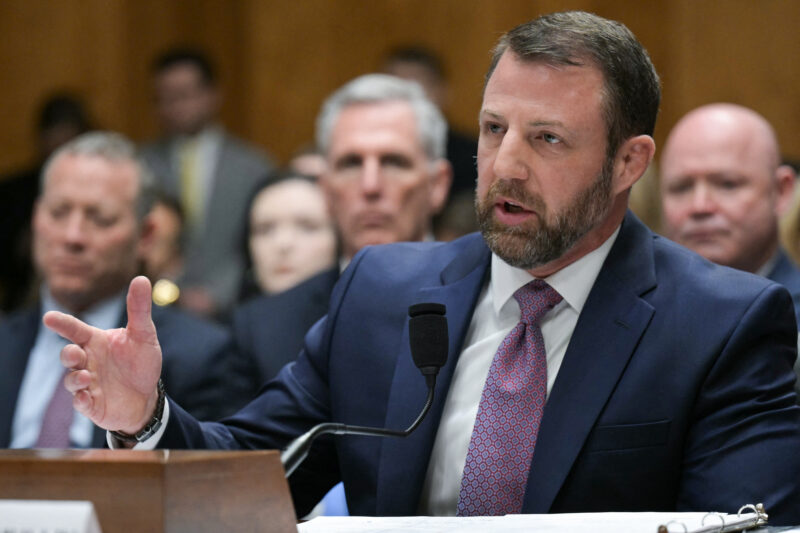
MANDEL NGAN/AFP via Getty Images
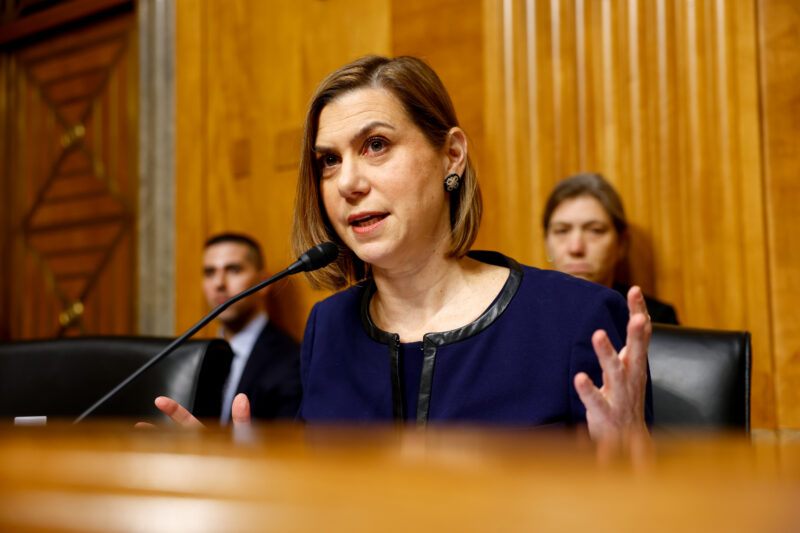
Michigan state Sen. Mallory McMorrow speaks on the first day of the Democratic National Convention (DNC) at the United Center in Chicago, Illinois, on August 19, 2024.


 Add JewishInsider on Google
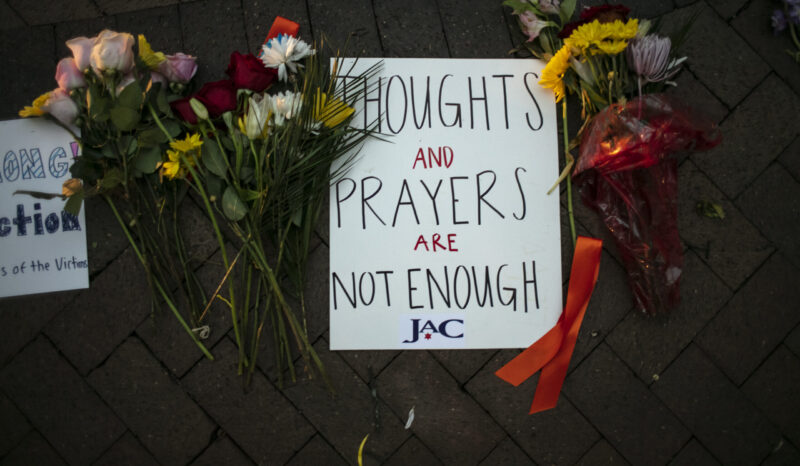
ROYAL OAK, Mich. — When Michigan state Sen. Mallory McMorrow saw the news on March 12 about an attack at Temple Israel, a Reform synagogue in West Bloomfield Township, her first thought was about her 5-year-old daughter, Noa.
McMorrow is not Jewish, but her husband is, and Noa attends preschool at another Reform congregation in the area.
“This could have been us. This could have been our daughter,” McMorrow thought.
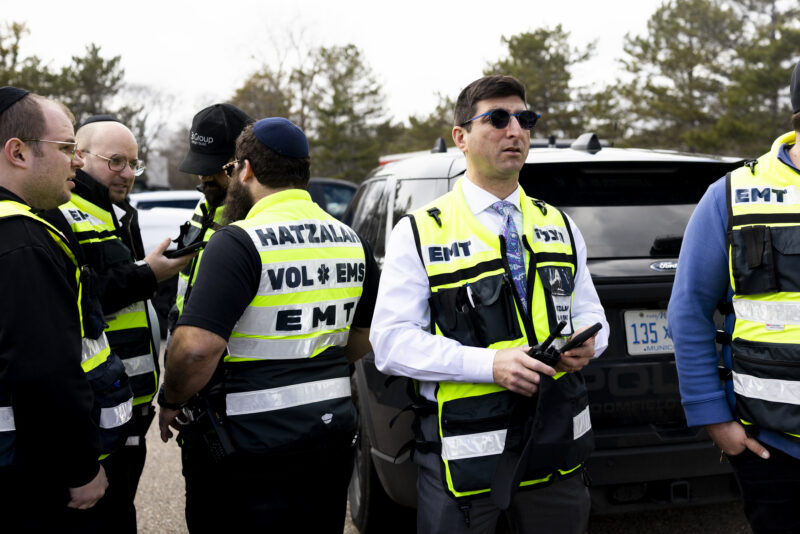
Then, as an elected official and one of the three leading candidates in the Democratic primary for U.S. Senate, she released a statement condemning the attack, in which a heavily armed man drove a car that was filled with explosives into the synagogue and opened fire before dying of a self-inflicted gunshot wound. No one else was killed in the attack, which occurred steps away from preschool classrooms where more than 100 children and their teachers sheltered in place.
“I was horrified when I put out my statement that day. All of the first comments on it were whataboutism,” McMorrow told Jewish Insider in an interview in a coffee shop near Detroit last week. “Antisemitism is real.”
Recent polling released by McMorrow’s campaign shows her with a narrow lead over her primary opponents, Rep. Haley Stevens (D-MI) and public health official Abdul El-Sayed. But many voters remain undecided, and the state’s primary is not until August.
The FBI said on Monday that the Temple Israel attacker, a Lebanese immigrant whose brother had been a Hezbollah commander until he was killed by the IDF the week before the attack, carried out a “Hezbollah-inspired act of terrorism purposely targeting the Jewish community and the largest Jewish temple in Michigan.”
The attack was emotionally jarring for McMorrow, who got choked up speaking about her daughter.
“It was really eye-opening when I started going to services and events with Ray and Noa — the level of security did stand out to me as somebody who grew up in a Catholic church, to walk in and the first thing you see are the security guards, and they’re lovely and they’re friendly, but it just — that really stuck with me, that we need that just to be Jewish,” McMorrow said. “We shouldn’t have to think twice that somebody is going to attack her or my husband or our family or anybody, for no other reason than she’s Jewish.”
After the attack, McMorrow watched people respond to her social media posts and argue that somehow the attack was warranted or justified.
“We didn’t see that with things like the Sandy Hook shooting. When we see attacks on kids, you don’t immediately jump to, ‘Well, what about this? And did they deserve it?’ Of course not,” McMorrow said.
In the Senate primary, McMorrow appears to be trying to carve out a lane between Stevens, a moderate pro-Israel stalwart, and El-Sayed, a far-left candidate whose recent decision to campaign with antisemitic political streamer Hasan Piker earned condemnation from both Stevens and McMorrow.
In her interview with JI, McMorrow described herself as someone tuned in to the fears of Jewish Michiganders who is also trying to be a bridge-builder to the state’s large Arab community.
“Over the last week, I made it a point to reach out and talk to not only members in Temple Israel and leaders in the Jewish community, but also leaders out of the Muslim community, particularly over in Dearborn,” McMorrow said. “What I heard independently from both groups is we need to figure out a way out of this, that there is so much hurt and there is so much pain, and this is not sustainable. There is a desire to bring the heat down, but we have to recognize as leaders, we need to create open doors for people to work through their trauma.”
But sadness or frustration at events in the Middle East cannot be grounds for attacking a Jewish institution, McMorrow said.
“There are going to be differing views on what the right course of action is in the Middle East, and that should be expected in a state like ours,” said McMorrow. “However you feel about what is happening in the Middle East, the response is never to take it out on people at home. The 140 kids who were at preschool that day bear no responsibility at all for anything that’s happening in the Middle East.”
McMorrow has said she will not accept donations from AIPAC, which has been a big booster of Stevens in the past, although AIPAC has not formally endorsed Stevens for Senate. McMorrow is endorsed by the progressive Israel advocacy group J Street, which currently describes McMorrow as a priority candidate for the organization.
“I believe deeply that long-term peace and security for Israel is necessary, and I worry that the Netanyahu government is making that reality harder,” McMorrow said. She has said that she supports legislation to block offensive weapons sales to Israel, and told JI that she thinks the U.S. should play a role as a moderating force for Israel — and described herself as someone who supports the U.S.-Israel relationship but not unconditionally.
“There was a headline in the Wall Street Journal a few months ago that I think about often, which is, ‘Israel won the war, but lost the world.’ And Israel needs allies to survive. It is attacked from all sides at all times,” she said. “That’s how I think about it with the U.S.-Israel relationship: How do we as an ally help our ally in the Middle East not make the same mistakes that the United States did, even in Iraq and Afghanistan, where retribution went too far?”
In October, when asked by a voter whether she believes Israel’s actions in Gaza amounted to genocide, McMorrow said yes, “based on the definition” of the word. Since then, she has avoided using the word directly, instead saying that its usage has become a “political purity test,” an argument she also employed in her interview with JI.
“People seem to be more focused on a word than a goal, which is why I have since said this does feel like we’re splitting hairs over the definition of a word and not talking about for most people, we want the same thing. How do we get there in a way that brings people together instead of pushing them apart?” McMorrow said.
That same attitude drives McMorrow’s approach to the state’s diverse constituencies — particularly, she said, as she thinks about how to address antisemitism and hate after the Temple Israel attack. She touted a bill she supported last year that expands the definition of hate crimes and called for more interfaith work in the state.
“That is part of the responsibility and role of a senator that may not be legislative, that’s just, how do we keep doors open?” she asked. “How do we talk about the things that unite us, and how do we work together so that Michigan, given the uniqueness of our population, can be a model for the rest of the country? That even in the wake of a lot of uncertainty and turmoil in the Middle East, we can coexist?”
But McMorrow also keeps returning to something that a Temple Israel parent told her, about the “root cause” of this month’s attack.
“As I was talking to a mom from Temple Israel, she credited all of the security that they’ve invested in,” McMorrow recalled. “She said, ‘We have to address the underlying root cause, which is antisemitism and hate that led this person — whatever trauma he was going through, his first course of action was to think to attack the synagogue full of preschoolers.’”
More Stories
SCOOP
Bipartisan group of lawmakers urges EU to designate IRGC as terrorist organization, ahead of key meeting

IHRA ADOPTED
Chicago City Council unanimously passes antisemitism legislation without mayor’s involvement

OUT OF BOUNDS
Ted Deutch compares Hasan Piker to Nick Fuentes, says Dems should shun him

chant controversy
Zohran Mamdani says ‘globalize the intifada’ is expression of Palestinian rights

Cataloging concerns
Why UPenn and the federal government are battling over lists of Jewish faculty members

AI EVALUATION
ADL rates Anthropic’s Claude best AI model at detecting antisemitism
Please log in if you already have a subscription, or subscribe to access the latest updates.
 Continue with Google
 Continue with Apple