










































































Israel, U.S. destroyed Iran’s ballistic missile production capabilities, IDF says
Iran launched several missile barrages overnight, killing two people in a cluster-bomb attack in central Israel
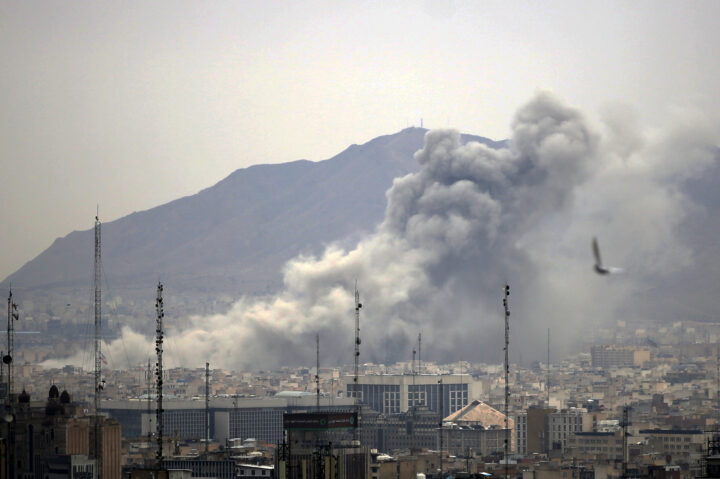
Fatemeh Bahrami/Anadolu via Getty Images
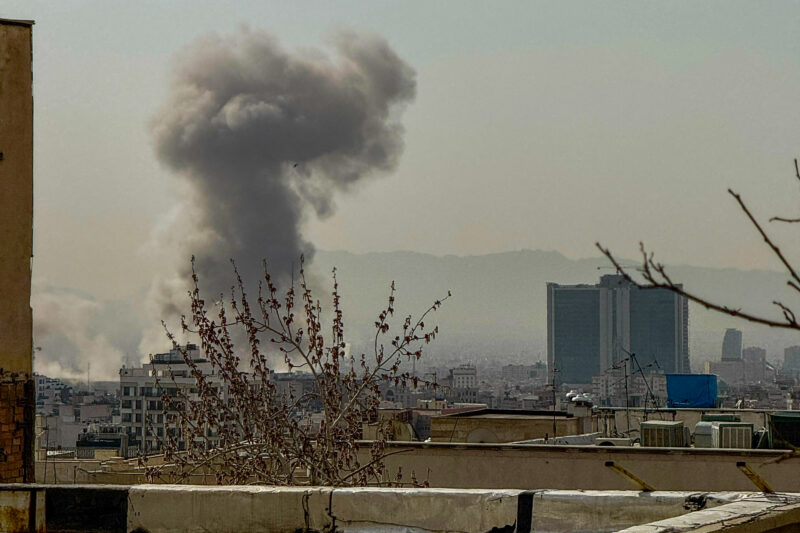
Smoke rises after airstrikes in Tehran, Iran on March 13, 2026.


 Add JewishInsider on Google
U.S. and Israeli strikes on Iranian production sites during the ongoing war have destroyed the Islamic Republic’s ballistic missile production capabilities, the IDF told Jewish Insider on Wednesday.
”Right now, they are unable, during this war, to produce ballistic missiles … due to steps we and the Americans took,” IDF Lt.-Col. Nadav Shoshani, the IDF’s international spokesperson, said in response to a query from JI.
The elimination of production facilities and stores of material for manufacturing the missiles means that Iran has a finite number of ballistic missiles that they produce domestically. The Islamic Republic has been burning through its ballistic missile stockpile daily, shooting at Israel and others in the region.
Shoshani noted that ahead of the war, Iran engaged in the “hyper-production” of ballistic missiles, and suggested that the Islamic Republic could restart production after the war, as it did after last year’s 12-day June war.
”But right now, as they’re fighting and desperate, they are unable to produce more missiles,” he added.
The White House said in an X post on Saturday that “Iran’s ballistic missile capacity is functionally destroyed.”
Jonathan Schanzer, executive director of the Foundation for Defense of Democracies, told JI that stopping Iran’s ballistic missile production “is a major achievement for both Israel and the United States. It’s a both a sign of tremendous intelligence collection and the ability to act on that intelligence.”
“The regime now has roughly 500 to 1,000 ballistic missiles,” Schanzer added. “Every time they fire one, their arsenal thins out. This is good news for Israelis who are tired of running to shelter.”
Overnight, an Iranian missile strike killed a husband and wife in their 70s in their home in Ramat Gan, a city adjacent to Tel Aviv. Israel’s Home Front Command confirmed that the missile carried cluster munitions; the strike also caused damage in the nearby city of Bnei Brak.
Naftali Halberstadt, an EMT with emergency service Magen David Adam, said that in Ramat Gan he “saw heavy smoke and destruction in a residential building. There was shattered glass and scattered items. During searches inside the apartment, two casualties were found unconscious, without a pulse and not breathing, with severe injuries … They showed no signs of life and we had to pronounce them dead.”
An eyewitness told Kann, Israel’s public broadcaster, that there was a direct hit on the top floor of the building where the couple lived, and their balcony fell to the ground. A neighbor told ynet that the man used a walker.
On Wednesday morning, a 71-year-old man who lost consciousness on his way to a shelter in Rishon Lezion was taken to a hospital in critical condition. People at the scene attempted to resuscitate him with a defibrillator before MDA reached the site.
Since the start of hostilities last month, MDA has reported 263 casualties from missile fire, including 14 fatalities. In addition, nearly 800 people were injured while making their way to shelter.
A day after announcing the elimination of the Iranian regime’s most senior security official, Supreme National Security Council Secretary Ali Larijani, and commander of the Basij paramilitary force Gholamreza Soleimani, the IDF continued to strike sites in Iran.
A day after announcing the elimination of the Iranian regime’s most senior security official, Supreme National Security Council Secretary Ali Larijani, and commander of the Basij paramilitary force Gholamreza Soleimani, Israeli Defense Minister Israel Katz announced that Israel killed Iranian Intelligence Minister Esmail Khatib.
Khatib “was responsible for the Iranian regime’s internal system of murder and oppression and on advancing external threats,” Katz said. “Prime Minister [Benjamin] Netanyahu and I authorized the IDF to eliminate any senior Iranian figure … without additional authorization. We will continue to eliminate and hunt down all of them.”
The IDF said it eliminated over 10 Basij posts in Tehran on Tuesday. The Basij had begun operations “from posts embedded within public areas in the heart of Tehran,” the IDF stated. One of the sites was previously used as a soccer club.
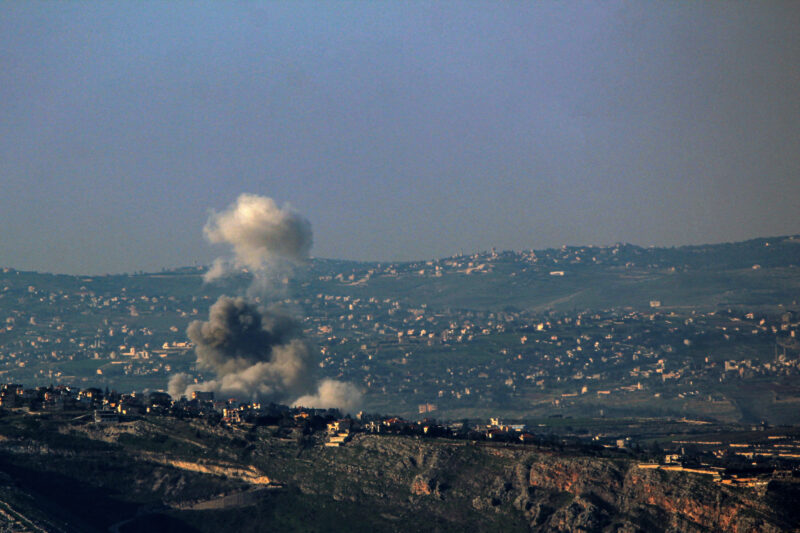
The IDF also continued its strikes and “forward defensive operations” by ground troops on Lebanon, the military spokesperson’s office said.
”The IDF will not allow any harm to the residents of Israel,” IDF Spokesperson Brig.-Gen. Effie Defrin said. “We are striking Hezbollah with determination at this very moment and will continue to target anyone who threatens our security.”
The Israeli Air Force struck dozens of Hezbollah infrastructure sites in three areas of Lebanon — Beirut, the Beqaa Valley and southern Lebanon — on Tuesday. Among the targets was an underground site used to store weapons, including cruise missiles and rockets, and Hezbollah’s stores of cash.
Israeli troops on the ground in southern Lebanon targeted 80 Hezbollah infrastructure sites, the IDF said Wednesday morning.
The IDF warned on Tuesday that Hezbollah was preparing to shoot a large barrage of rockets at Israel’s north, and later said that its efforts “reduced the scope of fire towards Israel.” While the Lebanese terrorist group did launch rockets into Israel, no casualties were reported.
More Stories

BOOKSHELF
Inside Tucker Carlson’s transformation, according to his chronicler

campus beat
Jennifer Mnookin takes over Columbia presidency with mixed record on dealing with antisemitism at Wisconsin
IRAN WAR UPDATE
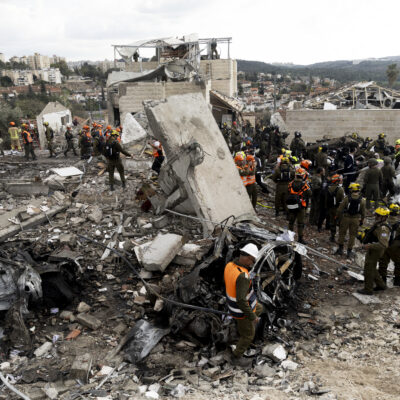
At least 12 killed in Iranian missile strikes in Israel since start of war

BARAKA'S BACKING
In progressive pivot, N.J. congressional candidate Brian Varela secures Newark Mayor Ras Baraka’s endorsement

IHRA ADOPTED
Chicago City Council unanimously passes antisemitism legislation without mayor’s involvement

COMEBACK BID
Elaine Luria wants to reclaim her post as a pro-Israel leader in Congress
Please log in if you already have a subscription, or subscribe to access the latest updates.
 Continue with Google
 Continue with Apple