




















































Before denouncing AIPAC, Moulton sought group’s endorsement for Senate campaign, source says
Moulton turned against the group when it was unable to guarantee him an endorsement upon the launch of his Senate campaign, a source told JI
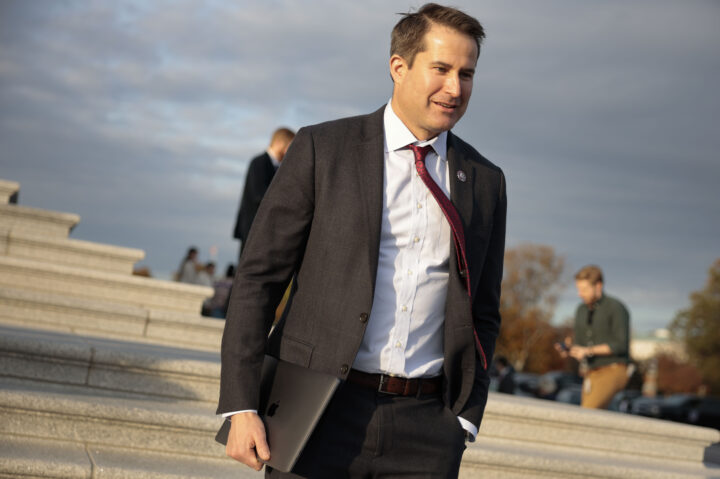
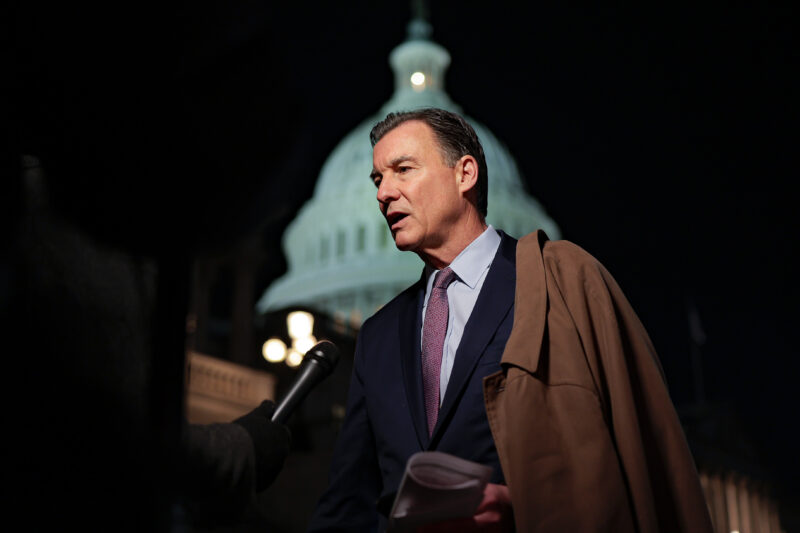
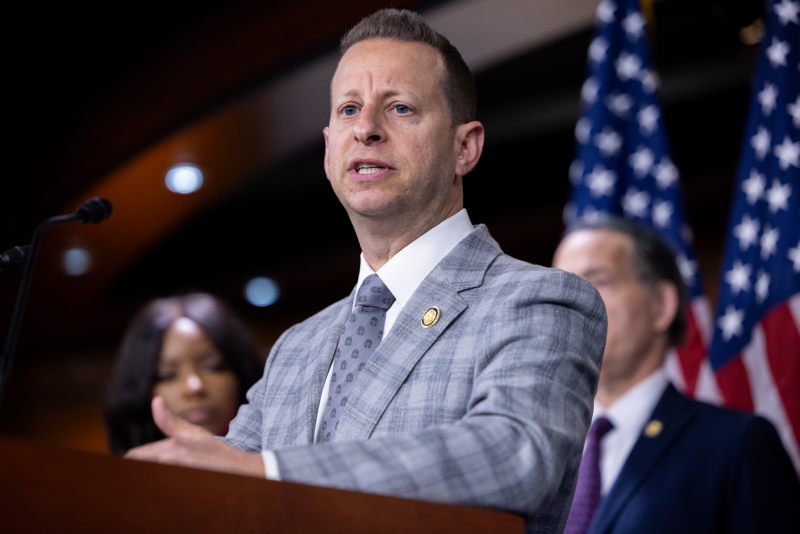
Anna Moneymaker/Getty Images
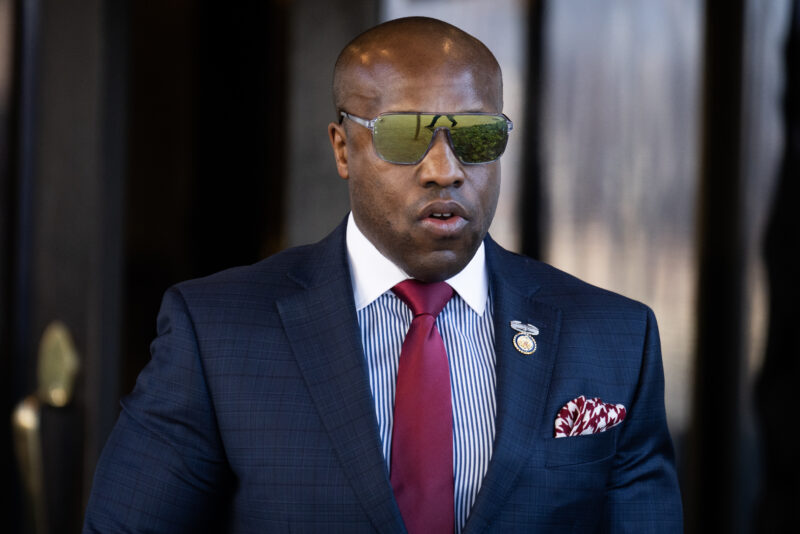
Rep. Seth Moulton (D-MA) speaks with a reporter outside of the U.S. Capitol Building on November 16, 2021 in Washington.


 Add JewishInsider on Google
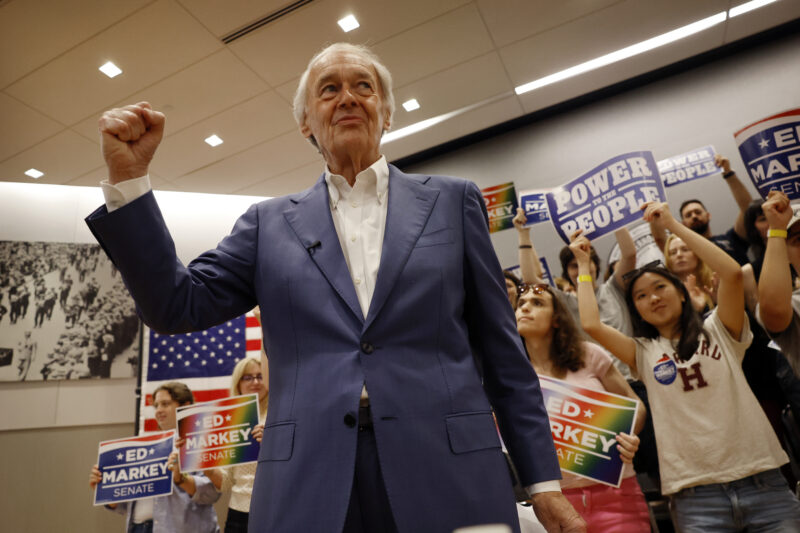
Before making public denunciations and rejections of AIPAC an early pillar of his Senate campaign against Sen. Ed Markey (D-MA), Rep. Seth Moulton (D-MA) spent months seeking a promise that the group would endorse him upon the announcement of his Senate campaign, a source familiar with the situation told Jewish Insider.
The source said that Moulton — who has been endorsed by AIPAC in previous races — began courting AIPAC leaders in Massachusetts in the spring this year and then made multiple explicit requests for an endorsement throughout the summer.
AIPAC leaders were ultimately unwilling to provide such a guarantee before the race began, the individual said.
On the second day of his nascent primary campaign, Moulton released an announcement rejecting AIPAC and saying that he would return any donations he had received from its members.
He has continued to hammer the group since then, saying in a recent interview that his break with AIPAC was “a long time coming.”
“AIPAC has made clear to all in Congress that it intends to use its significant resources to influence U.S. elections, and Seth believes that’s all the more reason to engage and push for change from within,” the Moulton campaign said in a statement. “He’s never been afraid to disagree with AIPAC, both privately and in public, but he’s been increasingly and particularly focused on getting them to distance themselves from the Netanyahu government. When it became clear that they would not do so, Seth made the decision to return their contributions.”
The campaign did not deny JI’s reporting that Moulton had made repeated requests for a guarantee of an AIPAC endorsement before announcing his Senate run.
Asked for comment on the situation, AIPAC spokesperson Marshall Wittmann referred JI to the group’s original statement on Moulton’s break with AIPAC. That statement highlighted his past relationship with and requests for an endorsement from the group — though it did not explicitly mention outreach in connection with the Senate campaign.
“Rep. Moulton is abandoning his friends to grab a headline, capitulating to the extremes rather than standing on conviction,” Wittmann’s original statement reads. “His statement comes after years of him repeatedly asking for our endorsement and is a clear message to AIPAC members in Massachusetts, and millions of pro-Israel Democrats nationwide, that he rejects their support and will not stand with them.”
The revelation of Moulton’s recent and unsuccessful efforts to secure a guarantee of AIPAC’s support may cast his rejection of the group in a new light.
Many strategists involved in Massachusetts politics said Moulton’s move is an odd strategic choice for a lawmaker known more as a moderate — especially when running against Markey, who holds a strong progressive record and has a deep well of support among progressive voters.
Moulton’s strategy is “all a little head scratching,” a state Democratic official told JI. In some ways, the official said, Moulton’s campaign mirrors his successful line of attack — focused on a generational and anti-establishment argument — against then-Rep. John Tierney (D-MA) in 2014, whom he unseated.
But, the official continued, “on the face of it, it doesn’t make a whole lot of sense as a political strategy” for Moulton to try to out-flank Markey from the left. “Maybe he sees something other people [don’t], but it’s an odd thing to make as your signature opening move.”
Moulton, the official continued, would probably be more successful once again focusing on a generational argument and “frankly staying far away from issues like Israel,” which is not likely to be a particularly salient issue in the race.
Anthony Cignoli, a longtime Massachusetts political consultant, said that “it’s clear Moulton is looking for the base of voters that he would need in a primary” — a voting population that’s generally to the left of Moulton’s own track record.
“But here you’ve got the long-standing champ of a lot of these issues, Ed Markey, and Moulton is really trying to find a way to muscle in here,” Cignoli said. “These are not issues he has a track record on.”
In the primary, Cignoli said Moulton needs to “reinvent and reintroduce himself” as a more progressive figure. “It’s hard to change in mid-course from his congressional track record … [and] that’s going to take an awful lot of money.”
He said that he thinks many voters, particularly in the Jewish community, will find Moulton’s sudden U-turn on AIPAC to be disingenuous. And he said that Markey is well-known and highly popular among key Democratic primary constituencies, particularly among the progressives who make up the base of the primary electorate.
One leader in the Boston Jewish community told JI that Moulton’s rejection of AIPAC has been largely overlooked outside of a highly engaged constituency of Jewish voters.
But, the leader agreed, Moulton’s strategy does not seem to make much sense. In a head-to-head race, they said, Markey will clearly own the left flank of the electorate. Moulton has “actively and aggressively” sought AIPAC’s endorsement in past races, the leader continued, and it’s not likely that many anti-Israel voters will see his recent turn as authentic.
Moulton’s strong rejection of AIPAC could lead Jewish pro-Israel voters in Massachusetts to give a second look to Markey, local observers say.
Particularly in recent years, Markey has been one of the most vocal and consistent critics of Israel in the Senate. He voted in favor of every resolution to block arms transfers to Israel that has come before the chamber in the past year and faced boos for a call for de-escalation between Israel and Hamas at a Jewish communal gathering immediately after the Oct. 7, 2023, Hamas attacks.
He was also a frequent critic of Israeli policy prior to the war in Gaza.
But despite his record, Markey has a long-running relationship with the state’s Jewish community and has been popular among Jewish Democratic voters during his long career.
“He does have a multi-decade well of support and goodwill. That’s been challenged in recent years … but he’s got a deep well of relationships to call upon and credibility from the past,” the Democratic official said. “That could potentially open an opportunity for new conversations.”
Moulton’s anti-AIPAC blitz is “almost pushing that community into Markey’s arms,” the official continued.
Cignoli said that while Markey may face some challenges in the Jewish community, Moulton appears to be effectively surrendering that territory.
It remains unknown whether other candidates, such as Squad member Rep. Ayanna Pressley (D-MA), will join the race. A Pressley candidacy in particular could prompt Jewish voters to unite around an alternative to block her ascension.
How strong supporters of Israel end up voting remains an open question, the Boston Jewish leader said — highly dependent on the ultimate shape of the race.
The Democratic official said that whether Pressley enters the race is currently one of the most-watched dynamics in Massachusetts politics — “the person that everybody is waiting for is Ayanna” — and that she is believed to be considering a campaign, though time could be running short.
“If Ayanna is in, that definitely changes the calculus for the [pro-]Israel community. Maybe people would rather have Markey at that point,” the official said.
Cignoli was somewhat skeptical that any others would enter the race, given that they’d likely split the anti-incumbent vote with Moulton, potentially to Markey’s benefit, and might struggle to qualify for the ballot.
“Pressley against the incumbent is one thing, but Pressley with another challenger out there who’s aggressive in his election style, campaign style, it makes it more difficult,” Cignoli said. “She would be a more significant candidate [against Markey] but with Moulton in, not as much.”
Pressley, he added, might have a stronger chance of winning a Senate seat if she waits until one of the incumbents retires. She could retain her safe House seat until then, or potentially find herself in line for a House Democratic leadership position, gain a spot in a future Democratic administration or run for another office.
Another potential challenge for Moulton could be locking down the necessary 15% support at the state’s Democratic convention — from local Democratic activists and officials, who are well to the left of the average Democratic voter and not Moulton’s natural constituency — to appear on the ballot next year.
Markey already has sufficient support and Pressley would likely be able to rally it, but “I don’t see where Seth gets his 15% from,” the official said.
Cignoli also said he’s unclear on how Moulton plans to meet that 15% threshold.
Jewish Insider’s Congressional correspondent Emily Jacobs contributed reporting.
More Stories
MICHIGAN MANEUVER
After holding out for weeks, Michigan AG Nessel endorses El-Sayed

MEMORIAL EVENT
State Department plans memorial for American victims of Oct. 7 attack
WAR POWERS WOES
Senate narrowly rejects Iran war powers resolution, as Tillis joins Democrats to oppose war

Daily Overtime
Bibi takes on Mamdani, Qatar, Turkey at U.N.

POLICY PIPELINE
Deborah Lipstadt launches Emory institute to train the next generation of policymakers fighting antisemitism

MONEY MATTERS
Treasury moves to terminate tax-exempt status for some universities, private schools
Please log in if you already have a subscription, or subscribe to access the latest updates.
 Continue with Google
 Continue with Apple