

































Mnookin, who is Jewish, initially disbanded an anti-Israel encampment at the University of Wisconsin-Madison before entering into negotiations with student protesters
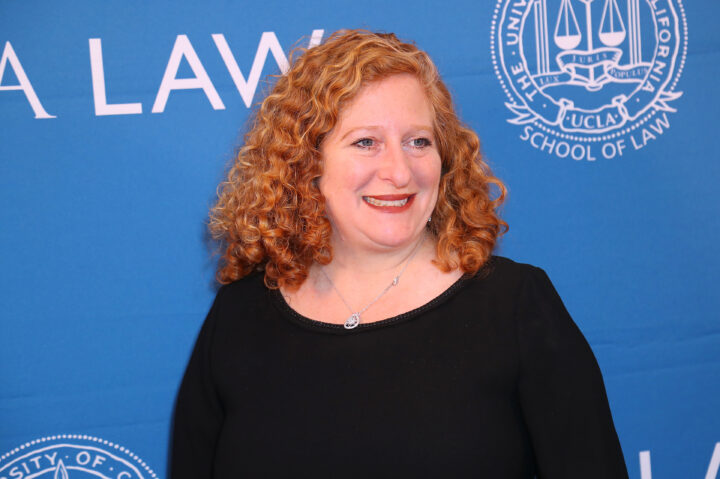
Leon Bennett/Getty Images
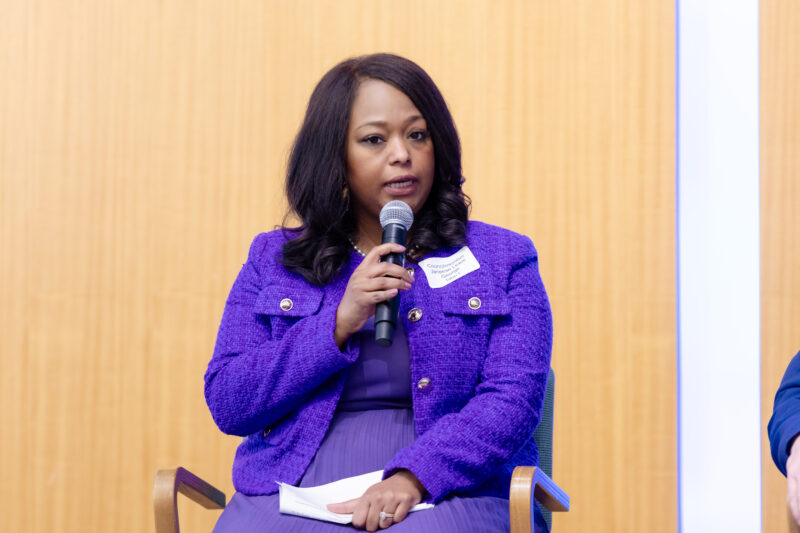
Jennifer Mnookin attends UCLA Black Law: 50th Anniversary Solidarity Gala at The Beverly Hills Hotel on April 04, 2019 in Beverly Hills, California.


 Add JewishInsider on Google
Columbia University this week tapped University of Wisconsin-Madison Chancellor Jennifer Mnookin as its fourth president in two years — and first Jewish leader in three decades.
While the New York City campus, which was roiled by antisemitic turmoil for nearly two years following the Oct. 7, 2023, terrorist attacks in Israel, has been quieter in recent months, Jewish student leaders who worked closely with Mnookin at Wisconsin expressed optimism that she could help Columbia repair its strained relationship with the federal government and ongoing division among students and manage the implementation of recent recommendations made by the school’s antisemitism task force.
Still, Mnookin, a legal scholar who served as dean of the University of California, Los Angeles School of Law before moving to Wisconsin in 2022, faced some criticism over concessions she made with Students for Justice in Palestine protesters during an anti-Israel encampment on the Madison campus in April 2024.
Mnookin initially sent law enforcement to shut down the student encampment — resulting in the arrest of roughly three dozen demonstrators — then negotiated with protesters after they established a new encampment. The non-binding deal reached to dismantle that encampment required SJP to comply with university protest rules in exchange for the right to present their divestment demands to university leaders, who did not consent to their requests.
Under Mnookin’s leadership, SJP was suspended from campus in July 2025 for violating university policy while protesting an event with former U.S. Ambassador to the United Nations Linda Thomas-Greenfield. SJP was reinstated, on probation, earlier this month.
After Columbia’s board of trustees announced her unanimous appointment, Mnookin wrote in an email to the Columbia community on Monday that “the last several years have been challenging ones for higher education, certainly including Columbia. Having had the privilege for the past few years of leading a public flagship university in a complex time, I well understand the significant uncertainties and heightened scrutiny many universities are now facing.”
“The chancellor being Jewish would lead a lot of Jewish students to automatically assume she’s ‘on our side.’ That’s not her role, despite what her personal beliefs might be outside of her position. [But] Mnookin was definitely present in the aftermath of Oct. 7,” Jacob Bigelman, who graduated from Wisconsin in May with a degree in personal finance, told Jewish Insider.
Bigelman, a former AEPi chapter president, helped organize the first meeting post-Oct. 7 between Jewish students and Mnookin “to express concerns about antisemitism and when freedom of speech teeters on the line of hate speech,” he said.
“She’s a very experienced legal scholar with an understanding of the First Amendment,” Bigelman said. When Mnookin didn’t put out a statement immediately following the terrorist attacks, as many other university leaders had done, Bigelman questioned her about the silence during an encounter at the university’s Hillel, a couple days after the attacks.
“She said it was a classic lose-lose situation,” he recalled. “You’re never going to make someone happy enough and it creates a precedent that every time a world event happens the university has to comment on everything.” Mnookin did release a statement on Oct. 11, which Bigelman described as “neutral.” In it, she expressed concern that “these devastating developments will fan the global flames of both anti-Semitism and Islamophobia, making peace and justice in the region even more elusive.”
Later, her response to the encampment “left everyone wanting a little bit more,” said Bigelman. “Jewish students, and people fed up with the protests in general, were happy to see she gave them warnings. When those weren’t met she brought in the police. A lot of people were glad to see the university was taking concrete steps to follow through on dismantling the protest. When the encampment started again, a lot of people were hoping they would send the police back in and were disappointed to find out that they were going to enter negotiations with SJP.”
At the same time, Bigelman said that “the negotiations were purely symbolic and she didn’t give in on anything of substance. The symbolism of negotiating with them is what frustrated a lot of Jewish students.”
“I think what Mnookin did well is she maintained institutional control,” he continued. “Campus never got to the levels of Columbia, which was seen as ground zero of all of this. Everyone was left wanting a little bit more [from her], but at the end of the day, in terms of negotiations with protesters, nothing happened with negotiations that impacted the way the university discloses its finances. I think it was just making the Palestinian cause feel that it had more space on campus. But just the symbolism of it left a sour taste in a lot of our mouths.”
Bigelman said that he would have liked to see more transparency from the administration, which relied on “proceduralism, such as codes of conduct, disciplinary probation, internal committees, that came off as a bit obscure to people involved.”
Overall though, “the chancellor was good to our university,” he said. “At the end of the day, she prevented the campus from turning into something worse. [That] track record may be why she was eyed for this opening at Columbia.”
He added, “I think Mnookin will be strong with working with Congress” in regard to reinstating Columbia’s funding that was slashed by the federal government over an alleged failure to combat antisemitism. The university announced in July it would implement several commitments in an effort to restore some $400 million in federal funding.
Sophie Small, who graduated from UW-Madison in December with a double major in history and religious studies, met Mnookin several times at Hillel. The chancellor was “a frequent flier at things like Rosh Hashanah services and would always come and light the Hanukkah candles on the first night,” Small, who served on Hillel’s executive board, recalled.
Small, who described the encampment as “a gathering” that was not disruptive like on other campuses, said she feels “70 percent positive, 30 percent negative” about how Mnookin handled protests and her relationship with Jews on campus.
“She did what she could and she showed up for the Jewish community in ways I was impressed by,” said Small. “She did not stop coming to Rosh Hashanah even though she was under flak from Jewish students and parents.”
“I’m excited for her to be at Columbia,” continued Small. “I didn’t feel like Columbia was encouraging its students to engage in conversation [the way Wisconsin did]. Our encampment was a night and day difference from Columbia’s. I think she’ll be good there. It will be good for Columbia to have a Jewish leader.”
Mnookin grew up in a Reform Jewish family in the Bay Area. Her father, Robert Mnookin, is on the board of directors at Harvard Hillel and the author of The Jewish American Paradox: Embracing Choice in a Changing World.
Mnookin’s tenure comes on the heels of three other presidents who grappled with campus unrest post-Oct. 7. Minouche Shafik, who was leading the university during the attacks, cited the “period of turmoil” that followed when she resigned in 2024. Shafik was criticized by members of Congress and some of the Columbia community over her handling of the encampment, which included physical intimidation of Jewish students.
Katrina Armstrong, who briefly replaced Shafik, abruptly stepped down in March 2025 as the school faced pressure and funding cuts from the Trump administration over antisemitism allegations.
Claire Shipman, Armstong’s successor and the current interim president, struck a deal with the government to restore funding. She also faced scrutiny — and later apologized — for leaked text messages where she suggested that a Jewish trustee should be removed from the university’s board over her pro-Israel advocacy.
Hillel directors at Wisconsin and Columbia both expressed support for Mnookin in statements on Monday.
“Mnookin has been an outstanding friend and partner to UW Hillel, and she has consistently and thoughtfully supported our students,” said Greg Steinberger, CEO and president of UW Hillel. “Her leadership, work ethic and commitment to building community has helped us grow the wonderful Jewish community the UW has long been known for. The UW Hillel Foundation is grateful to Chancellor Mnookin for her friendship, service, and leadership, and we look forward to continuing to work closely with her through the spring semester. We remember fondly celebrating our holidays with the Chancellor. She has stood with us through the challenges, sorrow, and sadness that our community and the campus have experienced.”
Brian Cohen, executive director of the Kraft Center for Jewish Life, Columbia’s Hillel, said, “the last few years have been undeniably difficult for the Jewish and Israeli communities on campus. While challenges remain, there is a vibrant, joyful, proud Jewish community at Columbia. I am hopeful that President-elect Mnookin will bring the reputation, experience, and understanding that we need to build on that strong foundation.”
Judea Pearl, a professor of computer science at UCLA — where Mnookin served as law school dean from 2015-2022 — was also supportive of Columbia’s new hire, calling Mnookin a “good choice” in a post on X.
Mnookin will begin her tenure on July 1.
Many campus leaders are now conceding it is easier to give in to protesters than to stand firm against their rule-breaking

Jacek Boczarski/Anadolu via Getty Images
Students and residents camp outside Northwestern University during a pro-Palestinian protest, expressing solidarity with Palestinians with banners in Evanston, Illinois, United States on April 27, 2024.
It’s spring in Cambridge, Mass. — graduation season — which means that large white tents have started to appear on the leafy quads throughout Harvard Square.
Until Tuesday, a different kind of tent was still visible in Harvard Yard: small camping tents housing the stragglers who remained in Harvard’s anti-Israel encampment even after final exams wrapped up several days ago. Last week, Harvard suspended student protesters who refused to abide by campus administrators’ orders to disband the encampment, blocking access to their dorms.
But now, just a week from the start of official university commencement festivities, Harvard has backtracked on its disciplinary action, ahead of the arrival next week of thousands of graduates’ family members, alumni and honorary degree recipients to the Ivy League university. University officials seemed to be saying that Harvard cannot get ready for commencement if Harvard Yard is still gated and locked, accessible only to university affiliates and the handful of people still camped out in protest of Harvard’s alleged “complicity in genocide.”
In making a deal with the protesters, Harvard interim President Alan Garber joined a growing number of leaders at elite universities who are incorporating protesters’ voices into major university investment decisions and allowing student activists to get off with few, if any, repercussions after weeks of disciplinary violations. Harvard’s dean of the faculty of arts and sciences wrote in a Tuesday email that the outcome “deepened” the university’s “commitment to dialogue and to strengthening the bonds that pull us together as a community.”
The path Garber took is now a well-trodden one — remove the threat of disciplinary consequences and allow protesters to meet with university trustees or other senior leaders to pitch them on divesting their schools’ endowments from Israeli businesses, a concession that before last month would have been unthinkable at America’s top universities.
In a matter of days it has become commonplace. Just two years ago, Harvard’s then-president, Lawrence Bacow, responded to the campus newspaper’s endorsement of a boycott of Israel by saying that “any suggestion of targeting or boycotting a particular group because of disagreements over the policies pursued by their governments is antithetical to what we stand for as a university.”
Northwestern University set the tone two weeks ago when President Michael Schill reached an agreement with anti-Israel protesters in exchange for them ending their encampment. Jewish leaders on campus found the agreement so problematic that the seven Jewish members of the university’s antisemitism committee — including Northwestern’s Hillel director, several faculty members and a student — stepped down in protest. Lily Cohen, a Northwestern senior who resigned from the committee, summed up their concerns: “It appears as though breaking the rules gets you somewhere, and trying to do things respectfully and by the books does not.”
Her observation has proven prescient as universities negotiate with anti-Israel protesters who break campus rules while they slow-walk reforms long sought by Jewish students — or even avoid meeting with Jewish community members altogether.
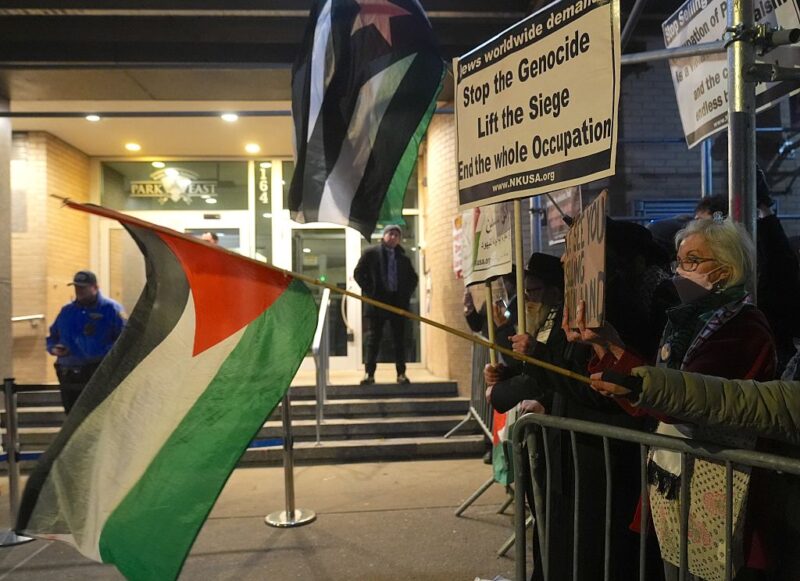
University of Wisconsin-Milwaukee Chancellor Mark Mone signed onto a far-reaching agreement with protesters this week that calls for a cease-fire in the war between Israel and Hamas in Gaza, condemns “genocide” and denounces “scholasticide” in Gaza and cuts off ties between a university-affiliated environmental NGO and two government-owned Israeli water companies. Meanwhile, Hillel Milwaukee said in a statement that Mone has refused to meet with Jewish students since Oct. 7. Where universities fumbled over statements addressing the Oct. 7 attacks last fall in failed bids to satisfy everyone, many campus leaders have now conceded it is easier to give in to protesters than to stand firm against their rule-breaking. (The president of the University of Wisconsin system said he is “disappointed” by UWM’s actions.)
Princeton University and Johns Hopkins University made concessions to encampment leaders this week. At Johns Hopkins, the school pledged to undertake a “timely review” of the matter of divestment, and to conclude student conduct proceedings related to the encampment. Hopkins Justice Collective, the group that organized the protests, characterized the agreement as “a step towards Johns Hopkins’ commitment to divest from the settler colonial state of Israel.”
In a campus-wide email on Monday, Princeton President Christopher Eisgruber said all students must vacate the campus quad where they had organized an anti-Israel encampment. He offered the campus protest leaders an audience with the body that reviews petitions for divestment. Other student groups can also petition for a meeting, he wrote.
Students who were arrested during the course of the protests may have a chance to take part in a so-called “restorative justice” process, whereby the university “would work to minimize the impact of the arrest on the participating students.” If protesters take responsibility for their actions, Eisgruber wrote, the school will conclude all disciplinary processes and allow the protesters to graduate this month.
At many more universities, top administrators — including university presidents — have met with demonstrators, giving them a chance to air their concerns even when they didn’t reach an agreement. University of Chicago administrators held several days of negotiations with encampment leaders before the talks fell apart and police cleared the protesters. The George Washington University President Ellen Granberg met over the weekend with student protesters who lectured her about “structural inequality” at GW and likened the university’s code of conduct to slavery and Jim Crow-era segregation, according to a video recording of the meeting.
College administrators’ negotiations to end the protests might bring a wave of good headlines and promises of quiet at campus commencements, the largest and most high-profile event of the year for most universities. But students haven’t said what they’ll do when school is back in session next year.
By promising meetings with university investment committees, the administrators are almost certainly guaranteeing that campus angst over the war in Gaza will not die down. Brown University President Christina Paxson pledged that protest leaders can meet with the university’s governing body to discuss divestment from companies that operate in Israel — in October, a year after the Hamas attacks that killed more than 1,200 people and ignited the ongoing bloodshed in the Middle East.
Correction: This article was updated to more accurately reflect negotiations between Princeton’s president and the protesters.
Please log in if you already have a subscription, or subscribe to access the latest updates.
 Continue with Google
 Continue with Apple