










































































A provision in draft versions of the 2027 NDAA mandating a department-wide hate symbols policy was prompted by a Coast Guard effort to reclassify swastikas as ‘potentially divisive’
Al Drago/Getty Images
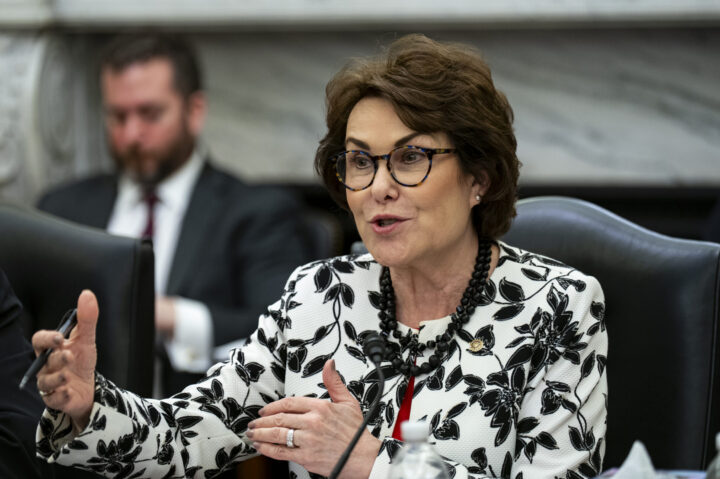
Sen. Jacky Rosen (D-NV), ranking member of the Senate Armed Services Subcomittee on Cybersecurity, speaks during a hearing on Artificial Intelligence cyber capabilities, on Capitol Hill on March 25, 2025 in Washington, DC.


 Add JewishInsider on Google
Sens. Jacky Rosen (D-NV), Sen. James Lankford (R-OK) and Rep. Wesley Bell (D-MO) wrote to the leaders of the Senate and House Armed Services Committees on Thursday to urge them to ensure that a provision mandating the creation of a Department of Defense-wide policy on hate symbols remains in the final version of the 2027 National Defense Authorization Act.
Similar language was adopted in both the Senate and House versions of the bills, but the final NDAA remains under negotiation by lawmakers. The push comes largely in response to a back-and-forth last year in the Coast Guard over whether displays of swastikas and nooses would be considered banned hate symbols or only “potentially divisive.”
“Existing DoD hate symbol policies vary across our military service branches, creating inconsistent standards and potential enforcement gaps when it comes to addressing their display,” the three lawmakers said. “This lack of uniformity makes it harder to prevent, identify, and address symbols that promote hate, and can even allow displays to go unaddressed depending on branch-specific rules.”
They emphasized that such symbols in the military workplace “undermine unit cohesion, erode morale, and threaten … good order and discipline.” Bell’s amendment adding the hate symbols provision was adopted by a voice vote in the House Armed Services Committee’s NDAA markup.
The lawmakers emphasized that it was only sustained pushback from lawmakers that prompted the Coast Guard and Department of Homeland Security, which has oversight over the Coast Guard, to reverse course.
“The swastika is not potentially divisive,” the lawmakers continued. “It is one of the most universally recognized symbols of hatred in human history. It represents antisemitism, racial supremacy, violent extremism, and the systematic persecution and murder of millions.”
The lawmakers similarly said that the noose is a “symbol of racial terror,” representing the lynching and terror used to threaten and deny the rights of Black Americans.
The two senators, who chair the Senate antisemitism task force, urged Meta to implement country-of-origin labeling for accounts
U.S. Senate
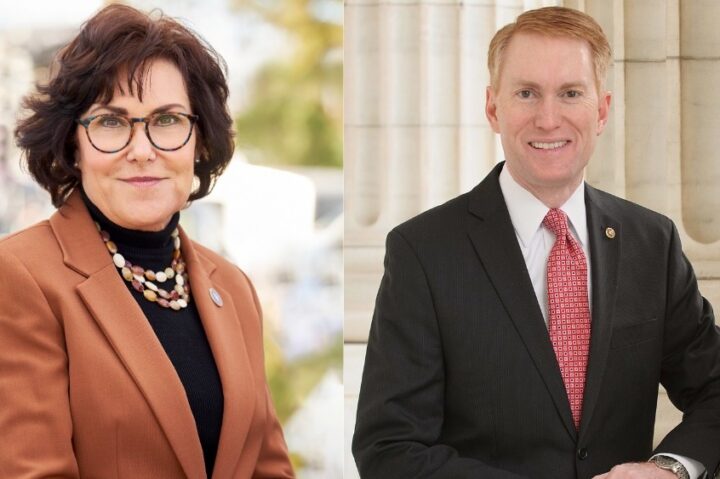
Sens. Jacky Rosen (D-NV) and James Lankford (R-OK)
Sens. Jacky Rosen (D-NV) and James Lankford (R-OK) wrote to Meta CEO Mark Zuckerberg on Tuesday pressing him over the company’s failures to address antisemitic bot accounts on its platforms, urging Facebook and Instagram to label posts and users by their country of origin as a particularly important reform.
“We write to express grave concerns regarding the persistent problem of inauthentic accounts and ‘bot farm’ operations abusing social media platforms to develop and spread antisemitic content on your platforms,” Rosen and Lankford, who together chair the Senate antisemitism task force, said in a statement.
They also requested that Zuckerberg share information about what safeguards Meta has in place to “prevent platform abuse by inauthentic accounts” on Instagram and Facebook and that the company take steps to “implement reforms to protect users, limit the proliferation of antisemitic content, and strengthen its transparency measures against inauthentic behavior, including by labeling accounts’ country of origin for the American public.”
Rosen and Lankford said that Meta “cannot continue to play catch up” against coordinated campaigns on social media, and that lawmakers need “collaboration” with social media companies to ensure greater transparency and integrity.
The senators asked Zuckerberg to provide more information on how Meta is preventing inauthentic accounts spreading antisemitic contenting from being monetized; how it takes action against inauthentic accounts “at scale”; how it handles non-English antisemitic bot networks; how it prevents those whose accounts have been shut down from establishing new ones; and how it addresses accounts with “unverifiable or inconsistent geolocation patterns.”
The lawmakers highlighted what they characterized as a growing problem of foreign actors using fake accounts to promote division in America, including through “open, hostile, and violent antisemitism.” They said that this problem is only likely to increase with the expansion of artificial intelligence, which can overwhelm current safeguards.
They noted that data indicates that more than 1.1 billion accounts on Facebook have already been sanctioned for inauthentic behavior.
“Analysis of online antisemitism across platforms shows that coordinated antisemitic narratives are often amplified by clusters of accounts with disguised locations,” Rosen and Lankford said. “In reality, many of these accounts operate across borders and outside of the American communities they target, making their activity difficult to trace or disrupt without reliable location signals.”
The senators emphasized that “glorification of harm” and calls for attacks on Jewish communities “have been particularly pronounced following political violence on American soil” and that antisemitic posts can quickly reach audiences of millions online.
Rep. Dan Goldman said that ‘words of condemnation are no longer enough’ and that there has been a ‘systematic failure’ by Congress to address rising antisemitism since Oct. 7
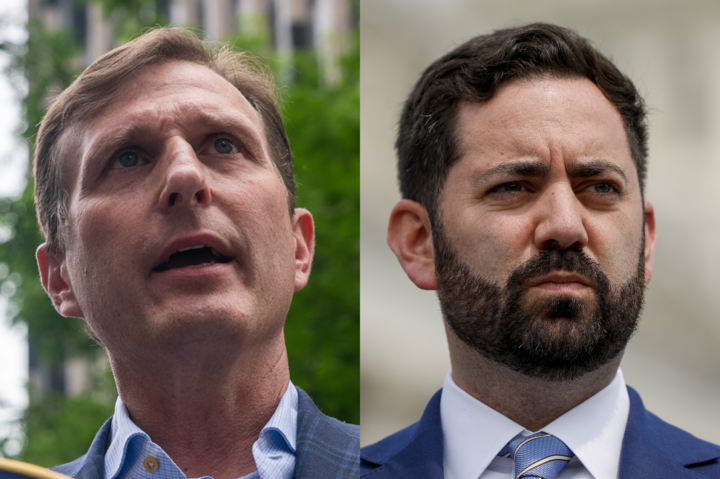
Reps. Dan Goldman (D-NY) and Mike Lawler (R-NY) are leading 28 colleagues in introducing a House version of the Jewish American Security Act, the package of antisemitism-related legislation introduced by Sens. Jacky Rosen (D-NV) and James Lankford (R-OK) last month in the Senate.
The bill includes a proposal for significant increases in security funding, new oversight and administrative measures to address antisemitism on college campuses and new transparency requirements for social media companies relating to antisemitism online.
The legislation is being co-sponsored by Reps. Grace Meng (D-NY), Brian Fitzpatrick (R-PA), Debbie Wasserman Schultz (D-FL), Maria Salazar (R-FL), Jared Moskowitz (D-FL), Rudy Yakym (R-IN), Josh Gottheimer (D-NJ), Marc Veasey (D-TX), Don Bacon (R-NE), Haley Stevens (D-MI), Michael McCaul (R-TX), Nicole Malliotakis (R-NY), Laura Gillen (D-NY), Jeff Van Drew (R-NJ), Jake Auchincloss (D-MA), Ted Lieu (D-CA), Dan Meuser (R-PA), Brad Schneider (D-IL), Tom Barrett (R-MI), Jen Kiggans (R-VA), Greg Landsman (D-OH), David Kustoff (R-TN), Juan Ciscomani (R-AZ), Lois Frankel (D-FL), Tom Suozzi (D-NY), Randy Weber (R-TX), Kristen McDonald Rivet (D-MI) and John Moolenaar (R-MI).
“Words of condemnation are no longer enough,” Goldman said in a statement. “Since the October 7th attacks, there has been a systematic failure in Congress and in our communities to counter the threat posed by surging antisemitism across this country.”
Goldman, a co-chair of the House antisemitism task force, said the bill would change that pattern: “Whether on campus, at synagogues, or online — the Jewish American Security Act will provide the tools necessary to help secure our at-risk communities to practice their faith without fear. American Jews cannot be asked to bear this burden alone. As Americans, we must stand shoulder to shoulder with those under siege by hate.”
Lawler, who is also the lead sponsor of the long-stalled Antisemitism Awareness Act, said in a statement that by providing additional resources for the Nonprofit Security Grant Program, the bill would help safeguard constitutionally protected religious freedom and bolster Jewish institutions against attacks.
“This bill also delivers critical protections for Jewish students on college campuses through stronger Title VI enforcement, requires greater transparency from online platforms on antisemitic content, and establishes key threat assessments,” Lawler said. “We must act decisively so Jewish Americans can feel safe in their schools, synagogues, and online.”
The legislation is supported by a wide range of Jewish groups across the religious and political spectrum.
“[A]ntisemitism remains a serious threat to the safety and security of the American Jewish community. A piecemeal approach to combat this scourge of [antisemitism] is no longer sufficient. The Jewish American Security Act is a serious and comprehensive federal response to this epidemic of hate,” Jonathan Greenblatt, CEO of the Anti-Defamation League, said in a statement. “We are grateful to Congressmen Goldman and Lawler for championing this bill in the House and showing that keeping Jewish Americans safe is a genuine bipartisan priority.”
Eric Fingerhut, the CEO of the Jewish Federations of North America, told Jewish Insider in a brief interview that, given the support in both the House and Senate and the Jewish community, “there’s never really been something like this at this level of comprehensiveness on Jewish security, with all the Jewish organizations working together.”
“People care, but they just don’t realize how bad it’s been. They don’t realize what’s happened in the last year. They don’t understand how Temple Israel was almost a disaster that would have changed the country,” Fingerhut continued. “This is really an important moment and we are all over this. There’s nothing that’s a higher priority.”
He said that if the bill passes, “we really have something that will make a difference for the Jewish community, which has been the target of a serious domestic terror crisis over this last year. So we’re grateful and we’re ready to work.”
American Jewish Committee CEO Ted Deutch said in a statement that Americans should not need security to pray or be afraid to leave their homes and interact in their communities, “yet, that is exactly what Jews in this country are experiencing every day.”
“We are at an inflection point. Surging antisemitism is not just a threat to the Jewish community; it is a crisis for our democracy and the values we cherish as Americans — pluralism, religious freedom, and the promise of equal protection,” Deutch said. “We thank Representatives Goldman and Lawler for their leadership and demonstrating that confronting this hatred is not a political issue, but a moral obligation.”
Amy Spitalnick, the CEO of the Jewish Council for Public Affairs, said that antisemitic violence “demands investments in a sustained, whole-of-government and whole-of-society response.”
“The Jewish American Security Act helps us to meet that need by focusing on tools that we know work,” Spitalnick said. “A truly inclusive American democracy requires Jewish safety — and so too does our safety as Jews depend on protecting our democratic institutions and values and ensuring the safety and rights of each and every community.”
Nathan Diament, the executive director of the Orthodox Union Advocacy Center, said that the organization “strongly supports” the bill and that the “unprecedented wave of antisemitism demands an unprecedented response by our government,” including increasing NSGP funding to $1 billion.
Rabbi Jonah Pesner, the director of the Religious Action Center of Reform Judaism, said that “the need for meaningful steps to bolster security and the fight against hate is vital.”
“The Jewish American Security Act strengthens the government tools and funding that will be available to help us meet this moment and uphold the American commitment to religious freedom,” Pesner said.
William Daroff, the CEO of the Conference of Presidents of Major American Jewish Organizations, praised the bipartisan support for the legislation as well as the broad consensus around it in the Jewish community, urging the bill’s quick passage.
“It is deeply encouraging to see this bill come together with bipartisan, bicameral support at a time when that kind of consensus is all too rare. There is real meaning in Republicans and Democrats joining around the shared responsibility to protect Jewish Americans,” Daroff said.
“It is encouraging to see real consensus across Jewish organizations. Since October 7, engagement is up and coordination is stronger. That unity is both needed and significant.”
Sen. James Lankford said the bill would help ensure ‘Israel and our partners have what they need before the next attack comes, not after’

Tom Brenner/Getty Images
Birds fly near the Pentagon
Sens. Jacky Rosen (D-NV), Joni Ernst (R-IA), Cory Booker (D-NJ) and James Lankford (R-OK) are set to introduce a bill on Thursday directing the Pentagon to develop a coordinated air- and missile-defense acquisition strategy with Israel, Abraham Accords members and other Middle East allies.
The Optimizing Acquisition Strategies for Integrated Security (OASIS) in the Middle East Act, which expands on existing legislative and administrative efforts to establish a coordinated air and missile defense system throughout the Middle East to protect the U.S. and its partners, would aim to ensure that the necessary resources are in place to protect the U.S. and its allies in future conflicts, sponsors said.
It builds on past legislation sponsored by the co-chairs of the Abraham Accords Caucus, including the DEFEND Act, and comes ahead of the Senate’s markup of the 2027 National Defense Authorization Act. Previous Abraham Accords caucus projects have been incorporated into past years’ NDAAs.
“Iran’s reckless and destabilizing behavior underscores why we must work together to ensure we have sufficient air and missile defense resources to respond to Iranian aggression and keep our allies, like Israel, safe,” Rosen said in a statement, referring to Iran and its proxies’ attacks throughout the region. “Our bipartisan bill will provide a clear framework to support DOD’s efforts to develop an integrated air and missile defense acquisition strategy for the region.”
Lankford said that Iran’s “aggression cannot go unanswered.”
“The OASIS in the Middle East Act makes sure the Department of War has a coordinated strategy so Israel and our partners have what they need before the next attack comes, not after,” Lankford continued. “Standing with our allies is not optional; it is a core American commitment, and this bill ensures we back that commitment up with real resources and real strategy.”
Plus, bipartisan push for Jewish American Security Act

Jeffrey Dean/Bloomberg via Getty Images
Representative Thomas Massie, a Republican from Kentucky, speaks during a campaign event ahead of a primary election at Veterans Memorial Park in Vanceburg, Kentucky, US, on Monday, May 18, 2026.
Good Wednesday morning.
In today’s Daily Kickoff, we break down the results of yesterday’s critical primaries, including Rep. Thomas Massie’s loss in Kentucky and Chris Rabb’s win in PA-03, and report on the introduction by Sens. Jacky Rosen and James Lankford of the Jewish American Security Act. We look at how Democratic officials speaking at the Center for American Progress’ convening on Tuesday sidestepped discussions about Israel even as it held multiple sessions on the Middle East, and cover a new report from Israel’s Institute for National Security Studies warning about the effects of the erosion of American Jewish support for Israel on the relationship between Washington and Jerusalem. Also in today’s Daily Kickoff: Mahmoud Ahmadinejad, Nick Valensi and Israeli Foreign Minister Gideon Sa’ar.
Today’s Daily Kickoff was curated by JI Executive Editor Melissa Weiss and Israel Editor Tamara Zieve, with assists from Danielle Cohen-Kanik and Marc Rod. Have a tip? Email us here.
What We’re Watching
- The House of Representatives is expected to vote today on the Iran war powers resolution sponsored by Rep. Greg Meeks (D-NY), the ranking Democrat on the House Foreign Affairs Committee. The vote comes a day after Sen. Bill Cassidy (R-LA), who last week fell short in his reelection bid after President Donald Trump endorsed an opponent, flipped his vote to advance a similar Democratic-led measure in the Senate. More below.
- The House Education Committee’s subcommittee on Health, Employment, Labor, and Pensions is holding a hearing this morning on antisemitism in the healthcare field, with the Louis D. Brandeis Center for Human Rights Under Law’s Deena Margolies, Dr. Jacob Agronin, Bend the Arc CEO Jamie Beran and American Jewish Medical Association CEO Eveline Shekhman set to testify. Read more here.
- Former Rep. Tom Malinowski (D-NJ) is among those slated to speak at a hearing being convened this morning by the House Foreign Affairs Committee on the State Department’s budget request for its adjacent entities.
- The House Judiciary Committee is holding a hearing on the Southern Poverty Law Center in a session titled “The Southern Poverty Law Center: Manufacturing Hate.”
- Elsewhere in Washington this morning, the Jewish Federations of North America, Conference of Presidents of Major American Jewish Organizations, Combat Antisemitism Movement and the Weitzman National Museum of American Jewish History are hosting a congressional breakfast to celebrate Jewish American Heritage Month. Sam Salz, who in 2022 became one of the only Orthodox Jews to play Division I college football when he walked on to Texas A&M’s team, will give the breakfast’s keynote address.
- Down Pennsylvania Ave., the Hudson Institute is holding an event with Sarah Rogers, the under secretary of state for public diplomacy, on modernizing public diplomacy to address global challenges. Sen. Eric Schmitt (R-MO) is slated to give introductory remarks at the event.
- The Federalist Society is hosting its inaugural Legislative Branch Summit today in Washington.
- In Israel, the Knesset unanimously advanced a bill to dissolve the body, which if passed would automatically trigger elections, which are slated to take place no later than October 27. The bill will still need to go through several more readings and votes before it is passed.
What You Should Know
A QUICK WORD WITH JI’S JOSH KRAUSHAAR
Pro-Israel and Republican Jewish groups helped oust one of their leading GOP antagonists on Tuesday night, aligning with President Donald Trump to defeat Rep.Thomas Massie (R-KY) in the most expensive House primary in recent memory.
Ed Gallrein, a military veteran and farmer recruited by the Trump White House to challenge Massie, decisively defeated the congressman by 10 points, 55-45%. Massie, a libertarian lawmaker who long cast lonely Republican votes against Israel funding and resolutions condemning antisemitism, increasingly trafficked in bigoted rhetoric in the closing weeks of the campaign.
In his concession speech, Massie continued his antisemitic vitriol against his opponent, telling the crowd: “I had to call my opponent and concede, and it took a while to find Ed Gallrein in Tel Aviv.” Even though Trump’s outspoken opposition was the leading factor behind his demise, he routinely blamed Jewish and pro-Israel donors like Miriam Adelson for costing him his seat and insinuated that Israel was buying seats in Congress.
Massie first drew the ire of Trump for voting against his “big beautiful” reconciliation bill last year, and the anger was exacerbated by his work with Democrats to force the Department of Justice to release all of the files involving Jeffrey Epstein.
Outside groups, including a Trump-aligned super PAC (MAGA KY) and those affiliated with the Republican Jewish Coalition, AIPAC and Christians United for Israel, spent aggressively with ads and billboards attacking Massie over his record, with several pointing out his opposition to Israel and Trump’s foreign policy.
Massie’s defeat also underscores Trump’s strong and continued support within the party, with his endorsements in primaries almost always translating into his candidate’s victory. His opposition to Sen. Bill Cassidy (R-LA) led to his defeat last week, and he successfully ousted most of the Indiana GOP state senators who opposed his redistricting efforts.
POLICY PRIORITIES
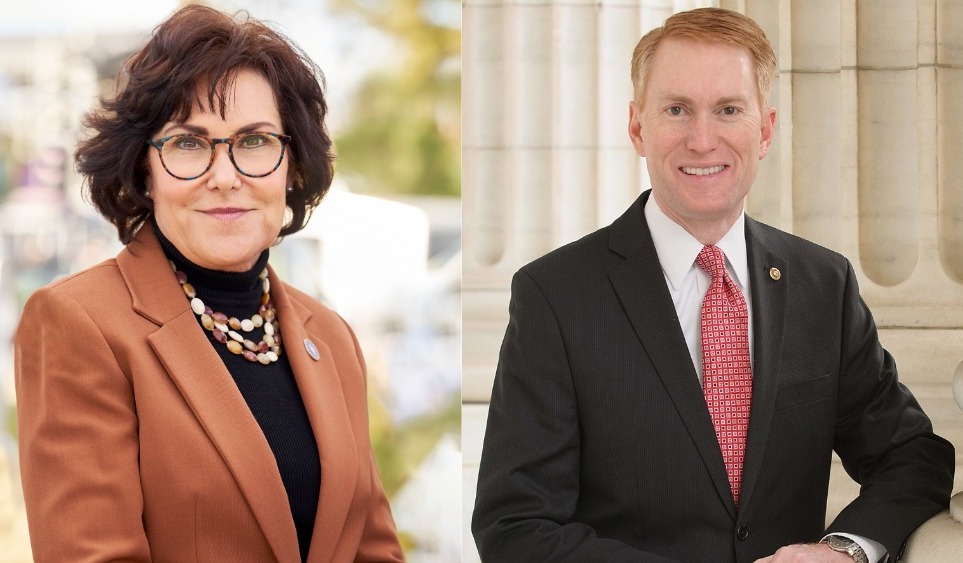
Sens. Jacky Rosen (D-NV) and James Lankford (R-OK) on Tuesday introduced the Jewish American Security Act, a broad new effort by the lawmakers, who co-chair the Senate antisemitism task force, to address antisemitism across multiple sectors of American society, Jewish Insider’s Marc Rod reports. Similar legislation is also expected to be introduced in the House.
About the bill: The bill contains various provisions aimed at increasing security for Jewish communities through additional funding and federal resources. Key provisions include: additional security assistance and improvements to security grant programs for Jewish communities; addressing antisemitism on college campuses through new federal oversight measures including a federal official to handle campus antisemitism; and addressing the spread of antisemitism online by requiring new transparency reports from social media companies, among a range of related steps in each category.
EIGHTH TIME’S THE CHARM

Sen. Bill Cassidy (R-LA) joined with Democrats to vote for a procedural motion advancing legislation that would end U.S. military operations against Iran, allowing the war powers resolution to move forward on Democrats’ eighth such attempt since the war began, Jewish Insider’s Marc Rod reports.
State of play: Cassidy, who last week fell short in his reelection primary effort against a Trump-backed challenger, joined three other Republicans — Sens. Susan Collins (R-ME), Lisa Murkowski (R-AK) and Rand Paul (R-KY) — in voting for the procedural motion, which was approved by a 50-47 vote. Sen. John Fetterman (D-PA) voted against the motion. The passage of the motion will now tee up further debate on and an additional vote on the resolution itself, at a time to be determined.
Money messages: Treasury Secretary Scott Bessent called on U.S. allies on Tuesday to “step up” and join Washington in taking aggressive economic action against Iran and its broader terrorism financing networks, JI’s Matthew Shea reports.
LEAVING FINGERPRINTS
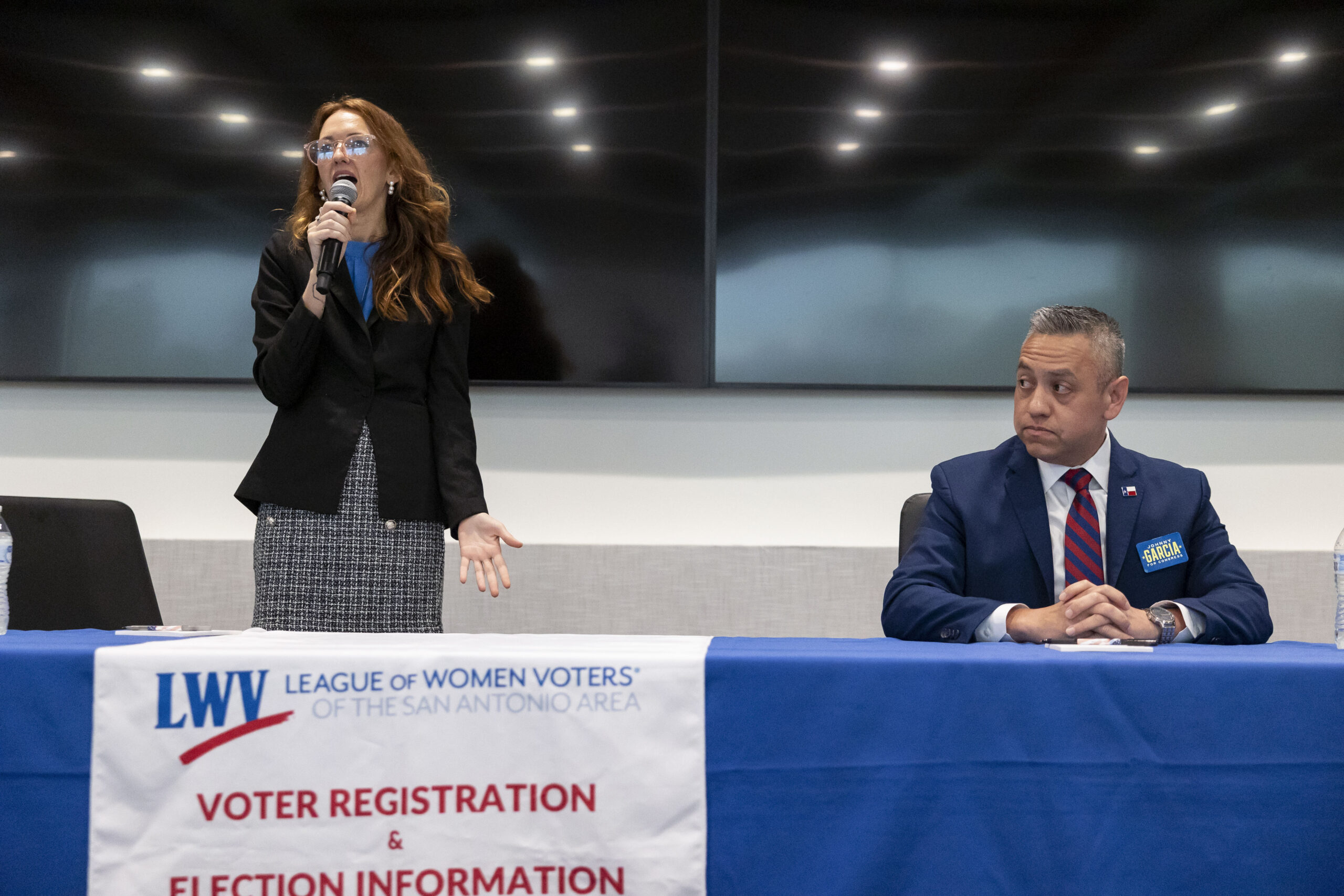
A newly launched super PAC with ties to Republicans has spent nearly half a million dollars to help boost a Democrat running for a competitive open House seat in Texas who is facing growing bipartisan furor over a series of virulently antisemitic social media remarks, Jewish Insider’s Matthew Kassel reports.
Boosting Galindo: Lead Left PAC, the GOP-linked group, has been aggressively promoting Maureen Galindo, a fringe San Antonio activist who finished first in the primary and has said that Jews “own Hollywood” and “worship the synagogue of Satan.” Last week, she said that, if elected, she would turn a local immigration detention center “into a prison for American Zionists and former ICE officers for human trafficking,” while adding, “It will also be a castration processing center for pedophiles which will probably be most of the Zionists.”
Bonus: Rep. Alexandria Ocasio-Cortez (D-NY) slammed Galindo’s comments, saying that “bigoted garbage and antisemitism should be nowhere near our politics” and suggesting that the “donors behind the Republican super PAC funding her should be exposed.”
MENDING FENCES

A new study from the Tel Aviv University-affiliated Institute of National Security Studies warns that American Jews’ ties with Israel have weakened in recent years, and Israeli leaders do not seem to care enough about how these shifting attitudes might affect Israel’s national security. If Israel ignores the growing distance with the American Jewish community, the country could face long-term consequences, authors Ted Sasson and Avishay Ben Sasson-Gordis argue, Jewish Insider’s Gabby Deutch reports.
Words of warning: “An American Jewish community that is less supportive of Israel would leave Israel more isolated globally, less capable of extending soft power, and less confident in its role as the nation-state of the Jewish people,” Sasson, a Middlebury College professor and INSS scholar, and Ben Sasson-Gordis, director of the Israel-United States Research Field at INSS, write.
DEM DISCUSSIONS
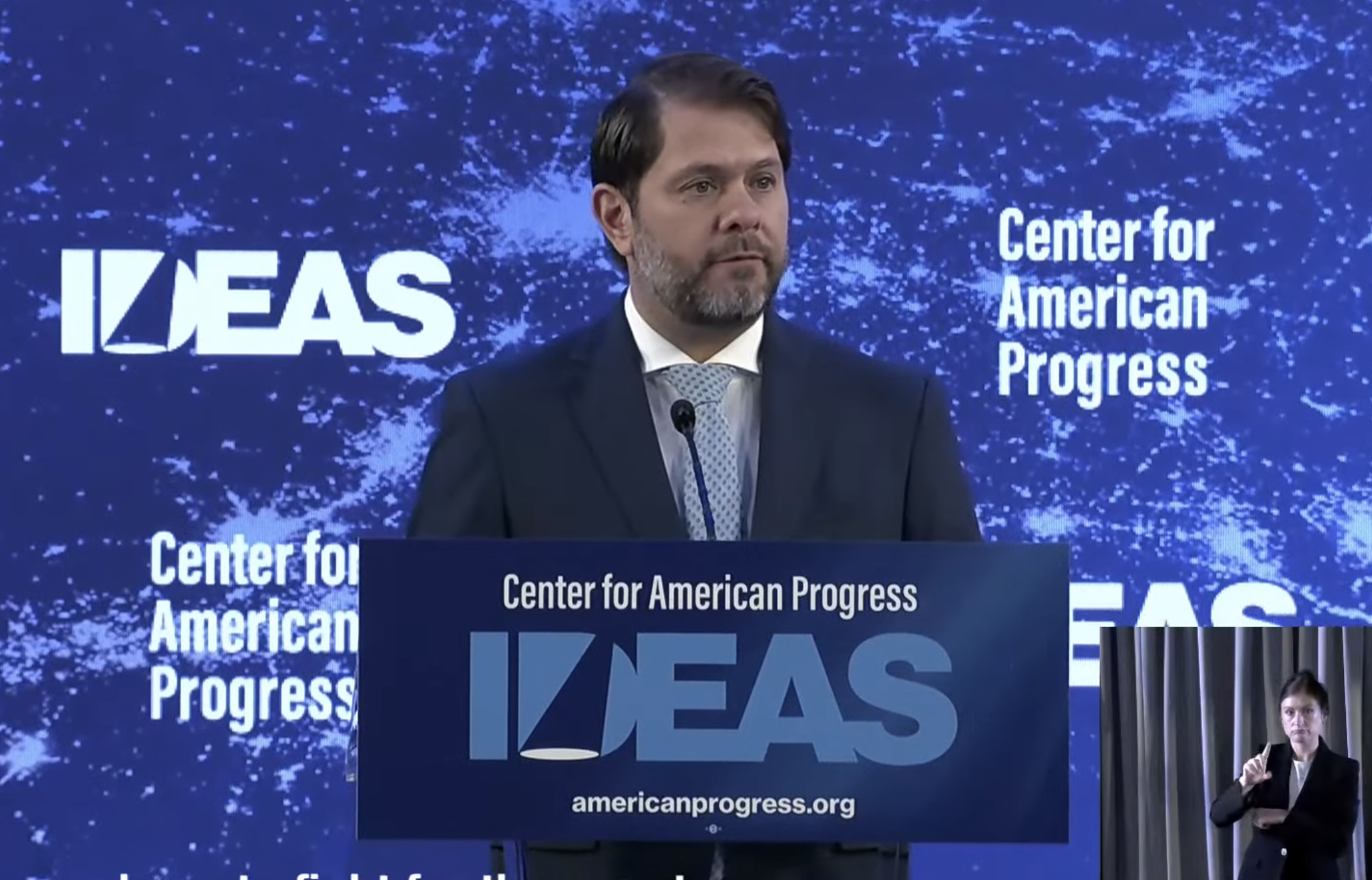
On Tuesday, more than a dozen Democrats pitched their vision for America to a roomfull of liberal donors, staffers and funders at the Center for American Progress’ IDEAS Conference, a convening that pledged to bring together “the broad center-left’s leading thinkers and doers” to offer ideas on a range of policy topics. American foreign policy was one of those topics. In the two sessions on national security, each of which devoted significant discussion to the Middle East, one topic was notably absent: Israel, Jewish Insider’s Gabby Deutch reports.
Iran war opposition: Sen. Ruben Gallego (D-AZ) kicked off the gathering with an address billed as “National Security Ideas for the Future.” He cited his own experiences as a member of the Marine Corps who served in Iraq, arguing that the war in Iran is misguided and harming Americans. ”I’m here today because right now our country is in danger. Will this president continue to drag America into another endless Middle East war?” Gallego said. “This is a war that wasn’t planned, wasn’t authorized and is not making us safer. [Donald] Trump got his war, and working families got stuck with the bill every day.”
FLOURISHING FRIENDSHIPS

While some geopolitical relationships have been tested by the Iran war, others have been strengthened: Emerging alignments between Israel, the United Arab Emirates and India are creating new opportunities for cooperation among three countries increasingly bound by shared defense and economic interests, experts told Jewish Insider’s Matthew Shea reports.
Overlapping interests: On Friday, India and the UAE agreed on the framework for a strategic defense partnership, a step that could deepen ties between New Delhi and Abu Dhabi amid the regional fallout from the war. Hussain Abdul-Hussain, a research fellow at the Foundation for Defense of Democracies, told JI that the partnership also extends to Israel, which has remained a key ally of both countries. He said the emerging alignment is rooted in overlapping economic and strategic interests and shared adversaries.
Worthy Reads
Narrative War: Days after The New York Times’ Nicholas Kristof published a piece alleging numerous abuses of Palestinian prisoners by Israeli security officials, Kristof’s colleague on the Opinion desk, Bret Stephens, observes the documented history of news outlets publishing falsehoods about Israel without basic fact-checking. “The common thread in these and many other stories is that they all involve strenuous, if ultimately embarrassed, efforts to prove that Israelis deliberately seek to kill the innocent and maim the vulnerable, apparently for no other reason than gratuitous cruelty. This isn’t a matter of reporters’ impartially trying to expose wrongdoing wherever they find it — if that were the case, the errors wouldn’t invariably lean in the same ideological direction. It isn’t speaking truth to power. It’s feeding narratives to the credulous.” [NYTimes]
Drawing Down Aid: In The Wall Street Journal, the American Enterprise Institute’s Daniel Samet argues in favor of winding down U.S. aid to Israel, calling it a “political liability” that could affect the future of the relationship between the countries. “Military aid to Israel, which Washington began supplying in significant amounts during the 1960s, has been a sound investment. The U.S. has financed a reliable ally that fights and wins wars against America’s enemies. Yet Israel no longer commands the affection of the American people as widely as it once did. Ending military assistance is a political imperative in changing times.” [WSJ]
Word on the Street
U.S. forces in the Indian Ocean seized an Iran-linked oil tanker that had been under U.S. sanctions since March; the vessel was believed to be carrying upwards of a million barrels of crude oil that was loaded earlier this year from Iran’s Kharg Island…
The New York Times reports on an Israeli-developed plan, backed by the U.S., for former Iranian President Mahmoud Ahmadinejad, who was under house arrest in Tehran, to be installed as the leader of Iran; the plan reportedly fell apart after the hard-liner was injured on the first day of the war in a strike intended to free him from house arrest and, per the Times, “became disillusioned with the regime change plan”…
Ahmadinejad biographer and Israeli analyst Meir Javedanfar dismissed the report, calling it “a disinformation campaign initiated by those that tried to assassinate him”; Javedanfar said that the “disinformation is being used to create chaos within the ranks of the Islamic Republic of Iran” following what he described as “an assassination attempt gone wrong”…
Iranian state media reported that Tehran had offered a new proposal to the U.S. that would include the withdrawal of U.S. troops from areas near Iran, an end to hostilities targeting both Iran and Hezbollah in Lebanon and reparations for damages the regime sustained in the recent war…
The United Arab Emirates said that three drones that targeted the country’s nuclear power plant over the weekend originated from Iraq, deepening speculation that Iran, which backs militias in the country, was behind the attack…
The Wall Street Journal spotlights the challenges facing Kuwait following the closure of the Strait of Hormuz that has halted the Gulf state’s ability to ship crude oil…
President Donald Trump endorsed Texas Attorney General Ken Paxton’s primary challenge against Sen. John Cornyn (R-TX) on Tuesday, dealing a significant blow to Cornyn’s bid for a fifth term, Jewish Insider’s Emily Jacobs reports…
Former CIA officer Amaryllis Fox Kennedy, an ally of Director of National Intelligence Tulsi Gabbard, is departing her senior roles at the Office of the Director of National Intelligence and the Office of Management and Budget to return to the private sector…
The Senate passed a resolution honoring Jewish American Heritage Month by unanimous consent…
Rep. Ro Khanna (D-CA), responding to Rep. Thomas Massie’s (R-KY) primary defeat, said that Massie “lost because he had the guts to stand up to the Epstein class and against the war”; the California Democrat, who is mulling a 2028 presidential bid, said he welcomed “voters who feel rejected by Trump,” pledging to “build a movement to stand for Team America”…
The South Carolina Statehouse approved a new congressional map that would eliminate the district represented by Rep. Jim Clyburn (D-SC), the state’s only Democratic district; the new map will next head to the state Senate for a vote…
New York City Mayor Zohran Mamdani has in recent days held a series of meetings and listening sessions with Wall Street executives, including JPMorgan Chase CEO Jamie Dimon and Goldman Sachs CEO David Solomon, after Mamdani angered business leaders by filming a video outside the home of Citadel’s Ken Griffin in which the mayor announced a plan to tax second homes in the city…
Police in New York are investigating the death of a Jewish bakery owner and former Hatzolah volunteer whose body was found in the Queens neighborhood of Flushing after he was shot in the neck and back…
The Strokes announced that guitarist Nick Valensi, who is Jewish, won’t be participating in the band’s upcoming summer tour, weeks after Strokes frontman Julian Casablancas said on the “SubwayTakes” web series that “American Zionists get the benefits of white privileged people, but talk like they are Black people during slavery”…
Mohamed Hagi, Somaliland‘s newly arrived ambassador to Israel, announced that Hargeisa planned to open its embassy in the country in Jerusalem…
Israeli Finance Minister Bezalel Smotrich claimed that the International Criminal Court was seeking a warrant for his arrest; the ICC would not comment on the claim, saying that requests for warrants are confidential…
In what he said was a response to the ICC’s request for a warrant, Smotrich threatened to evict residents of the West Bank Bedouin village of Khan al-Ahmar…
Comedy writer Barry Blaustein, a longtime collaborator of comedian Eddie Murphy who worked on the screenplays of “Coming to America” and “The Nutty Professor,” died at 71…
Pic of the Day

Israeli Foreign Minister Gideon Sa’ar, who is in Prague this week for meetings with senior officials, announced the launch of the Israel-Czech Republic Business Forum alongside his Czech counterpart, Petr Macinka.
Birthdays

Emmy Award-winning singer and songwriter, Rachel Platten turns 45…
CEO at Kings’ Care – A Safe Place, operator of multiple drug and alcohol rehabilitation and treatment centers, Ilene Leiter… Canadian businesswoman and elected official, she served in the Ontario Assembly and in the Canadian House of Commons, Elinor Caplan turns 82… Former member of the New York State Assembly until 2020, representing the 97th Assembly District in Rockland County, Ellen Jaffee turns 82… Former member of the U.S. House of Representatives (D-CT) for 20 years, he was born in a DP camp in Germany after WWII, Sam Gejdenson turns 78… Chagrin Falls, Ohio, attorney, Robert Charles Rosenfeld… CEO emeritus of the Jewish Community Relations Council of New York, Michael S. Miller… Seamstress and weaver, Bernice Ann Penn Venable… Retired in 2022 as a federal judge for the Southern District of Texas, she is now a mediator and arbitrator, Judge Nancy Ellen Friedman Atlas turns 77… Five-time Emmy Award-winning producer and writer who has worked on “Saturday Night Live,” PBS’ “Great Performances” and “It’s Garry Shandling’s Show,” Alan Zweibel turns 76… U.S. Sen. Mike Crapo (R-ID) turns 75… Former director of international affairs, policy and planning at the Conference of Presidents of Major American Jewish Organizations, following 12 years at the ADL, Michael Alan Salberg… Professor at Tulane, he was president of the Aspen Institute, CEO of CNN and managing editor of Time, Walter Isaacson turns 74… Born in upstate New York as Michael Scott Bornstein, former Israeli ambassador to the U.S. and then member of the Knesset, Michael Oren turns 71… Actor and singer, known for her work in musical theater, Judy Kuhn turns 68… CEO and founder of Abrams Media, chief legal analyst for ABC News and the founder of Mediaite, Dan Abrams turns 60… NYC location scout and unit production manager for feature films, TV and commercials, David Brotsky… Co-founder and CEO of Breitbart News, Larry Solov turns 58… Senior advisor at Majority Democrats, Ami Copeland… French singer and actor, at 13 she became the youngest singer to ever reach No. 1 in the French charts, Elsa Lunghini turns 53… Co-president of Major League Baseball’s Tampa Bay Rays, Matthew Silverman turns 50… Principal of public policy at Amazon, Philip Justin “PJ” Hoffman… Program officer of Jewish life at the Michigan-based William Davidson Foundation, Vadim Avshalumov… Founder and CEO of Berkeley, California-based Caribou Biosciences, a genome engineering company, Rachel Haurwitz, Ph.D…. Senior director of government relations and strategy for the ADL, Lauren D. Wolman… Executive communications leader, Susan Sloan… VP of digital advocacy at McGuireWoods Consulting, Josh Canter… Beauty pageant winner who was awarded the title of Miss Israel 2014, Doron Matalon turns 33… Master of public policy candidate at Oxford University, Aylon Berger turns 26… Conservative political activist, he is a survivor of the Marjory Stoneman Douglas High School shooting, Kyle Kashuv turns 25…
The Jewish American Security Act addresses security threats, antisemitism on campus and online antisemitism
U.S. Senate
Sens. Jacky Rosen (D-NV) and James Lankford (R-OK)
Sens. Jacky Rosen (D-NV) and James Lankford (R-OK) on Tuesday introduced the Jewish American Security Act, a broad new effort by the lawmakers, who co-chair the Senate antisemitism task force, to address antisemitism across multiple sectors of American society.
Similar legislation is also expected to be introduced in the House.
The bill, which has widespread support from all corners of Jewish leadership, including all major religious denominations and political organizations on both sides of the aisle, contains various provisions aimed at increasing security for Jewish communities through additional funding and federal resources.
Key provisions include: additional security assistance and improvements to security grant programs for Jewish communities; addressing antisemitism on college campuses through new federal oversight measures including a federal official to handle campus antisemitism; and addressing the spread of antisemitism online by requiring new transparency reports from social media companies, among a range of related steps in each category.
Rosen, leaders from the Anti-Defamation League, American Jewish Committee and BBYO International and local leaders whose communities have been impacted by antisemitic violence in recent years spoke in favor of the bill at a Jewish Federations of North America press conference on Capitol Hill on Tuesday. JFNA activists are on Capitol Hill this week meeting with more than 200 lawmakers to advocate for the bill and other legislation.
Rosen called the bill an “aggressive and comprehensive” response to antisemitism in the U.S. which will “help keep Jewish students safe, will help secure Jewish community institutions and we will help fight antisemitism online.”
She acknowledged that the path ahead is “not going to be easy” but emphasized that “it’s not an option for our government to not do more to fight antisemitism.”
Lankford emphasized the impacts of antisemitic violence on individual Jews and communities in a statement on the bill.
“These are not just numbers, these are real stories impacting real people. Jewish students being targeted on campuses. Synagogues being vandalized. People being attacked in the streets simply because of their faith and heritage,” Lankford said. “That is not who we are as a nation, and we unequivocally condemn antisemitism in all its forms. Every American deserves to live their faith freely. That is worth fighting for.”
Rosen told Jewish Insider later in the day that she and Lankford had been working to craft the bill for the past year, and had taken a range of input on the legislation. She said she and Lankford had learned from past legislative fights that to garner strong bipartisan support “you have to be very specific” and targeted in how legislation is crafted.
She said the new bill is focused on combating domestic antisemitism across three of the areas that have been epicenters of the recent rise in antisemitism since Oct. 7.
“I think it’s a good, solid bill and I believe that we crafted it in a way to get that good bipartisan support,” Rosen said. “We’re not going to solve every problem, but you have to start with something and work from there, and hopefully we build on that success.”
“Antisemitism we know is a canary in the coal mine. It starts with the Jews, it doesn’t end with the Jews,” she said.
“This bill that we wrote, we meant it to not be so prescriptive,” Rosen continued.” When we do things on college campuses, it’s going to help all students. When we do things in houses of worship, it’s not just for synagogues, it’s for all houses of worship. And when we start looking and analyze some of these algorithms online, it will probably inform us about some of the other algorithms, probably the same algorithms that are taking people down that hateful rabbit hole.”
Asked after the press conference about the path forward for the bill, and how advocates could avoid the same pitfalls that befell other efforts to combat antisemitism since Oct. 7, JFNA CEO Eric Fingerhut said that Jewish community groups took lessons from previous fights, particularly over the Antisemitism Awareness Act, which would codify the federal government’s use of the International Holocaust Remembrance Alliance’s working definition of antisemitism in evaluating campus antisemitism cases, but has failed to pass in several congressional sessions.
“We learned a lot from the experience with the Antisemitism Awareness Act. Of course we still support the IHRA definition, but we made a collective communal decision that there’s a separate bill that covers the IHRA definition, and that we hope that will continue to move through the process, but this is a separate issue,” Fingerhut told JI.
The bill does not explicitly endorse the International Holocaust Remembrance Alliance’s working definition of antisemitism, which has proven a hurdle to previous efforts to combat antisemitism, but it notes that the Trump administration in 2019 implemented an executive order enforcing the IHRA definition on college campuses.
“This is the security of the Jewish community, and it has to be something that can be embraced on a bipartisan basis across the aisle,” he continued.
Fingerhut said that Rosen and other advocates made specific efforts to ensure the bill would not contain elements that would “turn it into a partisan effort” or “alienate people who have strong feelings about some of the issues that were in the Antisemitism Awareness Act, and so we hope we’ve accomplished that.”
Rep. Dan Goldman (D-NY), who co-chairs the House antisemitism task force and also spoke at the press conference, said that he and his House co-chairs are moving toward introducing companion legislation.
“This was a labor of … unquestionabl[e] importance and it has taken us quite some time to come together in a bipartisan, bicameral way,” Goldman acknowledged. “We worked for several months to fine tune this bill, so that it can be a targeted, productive, and effective concrete step to fighting antisemitism and rooting it out on the ground. We have worked very hard in a bipartisan way because none of these bills matter unless they become law.”
Goldman highlighted the “dramatic escalation” in antisemitic incidents in New York City in recent weeks, and said that simple condemnation after -the -fact is “too little, too late.”
The bill has widespread support among Jewish community groups and across all major religious denominations, including from the American Jewish Committee, Anti-Defamation League, Jewish Council for Public Affairs, Orthodox Union, JFNA, Conference of Presidents of Major Jewish Organizations, Secure Community Network, The Rabbinical Assembly, Hadassah, Jewish Women International, Religious Action Center of Reform Judaism, the United Synagogue of Conservative Judaism, the Blue Square Alliance Against Hate, JCC Association of North America, the Nexus Project, Union for Reform Judaism, the Central Conference of American Rabbis and Agudath Israel of America.
The Republican Jewish Coalition and Jewish Democratic Council of America are also both endorsing the bill, JI has learned.
The legislation follows a previous effort by Rosen and Lankford, and counterparts in the House, to introduce a comprehensive package of antisemitism legislation in the past Congress, the Countering Antisemitism Act, which faced opposition from senior lawmakers on both sides of the aisle and ultimately did not advance.
The new bill is somewhat more limited than that prior effort, and builds on or combines other efforts that lawmakers have advanced individually, though certain provisions could still face objections from various corners.
Mirroring efforts currently underway in the 2027 government funding process, the legislation would authorize $1 billion annually for the Nonprofit Security Grant Program — though that funding would still have to be approved annually through the appropriations process even if this bill passes.
It also includes various provisions aimed at reforming NSGP management, including requiring that the Federal Emergency Management Agency provide sufficient staffing to “streamline the application process and post-approval process for a grant,” provide additional technical assistance to grantees and quickly disburse funds under the program, within 90 days of when grantees submit reimbursement requests.
At the outset of the Trump administration, grant reimbursements were paused for a significant period as the administration reviewed all Department of Homeland Security grant programs.
It requires that applications for the program open no later than 90 days after Congress passes funding for the program, and that each state publicize a timeline to submit applications, both of which were issues during the 2025 grant cycle.
Addressing repeated congressional complaints during the second Trump term that lawmakers have not received adequate information about or communication from the administration about the grant program, the legislation would codify a requirement that FEMA provide Congress with a list of grant awards and amounts at least a week before such grants are publicized. It would also release to the public information about grant acceptances and rejections and the criteria for such decisions.
Responding to concerns about new conditions imposed on applicants relating to cooperation with immigration authorities and Diversity, Equity and Inclusion programming, the bill bars any conditions or terms that would disadvantage applicants or grant recipients based on their “religious, political, or ideological affiliation.”
The bill would modify current grant rules to allow nonprofits to use NSGP funding to pay for contracted or in-house security personnel.
At the press conference, Rosen called the provisions “comprehensive and long overdue reforms to this program that will actually make sure that it works for our at-risk institutions.”
And it would require the intelligence community to produce annual assessments on domestic and transnational antisemitic violent extremism.
The legislation would additionally codify a version of a program established in the 2026 Department of Justice funding bill that would allow the DOJ to provide grants to state and local law enforcement for the purpose of protecting religious institutions and addressing religious-based hate crimes.
In the education space, the bill would establish an antisemitism coordinator within the Department of Education, whose responsibilities would include working to ensure that antisemitism complaints that have been pending with the department’s Office for Civil Rights for more than 180 days are resolved promptly.
It would also mandate that any schools receiving federal funding designate a coordinator for addressing discrimination complaints under Title VI of the Civil Rights Act, and establish a uniform grievance procedure and provide support mechanisms for such complaints. The effort mirrors policies currently in place for sex-based discrimination, under Title IX.
To improve visibility into the volume of antisemitic activity on college campuses, the legislation would change federal reporting procedures for hate crimes on college campuses, requiring that annual public campus crime reports disaggregate such offenses based on the bias category, such as antisemitism, that motivated them.
It also requires the Department of Education to offer trainings for schools on their Title VI responsibilities and to create an online database on Title VI best practices and recommendations. It requires schools to publicize educational materials about students’ Title VI rights both online and in person.
Rosen told JI that existing mechanisms have been “woefully inadequate to protect our students.”
Addressing antisemitism online, the bill requires platforms with more than 50 million unique monthly American users to submit to the Federal Trade Commission and to share publicly a transparency report on their “content moderation practices and efforts to detect, remove, limit the visibility of, and prevent the amplification of antisemitic content” on their platform, twice each year.
That report would include details on the specific review mechanisms and content moderation tools the platforms use; the total number of pieces of content on the platform that were determined to violate their policies on antisemitism and what action the platforms took; the amount of antisemitic content that reached more than 100 viewers or was promoted by the platform’s algorithms; the percentage of antisemitic content that violated the platforms’ policies but remained online; and details on accounts that were suspended or removed for sharing antisemitic content.
Platforms that do not comply with these reporting requirements would be subject to penalties by the FTC.
The administration would also be required to report to Congress on antisemitism online that has been linked to offline violence.
Goldman said that such transparency provisions would serve as a “tremendous deterrent.”
“If these social media companies need to disclose how much money they’re making off of antisemitic content, that’s going to be a deterrent. That is bad PR. And so it is critically important that we take this first step,” Goldman said. “It doesn’t violate the First Amendment, it doesn’t violate Section 230. It is purely bringing some transparency.”
Rosen emphasized that social media has been an “accelerant” and driver of antisemitism, making such content easier to access. She said the legislation would not compel speech or action by the platforms, but would provide transparency into how algorithms may be driving people toward hate and violence, and allow better analysis and understanding of the problem.
Fingerhut told JI that recent antisemitic attacks may also play a role in demonstrating to lawmakers the need for the legislation to address antisemitism and protect the Jewish community.
Several speakers also made note at the press conference of the attack on Monday at the Islamic Center in San Diego, highlighting the threats to religious communities broadly which can benefit from the NSGP funding.
Please log in if you already have a subscription, or subscribe to access the latest updates.
 Continue with Google

 Continue with Apple