

































Asked whether he plans to change his vetting procedures for staff, Collins said, ‘I can’t see into the future’

Tom Williams/CQ-Roll Call, Inc via Getty Images
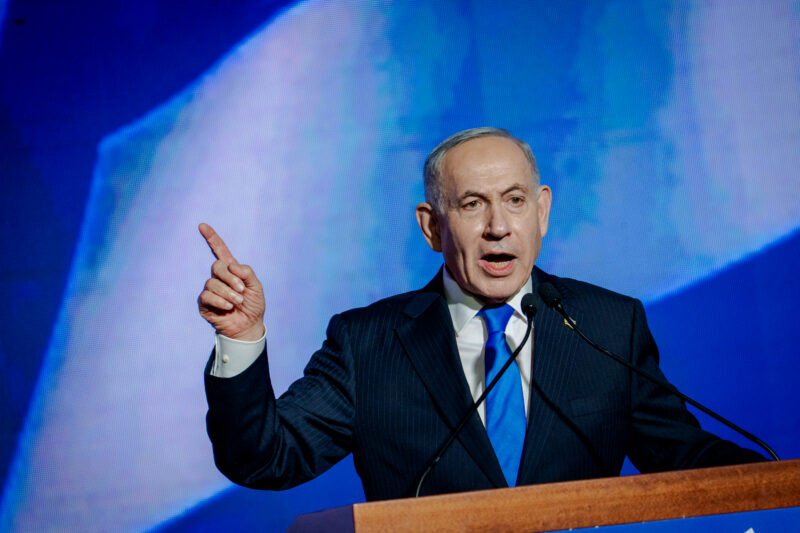
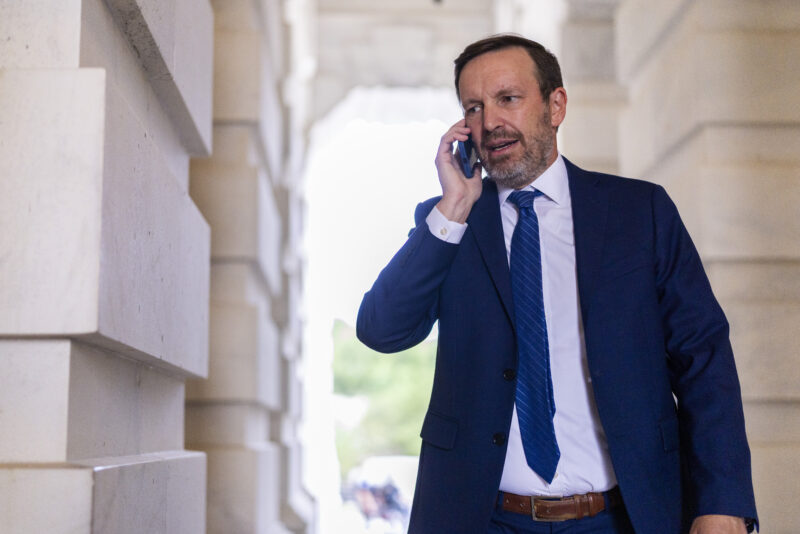
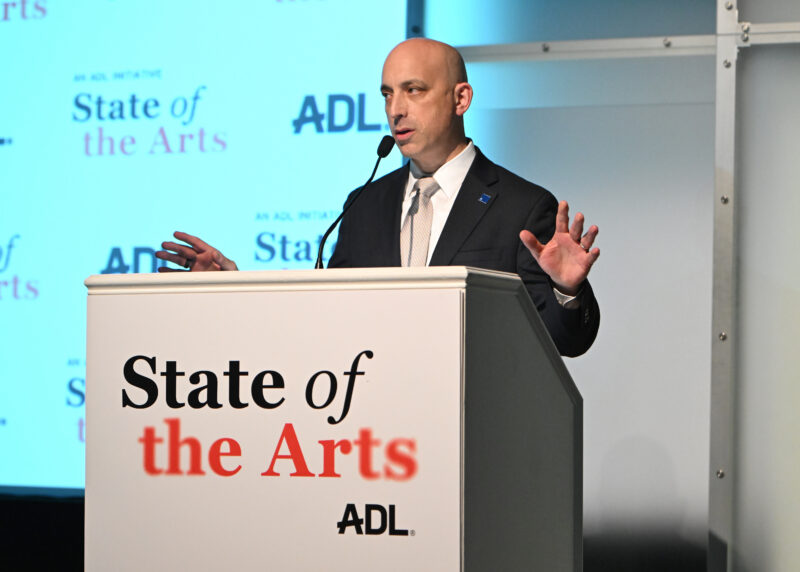
Rep. Mike Collins (R-GA) speaks during a news conference in the Capitol Visitor Center on a resolution "stating that President Donald Trump did not engage in insurrection," on Tuesday, February 6, 2024.


 Add JewishInsider on Google
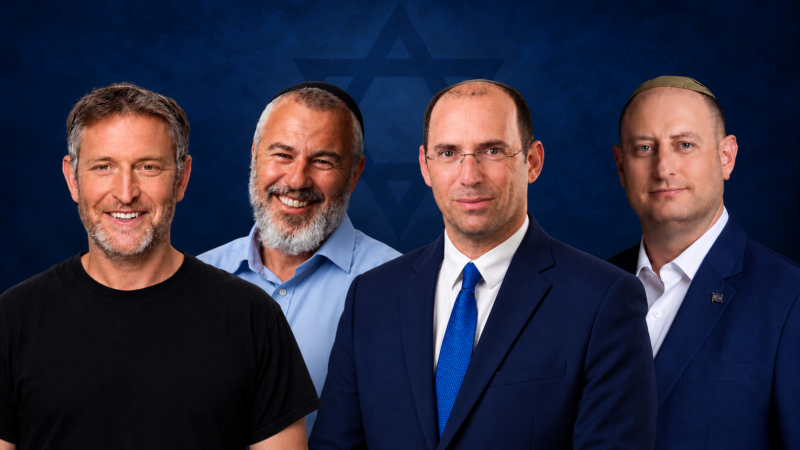
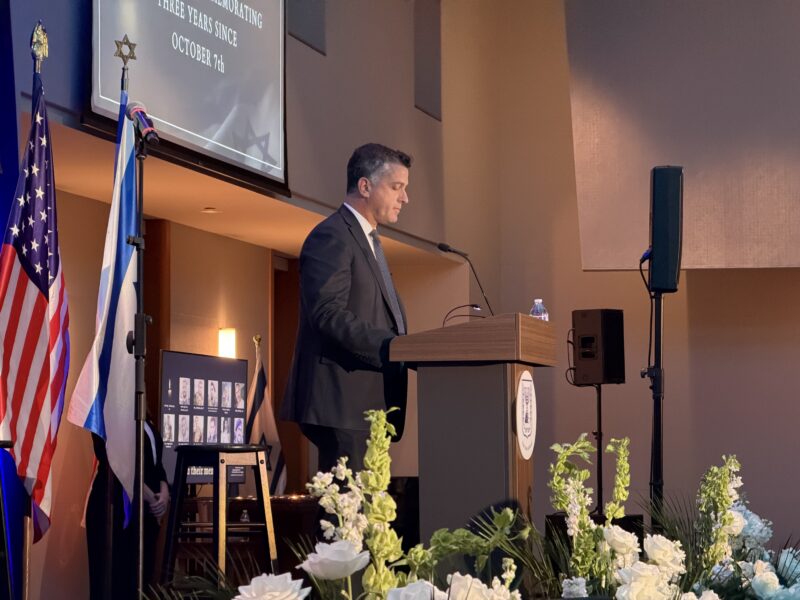
LAS VEGAS — Rep. Mike Collins (R-GA) on Sunday disavowed the antisemitic views and white nationalist affiliations of several former staffers and said that he understands why Jewish voters are concerned, but also suggested there was little he could have done to identify those red flags in the hiring process.
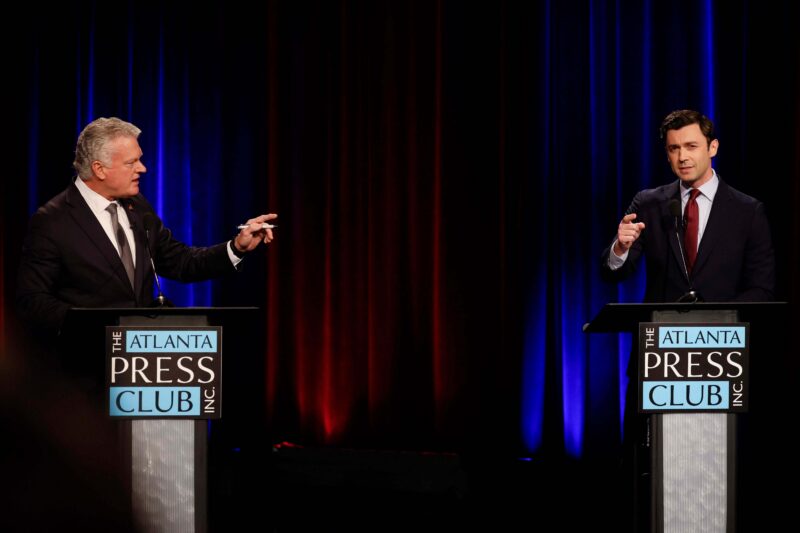
Collins, the GOP nominee for Georgia’s Senate seat, has been mostly quiet publicly about the repeated disclosures concerning his former staffers — as well as his son-in-law — and is working to court Jewish voters concerned about Sen. Jon Ossoff’s (D-GA) record of voting against aid to Israel on multiple occasions.
“Those staffers — those views are abhorrent, and they don’t represent my values,” Collins told reporters at the Republican Jewish Coalition’s annual leadership summit. “And you can look at my voting record.”
Pressed by Jewish Insider on how or whether he would change vetting procedures to ensure that such staff didn’t find their way onto his team again in the future, Collins downplayed the connections between himself and their activity, saying “this was after they were on my team and gone.”
But at least one of those staffers was engaged in the activity while still working for Collins: his former Chief of Staff Kip Talley was reportedly active in a white nationalist group chat discussing efforts to free a Holocaust denier from prison while still on Collins’ team.
“I can’t see into the future, but regardless I still don’t agree with them, period,” Collins continued. “We can vet all day long, but what happens when they leave and they go out into the future — that’s a different question. But I certainly don’t want people around me like that.”
He said that he sees “a rise of antisemitism and hate with young people around the globe, and we certainly need to address that because so many of these young people feel like they’ve been forgotten.”
Collins said that education and opportunity are key to pulling young people out of such radicalization and conspiracy theories.
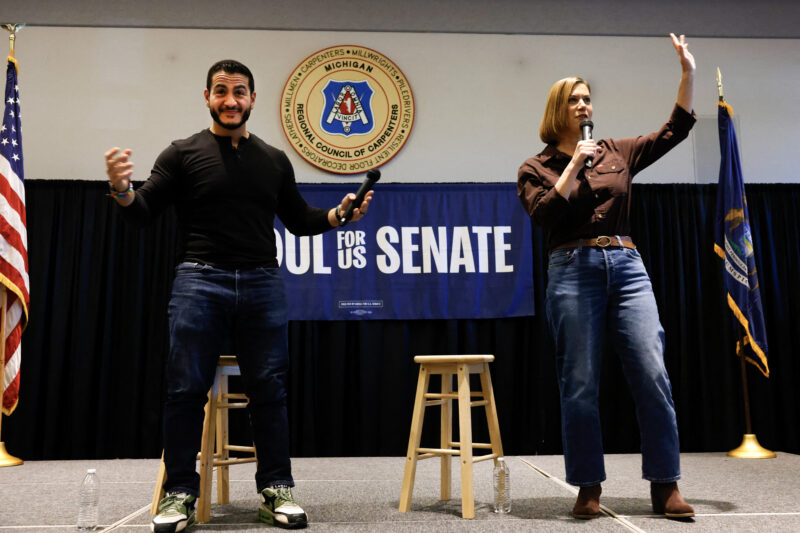
Collins cast Ossoff as positioning himself to run as a Democratic Socialists of America candidate for president, highlighting Ossoff’s recent endorsement of Abdul El-Sayed for Michigan’s Senate seat and the support he previously received from antisemitic streamer Hasan Piker.
Neither Ossoff nor El-Sayed are DSA members. Piker disavowed Ossoff this week after Ossoff condemned recent antisemitic comments.
“We are both polar opposites, even on where we stand on Israel,” Collins said. “And it goes well past just the support for Israel and the Jewish population.”
In remarks to the RJC audience, Collins emphasized that his support for Israel is rooted in his religious faith.
“My faith tells me to support Israel,” Collins said. “I don’t have to answer to anybody in this room, but I tell you what, I’ve got to answer to the man upstairs, and by God, that’s important to me, and I know where I stand on that.”
He went on to emphasize that, even apart from faith, the contributions Israel has made to the world and the ways it has supported U.S. interests — including opposing Iran and other terrorist regimes — make supporting Israel worthwhile.
“That’s my stand. It always will be, and I have no problem professing that,” Collins said.
Graham Nordone is expected to serve as a caretaker for the seat for the remainder of the year; a larger field of Republicans are looking to run in the primary for the full six-year term
Grant Baldwin/Getty Images
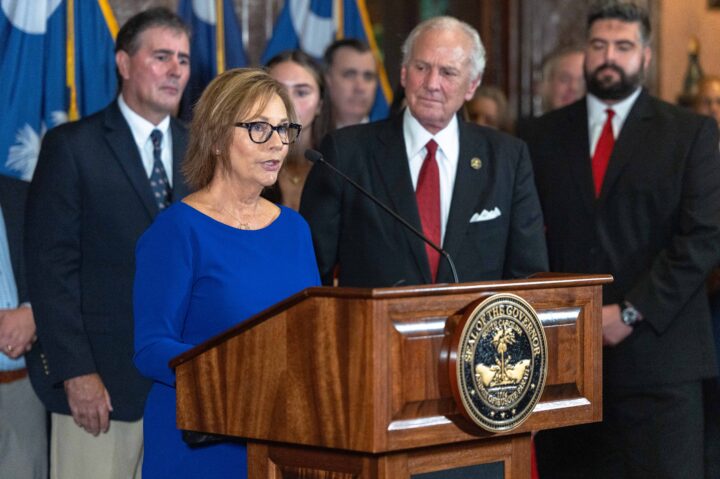
Darline Graham Nordone speaks during a press conference outside the governor's South Carolina Statehouse office on July 13, 2026 in Columbia, South Carolina.
Darline Graham Nordone, the sister of the late Sen. Lindsey Graham (R-SC), was appointed by South Carolina Gov. Henry McMaster on Monday to serve out the remainder of her older brother’s Senate term through January 2027.
McMaster, a Republican, announced his decision to appoint Graham’s sister to fill the vacancy caused by his sudden passing over the weekend at a press conference from the Statehouse in Columbia, S.C., alongside Nordone and Sen. Tim Scott (R-SC), a close ally of both Graham and President Donald Trump.
After hailing Graham, who had been running for a fifth Senate term in November, as “one of South Carolina’s greatest sons,” McMaster explained that he was selecting Nordone to succeed him because he wanted the work that Graham started to be completed by the sister he adored.
“Lindsey took care of his little sister in years long departed,” McMaster said. “It is my honor to ask his little sister, Darlene Graham, to finish his work for him now.”
A source familiar told Jewish Insider that Nordone, who now uses her married name, will be sworn in at the U.S. Capitol on Tuesday at 2:30 p.m. ET.
In brief remarks, Nordone thanked those who had reached out with well wishes or to share memories and funny stories about Graham before expressing gratitude to McMaster for appointing her to fill her brother’s Senate seat.
“Lindsey has always been there for me, and now I will be there for him,” Nordone said. “I think this is what Lindsey would have wanted, and I plan to honor him in this way. Now, to Lindsey, I miss you more than I can ever put into words, but I’m going to do this. I got it.”
Republicans expect Nordone to serve as a caretaker for her brother’s seat for the remainder of the year. Among the top contenders for the upcoming special election for the full six-year term include Rep. Russell Fry (R-SC), a close ally of Trump’s, and Lt. Gov. Pamela Evette, who unsuccessfully ran for governor this year with Trump’s endorsement.
Rep. Nancy Mace (R-SC), who has publicly expressed interest in the seat after finishing fifth in last month’s gubernatorial primary, and Rep. Ralph Norman (R-SC) are also prospective candidates. A special election candidate filing period is scheduled to begin July 21, and will last for a week.
Graham died at 71 on Saturday evening following what his office described as a “brief and sudden illness,” which the Washington, D.C., medical examiner’s office, in a preliminary autopsy report, attributed to aortic dissection caused by arteriosclerotic cardiovascular disease.
Graham and Nordone were raised above a local pool hall and liquor store in Central, S.C. Graham adopted his younger sister when he was 22 and she was 13, after their parents died within 15 months of one another. Graham, who was a senior in college at the time, moved himself and Nordone into a relative’s house and took over raising her, eventually becoming her legal guardian. He joined the Army Reserves, allowing him to stay close to his sister and attend college.
Nordone remained Graham’s closest confidante throughout his life and was one of the most ardent supporters of his political ambitions, campaigning for him in his House and Senate bids and during his 2016 presidential run.
Speaking from the press conference on Monday, Nordone described her late brother as “the most amazing person, outstanding leader, and just a genuinely good man. He was kind and considerate and loved by his family dearly.”
Monday’s announcement came hours after Trump publicly declared that Nordone was his preferred choice to represent South Carolina on Graham’s behalf until the conclusion of his Senate term. “This would be a fabulous tribute to Lindsey, who loved her dearly,” Trump wrote on Truth Social of the idea.
Scott and Senate Majority Leader John Thune (R-SD) also voiced support for Trump’s suggestion to appoint Nordone in the hours before the official announcement.
McMaster said on Monday he had asked Nordone to serve out the remaining six months of Graham’s term after the senator’s passing was announced early Sunday morning, prior to consulting the president.
“After we spoke on the phone in the wee hours of Sunday morning, you agreed to serve through tears. Earlier, I had wondered what you would say, and I was humbled by your quickness to see the duty that you had to serve,” McMaster told Nordone from the podium. “I called the president afterwards and he thought it was a great idea, and I’m sure everyone here does as well.”
Scott, who a source familiar confirmed to JI had “spoken multiple times with Darline in the last 24 hours” leading up to her appointment, did not speak at the press conference, though he said in a post on X that “The appointment of Darline Graham Nordone to the U.S. Senate is an incredible way to honor the legacy of Lindsey Graham.”
“Nobody understands Lindsey Graham’s heart for faith, family, and South Carolina the way she does,” Scott wrote. “I look forward to working alongside her to continue Sen. Graham’s commitment to keeping Americans safe and secure.”
Others that were reportedly under consideration for the role in the event that Nordone turned down the appointment included former Rep. Trey Gowdy (R-SC), a close friend of Scott’s from their time in Congress who now hosts a Fox News program; former Sen. Jim DeMint (R-SC), Scott’s predecessor in the Senate who has led several conservative organizations including the Heritage Foundation and the Conservative Partnership Institute; and Evette, who lost the state’s gubernatorial GOP primary in a runoff last month.
Rep. Joe Wilson (R-SC), who was also reportedly floated as a possible appointment option, said on Sunday that he was committed to staying in the House to protect Republicans’ slim majority in the lower chamber.
The AIPAC-affiliated super PAC is touting Stevens’ record fighting for the auto industry, opposing Medicare cuts and working to cap insulin prices in Congress
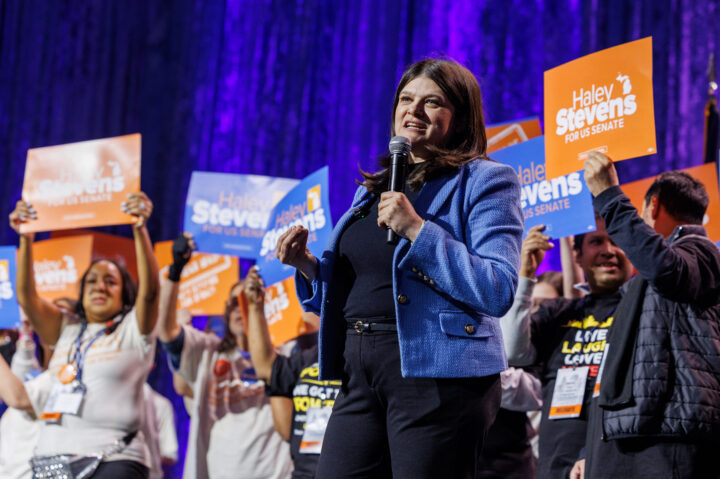
Andrew Roth/Sipa USA
Rep. Haley Stevens (D-MI) speaks at the Michigan Democratic Party Endorsement Convention in Detroit, Mich., on April 19, 2026.
United Democracy Project, the super PAC affiliated with AIPAC, is spending $2 million on an initial ad buy this week to boost Rep. Haley Stevens (D-MI) in the Democratic primary for Michigan’s open Senate seat, a UDP spokesperson confirmed to Jewish Insider on Tuesday.
The new TV ad, which calls Stevens “a proven fighter for Michigan,” touts her past role as chief of staff to President Barack Obama’s auto task force, support for capping insulin prices and efforts “fighting back against” President Donald Trump’s “Medicare cuts.”
“She’s a fighter for Michigan families on affordability and jobs,” Patrick Dorton, a spokesperson for UDP, said of Stevens, a moderate pro-Israel Democrat. “We are going to show that on these ads,” he said in a statement to JI.
UDP is also spending $300,000 on radio and mail ads, Dorton said of the group’s first investment in the race. He was unable to share how much UDP intends to spend in the primary, which takes place on Aug. 4.
The spending comes as AIPAC is viewed as a lightning rod in Michigan’s closely contested Democratic Senate primary, where one of Stevens’ top rivals, Abdul El-Sayed, a vocal far-left critic of Israel, has accused her of being beholden to donors from the pro-Israel group. Mallory McMorrow, a state senator, has also vowed to reject campaign contributions from AIPAC.
In contrast with other races where UDP has relied on shell PACs that allow it to shield its involvement until after a primary has concluded, the group is spending under its own name in Michigan, which is home to a sizable Jewish community.
Meanwhile, Rep. Haley Stevens avoided a question about receiving support from pro-Israel donors, while Abdul El-Sayed blamed rising antisemitism on white supremacy
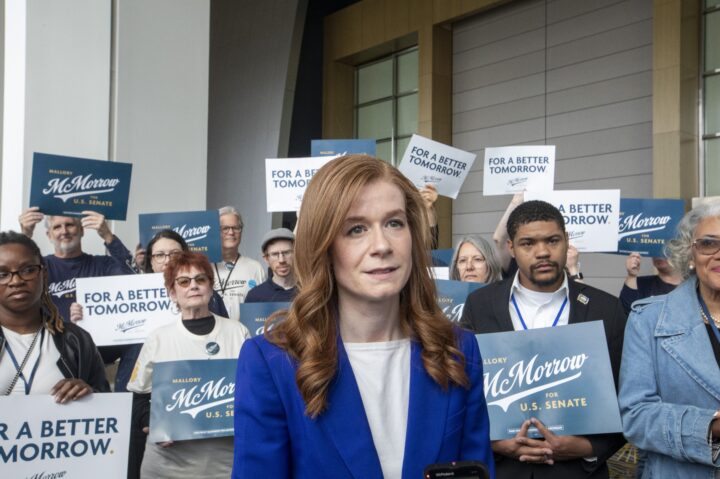
Jim West/UCG/Universal Images Group via Getty Images
Mallory McMorrow, a candidate for U.S. Senate, campaigns at the Michigan Democratic Nominating Convention
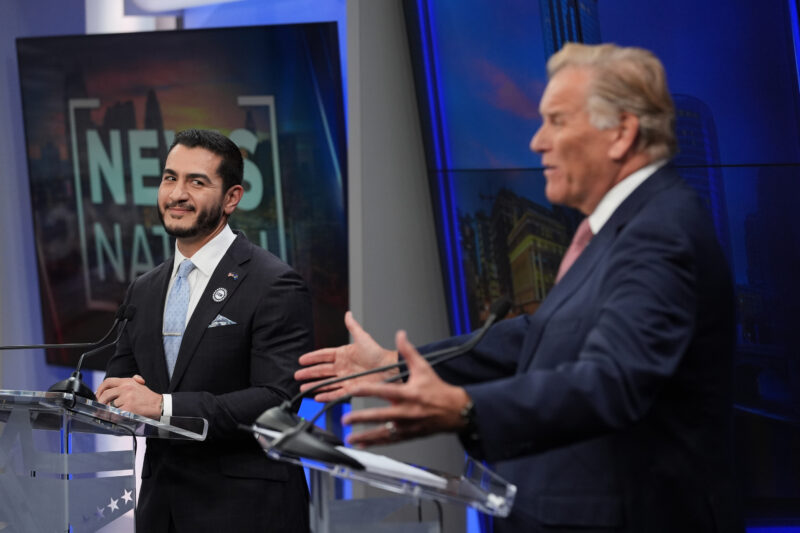
State Sen. Mallory McMorrow offered a straightforward answer when asked at a debate on Thursday, alongside the other two Democrats vying for an open Senate seat in Michigan, whether there is an antisemitism problem in the Democratic Party.
“There is,” said McMorrow. She told the story of an attendee at last month’s Democratic Party convention in Detroit who yelled an antisemitic slur at her Jewish husband, in front of their young daughter.
“That is terrifying. We need to be able to state very clearly that what the Netanyahu government is doing is wrong, that the violence needs to end, that we need to bring about long-term peace and security for Palestinians and for Israelis, and that turning that into not an anti-Netanyahu, but an anti-American Jewish message is dangerous,” McMorrow said, earning applause from the room.
The other two candidates — Rep. Haley Stevens (D-MI) and former public health official Abdul El-Sayed — did not directly address the question about Democrats.
Stevens condemned “rising political violence and extremism,” including the attack at Temple Israel in West Bloomfield, in her district, which she said was carried out by a “homegrown terrorist.” She described herself as a lawmaker who is “leading on combating antisemitism in a bipartisan way. That does not have to be a partisan thing.”
El-Sayed said he understands discrimination because he has faced it himself. He blamed antisemitism in the U.S. on white supremacy.
“I know that antisemitism and Islamophobia tend to go hand in hand, and the real issue when it comes to either of them is the scourge of white supremacy,” he said, while arguing that respecting American Jews does not require supporting Israel.
The Democratic primary for the open Senate seat in Michigan is one of the most contentious in the country, and antisemitism has become a major issue, alongside U.S. foreign policy and support for Israel. It is perhaps the most high-profile seat where debates about the role of AIPAC might actually have an impact on the outcome.
Stevens, a longtime ally of the pro-Israel group, was the early frontrunner in the race but has faced attacks from her opponents for not criticizing AIPAC.
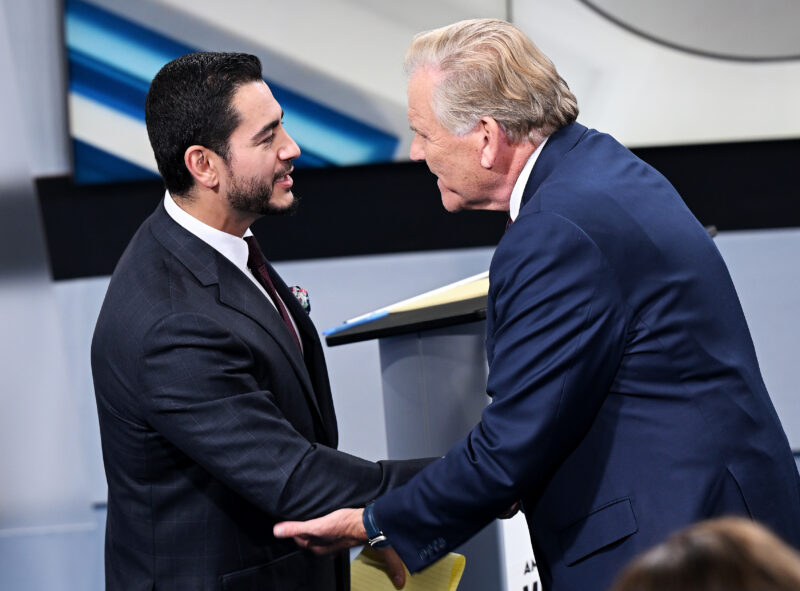
Presented with an opportunity on Thursday in a primary debate to help voters understand why she continues to receive support from the pro-Israel advocacy group, Stevens chose not to speak about the group at all.
“You take money from AIPAC. Walk us through what that money means and what it buys, and maybe what it doesn’t,” one of the debate’s moderators asked Stevens, as part of a question about how much influence individual donors have over their decisions.
“Michiganders are frustrated because we have not done comprehensive campaign finance reform. Mike Rogers will not vote for comprehensive campaign finance reform like I have in the House of Representatives,” Stevens said, referring to former Rep. Mike Rogers (R-MI), the expected GOP nominee for Senate. “We squarely need to put people at the front of our agenda.”
She also said she is “deeply proud to have grassroots support coming from grocery clerk workers to retired teachers to factory workers and the like,” and named some of the politicians who have endorsed her, including former Rep. Brenda Lawrence (D-MI), former Sen. Debbie Stabenow (D-MI) and former Gov. Jennifer Granholm.
When asked about her views on foreign policy, Stevens attacked President Donald Trump for the “harmful and ridiculous” steps he took to pare back U.S. humanitarian aid abroad, and pledged to focus on peace.
“We need to see the United States work with our allies to achieve lasting peace between Russia and Ukraine, between the people of Israel and Palestine and of course between China and Taiwan,” said Stevens. “But when you remove the tools from our tool kit, you fail this country and you fail us, to allow us to work alongside our allies.”
Both McMorrow and El-Sayed used Thursday’s debate to remind voters that they do not accept donations from AIPAC. (AIPAC has not made an endorsement in the Senate race, but it has encouraged its supporters to donate to Stevens’ campaign.)
“I have not taken a dime of corporate PAC donations. I have not taken a dime of AIPAC donations,” said McMorrow, who is endorsed by the progressive Israel advocacy group J Street.
El-Sayed, who regularly accuses Israel of genocide and has said he struggles with the question of whether Israel has the right to exist as a Jewish state, slammed Stevens for taking AIPAC supporters’ donations.
“Let me tell you what absolutely would not shape my perception [of foreign policy]: it’s AIPAC money,” said El-Sayed.
Craig will be facing off against Lt. Gov. Peggy Flanagan in the state’s August Senate primary
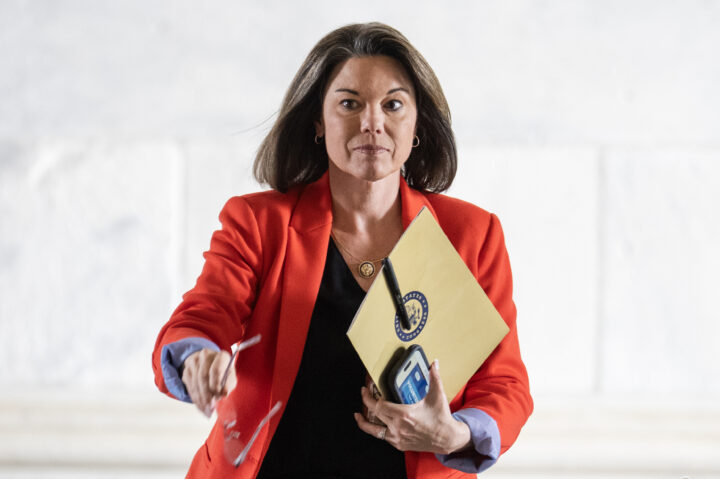
Tom Williams/CQ-Roll Call, Inc via Getty Images
Rep. Angie Craig (D-MN) arrives for a vote in the U.S. Capitol on Thursday, March 26, 2026.
Rep. Angie Craig (D-MN), a moderate Democrat running for Minnesota’s open Senate seat, said on Wednesday that she would not seek the support of the state Democratic Party at its convention being held this weekend — effectively ceding that endorsement to Lt. Gov. Peggy Flanagan, her left-wing opponent.
Craig, who will still run in the Aug. 11 primary, said “the DFL endorsement process just doesn’t reflect the full scope of the party that we are and the purple state that we have become,” referring to the Democratic-Farmer-Labor Party, Minnesota’s Democratic affiliate, which was already expected to back Flanagan.
“Most Minnesotans don’t have the luxury of choosing a sub-caucus over a Saturday soccer game with their kids. Most Minnesotans can’t choose a convention over a closing shift. And most Minnesotans can’t put a delegate vote over driving their dad to a doctor’s appointment,” she said in a press conference while criticizing the DFL’s endorsement process.
In a statement, a spokesperson for Flanagan’s campaign countered that “DFLers overwhelmingly consolidated behind” the lieutenant governor “because they’re hungry for a leader who will stand up to corporate power, not bend to Republicans, and fight unapologetically for working people.”
Last month, Craig’s campaign called on the DFL to launch a formal investigation into a series of alleged instances of antisemitic activity among delegates in advance of its state convention, which has navigated mounting intraparty divisions over Israel.
The Michigan Senate candidate questioned how Israel being a Jewish state is ‘consistent with any form of liberal values that we say we believe in here in the United States’
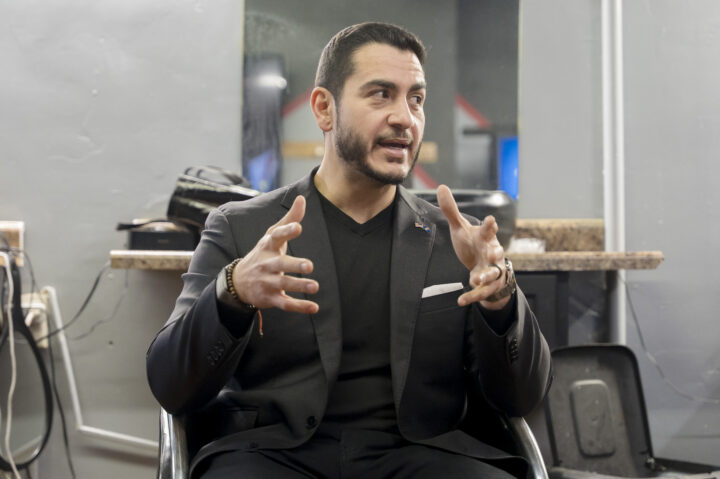
Evan Cobb for The Washington Post via Getty Images
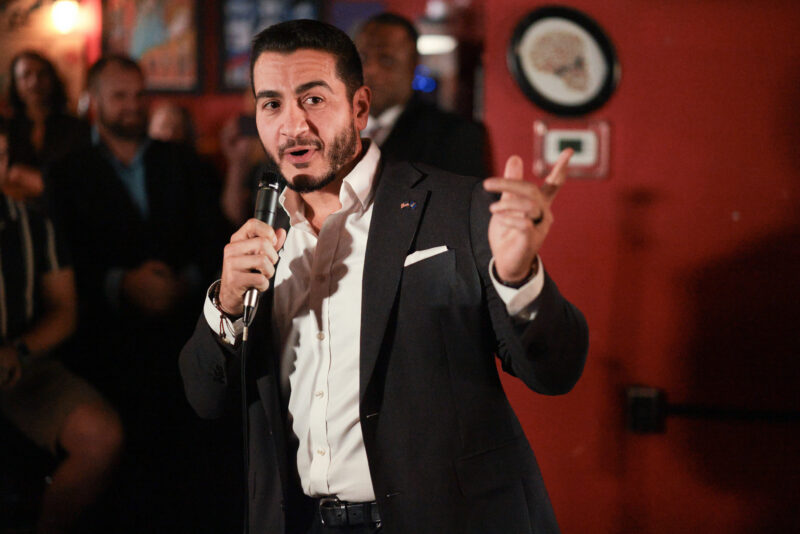
Michigan Senate candidate Abdul El-Sayed speaks with customers and barbers at Blazin Wade Cuts in Grand Rapids, Michigan, on Saturday, Feb. 21, 2026.
Abdul El-Sayed, the far-left Democratic candidate for Michigan’s Senate seat, said at an event with Jewish supporters last week that he struggles to answer questions about whether he believes Israel has a right to exist as a Jewish state.
At his “Jews for Abdul” event last week in Pontiac, Mich., a recording of which was obtained by Jewish Insider, El-Sayed, in response to a question from an audience member about him sidestepping inquiries about Israel’s right to exist, said, “I often struggle with the question that people ask in this particular scenario, because what they now ask is, ‘Do you believe in the right of Israel to exist as a Jewish state,’ which, to me, forces the question of a definition of what a Jewish state means.”
SCOOP | Abdul El-Sayed, the far-left Democratic candidate for Michigan’s Senate seat, said at an event with Jewish supporters last week that he struggles to answer questions about whether he believes Israel has a right to exist as a Jewish state.
— Jewish Insider (@jewishinsider) May 27, 2026
“I often struggle with the… pic.twitter.com/ugjbXgxUvr
El-Sayed continued: “I need folks who want to ask me that question [to explain] what it is that they mean by that, and how that is consistent with any form of liberal values that we say we believe in here in the United States.”
He accused Israel of “bypassing” the issue of Palestinian rights and maintaining a Jewish majority in Israel by implementing apartheid in the West Bank, east Jerusalem and Gaza, and said that the question of Israel’s right to exist overlooks “the rights of people who’ve been displaced by Israeli action” dating back to 1948.
He said that U.S. support is “funding leadership” in Israel that is opposed to a two-state solution while Palestinians do not have a voice in that conversation, and said “it’s not actually our job to decide what the peace looks like there.”
“[Israel] exists as it stands, but nobody ever asked me about the right of Palestine to exist, because it doesn’t exist. And so I just push back on the characterization here,” El-Sayed said.
MORE EXCLUSIVE VIDEO: Abdul El-Sayed says “I need folks who want to ask me that question [to explain] what it is that they mean by that, and how that is consistent with any form of liberal values that we say we believe in here in the United States.”
— Jewish Insider (@jewishinsider) May 27, 2026
Read more:… pic.twitter.com/8kaWUqwYCK
El-Sayed’s candidacy, positions and affiliations — particularly his campaigning with streamer Hasan Piker, who has repeatedly shared antisemitic sentiments and support for terrorism — has drawn concern from the sizable Jewish community in Michigan and nationally.
Photos from the event shared by El-Sayed’s campaign appear to show around a few dozen people in the audience, at least one of whom — who raised the question about Israel’s right to exist — said she was not Jewish.
The president backed Texas Attorney General Ken Paxton’s primary challenge to Sen. John Cornyn, despite the AG’s ethical and legal baggage
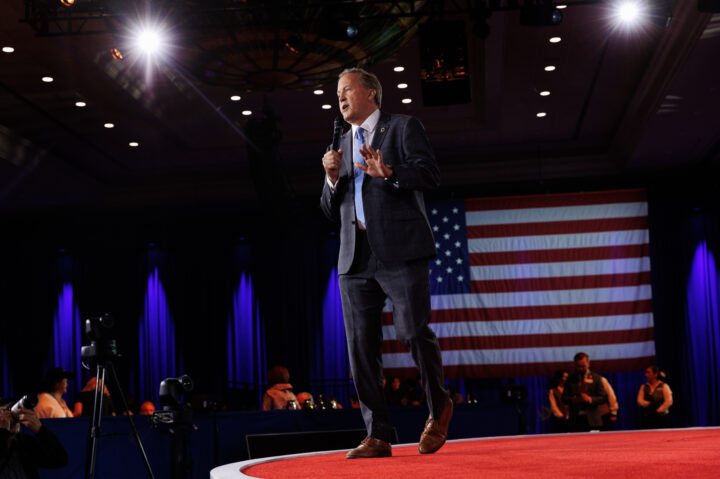
Shelby Tauber/Bloomberg via Getty Images
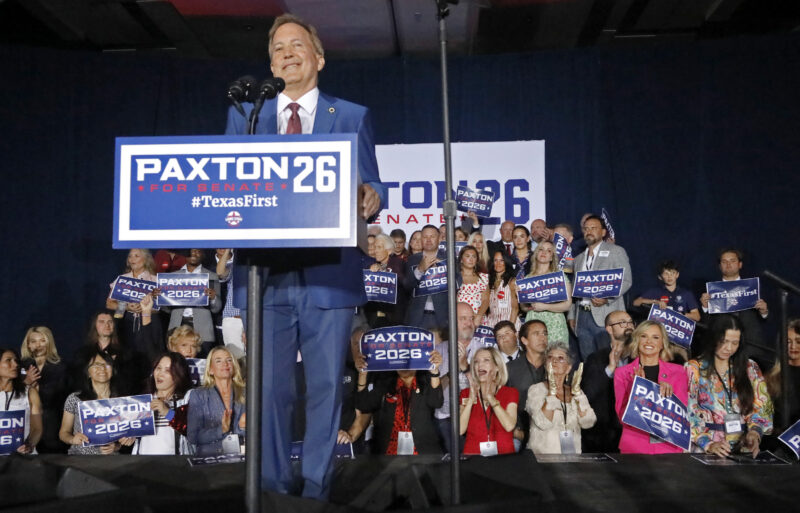
Ken Paxton, Texas attorney general and Republican US Senate candidate, speaks at the Conservative Political Action Conference (CPAC) in Grapevine, Texas, on Friday, March 27, 2026.
President Donald Trump endorsed Texas Attorney General Ken Paxton’s primary challenge against Sen. John Cornyn (R-TX) on Tuesday, dealing a significant blow to Cornyn’s bid for a fifth term.
Trump announced the Paxton endorsement in a post on Truth Social a week before the runoff election, writing that while Cornyn “is a good man,” the senator was insufficiently “supportive of me when times were tough.” He pointed to Cornyn’s late backing of his presidential bids and his aversion to terminating the filibuster in the Senate in order to pass the president’s Save America Act.
The president argued that Paxton, on the other hand, “is a true MAGA warrior who has ALWAYS delivered” for Texans, calling him “someone who has always been extremely loyal to me and our AMAZING MAGA MOVEMENT.”
The endorsement makes Paxton the odds-on favorite to win the Republican nomination, given Trump’s track record of success with his endorsed candidates in primaries. Cornyn narrowly finished ahead of Paxton in the first round of balloting in March with 42% of the vote, while Paxton received 41%.
If Paxton wins the May 26 runoff, Democrats plan to invest millions behind their nominee, state Rep. James Talarico, who is trying to become the first Democrat to win a Senate seat in Texas since 1988. General election polling indicates that a matchup between Talarico and Paxton — who carries significant legal and ethical baggage — would be highly competitive.
Sen. Lindsey Graham (R-SC) told reporters Tuesday that he thought the race would be three times more expensive with Paxton as the nominee. “You don’t have to be a rocket scientist to figure out the pathway for Paxton is there, but it’s more uphill.” Graham said.
Paxton thanked the president for his endorsement on X, saying “he look[s] forward to championing his American First agenda in the Senate.” In March, Paxton said that he would consider withdrawing from the race if Senate GOP leadership, who were lobbying the president to endorse Cornyn, agreed to get rid of the filibuster to pass the Save America Act, Trump’s election security bill. GOP leadership did not seriously consider Paxton’s offer, two sources familiar with the matter told JI.
Cornyn, in a statement, said that he has “worked closely with President Trump through both of his presidential terms and voted with him more than 99% of the time,” claiming Trump has “consistently called me a friend in this race.”
“It is now time for Texas Republican voters to decide if they want a strong nominee to help our GOP candidates down ballot and defeat [Democratic state. Rep James] Talarico in November, or a weak nominee who jeopardizes everything we care about,” Cornyn continued.
Cornyn, who was first elected in 2002, warned in an interview with Jewish Insider in February that the GOP is at risk of being overrun by extremists if prominent conservatives continue to align themselves with fringe figures who espouse antisemitic views, and attacked Paxton for appearing on Steve Bannon’s podcast.
“To maintain the integrity of conservatives, that’s why it’s so important to call out and to cut out some of these cancers that I think ultimately would result in the failure of the conservative movement,” Cornyn said.
“I know Ken Paxton regularly goes on Bannon’s ‘War Room’ podcast, and it’s something that should be alarming to Texas voters. People like that I don’t think are what I would call conservatives.”
Lt. Gov. Juliana Stratton seems to be running to the congressman’s left on Israel, even as Rep. Robin Kelly is the most outspoken critic of Israel in the race
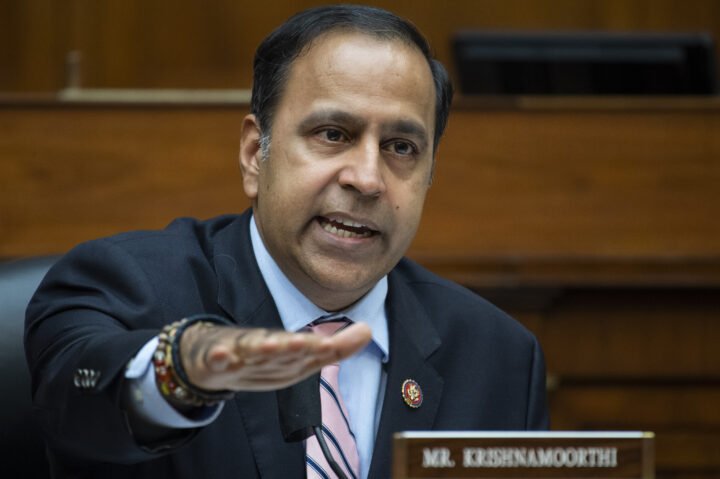
Tom Williams/CQ Roll Call/Bloomberg via Getty Images
Representative Raja Krishnamoorthi, a Democrat from Illinois
Democrats running for the open Senate seat in Illinois are increasingly trying to differentiate themselves on Israel policy ahead of next month’s primary. In the final weeks of the campaign, Illinois Lt. Gov. Juliana Stratton appears to be trying to straddle a line on Israel policy between Rep. Raja Krishnamoorthi (D-IL), who has a largely pro-Israel record, and Rep. Robin Kelly (D-IL), who has been increasingly critical of Israel.
Stratton, of the three, has the least established record on Middle East policy issues, and her approach was on display at a debate last week with fellow candidates, where she did not offer direct answers to questions on whether additional conditions should be applied to U.S. aid to Israel or whether the war in Gaza constituted a genocide.
Asked about conditions on aid to Israel, Stratton said that the “devastation” both on Oct. 7, 2023, and during the ensuing war in Gaza has been “horrifying” and she wants to “see the suffering end.”
“I can tell you that as our democratic ally in the Middle East, I believe that Israel has a right to safety and security, but at the very same time, I totally disagree with the way that [Israeli Prime Minister Benjamin] Netanyahu has responded to those attacks, and I believe that he should be removed from power, or he should step down, and there should be elections, as the people have been calling for,” Stratton said.
Israel is set to go to elections in October.
Stratton also called for aid to Gaza and for Palestinian leadership that can push toward a two-state solution.
Asked whether she would vote for a resolution led by Rep. Rashida Tlaib (D-MI) describing the war in Gaza as a genocide, Stratton said the war was “devastating and it was horrific” and that “we must do everything we can to make sure that we can be on a real, sustained path to peace,” but avoiding directly answering the question.
Krishnamoorthi emphasized that U.S. aid to Israel and all other allies is already subject to various conditions, which he said should be enforced. He “strongly condemned” both Hamas for the Oct. 7 attacks and Netanyahu for Israel’s conduct during the war.
“We need to take the next step,” Krishnamoorthi said. “That means Israel needs to withdraw from the Gaza Strip. Hamas needs to be demilitarized. An international stabilization force has to arrive, and then massive construction aid has to come in, to the point where we have a chance at a road to a two-state solution of Palestinian and Israeli states living side by side.”
When asked about classifying the war as a genocide, he said that the parties in the region “don’t agree on a credible assessment of what exactly happened” and suggested that debate over or the use of the term would be an obstacle to progress in the ceasefire agreement first implemented in October 2025.
“I want to see the language [of the Tlaib resolution], but I need to be comforted right now that this type of resolution doesn’t get in the way of progress right now for Gazans, because right now they’re going through hell as it is, and we got to get to a better place,” he responded, when pressed on whether he would vote for the Michigan congresswoman’s resolution.
Kelly touted her support for the Block the Bombs Act that would place sweeping restrictions on U.S. arms sales to Israel, and joined Stratton in calling for Netanyahu to resign, calling his leadership a “reign of terror.”
“A lot of people would say what happened on Oct. 7 was horrible, but there were a lot of things that happened before Oct. 7 also,” Kelly said. “I’m the only one on this stage that supported something like Block the Bombs and I’m the only one on the stage that said, it may not have started off like this but … genocide was the result.”
All three candidates said that a preemptive U.S. strike on Iran without congressional authorization would be illegal.
Krishnamoorthi emphasized that Iran cannot obtain a nuclear weapon, but argued that the U.S. must find a diplomatic solution to address the Islamic Republic’s nuclear and ballistic missile programs.
He added that any military action must be authorized by Congress and that he plans to support an upcoming war powers resolution to block military action against Iran without such authorization.
Stratton said that “we certainly don’t want to see a nuclear Iran … but what we also can’t have is a president who just decides whenever he gets a whim … and threatens to strike or commit some act of war. We need Congress to rein him in.”
Kelly accused Trump of seeking out war as a “distraction” from alleged failures on the home front, and demanded a diplomatic path using any tools and partners available.
Stratton is supported in the Senate race by Gov. JB Pritzer, who last week condemned AIPAC as a “pro-Trump organization.”
A Democratic strategist in the state said that it’s hard to tell where the race stands, but that public polling has put Krishnamoorthi in the lead. He noted that Krishnamoorthi is running an ad contrasting him with Stratton, indicating his campaign thinks Stratton may be making up some ground.
Pritzker’s super PAC recently began spending big backing Stratton and attacking Krishnamoorthi.
The strategist said that Kelly hasn’t been keeping up with the other two candidates in television advertising, but there are still opportunities to make up ground and increase her vote share. Kelly has largely been trying to court the most progressive voters and carve out the left-most lane for herself, but otherwise, the strategist said, there’s been little ideological difference among the candidates overall.
But his initial reticence in speaking out against anti-Israel Democratic leaders in his state could become a vulnerability in the red-state contest

Allison Joyce/Getty Images
Former North Carolina Governor Roy Cooper
Former North Carolina Gov. Roy Cooper’s decision to seek the Democratic nomination for North Carolina’s open Senate seat has equipped the party with a moderate standard-bearer with a strong relationship with the state’s Jewish community.
But his handling of anti-Israel activism within the North Carolina Democratic party is expected to become an issue in the Senate race, one that Republicans are already seeking to exploit.
Cooper served two terms as North Carolina governor, winning close contests even in elections when President Donald Trump carried the state. He previously served four terms as the state’s attorney general, where he compiled a tough-on-crime record that allowed him enough bipartisan support to win in a red-leaning state. In his nearly four decades in state politics, Cooper has never lost a race, notching a 16-0 record.
In recent years, Cooper has been forced to address issues of antisemitism among political leaders in the state — one against a Republican rival, and one involving activists within his own political party.
Cooper said he decided to pass up consideration for the role of Vice President Kamala Harris’ running mate because he didn’t want former Lt. Gov. Mark Robinson, a Republican with a history of posting racist and antisemitic content online, to temporarily assume the governor’s responsibilities. (North Carolina’s constitution states that the lieutenant governor, who is elected separately from the governor, assumes power in an acting capacity when the governor leaves the state.)
Cooper told Politico last July that Robinson, who has quoted Adolf Hitler, downplayed the Holocaust in social media posts and referred to himself as a “black Nazi” in an online porn forum, had previously claimed he was the acting governor while Cooper was traveling to Japan on official business.
“I was on a recruiting trip to Japan,” Cooper said, referencing a trip in October of 2023. “He did claim he was acting governor. He did a big proclamation and press conference while I was gone. It was something about support for the state of Israel. It was obviously to make up for all of his antisemitic comments that he’d made, his denial of the Holocaust that he’d made over the years.”
But when confronted with anti-Israel extremism within his own state party, Cooper has been more cautious.
The former governor did not initially weigh in on the resolution passed by the North Carolina Democratic Party last month calling for an arms embargo on Israel, as well as on the other anti-Israel measures adopted by the state party. An advisor to Cooper told CNN at the time that the former governor “generally does not opine on party resolutions.”
Reached for comment on the state party measures by Jewish Insider on Monday, Cooper said in a statement that he opposes the resolutions.
“I don’t agree with the party resolution, and Israel is an important ally. Israel needs to take seriously the job of getting humanitarian aid into Gaza right now. The hostages must be returned and I continue to pray for a swift end to this war and a meaningful peace in the region,” Cooper told JI.
Former Rep. Wiley Nickel (D-NC), who was considering running for the Senate before Cooper announced his candidacy, had condemned the resolution as an “extreme” measure that amounted to a “death sentence for thousands.”
North Carolina Gov. Josh Stein, a Democrat and the state’s first Jewish governor, similarly expressed disapproval with the resolutions to JI on Monday.
“I disagree with the party’s anti-Israel resolutions and believe that our state party should focus on issues we’re facing here in North Carolina like the high cost of living, harmful cuts to people’s health care, and rising levels of antisemitism, Islamophobia, and other forms of hate. What’s happening in Gaza is devastating. Israel must allow in food and humanitarian supplies; Hamas must free the hostages; and they must work to achieve a just and lasting peace,” Stein told JI.
The National Republican Senatorial Committee, Senate Republicans’ campaign arm, have repeatedly hammered Cooper over his initial silence on the matter.
“Cooper’s silence exposes his true character as a radical, pro-Hamas leftist and sends a clear message to Jewish North Carolinians that he’s with the extremists in his party and not them,” Nick Puglia, NRSC’s regional press secretary, said in a statement at the time of the vote.
Cooper offered his thoughts on Israel’s war with Hamas during an interview with the Technician, North Carolina State University’s news site, last March that has since been scrubbed from their website but is available through online archival services, stating that he believes, “This war is devastating. We’re seeing innocent civilians killed.”
“What you have is a terrorist organization, Hamas, that runs Gaza, who invaded Israel and committed atrocities, still holds hundreds of people hostage. At the same time, in Israel’s attempts to defend itself and to rid itself from Hamas, you’re seeing devastating consequences to civilians, women and children,” Cooper told the outlet. “I know that the president is working very hard toward a ceasefire, toward providing aid to Gaza, and that there’s so much hard work going on behind the scenes and now even more publicly, to make sure that the hostages are released, and to make sure that peace is brought to this area of the world.”
“There needs to be a two-state solution here. We need the Arab countries to come together. But I do know that this Biden administration will work hard toward peace. You’re not going to see that from Donald Trump, who talks about how much he admires dictators across the world. That’s not going to be the solution to this,” he continued.
Pointing to the anti-Israel protests taking place on campuses last spring, Cooper added that, “It’s wonderful to live in a democracy when people’s voices can be heard and they’re unafraid to protest. In many countries, that’s not the case.”
In his tenure as governor, Cooper made North Carolina the 37th state in the nation to adopt the International Holocaust Remembrance Alliance’s working definition of antisemitism. Cooper signed the SHALOM Act, which adopted the IHRA language as the state’s official definition of antisemitism, last July after it passed the state House and Senate in bipartisan fashion.
“Defining antisemitism is important to stopping it, and this new law helps do that as antisemitic incidents are on the rise. While we protect the right to free speech, this legislation helps to make our state a more welcoming, inclusive and safe place for everyone,” Cooper said in a statement on the bill.
In the month after the Oct. 7, 2023 attacks on Israel, he co-signed a letter with 10 fellow Democratic governors to congressional leaders urging more funding for the Federal Emergency Management Agency’s Nonprofit Security Grant Program, amid an uptick in “threats in the Jewish and Muslim communities,” according to a press release from his office.
“Many houses of worship in North Carolina rely on the Nonprofit Security Grant Program to protect their congregations, and I encourage Congress to pass more funding for this vital program during this time of increased threats. The right to worship freely and without fear is fundamental to our country, and we are doing everything we can to protect that here in North Carolina,” Cooper said in a statement on the letter.
The Auburn University basketball coach has become a vocal advocate for Israel and against antisemitism, speaking at a Capitol Hill event last week

Stew Milne/Getty Images
Bruce Pearl head coach of the Auburn Tigers argues a call during the first half against the Alabama Crimson Tide at Neville Arena on March 8, 2025 in Auburn, Alabama.
With Sen. Tommy Tuberville (R-AL), the former Auburn University head football coach, announcing on Tuesday that he’ll forgo a second term in the Senate to instead run for governor of Alabama, chatter is emerging that another Auburn University coach, Bruce Pearl, might follow in Tuberville’s footsteps and make a bid for his Senate seat.
Semafor reported on Tuesday that Pearl’s name is being floated for the seat, but it’s not clear that he is interested. Pearl is Jewish and has become politically active on issues related to Israel and Middle East policy and antisemitism — delivering a keynote address just last week on Capitol Hill at a breakfast celebrating Jewish American Heritage Month.
“Alabama is a Republican stronghold, so the NRSC is confident voters will elect another Republican to continue representing them and championing President Trump’s agenda,” Sen. Tim Scott (R-SC), the chair of the National Republican Senatorial Committee, said in a statement about Tuberville’s decision, which did not mention Pearl specifically.
In his speech on the Hill last week, Pearl, who coaches Auburn’s men’s basketball team, rejected the idea of a two-state solution.
Pearl argued that a Palestinian state had effectively been “tried” in Gaza, following the Israeli withdrawal from the territory in 2005. “They had an opportunity and they turned it into a terrorist state. We cannot make that same mistake again,” he said.
“There cannot be another Palestinian state,” Pearl said. “We need to practice our faith and we need to put our faith into practice. My Jewish friends, we need to wake up and understand that when we said never again, we meant never again, but it happened again on Oct. 7.”
Pearl said that he supports the position recently articulated by Trump administration officials on Iran — that negotiations are the right first step but that Iran must dismantle its nuclear program.
“I’m glad President [Donald] Trump is taking leadership and having this discussion, and giving them the opportunity, and if they don’t take the opportunity, it’s got to be done for them,” Pearl said.
He pushed back on charges of genocide leveled against Israel, highlighting that the Palestinian population has ballooned since 1948, and said that Holocaust education should be mandatory and that colleges should be teaching the truth about the Middle East. Pearl also condemned countries that have criticized Israel’s conduct in the war.
“We’ve gotta protect ourselves from those people that want to kill us,” Pearl, who does not have Israeli citizenship, said. “And the second thing is this: We’ve got to be mensches. We’ve got to be kinder. We’ve got to be more generous. We’ve got to be the very best versions of ourselves that we possibly can. That’s what we’re simply commanded to do.”
Pearl told his family’s story at the event — his grandfather fled the pogroms to the United States with three siblings, while the rest of his family remained in Europe, where most died in the Holocaust.
He said he remembers sitting with his crying grandfather watching television coverage of the Six-Day War; Pearl said his grandfather was afraid that Israel would be wiped out overnight.
“He said if Israel was a state, maybe, in 1929, maybe more of his family would have been able to go to Israel,” Pearl said. “And maybe some of his relatives would still be alive. He told me two things that day: Number one, the United States of America saved his life … And the second thing was that if Israel was born sooner, maybe more of my family would still be alive.”
Pearl said that his love for Israel is an intrinsic part of his love of his Jewish faith.
He highlighted connections between the Abrahamic faiths — that Abraham “is the father of all nations, that connects us all” and that Jesus was Jewish.
“The Jewish people are strong. The Jewish people know how to work hard. We’re taught to speak the truth. We’re taught to hold the right values. We’re taught to stand up for injustice. We’re taught to teach it to our children,” Pearl said, describing that spirit as the one that brought him and two other Jewish coaches into the college basketball Final Four this year.
He said he believes the “vast majority of Americans support the Jewish people and support the State of Israel,” and praised Evangelical Christians who support Israel for reasons of faith.
The longtime Illinois senator was first elected to Congress as a staunchly pro-Israel Democrat, but turned critical of Israel in recent years

Nathan Posner/Anadolu via Getty Images
Senator Dick Durbin (D-IL) speaks at a press conference with other members of Senate Democratic leadership following Senate policy luncheons in Washington, DC on March 4, 2025.
Sen. Dick Durbin (D-IL), the Senate Democratic whip, announced on Wednesday that he will not seek reelection to a sixth term, setting up a competitive primary contest to fill his seat and his leadership role.
Durbin, 80, the second highest ranking member of his conference and the top Democrat on the Senate Judiciary Committee, is the fifth Senate Democrat to retire this year, joining Sens. Gary Peters (D-MI), Tina Smith (D-MN), Jeanne Shaheen (D-NH) and Michael Bennet (D-CO).
“The decision of whether to run for re-election has not been easy. I truly love the job of being a United States Senator. But in my heart, I know it’s time to pass the torch. So, I am announcing today that I will not be seeking re-election at the end of my term,” Durbin said in a statement and video posted to social media.
Durbin, who was first elected to Congress in 1982 as a stalwart supporter of Israel, has grown more critical of the Jewish state in recent years. He joined the left-wing faction of his party that supported Sen. Bernie Sanders’ (I-VT) resolutions to cut off some arms sales to Israel over the last year. He also drew criticism for sidestepping the fight against antisemitism, avoiding holding Senate Judiciary Committee hearings that focused on the plight of Jewish students facing discrimination on campuses.
The news of Durbin’s decision to step aside sets up several contests to replace him, both for his Senate seat and in his several leadership positions in the Senate Democratic Conference.
Sens. Cory Booker (D-NJ) and Brian Schatz (D-HI) are among the names being floated for Durbin’s whip role. Others in leadership who could be interested include Sens. Amy Klobuchar (D-MN), Tammy Baldwin (D-WI), Catherine Cortez Masto (D-NV) and Chris Murphy (D-CT), all of whom currently serve in leadership.
Sen. Sheldon Whitehouse (D-RI) is the top contender to succeed Durbin as the ranking Democrat on the Judiciary Committee. Whitehouse is currently the No. 2 Democrat on the committee, and has previously challenged Durbin for the top spot.
While Illinois is a solidly Democratic state, the battle to succeed him is likely to expose divisions within the Democratic Party between moderates and progressives, and potentially showcase the fractures over Israel within the party.
Rep. Raja Krishnamoorthi (D-IL), a top fundraiser and pragmatic lawmaker, is viewed as a leading candidate for the seat. Rep. Lauren Underwood (D-IL), Rep. Robin Kelly (D-IL) and Illinois Lt. Gov. Juliana Stratton have also been named in news reports as potential candidates.
Please log in if you already have a subscription, or subscribe to access the latest updates.
 Continue with Google
 Continue with Apple