







































Plus, CAIR sues over antisemitism training video
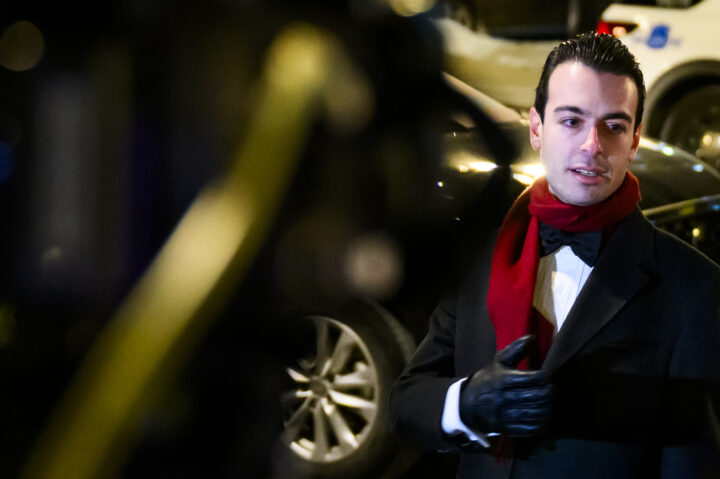
Pete Kiehart for The Washington Post via Getty Images
Paul Ingrassia, forer White House liaison to the Justice Department, left, announces the release of brothers Andrew and Matthew Valentin outside of the DC Central Detention Facility on January 20, 2025 in Washington, DC.


 Add JewishInsider on Google
Good Monday afternoon!
This P.M. briefing is reserved for our premium subscribers like you — offering a forward-focused read on what we’re tracking now and what’s coming next.
I’m Danielle Cohen-Kanik, U.S. editor at Jewish Insider and curator, along with assists from my colleagues, of the Daily Overtime briefing. Please don’t hesitate to share your thoughts and feedback by replying to this email.
📡On Our Radar
Notable developments and interesting tidbits we’re tracking
President Donald Trump continued to voice his frustration today with Hamas’ ongoing violence in the Gaza Strip, including a recent ceasefire violation where Hamas terrorists shot an anti-tank missile at IDF machinery and killed two soldiers, though he stopped short of calling for action against the terror group.
At a bilateral lunch at the White House with Australian Prime Minister Anthony Albanese, Trump told reporters, “We made a deal with Hamas that they’re going to be very good, they’re going to behave, they’re going to be nice and if they’re not, we’re going to go in — we’re going to eradicate them if we have to, they’ll be eradicated.”
Trump claimed the violence was committed by rogue members of the terror group: “I don’t believe it was the leadership — they had some rebellion in there among themselves — and they killed some people, a lot of people.”
Despite his phrasing, Trump emphasized that the U.S. will not send troops into Gaza. “We don’t need to [have U.S. boots on the ground] because we have many countries, as you know, signed on to this deal,” he said. “We had countries calling me when they saw some of the killing with Hamas, saying, ‘We’d love to go in and take care of the situation ourselves.’ In addition, Israel would go in in two minutes if I asked them to go in. … But right now we haven’t said that. We’re going to give it a little chance and hopefully there will be a little less violence”…
Trump advisors Steve Witkoff and Jared Kushner, in Israel to help shore up the ceasefire, reportedly told Israeli Prime Minister Benjamin Netanyahu in their meeting today not to take any action that could risk the first phase of the agreement, Israeli media reports, despite the recent violations by Hamas…
Netanyahu appointed Israeli-American businessman Michael Eisenberg as his representative to the U.S.-led international body monitoring the implementation of the ceasefire, according to Israeli media. Eisenberg previously helped establish the Gaza Humanitarian Foundation. Vice President JD Vance, set to land in Israel tomorrow, is expected to visit the monitoring body’s command center…
The Trump administration’s nominee for ambassador-at-large for international religious freedom, former Rep. Mark Walker (R-NC), is also in Israel this week on a trip focused on “religious freedom, unity and resilience after the release of hostages.” Yesterday, he met with American hostage families and today visited Yad Vashem and the Western Wall…
The military wing of the Popular Front for the Liberation of Palestine said today it was handing over the remains of a hostage held in Gaza to IDF troops. The army announced the casket is now in Israel and headed for identification…
Meanwhile in the U.S., Politico reports that Paul Ingrassia, the Trump administration’s nominee to head the Office of Special Counsel, said on a text chain of Republican operatives last year that he has “a Nazi streak” in him “from time to time” and that all holidays commemorating Black communities “need to be eviscerated.”
Ingrassia, who has a history of promoting antisemitic conspiracy theories, including calling the Oct. 7 attacks in Israel a “psyop,” is scheduled receive a confirmation hearing in the Senate on Thursday…
The Council on American-Islamic Relations filed a lawsuit against Northwestern alleging that the university violated Title VI of the Civil Rights Act of 1964 by adopting time, place and manner restrictions on student protest and requiring students to watch an antisemitism training video, Jewish Insider‘s Danielle Cohen-Kanik reports.
Among other allegations, the suit, filed in federal court in Illinois, claims Northwestern violated students’ rights by requiring them to agree to the school’s code of conduct, which now incorporates the International Holocaust Remembrance Alliance’s working definition of antisemitism, as well as mandatory bias training that includes a video on antisemitism created in collaboration with the Jewish United Fund, the city’s Jewish federation…
Dartmouth College joined five other universities in rejecting the Trump administration’s “Compact for Academic Excellence” over the weekend. With a deadline of today, the University of Arizona, the University of Texas at Austin and Vanderbilt University are the only schools offered early access to the compact that have yet to respond publicly…
John Kirby, spokesman for the National Security Council under the Biden administration, is set to become director of the University of Chicago’s Institute of Politics on Nov. 15, according to Axios…
⏩ Tomorrow’s Agenda, Today
An early look at tomorrow’s storylines and schedule to keep you a step ahead
Keep an eye on Jewish Insider tomorrow morning for reporting on the U.K. Jewish community’s reaction to rising antisemitism in the country after the Yom Kippur attack on a Manchester synagogue and reflections from a 21-year-old Argentinian activist who was awarded with a trip to the U.S. Holocaust Memorial Museum for her work in tolerance.
This evening, Aish is hosting former New York Gov. Andrew Cuomo in conversation with Elisha Wiesel on “the future of New York City” about the upcoming mayoral elections.
Tomorrow, the Senate Caucus on International Narcotics Control will hold a hearing on Hezbollah’s drug trafficking activities in Latin America.
Hillel International CEO Adam Lehman will appear at 92NY in New York City tomorrow evening to discuss “the state of Judaism on campus.”
Stories You May Have Missed
SUOZZI’S STAND
Tom Suozzi finds comfort zone in the political middle, speaking up for Israel

The New York Democrat praised Trump for the hostage deal: ‘We thank God and congratulate President Trump and all those who helped make the return of the hostages a reality’
HERITAGE OF HOPE
In Israel and Gaza, Nelson Mandela’s granddaughters find hope amid devastation
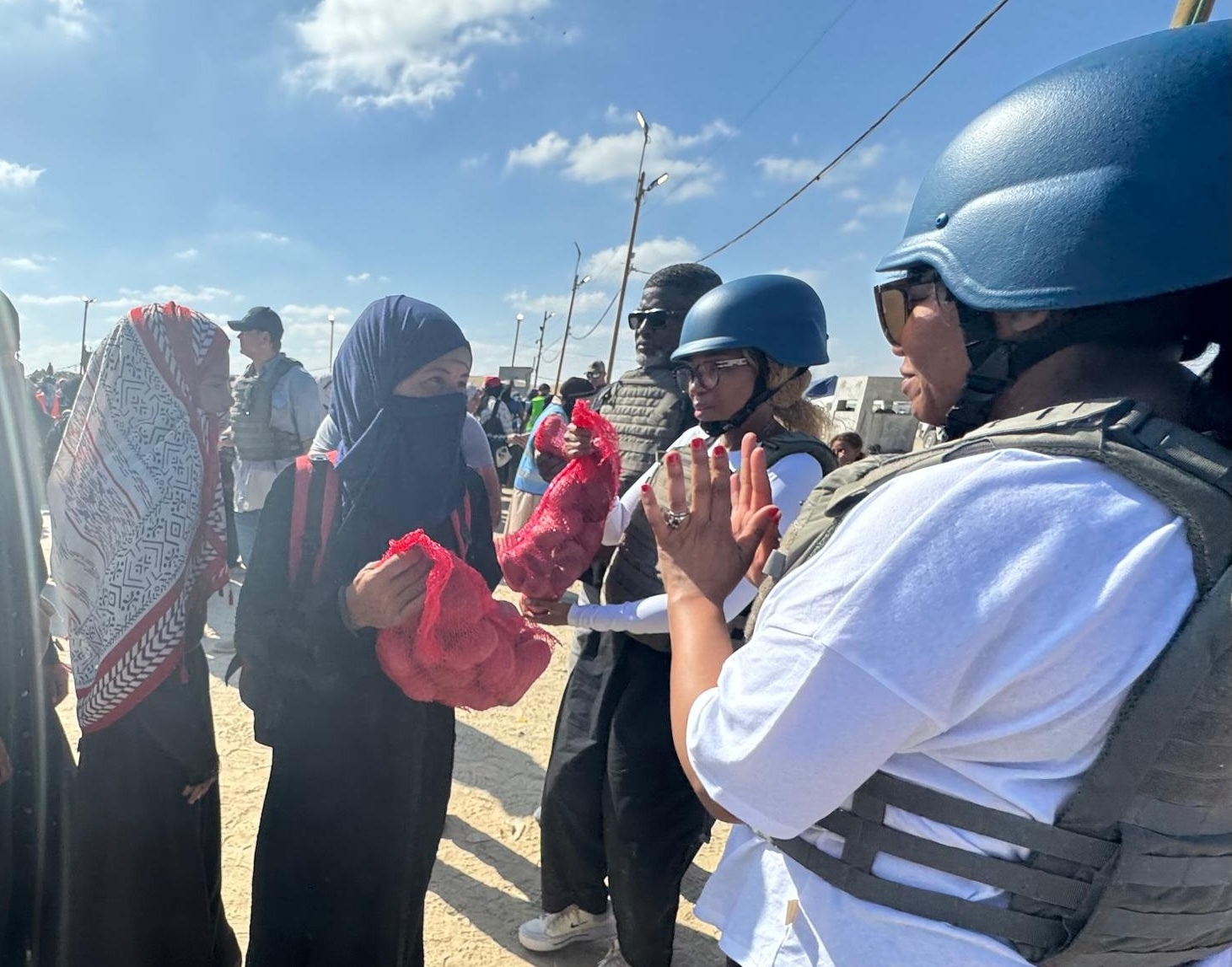
Zamaswazi (Swati) Dlamini-Mandela and Zaziwe Dlamini-Manaway traveled to the region earlier this month, ahead of an announced ceasefire between Israel and Hamas
The venture capitalist and thought leader discusses the Gaza war’s impact on Israeli tech and society, and how Israel and its neighbors can lead a new AI-powered alliance
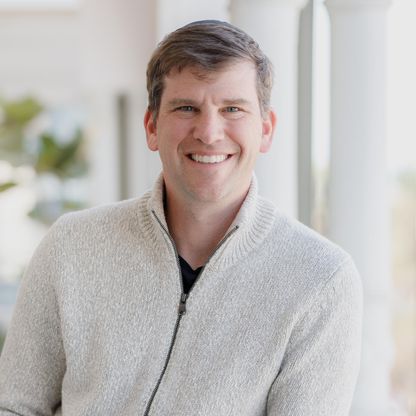
American-Israeli venture capitalist Michael Eisenberg isn’t just watching Israel’s transformation — he’s trying to shape it. As cofounder of the prominent investment fund Aleph, early backer of companies including Lemonade and WeWork, and a longtime thought leader in the intersection of Judaism, economics and technology, Eisenberg has become an influential voice in Israel’s public discourse.
In a wide-ranging conversation on the Misgav Mideast Horizons podcast, co-hosted by Jewish Insider’s Lahav Harkov, Eisenberg discussed the impact of the war in Gaza on Israeli society and the tech sector, what the government must do to turn postwar recovery into long-term renewal and why he sees young Israelis as a “defining generation.”
“It’s not just a defining generation for Israel, it’s a defining generation for the West,” Eisenberg said. “These were kids that everybody was worried about, that they were behind their screens, Instagram, TikTok, who put it all aside and got up to defend the values of Israel, the safety of Israel, the people of Israel and by extension, Western civilization, because Islamism is on the rise.”
Eisenberg also made the case for an ambitious AI-powered regional alliance between Israel and its Abraham Accords partners — and warned that Israel’s political dysfunction could squander the opportunity.
This interview has been edited and condensed for clarity.
Q: When you look at the Israeli tech ecosystem over the next five years, look at Israeli society in general over the next five years, what makes you optimistic and what makes you worried?
Michael Eisenberg: Part of what makes me optimistic is the youth of Israel. Two years into this war that nobody wanted, two years into a war that saw hundreds of thousands of people called up to reserves — [I have] sons, sons-in-law who have probably done more than 1,500 days of reserve duty in Gaza or mandatory service in Gaza. We currently have two kids in the army right now.
These kids have proven to be what I called already in November 2023 the “defining generation.” It’s not just a defining generation for Israel, it’s a defining generation for the West. These were kids that everybody was worried about, that they were behind their screens, Instagram, TikTok, who put it all aside and got up to defend the values of Israel, the safety of Israel, the people of Israel and by extension, Western civilization, because Islamism is on the rise.
And Hamas is not even an extreme version of Islamism. It is one of the variants of this disease called Islamism, which is a mutant form of Islam promulgated by the Muslim Brotherhood, and these kids stood up, risked their lives, some of them lost their lives. I lost two cousins since Oct. 7.
The most important reason to be optimistic about Israel is the young people here who have shown incredible courage, conscientiousness, responsibility, fortitude and innovation in tackling this problem. I’m a high-tech investor in my day job. The amount of innovation that this war has brought out of Israelis, like magic stuff, the AI and space lasers, etc., but also just simple innovation. Just the amount of ingenuity that has come out is stunning, and people are paying attention to it. The U.S. Department of Defense just issued [a statement that] they want technologies that have been battle-tested. There’s nowhere where technologies have been more battle-tested than Israel, maybe Ukraine second, but certainly kind of the high-tech wizardry and missiles — it’s Israel. I think that sets us up now for a lot of positives.
What worries me is a lack of political will. And I use one example of it. We need to borrow the money to fight the war, but at the same time, politicians need to rise out of the sectarianism and to make the hard political decisions to cut the budget in places which are not growth investments or investments in security. Period. Full stop.
Q: What needs to change?
A: Israel is not necessarily on the best path. We went into the war with a debt-to-GDP ratio in the low 60s; we can finance our welfare state for the most part. However, to the best of my knowledge, there’s nobody in the Israeli government or the Ministry of Finance who sits down and says, “OK, these shekels are for investments in future growth; these shekels are just handouts or part of the welfare state.” The only way to get our debt-to-GDP ratio back to where it needs to be, post the war — and again, we should borrow money to prosecute this war and win it as fast as possible — is to grow. In order to grow, you need investments in infrastructure. The investments in infrastructure are more limited because we spend way too much on the spending part of the ledger, which is non-investment, whether it’s supporting ultra-Orthodox yeshivas or unproductive parts of society in general.
Western society has been taken over by progressive nonsense in which you fund the fringes, instead of focusing on the core of society. The core of Israeli society serves. We can’t afford [funding the fringes] and we need to make the cuts necessary to be able to focus on the core needs of society, which is defense. We need to revamp our education system completely from the ground up. We need to make sure that our health system is taken care of, because we’re one of the best health systems on the planet, but it’s falling behind because it’s both underfunded and there aren’t enough doctors and nurses in the system. These are solvable problems, but they need shekels that are being frittered away elsewhere.
Q: Is it just an issue of priorities? At the Knesset last year, at a hearing on AI, you described Israel’s approach as amateurish and said that nobody in the Knesset knows what they’re talking about. What do you think Israel needs to do to ensure its leadership is moving forward in critical tech areas like AI and defense tech?
A: Generally, in technology, civilian innovation wins, and we’re very good at that. Nobody said, “Hey, go do defense tech.” People came out of Gaza and said, “Hey, I saw drones or missiles or AI, I can do this.” Defense tech has popped up without any government help, and that’s the way it should be.
AI is an entirely different story. AI is infrastructure for the future nation state, like nuclear power, like nuclear weapons. This is what will define the winning nation states of the coming 100 years. And it’s infrastructure, because it needs a lot of energy, because you need a lot of human beings with a lot of degrees. We’re a small country, so we need to bring some of these people either back, because they left, or [bring them] in, because there’s not a small number of Jews or other people who would want to live in Israel that we can bring into this.
Q: You recently said the following about AI: “As Europe declines and the east and south rise, Israel and our Abrahamic partners are perfectly placed as the innovation ecosystem that will help drive their economies and drive an AI future in this region and a realigned world.” How do you think Israeli innovation and AI can change Israel’s standing in the world and change the Middle East more broadly?
A: The leadership of Israel has always been very tactical. Part of it, I think, comes from a survival mentality and instinct. But we are now a regional superpower. We need to think like a regional superpower and that requires much more strategy, but it also requires working with our neighbors.
The UAE has spent incredible amounts of time, energy, money and professionalism, and they’ve done incredible work on AI strategy. They figured out, to their credit, that what they have in abundance is energy, and their capability to do large projects, I would argue, is almost second to none. The Emiratis are incredible at building infrastructure projects, whether it’s the new airport in Abu Dhabi, the airport in Dubai, the energy fields. It’s mind-boggling and a sight to behold. I admire them greatly.
The Saudis have launched this initiative called HUMAIN. The Saudis, I think, are behind the Emiratis, but they have abundant energy and abundant money to be able to bring chips in, and perhaps, although I’m skeptical of it, to bring manufacturing in.
What they all lack is talent. What do we have? We’re way worse than the Emiratis at building big projects. We have way less energy abundance, but we have real innovation talent. Number two, we have a relationship with the United States, which wants to kind of own this sphere of AI, that almost nobody has. Now we have this new energy agreement that was signed by the prime minister when he was in Washington a couple of weeks ago, and an AI agreement and very friendly people coming into the State Department.
Q: When you look at the coalition politics, the question is, can we get there? You can be supportive of Prime Minister [Benjamin] Netanyahu, you can be critical of him, but he has a vision for the Israeli economy and for Israeli technological development. But when you look at the broader political spectrum, you don’t seem to have that kind of strategic thinking and the economic vision is often subsumed by politics. Most of Netanyahu’s partners are not free-market capitalists like he is.
A: I actually think that a not-small part of the Likud party, currently in government, is socialist. All the ultra-Orthodox parties are socialists, even though the bases of these parties are not socialists. I think Prime Minister Netanyahu is a capitalist, but below him on the list are a lot of people who unfortunately have the wrong view of economics, or forgot what socialism is, and certainly the ultra-Orthodox politicians who just want handouts without responsibility. They just want to kind of keep the people underfoot.
Q: So what do you do about it?
A: To use a different example, because it’s less personal. You ask yourself, How is it plausible that Keir Starmer, the prime minister of the U.K., has said such a dumb thing [recognizing a Palestinian state]? I don’t think there is a dumber statement ever made by a politician. We should say it openly. He may have killed the hostages by caving to Hamas and the Palestinian narrative. [French President Emmanuel] Macron, also. These two may be responsible for the life of our hostages because of stupid things that they said.
Why are people so stupid? And the answer is, because all politics, at the end of the day, are local. My friend Eugene Kandel, the former economic advisor for the prime minister, said the KPI [key performance indicator] of every politician is to get reelected. That’s what they want. And you look at the voting bases, under Starmer and under Macron, there are a lot of Islamists there in these countries. And so they’re pandering to the base.
I think a lot of this in democratic politics, unfortunately, comes down to a lack of leadership and people who pander to the base, and populism has become popular again. But the laws of physics for every action is an equal and opposite reaction. I hope that there is going to be an era of leadership that follows this era of populism, because I think people are sick and tired of the amateur hour that has become much of government, technology and economic policy. They’re sick and tired of it. And they’re sick and tired of the cost of living going up here.
When you want to be a regional superpower, you can’t run a country like this in the modern era, and we need to fix that. This younger generation is incredible. They’re going to fix it.
Q: We’ve seen the negative impact of campaigns against Israel, not just in Europe, but particularly in the U.S., where we’ve seen a drop in public opinion towards Israel. You’ve talked a lot about narrative and storytelling and how it applies to startups, but when you look at Israel, what do you think it should be doing differently?
A: I did some work at the beginning of the war on bot networks, and how this coordinated campaign got unleashed on Oct. 8. Amazingly, there were Google Drives all over campuses in America that had posters that you could download and print. The people were ready for this. The Network Contagion Research Institute run by Joel Stein has done an incredible job recently of charting this, and there is a very, very well-honed narrative meme-making system, probably funded by Qatar in various ways, that has gotten the best of the West and Israel, too.
You have a very complicit media. You just look at that picture of the poor kid with MS that ends up on the cover of all these pages, and you look at the inside deliberations of The New York Times where they knew the problem and they still decided to publish it. It is outrageous, by the way. You can read on my Twitter, I’m calling for the New York Times editor Joe Kahn to resign. In this case, Kahn got it right, and he still published it. The guy is complicit in spreading false narratives to a level of nobody anywhere in the world.
We need to start playing offense and not defense. And unfortunately, I think the government and the narrative are always defensive, rather than offensive, and we wait for the crisis to happen rather than crafting the narrative ourselves.
What is the narrative? I think the answer is, we are Israel. Israel is the freest, most innovative, most initiative-taking society in the world, and it is the most mutually responsible. You want to raise your children here, because they grow up with mutual responsibility for their society and in an emergent regional superpower. Together with our cousins in the UAE and Saudi Arabia and the southern part of the Mediterranean in Greece and Italy, we can define this region as a future model for the world.
Q: What impact has the war had on the tech sector and the economy? It seems that things are better than anyone could have predicted.
A: Israel is the best-performing stock market in the world since October 2023. It’s pretty mind-blowing. It’s been very resilient.
Since the war started, numerous American funds have been set up in Israel. People want to access the innovation. I’ve been working very, very hard to try to develop the finance sector here. I think the current Finance Minister [Bezalel Smotrich] has figured this out, and I think you’ll see some news in the future about a regulatory and tax overhaul to enable the emergence of the finance industry. We need a second industry other than tech.
In tech, cyber carried us this far, but it’s not enough to carry us to the next phase. We need the AI enabled services businesses to sell globally from here — like Lemonade, which I was lucky to be the first investor in, is the fastest growing insurance company in the world. It’s an AI native business and we now operate globally, we started here. We need these businesses to grow so that we have more engines of growth other than just cyber and defense.
Q: Now for a more personal question. You have eight kids. How do you manage running a large investment fund, writing books, chairing charitable organizations, owning a winery — and being a dad and grandfather?
A: I think the secret in life is kind of two things. Marry well, and I was very fortunate to meet my wife young, and we’ve had just an incredible relationship and partnership and raising a family together, and incredible business partners and in the nonprofit universe. And we don’t have a television — I say that half in jest, but it’s kind of true, I don’t have that many hobbies in life.
Even on the books that I’ve published, I have an incredible editor who is also a thought partner and challenges me really hard and fine tunes me quicker. So everything in life is who you partner with. And then my only two real hobbies that I have that I enjoy very much are skiing, which you can only do a small number of days a year, unfortunately, and drinking Israeli wine. I just want to write books and help Israel and the Jewish people. That’s my life. And raise our family together.
I actually don’t believe in work-life balance. I think this is a terrible promise that psychologists make to kids, and it’s just false. What is balanced about the last two years? If I’ve promised you that your life is going to be balanced and you encounter the last two years, you will have failed, because there’s no balance. No one promised my daughter, who had three kids and now had her fourth in the middle of the war and her husband was 300-plus days in reserve duty, any balance this year. What we need to do is to tell people that there are trade-offs in life because there are 24 hours a day and seven days in a week, and we try to be as good as we can at everything, and we’re going to fail. And I think that builds resilience.
What I think Israel has in spades is optimism and resilience. Optimism and resilience. That’s the reason I’m bullish on Israeli society in this generation, that’s because they’re battle hardened. They have built resilience. It hasn’t been easy. Nothing is easy. That’s real life.
We got knocked on our butts, and we got up and gave it back, and it’s had a tremendous price. It still has a price. The hostages are still the price. There’s still people fighting in Gaza, and unfortunately, soldiers being killed and a lot of broken hearts and a lot of widows and orphans who are our responsibility collectively. But we have, unfortunately, through trauma, built resilience, and now we need to get to the post-traumatic growth phase.
Plus, NYT spotlights terror leader

Zhu Ziyu/VCG via Getty Images
A glimpse into the Harvard University campus on May 24, 2025 in Cambridge, Massachusetts.
Good Tuesday afternoon.
This P.M. briefing is reserved for our premium subscribers like you — offering a forward-focused read on what we’re tracking now and what’s coming next.
I’m Danielle Cohen-Kanik, U.S. editor at Jewish Insider and curator, along with assists from my colleagues, of the Daily Overtime briefing. Please don’t hesitate to share your thoughts and feedback by replying to this email.
📡On Our Radar
Notable developments and interesting tidbits we’re tracking
Former Sen. Sherrod Brown (D-OH) is set to make a comeback bid for the Senate, taking on Sen. Jon Husted (R-OH) — who was appointed earlier this year to fill Vice President JD Vance’s seat — next year. Brown, who lost his seat to Sen. Bernie Moreno (R-OH) in a hotly contested 2024 race, held a solidly progressive voting record during his three terms in the Senate but maintained his support for Israel and relationships with Ohio’s sizable Jewish community. Senate Democrats have encouraged Brown to run again, seeing him as one of the party’s few chances to flip a GOP-held Senate seat back to blue in the midterms…
The Democratic National Committee is set to consider two resolutions on Israel this month — one of which is downright hostile to the Jewish state. The first, introduced by DNC Chairman Ken Martin, calls for a ceasefire, the return of all hostages and a two-state solution. The other, introduced by progressive DNC members, calls for an arms embargo, the suspension of all military aid to Israel and for the Democratic Party to recognize a Palestinian state…
The Atlantic reports on the divide between the “reformist” and “academic resistance” factions of university leaders, exemplified by a heated meeting of the Association of American Universities. The reformists are led by Vanderbilt Chancellor Daniel Diermeier and Washington University in St. Louis Chancellor Andrew Martin, who have positioned their schools as safe spaces for Jewish students facing antisemitism on other campuses and advocate for more universities to do the same. The two told Jewish Insider last month, “Here are two institutions that are willing to stand in the public square and say, American higher education has lost its way in some respects. We’re great institutions, and we’re committed to working to ensure that our institutions and higher education writ large will do better in the future.”
The resistance faction, meanwhile, led in part by Princeton President Christopher Eisgruber and encompassing most Ivy League schools, says the reformists are lending legitimacy to the Trump administration’s war on higher education by admitting universities have a problem with liberal bias…
We’re hearing that Harvard, one of those Ivy Leagues battling with the federal government, could reach a settlement with the Trump administration as soon as tomorrow. Harvard may agree to spend $500 million for the restoration of its frozen federal funding, more than double what Columbia paid to the federal government last month. However, reported terms of the deal would see Harvard’s payment going towards vocational and educational programs, similar to the $50 million Brown University agreed to spend on local workforce initiatives, rather than going to the Trump administration…
George Washington University joined the schools under fire from the federal government today as the Department of Justice found it in violation of federal civil rights law. The DOJ said GW “took no meaningful action and instead was deliberately indifferent to the hostile educational environment on its campus” during an anti-Israel encampment and protests, and gave the D.C. school an Aug. 22 deadline to agree to dialogue…
The Trump administration is busy on the diplomatic front as well, now working towards a deal between Israel and Syria to open a corridor for Israel to deliver humanitarian aid to the Druze community in the southern Syrian city of Suweida, according to Axios. The initiative comes after Israel bombed Syria last month in defense of that community, as the Druze clashed with militias aligned with Syrian President Ahmad al-Sharaa’s government. Tom Barrack, U.S. ambassador to Turkey and envoy to Syria, is expected to meet with Israeli Strategic Affairs Minister Ron Dermer and Syrian Foreign Minister Asaad al-Shaibani to discuss the deal in Paris next week…
The New York Times interviews Zakaria Zubeidi, the former leader of the Al-Aqsa Martyrs Brigade, a U.S.-designated terror group based in the West Bank town of Jenin, who was released from Israeli prison in February as part of a temporary ceasefire deal between Israel and Hamas. The profile framed Zubeidi, who also founded the Freedom Theater in Jenin, as “emblematic of something else: a sense of hopelessness that imbues Palestinian life,” a charitable interpretation for the man who led the Al-Aqsa Martyrs Brigade during the Second Intifada — during which time the militia was designated as a Foreign Terror Organization by the U.S. and over 1,000 Israelis were killed in terror attacks…
World Central Kitchen confirmed that the individuals struck by the IDF who were operating from a vehicle with a WCK emblem were not affiliated with the aid organization, saying it “strongly condemn[s] anyone posing as WCK or other humanitarians as this endangers civilians and aid workers”…
⏩ Tomorrow’s Agenda, Today
An early look at tomorrow’s storylines and schedule to keep you a step ahead
Keep an eye on Jewish Insider tomorrow morning for an interview with Arkansas Gov. Sarah Huckabee Sanders, who just returned from a trip to Israel, and another with American-Israeli venture capitalist Michael Eisenberg. We’ll also profile American Eagle CEO and philanthropist Jay Schottenstein.
Eric Levine, a top GOP donor and board member of the Republican Jewish Coalition, is co-hosting a fundraiser tomorrow evening for New York City Mayor Eric Adams as Adams tries to retain his office as an independent against Democratic nominee Zohran Mamdani. Levin is joined by an array of donors from New York’s legal, financial and Jewish communities in hosting the event, advertised as “Democrats, Independents and Republicans coming together to save New York City.”
Stories You May Have Missed
BLUE RIDGE BAYIT
Mountain minyan: An unorthodox experiment in North Carolina’s Blue Ridge Mountains

A development called Mountain View, still in its early days, aims to build an Orthodox community from the ground up in Sparta, N.C.
DIVERGENT VOICE
Hostage families protest Gaza offensive — but this father says it doesn’t go far enough
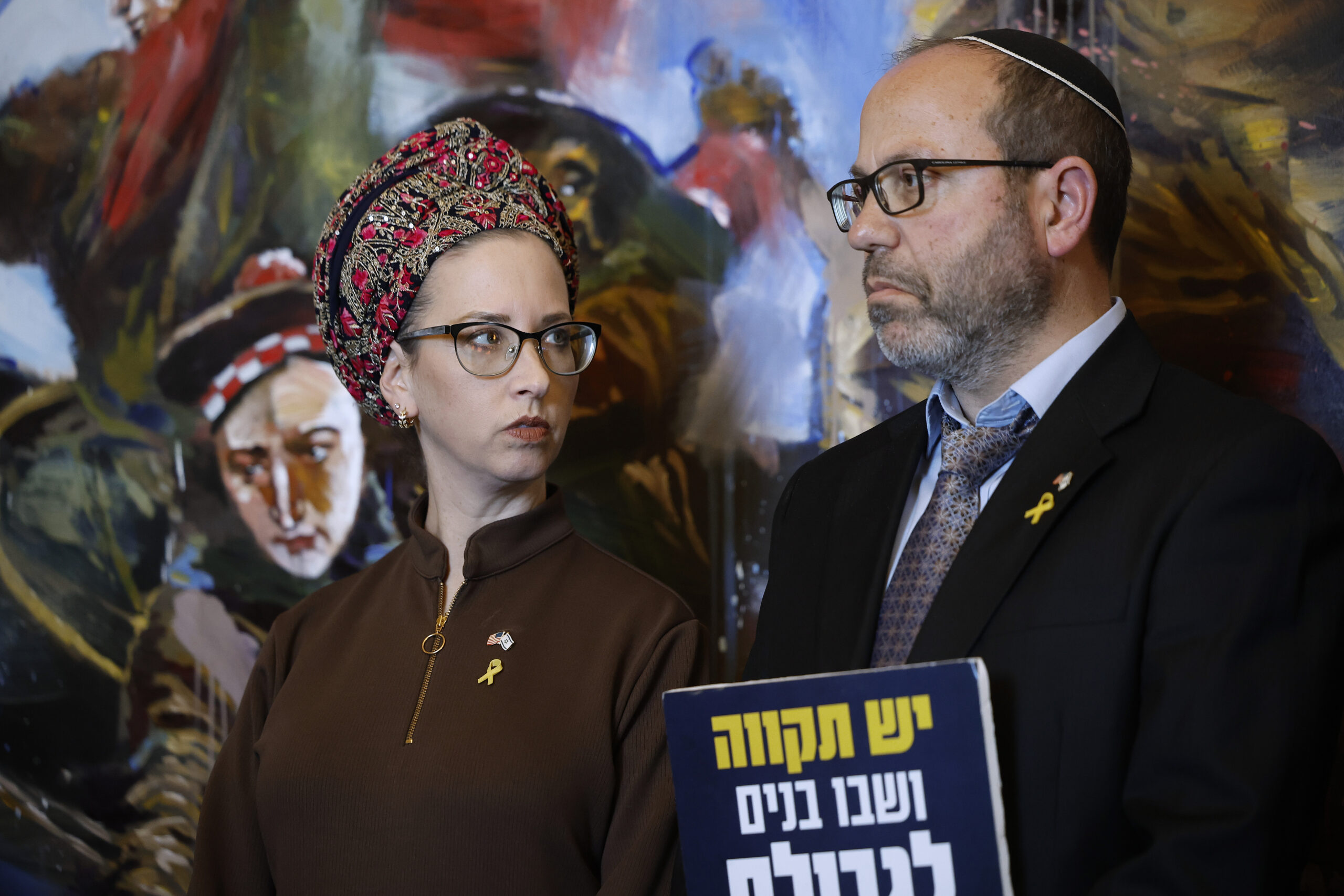
Tzvika Mor, head of the hawkish Tikvah Forum, a minority group of hostage families, calls to prioritize defeating Hamas, says putting hostages first is ‘indescribable stupidity’
Some Israeli business leaders and innovators are urging the country to seriously consider adopting a strategy of ‘economic diplomacy’ to place the country more firmly on Trump’s radar

Win McNamee/Getty Images
U.S. President Donald J. Trump and Emir of Qatar Tamim bin Hamad al Thani attend a signing ceremony at the Amiri Diwan, the official workplace of the emir, on May 14, 2025, in Doha, Qatar.
During President Donald Trump’s trip to the Middle East earlier this month, he shuttled between Gulf capitals to announce major economic deals. In Qatar, it was an eye-popping $1.2 trillion economic commitment in trade agreements and direct investment. Saudi Arabia pledged to invest $600 billion in the United States in defense, energy and infrastructure. And in the United Arab Emirates, Trump announced a series of agreements — including one to build Stargate UAE, the largest artificial intelligence campus outside the United States, in partnership with OpenAI and Nvidia — worth more than $200 billion, on top of $1.4 trillion previously committed in U.S. investments.
Missing from the list of deals announced on Trump’s Middle East junket was any kind of similar agreement with Israel, which Trump did not visit on his first major trip abroad since returning to office. Economic ties between the U.S. and Israel are strong; Israel is a larger trading partner to the U.S. than either Saudi Arabia, the UAE or Qatar, and American investors are among the biggest investors in Israeli startups. But the country lacks the liquid financial firepower that is available to the oil-rich Gulf monarchies, which risks placing Israel at a disadvantage in the eyes of an American president who sees the world as a series of business deals.
“You try not to compete in areas where you have a disadvantage. We have a capital disadvantage. So we should compete where we have an advantage, which is on innovation and technology,” said Michael Eisenberg, who co-founded Aleph, an Israeli VC firm.
Some Israeli business leaders and innovators are now urging the country to seriously consider adopting a strategy of “economic diplomacy” to place the country more firmly on Trump’s radar. They think that startup founders and venture capitalists stand to serve as Israel’s best ambassadors, better suited to make the economic case for deepening U.S.-Israel ties than the buttoned-up bureaucrats who populate global capitals advancing Israel’s interests.
“Founders are Israel’s best ambassadors. They travel more than diplomats, pitch to the world’s biggest investors and solve real-world problems that transcend borders,” said Jon Medved, the Israel-based CEO of OurCrowd, a global venture investing platform. “Do they have a responsibility to engage in economic diplomacy? I think they already do, whether they realize it or not.”
Where the Gulf countries have the ability to spend seemingly endless sums of money on American investments and projects to woo Trump, Israel offers “deep tech expertise” and a venue for early stage collaboration that cannot easily be replicated.
“We’re the lab. The Gulf can be the scale-up market,” Medved continued. “There’s a powerful opportunity for synergy, not just competition.”
It’s not news to the American government that Israel excels in technology. In 2022, the two countries launched a strategic high-level dialogue on technology as a way to advance cooperation on artificial intelligence, climate change and pandemic preparedness. (The dialogue slowed down after the Oct. 7, 2023, Hamas attacks.)
Avner Golov, who until 2023 served as the senior director for foreign policy in Israel’s Prime Minister’s Office, thinks the collaboration between the two countries should be formalized with a photo op, like the signing ceremonies Trump participated in during his visit to the Gulf. The U.S.-Israel security memorandum of understanding, which promises Israel $3.3 billion in U.S. security assistance annually, expires in 2028, and Golov thinks the renegotiation of that agreement is an opportunity to strengthen the tech and economic ties between the countries — to put Israel’s tech diplomacy to the test.
“I envision going to the White House Rose Garden, signing, for the first time, a formal strategic partnership between Israel and America, approved in both Congress and the Israeli Knesset,” Golov told Jewish Insider. Such a deal, as Golov sees it, might also include ways to make it easier for American businesses to operate in Israel.
Eisenberg, who has invested in major Israeli startup successes such as WeWork and Lemonade, thinks changes to Israel’s “regulatory environment” can help make the sell to American companies and, by extension, Trump.
“We’re not going to do zero taxes like Dubai, but we need to be attracting more capital here by making our regulatory environment much simpler and lowering our capital gains taxes to be competitive with the United States so that we can bring capital formation vehicles like hedge funds to Israel,” Eisenberg said.
Of course, many leading tech companies already have large operations in Israel. The chip giant Nvidia announced a $500 million investment in an Israeli AI research data lab in January. In March, Google acquired the Israeli cybersecurity company Wiz for $32 billion, Google’s largest-ever acquisition. Nvidia CEO Jensen Huang and Google President Ruth Porat were with Trump in Saudi Arabia, along with other top CEOs.
“Many of them have employees in Israel because of our innovation, but we need to build a strategy around attracting them, getting deeper engagement and using them in our attempt to build us into a regional superpower,” added Eisenberg.
Israeli Prime Minister Benjamin Netanyahu has long touted Israel’s startup ecosystem, but some worry he has not sufficiently tapped into that world to meet the moment, when Trump — whom Netanyahu has always sought to present as a close friend — seeks flashy financial success on the world stage.
“[Netanyahu] should have realized that in a competition for the affections of a strongman like Trump, Israel had little to offer,” The Atlantic’s Yair Rosenberg wrote this month.
But the basis of the U.S.-Israel relationship has never been purely about dollars and cents.
“If we’re going to make sure, ‘Hey, don’t forget about us,’ it’s not about money. It’s about morality and humanity and the purpose of Israel on the world stage,” former U.S. Ambassador to Israel Tom Nides told JI. “Obviously there’s this whole notion that there are a lot of deals to be done. But that’s not how we compete.”
By Jacob Kornbluh & JI Staff
DRIVING THE DAY: UPSET IN ISRAEL’S PRESIDENT ELECTION: Dovish Knesset member Meir Sheetrit surprised everyone this morning by surging to 2nd place in the first round of voting. Out of 117 qualified votes, frontrunner Reuven Rivlin came in first place with 44 votes, Sheetrit in second place with 31 votes and former Knesset speaker Dalia Itzik with 28 votes. The momentum has now shifted towards Sheetrit as the top two face each other in the second round. WATCH LIVE BROADCAST [Knesset Channel] (more…)
Please log in if you already have a subscription, or subscribe to access the latest updates.
 Continue with Google
 Continue with Apple