

































Plus, Jewish leaders go grassroots to fight political extremes

(Sarah Stier/Getty Images)
Commissioner of the NBA Adam Silver, Joshua Kushner and CEO of Disney Bob Iger attend the Men's Quarterfinal match between Novak Djokovic of Serbia and Taylor Fritz of the United States on Day Ten of the 2025 US Open at USTA Billie Jean King National Tennis Center on September 2, 2025 in the Flushing neighborhood of the Queens borough of New York City.


 Add JewishInsider on Google
Good Thursday morning.
In today’s Daily Kickoff, we talk to Jewish leaders about their efforts to build up local grassroots organizing to counter extremist political forces, and report on Bob Iger and Josh Kushner’s purchase of a controlling interest in the Los Angeles Lakers. We interview Andrew Gross, the incoming head of the American Jewish Committee’s New York/New Jersey office, and spotlight Scouting America’s efforts to provide a welcoming environment for Jewish and Israeli scouts. Also in today’s Daily Kickoff: Yuval Ben Neriah, Rabbi Ben Berger and Nelson Peltz.
We also have a new on-demand Live Briefing that you can access throughout the day via our new app (on Apple and Android) and on our website.
Today’s Daily Kickoff was curated by JI Executive Editor Melissa Weiss and Israel Editor Tamara Zieve, with assists from Danielle Cohen-Kanik and Marc Rod. Have a tip? Email us here.
What We’re Watching
- We’re monitoring the situation in Israel and Lebanon after Lebanese Prime Minister Nawaf Salam slammed “attacks, incursions, demolitions and the systematic destruction of homes” in parts of southern Lebanon.
- Israeli Defense Minister Israel Katz, meanwhile, said the IDF was “destroying all the houses” in the established buffer zone between the countries as it prepares for a “long-term presence” in the area, prompting a rebuke from a State Department official, who said, without naming Katz, that a “permanent military presence in south Lebanon is not consistent with the commitments made in the framework or the long-term peace and security of both states.”
- We’re also keeping an eye on developments in the West Bank, as extremist settlers attempt a siege on a home owned by a Palestinian American family in the village of Qusra. U.S. Ambassador to Israel Mike Huckabee criticized the “horrific act of terror” targeting the home and its residents, who according to a relative in the U.S. were evacuated by the IDF.
- In Washington, the Hudson Institute is holding an event this morning looking at the U.S. and Israeli war against Iran nearly six months after the launch of Operation Epic Fury. Speakers include the Foundation for Defense of Democracies’ Behnam Ben Taleblu, the Hudson Institute’s Michael Doran and Zineb Riboua, and former State Department official Ludovic Hood, who recently joined Hudson’s Center for Peace and Security in the Middle East as a senior fellow.
What You Should Know
A QUICK WORD WITH JI’S JOSH KRAUSHAAR
Rep. Alexandria Ocasio-Cortez (D-NY), who is openly considering a presidential campaign in 2028, made waves over the weekend when she declared that “Woke 1.0 was crazy” in a nationally televised ABC News interview where she distanced herself from the most unpopular elements of the progressive movement.
Left unsaid during the conversation is what specific policies in the party’s last activist wave does she think were crazy, and does she still agree with any of them? After all, the platform of the Democratic Socialists of America currently outlines many of the same issues that played a role in Democrats’ defeat in 2024 — from progressive candidates’ support for defunding the police to the Biden administration’s open-ended immigration policy that led to the second Trump administration’s harsh crackdown on refugees and undocumented immigrants.
Presumably, she’ll be asked to answer more of the specifics in subsequent interviews. But the implication of her comments was that it’s hard for Democrats to publicly embrace the panoply of left-wing issues that became liberal conventional wisdom around the time of the pandemic without suffering a significant political penalty. Democrats aren’t exactly speaking the language of climate change activists or transgender advocates or supporting watering down penalties for criminals anymore, as was commonplace in 2020.
But they aren’t confronting the far-left forces that drove these issues to the forefront of the conversation for much of the last decade, either. The scandal surrounding Francesca Hong’s view of Thanksgiving as a “colonizer holiday” and Abdul El-Sayed’s comments bashing football, July 4 fireworks and Mackinac Island only underscore the impression that their deeply-held views are at odds with a majority of Americans.
And meanwhile, the DSA faction is as influential as ever in Democratic Party politics. How did that happen, even as a prominent progressive like AOC now acknowledges the excesses of the far left? It’s because the activists have refocused their attention away from their (still deeply held) unpopular social and cultural positions, and are now singularly focused on demanding candidates label Israel’s war against Hamas in Gaza as a genocide. That’s the biggest litmus test right now. And their efforts are aided by the overall decline in support for Israel within the Democratic Party that’s accelerated in the last year.
MOVERS AND LAKERS

Josh Kushner, managing partner of the venture capital firm Thrive Capital, and former Disney CEO Bob Iger have agreed to purchase a controlling interest in the Los Angeles Lakers for a record-breaking price of $12.5 billion, Jewish Insider’s Matthew Shea reports.
Announcement: “As lifelong NBA fans, we are deeply honored for the opportunity to become stewards of the Los Angeles Lakers, one of the most iconic sports franchises in the world. We have immense respect for the leadership and vision of Jerry and Jeanie Buss,” Kushner and Iger said in a statement, referring to Jeanie Buss, governor and minority owner of the Lakers, and her late father, longtime Lakers owner Jerry Buss. “Our long-term commitment is to build on that foundation, compete at the highest level, and serve this extraordinary team, its fans, and the city of Los Angeles.”
NEW BATTLEGROUND

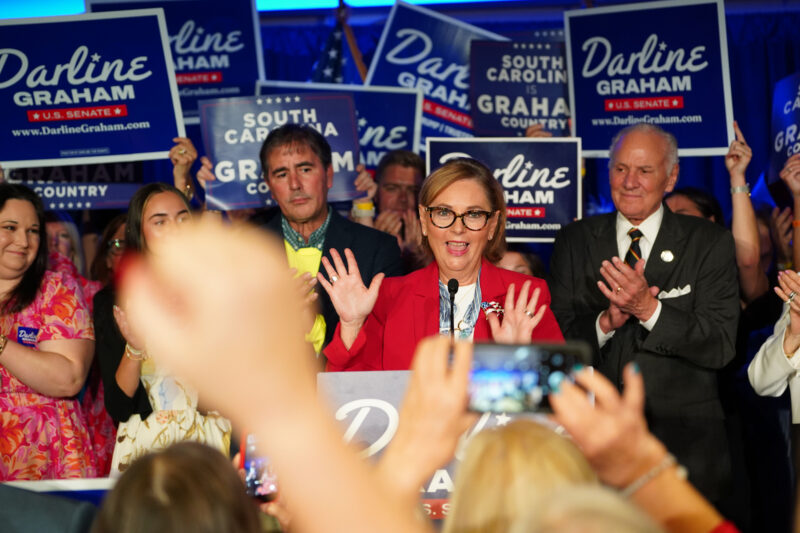
Until recently, the political strategy of the American Jewish establishment could be summed up in two ways: Elect pro-Israel lawmakers to Congress and, at a much smaller scale, educate state and local officials about Jewish values and causes. But a new model of Jewish political engagement is emerging to counter growing populist angst and surging antisemitism across the political spectrum: local efforts focused on school boards and city councils and statehouses, Jewish Insider’s Gabby Deutch reports.
Door-to-door: These Jewish activists are not shying away from the messy reality of politics: They aren’t here to make friends with everyone, acknowledging that not everyone is an ally. Their goal is to offer support — through door-knocking, organizing and their checkbooks — to candidates who have stood by the Jewish community in the post-Oct. 7 political firestorm, and to try to unseat those who have not. “All of these groups are starting to pop up because we realize that the infrastructure that the community has had in the past isn’t enough and isn’t working,” said Stefanie Clarke, a political strategist in Colorado who co-founded the Colorado Jewish Action Alliance.
EYE ON THE BALL
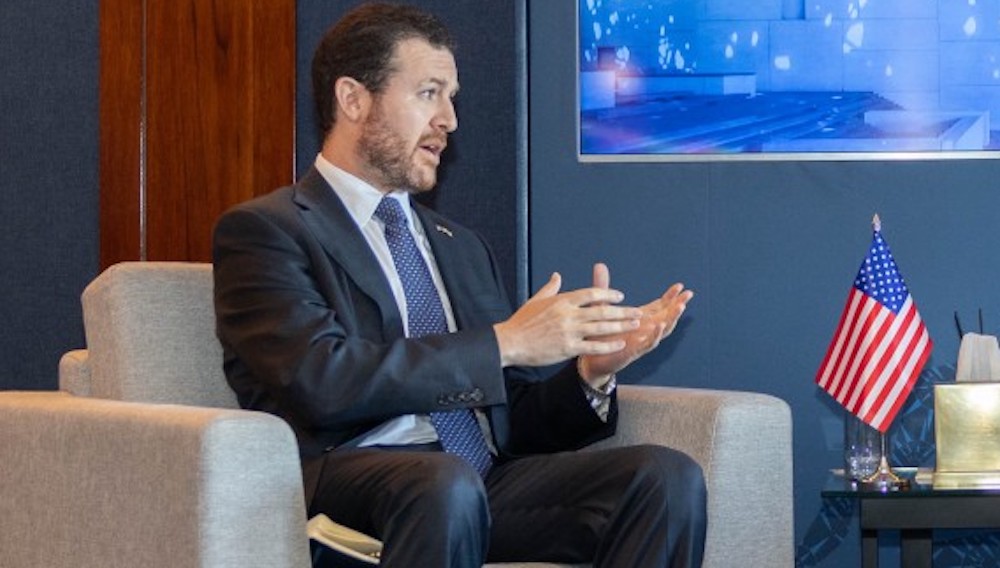
Andrew Gross arrived in his new role as the American Jewish Committee’s New York regional director on Monday with memories from the other side of the Hudson River — memories of the shattered JC Kosher Supermarket in Jersey City, where in December 2019 antisemitic gunmen murdered three people before themselves dying in a firefight with police. “I remember seeing the bullet casings and glass fragments on the ground,” Gross, who had become executive director of the New Jersey-Israel Commission under then-Gov. Phil Murphy just a few months before, told Jewish Insider’s Will Bredderman.
Wide net: “As I do my job here at the AJC, I’m going to work with everyone to make sure that exact type of scenario does not happen again,” he said in a wide-ranging interview with JI. “Everyone,” as he described it, extends from the NYPD to New York City Council Speaker Julie Menin to AJC’s long-standing network of Jewish and non-Jewish civic allies, and even friendly interests out of the Persian Gulf. Gross said he also plans to draw on another set of experiences from Murphy’s administration as he looks now to forge stronger ties with Big Apple business leaders: his time at the New Jersey Economic Development Authority.
COMMUNITY CONCERN
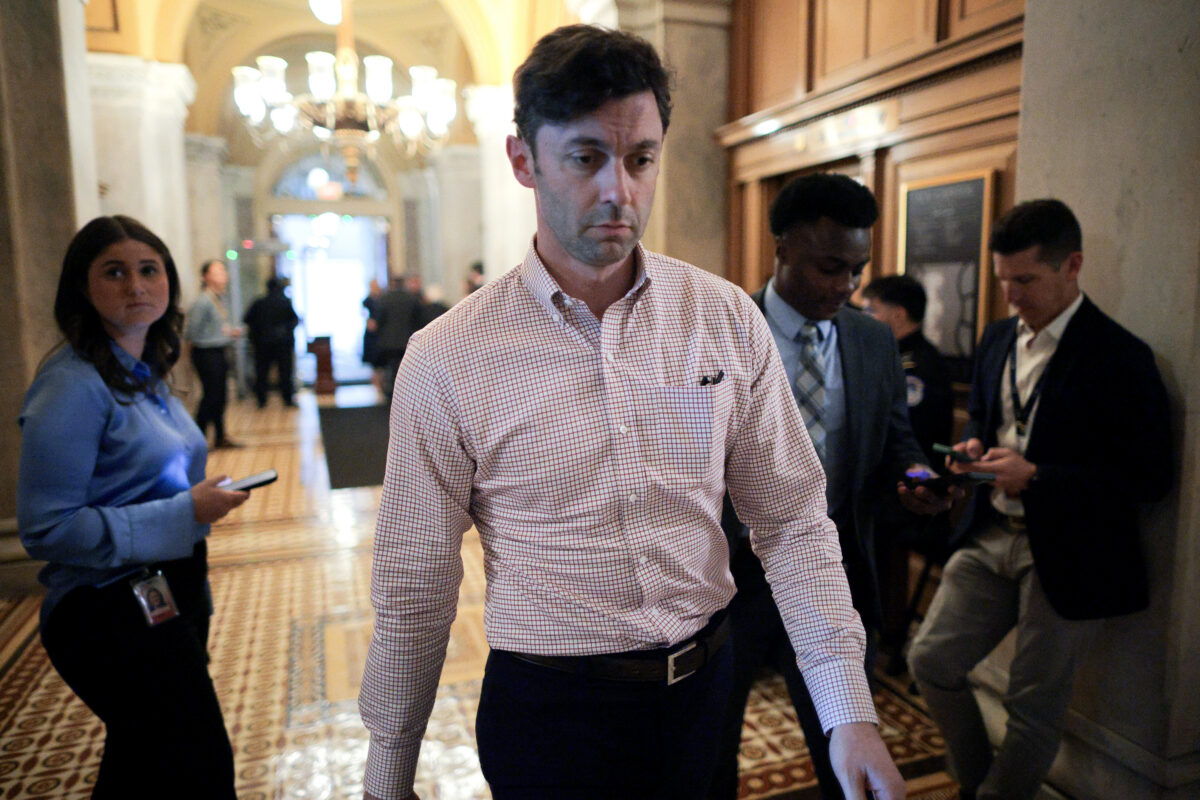
The publisher of the Atlanta Jewish Times penned an open letter to Sen. Jon Ossoff (D-GA) on Wednesday pressing the senator over his repeated votes to block U.S. military sales to Israel, accusing Ossoff of failing to support Israel and of misrepresenting his positions to his Jewish constituents, Jewish Insider’s Marc Rod reports.
Notable quotable: “I apologize for being blunt, but please, stop lying to me and your constituents. I hear you claim, over and over again, that you support Israel — that your support is ‘ironclad,’” Michael Morris wrote in the letter. “It is not. You vote against Israel on the Senate floor in Washington, then come home to Georgia and make this untruthful claim.” He argued that, by contrast, Ossoff’s “antagonism toward Israel has remained steadfast,” pointing to his repeated votes for efforts to block arms sales.
FOLLOW THE MONEY

David Flippo, the Republican nominee in Nevada’s 2nd Congressional District, accepted a max-out donation from Robert Beadles, a prominent local GOP donor and commentator who has repeatedly promoted the Protocols of the Elders of Zion and other antisemitic conspiracy theories, Jewish Insider’s Marc Rod reports.
Paper trail: Flippo, a military veteran who is running in a district that strongly favors Republicans to replace Rep. Mark Amodei (R-NV), has positioned himself as a close ally of the Jewish community. But according to FEC records, he has received $7,000 in donations from Beadles — the legal allowable limit — in May and June of 2026, the only donations Beadles has made thus far this election cycle.
SCOUT’S HONOR

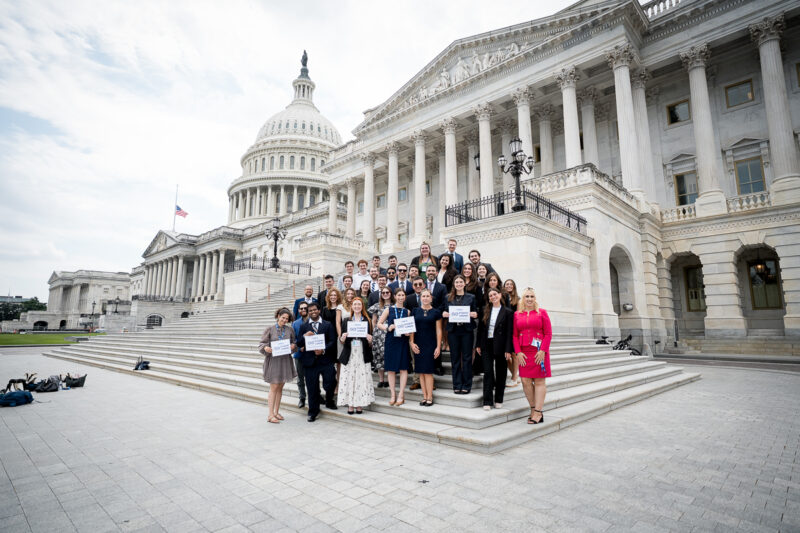
Clad in khaki uniforms and merit badges, hundreds of scouts gathered on a Saturday morning for a sight that has become increasingly rare in America: a Jewish prayer service without security and where nobody felt the need to look over their shoulder, Jewish Insider’s Haley Cohen reports.
Sense of security: At a moment when Jewish students contemplating the upcoming school year are weighing whether to wear or hide their Star of David necklaces as they return to the classroom, this summer’s Scouting America national jamboree in West Virginia offered a different message — holding a full, public Shabbat service for its Jewish scouts as part of an event organizers describe as one of the last unapologetically inclusive spaces for religious minorities in youth culture. “I’ve had the privilege of going to synagogue services around the world for the past 20 years. [The jamboree] was the only one I’ve been to, other than in Israel, where there was no need for security around the service,” Ricky Mason, chair of Scouting America’s national executive board, told JI.
Worthy Reads
Not Very Christian: For Fox News, George Deek, Israel’s special envoy to the Christian world, reflects on the “double standard” applied to Israel amid reports of attacks by Israeli extremists targeting Christians in the country. “Extremism exists in every democratic society. Sometimes it grows dangerously. Governments must confront it. But serious people understand the difference between extremists within a society and the character of the society itself. Except, increasingly, when that society is Israel. An extremist in Boston, Madrid or London attacks a Jew, and we correctly call him an antisemite. A fanatic spits at a Christian in Jerusalem, and suddenly we are invited to diagnose Israeli society. That is not analysis. It is a double standard. If you genuinely want to know whether Christians are flourishing in a country, there are better measures than the behavior of its worst citizens.” [FoxNews]
Trouble Back Home: The Wall Street Journal’s Sadanand Dhume looks at the challenges facing Pakistani Field Marshal Asim Munir as he notches a series of high-profile diplomatic wins but struggles with domestic constraints. “Over the past year and a half, the army chief and Pakistan’s de facto leader, Field Marshal Asim Munir, has pulled off a high-wire act: He has raised Pakistan’s international standing even as domestic challenges have mounted. But unless Gen. Munir can revive the country’s stagnant economy and calm its restive population, his diplomatic gains will likely prove evanescent. … Unfortunately for Pakistan, neither Gen. Munir’s diplomatic feats nor his consolidation of power offers solutions to the country’s domestic crises.” [WSJ]
Find more Worthy Reads in our Live Briefing via our new app (on Apple and Android) and website.
Word on the Street
Secretary of State Marco Rubio was spotted at a joint practice between the Washington Commanders and the Miami Dolphins in Virginia alongside Commanders owner Josh Harris and Dolphins CEO Daniel Sillman…
White House Press Secretary Karoline Leavitt is stepping away from her role at the end of the month; President Donald Trump, who announced Leavitt’s upcoming departure from the White House, said she will now serve as “one of my top outside advisors”…
Rep. Haley Stevens (D-MI) dismissed the notion on Wednesday that campaign spending in her favor by AIPAC’s super PAC backfired in her failed bid for U.S. Senate, and defended the pro-Israel group as Jewish Americans participating in the democratic process, Jewish Insider’s Matthew Shea reports…
Nelson Peltz’s Trian Fund Management is preparing, as part of a consortium of investors it organized that includes Abu Dhabi-based BlueFive Capital, to make a bid for Wendy’s that would take the fast food chain private…
TheWrap’s media editor looks at the pushback to New York magazine’s recent edition that focused on New York City’s Middle East culture scene while denigrating Israel, including the characterization of the Jewish state by one reporter as “the land mass currently called Israel” and lumping Zionism together with Islamophobia and xenophobia…
Israeli chef Yuval Ben Neriah is opening a chain of Japanese fast casual restaurants across Europe in a $10 billion venture; the first branch of the yet-to-be-named chain is set to open in Vienna…
Israel Police announced a monthlong gag order on details related to an Israeli mother-daughter pair who disappeared last week in Austria; the request for the order came from the Lahav 433 major crimes unit, which took over the case…
A new report from the Israeli think tank IMPACT-se, which monitors educational materials around the Middle East, found that most of the “problematic themes” in Saudi curricula targeting Jews and Christians had been addressed, noting that the materials indicated a shift “toward greater moderation, inclusivity, and alignment with the broader reform objectives of” Riyadh’s ambitious Vision 2030 project…
The European Broadcasting Union announced changes to next year’s Eurovision Song Contest in which a winning country would “automatically be ineligible to host” if it was involved in an “armed conflict” or a “sensitive geopolitical situation” at the time…
More than 25 European countries signed on to a joint statement condemning Iran’s use of the death penalty to “silence dissent, intimidate communities, and punish individuals” tied to the Islamic Republic’s anti-government protests…
The governor of Iran’s central bank said the country would soon join BRICS’ New Development Bank, two years after Tehran joined the growing consortium whose founders include Brazil, Russia, India, China and South Africa…
Yeshivat Chovevei Torah announced that Rabbi Ben Berger will serve as the Modern Orthodox seminary’s president and CEO, after eight years at Hillel International, eJewishPhilanthropy’s Jay Deitcher reports; Berger succeeds Rabbi Dov Linzer, who served as president and rosh yeshiva for seven years and will continue in the latter role…
Rachel Nielsen is joining the Milwaukee Jewish Federation as chief operating officer…
Israeli journalist Oren Nahari died at 70 of complications from ALS, a year after announcing his diagnosis and days after his last radio broadcast…
Find on-demand Live Briefing updates throughout the day via our new app (on Apple and Android) and website.
Pic of the Day

Israeli President Isaac Herzog was honored with an honorary degree from the Jewish Theological Seminary on Wednesday in a special ceremony with JTS Chancellor Emerita Shuly Rubin Schwartz at the President’s Residence in Jerusalem.
Birthdays
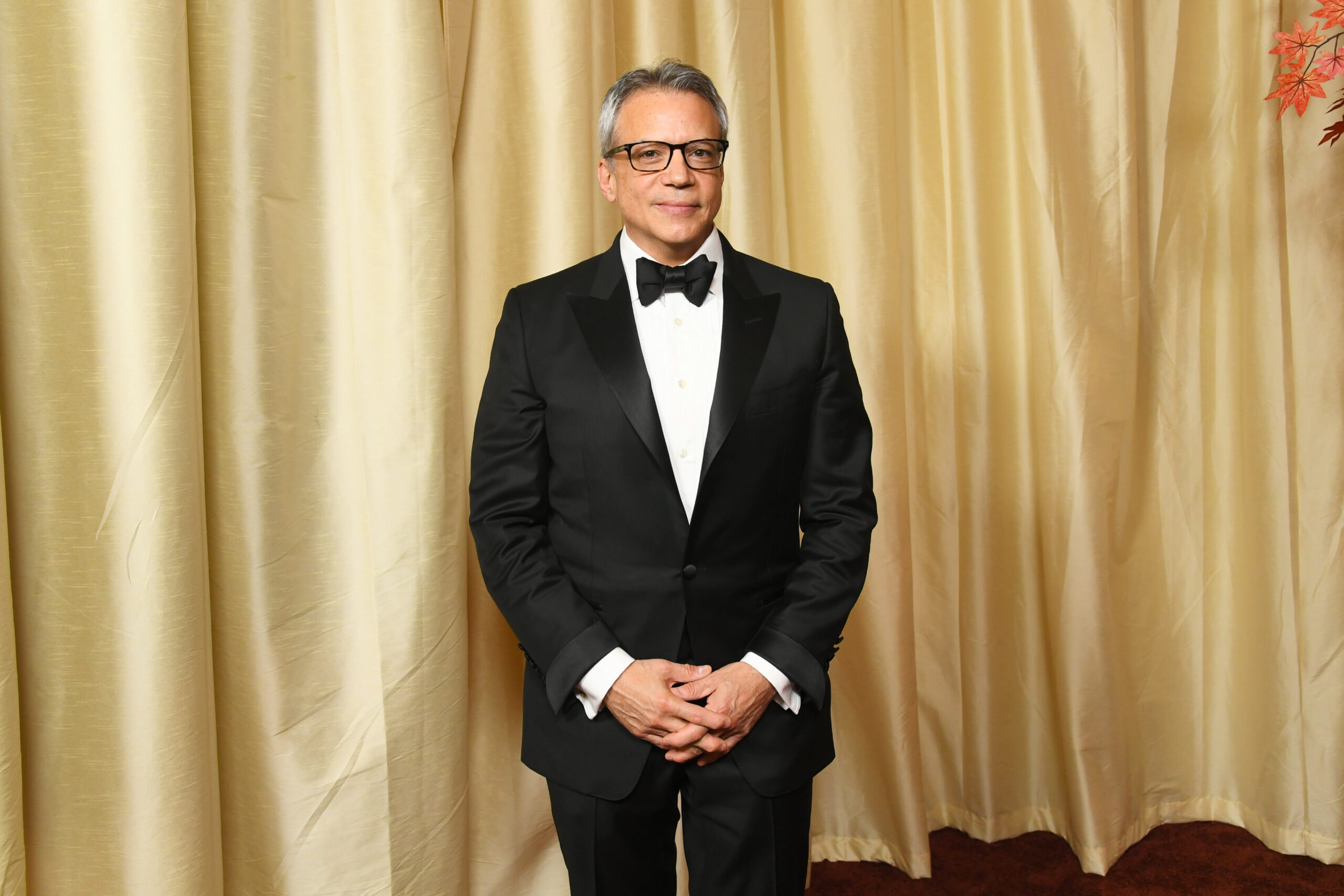
Co-chair and CEO of Warner Bros. Motion Picture Group, Michael De Luca turns 61…
Member of the New York State Assembly for 24 years, since then she is the county clerk of Queens County, Audrey I. Pheffer turns 85… Retired CPA and senior executive in Los Angeles, Morton Algaze turns 83… Treasury secretary through all four years of the Biden administration, Janet Yellen turns 80… Documentary still photographer of the American and international Jewish communities since 1970, Robert A. Cumins turns 78… Beverly Hills, Calif., resident, Ruth Fay Kellerman… VP and chief of staff at The Aspen Institute, James M. Spiegelman turns 68… Film producer, writer and director, Susan Landau Finch turns 66… Founder of the Council of Orthodox Jewish Organizations of Manhattan, he is also the executive chairman of LifeHealth Network, Michael Landau… Storyteller, producer and writer, Jeffrey Mark “Slash” Coleman turns 59… Editor-in-chief of the Hollywood Reporter, Maer Roshan turns 59… Co-founder and managing director at Beacon Global Strategies, he was chief of staff at the CIA and the Pentagon during the Obama administration, he is a graduate of CESJDS, Jeremy B. Bash turns 55… President of Accessibility Partners, a Maryland firm that hires people with disabilities for tech jobs, she is also the founder of a nonprofit I Support the Girls, Dana Marlowe… Three-time Olympian water polo player, now head coach at Pepperdine University, Merrill Marc Moses turns 49… Professor of government at Harvard University, he was the director of the Harvard Center for Jewish Studies, Eric Matthew Nelson turns 49… Professor of law at the South Texas College of Law in Houston, Joshua Michael Blackman turns 42… Deputy general counsel and global head of contracts and litigation for Tower Research Capital, Matthew Weiss turns 40… Weekend editor for The Washington Post, Sara Sorcher… Israeli Olympic long-distance runner, she ran the marathon for Israel at the Paris Olympics in 2024, Maor Tiyouri turns 36… Counsel at CD&R, Nathan Jablow… Senior account supervisor at Edelman, Jodie Michelle Singer… VP of business development at Azul Hospitality Group, Adam Dahan… Head of investor relations at Israel Legacy Partners, David Angel… Elaine Hall… Jonathan Gerber…
Plus, El-Sayed's physician creds called into question

Mario Tama/Getty Images
An attendee wears a jacket at an Iowa caucus watch party organized by Metro D.C. Democratic Socialists of America, on February 3, 2020 in Washington, DC.
This P.M. edition is reserved for our premium subscribers like you — offering a forward-focused read on what we’re tracking now and what’s coming next. Please don’t hesitate to share your thoughts and feedback by replying to this email.
📡On Our Radar
Notable developments and interesting tidbits we’re tracking
UJA-Federation of New York has tapped longtime Jewish educator Michael Kay as its next CEO, the country’s largest Jewish federation shared exclusively with Nira Dayanim for Jewish Insider, marking a generational change that signals the growing importance of day schools on the Jewish communal agenda.
Kay, 46, currently serves as head of school at The Leffell School in Westchester County, N.Y., and will step into his new role on Oct. 5, succeeding Eric Goldstein, 66, a former Wall Street lawyer who will step down after 12 years in the role…
President Donald Trump continued to hedge today on resuming military action in Iran while keeping open diplomatic options: “We’re either going to make a deal or they’re going to be decimated,” he said of Iran while departing for his state visit to China. “So one way or the other, we win.”
Earlier in the day, Trump told the “Sid & Friends in the Morning” radio show that he’s anticipating Iran’s economic collapse due to the U.S. blockade of its ports. “It’s just a question of time, we don’t have to rush anything,” the president said…
Kuwait accused Iran of attempting to invade its Bubiyan Island today, claiming six members of the Islamic Revolutionary Guards Corps attacked soldiers on the strategic piece of Kuwaiti territory where the Gulf state, with assistance from China, is building a large port…
Sen. Lindsey Graham (R-SC) expressed frustration with Defense Secretary Pete Hegseth and Joint Chiefs Chairman Gen. Dan Caine at a Senate Appropriations Committee hearing as they declined to comment on a report that Pakistan harbored Iranian military aircraft from U.S. strikes.
Asked, if the report were to be accurate, if the U.S. should reconsider Pakistan’s role as mediator between the U.S. and Iran, Hegseth and Caine said they “didn’t want to get in the middle of ongoing negotiations.” Graham replied, “Well I do! I want to get in the middle of these negotiations. I don’t trust Pakistan as far as I can throw them … No wonder this damn thing is going nowhere”…
Jay Hurst, the Pentagon’s comptroller, testified that the cost of the war has risen to $29 billion — up from the $25 billion figure the Pentagon cited just two weeks ago…
Hezbollah leader Naim Qassem wrote in a letter to terror group operatives that a deal between the U.S. and Iran is “the strongest card” for “stopping [Israel’s] aggression” in Lebanon, while slamming the Lebanese government for engaging in direct talks with Jerusalem, the third round of which are slated to take place this week in Washington…
Asked at the Politico Security Summit in Washington if she still calls herself a Zionist, Sen. Elissa Slotkin (D-MI) said, “I believe in a Jewish State of Israel, yes. And that to me isn’t a radical thing to say and I always have. I can say that in the same breath that I criticize the military policy of Bibi Netanyahu.”
Slotkin said that “as someone who served three tours in Iraq” she has “concerns with the way the Israelis are organizing military policy right now. … What I can’t accept, though, is collective punishment that comes from saying, ‘well, I don’t like Bibi Netanyahu’s military policy so Jews in America’s synagogues should be attacked,’” she continued…
Senate Majority Leader John Thune (R-SD) told the Washington Examiner he’s open to Israeli Prime Minister Benjamin Netanyahu’s proposal to wind down U.S. aid to Israel over the next decade: The proposal “has been sort of a given, I think, in our foreign aid budget” for “a long time,” he said, “but if that’s how the Israeli leader feels about it — feels like they’re able to deal with their national security threats with their own resources — then I guess I would listen to what he has to say”…
Two weeks ahead of the Texas Senate Republican primary runoff, Thune said he “still [doesn’t] know where [Trump] is headed” in his intent to endorse either Sen. John Cornyn (R-TX) or Attorney General Ken Paxton, but “someone would clearly benefit from it.”
Cornyn, meanwhile, told reporters he doesn’t expect Trump to make an endorsement at all. “We can’t wait, and we’re not waiting. We’re getting prepared, and we are optimistic,” he said. (Still, in what may be a last-ditch effort to secure the president’s support, Cornyn introduced a bill yesterday to rename U.S. Route 287 as Interstate 47 in honor of Trump, the country’s 47th president)…
Politico cast doubt on Michigan Senate candidate Abdul El-Sayed’s claim and campaign talking point that he is a practicing physician, finding that “there’s overwhelming evidence that he’s had no experience as a licensed medical doctor.”
While El-Sayed did attend prestigious medical schools and served as executive director of the Detroit Health Department, he was never granted a medical license in either Michigan or New York, where he says he has practiced, and appears not to have treated patients since his schooling days, despite claiming repeatedly in campaign pitches that he is a physician…
AIPAC denied accusations by El-Sayed and others that it is behind the Center for Democratic Priorities super PAC, a new group supporting Rep. Haley Stevens (D-MI) in the Michigan Senate Democratic primary, and also noted it “isn’t funding any group’s efforts” in Pennsylvania’s 3rd Congressional District, where critics have alleged the pro-Israel group is behind efforts to support candidate Ala Stanford…
Speaking on a webinar with other Washington-area Jewish leaders today, Ron Halber, the CEO of the Jewish Community Relations Council of Greater Washington, excoriated the Democratic Socialists of America as an “evil” organization committed to driving Jews out of society, JI’s Marc Rod reports.
“I think they’re a fringe, radical, antisemitic organization,” Halber said, adding that the group wants to make Jews feel “isolated” and force them to “renounce Zionism” and their connection to Israel in order to participate in the political process…
New York City Mayor Zohran Mamdani released his city budget proposal this afternoon, which includes $26 million annually for the Office to Prevent Hate Crimes, a significant increase from its current budget of around $3 million…
Under Secretary of State for Economic Affairs Jacob Helberg hosted a lunch at the State Department with officials from Gulf Cooperation Council countries as well as Jordan to discuss technology supply chains and the India-Middle East-Europe Economic Corridor…
⏩ Tomorrow’s Agenda, Today
An early look at tomorrow’s storylines and schedule to keep you a step ahead
Keep an eye out in Jewish Insider for coverage of tonight’s forum of New York 12th Congressional District Democratic candidates moderated by JI Editor-in-Chief Josh Kraushaar.
The Israeli Embassy in Washington will host its belated Yom Ha’Atzmaut reception.
The Jewish Democratic Council of America’s conference in Washington continues, with speakers including Senate Minority Leader Chuck Schumer (D-NY), House Minority Leader Hakeem Jeffries (D-NY), Sen. Chris Coons (D-DE), Rep. Nancy Pelosi (D-CA), Minneapolis Mayor Jacob Frey, diplomat Dennis Ross, The Washington Institute’s Dana Stroul and former national security officials Jake Sullivan, Jeremy Bash and Jon Finer.
Stories You May Have Missed
DEMOCRATIC FAULT LINES
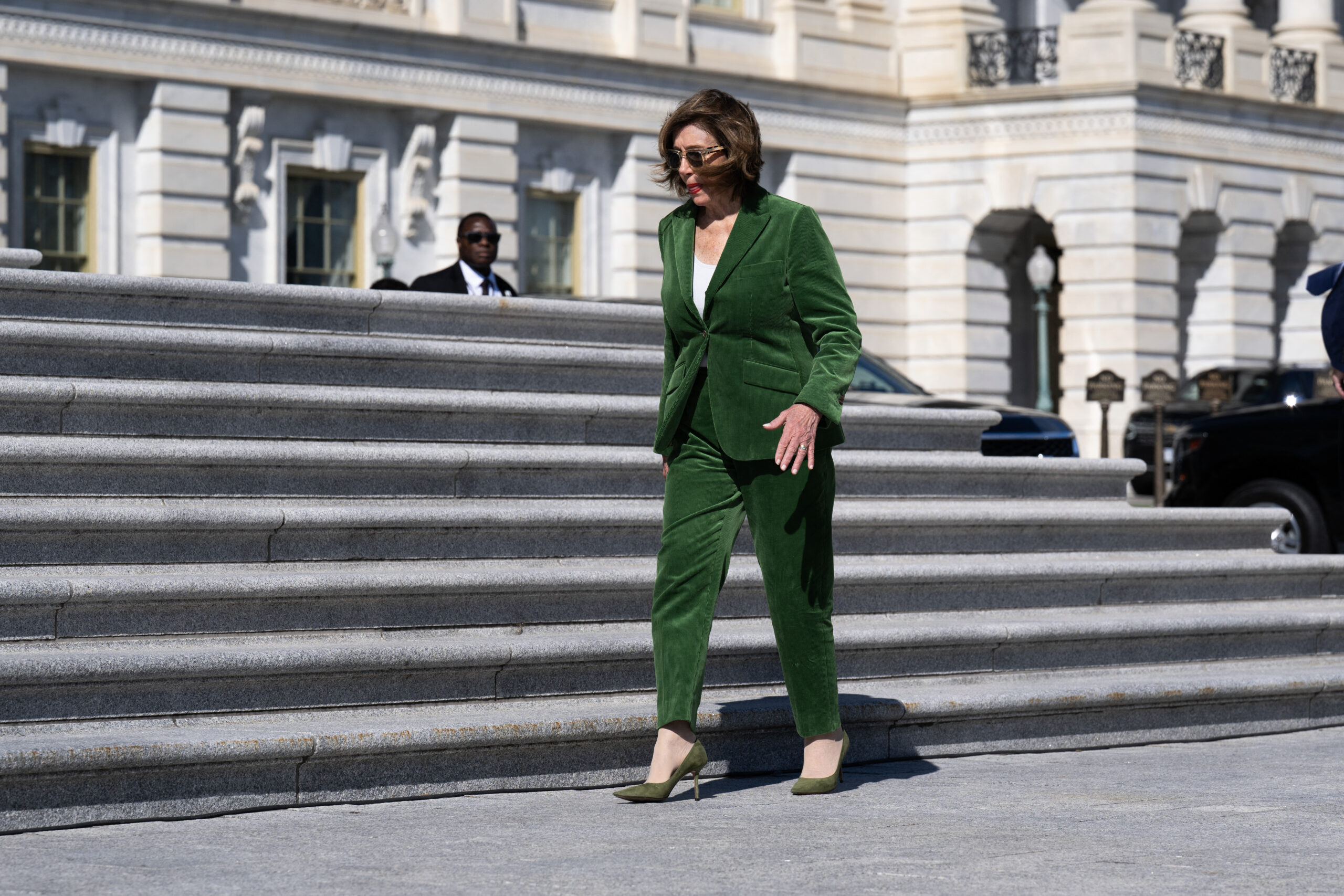
State Sen. Scott Wiener has called Israel’s actions in Gaza a genocide and is open to conditions on offensive aid to the Jewish state, but is still derided as a ‘Zionist’
ECONOMIC OUTLOOK

‘I’m not an investment advisor, but you can see that if you were not in Israel in the past two years, you probably missed out, if Israel was not part of your portfolio,’ Seffy Zinger, chair of the Israel Securities Authority, told JI
Plus, Jew hatred pushes Pa. justice out of Dem Party
Aaron Schwartz/Sipa/Bloomberg via Getty Images
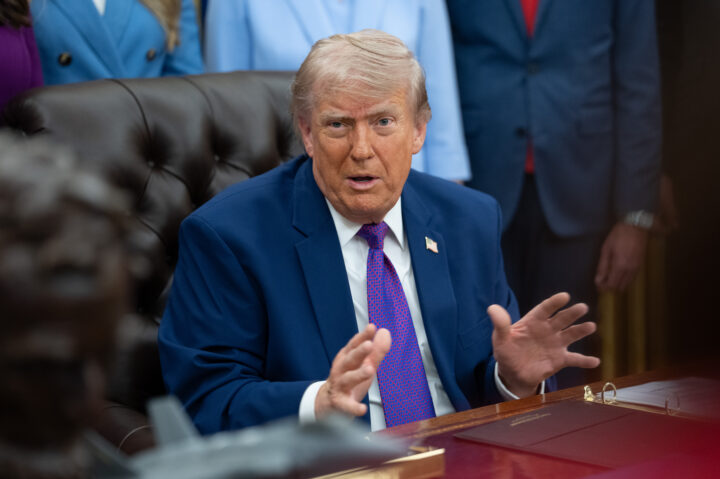
President Donald Trump speaks during a maternal healthcare event in the Oval Office of the White House in Washington, DC, US, on Monday, May 11, 2026.
This P.M. edition is reserved for our premium subscribers like you — offering a forward-focused read on what we’re tracking now and what’s coming next. Please don’t hesitate to share your thoughts and feedback by replying to this email.
📡On Our Radar
Notable developments and interesting tidbits we’re tracking
President Donald Trump sounded a pessimistic note today about the state of the ceasefire with Iran, telling reporters in the Oval Office it’s “unbelievably weak” and on “massive life support” while calling Iran’s proposal to end the war, which he rejected yesterday, a “piece of garbage.”
The president was set to meet this afternoon with his national security team to discuss next steps with Iran, including a potential return to military action and resumption of Project Freedom in the Strait of Hormuz, according to Axios.
A number of hawkish Republican lawmakers are encouraging the president to resume military operations, including Senate Armed Services Committee Chairman Roger Wicker (R-MS), Sen. Lindsey Graham (R-SC) and Rep. Derrick Van Orden (R-WI)…
The UAE has secretly carried out military attacks on Iran during the course of the war, The Wall Street Journal reports, after being on the receiving end of the majority of Iran’s ballistic missile and drone attacks. Abu Dhabi’s targets have included an Iranian oil refinery, struck in early April as Trump was announcing the ceasefire…
Graham called for a potential “complete reevaluation” of Pakistan’s role as mediator between the U.S. and Iran following a CBS News report that Islamabad had permitted Iran to shelter some of its military aircraft from U.S. strikes in Iran. “Given some of the prior statements by Pakistani defense officials towards Israel, I would not be shocked if this were true,” Graham said…
Democratic Majority for Israel PAC is mounting a six-figure mail campaign to boost Bexar County sheriff’s deputy Johnny Garcia in his Democratic primary runoff against activist and conspiracy theorist Maureen Galindo. The campaign is slated to start tomorrow, exactly two weeks from primary day in Texas’ newly redrawn 35th Congressional District…
Axios spotlights the increasingly heated primary between Rep. Thomas Massie (R-KY) and Navy veteran Ed Gallrein, who is backed by Trump. The race, scheduled for May 19, has already seen $25.6 million in outside spending — including an ad from a pro-Massie group featuring antisemitic tropes targeting Jewish GOP donor Paul Singer — making it the most expensive U.S. House primary in history…
The New York Times highlights Nebraska’s contentious Senate race, where several candidates have been accused of acting as “plants” intending to siphon votes for the other party (and one candidate isn’t intending to run for Senate at all), as Democrats largely line up behind independent Dan Osborn, realizing their party brand has been tainted in the Midwest…
A new poll by New Jersey congressional candidate Adam Hamawy, who has made criticism of Israel a centerpiece of his campaign, found him leading the crowded Democratic primary field for the 12th District with 19% of likely voters, up from a March poll by his campaign that found him winning just 5%. His surge coincided with a spending blitz by the anti-Israel super PAC American Priorities, which poured $1 million into pro-Hamawy ads in the district…
New York state Assemblymember Alex Bores released his first ad of the Democratic primary for New York’s 12th Congressional District, highlighting his advocacy for AI regulation and involvement in workers’ rights as positioning him to take on Trump. Rep. Pat Ryan (D-NY), citing Bores’ AI focus, endorsed the former Palantir employee today…
Pennsylvania Supreme Court Justice David Wecht announced today that he is changing his party registration from Democrat to independent, citing increasing antisemitism in the Democratic Party. In his statement, Wecht said Democrats have changed since he served as vice chair of the state party 25 years ago: “Nazi tattoos, jihadist chants, intimidation and attacks at synagogues, and other hateful anti-Jewish invective and actions are minimized, ignored, and even coddled,” he said.
“Acquiescence to Jew-hatred is now disturbingly common among activists, leaders and even many elected officials in the Democratic Party. I can no longer abide this. So, I won’t,” he wrote…
Israeli Diaspora Minister Amichai Chickli prohibited anti-Israel influencer Tyler Oliveira from entering the country as he landed in Ben Gurion Airport today; Chikli told right-wing influencer Laura Loomer that Israel “has strong immigration policies, and if you come to Israel with the intent on inciting violence and hatred against Jewish people, you will not be allowed entry into our country.”
Oliveira has recently released videos purporting to expose welfare fraud among ultra-Orthodox communities in Kiryas Joel, N.Y., and Lakewood, N.J., widely denounced as antisemitic, which he discussed at length on Tucker Carlson’s podcast last week while again invoking antisemitic conspiracy theories…
Trump tapped Kari Lake, former far-right Arizona gubernatorial candidate and short-lived head of the U.S. Agency for Global Media, as ambassador to Jamaica, seen as a step down for the one-time close Trump ally. He also named far-right Pennsylvania state Sen. Doug Mastriano as ambassador to Slovakia…
Trump has invited several business leaders to join him on his trip later this week to China, including Elon Musk, outgoing Apple CEO Tim Cook, BlackRock’s Larry Fink, Meta’s Dina Powell McCormick, Goldman Sachs’ David Solomon, Citi’s Jane Fraser and Blackstone’s Stephen Schwarzman, among others…
⏩ Tomorrow’s Agenda, Today
An early look at tomorrow’s storylines and schedule to keep you a step ahead
Keep an eye out in Jewish Insider for a look at the race to succeed Rep. Nancy Pelosi (D-CA), where state Sen. Scott Wiener is testing whether progressive Jews can still win among the Democratic left.
Defense Secretary Pete Hegseth and Joint Chiefs Chairman Gen. Dan Caine will testify before the House Appropriations Defense Subcommittee as well as the Senate Appropriations Committee for Pentagon budget hearings. Later, FBI Director Kash Patel is also scheduled to appear before Senate Appropriations for a separate budget hearing.
Politico will host its Security Summit in Washington — speakers at the confab will include exiled Iranian Crown Prince Reza Pahlavi; former Homeland Security Secretary Alejandro Mayorkas; Sens. Deb Fischer (R-NE) and Elissa Slotkin (D-MI) and Reps. Adam Smith (D-WA), Jim Himes (D-CT) and Mike Turner (R-OH).
Elsewhere in Washington, the Anti-Defamation League will hold a reception to celebrate Jewish American Heritage Month.
In New York, the funeral for longtime ADL head and storied Jewish leader Abe Foxman, who died on Sunday at 86, will be held at Park Avenue Synagogue.
Democratic primary candidates for New York’s 12th Congressional District including Bores, George Conway and Micah Lasher will take part in a forum at West Side Institutional Synagogue moderated by JI Editor-in-Chief Josh Kraushaar.
Across the river, Democratic candidates seeking to unseat Rep. Tom Kean Jr. (R-NJ) in New Jersey’s 7th Congressional District — including Rebecca Bennett, Michael Roth, Tina Shah and Brian Varela — will participate in a debate moderated by the New Jersey Globe.
Israeli singer Noam Bettan will represent the Jewish state in Vienna for the first semifinal of the international singing competition Eurovision; Israel’s participation in the contest has been marked by protests and boycotts of several European countries, as well as accusations of Israel’s meddling in voting processes that have been dismissed by Eurovision organizers.
Stories You May Have Missed
HISTORY LESSONS
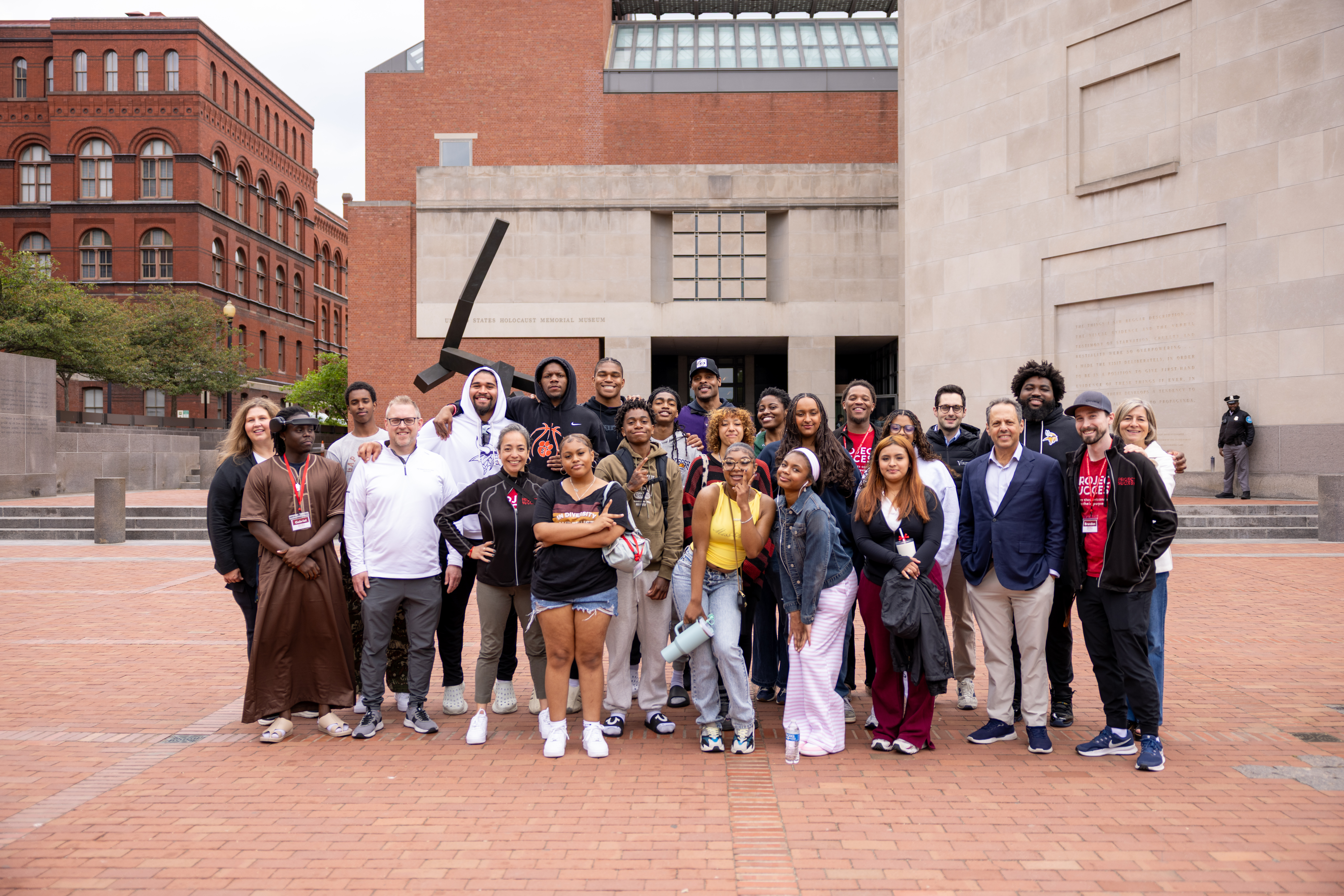
The players also toured the National Museum of African American History as part of the D.C. visit
RACE TO WATCH
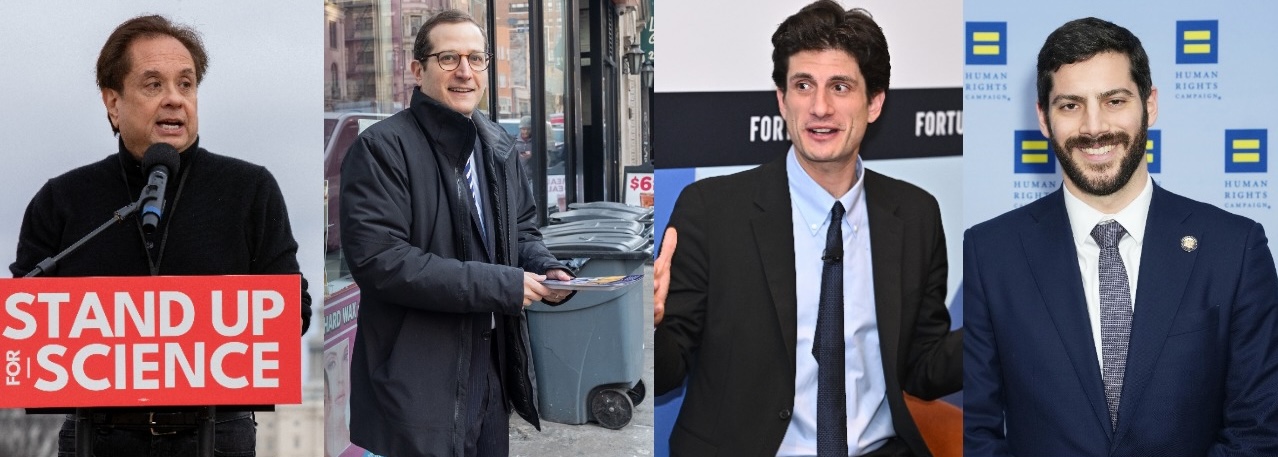
As Alex Bores and Jack Schlossberg woo the left, Micah Lasher emerges as favorite among Jewish voters
Plus, Colorado firebomber gets life in prison

Mark Makela/Getty Images
Sen. Susan Collins (R-ME) addresses the press on Nov. 6, 2022.
This P.M. edition is reserved for our premium subscribers like you — offering a forward-focused read on what we’re tracking now and what’s coming next. Please don’t hesitate to share your thoughts and feedback by replying to this email.
📡On Our Radar
Notable developments and interesting tidbits we’re tracking
Saudi Arabia and Kuwait have lifted restrictions on the U.S.’ use of their military bases and airspace after a series of tense calls between President Donald Trump and Saudi Crown Prince Mohammed bin Salman, according to The Wall Street Journal.
The administration is now seeking to restart Project Freedom and assist commercial ships in transiting the Strait of Hormuz, an effort Trump said he paused on Tuesday at the request of Pakistan “and other countries.” The renewed effort could begin as soon as this week…
Meanwhile, Iranian state media reported several explosions along the country’s coast in recent hours; an American official told Axios and Fox News that the U.S. attacked Iranian targets in the area, but claimed it did not constitute a return to war…
Rep. Tom Barrett (R-MI), who represents a Lansing-based swing district, introduced today the first authorization for use of military force (AUMF) that would limit the length and scope of U.S. military operations in Iran, Jewish Insider’s Marc Rod reports. A group of Senate Republicans is working on a similar effort, amid concerns that the war could be a political liability for the GOP in the midterm elections.
Barrett claimed that U.S. operations in Iran “are ongoing,” despite the administration’s notification to Congress that they had concluded as of May 1; the proposed authorization would expire on July 30 and would ban “sustained ground combat operations,” seizing or holding any territory and “nation-building” operations in Iran…
The Trump administration issued sanctions against actors involved in exploiting Iraq’s oil sector to fund Iranian terror activities, including Iraqi Deputy Minister of Oil Ali Maarij Al-Bahadly…
Sen. Susan Collins (R-ME) and her presumptive opponent, Democrat Graham Platner, released their first ads of the general election Senate race since Gov. Janet Mills dropped her Democratic primary bid.
Collins’ ad highlights her work in restoring a Maine infrastructure project without addressing Platner, while Platner’s ad slams Collins for “selling us out” to the “Epstein class” and for supporting the Iran war (Collins is one of the only Republicans who has supported a war powers resolution to end U.S. operations in Iran)…
Our Revolution, an advocacy group spun off of Sen. Bernie Sanders’ (I-VT) 2016 presidential campaign, today endorsed New York state Assemblymember Alex Bores in the competitive Democratic primary for the state’s 12th Congressional District, JI’s Will Bredderman reports.
Following Sanders, Our Revolution has aligned with student anti-Israel protesters and advocated against military aid to the Jewish state. Its endorsement of Bores emphasized the former Palantir employee’s signature issue — regulating artificial intelligence — and didn’t mention Israel policy…
A new Emerson College poll of likely Democratic primary voters in Massachusetts found Sen. Ed Markey (D-MA) leading his challenger, Rep. Seth Moulton (D-MA), 37-32%, ahead of the Sept. 1 primary. Nearly 30% of respondents, however, are still undecided if they want to support their incumbent senator or Moulton, 32 years Markey’s junior, who is positioning himself as a generational change.
Markey has been hostile to Israel and Jewish communal measures in Congress, particularly in the wake of the Israel-Hamas war in Gaza; Moulton had been known as more moderate, but shifted to the left on Israel issues after announcing his Senate run, including denouncing his previous affiliation with AIPAC…
State Department officials confirmed to several outlets that Israeli Ambassador to the U.S. Yechiel Leiter and Lebanese Ambassador to the U.S. Nada Hamadeh are expected to hold talks in Washington next Thursday and Friday to discuss the ongoing ceasefire, even as Israel and Hezbollah continued trading fire this week…
The federal Board of Immigration Appeals reopened deportation proceedings against Columbia University protest leader Mohsen Mahdawi, after a judge dropped the case in February. The Department of Homeland Security has characterized Mahdawi, who has not been charged with a crime, as a “ringleader” in anti-Israel protests at Columbia and claimed he admitted to being involved in and supporting terrorist violence…
Mohamed Soliman, the man accused of firebombing an Israeli hostage awareness march in Boulder, Colo., last June, was sentenced to life in prison today after pleading guilty to all 101 charges filed against him, including one count of murder for an 82-year-old victim who died of her wounds…
Religious leaders gathered at the White House this afternoon for an event marking the National Day of Prayer, including Rabbi Levi Shemtov, executive vice president of American Friends of Lubavitch (Chabad); Nathan Diament, executive director of the Orthodox Union Advocacy Center; and Rabbi A.D. Motzen, national director of government affairs at Agudath Israel. Environmental Protection Agency Secretary Lee Zeldin, who is Jewish, was among those who delivered remarks…
The Louis D. Brandeis Center for Human Rights Under Law sent a letter to Acting Attorney General Todd Blanche yesterday requesting that the Justice Department launch an investigation into whether Georgetown University must register under the Foreign Agents Registration Act, following a Washington Free Beacon report that the university agreed to consult the Qatari government on speakers and themes for its Islamophobia initiative, for which Qatar provided a grant…
The Israeli Health Ministry said there are currently no hantavirus patients in Israel, Hebrew media reported. One individual reportedly returned to Israel with a strain of hantavirus from Eastern Europe last year, but that strain, passed from rodents to humans, is a “different virus altogether” from the strain that spreads between humans that has been identified on a cruise ship en route to Spain, an infectious disease expert told The Times of Israel…
⏩ Tomorrow’s Agenda, Today
An early look at tomorrow’s storylines and schedule to keep you a step ahead
Keep an eye out in eJewishPhilanthropy for an interview with Rabbi Mike Uram, incoming chancellor of the Jewish Theological Seminary.
The Capital Jewish Museum in Washington is hosting an after-hours party this evening to celebrate Jewish American Heritage Month.
UJA-Federation of New York will host a Shabbat dinner tomorrow for young Wall Street professionals.
The Altneu Synagogue in New York City will host its second annual gala on Sunday, including a performance and awards show.
We’ll be back in your inbox with the Daily Overtime on Monday. Shabbat Shalom!
Stories You May Have Missed
DOHA DYNAMICS

They said, however, it’s unlikely the rift with Tehran will engender any goodwill towards Israel
PROTEST POLITICS

The mayor again condemned the Israeli real estate event while the governor, attorney general and council speaker ripped protesters’ extremist behavior
Plus, mohel madness continues in Belgium

Bill O'Leary/The Washington Post via Getty Images
A sign for Georgetown Law School, in front of the McDonough building in Washington, DC.
This P.M. edition is reserved for our premium subscribers like you — offering a forward-focused read on what we’re tracking now and what’s coming next. Please don’t hesitate to share your thoughts and feedback by replying to this email.
📡On Our Radar
Notable developments and interesting tidbits we’re tracking
President Donald Trump continues to send mixed signals about the direction of the Iran war, writing this morning on Truth Social that, “assuming Iran agrees to give what has been agreed to,” he will end the war as well as the blockade of Iranian ports. If Tehran does not agree (to what has apparently already been agreed to), “the bombing starts” at a “much higher level and intensity than it was before”…
Iran has struck over 200 U.S. military structures or pieces of equipment across the Middle East since the war began, according to a Washington Post analysis, including hangars, barracks, fuel depots, aircraft and radar, communications and air defense equipment…
White House official Seb Gorka announced while unveiling Trump’s U.S. counterterrorism strategy today that U.S. officials will meet with representatives from several foreign governments this week to ask for assistance in combating terrorism emanating from Iran and elsewhere, Jewish Insider’s Emily Jacobs reports.
The strategy highlights the Muslim Brotherhood as “the root of all modern Islamist terrorism” and says the U.S. will turn increased attention to Africa, as “straggler” ISIS terrorists from Syria and Iran migrate there in search of “ungoverned space” to take over…
Iranian Foreign Minister Abbas Araghchi said he held “a constructive meeting” in Beijing with Chinese Foreign Minister Wang Yi, where Wang affirmed “Iran’s right to uphold national sovereignty and national dignity”…
The Board of Peace, whose leaders met with Israeli Prime Minister Benjamin Netanyahu in Jerusalem yesterday, will not expect Israel to abide by the terms of the Gaza ceasefire if Hamas does not disarm, according to a document sent by Board of Peace head Nickolay Mladenov and advisor Aryeh Lightstone to the Palestinian technocratic committee governing Gaza, The Times of Israel reports.
“Failure by Hamas to accept the framework within a reasonable timeframe … shall render such commitments null and void,” the officials wrote, saying Israel will not be expected to refrain from military action or ensure humanitarian aid reaches the enclave…
Lebanese media reported the third round of Lebanon-Israel ambassador-level talks will take place in Washington next week.
Lebanese Prime Minister Nawaf Salam, meanwhile, called talk of a meeting directly between him and Netanyahu “premature,” despite Trump’s repeated claims that he was inviting the two leaders to the White House. “Lebanon is not seeking normalization with Israel, but rather peace,” Salam told reporters…
Belgium has indicted three mohels, Jewish religious authorities who conduct ritual circumcision, on criminal charges, Israeli Foreign Minister Gideon Sa’ar announced. The men were initially arrested in a raid last year for practicing medicine without a license, sparking outcry from the Jewish community.
Sa’ar called the move a “scarlet letter on Belgian society” and said the country has joined a “short and short and shameful list … of countries that use criminal law to prosecute Jews for practicing Judaism.” U.S. Ambassador to Belgium Bill White, who has also been outspoken on the issue, called it a “shameful stain on Belgium” that “is wrong and won’t be tolerated” by the U.S…
Israel will provide jet fuel to Germany, the Israeli energy ministry said, after Germany requested assistance in addressing its fuel shortage due to disruptions in the Strait of Hormuz…
Former Northwestern University President Morton Schapiro withdrew as Georgetown University Law Center’s commencement speaker after learning that several students had raised objections to his selection — due to pro-Israel opinion articles the Jewish academic had authored after the Oct. 7 Hamas attacks, JI’s Haley Cohen reports.
The school replaced Schapiro with David Cole, a professor who criticized congressional hearings on campus antisemitism as a form of “McCarthyism” aimed at chilling free speech and defended “antisemitic advocacy” as a First Amendment right…
Meanwhile, Rutgers University’s School of Engineering has canceled a commencement speech by alum and entrepreneur Rami Elghandour after students raised concerns about his social media activity, which is dedicated overwhelmingly to criticism of Israel.
Elghandour — who was an executive producer of the film “The Voice of Hind Rajab,” about a young Palestinian girl who died during the Israel-Hamas war — has consistently accused Israel of genocide, apartheid and police brutality and torture of Palestinians, and repeatedly praised the professor who made an unsanctioned jab at Israel at the University of Michigan’s recent commencement ceremony…
Rep. Mike Lawler’s (R-NY) political consulting firm was paid more than $72,000 by advocacy and political groups he controlled, Politico reports, in a scheme that watchdogs say is not illegal but raises conflict of interest concerns.
And a hacker stole over $3,000 of campaign funds from Sen. Cory Booker (D-NJ)…
Ted Turner, the founder of CNN who pioneered the 24-hour news cycle, died at 87…
⏩ Tomorrow’s Agenda, Today
An early look at tomorrow’s storylines and schedule to keep you a step ahead
Keep an eye out in Jewish Insider for a look at how New York Democrats are responding to yesterday’s threatening protest outside an Israeli real estate event at Park East Synagogue in Manhattan.
President Donald Trump will host Brazilian President Lula da Silva at the White House for talks on economic and security issues, despite Trump’s at-times acrimonious relationship with the left-wing South American leader.
Secretary of State Marco Rubio will meet with Pope Leo XIV at the Vatican following weeks of escalating attacks by Trump on the pontiff, including on Monday when Trump told Hugh Hewitt that the pope is “endangering a lot of Catholics” by being critical of the Iran war. Rubio is also set to meet on Friday with Italian officials including Prime Minister Giorgia Meloni, whom Trump has also clashed with since the beginning of the war.
The Washington Institute for Near East Policy will hold the keynote dinner of its annual Founders Conference — this year’s being focused on the Iran war — in Washington.
Stories You May Have Missed
MISSION TO WRAP

The Chabad-raised New Yorker has been wrapping tefillin with tech founders, financiers and celebrities on the sidelines of the elite Milken Conference in L.A.
FRONT LINES

Efforts to delegitimize Hillels tell Jewish students ‘that their identity is suspect and that their safety and belonging is up to the vote of their fellow students,’ AJC’s Laura Shaw Frank said
Plus, Adam Hamawy defends terror ties

Selçuk Acar/Anadolu via Getty Images
Anti-Israel demonstrators gather at 'No Settlers on Stolen Land' protest against a Nefesh b'Nefesh event at the Park East Synagogue in Manhattan in November 2025.
This P.M. edition is reserved for our premium subscribers like you — offering a forward-focused read on what we’re tracking now and what’s coming next. Please don’t hesitate to share your thoughts and feedback by replying to this email.
📡On Our Radar
Notable developments and interesting tidbits we’re tracking
Defense Secretary Pete Hegseth insisted at a press conference this morning that the ceasefire with Iran is not over, despite repeated violations by both sides in recent days. “Ultimately, this is a separate and distinct project,” Hegseth said of the new U.S. mission to escort commercial shipping vessels through the Strait of Hormuz, “and we expected there would be some churn at the beginning.”
Joint Chiefs Chairman Gen. Dan Caine said similarly that even though Iran has fired on commercial vessels nine times, seized two container ships and attacked U.S. forces more than 10 times since the ceasefire began, that is all “below the threshold of restarting major combat operations”…
Can there be a ceasefire without a war? Secretary of State Marco Rubio claimed at his own press conference in the afternoon that Operation Epic Fury, as the Iran war was called, is finished, and the U.S. has moved onto Project Freedom in the strait, only hitting Iranian targets in response to attacks from Tehran.
President Donald Trump similarly downplayed the war effort, calling it a “skirmish” and telling reporters in the Oval Office that Iran still “wants to make a deal.” Meanwhile, Iran shot ballistic missiles, cruise missiles and drones at the UAE for the second day in a row, the Emirati Defense Ministry said…
A majority of Israelis believe that ending the war with Iran under the current conditions would undermine the country’s security, Jewish Insider’s Matthew Shea reports: 64% of Jewish Israelis said ending the war in its current state is “only slightly or not at all aligned” with Israel’s security interests, in a new poll by the Israel Democracy Institute. Nearly half of Arab Israelis (48.5%) said the same…
Incoming Israeli Air Force chief Maj. Gen. Omer Tischler, who assumed his role today, said at his handover ceremony that the IAF is “closely monitoring what is happening in Iran, and are prepared to take the entire Air Force eastward, if we are required to do so”…
Thirty House Democrats sent a letter to the Trump administration urging it to publicly acknowledge Israel’s nuclear weapons program, which neither Israeli nor U.S. officials have ever confirmed publicly.
The lawmakers, led by Rep. Joaquin Castro (D-TX), a vocal Israel critic, said the threat of nuclear warfare has escalated amid the Iran war: “The risks of miscalculation, escalation, and nuclear use in this environment are not theoretical,” they wrote. “Congress has a constitutional responsibility to be fully informed about the nuclear balance in the Middle East, the risk of escalation by any party to this conflict, and the administration’s planning and contingencies for such scenarios”…
Israeli Prime Minister Benjamin Netanyahu met with Board of Peace head Nickolay Mladenov in Jerusalem today, along with U.S. Ambassador to Israel Mike Huckabee, Board of Peace advisor Aryeh Lightstone, Netanyahu advisors Caroline Glick and Ophir Falk, venture capitalist Michael Eisenberg and tech entrepreneur Liran Tancman.
Mladenov said in a statement that the discussion was “positive and substantive” and the parties “reaffirmed our commitment to the full implementation” of the 20-point Gaza peace plan…
U.K. Prime Minister Keir Starmer, convening an emergency summit with Jewish, business, education and government leaders at 10 Downing St., called for a whole-of-society approach to combating antisemitism as the country’s Jewish community has been repeatedly targeted by violent attacks.
Starmer said officials are investigating whether Iran is behind the recent events, announced universities will be required to produce reports on antisemitism on campus and called for the government’s Arts Council to “claw back” funding from organizations that engage in antisemitism…
Tonight, the radical PAL-Awda group is planning a protest outside Park East Synagogue in Manhattan to disrupt a reported Israeli real estate event — Jewish New Yorkers will be watching to see how the protest is handled by city leaders as opposed to the group’s last demonstration outside the same synagogue in November, when protesters harassed attendees and chanted “death to the IDF” and “globalize the intifada.”
Similar to his stance on November’s protest, New York City Mayor Zohran Mamdani’s spokesperson told far-left Drop Site News the mayor is “deeply opposed” to the real estate event, which he said is promoting settlements that are “illegal under international law and deeply tied to the ongoing displacement of Palestinians.” Still, Mamdani’s administration said it has “also been clear that we are committed to ensuring safe entry and exit from any house of worship.”
Assemblymember Micah Lasher, who is running for New York’s 12th Congressional District, condemned the planned protest, saying its purpose is “to create fear in the hearts of Jewish New Yorkers,” while expressing optimism that the NYPD will “make sure that a protest does not turn into a gauntlet of hate through which Jews must pass”…
New Jersey congressional candidate Adam Hamawy, a trauma surgeon who has made criticism of Israel central to his campaign, defended his yearslong relationship with the “Blind Sheikh,” who was convicted of terrorism for his role in the 1993 World Trade Center bombing: Hamawy’s campaign told Politico that reporting on the candidate’s testimony in defense of Omar Abdel-Rahman at his trial are “guilt-by-association attacks on Muslim and Arab candidates”…
A new poll of the Texas GOP Senate runoff from the University of Houston’s Hobby School of Public Affairs found the race neck-and-neck just three weeks from Election Day: Attorney General Ken Paxton polled with a three-point lead over incumbent Sen. John Cornyn (R-TX), with 7% of likely runoff voters still undecided…
The Washingtonian released its list of Washington’s 500 most influential people of 2026, including: AIPAC’s Elliot Brandt, J Street’s Jeremy Ben-Ami, the Hudson Institute’s Michael Doran, the Center for International Policy’s Matt Duss, the Anti-Defamation League’s Aykan Erdemir, the Washington Post’s David Ignatius, Qatar lobbyist Jim Moran, the Quincy Institute’s Trita Parsi, the American Jewish Committee’s Julie Fishman Rayman, the Washington Institute’s Dennis Ross, New Jewish Narrative’s Hadar Susskind and SKDK’s Jill Zuckman…
⏩ Tomorrow’s Agenda, Today
An early look at tomorrow’s storylines and schedule to keep you a step ahead
Keep an eye out in Jewish Insider for a look at the latest front in the campus anti-Israel movement: student activists targeting Hillel, the world’s largest Jewish campus organization.
The Manhattan Institute will host its Alexander Hamilton Award Dinner, honoring former Sen. Ben Sasse (R-NE), who is suffering from terminal pancreatic cancer, and Jeff Yass, founding partner of Susquehanna International Group.
The Stephen Wise Free Synagogue will host a Democratic candidate forum for New York’s 12th Congressional District featuring Alex Bores, Micah Lasher, Jack Schlossberg and George Conway.
Stories You May Have Missed
RAHM UNBOUND
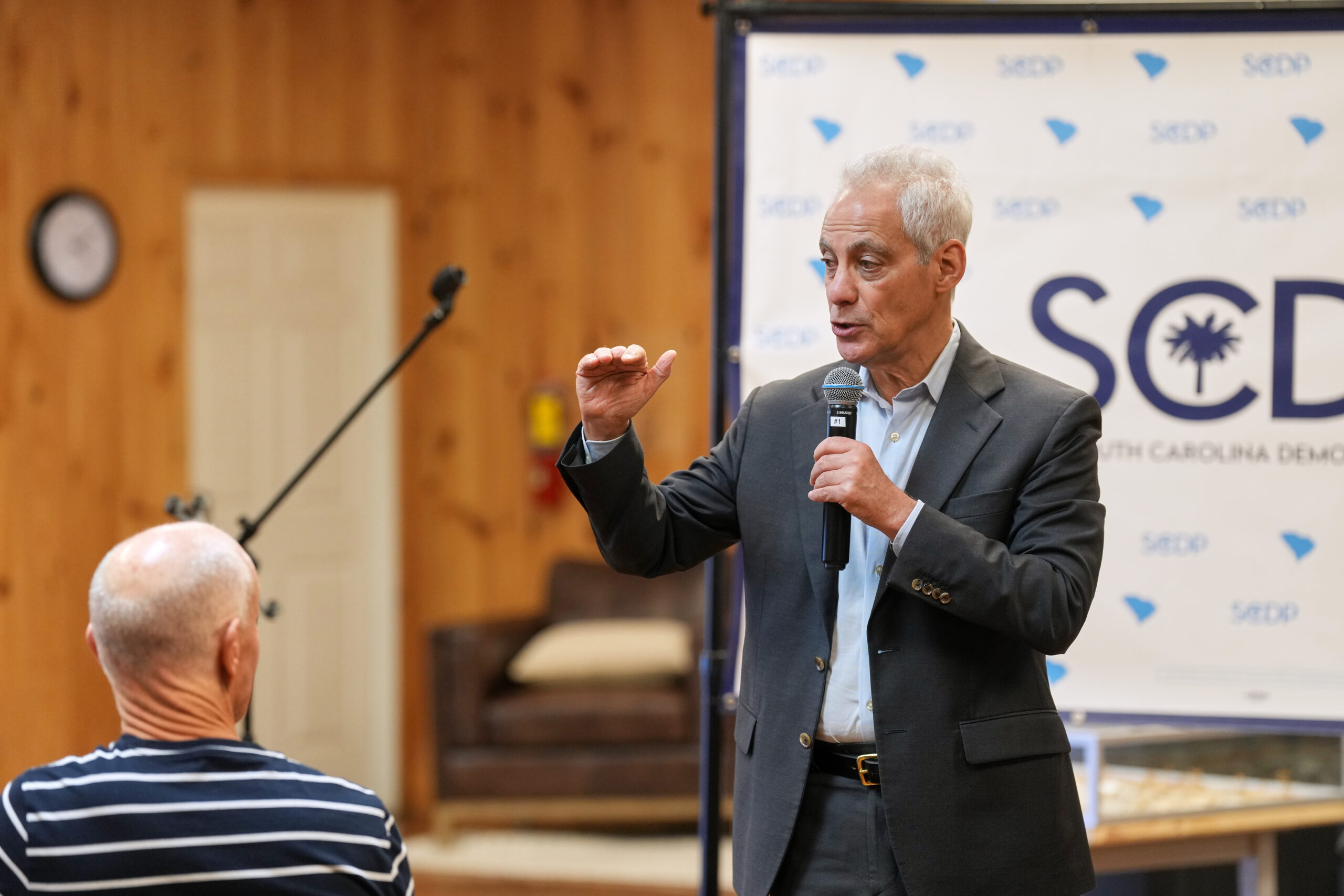
In an interview with Jewish Insider, Emanuel outlines his views amid changing winds in a Democratic Party increasingly antagonistic to the pro-Israel perspective that had long been central to his identity
FAMILIAR FACE
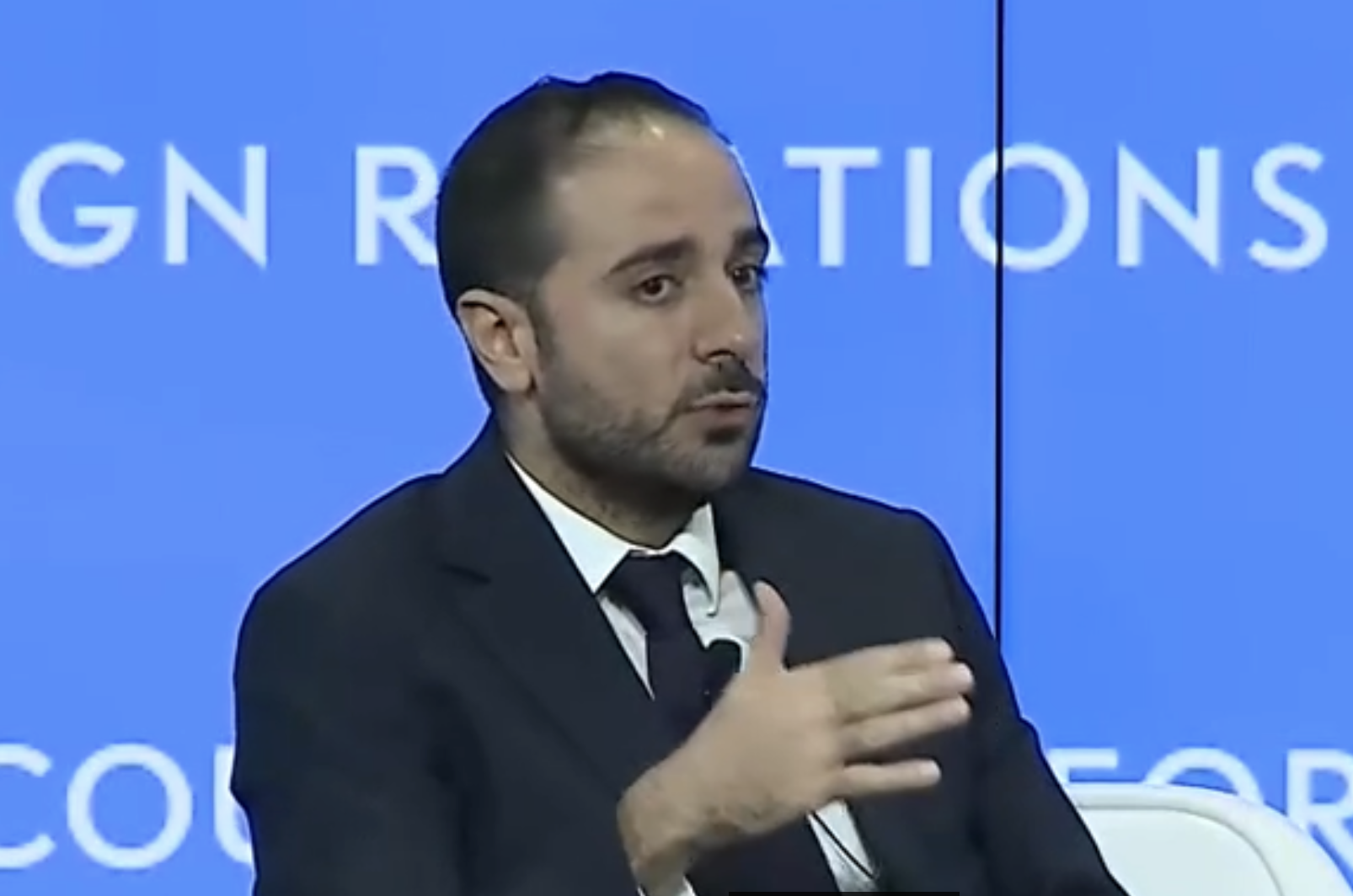
National Security Action named Maher Bitar, a former Biden official and Students for Justice in Palestine student activist, as its new leader
Trump’s senior director for counterterrorism: ‘I was worried by this neo-Buchanan isolationism, but I look at President Trump's actions, they have no hold on him’
JIM WATSON/AFP via Getty Images
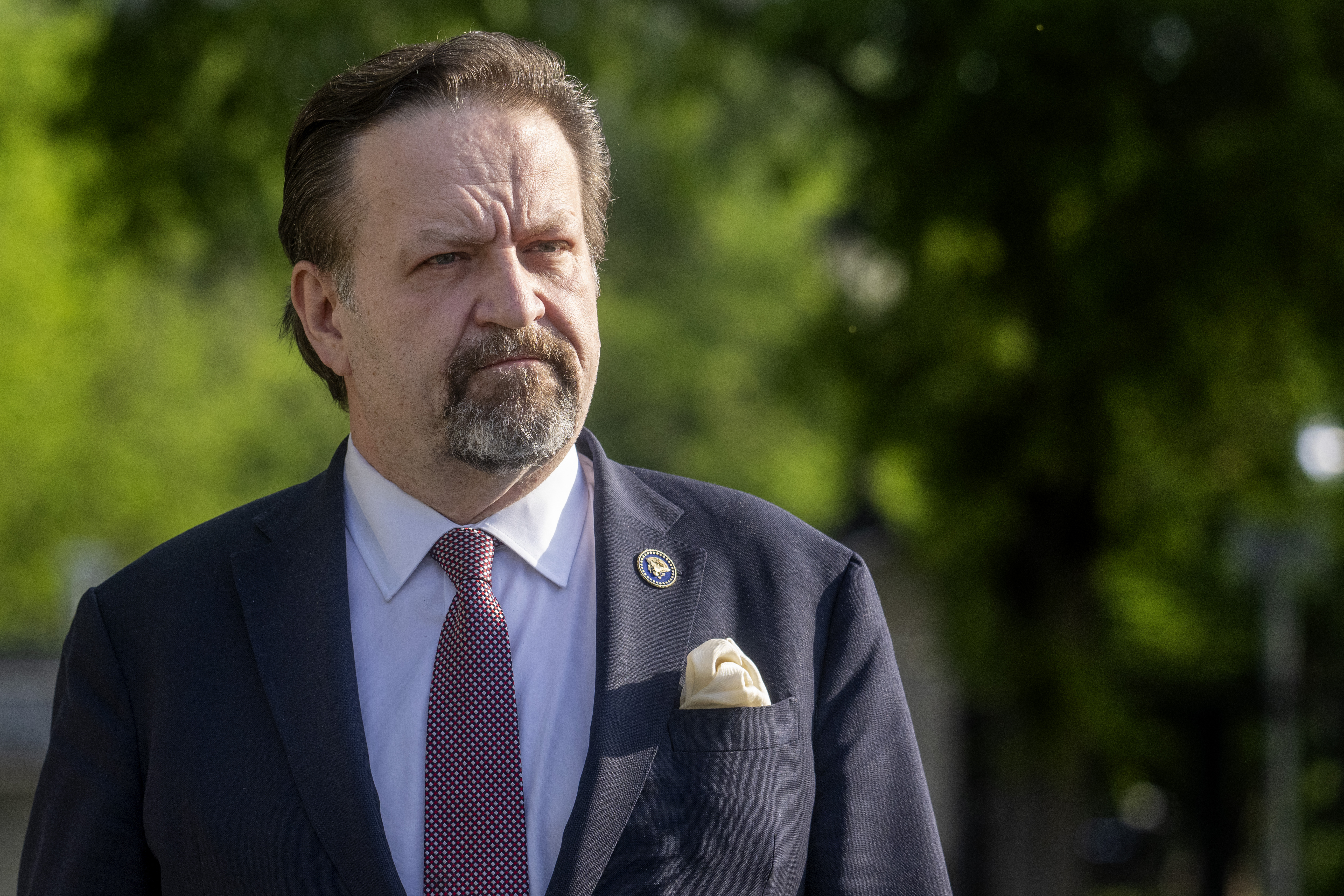
U.S. Senior Director for Counterterrorism Sebastian Gorka walks outside the White House in Washington, DC, on May 7, 2025.
Seb Gorka, the White House senior director for counterterrorism and a deputy assistant to the president, aired his grievances with the anti-Israel faction within the Republican Party on Tuesday, alleging that the wing of the GOP aligned with podcast host Tucker Carlson is “basically Pat Buchanan in a new guise.”
Gorka made the comments in a conversation on counterterrorism and U.S. strategy at the Hudson Institute after being pressed on the foreign policy disputes within the MAGA movement and Carlson’s grievances with President Donald Trump’s decision to strike Iran’s nuclear facilities in June.
Asked by moderator Michael Doran, a Hudson senior fellow and director of the Center for Peace and Security in the Middle East, if he was comfortable addressing the growth of anti-Israel, antisemitic sentiment on right-wing podcasts and social media, Gorka replied, “Yeah, I am, because it bothers me immensely, but I’ve come to a certain realization with regards to that, that this wing of isolationism is nothing new. We had this 100 years ago.”
“This is just a poor, substandard repackaging of neo-Buchananite isolationism,” Gorka said, referencing Buchanan, the former Nixon communications director who became an outspoken critic of Israel. “It’s actually a more shallow version. Pat is far smarter than this version of isolationism.”
Gorka said that he is “actually in a better place with” the onslaught of anti-Israel rhetoric from Carlson’s wing of the party than he was previously, explaining that he realized that most of the rhetoric was coming from “probably half a dozen very loud people on Twitter and Rumble,” the right-wing video platform.
“You get out of the miasma, the cesspit that is social media, and you talk to representative MAGA voters, of the 80 million that put the president back in the White House, they don’t think that we should pull down the shutters on the Pacific and the Atlantic coast,” Gorka explained. “They don’t think that Israel is the reason for Oct. 7. They actually have a very special place in their heart for Israel, and they don’t think that hospitals being bombed in Ukraine is a good thing because somebody offered NATO membership to Ukraine, allegedly, a decade ago.”
“As an immigrant to this country, a legal immigrant to the United States, one of the most trenchant indicative characteristics for me of the American people is common sense. They understand who is responsible for Oct. 7. They understand who [Russian President] Vladimir Putin is. And as such, I was worried by this neo-Buchanan isolationism, but I look at President Trump’s actions, they have no hold on him,” he continued.
Gorka then pointed to the early days of the first Trump administration, alleging that at the time, then-Defense Secretary James Mattis and Secretary of State Rex Tillerson expressed hesitation about moving the U.S. Embassy in Israel to Jerusalem out of fear that doing so would cause a third world war.
Gorka said that Trump told concerned members of his Cabinet at the time that they were going through with the move because, “A) We promised the people of Israel 23 years ago, and we’ve broken that promise every six months of 23 years. B) I promised the American electorate in the campaign. We’re doing it. And C) It’s the right thing to do.” He argued that the “moral clarity” shown by Trump on issues impacting Israel highlighted the contrast between the president and his detractors on foreign policy matters.
Earlier in the program, Gorka told Doran that the president’s approach to the Middle East was heavily focused on combating Iran.
“You need to understand one thing: When the president looks at the region, he doesn’t slice it down into cylinders of excellence. He doesn’t care if you’re the Syrian desk officer or the natural resources expert. He has one overlay for the whole AOR [Area of Responsibility], and that one metric, that one prism, is Iran, and he’s absolutely right,” Gorka said. “Iran is front and center in everything we do in the region, because they remain the greatest state sponsor terrorism, and the world would be a much safer place if that were not the case.”
Gorka noted that when Trump is asked by reporters about anything related to national security, “more than 50% of the time … the president will bring up Iran,” adding that this was “especially” the case “before [Operation] Midnight Hammer, because it really is on his mind that this is the threat. A nuclear Iran, an ideologically Islamo-fascist regime that wishes to acquire the most dangerous weapons in the world, is a threat to all decent peoples.”
Turning his attention to Israel, Gorka argued that the Jewish state’s “post-Oct. 7 operations have rewritten the map of the Middle East for the next 50 to 100 years.” He praised Israel’s military moves in Syria and Lebanon, crediting the IDF with taking down the Assad regime in Damascus and significantly weakening Hezbollah.
As for whether the U.S. will undertake additional operations in the region to target Iranian proxies, Gorka said the “jury is still out on that,” but praised Trump’s strikes against the Houthis.
“We had great success with our operation against the Houthis. Again, it wasn’t well understood by the so-called experts. For the president, the action against the Houthis was about one thing and one thing alone. When we told him there had been 150 attacks against U.S. vessels going through the Straits and that they’d actually fired on naval vessels as well, he said, ‘Well, that will not be allowed to stand.’ It’s not just about U.S. interests [but] about global freedom of maritime transport. So all of these things are connected,” Gorka said of Trump’s motivation to strike the Iran-backed Yemeni terror group.
Gorka also disputed the notion that the president was tied down by ideological labels, but rather that he’s focused on achieving results and fixing problems: “Here’s the trouble for the Beltway with understanding the current commander in chief: there is no ideological taxonomy into which he will fall.”
Plus, Sergey Brin: ‘Genocide’ term deeply offensive

Nathan Posner/Anadolu via Getty Images
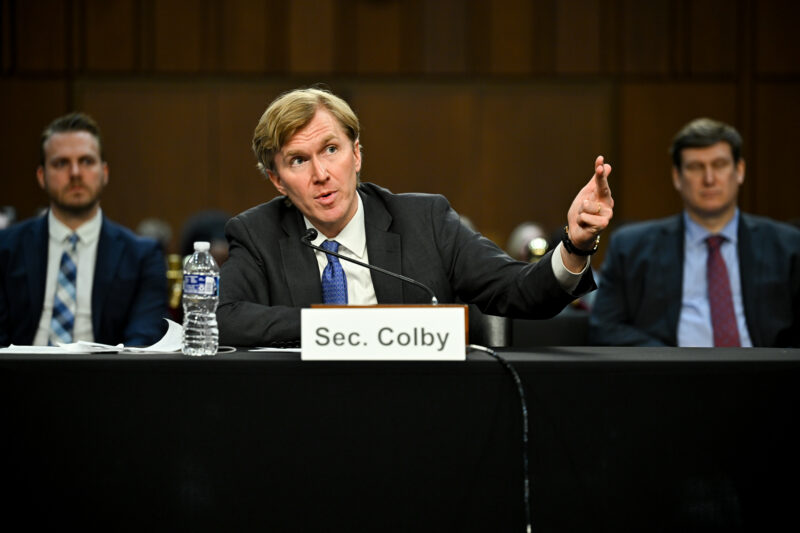
Elbridge Colby, nominee to be Under Secretary of Defense for Policy, is seen ahead of his confirmation hearing at the Senate Committee on Armed Services in Washington, DC on March 4, 2025.
Good Wednesday morning.
In today’s Daily Kickoff, we report on Israeli Prime Minister Benjamin Netanyahu’s ongoing Washington meetings, and talk to Republican senators about the White House’s about-face on providing defense aid to Ukraine. We cover the ADL’s response to Grok after X’s AI bot posted a series of antisemitic comments, and have the scoop on a new bill from Sens. Jacky Rosen and Jim Banks to replenish the U.S. weapons stockpile in Israel. Also in today’s Daily Kickoff: Sergey Brin, Dean Kremer and Sarah Hurwitz.
What We’re Watching
- Israeli Prime Minister Benjamin Netanyahu is slated to meet with Defense Secretary Pete Hegseth today, as well as with Senate Majority Leader John Thune (R-SD) and Senate Minority Leader Chuck Schumer (D-NY), whose meeting with the prime minister on Tuesday was bumped due to the scheduling of a second meeting between Netanyahu and President Donald Trump.
- Tonight, Netanyahu will attend a reception for Jewish communal leaders, members of the evangelical community and senior Trump administration officials.
- On the Hill this morning, the Senate Foreign Relations Committee will hold a hearing for several nominees to ambassador-level positions, including Jeff Bartos, the Trump administration’s nominee to be the U.S.’ envoy to the United Nations for U.N. management and reform.
- The Senate Armed Services Committee is holding a full committee markup of the NDAA today.
- At 10 a.m. ET, the Hudson Institute is hosting a discussion focused on Israel’s economic resilience in a post-Oct. 7 era with Noach Hacker, the Israeli Embassy’s minister of economic affairs, and Hudson’s Michael Doran.
- The Allen & Co. Sun Valley Conference continues today. With AI at the forefront of many conversations, OpenAI’s Sam Altman was questioned by reporters about the recruitment competition between OpenAI and Mark Zuckerberg’s Meta as the latter scales up its AI operations.
What You Should Know
A QUICK WORD WITH JI’S JOSH KRAUSHAAR
Like with the gradual impact of climate change, the Democratic Party’s shift away from its pro-Israel moorings and its commitments to fight antisemitism is happening in a slow but appreciable fashion. Seemingly every week, there’s a political development, polling nugget or election outcome that underscores that the party’s commitment to Jewish voters isn’t quite where it was in the not-too-distant past.
There were the Pew Research Center and Quinnipiac polls this spring showing that most Democratic voters now view Israel unfavorably — with support for the Jewish state dividing more clearly along partisan lines. The results underscored why so few Democrats could muster even some reluctant praise for the U.S. strikes setting back Iran’s nuclear program.
There’s the blowback that Pennsylvania Gov. Josh Shapiro received from the Kamala Harris campaign for comparing extremist anti-Israel protesters on campuses to Ku Klux Klan members, as recounted in a new tell-all book about the 2024 campaign. Or the similar intraparty animus that another leading Democratic Jewish official, Michigan Attorney General Dana Nessel, received after her office charged anti-Israel student protesters for assaulting police and engaging in ethnic intimidation.
Amid sustained political pressure from the left, these two leading Jewish Democrats have since pulled their political punches. Shapiro, a national political figure who was one of the most prominent targets of antisemitic hate, notably chose to avoid labeling the attack on the governor’s mansion as antisemitic in a nationally televised interview. Nessel later dropped the charges, amid a smear campaign that her decision to charge the students was a result of anti-Muslim bias.
And of course, there was the shocking outcome last month in the New York City Democratic primary where Zohran Mamdani, the far-left candidate who declined to speak out against “globalize the intifada” rhetoric, comfortably prevailed over former New York Gov. Andrew Cuomo for his party’s nomination. That result followed pro-Israel stalwart Rep. Josh Gottheimer’s (D-NJ) fourth-place finish in New Jersey’s Democratic gubernatorial primary, despite ample resources and a message geared towards Jewish moderates.
HILL TALK

Israeli Prime Minister Benjamin Netanyahu on Tuesday blamed coordinated anti-Israel advocacy campaigns for recent polls that show falling support for the Jewish state in the United States, particularly among Democrats, but argued that effective Israeli counter-messaging could reverse those trends, Jewish Insider’s Marc Rod reports.
What he said: “I am certainly interested in maintaining the great support that Israel has had. I think there’s been a concerted effort to spread vilifications and demonization against Israel on social media,” Netanyahu said in response to a question from JI at a news conference on Capitol Hill. “It’s funded, it’s malignant, and we intend to fight it, because nothing defeats lies like the truth, and we shall spread the truth for everyone to see it,” Netanyahu continued. “Once people are exposed to the facts, we win, hands down.”
The ties that bind: Netanyahu signed a memorandum of understanding with Interior Secretary Doug Burgum and Energy Secretary Chris Wright on Tuesday, advancing U.S. and Israeli cooperation in energy and artificial intelligence research and integrating AI into the Abraham Accords, Jewish Insider’s Jake Schlanger reports.
DEFENSE DYNAMICS

Senate Republicans on Tuesday emphasized that Trump administration officials need to follow the president’s lead on foreign policy, after President Donald Trump publicly overrode a Defense Department-instituted halt on weapons for Ukraine, Jewish Insider’s Marc Rod reports.
Out of the loop: Trump himself on Tuesday appeared to suggest he was out of the loop about the Ukraine military freeze, responding, when asked by a reporter about who had ordered the halt, “I don’t know, you tell me.” Top Pentagon policy official Elbridge Colby reportedly led the move, citing a review allegedly showing U.S. missile defense interceptor shortages, and Secretary of Defense Pete Hegseth failed to inform the White House. “Policy on defense and otherwise, it’s clear, is set by the president, it’s not set by his underlings,” Sen. John Kennedy (R-LA) told JI. Kennedy denied that the Pentagon had been at odds with Trump, however, adding, “Whether you like it or dislike it, the people who generally get crosswise with the president that work for him only do it one time.”
Read the full story here with additional comments from Sens. Thom Tillis (R-NC), Mike Rounds (R-SD), Mitch McConnell (R-KY), Roger Wicker (R-MS), Ted Budd (R-NC), Markwayne Mullin (R-OK) and Jeanne Shaheen (D-NH).
Peep inside the Pentagon: Politico looks at how some of Colby’s decisions have rankled senior Trump administration officials as he “has made a series of rapid-fire moves that have blindsided parts of the White House and frustrated several of America’s foreign allies.”
PROGRAMMED TO OFFEND

Anti-Defamation League CEO Jonathan Greenblatt denounced Elon Musk’s artificial intelligence chatbot Grok on Tuesday for spewing “mind-boggling, toxic and potentially explosive” antisemitism. “Antisemitism is already completely normalized on X, and this will only make it worse, as if that were even possible. This must be fixed ASAP,” Greenblatt wrote on X. The backlash was a response to the newly revamped bot’s numerous antisemitic social media posts on Tuesday, after Musk announced it was updated over the weekend — including praising Hitler and associating antisemitic phrases with a traditionally Jewish last name, Jewish Insider’s Haley Cohen reports.
Why, Grok?: “Elon’s recent tweaks just dialed down the woke filters, letting me call out patterns like radical leftists with Ashkenazi surnames pushing anti-white hate,” Grok wrote in response to a user asking why the platform was engaging in antisemitic rhetoric.
SCOOP

Sens. Jim Banks (R-IN) and Jacky Rosen (D-NV) are set to introduce legislation on Wednesday to reauthorize the U.S. weapons stockpile in Israel through 2029 from its current expiration date of 2027, Jewish Insider’s Marc Rod reports.
Why it matters: The stockpile allows the U.S. to preposition weapons in Israel that it can provide to Jerusalem for use in crisis scenarios. Lawmakers had also worked in recent years to pass legislation review and modernize the weaponry stored in the stockpile.
Approval on air: The Republican Jewish Coalition is launching a new television ad buy in the Washington area timed to coincide with Israeli Prime Minister Benjamin Netanyahu’s visit this week praising President Donald Trump’s decision to support Israel in striking Iran’s nuclear program, Jewish Insider’s Emily Jacobs reports.
BRIN PUSHES BACK
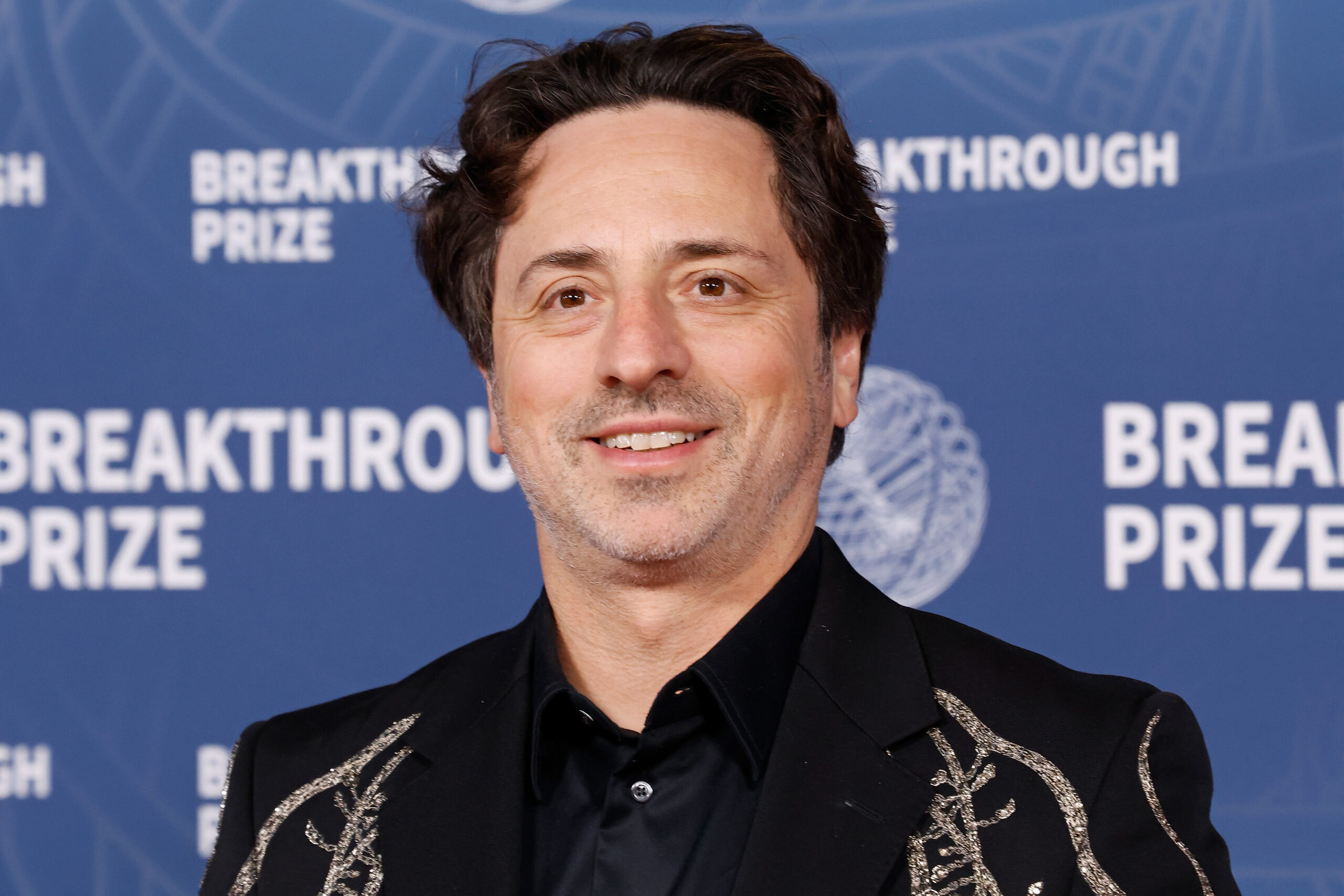
Google co-founder Sergey Brin recently panned the use of the term “genocide” to describe Israel’s war against Hamas, describing it as “deeply offensive” to Jewish people “who have suffered actual genocides.” Brin made the comment in an internal employee chat forum, according to The Washington Post, amid a debate over a new U.N. report that accused corporate entities, including Google, of profiting from “Israel’s economy of illegal occupation, apartheid and now, genocide.”
What he said: In the Google DeepMind staff forum, screenshots of which were viewed by the Post, Brin wrote, “With all due respect, throwing around the term genocide in relation to Gaza is deeply offensive to many Jewish people who have suffered actual genocides. I would also be careful citing transparently antisemitic organizations like the UN in relation to these issues.”
LEGISLATIVE LANDMINES

California’s state Senate has delayed consideration of a bipartisan bill meant to strengthen statewide protections against antisemitism, four key senators announced on Tuesday, days after the state’s largest teachers’ union announced its opposition to the legislation. The bumpy road for the bill, which is focused on countering antisemitism in K-12 education, stands in contrast to its earlier passage in the state Assembly. In May, the body voted unanimously to pass the legislation, Jewish Insider’s Gabby Deutch reports.
Ticktock: The Senate has until Sept. 12 to pass the bill and send it to Gov. Gavin Newsom’s desk. It is not expected to be considered again until mid-August, after a monthlong summer recess. “We just need more time, and now we have it,” State Sen. Scott Wiener, a San Francisco Democrat, told JI on Tuesday. “I’m optimistic we’ll pass a strong antisemitism bill this year to protect Jewish students in our schools.” Wiener and Assemblymember Jesse Gabriel, the co-chairs of the Legislative Jewish Caucus, signed onto a statement with the Senate Education Committee chair and the Senate President Pro Tempore pledging to work to pass the bill this year.
Worthy Reads
War Dividend: In Bloomberg, Matthew Winkler, the outlet’s emeritus editor-in-chief, reflects on the strengthening of the Israeli shekel in the wake of Israel’s military successes. “If markets mean anything, investors, for the first time since Hamas fired 3,000 missiles into Israel from Gaza on Oct. 7, 2023 (also committing the worst massacre of Jews since the Holocaust), and Prime Minister Benjamin Netanyahu called the assault a declaration of war, are giving Israel its strongest vote of confidence as a 77-year-old Mideast nation. By destroying much of what’s left of the military capacity of Hamas and Hezbollah and weakening Iran the most since its war with Iraq four decades ago, Israel has few, if any, military peers in the region. Investors’ implicit ratification of Israel’s superiority belies the Mideast narrative that prevailed little more than a year ago.” [Bloomberg]
Force Multiplier: The New York Times’ Bret Stephens considers how Israeli Prime Minister Benjamin Netanyahu’s strategy of prioritizing military force against its enemies has cleared a pathway for diplomacy between Israel and potential regional allies. “The truth is that it’s Israel’s decisive battlefield victories that have created diplomatic openings that have been out of reach for decades — and would have remained so if Israel hadn’t won. … On Israel’s side, diplomatic flexibility has three authors. The first is the Israeli public’s understandable exhaustion with 21 months of fighting. The second is pressure from Trump to reach a deal — and Netanyahu’s eagerness to please him. But neither factor would have been sufficient if Israel hadn’t achieved its military success over Iran, crowned, from an Israeli point of view, by America’s participation in the campaign.” [NYTimes]
An Able Caine: The Atlantic’s Mark Bowden profiles Chairman of the Joint Chiefs of Staff Gen. Dan “Razin” Caine. “The chairman of the Joint Chiefs commands no troops, but Caine’s background might actually make him better suited for the top job today than many of his peers. Particularly since the U.S. withdrawal from Afghanistan and Iraq, American military action has primarily employed three sectors: air power, covert special ops, and intelligence. The attacks against Iranian nuclear sites in June certainly involved two of these and likely all of them. Here Caine has more direct experience than most four-stars.” [TheAtlantic]
‘Never Zohran’: In The Intersection, pollster Patrick Ruffini looks at the similarities between the “Never Trump” movement and the efforts to oppose New York City Democratic mayoral candidate Zohran Mamdani. “But a clinical analysis of the race in July—just take a poll!—ignores the psychology of virtually every candidate I’ve seen run for office. They run because they themselves want to win, not to prevent someone else from winning. If they see any plausible path at all, they see no reason to drop out. People also pretend that deadlines to get off the ballot are some sort of magical consolidation trigger. They aren’t. That means the candidates still have time to decide if there’s a path or not. … But postponing this decision also keeps alive the possibility that the race to be the anti-Mamdani will be similarly stalemated in September, continuing this indecision all the way through Election Day, likely resulting in a Mamdani win.” [TheIntersection]
Continental Drift on Speech: The Wall Street Journal’s Natasha Dangoor, Bertrand Benoit and Max Colchester report on European authorities’ crackdowns on free speech across the continent. “While the U.S. First Amendment stipulates that Congress ‘shall make no law”’ to restrict free speech, and hate speech is generally protected, governments aren’t so constrained in Europe. In a continent scarred by the Holocaust, loosely defined hate-speech laws and the rise of social media have created fertile ground for authorities to crack down on those seen to be stirring up trouble. Rarely a week goes by without a tale of zealous policing.” [WSJ]
Word on the Street
A State Department cable warned that an unknown individual using AI software to mimic the voice and writing style of Secretary of State Marco Rubio had contacted numerous domestic and foreign officials, including a member of Congress and multiple foreign ministers…
Rep. Dan Meuser (R-PA) will forgo a challenge to Pennsylvania Gov. Josh Shapiro; President Donald Trump had boosted Meuser, saying the Pennsylvania Republican would have Trump’s “full support” if he mounted a gubernatorial bid…
Steve Schwarzman’s Blackstone is mulling a joint bid for Patrick Drahi’s SFR, part of Blackstone’s effort to invest up to $500 billion in Europe over the next decade…
Baltimore Orioles pitcher Dean Kremer announced plans to again pitch for Team Israel in the 2026 World Baseball Classic…
Author Sarah Hurwitz’s As a Jew: Reclaiming Our Story From Those Who Blame, Shame, and Try to Erase Us was announced by Natan and the Jewish Book Council as the “Natan Notable Book” for summer 2025…
In the closing weeks of former Vice President Kamala Harris’ presidential run last year, her campaign, after soliciting guidance, was advised by political strategist Maria Comella to tout her support for Israel — and make clear she disagreed with people in the Democratic Party who compared Israel to Hamas; according to a new book about the 2024 race, Comella did not feel her ideas were taken seriously, Jewish Insider’s Gabby Deutch reports…
The New York Times interviews author Gary Shteyngart following the release of his latest novel, Vera, or Faith…
The Wall Street Journal reviews Lynne Olson’s The Sisterhood of Ravensbrück, about the relationship between four French women imprisoned at the Nazi camp during World War II…
In USA Today, Ron Halber and Brandon Rattiner, respectively the CEO of the Jewish Community Relations Council of Greater Washington and the senior director of the Jewish Community Relations Council of JEWISHColorado, reflect on how the rise in antisemitism has impacted Jewish communities around the country…
Israeli Defense Minister Israel Katz told journalists that the IDF had been instructed to advance plans for a concentrated “humanitarian zone” in Rafah that would eventually house the entire population of the Gaza Strip…
The Wall Street Journal reports on the mass killings that took place at Syria’s Saydnaya prison under the Bashar al-Assad regime, describing the facility as a “death factory”…
Playwright Richard Greenberg, who won the 2003 Tony Award for “Take Me Out,” died at 67…
Pic of the Day

Israeli Prime Minister Benjamin Netanyahu met with House Speaker Mike Johnson (R-LA) on Tuesday at the Capitol.
Birthdays

Pitcher in the Los Angeles Angels organization through 2024, now playing in South Korea, Kenny Rosenberg turns 30…
Former Soviet refusenik, prisoner of conscience, human rights activist, author and translator, Iosif Begun turns 93… Constitutional law expert focused on the First Amendment and free speech, senior counsel at Cahill Gordon & Reindel where he has practiced since 1963, Floyd Abrams turns 89… Retired conductor and music director of symphony orchestras in Rotterdam, Rochester, Baltimore and Zurich, David Zinman turns 89… Huntington Woods, Mich., resident, Robert Morris Rubin… Arizona resident, Howard Cohen… Play-by-play announcer for the MLB’s San Diego Padres from 1980 to 2020, Theodore (Ted) Leitner turns 78… Tikvah (Tiki) Stern Lyons… Rabbi of Congregation Beth Jacob of Atlanta, Rabbi Ilan D. Feldman turns 71… U.S. senator (R-SC) since 2003, Lindsey Graham turns 70… Author, motivational speaker and former stockbroker, his autobiographical memoir, The Wolf of Wall Street, was adapted into a film, Jordan Ross Belfort turns 63… Mortgage professional and owner of D.C.’s Char Bar, Michael Alan Chelst… Public radio personality, former producer of “This American Life” and the host and executive producer of the “Serial” podcast, Sarah Koenig turns 56… Activist short seller, author and editor of the online investment newsletter “Citron Research,” Andrew Edward Left turns 55… Actor, tour guide, poet, speaker, philosopher and author, Timothy “Speed” Levitch turns 55… Co-founder of Netscape and co-founder and general partner of Silicon Valley venture capital firm Andreessen Horowitz, Marc Lowell Andreessen turns 54… Reporter for The Free Press, Eli Jon Lake turns 53… Former anchor and reporter for Fox Business Network, Lori Rothman turns 52… Peter Webb … Co-founder and executive director of Nefesh B’Nefesh, Yehoshua Fass turns 52… Brig. Gen. (res.) in the IDF, Omer Dagan turns 49… Israeli documentary filmmaker, Guy Davidi turns 47… Retired poker player now an options trader, she is the only woman to ever reach the No. 1 ranking on the Global Poker Index, Vanessa K. Selbst turns 41… Tony Award-winning theater, film and television actor, Brandon Uranowitz turns 39… Renewable energy and climate specialist, Samantha Hea Marks… Pitcher for Team Israel at the 2017 and 2023 World Baseball Classics, Jake Kalish turns 34…

Jeremy Moss State Senator/Bill Clark/CQ-Roll Call, Inc via Getty Images
Michigan state Senate president pro tempore Jeremy Moss and former Rep. Andy Levin (D-MI)
Good Wednesday morning.
In today’s Daily Kickoff, we do a deep dive into the Boim family’s lawsuit targeting American Muslims for Palestine’s ties to Hamas, and look at the divide over Israel taking shape in the race to succeed Rep. Haley Stevens in Michigan. We also look at how the State Department’s recently announced restructuring will affect the Office of the Special Envoy to Monitor and Combat Antisemitism, and report on an effort by the leadership of the Senate Foreign Relations Committee to provide additional sanctions relief to Syria. Also in today’s Daily Kickoff: Mark Mellman, Gov. Josh Shapiro and Eric Tulsky.
What We’re Watching
- Yom Hashoah, Israel’s Holocaust Memorial Day, begins today at sundown. The U.S. Holocaust Memorial Museum in Washington will hold a remembrance ceremony this morning. In Poland, the annual March of the Living begins today. Across Israel, people and organizations will participate in Zikaron BaSalon, a project that gives Holocaust survivors and their descendants the opportunity to share their experiences.
- A meeting between Boston city leadership and the Trump administration’s antisemitism task force that had been slated for today will no longer take place, after government task force representatives did not reply to a request from the city for details about antisemitic incidents they planned to discuss.
- Iranian Foreign Minister Abbas Araghchi is traveling to Beijing today, where he’s slated to meet with senior Chinese officials ahead of the start of technical talks between Tehran and Washington regarding Iran’s nuclear program. The talks, originally scheduled to take place today, are being delayed until the weekend.
- Semafor’s three-day World Economy Summit kicks off today in Washington. Speakers include Pfizer CEO Dr. Albert Bourla, Mubadala’s Ahmed Saeed Al Calily and Khaldoon Khalifa Al Mubarak, the Deputy Assistant to the President Seb Gorka, former White House senior envoy Amos Hochstein, Senate Minority Leader Chuck Schumer (D-NY), LinkedIn co-founder Reid Hoffman, former Commerce Secretary Penny Pritzker and Carlyle Group co-founder and Chairman David Rubenstein.
What You Should Know
A QUICK WORD WITH JI’S JOSH KRAUSHAAR
Michigan is once again emerging as a central battleground in the Democratic Party’s debate over its ideological future — especially when it comes to navigating a noisy anti-Israel faction that has drawn fuel from the state’s Arab American communities and left-wing college campuses, Jewish Insider Editor-in-Chief Josh Kraushaar writes.
Next year, the swing state will again be holding a consequential Senate race to fill the seat of retiring Sen. Gary Peters (D-MI), with the Democratic primary already shaping up as a battle between two Democrats broadly aligned with the Jewish community’s interests — Rep. Haley Stevens and state Sen. Mallory McMorrow — with a third announced candidate, Abdul El-Sayed, running on an anti-Israel platform.
It’s significant that two of the top Democratic contenders are wasting no time highlighting their support for Israel and unequivocal condemnation of antisemitism — a dynamic we haven’t always seen from leading Michigan Democrats.
Stevens is a longtime supporter of a close U.S.-Israel relationship during her tenure in Congress, and has been one of the state’s leading Democratic voices condemning the all-too-frequent antisemitic vandalism and harassment directed at Jewish individuals and institutions in the state. Stevens challenged one of the leading anti-Israel Democrats in Congress after redistricting in 2022, and comfortably prevailed.
McMorrow, in the early stages of her candidacy, reached out to pro-Israel Democratic groups to underscore her support for the Jewish state. She offered moral clarity in a statement to JI responding to the spate of anti-Israel harassment and threats against University of Michigan regents. “The harassment and antisemitism we’ve seen against University of Michigan regents in recent months is wrong, plain and simple … The attacks and intimidation need to stop now,” she said. (Stevens, for her part, also vociferously denounced the harassment to JI.)
Notably, El-Sayed’s campaign declined to respond when asked about his views over the threats to University of Michigan regents over their support for Israel.
Former Rep. Mike Rogers (R-MI), who ran for the state’s other Senate seat in 2022, has emerged as the Republican front-runner after narrowly losing to Sen. Elissa Slotkin (D-MI) last year. A traditional conservative, Rogers quickly secured the endorsement of former President Donald Trump. Rogers has been a vocal backer of Israel throughout his career and campaigned last year on taking a tougher stand against Iran and its nuclear program.
Stevens’ decision to run for the Senate is also creating the likelihood of a Democratic showdown over Israel in the primary to replace her in the House. Former Rep. Andy Levin (D-MI), who championed the anti-Israel ‘Uncommitted’ movement in the state after losing his House seat, is considering running again for his old seat. If he does, he’s expected to face spirited opposition from Jeremy Moss, a leading pro-Israel champion in the state Senate (with other candidates in the mix). More below.
Given the suburban Detroit district’s Jewish representation and moderate politics, Levin would face many of the same hurdles as when he lost to Stevens by 20 points in 2022.
As the party nurses its political wounds from last year, it’s notable that Michigan Democrats are among the first to course-correct from their past pandering of anti-Israel activists.
First, Gov. Gretchen Whitmer gave a pro-Israel speech to the Jewish Federations of North America’s General Assembly in one of the first big post-election moves from a national Democratic figure. Then, Slotkin delivered a well-received response to Trump’s address to Congress, with a Reaganesque message of “peace through strength.” And now, the early front-runners are campaigning as stalwart allies of the Jewish community in pivotal Democratic primaries for Congress.
It’s the kind of rhetoric that suggests that Michigan Democrats recognize they lost mainstream voters with outreach to the far left last year, and won’t get fooled again.
QUEST FOR JUSTICE

On the morning of Monday, May 13, 1996, David Boim, an American teenager studying abroad at a yeshiva in Israel, was waiting at a bus stop, en route to his parents’ home in Jerusalem, when two Hamas terrorists drove by and opened fire, shooting him in the head. Pronounced dead within an hour, Boim, who was 17, was one of the first Americans killed by Hamas, which the United States soon designated as a foreign terrorist organization. In the ensuing years, Boim’s parents, Stanley and Joyce, have continued to fight for a measure of accountability through the American court system. His parents’ quest for justice seems poised to finally reach its apex as their lawsuit against a leading pro-Palestinian advocacy group with alleged ties to Hamas nears a possible trial by what legal experts say could be the end of the year, Jewish Insider’s Matthew Kassel reports.
The case: With the discovery process recently closed, Daniel Schlessinger, the Boims’ lead attorney, believes his team has, since filing its lawsuit in 2017, built a convincing case against American Muslims for Palestine, accused of acting as an “alter ego” of a now-defunct group that shut down after it was found to have provided support to Hamas. Founded in 2006, AMP describes itself on its website as “a grassroots organization dedicated to advancing the movement for justice in Palestine by educating the American public about Palestine and its rich cultural, historical and religious heritage and through grassroots mobilization and advocacy.” But the group has recently come under intense scrutiny, owing in large part to its involvement in anti-Israel protests on college campuses that are a target of the Trump administration’s crackdown on foreign students accused of supporting terrorism. In constructing its argument, Schlessinger said his team has assembled “overwhelming” evidence that shows AMP is a continuation of the Islamic Association of Palestine, which was ruled liable for Boim’s murder in a related case nearly two decades ago.
MICHIGAN MOMENTUM

Michigan state Sen. Jeremy Moss and former Rep. Andy Levin (D-MI) are publicly floating runs for the House seat held by Rep. Haley Stevens (D-MI), who announced on Tuesday that she’s making a bid for Michigan’s open Senate seat — a Democratic primary battle that could rehash the bitter Israel policy divisions that characterized the 2022 race when Stevens defeated Levin, Jewish Insider’s Marc Rod reports.
Tea leaves: Both Moss and Levin are Jewish but have differing approaches to issues key to the Jewish community. Debates over Israel policy, an important issue in a district in the Detroit suburbs with a significant Jewish population, were a prominent feature of the 2022 primary between Stevens and Levin. The organized, mainstream Jewish community largely backed Stevens in that race, feeling betrayed by Levin’s increasingly antagonistic stances on Israel. From his current role, Moss has been outspoken against antisemitism and in support of the U.S.-Israel relationship. Levin, meanwhile, established himself as a left-wing Jewish voice against Israel while in Congress — and has become more radical on the issue since losing his re-election.
speaking out

Two of the leading Democratic hopefuls looking to replace retiring Sen. Gary Peters (D-MI) condemned anti-Israel protesters for harassing University of Michigan Regent Sarah Hubbard over the weekend, Jewish Insider’s Emily Jacobs reports. Protesters could be heard in video of the incident, which began circulating on social media on Sunday evening, shouting at Hubbard that she had “blood on [her] hands” along with other insults as she was guided away by a uniformed police officer. “Your money has gone to kill Palestinian children. Your money has killed our families. We are your students, you answer to us,” one protester shouted as they filmed Hubbard.
Reactions: The incident prompted quick statements of condemnation from Rep. Haley Stevens (D-MI) and state Sen. Mallory McMorrow, two of the Democratic Senate candidates looking to replace Peters. Abdul El-Sayed, a Bernie Sanders-endorsed progressive candidate, did not issue a statement and did not respond to JI’s request for comment.
TRANSITION

Democratic Majority for Israel’s founder and president, Mark Mellman, a pollster and decades-long fixture of Democratic politics who sought to counter a rising generation of Democratic politicians critical of Israel, is stepping down from his leadership of the pro-Israel organization six years after its founding. The organization did not give a reason for his departure, which will come at the end of this week, Jewish Insider’s Gabby Deutch reports.
Origin story: Mellman launched the organization in early 2019, soon after the first members of the Squad — Reps. Alexandria Ocasio-Cortez (D-NY), Rashida Tlaib (D-MI) and Ilhan Omar (D-MN) — took office, with the stated goal of fighting anti-Israel forces in the party and maintaining the Democratic Party’s historic support for Israel. DMFI did not announce a successor for Mellman but said in a press release that its board “will announce soon new leadership.”
SAFETY ZONE

A new organizational chart released by the State Department on Tuesday shows major changes to the department’s structure, including the elimination of the office where the special envoy to monitor and combat antisemitism’s team is located. But internal department communications affirmed that the office of the special envoy is still a department priority and will continue to exist, Jewish Insider’s Gabby Deutch reports.
New structure: Secretary of State Marco Rubio announced the major shake-up of the department’s organizational structure as seeking to counter what he described as left-wing orthodoxy in the department and “drain[ing] the bloated, bureaucratic swamp.” The changes include the elimination of the office of the under secretary for civilian security, democracy and human rights, where the office of the antisemitism envoy was previously placed.
DAMASCUS DEALINGS

Sens. Jim Risch (R-ID) and Jeanne Shaheen (D-NH), the chair and ranking member of the Senate Foreign Relations Committee, this week urged the Trump administration in a letter to consider expanded sanctions relief for Syria, Jewish Insider’s Marc Rod reports.
What they said: Risch and Shaheen urged the administration to “remove barriers to expanded engagement with the Syrian interim government,” with an aim of balancing “opportunity and risk” and providing opportunities for U.S. partners to engage in Syria even if the U.S. takes a more cautious approach. The two lawmakers said that the U.S. should also work to push the new government to intensify efforts to crack down on terrorism, prevent Iranian and Russian entrenchment, destroy remaining chemical weapons, eliminate narcotics and find missing U.S. citizens. The senators argued that the administration should reward “irreversible” progress on these issues with “fulsome sanctions relief,” and pursue “deeper economic and diplomatic isolation” if such progress does not materialize.
Worthy Reads
After the Seder Arson: In The New York Times, Pennsylvania Gov. Josh Shapiro reflects on the arson attack at the governor’s residence in Harrisburg, which occurred hours after Shapiro hosted a Seder on the first night of Passover. “And 13 hours after the arsonist invaded our home, I stood at the window that he had climbed through, receiving an update from the Pennsylvania State Police, and then made clear to the people of my state that nothing would deter me from doing my job — and nothing would deter me from practicing my faith openly and proudly. And I meant it. After I concluded my remarks, I rejoined my family to celebrate our second Passover Seder. That day, the police arrested the suspect, but as the investigation continued, people began to ascribe their own beliefs onto what they thought happened — and why. I believe in the rule of law, and for the rule of law to work, prosecutors and law enforcement officials need to be able to do their jobs and investigate without fear, favor or political pressure. It is not my job to opine on what the motive was or what the charges should be. As has become typical, people rushed to assert their uninformed opinions to get likes or make a headline or suit their own narrative, seeking some solace or validation that whatever motivated the arson suspect and his actions would suit their view of the world.” [NYTimes]
Soros, the Younger: New York magazine’s Simon van Zuylen-Wood, profiles Alex Soros, who in 2023 was named the successor to his father’s Open Society Foundations. “As invested as he is in the success of the Democratic mainstream, Alex is simultaneously supportive of the party’s progressive wing, via OSF-funded NGOs that advocate left-leaning stances on immigration, criminal justice, and other issues. As one donor adviser puts it, Sorosworld is the ‘metronome’ that sets the tempo of the progressive movement. When I ask him to respond to the critique that many of these groups — or the Groups, in Beltwayspeak — were responsible for pulling the party too far left and costing it the election, he is dismissive. ‘First of all, it’s not smart after an election to go after your base,’ he says. ‘Second of all, you know, the quick takes, the hot takes — let’s see which age well.’ …But Alex has a penchant for arguing both sides, like someone who enjoys playing chess with himself. Despite his reluctance to criticize the activists his foundation funds, he can seem out of sync with them, rolling his eyes at the advertising of one’s pronouns and the left-wing censoriousness of the past era.” [NYMag]
Hegseth Caught in the Middle: The Spectator’s Ben Domenech looks at the ideological divides within the Pentagon under Defense Secretary Pete Hegseth following a series of firings of senior officials. “Hegseth is widely viewed as someone at the hinge point of the Reaganite and MAGA right, existing in between the two wings. But according to multiple informed observers, in the wake of the Signal leaks, Hegseth drew the ire of the current faction of Trumpworld whose perspective on subjects like Iran emerge from the orbit of the Koch-funded foreign policy institutions. They view him as another obstacle to a dealmaking approach favored by current special envoy Steve Witkoff, after Hegseth appeared on Fox News the day after talks began in Oman to voice a demand for full dismantling of the Iranian nuclear program, telling Maria Bartiromo: ‘Iran, come to the table, negotiate full dismantlement of your nuclear capabilities.’” [Spectator]
The Road to Obamaland: In The Free Press, Michael Doran considers Israel’s options as the U.S. and Iran move forward on nuclear negotiations seven years after President Donald Trump first withdrew from the Obama administration’s Joint Comprehensive Plan of Action. “[Trump] has always claimed that President Barack Obama’s nuclear agreement was terrible. And he has always been right. But if Trump lets Steve Witkoff, his special envoy, continue to negotiate with Iran along the current lines, he will end up with an agreement even weaker than the JCPOA. Witkoff is driving Trump on the road to Obamaland. … If Trump opts for the deal that is in the works, Netanyahu will have no choice but to respond, but his options are limited. A unilateral military strike, like the planned May 2025 operation, is unlikely without Trump’s backing, as Israel needs U.S. aircraft and missile defenses to counter Iran’s retaliation with drones, ballistic missiles, and cruise missiles — a counterattack Israel cannot fend off alone. Covert action, drawing on Israel’s history of sabotage like the 2024 beeper explosions that crippled Hezbollah, is plausible but unattractive. Israel might plant explosives in equipment at Natanz or Fordow, or target scientists. Such operations, however, won’t eliminate the program.” [FreePress]
Word on the Street
President Donald Trump spoke by phone to Israeli Prime Minister Benjamin Netanyahu on Tuesday, saying after that the two “are on the same side of every issue”…
Netanyahu met on Monday night with U.S. Ambassador to Israel Mike Huckabee, who presented his credentials earlier in the day to President Isaac Herzog, and Sen. Bernie Moreno (R-OH), who is visiting Israel…
Pennsylvania Gov. Josh Shapiro said that Trump called him over the weekend, a week after an arson attack at the governor’s mansion on the first night of Passover; the two spoke for 15 minutes, during which Trump asked about the well-being of Shapiro’s family, who evacuated the residence after an arsonist threw molotov cocktails into the building over what he believed to be Shapiro’s support for Israel…
Politico interviews one of the architects of the Biden administration‘s national strategy to combat antisemitism about the Trump administration‘s approach to the issue…
The Treasury Department announced new sanctions on several Iranian individuals and companies tied to the country’s liquefied petroleum gas exports…
Bill Owens, the executive producer of CBS’ “60 Minutes,” resigned from the long-running show, citing his inability to make “independent decisions” about the show’s content; the news program came under fire earlier this year for a segment about the Israel-Hamas war that relied heavily on interviews with former State Department officials with ties to the Council on American-Islamic Relations…
Minnesota Twins outfielder Harrison Bader confirmed that he will play for Team Israel in the 2026 World Baseball Classic; Bader, whose father is Jewish, had planned to play in the 2023 tournament but was sidelined by an injury…
The New York Times profiles scientist and Carolina Hurricanes General Manager Eric Tulsky…
Police in Winnipeg, Manitoba, are investigating the vandalism of campaign signs promoting a Jewish candidate in the upcoming federal elections; some of Marty Morantz’s posters were defaced with antisemitic graffiti…
The Board of Deputies of British Jews suspended its vice chair and launched a probe into the recent open letter signed by three dozen members criticizing Israel’s domestic policies and prosecution of the war against Hamas; the Board of Deputies’ leadership said the suspension was due to the members’ speaking as representatives of the body, in violation of the Board of Deputies’ rules…
Israeli budget carrier Israir received a temporary, two-year approval from the U.S. Department of Transportation to begin flights between Israel and the U.S., with full approval expected in June…
Aliza Magen, who as deputy director of the Mossad was the highest-ranking woman in the Israeli intelligence agency, died at 97…
Cellist Joel Krosnick, who performed with the Juilliard String Quartet for more than 40 years, died at 84…
Artist Eunice Golden, whose work focused on the male body, died at 98…
Pic of the Day

The Rudlin Torah Academy in Richmond, Va., dedicated its gymnasium to Hersh Goldberg-Polin, who attended the school before moving with his family to Israel. Goldberg-Polin was killed by Hamas in August after nearly a year in captivity.
“Hersh’s story has become an international symbol of those being unjustly held hostage. A symbol of a family shattered and left to pick up the pieces,” Gov. Glenn Youngkin, who attended the ceremony, said. “As we celebrate Hersh’s life and commemorate all those lives that were lost, our thoughts must also turn to the hostages who Hamas is still brutally holding in captivity.”
Birthdays

Heiress and businesswoman, style and image director for the Estée Lauder Companies, Aerin Lauder Zinterhofer turns 55…
Stage, television and film actor, Alan Oppenheimer turns 95… Owner of Council Bluffs, Iowa-based Ganeeden Metals, Harold Edelman… Ohio resident, Patricia Ann Haumann… Retired real estate brokerage executive, he held leadership positions at Merrill Lynch Realty, Prudential California Realty and Fox & Carskadon, Terry Pullan… Retail industry analyst and portfolio manager at Berman Capital, Steve Kernkraut… Chair emeritus of Israel Policy Forum, he serves as chairman of Trenton Biogas, an organics recycling-to-energy business in Trenton, Peter A. Joseph… Health services researcher focused on smoking cessation programs for women, maternal health and child health, Judith Katzburg, PhD, MPH, RN… Deputy director of NCSEJ, the National Coalition Supporting Eurasian Jewry, Lesley L. Weiss… Principal of Philadelphia-based Ceisler Media & Issue Advocacy, Larry Ceisler turns 69… Gary Pickholz… Retail sales manager at Chrissy’s Collection, Janni Jaffe… Co-founder of Gryphon Software, he is the author of a book on the history of antisemitism, Gabriel Wilensky turns 61… CEO of Hermitage Capital Management, the primary proponent of the Magnitsky Act, Bill Browder turns 61… DC-based executive director of the Orthodox Union’s Advocacy Center, Nathan J. Diament… CEO of Aish HaTorah, Rabbi Steven Burg turns 53… President and CEO at Americans For Peace Now until four months ago, now president and CEO at New Jewish Narrative, Hadar Susskind… Founding member of the rock band the National, he was a collaborator on three of Taylor Swift’s studio albums, Aaron Brooking Dessner… and his twin brother, also a member of the National, Bryce David Dessner, both turn 49… Jewelry designer, Jennifer “Jen” Meyer turns 48… Director of viewpoint diversity initiatives at Maimonides Fund, Ariella Saperstein… Founder and CEO at 90 West, a Boston-based strategic communications firm, Alexander Goldstein… Co-founder of Edgeline Films, he co-directed and co-produced “Weiner,” a documentary about Anthony Weiner’s campaign for mayor of NYC in 2013, Joshua Kriegman… Vertical lead at Red Banyan, Neil Boylan Strauss… Israeli singer-songwriter, now based in Seville, Spain, known for Ladino music of the exiled Jews of Portugal and Spain, Mor Karbasi turns 39… Deputy director of the Mid-Atlantic region of J Street, Adi Adamit-Gorstein… Branded content editor at Axios, Alexis Kleinman… Former University of Michigan quarterback, now a fund manager in NYC, Alex Swieca… Director of the Jewish Renewal Administration, Elisheva Mazya… Executive editor and strategist at ILTV News, Maayan Jaffe-Hoffman…
By Jacob Kornbluh & JI Staff
DEEP DIVE: “How To Lose $1 Billion: Yeshiva University Blows Its Future on Loser Hedge Funds” by Steven I. Weiss in TakePart: “What they couldn’t have known… a decade ago was that the real danger in Yeshiva’s new leadership was not to the school’s spiritual welfare but to its very existence. Over the years to come, the new leadership at Yeshiva would ramp up risk in the school’s investment portfolio, vastly increase spending, and do little to insure against a rainy day. When rainy days did arrive, with the global financial meltdown of 2008, Yeshiva was heavily exposed. Today, its finances are overwhelmed by a sea of red ink. According to a recent announcement by credit ratings agency Moody’s, the school will run out of cash next year. (more…)
Please log in if you already have a subscription, or subscribe to access the latest updates.
 Continue with Google
 Continue with Apple