





























Performers at the ‘We Will Dance Again’ festival include Idan Raichel, Matisyahu and Five for Fighting

Rick Kern/Getty Images
Matisyahu performs in concert during the "Hold The Fire Tour" at Stubb's Waller Creek Amphitheater on February 10, 2024 in Austin, Texas.


 Add JewishInsider on Google
In recent weeks, as headlines have painted an increasingly grim picture of life for Jewish students on many American college campuses, a group of Boston-area Jewish students banded together to try to inject some positivity into that gloomy narrative.
The result is a just-announced music festival taking place on Thursday at the Massachusetts Institute of Technology in Cambridge, with a slew of artists who have been outspoken about their support for Israel and the Jewish community in recent months. The four-hour event will feature performances by the Israeli singer Idan Raichel; rapper and reggae artist Matisyahu and his son, LAIVY; singer-songwriter John Ondrasik of Five for Fighting; rapper Kosha Dillz; and a DJ from the Nova music festival. There will also be food trucks on-site, including kosher options.
“Through the power of music and rhythm, the event aims to unite attendees, honor those who have passed, and support those facing challenges while celebrating joyful Judaism,” reads the event description. Tickets are free for college students, and cost $36 for anyone else who wants to attend.
Called “We Will Dance Again,” the event came together in less than two weeks, after MIT graduate student Talia Khan, the co-president of the MIT Israel Alliance, created a GoFundMe with the support of MIT Chabad to raise money to organize the event and cover the cost of student tickets. As of Tuesday night, the campaign has raised $32,000.
“We invite you to support and join us at ‘We Will Dance Again,’ a vibrant, student-led party,” inspired by the mantra used by survivors of the Nova music festival massacre, “which promises an unforgettable night of music, dance, and solidarity,” Khan wrote in the GoFundMe campaign. The festival is also being supported by several major Jewish nonprofits, including Boston’s Combined Jewish Philanthropies, Hillel International, the Anti-Defamation League and Jewish National Fund.
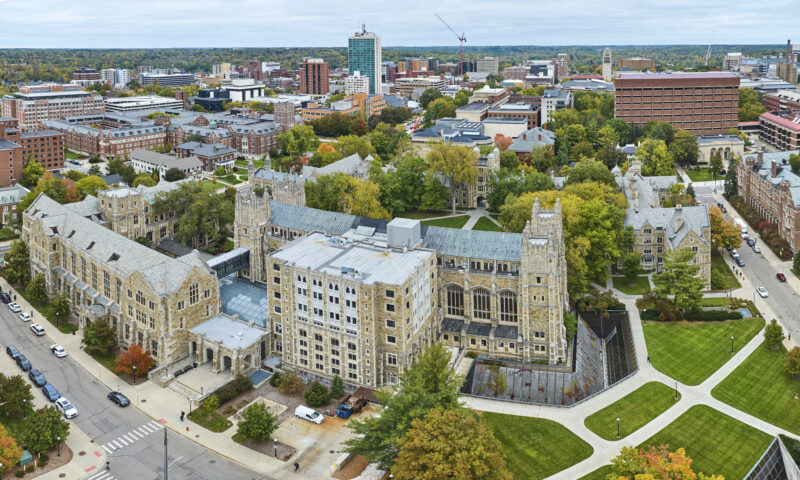
Organizers expect 1,500 people at the festival, which is taking place at Hockfield Court, a campus lawn just half a mile from where an anti-Israel encampment stood until a few days ago. MIT’s classes ended this week, but the school year is already over at some other local universities.
“Security is always, of course, top of mind when we’re bringing large groups together right now on campuses,” said Leora Kimmel Greene, a Boston event planner who is producing the outdoor concert. “The idea of having to go inside because our event feels too political, or too pro-Israel or too Jewish, just feels so sad. While this event is outdoors and in a tent, we have built a perimeter around the area to ensure that only those with tickets can come in and out of the space.”
Rabbi Menachem Altein, director of MIT Chabad, offered a more positive twist: “As they say, haters gonna hate, but we’re proud and loud,” he said on Tuesday. “Being Jewish should invoke a feeling of gladness rather than the feeling of sadness and being a target.”
The organizers hope the event inspires Jewish students at other campuses. “My hope is that, while at Thursday’s event we’re aiming to amplify our message of unity and resilience at MIT, there’s other people on campuses around the country and beyond [who] see this as a model to replicate,” Greene said. “I strongly believe that Jewish college students going back to campus in the fall will need moments that are so focused on Jewish joy and being able to live loudly and proudly Jewish in a safe and meaningful way.”
Matisyahu has faced protests at many of his shows due to his support for Israel, and a handful of stops on his recent tour have been canceled. Ondrasik, who is not Jewish, has emerged as a strong voice against antisemitism since the Oct. 7 Hamas attacks in Israel. He released a single in January, “OK,” that calls out the silence of many leaders and activists in the aftermath of Oct. 7 and traveled to the Jewish state last month.
“As MIT has created a climate of rampant antisemitism, I look forward to speaking and singing to the students who have been under siege, and telling them personally that people of conscience love and support them,” Ondrasik told Jewish Insider on Tuesday.
John Ondrasik met with hostage families, injured soldiers and first responders on his first trip to Israel this month

Courtesy
Five for Fighting performs in Hostage Square in Tel Aviv on April 13, 2024.
Three months after Hamas launched its deadly terror attack in Israel, singer John Ondrasik, known by his stage name Five for Fighting, penned the song “OK,” a ballad paying tribute to Israeli resilience in the aftermath of Oct. 7.
More than two decades earlier, in the wake of the Sept. 11, 2001, terror attacks, Ondrasik’s then-recently released “Superman (It’s Not Easy)” became the anthem for Americans reeling from the attacks, and to honor the first responders and victims of the deadliest terror attack on American soil. He would go on to perform the song at The Concert for New York City, held a month after the attacks on the Twin Towers and the Pentagon.
Ondrasik made his first trip to Israel this month, where he met with hostage families, first responders and soldiers who were recovering from injuries sustained while fighting Hamas in Gaza. After playing at a jam session honoring hostage Evyatar David, a musician, Ondrasik was invited to perform at the weekly Saturday night rally in Tel Aviv calling for the release of the remaining 133 hostages. His performance came hours before missiles and drones launched by Iran entered Israeli airspace, setting the country on high alert in the first direct confrontation between Tehran and Jerusalem.
Ondrasik spoke to Jewish Insider about his five-day visit, meetings with Israelis and how the music he created more than two decades ago has taken on new meaning in light of his experiences in Israel.
Jewish Insider: This was your first time in Israel. What expectations did you have before coming here?
John Ondrasik: Well, I heard the food was great. (laughs)
JI: It is!
JO: And that was proven very quickly. Obviously concerning why I was coming, I was anxious and interested about meeting with the hostage families, the troops, perhaps singing. So typically, I would be interested in touristy things, but there was so much to do here. We were so busy. I was really focused on doing whatever I can to support Israel and let them know in so many facets that there were artists and Americans who supported them and stood shoulder-to-shoulder with them. But at the end, I never could have imagined how our trip ended.
JI: We’ll get there, don’t worry. But before we do, talk to me about some of the folks that you met while you were here. Who stuck out to you?
JO: You know, I met some really cool people we can talk about, but it was just the people on the streets that I met. At our first restaurant, the waitress sat down at our table and started talking to us and was so friendly. I’m like, you don’t see that in the United States. And just the difference, talking to 18-year-old girls who are in full army uniform carrying machine guns. That’s something I’ve never done before. But, of course, meeting [former Soviet refusenik] Natan Sharansky is kind of like meeting [Nelson] Mandela, right? [He’s] such a powerful figure, and just spending time with him. … I met one of the leaders of United Hatzalah, and to see what they’ve done and to go into the control room and see what they have built, it’s just another example of Israeli ingenuity that no one else in the world can do.
Of course, the hardest, the most heartbreaking, the most agonizing people I met were the hostage family members. And I actually ended up meeting with three different sets of hostage families, including on my last day, the mother and brother of [Evyatar David, the honoree of the] Thursday night jam session came to the Hostage Forum and I sat with them and talked to some people and there’s no words to explain that. Anything I say would be diminishing their suffering. And so that was, of course, excruciating, but I think it was helpful for them to be able to tell their stories and know that there are some people that are not Jewish and in America advocating for them. I think they were surprised, and I think that telling them how people reacted to my song, and now millions of people in America have now heard about the hostages, and every day were calling for their release. I think that gave them a little bit of solace. So that was probably the most important thing we did. Playing with the troops, that was amazing.
JI: You played with the troops?
JO: Oh, yeah, I went and visited some troops at Sheba [Medical Center]. Three of them had lost their legs. And so we sat there and jammed on guitar and they ended up giving me guitar lessons because they’re so much better than me. They tend to have a pretty more optimistic view. You know, they’re young, they’re teasing each other. They know that they’re gonna have a great life. I actually met with one American IDF soldier who came from Florida, seven or eight years ago. And we spoke a lot about his experience and going door to door instead of just razing buildings, trying to save lives even though his commander was killed and he got shot four times trying to save him. [It was interesting to] hear from their mouths why they have these values that no one in the world wants to talk about. So, meeting with the troops was great. And then meeting the Hostage Family Forum and the people there that put together that thing literally overnight, and really took over the plight of the hostages. The government was way behind them and to see them every day have to deal with this horrible grief, they are heroes in their own right. So I just met amazing people and inspiring people and then I met some artists. I met Idan Raichel. We had a long talk about what’s going on and we have some projects possibly in the works. I met with Danny Sanderson. I met with Gilad Segev.
So I met with artists because we have these projects in the work that was really the main initial reason for my trip but then things got a lot bigger. I feel like I packed in a month of stuff in five days. I just wish I had more time. I would have stayed another week or two, but I have [shows in the U.S].
JI: So you performed on Saturday night at Hostage Square, literally as Iran was launching its missiles and drones at Israel. What was that like? They didn’t come until hours and hours later, but they were firing them off while you were performing. What was that whole experience like?
JO: I have not processed it yet. But I’ll tell you this — I’ve never played a gig where before the show, they make an announcement of what to do during a missile attack and nobody leaves.
JI: Only in Israel.
JO: Only in Israel. I have learned so much about Israel. That alone was surreal. The only experience I can compare that performance with, for me, is when I played the concert for New York after 9/11. At that concert, looking out at the emergency workers, meeting the families, [performing at Hostage Square] was very similar to that, to walk on that stage, to be able to play “Superman,” knowing that was the 9/11 song, and here we are in the Oct. 7 aftermath. To be able to speak to them and say my words, I was honored to do that. To perform “OK,” and to look at 5,000-10,000 people, many in the beginning holding signs of their loved ones, singing back to me — there’s no there’s no words for that. It’s heartbreaking, but it’s also why music can matter in so many ways. To see them crying and singing reminded me of a guy that I saw at the concert for New York who was crying and singing “Superman” at the top of his lungs, and sometimes music provides solace like that and lets people know they’re not alone.
So many in Israel, every interview I did, first of all I said, ‘Where’s everybody else? Where are all the artists? Why is nobody speaking up for us?’ So be able to show them that no, they’re not crazy, they’re not alone, there are artists who understand that Israel is fighting the good fight, and that people recognize that. [Performing at Hostage Square was], probably with the concert in New York, the most significant, important thing I’ve ever done as a musician, and then to walk off stage, kind of with that mindset of ‘wow,’ to be greeted by all the hostage families and hug them and take pictures with them. And then be told that we have to be in our hotel 11, by a safe room because there’s gonna be a missile attack.
My Israeli friends were like, ‘Well, let’s just go get dinner first.’ I’m like, ‘No, I’m going to the hotel!’ So we go to the hotel, they’re all drinking and eating dinner. It’s 10:30 and I go to my room and then they launched the missiles. Look, I had brought my son. And my wife was very reluctant to bring him, but she allowed him to come. And so I was scared. I was scared, especially when they launched the ballistic missiles. My wife is calling me crying, everybody from the States is reaching out. And so I was like everybody, I’m human. I had my bag packed for the safe room, we knew where it was, we were ready to go. I had my son with me and then we’re sitting there, then I actually connected with Fox News and ended up going on Fox News from Tel Aviv.
I’ve always wanted to do my best [Fox News reporter] Trey Yingst impersonation, so it’s 3 in the morning in Tel Aviv, I’m outside my window, things are kind of slowing down. And I’m on Fox News talking about it. And I thought it was going to be over, but then we saw that Jerusalem interceptions so like, wow, it’s still coming this way. And in the meantime, I’m trying to get a flight, which nobody could get flights [because] everybody’s panicking. But that was the most surreal, insane, important, inspiring 12 hours of my life and I’ll never forget it. I’ll never recover from it, but I’m so grateful. I’m still grateful at the end of the day that I was there. I was so grateful that I was there to experience that, to experience the people. And then the next day I went into the Mediterranean Sea and got stung by jellyfish.
JI: It’s early for that. You already got stung?
JO: I found out in Israel that the thing that is more dangerous than Iran is jellyfish.
JI: What is the main message that you want to communicate to your friends back home, to your neighbors, colleagues, to other people in the industry about your time here?
JO: I’m already doing it. I’ve gotten a lot of press inquiries, and I’m doing radio and television. And I like to tell people about the fortitude of Israeli people, but people know that. I like to tell them about the courage, the innovation of the Israeli people, but people know that. But what I really was moved by was in this dark time, in this horrible time in Israel, everybody finds a way to have joy within the fear. And that’s what I took from Israel with me. And I guess it makes sense because Jewish people have been dealing with this for millennia. But to see it firsthand and to see people dealing with these really hard things and, you know, the day that everybody says Iran’s going to attack, everybody’s at the beach and everybody’s playing volleyball and running, and living their lives and [having] dates at dinner. We could not get a seat at a restaurant on that Friday. I was just really moved by how Israelis live life and appreciate life. And I think that’s why they have joy. I guess they’re ranked fifth happiest in the world. And I understand it, because when you’re always at risk of being bombed or [being targeted by a] suicide bomber, you have a sense of, ‘I gotta live today. I’m gonna live today.’
I wrote a song called “100 Years,” which is all about that. I don’t think I ever really lived it, but seeing them, they lived that. I can’t wait to bring my wife back and my daughter, when things get a little safer, and let them share the experience, you know, go to the Western Wall in Jerusalem and leave a prayer note and all that stuff. So that’s what I’m telling people and I’m also doing a lot of press here to keep the focus on the hostages and really try to be a strong voice for Israel as much as I can.
Please log in if you already have a subscription, or subscribe to access the latest updates.
 Continue with Google

 Continue with Apple