
















































Haley Stevens touted her support for a two-state solution for Israel and the Palestinians, while Abdul El-Sayed lambasted U.S. aid to the Jewish state
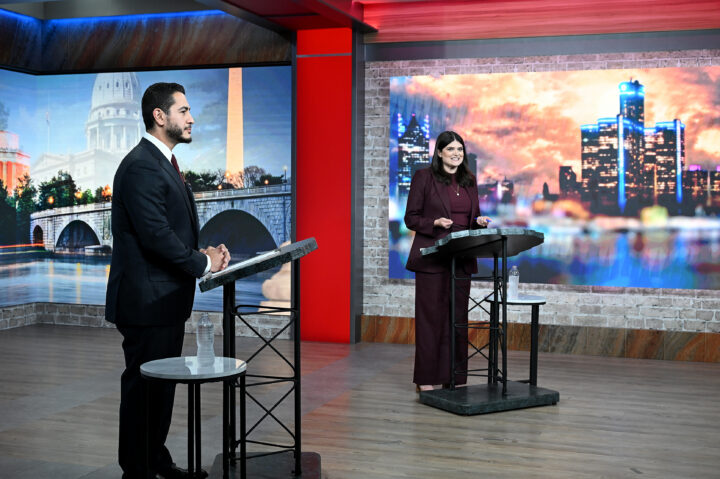
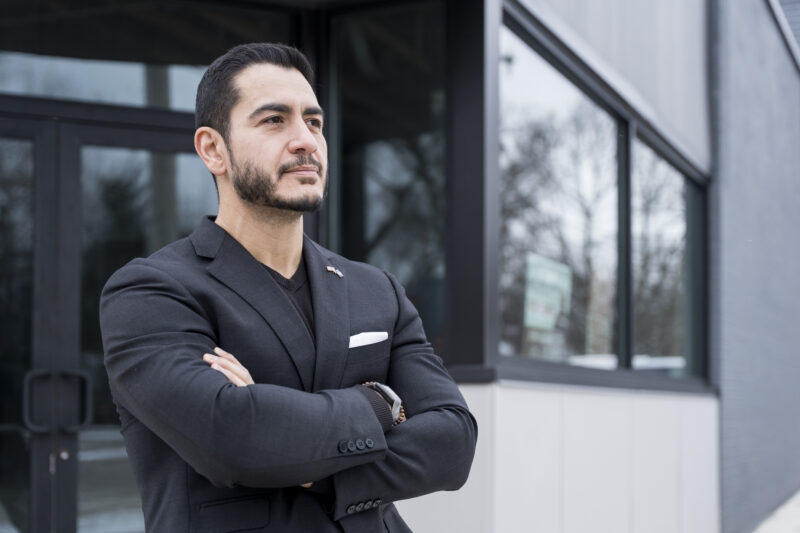
(Robin Buckson/Detroit News via AP, Pool)
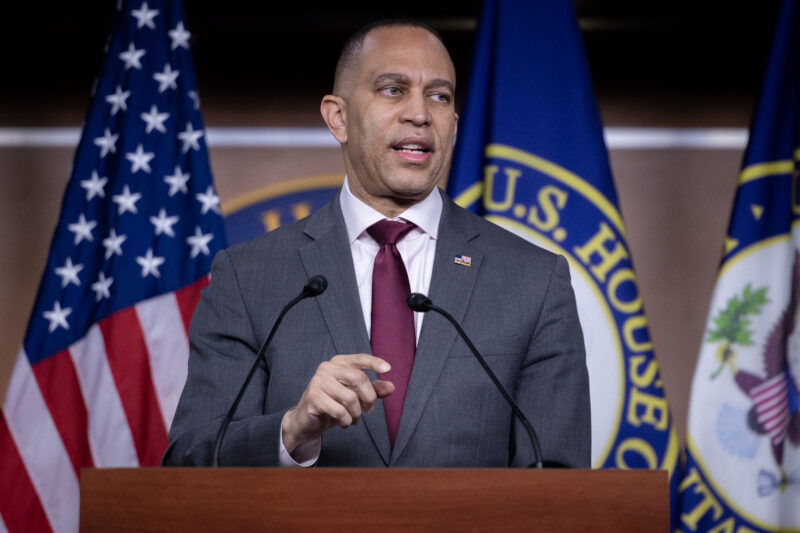
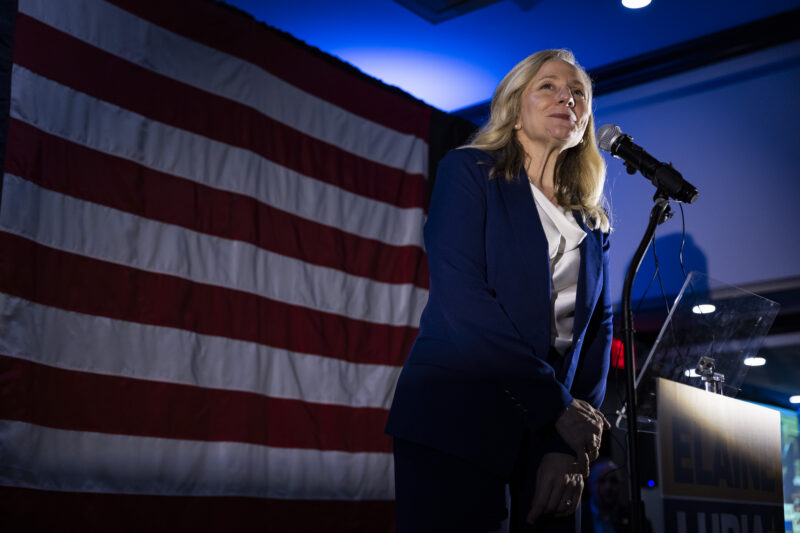
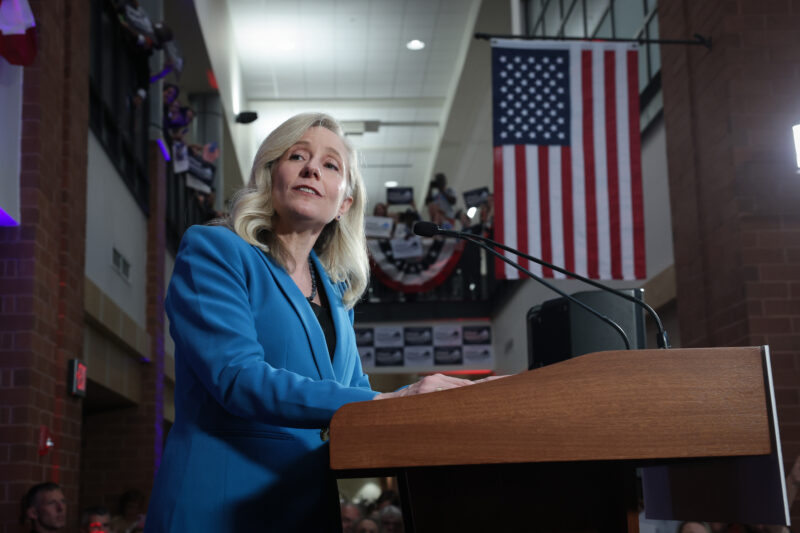
Senate candidates Abdul El-Sayed, left, and Rep. Haley Stevens participate in a televised debate moderated by Roop Raj, Monday, July 27, 2026, in Southfield, Mich.


 Add JewishInsider on Google
If Michigan’s Democratic Senate primary has become a test case for the saliency of AIPAC and Israel as a political issue for Democratic voters, then Monday night’s debate between Abdul El-Sayed, a far-left former public health official, and Rep. Haley Stevens (D-MI) served as the ultimate battlefield — and illustrated the gulf between the two candidates on the issue.
Over the course of an hourlong debate, El-Sayed made clear that he believes his opposition to AIPAC and to Israel will help him win next week’s election. Stevens, meanwhile, did not even utter the word “AIPAC.”
Stevens outlined her views on the Middle East, arguing that she and El-Sayed diverge because she supports a two-state solution to the Israeli-Palestinian conflict while he has not acknowledged Israel’s right to exist as a Jewish state. She touted her support for Michigan’s Jewish community and mentioned the work she did to advocate for the hostages after the Oct. 7, 2023, Hamas attacks on Israel.
Debate moderator Roop Raj, an anchor on FOX 2 News, prodded Stevens on her support from AIPAC, pushing her to discuss the group’s spending in the race, but she largely avoided doing so.
“Absolutely not,” Stevens said when asked by Raj whether voters should be concerned that she will do AIPAC’s “bidding” when she wins the seat.
Mostly, she turned the transparency questions on her opponent, attacking El-Sayed for not releasing all of his financial disclosure forms and for benefitting from a super PAC to which his father-in-law has contributed $200,000.
“I don’t think there’s much difference between super PACs going in for Abdul or super PACs going in for me,” Stevens said, when asked about AIPAC spending $46 million in the race. “We have a problem with campaign finance reform in this country.”
El-Sayed did the same, but in reverse: When she called out his lack of personal financial transparency, he went after her for benefiting from outside spending in the race.
The first question of the debate, to El-Sayed, was about how he would work to make Michigan more affordable. His answer: eschewing campaign donations “from the corporations who are jacking up your prices in the first place,” a category in which he placed AIPAC.
“Just last week, our friend here voted to send 3.3 billion of your tax dollars to a foreign government. That is the pro quo that comes with the quid of $30 million spent by AIPAC,” El-Sayed said. “It really comes down to how are you funded.”
Stevens, when asked about affordability, talked about regulating utilities in the state and promising to be a “proven fighter.”
When Stevens described being “robbed by Washington, D.C., and [President] Donald Trump,” and pledged to fight corruption in public office, El-Sayed said he agreed that Michiganders are being robbed — but by AIPAC, not Trump.
“The money that we should have to invest in our schools is being sent to foreign governments to destroy other people’s schools instead of investing in our own, and that is exactly what AIPAC wants you to do, and why they’re spending so much money to get the congresswoman elected,” El-Sayed said.
Democrats also nominated pro-Israel former Navy pilot Rebecca Bennett in a neighboring district to run against Rep. Tom Kean Jr.
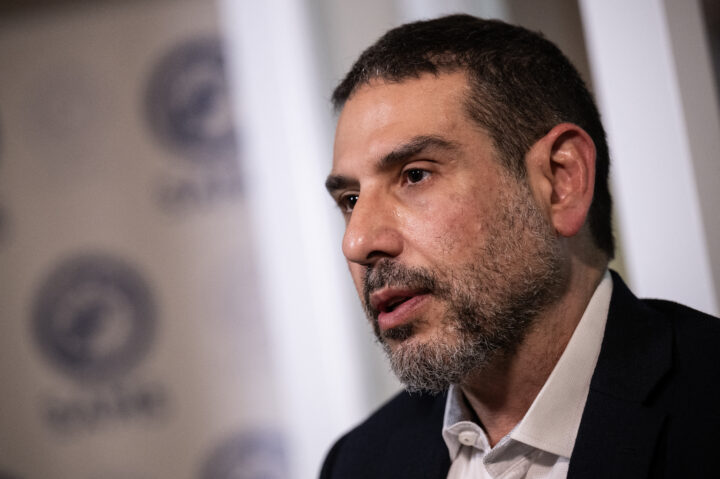
DREW ANGERER/AFP via Getty Images
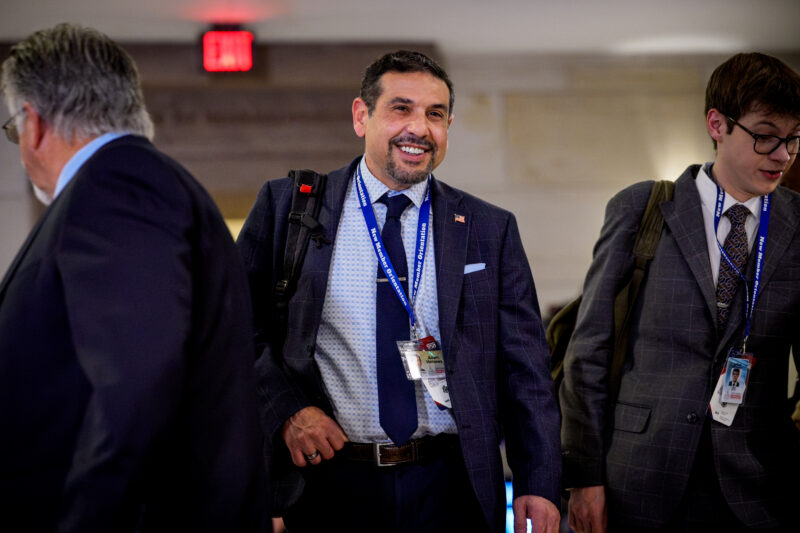
Dr. Adam Hamawy speaks during an AFP interview after meetings on Capitol Hill, in Washington DC, on June 14, 2024.
New Jersey, the state with one of the largest Jewish populations in the country, has become something of a political nightmare for Jewish voters who have seen Democrats turn to far-left, virulently anti-Israel candidates in this year’s primaries.
That trend continued Tuesday night as Democratic voters in New Jersey’s 12th Congressional District nominated plastic surgeon Adam Hamawy, despite his past affiliations with Islamist extremists, who prevailed with about 28% of the vote in a crowded Democratic primary field.
Hamawy, with the support of left-wing groups, some progressive lawmakers and the anti-Israel American Priorities super PAC, prevailed over his opponents with regional bases but limited support outside their local communities. No pro-Israel groups or other moderate-minded outside PACs decided to spend money on anti-Hamawy attack ads, allowing him to consolidate enough backing from his base to prevail with a relatively small plurality.
Hamawy was a former associate of Omar Abdel Rahman, also known as the Blind Sheikh, who was convicted of inspiring the terrorists who engineered the 1993 World Trade Center bombing. Hamawy later served as a defense witness during Abdel Rahman’s 1995 trial, and volunteered around the same time in Bosnia with a group later shuttered as a front for Al-Qaida.
Despite his baggage, Hamawy is expected to win election to Congress in the November general election, given the central New Jersey district’s heavily Democratic electorate.
Democratic voters in the neighboring 11th Congressional District also overwhelmingly renominated left-wing Rep. Analilia Mejia (D-NJ), who was the surprise winner in a special election primary earlier this year after AIPAC’s super PAC spent money attacking the more moderate former Rep. Tom Malinowski (D-NJ)
But while Mejia won a whopping 82% of the Democratic vote against her long-shot opposition, there was a significant protest vote against her in the towns with a large Jewish constituency: Livingston and Millburn.
In more favorable news for pro-Israel moderate voters, Democrats nominated former Navy pilot Rebecca Bennett, who flew missions over the Straits of Hormuz, to run against Rep. Tom Kean Jr. (R-NJ) in a major battleground district.
“I just feel very strongly that Israel has a right to defend itself and has a right to exist, and that the United States needs to be able to support Israel, and it shouldn’t be partisan,” Bennett told Jewish Insider last August. “I think we should be supporting Israel as an ally, regardless of political party.”
She also told JI she supports continuing U.S. aid to Israel without restrictions or conditions.
Kean, who has represented the 7th Congressional District since 2022, has been missing from Congress for the last several months with an undisclosed illness. His uncertain personal circumstances have made Democrats bullish of their prospects in the swing district, which Kean only won by five points in 2024.
Meanwhile, Rep. Robert Menendez Jr. (D-NJ), a pro-Israel Democrat, comfortably brushed back a challenge from far-left, anti-Israel candidate Mussab Ali, winning 70% of the primary vote.
Please log in if you already have a subscription, or subscribe to access the latest updates.
 Continue with Google

 Continue with Apple