
























































Washington Institute expert witnesses argue that the U.S. should condition security assistance to Lebanon on further progress in disarming Hezbollah
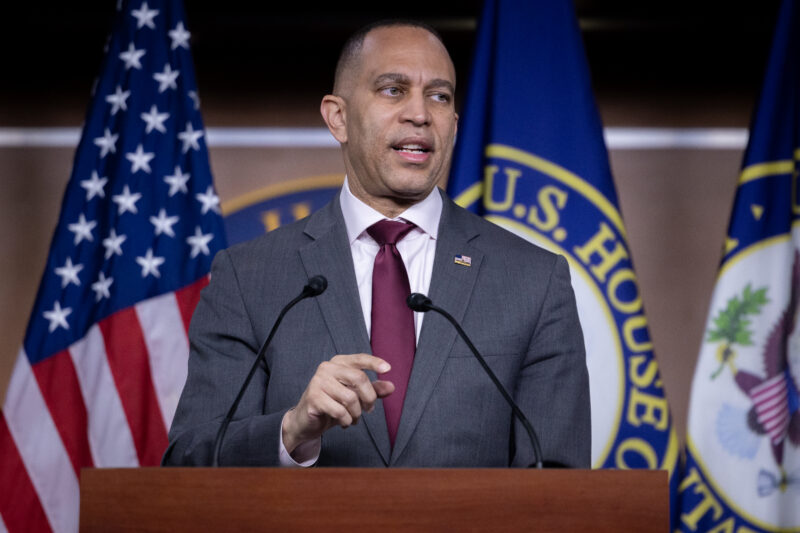
Bill Clark/CQ-Roll Call, Inc via Getty Images
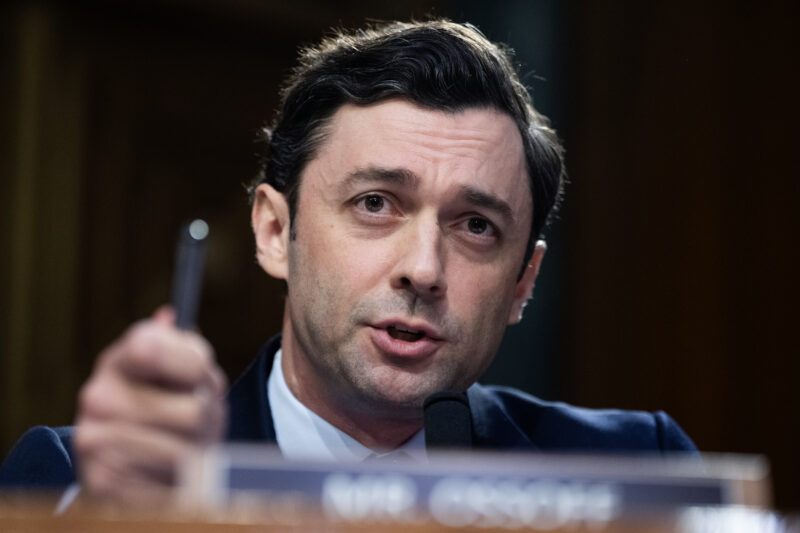
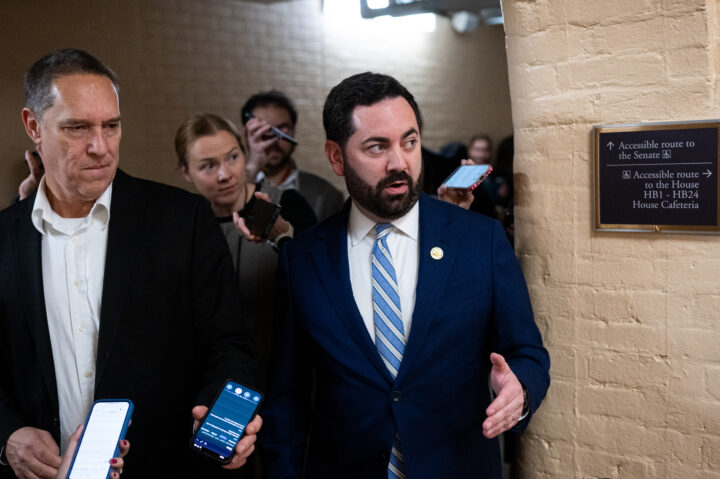
Rep. Mike Lawler (R-NY) speaks to reporters as he leaves the House Republican Conference meeting in the U.S. Capitol on December 10, 2025.


 Add JewishInsider on Google
Lawmakers and expert witnesses at a House Foreign Affairs Committee subcommittee hearing on Tuesday highlighted the ongoing challenges and delays in the disarming of Hezbollah in southern Lebanon, but also argued that there is tremendous opportunity in the country if Hezbollah’s influence can be defeated — including potential moves in the near term toward normalization with Israel.
“Right now, we have the chance to help this government break free of the shackles of Iran’s malign influence. Hezbollah’s influence is vastly diminished thanks in large part to decisive Israeli action. But difficult choices now need to be made to permanently block Hezbollah’s path to power,” Rep. Mike Lawler (R-NY), the Middle East subcommittee chair, said in his opening statement.
He said that the Lebanese Armed Forces have made strides in disarming Hezbollah but the ceasefire plan’s implementation “has been haphazard at best,” also emphasizing the ongoing economic difficulties and widespread corruption that continue to plague the country and provide Hezbollah and its Iranian backers opportunities to rebuild.
Lawler also emphasized that significant reforms are needed, particularly in southern Lebanon, to ensure that the same corrupt systems that allowed Hezbollah to flourish do not return. In the long term, Lawler said that he hopes to see Lebanon become a “true partner” in the region and normalize its relationship with Israel.
Rep. Brad Sherman (D-CA), the ranking member, said that there is a “historic opportunity” in Lebanon but “[t]hat window of opportunity, however, is narrow. Hezbollah is working hard to rebuild, rearm and to reconstitute itself as a major terrorist organization.”
Sherman accused the Trump administration of a “lack of urgency and a lack of the necessary support” to groups working to counter Hezbollah in the country, particularly following cuts to foreign assistance.
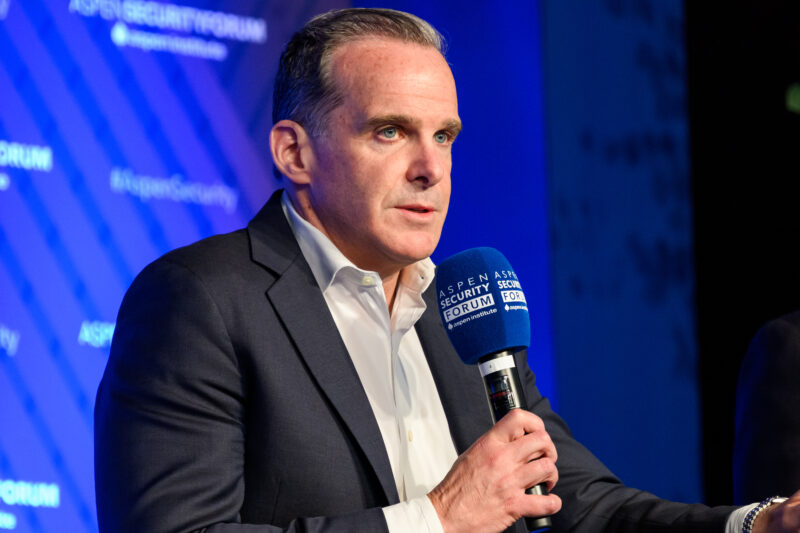
He said that comments by the Trump administration “have often sent the wrong signals, particularly when Special Envoy Tom Barrack downplayed Hezbollah and described it as a political party that also has a — let me quote him exactly — ‘a political party that also has a militant aspect to it,’” Sherman continued.
During the hearing, expert witnesses, all from The Washington Institute for Near East Policy, warned that the disarmament process is not proceeding smoothly or entirely as expected. All three agreed that the U.S. should condition security assistance to Lebanon on progress in disarming Hezbollah, among other steps. And they each said the U.S. should ramp up its sanctions efforts, targeting Hezbollah and malign actors in the Lebanese government.
David Schenker, a senior fellow at The Washington Institute and former Trump administration official, emphasized that the Lebanese Armed Forces (LAF) are encountering ongoing obstacles including Hezbollah’s use of human shields, a lack of political will, ongoing Hezbollah penetration of the LAF, ongoing LAF deference to Hezbollah and threats to LAF forces’ safety.
He said the Lebanese government has not deployed as many troops to southern Lebanon to carry out the disarmament mission as it had promised.
Hanin Ghaddar, a senior fellow at The Washington Institute and longtime Lebanese journalist, said that the lack of a concrete timeline for disarmament “has produced a de facto freeze,” in which neither the LAF nor Hezbollah are moving forward. She called for outside pressure, including conditions on U.S. aid, to pressure the LAF into continuing with its obligations to disarm Hezbollah.
Dana Stroul, the research director at The Washington Institute and a former Biden administration official, said that defanging Hezbollah requires not only disarming the group but also “addressing the political, social and economic system within which Hezbollah has thrived.” She called for expanded U.S. engagement in the country outside of the security realm.
Stroul, differing from the other witnesses, argued that the U.S. should offer reconstruction assistance — in addition to military aid — to offset the unconditional aid flowing in from Qatar and Turkey and ensure oversight and safeguards. She said that waiting to contribute to reconstruction efforts until after disarmament is complete risks locking the U.S. out of the process and preventing it from enforcing its own conditions.
Schenker argued that the current “division of labor” between the LAF and Israel, which maintains positions inside Lebanon and continues to carry out strikes on Hezbollah outposts, should continue pending further LAF progress. He said that many in the LAF are quietly “very pleased” about the Israeli action, in contrast with their public protests.
In spite of the ongoing issues, the witnesses said that the new Lebanese government is an improvement over previous ones and that there are people within the Lebanese government with whom the U.S. can work and who are making real strides. The witnesses noted that other regional and global developments are also depriving Hezbollah of its key allies.
Schenker and Ghaddar said that, if the Iranian regime were to fall, Hezbollah would be significantly weakened, though Schenker warned that it would not fully disappear due to its various money-generating ventures inside Lebanon and foreign supporters.
The witnesses said that Lebanese normalization with Israel could be achievable.
“Peace between Lebanon and Israel is not separate from this effort, it is what sustains it,” Ghaddar said, adding that such an outcome is “closer than many may assume” but only with a forceful U.S. policy approach. She said that “peace is no longer taboo” and that the “Lebanese street is ready” for such a step. She said that the peace process should begin immediately.
“Peace raises the political cost of re-armament, strengthens state legitimacy, unlocks economic recovery and deprives Hezbollah of its core justification. Without a credible peace horizon, disarmament and economic reform will be temporary,” Ghaddar continued. “With one, they become structural.”
She said that the U.S. should focus on eroding the Lebanese anti-normalization law by offering incentives to not enforce the law, and sanctioning those involved in its enforcement. She also called for continued discussions on economic cooperation between Lebanon and Israel.
Stroul similarly said that a Lebanese government publicly considering normalization with Israel is “not any policy opportunity that, before Oct. 7, we could have imagined,” providing a “tremendous reason for hope,” alongside other improvements in the leadership in Beirut.
Rep. Ryan Zinke (R-MT) raised concerns about the role of the Muslim Brotherhood, backed by Turkey and Qatar, in Lebanon.
Schenker said that the Muslim Brotherhood-affiliated party in Lebanon has been “making slow but steady progress.” Ghaddar said that Turkey and Qatar “play a very bad role in Lebanon in terms of supporting the Muslim Brotherhood” and that the Muslim Brotherhood branch, which she described as “Lebanese Hamas,” is a “very dangerous phenomenon.”
Ghaddar added that the Muslim Brotherhood has been treating Hezbollah as a “strategic ally” and that they might form an alliance in the upcoming elections.
Lawmakers and experts highlighted those upcoming Lebanese elections as a potential pivot point for anti-Hezbollah efforts.
Ghaddar warned that, if Hezbollah is able to win all of the Shia seats in the next parliament and the Iranian regime does not fall, the political situation would functionally return to the pre-Oct. 7 status quo.
Stroul said the “U.S. must do more than insist that elections take place on time. Signaling U.S. interest in a parliamentary outcome that demonstrates a break with the pre-Oct. 7 governmental paralysis is critical. The worst case outcome would be a parliamentary makeup that leaves in place Hezbollah-affiliated politicians.”
Ghaddar and Schenker emphasized that the Lebanese diaspora could be a key deciding factor in the upcoming election, but it is unclear if they will be able to vote as required by Lebanese law. The millions of Lebanese citizens living abroad “will have a real impact on whether this government stays or whether we go back to business as usual,” Schenker said.
Rep. Darrell Issa (R-CA) highlighted legislation he introduced with Rep. Darin LaHood (R-IL) ahead of the hearing to authorize sanctions on any individuals involved in blocking Lebanese citizens abroad from voting in the elections or who are otherwise obstructing the Lebanese elections.
Schenker called for the U.S. to press allies to fully designate Hezbollah as a terrorist organization and repudiated Barrack’s comments about Hezbollah having political and military elements — a stance mirroring that of some European countries.
He said the U.S. needs to be clear that the entire group is a terrorist organization if it wants to see its allies agree to such a designation. But he was skeptical that France, in particular, would be willing to proceed with such a step.
Stroul argued the U.S. needs more technical experts and diplomats focused on Lebanon, noting the repeated turnover in U.S. envoys working on the portfolio. She also urged the Trump administration to welcome Lebanese President Joseph Aoun to the White House for a meeting.
Two Dallas therapists filed suit against their former employer for discrimination and retaliation, alleging they were terminated for speaking out against a policy barring discussion of religious opinions

BSIP/UIG Via Getty Images
Models
One November afternoon last year, Jackie Junger and Jacqueline Katz, both therapists at a private practice in Dallas, sat down with their colleagues for their weekly team meeting. This one-hour gathering was a lifeline for the therapists, where they could discuss challenges their clients were facing and receive advice from their fellow practitioners.
When a non-Jewish therapist asked for help better understanding a Jewish client who was “experiencing trauma with everything going on,” Junger and Katz — both Jewish — were eager to offer insight about the surge in antisemitism in the United States, in the hopes of helping their colleague better serve her client. But before Junger, 29, and Katz, 61, could speak, their supervisor, Dr. Dina Hijazi, shut down the conversation.
“I don’t think that’s a good idea, because you’ll get a one-sided response,” Hijazi told the therapists, according to legal filings.
The next day, Hijazi emailed the team and asked them to avoid discussing the “Palestine Israel topic” because she has “great pain” around the issue. But no one had mentioned the events in the Middle East at that meeting. Junger and Katz each responded to Hijazi’s note: Why, they wondered, would it be considered “one-sided” for Jewish therapists to speak about their understanding of antisemitism and Jewish trauma?
Over the next five days, Junger and Katz would see their lives upended after they chose to raise concerns about antisemitism and double standards against Jewish practitioners and clients.
That’s the key allegation at the heart of a federal lawsuit that Junger and Katz filed last month against D2 Counseling and its co-owners, Hijazi and Rev. Daniel Gowan. The two Jewish therapists claim they were discriminated against for objecting to their supervisors’ handling of antisemitism — and that, ultimately, they faced unlawful retaliation when they were fired days later. On the Monday before Thanksgiving, both received identical voicemails letting them know they had been terminated, saying they were no longer a “good fit” for D2. (An attorney representing Hijazi and Gowan declined to respond to detailed questions, citing the ongoing legal proceedings. The account in this article is based on an interview with Katz and Junger, allegations in their lawsuit and information shared by their lawyer.)
The incident was jarring for both Katz and Junger, they told Jewish Insider this week. But the biggest travesty, they said, is not that they lost their jobs: It’s that Jewish clients at their old practice should no longer expect to receive the highest level of care — because of their religion.
“This Jewish client — I don’t know who it is, obviously, I just know that it’s a Jewish client who is genuinely seeking support for something that they’re having trouble with in their life. It’s real trauma. I think most Jews can appreciate that it’s really traumatic, what’s happening,” Junger told JI. “And they’re not allowed to get competent health care. They have no clue.”
*****
This case is only a single incident experienced by just two of the nation’s more than 100,000 licensed therapists. But it comes amid what Jewish mental health professionals in the United States have described as an increasingly hostile professional environment, where denunciations of Israel are expected and outright antisemitism is no longer a taboo, particularly after the Oct. 7, 2023, terror attacks in Israel.
Earlier this year, the state of Illinois formally reprimanded a social worker who had created a blacklist publicly naming “Zionist” therapists. (The clinicians included on the list said it was just a pretext for targeting Jews.)
In May, Rep. Ritchie Torres (D-NY) warned of a “persistent and pernicious pattern of antisemitism” at the American Psychological Association, the preeminent professional organization for psychologists in the U.S.
Empathy is supposed to be the central tenet of the mental health field, but compassion and understanding are not always extended to Jewish therapists — or worse, their clients.
“Our role is really to facilitate the discussion, to honor their feelings, and to create a safe space — to create a space that [clients] can communicate what they’re experiencing internally, without any sort of feeling that, ‘I’m going to be shut down or marginalized or not taken seriously,’” Katz explained.
It was clear to Junger and Katz soon after the Oct. 7 attacks that team conversations about what was happening in the Middle East would be different from other issues they’d been discussing for years.
“We talk about current events a lot because these things affect our clients,” said Katz. The D2 team had talked about the war in Ukraine soon after it started; abortion access following the Supreme Court’s overturning of Roe v. Wade in 2022; and gun control after a mass shooting at a Texas mall in 2023.
A therapist helping a client work through issues with their sexuality might seek advice from a gay co-worker. Past meetings also included discussions of Mormonism and Islam, according to the complaint filed by Katz and Junger. Hijazi led a conversation about how to help clients who were having an emotional reaction to President Donald Trump’s reelection shortly after it occurred, according to the lawsuit.
“It’s very common to seek peer consultation, supervision from someone who has expertise, whether it’s lived experience or clinical experience,” Junger told JI. “If someone, let’s say, had cancer, and I had a client who’s going through cancer, I might reach out and say, ‘Hey, what would be helpful for me to know?’”
Three days after the Oct. 7 attacks, when the D2 team gathered as they do each Tuesday, Hijazi and Gowan did not address the recent terror attacks.
“We were all very shocked that we weren’t going to address the elephant in the room, as it were, and it quickly fell apart because one of my coworkers brought it up. ‘Aren’t we going to talk about what happened? We’re all very upset and suffering here,’” said Katz. “And it was shut down.”
Lesson learned, according to Katz and Junger: Don’t bring up Israel or Gaza again. It wasn’t an overt order, but the palpable discomfort from Hijazi and Gowan kept a lid on future conversations.
Still, Hijazi’s strong reaction to the conversation about antisemitism a year later, in November 2024, surprised Junger and Katz. No one had mentioned Israel or Gaza. But Hijazi followed up with an email requesting that the “Palestine Israel topic” not be discussed.
“I have great pain around this as I know some of you do as well,” Hijazi wrote in the email, which was shared with JI. “In order for me to work and be present with my clients I have asked that this be kept out of the noon meeting.” (What Hijazi did not share is that her family is Palestinian — a fact her daughter discussed in an online blog post viewed by JI, but one Hijazi didn’t mention to colleagues.)
Katz and Junger did not see how a question about the trauma of a Jewish patient in Texas could be extrapolated to extend to the Israeli-Palestinian conflict, nor did they understand why Hijazi chose to shut down future discussions of Jewish trauma. Separately, they each responded with lengthy emails, screenshots of which were included in the lawsuit.
“I believe every single one of us has Jewish clients, and the more we understand, the better we can service our clients,” Junger wrote in her email.
Katz took issue with Hijazi letting her own emotions guide the discussion, a therapist no-no.
“As a managing partner in this practice I think it was essential for you to be able to manage the inquiry without adopting the victim role and personalizing it to your pain,” Katz wrote in another email. “I understand that you were protecting yourself by leaving the room, however the impact was that some of us felt shut down and unheard.”
The matter only escalated from there, playing out like most modern office dramas: over email, leaving a lengthy digital record.
Hijazi banned the expression of “political or religious opinions” in the group meetings, under the rationale of “safety in the workplace.” “Emotional safety for the group,” she wrote, “will always come before personal agendas.”
But Katz and Junger were still unsure what was political about their earlier meeting and decided to press the point about their concern for Jewish clients. “I think your failure to see that this was not a political conversation is a huge blind spot for you,” wrote Katz. Gowan responded by telling her she was “way over the line,” a sentiment Hijazi echoed.
Over that weekend, on Sunday night, Junger chimed in, too. “I would love some clarification, as I am feeling lots of confusion,” she wrote. “Would wanting more clarity on a Black client experiencing racism violate that policy as well? How about talking about a client who is part of the LGBTQ community and experiencing trauma and discrimination? Are we allowed to talk about their lived experience? Or does this rule only apply to Jewish clients?”
That was Junger’s final message to her bosses about the matter. Katz chimed in after, saying she had the same questions.
A day later, they were both fired.
“It was just outrageous behavior on their part, I think, and so punishing, really. You open your mouth here, and this is what happens to you,” said Katz. “If we weren’t Jewish, [the other therapist] wouldn’t have asked us for supervision. If we weren’t Jewish, we wouldn’t have spoken up. If we weren’t Jewish, we wouldn’t have been let go.”
Their contract required D2 to give them 30 days to finish seeing clients. But they were forced to move to a different office, and asked to pay tens of thousands of dollars stemming from a part of the contract with buyout options and a non-compete clause. (They have refused to pay.)
“I knew antisemitism was on the rise, but to have it so blatant in my face in this way was really shocking. It was honestly a little scary,” said Junger.
*****
Winning an employment discrimination suit is not an easy task. But the lawyers at the Lawfare Project and Winston & Strawn representing Katz and Junger are confident that they have a strong case.
“It’s very rare to see a case like this, a discrimination retaliation case like this, where the employer’s actions are so brazen,” said Jaclyn Clark, the Lawfare Project attorney who brought the case. “I strongly suspect that the employer in this instance just thought that they could get away with it … So from my standpoint, beyond just shining a light on the issue of antisemitism in the mental health field, the politicization of Jewish trauma and all of those things, is also to put these smaller employers on warning.”
Orly Lobel, an employment law expert at the University of San Diego who looked over the complaint, described it as “a strong case, since it is all documented with email exchanges and there is no pretextual reason for the termination,” she told JI.
Junger and Katz’s attorneys allege that they faced discrimination as members of a racial minority, leaning on a 1987 Supreme Court ruling as precedent. L. Camille Hébert, a professor at The Ohio State University’s law school, said the race-based argument could be a tougher bar to clear than if the therapists made an argument about religious discrimination. But she noted that the facts laid out in the complaint paint a picture of discrimination.
“If the facts are as alleged, that all subjects were allowed to be addressed in the meetings other than antisemitism, then there might be a cognizable claim of discrimination based on religion. The defense of ‘workplace safety’ seems not to be a particularly strong one,” Hébert said after reviewing the complaint.
*****
Jewish therapists aren’t the only ones worried about antisemitism in the field. People seeking mental health care are, too, and Junger and Katz say they are right to be concerned.
After she was fired by D2, Junger created a list of Jewish therapists in the Dallas area to share with the people in the Jewish community who come to her asking for a referral. Since Oct. 7, she has seen more people seeking out a therapist who understands Jewish issues — and she understands why.
“Maybe a while ago I would have been like, ‘No, it’s a therapist job to [listen]. They’re not political. It’s OK,’” said Junger. “Now I’m like, ‘I get that.’ It makes sense to want to have safety and know that you have a real safe space to be able to process things that are directly impacting us.”
Please log in if you already have a subscription, or subscribe to access the latest updates.
 Continue with Google
 Continue with Apple