


















































Counterterrorism chief says Iran’s leadership hasn’t moderated, undercutting Vance’s hopes
The assessment came during questioning by Sen. Tom Cotton, who a day earlier criticized the Iran agreement negotiated by the vice president
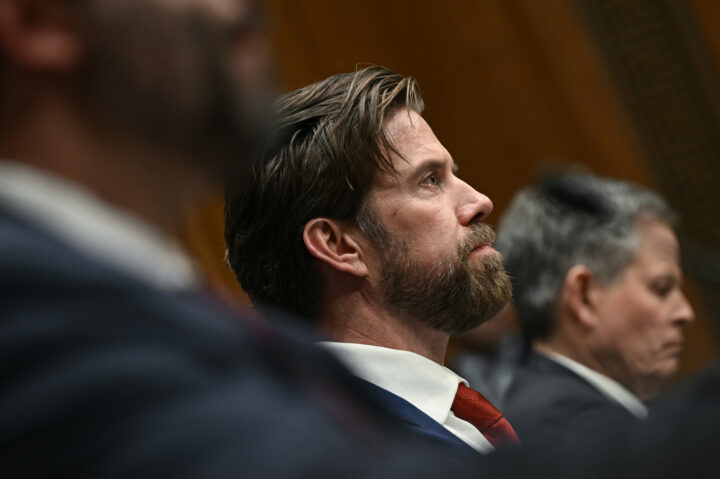
Acting Director of the National Counterterrorism Center (NCTC) Joseph Weirsky attends Senate Select Committee on Intelligence hearing on his nomination to be general counsel for the Office of the Director of National Intelligence (ODNI) on November 18, 2026. (Photo by Brendan SMIALOWSKI / AFP via Getty Images)


 Add JewishInsider on Google
The acting director of the National Counterterrorism Center said Wednesday that Iran’s leadership has not moderated its behavior, casting doubt on Vice President JD Vance’s earlier hopes that negotiations could fundamentally transform relations between Washington and Tehran.
Joseph Weirsky, President Donald Trump’s nominee to permanently lead the counterterrorism agency, made the assessment during a Senate Intelligence Committee confirmation hearing while being questioned by committee Chairman Tom Cotton (R-AR).
Cotton asked Weirsky: “Is there any reason to think the current leaders of Iran have turned over a new leaf?”
“Senator, there’s no indication there’s any turning over of leaves with the regime,” Weirsky replied.
The exchange comes five months after Vance suggested that Iran’s weakened position could provide an opportunity to reshape its relationship with the United States following decades of hostility.
Speaking at the opening of negotiations with Iranian officials in Switzerland in June, Vance said Trump had instructed American negotiators to “turn over a new leaf” with Iran, offering the possibility of improved relations if Tehran abandoned its nuclear ambitions and destabilizing activities across the Middle East.
Vance argued that Washington was willing to fundamentally transform its relationship with Iran if the country’s leadership changed its behavior, while acknowledging that the outcome depended on Tehran’s willingness to make concessions.
In a separate interview with CNBC earlier that month, Vance suggested that even Iranian hard-liners were reconsidering decades of hostility toward Washington, saying American negotiators were hearing from Iranian officials who believed the relationship between the two countries over the previous 47 years had been a mistake. He stressed that Washington would need to verify whether Tehran intended to follow through.
The administration’s diplomatic efforts produced a 14-point memorandum of understanding in June that temporarily halted hostilities and established a framework for further negotiations over Iran’s nuclear program. The agreement ultimately collapsed without producing a lasting settlement.
Weirsky’s testimony comes a day after Cotton criticized the agreement, arguing that the diplomatic arrangement allowed Tehran to regroup and rearm, potentially prolonging the war.
“We need a victory strategy, not an exit strategy,” Cotton said Tuesday, criticizing the memorandum as an “ill-advised, naive, foolish” agreement while accusing Democrats seeking to end the war of advocating surrender to the Iranian regime.
Last week, Trump directed Vance away from negotiations with Tehran and toward domestic issues, declaring that Washington no longer needed an agreement with Iran as the administration continued applying economic pressure on the regime.
More Stories
War Powers
Senate again rejects resolution calling for end to Iran war
MOMENT OF TRUTH
Harmeet Dhillon calls out bigotry, antisemitism within MAGA movement
FIRST-WEEK PRIORITY
Jeffries says House will pass Iran war powers resolution in first week of new session

analysis
Success of federal education tax credit program hanging in the balance
DOUBLING DOWN
Mamdani says he can’t honor Oct. 7 victims without mentioning Gaza
BRUSHBACK PITCH
Menin challenges Mamdani over controversial NYPD protest bill
Please log in if you already have a subscription, or subscribe to access the latest updates.
 Continue with Google

 Continue with Apple