


























































Israeli exit polls: opposition bloc holds early edge
Netanyahu’s bloc is positioned to lose nearly one-quarter of the seats from 2022; former IDF Chief of Staff Gadi Eisenkot’s bloc notably short of a majority
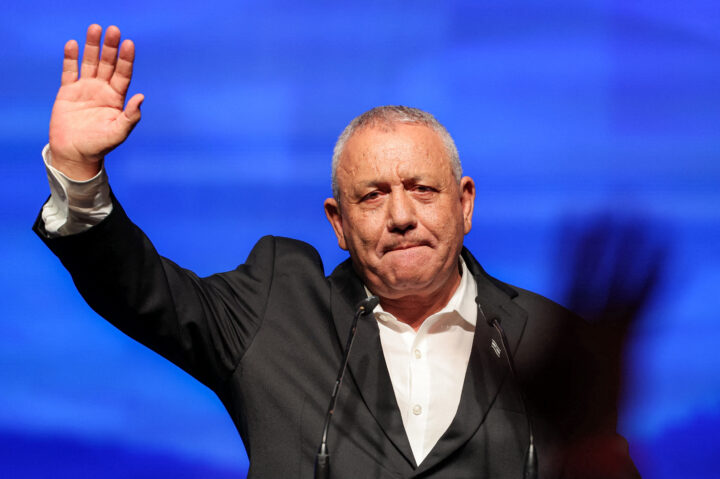
(Jack GUEZ / AFP via Getty Images)
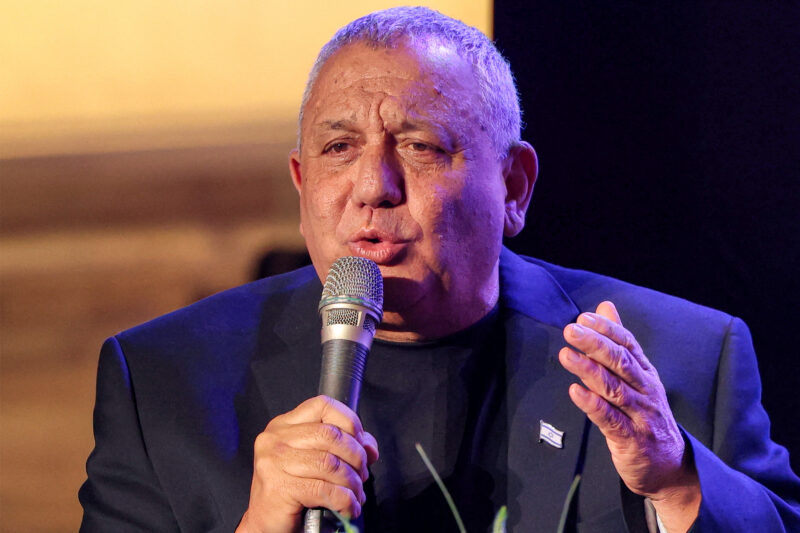
Gadi Eisenkot, Israel's former military chief of staff and leader of the Yashar party, addresses supporters at the party's final campaign rally before the legislative election, in Tel Aviv on October 25, 2026.


 Add JewishInsider on Google
The Israeli opposition bloc, led by former IDF Chief of Staff Gadi Eisenkot, held a narrow edge over Prime Minister Benjamin Netanyahu’s coalition, according to exit polling released Tuesday night, after polls closed in an election widely seen as a referendum on Netanyahu’s leadership.
Neither bloc had a majority in any televised exit polls, leaving unclear the trajectory of the coming weeks’ coalition negotiations. The Arab parties appear likely to win a record number of seats in the Knesset, with exit polls showing them winning 17-18 seats — far more than the 10 they currently hold.
In the Channel 13 exit poll, Likud received 25 seats in the Knesset, while Eisenkot’s Yashar had 23. The opposition bloc received 53 seats and the bloc supporting Netanyahu had 50, a significant drop from the 64 seats his bloc won in 2022.
In Channel 12’s poll, Likud received 24 seats and Yashar had 22, while Eisenkot’s bloc reached 52 seats and Netanyahu’s had 50.
Channel 11’s poll put Likud at 25 seats and its bloc at 50, while Yashar received 21 and its bloc 55.
Pro-Netanyahu Channel 14, which has been an outlier in polls throughout the election season, said the right-wing bloc received 60 seats, including Likud’s 30, while the opposition bloc had 43, including the 19 seats for Eisenkot’s Yashar party.
The large Arab bloc is an obstacle to the ability of the major blocs to form a majority. The entire right-wing bloc has rejected relying on Ra’am to form a government, as have Eisenkot and other party leaders of the “change” bloc. Of the Arab parties, the Joint List opposes joining any Israeli government, while Ra’am has said it is willing to work with Zionist parties.
However, the other parties in Eisenkot’s bloc formed a coalition with Ra’am in 2021, and may be more likely than the Netanyahu bloc to do so again despite campaign promises.
Turnout throughout the day was the highest in decades, with about 9% more Israelis voting in this election than in the 2022 election, according to early evening returns. Roughly half of that added turnout came from Arab-majority cities.
Throughout the day, Likud and other parties in Netanyahu’s bloc sent get-out-the-vote messages emphasizing that high Arab turnout would make it much harder for their side to win and featuring videos of long lines in Arab cities.
Increased turnout also raised the number of votes needed to meet the 3.25% electoral threshold from about 155,000 to roughly 188,000, resulting in both parties polling near the threshold — right-wing Amcha Yisrael and the Reservists and Economy Party, who had not committed to either bloc — falling below it.
More Stories

SCOOP
Former Haley Stevens campaign chair and prominent Democratic fundraiser says he plans to vote for Rogers
DEPARTURES
After Israel’s election, expats leave country disappointed by result
MANAMA MOMENT
Bahrain prepares to host Manama Dialogue amid economic, security disruptions
On the hill
House report finds American Psychological Association leadership ‘repeatedly failed to confront antisemitism’

MCCORMICK'S MESSAGE
McCormick warns an El-Sayed victory could lead to France-like chaos in America

ALLIES APART
Competing Middle East frameworks put U.S. allies on rival tracks, experts say
Please log in if you already have a subscription, or subscribe to access the latest updates.
 Continue with Google

 Continue with Apple