















































Democratic foreign policy veterans preview party’s shifts on Middle East policy
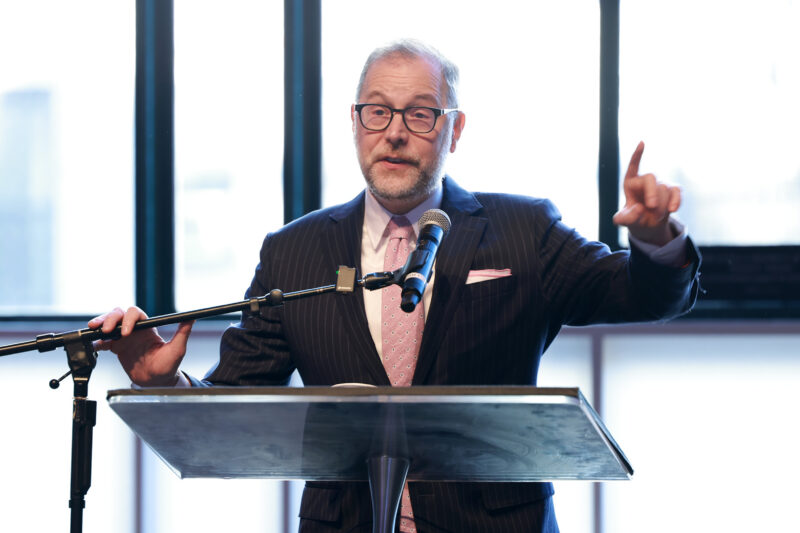
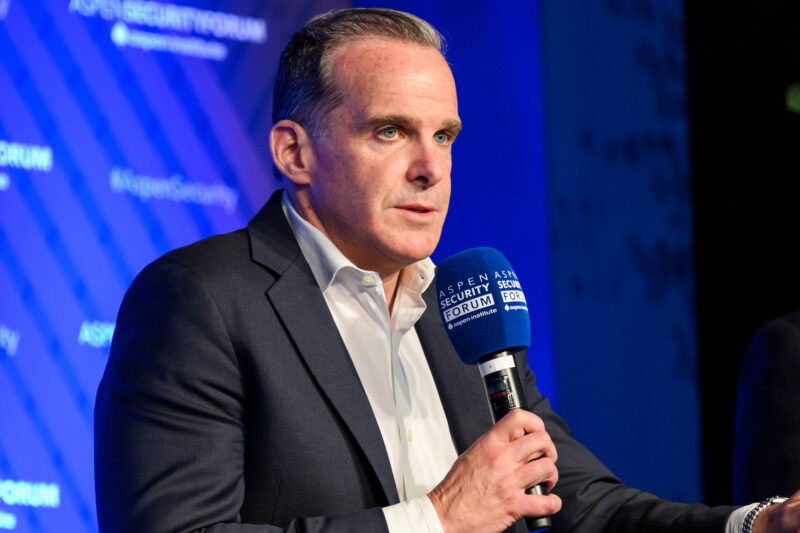
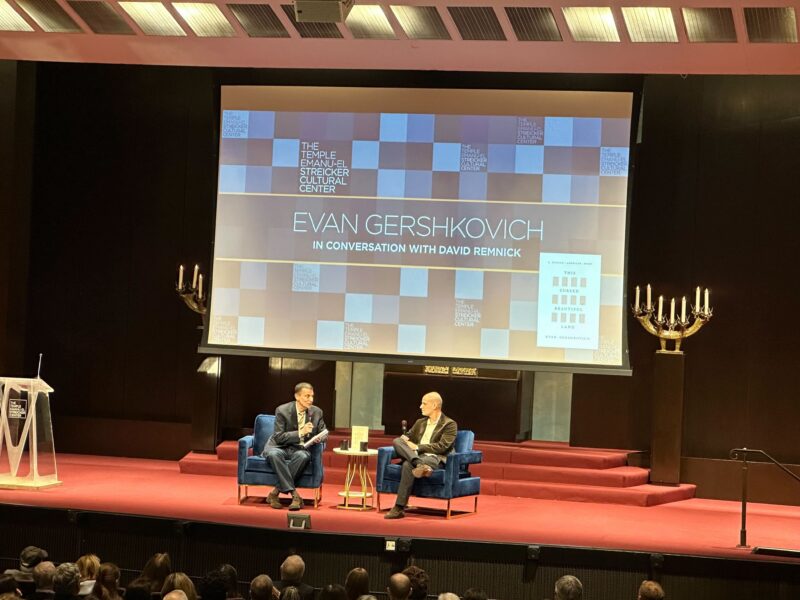
Former State Department spokesperson Marie Harf and the Middle East Institute’s Brian Katulis spoke at Georgetown University's Center for Jewish Civilization
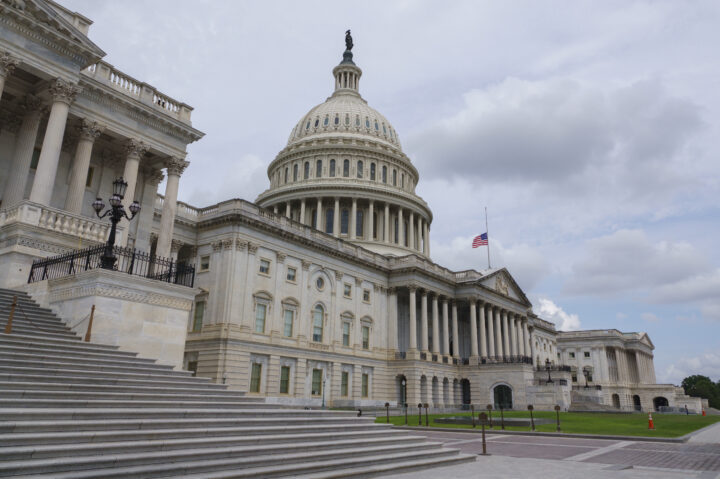
Kevin Carter/Getty Images
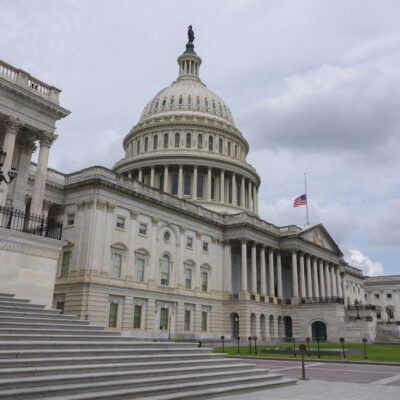
U.S. Capitol building on July 12, 2026 in Washington, DC.


 Add JewishInsider on Google
Congress could renew its efforts to restrict U.S. weapons transfers to Israel, impose sanctions on Israeli officials and increase scrutiny of Trump administration policy in the Middle East if Democrats win control of Congress in the midterm elections, two Democratic foreign policy veterans said Monday, as they argued that declining support for Israel and shifting political attitudes are reshaping the U.S.-Israel relationship.
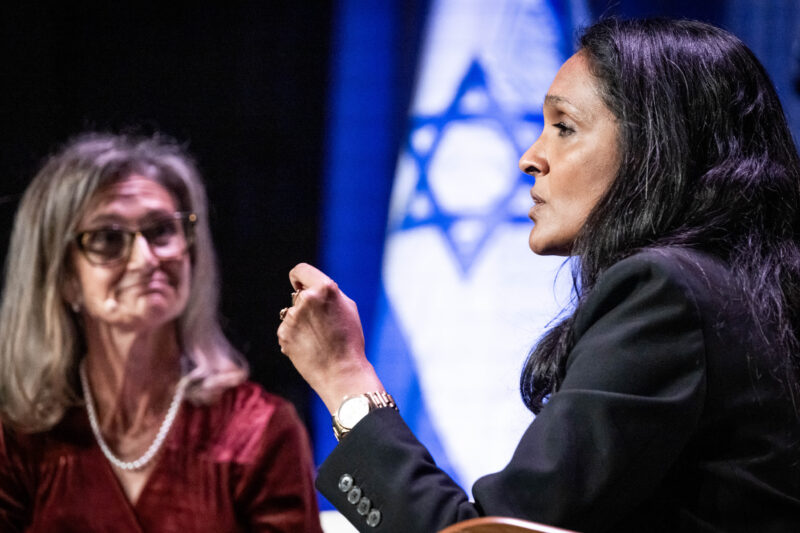
Marie Harf, a former State Department spokesperson and current executive director of the University of Pennsylvania’s Perry World House, and Brian Katulis, a senior fellow at the Middle East Institute, offered their assessments during a discussion titled “Israel, Iran and the Midterms: A Discussion on the Middle East and the 2026 Election,” hosted by Georgetown University’s Center for Jewish Civilization.
Harf predicted renewed Democratic efforts to restrict offensive weapons transfers to Israel, including through the Block the Bombs Act, the sweeping legislation aimed at restricting the transfer of certain U.S. weapons to Israel.
“I think there’s a lot of [congressional] support for it, which is about offensive weapons being [sold to] Israel,” Harf said. “There’s questions about what is technically offensive and what isn’t. But I think we’ll get Block the Bombs.”
Harf said she also expects efforts to sanction Israeli officials, although she cautioned that the outcome of Israel’s upcoming elections could affect those prospects.
“I think you’ll probably see — when it comes to the West Bank sanctioning — efforts to sanction more Israeli officials,” Harf said.
Katulis suggested that lawmakers could also pursue greater scrutiny of Jared Kushner’s investment firm, Affinity Partners, and its involvement with the Board of Peace.
“I actually think the anti-corruption issue is going to be huge,” Katulis said. “There’s ample space to look at Jared Kushner and Affinity Partners and their involvement in things like the Board of Peace. There’s places where you could actually have scrutiny and the light of day and checks and balances that actually do good for the Palestinian people.”
Katulis, however, cautioned against expecting the next Congress to significantly reshape Middle East policy, citing the limits of congressional power over national security. He pointed to when Democrats won control of Congress in 2006, during which they were unable to stop President George W. Bush from increasing U.S. troop levels in Iraq.
Katulis argued that successive Democratic and Republican administrations have further expanded this executive authority, constraining Congress’ influence over major foreign-policy decisions.
The speakers argued that the congressional debate over how the U.S. should approach its relationship with Israel and policy in the Middle East is unfolding against the backdrop of a precipitous drop in American support for Israel seen across parties and demographic groups.
“In two decades of working in politics, I have never seen an issue crater … like support for Israel has… across parties, demographics, ages, genders,” Harf said. “I think it is among the most important trends in American politics, sort of medium and long term.”
She pointed to Pew Research Center polling showing Israel’s net favorability among American men under 50 declining from slightly underwater (-3) in 2022 to rock bottom (-47) this year.
“That’s a 44% shift in four years,” Harf said. “All of that is not antisemitism.”
Harf, who described herself as a “liberal Zionist,” warned against conflating legitimate criticism of Israeli policy with antisemitism, arguing that doing so has undermined efforts to confront genuine anti-Jewish hatred and is pushing voters away from Israel.
“I think that … lumping opposition to Israeli policy into the antisemitism bucket does a couple things,” Harf said. “No. 1, it lessens the severity of actual antisemitism, and we see it.”
She was particularly critical of AIPAC’s political involvement in Democratic primaries, arguing that the organization has alienated even some politicians who have been historically supportive of Israel.
“When…they [AIPAC] defined being pro-Israel [as having to be] pro-Bibi or pro-Likud … I think there were a lot of moderates who said, ‘You know what, I’m not going to bow to that pressure,’” Harf said.
Katulis contended that Israel’s political shift to the right has contributed to tensions with American supporters of the Jewish state, but warned that changes in the relationship should emerge from constructive debate.
“I know there’s change coming in the U.S.-Israel relationship. It has to come,” Katulis said. “I’d rather have it come from a considered discourse of different ideas as opposed to antisemitism, which is on the rise, or isolationism, which is on the rise.”
Katulis also expressed concern about the Democratic Party’s broader approach to Middle East policy, arguing that opposition to the Trump administration has not always been accompanied by a coherent alternative.
“What I see in the Democratic Party, and I say this as a loyal Democrat, is disarray and lack of cohesion in terms of their message,” Katulis said. He also criticized activists for advocating for reduced American support for Israel without articulating what he considers a practical strategy for improving Palestinian lives.
“What I think is needed, and it’s alarmingly absent from a lot of the progressive Jewish organizations that are said to be ‘pro-Palestinian,’ or especially the pro-Palestinian advocates, is an actual agenda of how does the U.S. engage with the Palestinian people?” Katulis said. “How do we work with Arab partners to actually solve this puzzle?”
Despite their concerns, both speakers suggested that the changing political environment presents an opportunity to redefine the U.S.-Israel relationship without abandoning American support for the Jewish state.
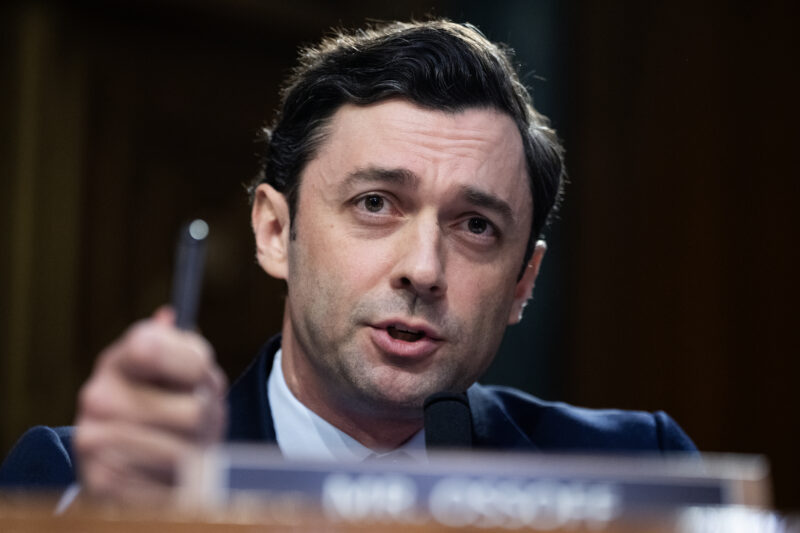
“I think there is space in our politics for someone to envision a new U.S.-Israel relationship that is not severed, but that is not the way it’s been,” Harf said, pointing to Sen. Jon Ossoff (D-GA) as a potential Democratic leader capable of bridging the party’s divisions.
“I don’t want to abandon Israel. I want Israel to be safe and secure. I also want the Palestinian people to be safe and secure and have autonomy and freedom and all the things we want,” Harf said. “I do think this is a trend, a cultural moment where how Israel is seen in the U.S. will never be the same.”
More Stories

RELATIONSHIP STATUS
How Israel’s parties say they would rebuild support in America
meeting minutes
Huckabee met secretly with Netanyahu’s top rival, Gadi Eisenkot

PLATFORM CHECK
Where Israel’s parties stand on the Diaspora — in their own words

TEXAS TALK
Talarico accuses Netanyahu of imposing ‘collective punishment’ in Oct. 7 response

COURSE CORRECTION
ADL, Gratz College launch antisemitism training for college administrators, faculty
NUCLEAR NEWS
Senate expected to vote on Saudi nuclear deal before end of year
Please log in if you already have a subscription, or subscribe to access the latest updates.
 Continue with Google

 Continue with Apple