






































Turkey, Iran seek de-escalation after missile shot down with dangerous potential, experts say
Turkish Foreign Minister Hakan Fidan warns his Iranian counterpart not to allow the conflict to spread across the region
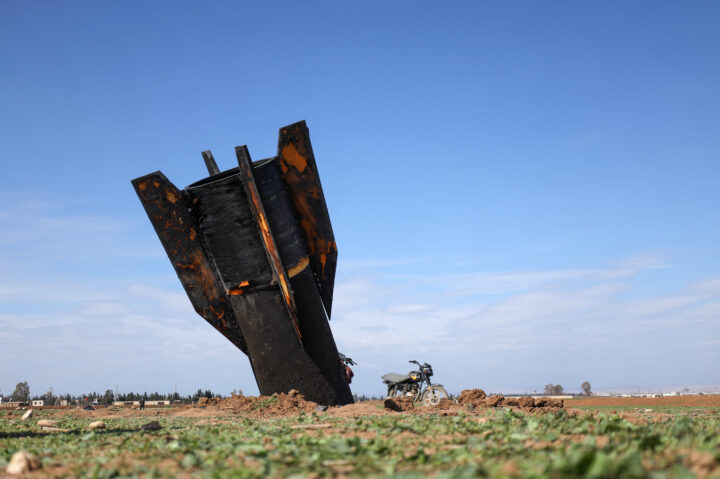
Amjad Kurdo / Middle East Images / AFP via Getty Images
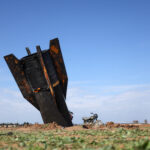
A view of an Iranian missile after it fell near Qamishli International Airport, near the Turkish border in the Qamishli district of Hasakah, Syria, on March 4, 2026, amid the U.S.-Israeli conflict with Iran.


 Add JewishInsider on Google
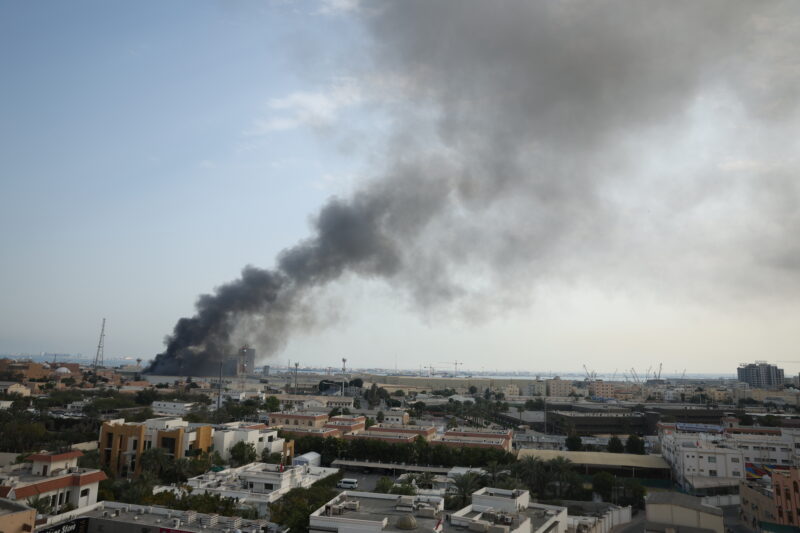
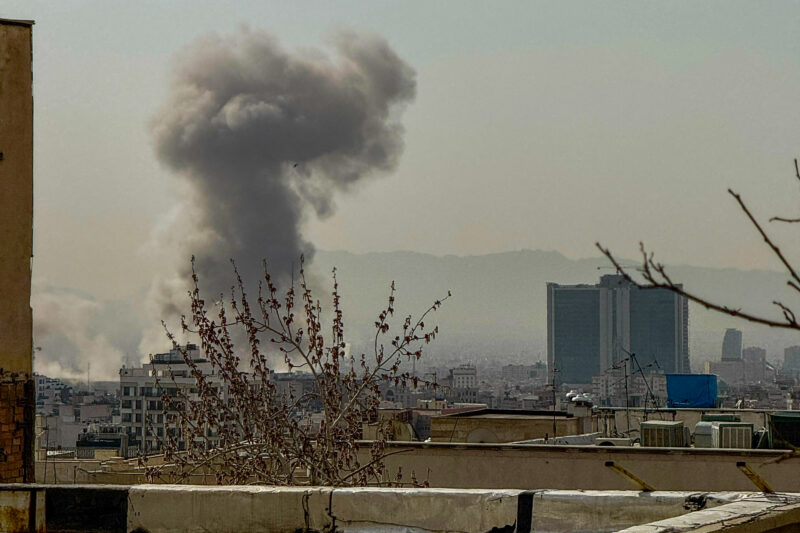
Iran and Turkey moved to de-escalate tensions between them in the immediate aftermath of the downing of an Iranian missile over Turkey on Wednesday, but the development signals dangerous potential if the conflict heats up between them, experts said.
NATO air defense systems shot down an Iranian ballistic missile heading for Turkish airspace on Wednesday. Turkish Foreign Minister Hakan Fidan spoke with his Iranian counterpart, Abbas Araghchi, warning Araghchi not to allow the conflict to spread across the region. Turkey summoned the Iranian ambassador to Ankara for a reprimand.
“All necessary steps to defend our territory and airspace will be taken resolutely and without hesitation,” including consulting with NATO allies to protect the country, Turkey’s Defense Ministry said in a statement.
Officials told The Wall Street Journal the missile was targeting the Incirlik Air Base in Turkey, which hosts American troops. At the same time, a Turkish official told Agence France-Presse that the missile was likely aimed at Cyprus, where Iran has struck British military assets.
Zvi Yehezkeli, an Arab affairs expert for i24 News, interpreted the missile over Turkey as mostly symbolic, meant as an Iranian message to Ankara to stay out of the war.
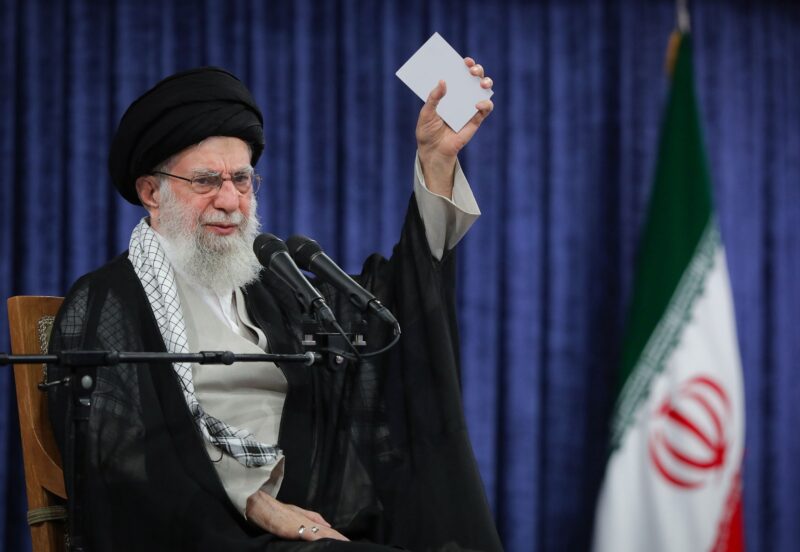
Though Turkish President Recep Tayyip Erdogan said he was saddened by the killing of Iranian Supreme Leader Ayatollah Ali Khamenei in the war, his response “was viewed in Tehran as hypocrisy,” and they see Erdogan as “playing a double game,” according to Yehezkeli.
“Ankara knows that this symbolic shot was mostly meant for domestic needs in Tehran,” Yehezkeli stated. “For Turkey, silence and containment are the most comfortable way at the moment.”
Gallia Lindenstrauss, a senior research fellow at the Institute for National Security Studies at Tel Aviv University specializing in Turkish foreign relations, told Jewish Insider that there were “efforts on both sides to minimize the significance of the event.”
In Ankara, she said, “some said [the missile] was meant for Cyprus, some said it was shot by independent groups and not under orders from Tehran. The Iranians said there was no attempt to harm Turkey.”
Lindenstrauss said that while Iran’s intentions are hard to confirm, they may have aimed at the Ceyhan port, through which Azerbaijan ships oil to Israel, especially in light of Iran’s strike on Azerbaijan the following day.
“The attempt to strike Turkey is part of an Iranian policy of trying to get everyone involved in the conflict. They are shooting in all directions. I don’t think [targeting Turkey] is a one-time thing,” she said.
Lindenstruass said she sees several possible negative consequences for Turkey from the war.
“Turkish commentators who understand the severity [of the missile attack] say that Iran is suicidal,” she said.
In addition, Ankara is very concerned about the “spillover of destabilization,” including the possibility of the Kurds getting involved in the conflict, of European navies sending ships to the region to defend Cyprus, and a wave of refugees attempting to enter Turkey from Iran.
Turkey has long had a wall on its border with Iran, and hundreds of Iranians have successfully crossed the border since the start of the war on Saturday, according to Reuters.
“For Israelis, what is most concerning is a growing view [in Turkey] of Israel as a threat that has grown too strong,” Lindenstrauss said. “They have the idea that Israel is behind the events. They don’t blame the U.S.; they blame Israel for a provocation and sabotaging the negotiations.”
At the same time, Turkey is making gains from the conflict in its defense industry, she said.
“Turkey is supplying drones to Gulf States, and Saudi Arabia and Egypt are interested in the fighter jet that Turkey is building. The Gulf States are not happy with Turkish behavior, but they will not isolate Ankara because of its defense industry. That is seen [in Turkey] as a game-changer,” Lindenstrauss said.
David Wurmser, former Middle East advisor to Vice President Dick Cheney and a senior fellow at the Jerusalem Center for Security and Foreign Affairs, warned in a message, obtained by JI, that he sent to Israeli and American officials that Turkey may choose to join the war against Iran, expressing a broader concern about the involvement of radical Sunni countries.
After Iranian missiles struck Qatar, the Gulf state’s foreign minister, Sheikh Mohammed bin Abdulrahman Al Thani, rejected Iran’s claim that they were aiming for American assets and said Tehran “was seeking to inflict harm on its neighbors and drag them into a war that is not theirs.”
Pakistan publicly warned that Iran “should keep … in mind” that it signed a mutual defense pact last year with Saudi Arabia, which has been struck repeatedly by Iranian missiles and drones in recent days. Pakistan has nuclear weapons.
“Any intervention by Turkey, Pakistan or Qatar is extremely dangerous,” Wurmser said. “It adds nothing, but transforms the texture of this war in extreme, dangerous ways. Even to the point that it can complicate or potentially even make [Israel and the U.S.] lose this … If a Sunni shark-feeding frenzy emerges, Iranians will hunker down, and become passive in fear, perhaps passive even against this regime.”
Intervention by those countries would “transform the narrative of this war,” Wurmser said. “Right now, the war [is] one of the civilized world defending itself and returning Iran to the Iranian people from a lunatic, evil and sadist regime. It cast the Iranian people as our allies and part of our team in battle.”
“The Sunni threat to Iran, however, is seen by Iranians in their gut and bones as a matter of threatening death,” he added.
Wurmser noted that most Sunni states in the region “opposed this war; they tried to sabotage it.” He accused Turkey, Pakistan and Qatar of now “try[ing] to swoop in on the prey.”
Yehezkeli also wrote about the role of deep-seated divisions between Sunni and Shi’ite states.
The Shi’ite leadership of Iran “has a clear accounting of who supported [them], who was silent and who is the real enemy,” Yehezkeli wrote. “The background goes deeper than recent events. The hatred between the Sunnis and the Shi’ites, which began in Islam’s early days, never disappeared. It was only hidden at times behind political interests and temporary alliances.”
Lindenstrauss, however, said she thinks “the Turkish context is more complex” when it comes to the Sunni-Shi’ite divide.
“The largest minority in Iran is Azeris, and they’re Shi’ite and so is [Turkey ally] Azerbaijan,” she noted. “The Kurds are Sunni and that doesn’t calm the Turks down about them. … I don’t see Sunni cooperation against Iran.”
Lindenstrauss said she thinks “Turkey’s interest is for the Islamic Republic to stay in charge [of Iran] but weaker, yet not so weak that there will be a wave of refugees and a Kurdish uprising.”
More Stories
ANALYSIS
Modi’s visit puts Israel-India alliance against regional terror on display

FACULTY FURY
Emory University faculty leader outraged over departure of Iran security official’s daughter

olive branch
Rabbi Ammiel Hirsch, outspoken backer of Israel, leaves meeting with Mamdani ‘encouraged’

analysis
Josh Shapiro and the politics of faith
SCOOP
Jewish leaders invited to meet with Saudi Defense Minister Khalid bin Salman in D.C.
RAISING RED FLAGS
Israel eyeing upcoming Iran-U.S. talks with deep skepticism
Please log in if you already have a subscription, or subscribe to access the latest updates.