












































A provision in draft versions of the 2027 NDAA mandating a department-wide hate symbols policy was prompted by a Coast Guard effort to reclassify swastikas as ‘potentially divisive’
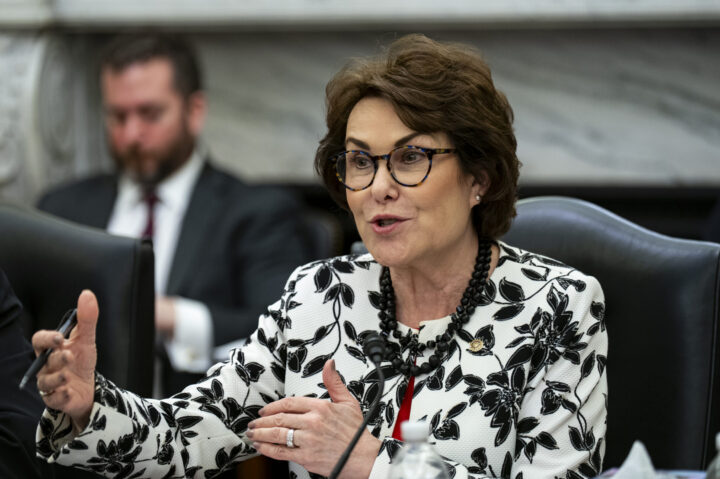
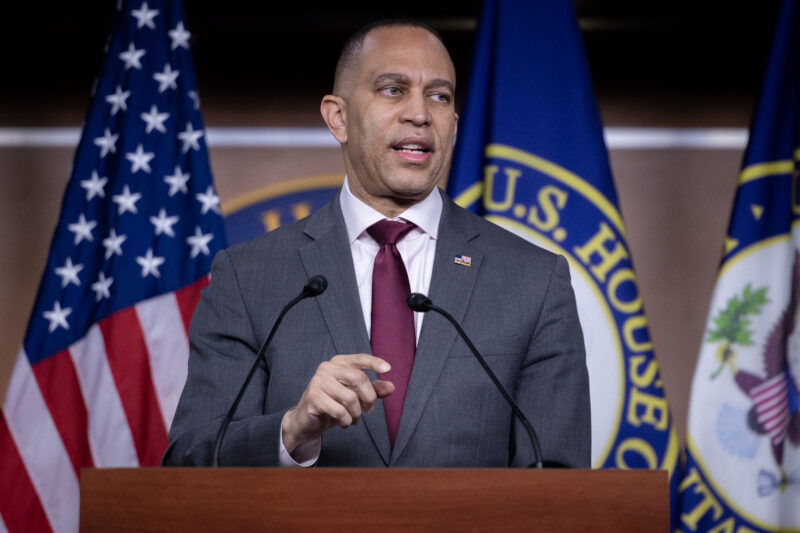
Al Drago/Getty Images
Sen. Jacky Rosen (D-NV), ranking member of the Senate Armed Services Subcomittee on Cybersecurity, speaks during a hearing on Artificial Intelligence cyber capabilities, on Capitol Hill on March 25, 2025 in Washington, DC.


 Add JewishInsider on Google
Sens. Jacky Rosen (D-NV), Sen. James Lankford (R-OK) and Rep. Wesley Bell (D-MO) wrote to the leaders of the Senate and House Armed Services Committees on Thursday to urge them to ensure that a provision mandating the creation of a Department of Defense-wide policy on hate symbols remains in the final version of the 2027 National Defense Authorization Act.
Similar language was adopted in both the Senate and House versions of the bills, but the final NDAA remains under negotiation by lawmakers. The push comes largely in response to a back-and-forth last year in the Coast Guard over whether displays of swastikas and nooses would be considered banned hate symbols or only “potentially divisive.”
“Existing DoD hate symbol policies vary across our military service branches, creating inconsistent standards and potential enforcement gaps when it comes to addressing their display,” the three lawmakers said. “This lack of uniformity makes it harder to prevent, identify, and address symbols that promote hate, and can even allow displays to go unaddressed depending on branch-specific rules.”
They emphasized that such symbols in the military workplace “undermine unit cohesion, erode morale, and threaten … good order and discipline.” Bell’s amendment adding the hate symbols provision was adopted by a voice vote in the House Armed Services Committee’s NDAA markup.
The lawmakers emphasized that it was only sustained pushback from lawmakers that prompted the Coast Guard and Department of Homeland Security, which has oversight over the Coast Guard, to reverse course.
“The swastika is not potentially divisive,” the lawmakers continued. “It is one of the most universally recognized symbols of hatred in human history. It represents antisemitism, racial supremacy, violent extremism, and the systematic persecution and murder of millions.”
The lawmakers similarly said that the noose is a “symbol of racial terror,” representing the lynching and terror used to threaten and deny the rights of Black Americans.
Meanwhile, pro-Israel state Sen. Jeremy Moss comfortably prevailed against a far-left challenger in the Michigan district of Rep. Haley Stevens

Robert Cohen/St. Louis Post-Dispatch via AP
Wesley Bell addresses the crowd after winning the Democratic congressional primary against Rep. Cori Bush on Tuesday, Aug. 6, 2024 at the Marriott Grand Hotel in downtown St. Louis.
Rep. Wesley Bell (D-MO) easily brushed off a comeback attempt by former Rep. Cori Bush (D-MO), whom he defeated in 2024, in a race where AIPAC spent over $3 million to help reelect the pro-Israel incumbent.
Bell’s race was called by the Associated Press just over an hour after polls closed. With about one-third of the vote in, Bell held a commanding 69-27% lead, winning huge margins in the suburbs of St. Louis County and a healthy margin among Bush’s base in the city of St. Louis, as well.
Bell is on track to easily outpace his five-point victory over Bush in 2024, the year he ousted the far-left, scandal-plagued Democrat from Congress.
The AIPAC-linked United Democracy Project super PAC spent a total of $3.1 million in the race boosting Bell, helping him to dominate the airwaves in Missouri’s 1st Congressional District. Bell also tripled Bush in campaign fundraising.
Bush’s allies, including the Justice Democrats, did not intervene to boost her campaign or help her match Bell’s advertising advantage.
Bush focused her message heavily on criticism of Israel and Bell’s support from AIPAC, while Bell accused her of being more focused on the Middle East than her own district at home.
“What we’ve seen over and over is talking about an issue that is not impacting folks right here in St. Louis, and while we take those issues seriously, you know, the M in Missouri doesn’t stand for Middle East. It stands for Missouri,” Bell said on Election Day.
Both Bell’s campaign and UDP hit Bush as an ineffective and absentee representative more focused on fighting with other Democrats, including opposing then-presidential candidate Kamala Harris.
“I am honored and grateful that the people of Missouri’s First Congressional District have continued to put their trust in me to represent them in Congress,” Bell said in a statement declaring victory.
“Two years ago, St. Louis voted for better and more accountable representation. We have kept that promise, whether it’s bringing federal resources home to our neighborhoods, standing with working folks when they needed someone in their corner, or helping families cut through red tape. That work does not stop tonight.”
Despite expected setbacks in Michigan’s Senate race, where Abdul El-Sayed is holding the lead over Rep. Haley Stevens (D-MI), pro-Israel Democrats are cheering the victory by state Sen. Jeremy Moss, a Jewish Democrat strongly supportive of the Jewish state, for winning his nomination in Stevens’ district. Moss leads far-left challenger Aisha Farooqi by 15 points, with most votes counted.
Please log in if you already have a subscription, or subscribe to access the latest updates.
 Continue with Google

 Continue with Apple