














































































The former Chicago mayor said the relationship between the countries ‘needs a solid dose of honesty’

Alex Wong/Getty Images
Rahm Emanuel testifies during a confirmation hearing before Senate Foreign Relations Committee at Dirksen Senate Office Building on Capitol Hill October 20, 2021, in Washington, D.C.


 Add JewishInsider on Google
Rahm Emanuel, the former Chicago mayor and prospective presidential candidate, is slated to discuss the future of U.S.-Israel relations at Tel Aviv University on July 8, according to an announcement on Monday from the school.
Emanuel, who has long held a close connection to the Jewish state, has recently drawn headlines over his calls to immediately end U.S. military aid to Israel, which he had played a key role in securing as a chief of staff to former President Barack Obama from 2009-2010.
“I’ve been having frank and honest conversations about Israel’s future throughout my public life,” Emanuel, who most recently served as U.S. ambassador to Japan in the Biden administration, said in a statement about the discussion, billed as “An Honest Conversation: The U.S.-Israel Relationship — Where It Stands Today and The Road Ahead.”
“Today, Israel is more militarily secure yet more politically isolated than it’s ever been,” he added. “As friends and allies, we need a candid conversation about where the relationship stands, what’s changed and what’s next. We find ourselves in a pivotal moment in our relationship and in the region. The U.S.-Israel relationship is strongest when it’s honest, and right now it needs a solid dose of honesty.”
The event will be moderated by Yoav Fromer, founding director of Tel Aviv University’s Center for the Study of the United States, and professor Yael Sternhell, who leads the school’s American studies program.
“We are delighted to host Ambassador Emanuel at Tel Aviv University and discuss both the challenges facing the U.S.-Israel relationship and the opportunities for the United States to play a constructive role in ensuring Israel’s long-term security and prosperity,” Fromer said in a statement. “Tel Aviv University has long been committed to the study, teaching, and research of the United States in order to enhance the special bonds between the two nations and promote wider public understanding of America among Israelis. An honest dialogue with Ambassador Emanuel will undoubtedly advance this important cause.”
Emanuel, a moderate Jewish Democrat who is seeking to challenge party orthodoxies on a range of issues as he positions himself for a potential presidential bid in 2028, has been reluctant to address his personal evolution on Israel in depth.
In a recent interview with Jewish Insider, however, Emanuel indicated that he is now advocating for a fundamental reassessment of the U.S.-Israel alliance, in contrast with more supportive rhetoric he had long espoused.
The United States, he told JI, should continue to stand with Israel only if its efforts in the region help contribute to peace. “Every risk you will take, the State of Israel takes, for peace, then America will stand by you,” he explained. “We understand there’s risks. We have stood by Israel through thick and thin.”
“But when one friend in that relationship abandoned something that’s contrary to our interests and contrary, in my view, also to Israel’s interests,” he added, it is reasonable, he suggested, to rethink that relationship.
In an interview with Jewish Insider, Emanuel outlines his views amid changing winds in a Democratic Party increasingly antagonistic to the pro-Israel perspective that had long been central to his identity
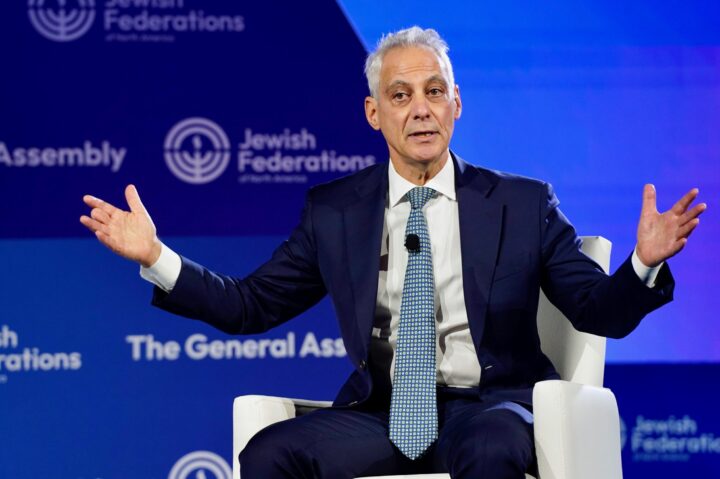
Jewish Federations of North America
Rahm Emanuel speaks at the Jewish Federations of North America's 2025 General Assembly opening plenary on Nov. 16, 2025.
Last November, Rahm Emanuel, the tough-talking Democratic operative and prospective presidential candidate, took the stage of the Jewish Federations of North America’s annual conference in Washington to deliver a blunt word of warning about Israel’s declining reputation in the United States and around the globe.
“I don’t mean to be the party pooper, but look, this is not going to be helpful if we’re not going to be honest with each other,” he said on an opening panel, urging the crowd to reckon with a marked downturn in support for the Jewish state over its war in Gaza, particularly among younger voters. “Israel is extremely unpopular.”
Emanuel, a veteran Jewish politician and party official who had recently concluded a tour as U.S. ambassador to Japan in the Biden administration, acknowledged his message might not ingratiate him to the thousands of Jewish communal leaders in the audience who were no doubt deeply familiar with the issue he was highlighting.
“This may be the last time I’m asked to speak to you. I get it,” he said with a hint of indifference. “But we have to be honest about the task we have” for those “who believe that there is something special” to the U.S.-Israel relationship. “We have our work cut out, and it’s not here to get applause,” he told the crowd.
In hindsight, Emanuel’s frankly worded comments marked something of a turning point in his approach to Israel and the Jewish community, foreshadowing more recent remarks in which he has voiced harsh criticism of the country’s military tactics in the wake of Hamas’ Oct. 7 terror attacks and championed new policy proposals against American military aid to Israel.
Yet even as he builds a profile as a potential candidate willing to tell the Democratic Party hard truths and challenge orthodoxy on a range of issues from trans rights to child social media bans to age limits for politicians, Emanuel, 66, was reticent in exploring his views on Israel in more depth during an interview with Jewish Insider, which he had resisted for nearly a month.
“What I said couldn’t have been clearer,” he told JI last Thursday, referring to his recent comments on “Real Time With Bill Maher” calling for an end to U.S. military aid to Israel that raised eyebrows in the Jewish community. “There will no longer be U.S. taxpayer subsidies for the purchase of U.S. military equipment. Israel will be like every other ally. They can buy what they want, and they have to live within the restrictions.”
“You can decide to slice it, dice it, but that’s what it is,” he said.
While U.S. military funding to Israel has increasingly faced pushback in the Democratic Party, particularly on the far left, Emanuel’s argument that Israel no longer needs the sort of special treatment that he helped promote in the Obama White House has been striking to watch precisely because he has long been a staunch defender of the Jewish state and its founding ideals.
Emanuel, whose middle name is Israel and who speaks fluent Hebrew, holds a uniquely personal connection to the Jewish state. His late father, an Israeli immigrant born in Jerusalem, served in the Irgun, the Zionist paramilitary force that fought for Israeli independence. As a child, he spent summers in Israel and later volunteered as a civilian assistant to the Israel Defense Forces during the Gulf War. His son celebrated his bar mitzvah in Israel.
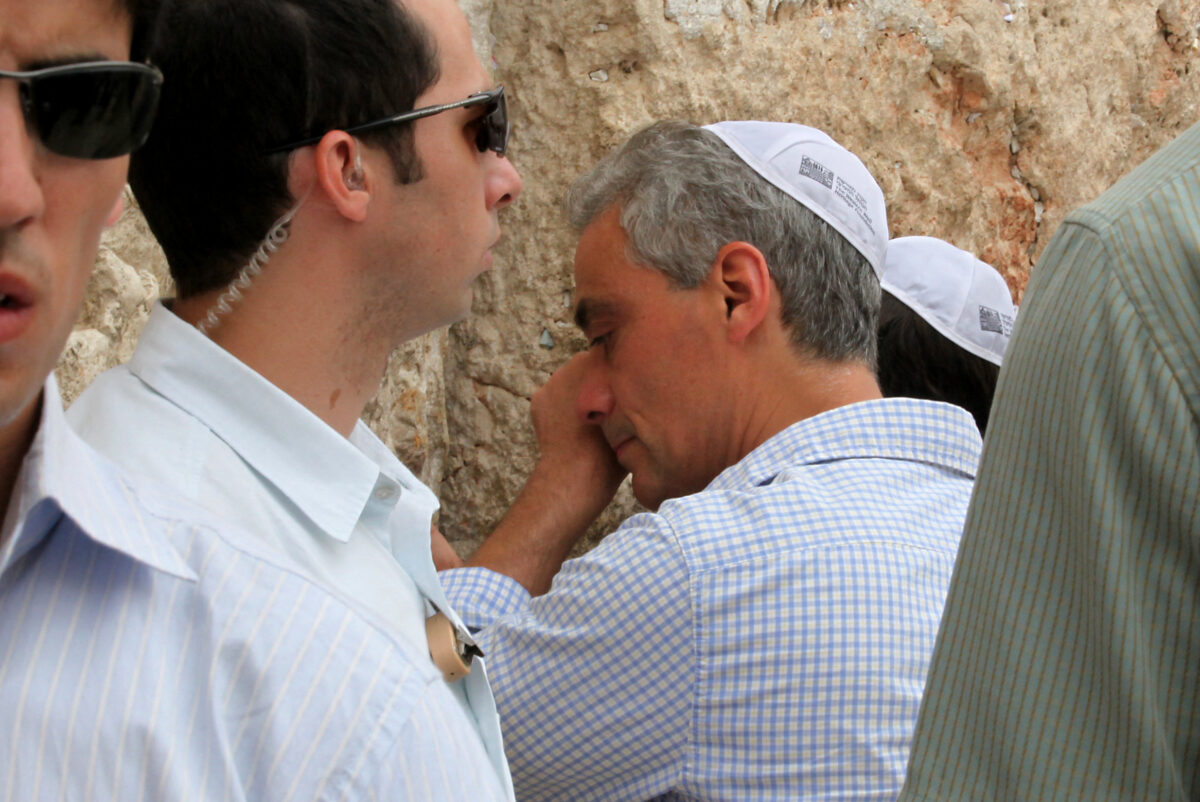
Emanuel, a moderate former congressman and mayor of Chicago, pointed out in the interview that Israeli Prime Minister Benjamin Netanyahu had himself proposed winding down U.S. military aid over the next 10 years, saying in January that the country had “come of age” and “developed incredible capacity” to continue on its own.
Emanuel, however, said that he would instead suspend the assistance “immediately,” characterizing his position as “part of an overall policy” tied to Israel’s strategically secure position in the region as well as its political isolation on the world stage — both of which he argued have never been greater than now.
“If you or anybody thinks you’re going to continue the American taxpayers paying for this, good luck passing that in the U.S. Congress. You’re asking a president of the United States to spend X amount of political capital to do something that even Israel’s own prime minister acknowledged isn’t going to happen,” he said, referring to continued U.S. military aid.
The Jewish state “has made a decision to only lean on its defense and not lean on its diplomatic front,” he told JI, adding that Netanyahu had chosen to “walk away” from pursuing a two-state solution, support for which has declined in Israel since the Oct. 7 attacks and ensuing war in Gaza.
In his view, the U.S. should continue to stand with Israel only if its efforts in the region help contribute to peace. “Every risk you will take, the State of Israel takes, for peace, then America will stand by you,” he said. “We understand there’s risks. We have stood by Israel through thick and thin.”
“But,” he said, “when one friend in that relationship abandoned something that’s contrary to our interests and contrary, in my view, also to Israel’s interests,” it is reasonable, he suggested, to rethink that alliance.
“There will no longer be U.S. taxpayer subsidies for the purchase of U.S. military equipment. Israel will be like every other ally. They can buy what they want, and they have to live within the restrictions,” Emanuel said of his vision of the future of military aid to Israel.
His comments indicate that he is now embracing a fundamental reassessment of the U.S.-Israel alliance, abandoning even the pretense of tough love that once characterized his approach, among other moderate voices in the Democratic Party.
For example, Pennsylvania Gov. Josh Shapiro, a centrist Jewish Democrat who is also weighing a presidential campaign in 2028, recently reiterated his support for continued U.S. aid to Israel but said that it should be seen as “leverage” to exert pressure over the country’s use of American-made weapons.
“Rahm’s move tells you a lot about the politics of the Democratic Party on Israel now. And that is a sign of how Israel’s image has changed in the country,” said Dennis Ross, a former U.S. diplomat and Middle East negotiator who overlapped with Emanuel in the Obama administration.
Despite his strong attachment to Israel, Emanuel is reckoning with a changing party no longer broadly sympathetic to the pro-Israel perspective that had long been central to his political identity, even as he has tussled with Israeli leadership during his time as a public figure.
Last Friday, for example, Emanuel signaled he would back Graham Platner, the far-left Senate candidate in Maine now poised to become the Democratic nominee, even as the Marine veteran has called to block U.S. military aid to Israel while facing controversy over a Nazi tattoo he recently covered up.
“Whether it’s people chanting ‘Jews will not replace us’” in Charlottesville, “or somebody bombing Gov. Shapiro’s home, or somebody painting Nazi insignia on my fence, or the candidate saying ‘I did not know that was a Nazi’” insignia on his chest, “we’re going to have to confront this,” Emanuel told JI the day before announcing his support for Platner, while touting his record of fighting antisemitism.
“I’ve dealt with it when I ran for Congress,” he said on the phone from Chicago, noting that he was outside an Anne Frank exhibition opening in his home city. “And I’ve also been upfront when I think a decision is going to lead to the strategic and diplomatic isolation of, not only the State of Israel, but, more importantly, the Jewish people.”
Still, Emanuel seemed reluctant and even somewhat frustrated to answer further questions seeking clarity on the implications of his new approach to Israel and how he arrived at his position. He refused to confirm explicitly, for example, if he would back defensive aid for Israel’s Iron Dome missile defense system, which has recently emerged as a subject of intense debate in some corners of the Democratic Party.
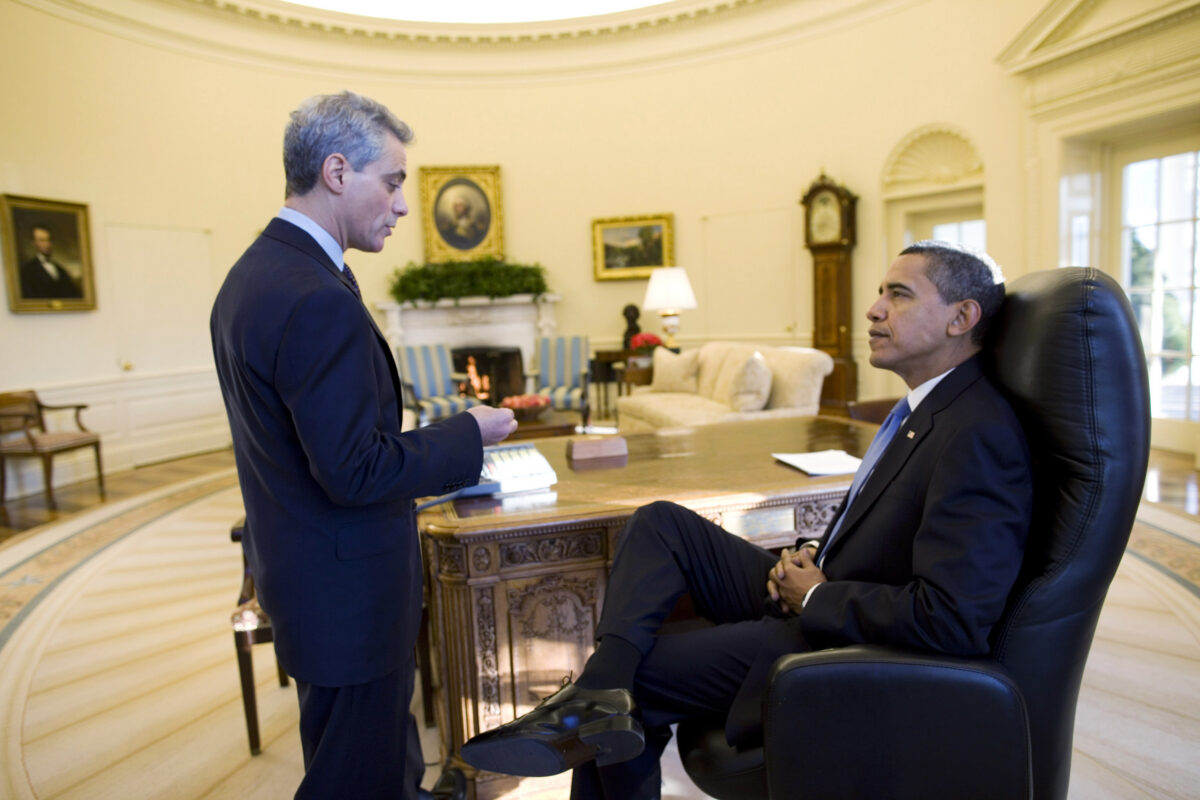
It is a significant contrast with where Emanuel stood during his time as Obama’s chief of staff. In the White House from 2009-2010, Emanuel was one of Obama’s top consiglieres on policies relating to Israel. He was involved in initial funding to boost Israel’s Iron Dome system, an effort that culminated in a 10-year memorandum of understanding between the two countries that provides $3.8 billion in annual aid through 2028, which the White House touted, at the time, as “the largest single pledge of military assistance in U.S. history.”
In 2009, Emanuel shared more reassuring words in his address to the JFNA’s annual gathering, praising Netanyahu while citing his own familial ties to Israel as well as what he had called the “privileged point of view” from understanding the Jewish state’s “value as a homeland.”
“Those who have questioned” whether the Obama administration’s opposition to Israeli settlement building in the West Bank and outreach to the Arab world “implies diminished support for Israel, that is not the intent,” he said, filling in for his boss. “It is not the case and it never will be. The truth is the opposite. Only through dialogue will Israel achieve the peace it seeks.”

Emanuel now takes a more jaundiced view of Israeli diplomacy, fueling his calls for an end to U.S. aid. “Under Prime Minister Netanyahu, in the last three years, you’ve lost Europe, you’ve lost the American public, and you picked up Somaliland,” he scoffed to JI, referring to Israel’s decision to formally recognize the secessionist region in the Horn of Africa last year. “As my grandmother would say, ‘Such a deal.’ That is your only diplomatic achievement.”
Julie Fishman Rayman, senior vice president of policy and political affairs at the American Jewish Committee, called Emanuel’s views “disappointing and worrying,” arguing that U.S. security assistance to Israel “is not just vital to deterring further attacks and ensuring the survival of the state of Israel, but is integrally tied to safeguarding American interests in the region.”
Emanuel argued that his position on U.S. aid is a logical extension of sentiments he had conveyed in 2009 while in the Obama administration, when he repeatedly clashed with Netanyahu over settlement expansion in the West Bank, which the White House cautioned would jeopardize prospects for achieving a two-state solution.
“I went straight to the prime minister to his face and said, ‘What you’re doing is going to lead to the great isolation of Israel,’” Emanuel recalled, noting, as he often does, that Netanyahu called him a “self-hating Jew,” underscoring the highly personal tenor of their long-testy relationship. “Look, I have a longstanding relationship,” he explained. “I’m honest about it.”
But even as he argues that Israel is today “a different country from a sense of wealth and capacity,” he has strained to harmonize the motives now animating his current approach. He has dismissed speculation over the sincerity of his stance and whether it is rooted in a good-faith view of Israel’s economic standing or if it is instead a more cynical political calculation tailored to a rising anti-Israel faction in the Democratic Party.
Though in contrast with high-profile voices on the far left, Emanuel has shied away from charged rhetoric about genocide in Gaza, saying it is a legal question, as well accusations that Israel had tricked President Donald Trump into war with Iran, which he says ignores U.S. agency in the conflict. He has said it is a “mistake” to restrict arms sales to Israel, suggesting that he is not aligned with related resolutions that were introduced by Sen. Bernie Sanders (I-VT) last month and notably drew backing from most Senate Democrats.
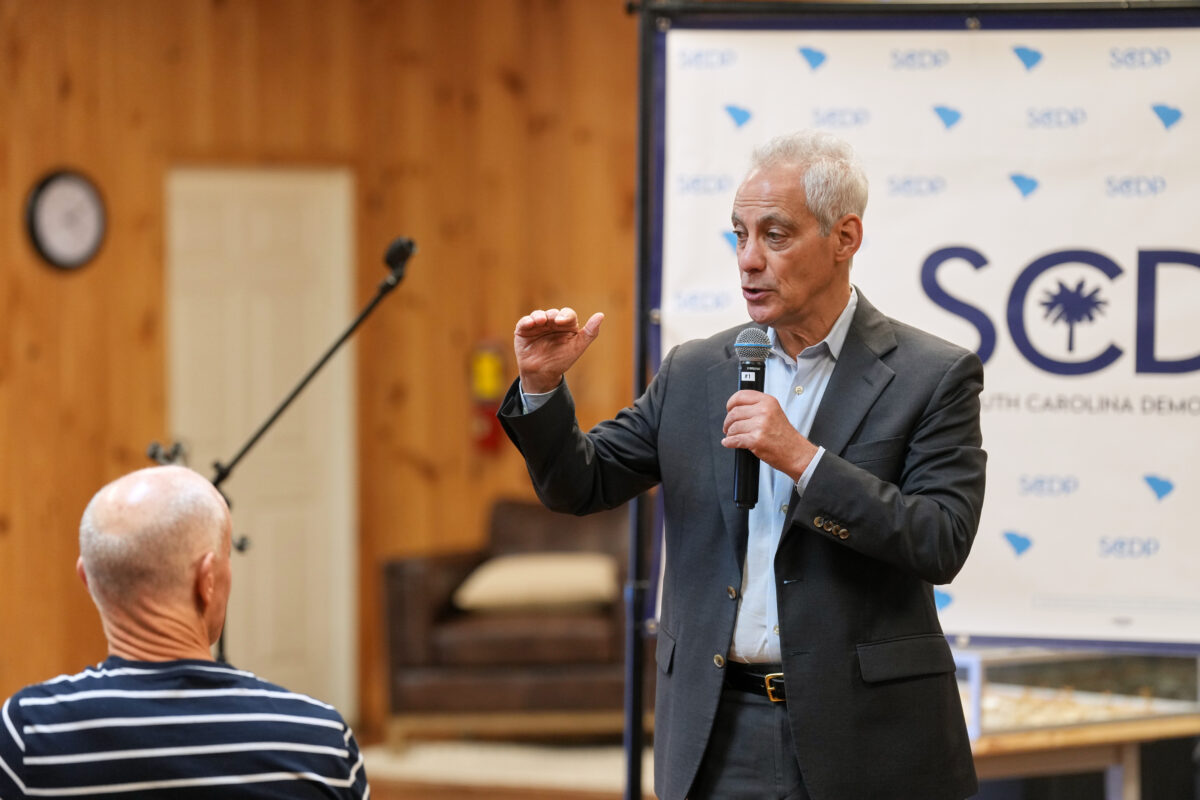
Emanuel’s allies said in recent interviews that they were not surprised with his approach, saying that he has been building to this moment for some time. “Do I agree with him? Not necessarily,” former Rep. Steve Israel (D-NY), who served with Emanuel in Congress, told JI. “But this is not a breakthrough position. He’s expressed those concerns for years.”
David Axelrod, a former chief strategist to Obama, likewise agreed in a text message to JI that “Rahm’s basic concerns about where Bibi is leading are not new,” using Netanyahu’s nickname. “Rahm, like a lot of us, has always believed a two-state solution was the only road to peace and Bibi has been deeply, irretrievably opposed and actively hostile to the notion.”
“You ask these questions like somehow I’ve changed. The prime minister used to articulate a two-state solution. He was for it. He’s the one that’s changed,” Emanuel said of Israeli Prime Minister Benjamin Netanyahu.
One prominent Jewish Democrat, who asked to remain anonymous to discuss a charged issue, called Emanuel’s stance a practical response that “takes the wind out of the sails of the far left and the far right,” which have politicized funding for Israel. “As long as we’re giving aid to Israel, Americans will feel like they have a say in Israeli policy and how that investment is managed.”
But if that is Emanuel’s aim, he has not made it clear. In conversation with JI, he was hesitant to clarify his own positions when pressed. Asked if he would back Iron Dome funding, he said he had been “part of the financing” for a “joint project” that he called “key for Israel’s security” when it was first developed with the United States.
He declined to elaborate further about such aid. “U.S. taxpayers should not be in the position of subsidizing a country,” he reiterated. “You know my history with the Iron Dome,” he said. “I’m done. I’ve answered it.”
Though some allies of Emanuel are willing to indulge his views more favorably than other 2028 prospects with thinner resumes related to Middle East policy, a range of Jewish and pro-Israel organizations are now pushing back on his recent turn against U.S. military aid.
“It’s in America’s interests to keep our word and help a democratic partner shield innocent civilians from missiles,” Deryn Sousa, a spokesperson for AIPAC, told JI, referring to the Iron Dome. “Reneging on the Obama administration’s signed agreement with our closest ally in the Middle East would send a devastating message to our allies, empower our enemies and do nothing to advance peace.”
Brian Romick, president of Democratic Majority for Israel, said that “Israel’s situation is not comparable to our other close allies.”
“Unlike Japan, South Korea and Germany, Israel does not have permanent U.S. troops on the ground,” he told JI recently. “It’s also surrounded by enemies who actively want to wipe it off the face of the earth. U.S. security assistance reflects that reality and the significant strategic benefits the aid provides.”
Michael Makovsky, president and CEO of the Jewish Institute for National Security of America, told JI in a recent interview that he disagreed with Emanuel, even as he acknowledged the sentiment as a “legitimate view.” Still, he added that it is “in the U.S. interest” to continue providing military aid to Israel, “which anyway all goes to buying U.S. weaponry.”
Even some pro-Israel Democrats sympathetic to Emanuel and his perspective said his comments on military aid raise more questions than they answer. One influential Jewish Democrat who has long been acquainted with Emanuel, speaking on the condition of anonymity to address a sensitive topic, expressed concerns that ending aid to Israel could stoke further calls from the far left to condition military funding or block future weapons sales outright.
For his part, Emanuel avoided commenting on the question of Israel’s qualitative military edge, which the U.S. is legally obligated to ensure but allies say could suffer without military aid. “I feel like we’re taking the same question from 50 angles,” Emanuel told JI. “I want Israel to fight for peace the way it’s proven that it’s fought in the last three years. That’s what’s missing,” he said last week.
“You ask these questions like somehow I’ve changed,” Emanuel said earlier in the call. “The prime minister used to articulate a two-state solution. He was for it. He’s the one that’s changed.”
Former U.S. Ambassador to Japan Rahm Emanuel, on the Maine Senate candidate: ‘If he's the Democratic nominee, I'm going to help him if he wants my help, absolutely’
Andrew Harnik/Getty Images
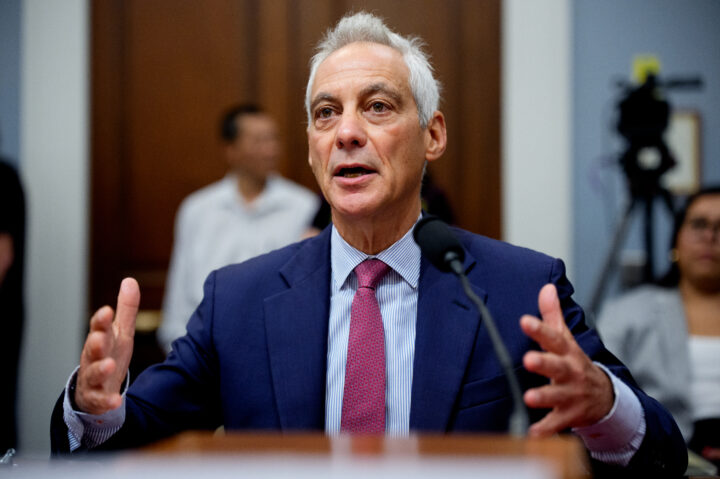
Former U.S. Ambassador to Japan Rahm Emanuel speaks on Capitol Hill on July 23, 2025 in Washington, DC.
Former U.S. Ambassador to Japan Rahm Emanuel, a likely Democratic presidential candidate, on Friday signaled his backing for Maine Democratic Senate candidate Graham Platner, who has drawn scrutiny over his far-left views and decades-old Nazi tattoo that he recently covered up.
“I would hope at this point in the process he understands what a Nazi symbol is,” Emanuel said. “He’s going to have to make his way. And the Democrats — he’ll be the nominee — should support his candidacy,” Emanuel told CNN’s Kasie Hunt.
Asked by Hunt if he was personally backing Platner, Emanuel said, “If he’s the Democratic nominee, I’m going to help him if he wants my help, absolutely.”
“You have to put an end to Donald Trump,” Emanuel added.
Emanuel, who served as mayor of Chicago from 2011-2019, later quipped about a meeting with New York City Mayor Zohran Mamdani, a vocal critic of Israel, after Mamdani’s election as mayor. “I told him when I first met him, I said, ‘I don’t know who’s going to hate this meeting more, my rabbi or AOC,’ but we had an honest meeting … an honest discussion about what to face as mayor,” he said.
Platner is now the expected Democratic nominee against Sen. Susan Collins (R-ME) after the Democratic establishment’s favored candidate, Maine Gov. Janet Mills, dropped out of the race on Thursday. Mills, despite holding a strong political track record, consistently trailed Platner in primary polling since launching her campaign.
Over the weekend, Platner’s campaign also drew support from another unexpected voice: far-right podcaster Tucker Carlson.
In a lengthy interview with The New York Times, Carlson said he “appreciated” Platner’s foreign policy views, and plans to meet with the candidate. “I appreciate how different [his foreign policy views] are from everybody else in his party,” Carlson said.
Democratic hopeful pushes back against ‘smears’ from ‘political elites’

Credit: Marc Nozell/Flickr
Insisting that claims she has not broken through in the Democratic primary are “an illusion,” author Marianne Williamson brought her campaign to the National Press Club in Washington, D.C. on Thursday.
Speaking to a crowd of a few dozen journalists and supporters, Williamson touted her plans for a Department of Peace and her broader goal to move American politics away from “a very 20th century mindset… infiltrated by the undue influence of money.”
Williamson told the crowd that the past century “was dominated by a mindset that’s basically a product of Newtonian physics, that saw the world as a huge machine… that 20th century mindset dominates our politics today.” In contrast, the Democratic hopeful urged a 21st century mindset that was “far more integrated” and “far more holistic.”
The presidential candidate said she had been targeted in a smear campaign by “political elites” after the second presidential debate in Detroit, where she warned of “the dark psychic force of collectivized hatred” that Trump was evoking.
“I sure as hell did break through,” Williamson said of her performance, suggesting “the political hits began” as a result of her popularity. Williamson has faced scrutiny over a variety of past statements including skepticism towards mandatory vaccination. The author did not meet the polling qualifications for the last two DNC debates, although she garnered a sufficient number of small donors to participate.
Advocating for a Department of Peace, a proposal pushed in past Democratic primaries by former congressman Dennis Kucinich (D-OH), Williamson argued, ”our national security agenda is dominated — as you know — basically by a constant perpetuation of war.” In contrast, she claimed “peace-building exemplifies skill sets and expertise [that are] just as sophisticated, just as important and, in many ways, take just as much courage” as those shown by the armed forces.
In her view, the building blocks were already there for this agency inside of government: “We already have the experts,” insisted Williamson. “It is simply not what we fund. We don’t need to bring in new people but to coordinate among the agencies that exist.”Williamson also outlined her foreign policy vision and reiterated her longstanding support for reentering the nuclear deal with Iran. She harshly criticized the Iraq War, saying “it was an absolutely horrible transgression on every level” — and argued that “the genesis of ISIS comes from that” — but insisted that the United States should have intervened militarily in Rwanda in the 1990s. She also expressed her support for the U.S. invasion of Afghanistan after September 11 by noting the brutal treatment of the Taliban towards women.
Former congressman says ‘most Republicans privately believe what I say about Trump publicly’
AP Photo/Daily Herald, Mark Black
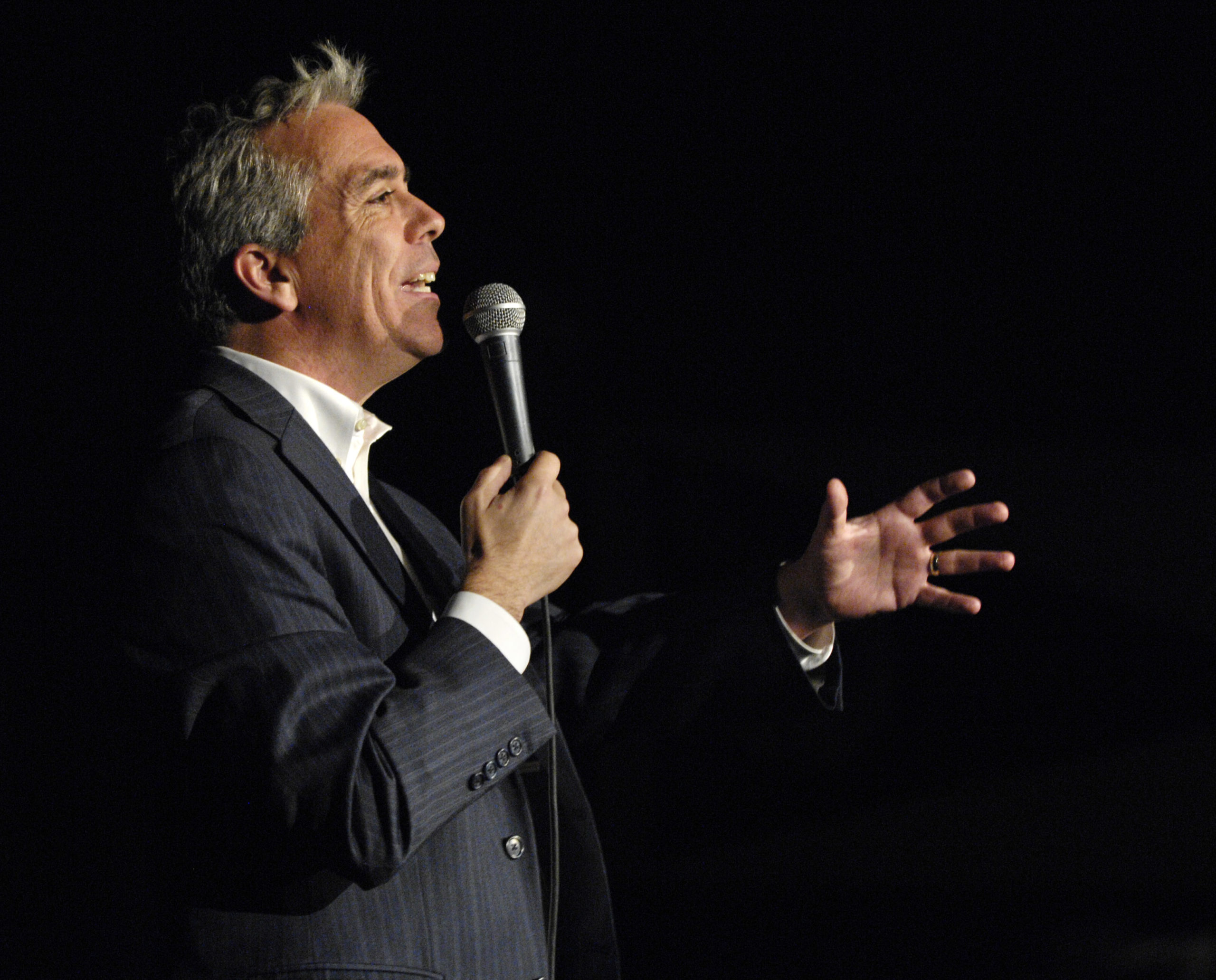
Congressman Joe Walsh speaks during a Chicago Tea Party in 2011.
Joe Walsh wants to turn the Republican presidential primary into “a referendum on Trump the man.”
The one-term former Illinois congressman spoke with Jewish Insider on Tuesday about his seemingly quixotic quest to run for the Republican presidential nomination.
Walsh, who declared his candidacy earlier this week, is the second significant primary challenger to Trump, joining former Massachusetts Governor Bill Weld, who announced his campaign in April.
The Illinois conservative has long been prone to “Trumpian” rhetoric, both on his radio talk show and his Twitter account. As a result of Walsh’s comments — which have included repeatedly calling former President Barack Obama a Muslim — he has spent much of the first several days of his campaign apologizing for past statements. In a Monday interview on MSNBC, Walsh said, “I wouldn’t call myself a racist, but… I’ve said racist things on Twitter. There’s no doubt about it. And an apology is not enough.”
Walsh, who became a radio talk show host months after his single term on Capitol Hill ended in 2013, said he wouldn’t run “if I just had a problem with a policy or two of this president.” Rather, he thinks, the incumbent is “completely unfit to be president.”
He doesn’t believe, however, that the administration is devoid of accomplishments. Walsh praised Trump’s judicial picks as well as “some good deregulation” and “pro-Israel stuff [like] moving the embassy to Jerusalem” as well as “his firm stance against Iran.”
But the radio show host balanced this against other concerns about Trump’s policies. “[Trump] doesn’t give a damn about the debt,” said the Republican hopeful, who also condemned the incumbent for “screwing things up at the border and not building a foot of a new wall.”
Speaking to JI, Walsh indicated he has shifted to a more moderate approach on the issue of climate change. Although he had been skeptical in the past, calling climate change “the media’s religion” in a 2017 tweet, the presidential hopeful said Tuesday: “It’s an issue that the Republican Party needs to more actively embrace, be open to and have dialogue on.”
However, Walsh insisted, “I’m still a Tea Party guy. I believe in limited government, free trade and free markets.” The former congressman argued that the Republican Party “has abandoned all those issues. [It] no longer stands for limited government, no longer stands for the rule of law and no longer stands for free trade.”
Walsh’s bet is not an ideological one, but simply that “most Republicans privately believe what I say about Trump publicly… they just don’t want to say those things publicly. What I’m trying to do is to get Republicans to say these things publicly.”
The former congressman believes that if Republican voters are presented with a conservative alternative where “you don’t get all the bull****, all the drama and all the insulting tweets,” they will eventually opt for him. His strategy is simply to “call Trump out everyday” and hope that eventually Republican voters will see how — under Trump — the economy slows and “he tweets us into a recession.”
Walsh expressed disappointment with Republican leaders who have not stepped up to challenge the president. “I like me,” Walsh said, but he acknowledged that there are “bigger, better [potential] candidates out there.” He mourned the Republican governors he knew who “have just determined that they will keep their mouths shut and then the Republican Party will go back to normal” after Trump leaves office.
Walsh will be campaigning in Iowa and New Hampshire in the coming weeks. A graduate of the University of Iowa, Walsh first attended Grinnell College, the elite liberal arts college located in the Hawkeye State.
Although the former congressman acknowledged that he won’t have the funding Trump does, he’s “optimistic about financial resources,” both in terms of what his campaign can raise and what outside groups can do on his behalf. “There is quiet support out there, people seem to be more willing to contribute financially than be public.”
In the meantime, Walsh will launch a campaign podcast and be “on TV as much as possible” to promote his bid for the White House. “My hope is that everybody will see my mug.”
Please log in if you already have a subscription, or subscribe to access the latest updates.
 Continue with Google

 Continue with Apple