






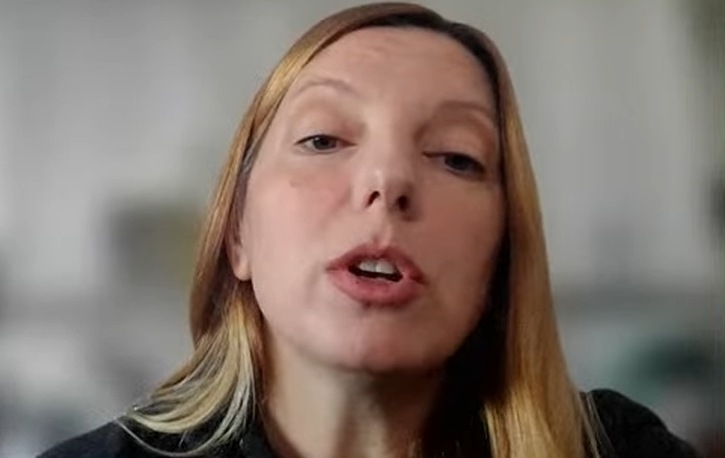









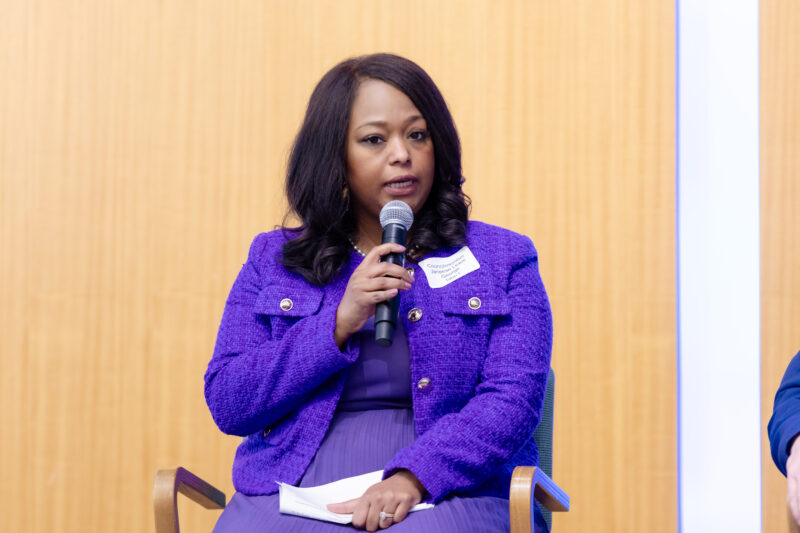














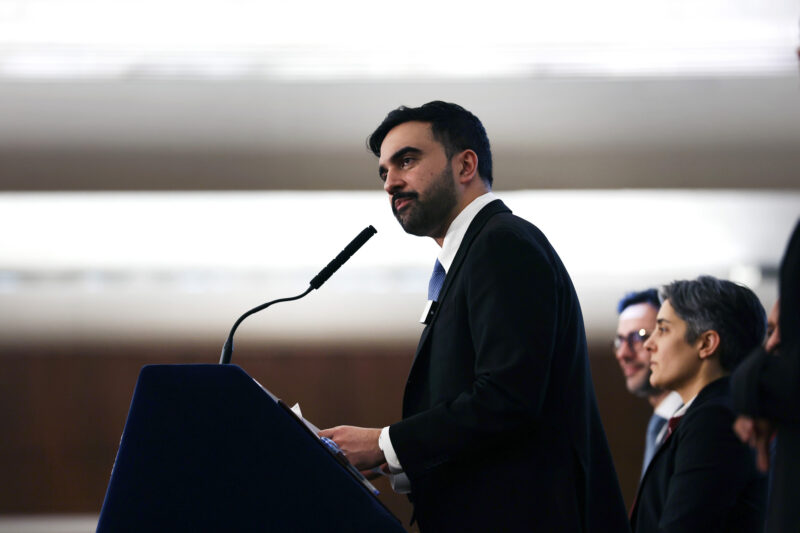












Former Democratic Rep. Kathy Manning: ‘There is no doubt that we are living through very difficult times for American Jews’
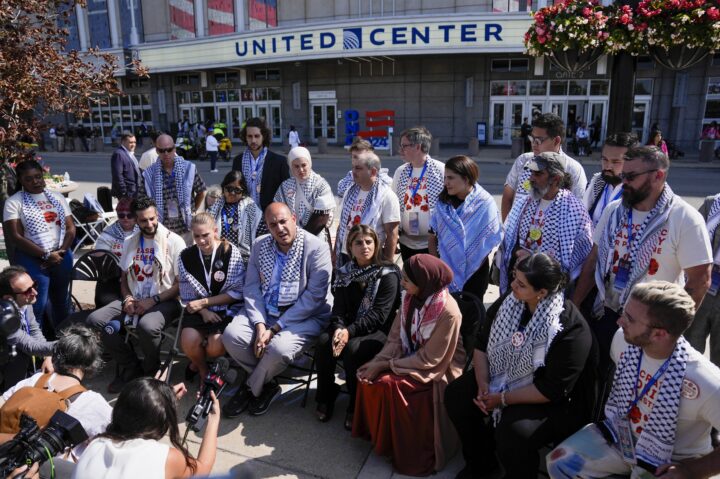
Matt Rourke/(AP
Uncommitted delegates hold a press conference outside the United Center before the Democratic National Convention Thursday, Aug. 22, 2024, in Chicago.


 Add JewishInsider on Google
The debate over Israel within the Democratic Party has long been a particularly acute source of tension, in the wake of a protracted war in Gaza that deepened internal divisions over America’s increasingly contested relationship with one of its closest allies.
Recently, however, many Jewish and pro-Israel Democrats say they have observed a distinct and troubling new shift in that debate, as the range of politically acceptable opinions on Israel has strayed far outside the mainstream, with little pushback from party leaders.
Amid growing claims of Israel committing genocide as settled fact, openly pro-Hamas demonstrations, ongoing efforts to demonize pro-Israel engagement in Democratic primaries and rejections of Israel’s right to exist as a Jewish state, the political atmosphere is raising questions about whether the party is willing to collectively draw red lines around creeping extremism or if it is now accommodating anti-Israel sentiment that until not long ago had been more commonly viewed as off-limits.
While hostility toward Israel has been building for some time over its military assault in Gaza sparked by Hamas’ Oct. 7, 2023, attacks, Jewish Democrats warn that the party’s acquiescence to its anti-Israel wing risks alienating a core constituency that could have negative consequences in the midterms as well as the upcoming 2028 presidential election.
Their worries have dovetailed with a sharp rise in anti-Israel and antisemitic invective from the right that some Jewish Democrats contend is inseparable from a deeper antipathy that transcends traditional party lines.
“For those of us who care about a strong U.S-Israel relationship, there is reason to be concerned,” said Howard Wolfson, a longtime advisor to former New York City Mayor Michael Bloomberg. “The challenge is profound.”
Even as he said that challenge also extends to the right, Wolfson voiced apprehension that in his own party, “there are Democrats thinking of running for president who have said that they won’t take money from pro-Israel” political donors “and have thrown around the word genocide” while describing Israel’s conduct in Gaza. The Jewish community “has a real problem,” he lamented to Jewish Insider in a recent interview. “It is a subject of considerable angst and debate.”
Sara Forman, the former executive director of the New York Solidarity Network, an advocacy group that backs pro-Israel Democrats for state and local office, said, “The willingness to accommodate absurd assertions about Israel is a cancer that is spreading unchecked” within “the left ranks of the Democratic coalition” in addition to “factions of the Republican right wing,” a dynamic she and others attributed, in part, to the polarizing influence of online algorithms that frequently reward incendiary content.
“Right now,” she added, “I hate to say we are in an extremely frustrating situation where the identity of the Democratic Party is being redefined, and where a majority of center-left traditional liberal Jews are left somewhere in the wilderness.”
“To me,” she concluded, “it’s depressing.”
“It is very troubling for American Jews that we are even having to have this conversation,” Jon Reinish, a Democratic strategist often involved in Jewish and pro-Israel causes, told JI. “Putting aside what one thinks” about Israel, he added, “to see it become a flashpoint in politics feels pretty shitty, to be sure.”
The Jewish state, he told JI last week, “is something that transcends language in a political primary and goes back to something deep within us emotionally, in terms of our family and how we think of our own history.”
“In the last presidential election we saw Jews, especially in the suburbs, swing more toward the Republican candidate than they had since” Ronald Reagan in 1980, Reinish noted. “If I’m Democratic leadership, I would be looking very closely at that.”
Over just the past few weeks, the scope of tolerable views on Israel has slid into markedly antagonistic territory, according to interviews with more than a dozen Jewish and pro-Isrsel Democrats who voiced a growing sense of alarm over the party’s direction.
Earlier this month, for instance, Rep. Alexandria Ocasio-Cortez (D-NY) used her first appearance at the Munich Security Conference to not only repeat calls for conditioning U.S. aid to Israel but also to suggest that such support had enabled a genocide in Gaza. Though her comments were not new, that she had made them on one of the world’s most high-profile foreign policy stages underscored how her positions are continuing to gain greater currency in the party.
Some observers were also unnerved by Ocasio-Cortez’s decision to level an accusation toward Israel of genocide while in Germany, seen as insensitive to the history of the Holocaust.
Jewish Democrats say they have been unsettled by the growing ease with which anti-Israel critics have invoked charged claims of genocide without understanding its meaning or historical significance. “The genocide conversation,” according to Steve Fulop, the former mayor of Jersey City who now leads the Partnership for New York City, an influential business advocacy group, “has unfortunately monopolized the left and has become more commonplace and accepted.”
Fulop, a grandson of Holocaust survivors, said the issue was not a major focus of conversation when he ran an unsuccessful primary campaign for governor of New Jersey last year. “In the last six months,” he told JI last week, “it has become more prevalent and more of a talking point.”
This month, the subject emerged in a special election for a House seat in a wealthy northern New Jersey suburb, where a far-left candidate, Analilia Mejia, clinched the Democratic nomination — beating a former congressman, Tom Malinowski, who had faced outside spending from AIPAC due to his support for conditioning aid to Israel.
While AIPAC drew widespread backlash for its role seen as unwittingly helping to elevate a harsher critic of Israel to the House in Mejia, many pro-Israel Democratic elected officials in the state have since coalesced behind the nominee, suggesting her staunchly anti-Israel views are little impediment to winning the party’s broad support. In addition to accusing Israel of genocide, the only candidate in the primary to do so, Mejia, a progressive activist, denounced Israel after the Oct. 7, 2023, attacks without mentioning Hamas and expressed “incredible discomfort” with Israel’s existence as a Jewish state.
Even as Malinowski, for his part, disagreed with Mejia’s anti-Zionist sentiments, he echoed other Democrats who chose to endorse Mejia in the April special general election because, he wrote last week, he “strongly” believes that the “seat must remain in Democratic hands.”
Speaking broadly about anti-Israel currents now shaping the party, one Jewish Democratic member of the House said they have been unnerved by what they called an “obsession” with Israel among many far-left activists and candidates that reflects “litmus tests” not evenly applied to other key foreign policy issues.
“The line of what’s acceptable has shifted massively, especially since Oct. 7,” the House member, granted anonymity to speak candidly about the party, told JI last week.
“What I’m watching right now, in 2026, is a breakdown in respectful language toward the Jewish community,” Joel Rubin, a progressive strategist and former State Department official, explained in an interview with JI last week. “It is very troubling and implies hostility that is undeserved — considering nobody should be treated to that kind of language. But it is also really dangerous for the Democratic Party and our electoral prospects to have this internal hostility and disunity.”
In New York City, which elected a fierce critic of Israel as mayor last November, Jewish Democrats say that line has moved in a particularly troubling direction. More recently, for example, Brad Lander, a former city comptroller now challenging Rep. Dan Goldman (D-NY) in a heavily Jewish House district, drew scrutiny for hiring a campaign consultant who had boosted antisemitic conspiracy theories using a pseudonymous X account that also celebrated Iran and Hamas, among other controversial social media posts.
Even as Lander fired the consultant, Kaif Gilani, after his online activity was uncovered by JI earlier this month, the episode still fueled questions about whether he was adequately vetted, given that the consultant had established a profile as a well-known promoter of New York City Mayor Zohran Mamdani during the recent election. It also underscored just how common such extremism has now become in New York City — where protesters have in recent months openly chanted their support for Hamas outside synagogues.
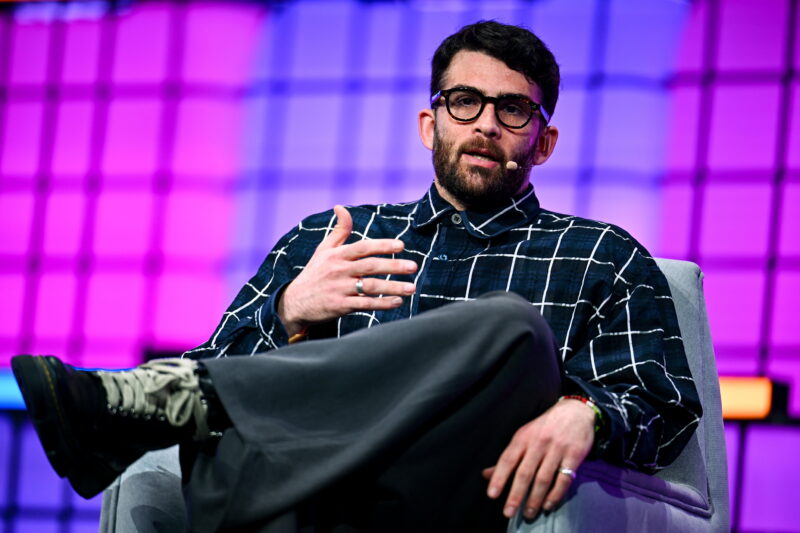
Meanwhile, leading progressive lawmakers such as Ocasio-Cortez and Rep. Ro Khanna (D-CA), both of whom are seen as potential presidential contenders, have avoided publicly distancing themselves from a popular far-left streamer, Hasan Piker, who recently sided with Hamas while sharing his views on one of those protests, near a synagogue in Queens hosting an event promoting Israeli real estate investment.
Joel Rubin, a progressive strategist and former State Department official now at work on a book about Democratic foreign policy, said he interprets such rhetoric as part of a broader “political tactic by some folks in the base to try to silence Jewish voices and to intimidate them into not advocating on these issues.”
“What I’m watching right now, in 2026, is a breakdown in respectful language toward the Jewish community,” he explained in an interview with JI last week. “It is very troubling and implies hostility that is undeserved — considering nobody should be treated to that kind of language. But it is also really dangerous for the Democratic Party and our electoral prospects to have this internal hostility and disunity.”
“There has always been this struggle within the Democratic Party of the argument, on every issue, of what is acceptable and what is not,” Sam Lauter, a political consultant and pro-Israel activist in the Bay Area, told JI. “With regard to Israel, that argument is not new, but what is new is how much it’s increased and what has become acceptable and what has been just dismissed.”
The increasingly charged tenor of conversation around Israel “is not the way Democrats should be thinking about communicating to voters if we want to win elections outside of deep blue areas,” Rubin suggested. “My biggest fear is that people are afraid to stand up and speak out.”
Kenneth Baer, a former Obama administration official who now directs a communications firm, sounded a similar note of caution. “Democrats are running to outdo each other to criticize Israel to curry favor with the massively online left and the interest groups that constitute the party,” he told JI recently. “The political dynamics of 2026 may mean this doesn’t matter in November, but in 2028 and beyond, running to the extremes is not a political winner.”
“There has always been this struggle within the Democratic Party of the argument, on every issue, of what is acceptable and what is not,” Sam Lauter, a political consultant and pro-Israel activist in the Bay Area, told JI. “With regard to Israel, that argument is not new, but what is new is how much it’s increased and what has become acceptable and what has been just dismissed.”
Still, he argued, pro-Israel Democrats have also “missed out” on the opportunity to forcefully defend their positions. “It has been very clear for years that people who disagree with us have been organizing at a grassroots level while building up support and making their viewpoint a part of the party mainstream,” he said. “And our community stopped engaging at that level years ago, which is why many of us have been screaming that this is a huge problem.”
Former Rep. Steve Israel (D-NY), who previously helmed the Democratic Congressional Campaign Committee, attributed the changing landscape in large part to what he views as a demographic shift driven by younger voters “generations away from romantic images of Israel” that are now “replaced by algorithm-fueled social media portraying Israel dropping bombs on schools and hospitals in Gaza.”
“In politics, perception is reality, and the reality for younger people is that Israel is wrong,” he told JI.
But he said it would be a miscalculation to disengage from that conversation. “Pro-Israel activists who don’t understand the need to push back proceed at their own peril,” he said. “You can’t surrender the narrative, which means supporters of Israel on both sides of the aisle need to find a much more effective narrative, particularly toward young voters.”
Many pro-Israel activists are at a loss, however, for how to recapture the debate, as Middle East policy now appears likely to be a focus of the next presidential election.
“It’s easy to observe a problem and then not have specific ideas on the solution,” Israel told JI. “That is a fundamental question now.”
“I don’t have a great answer, to be honest with you,” said Wolfson, the Bloomberg advisor. “I find it is far easier to identify the breadth of the problem than to identify a solution.”
According to Lauter, “the Overton Window has shifted” for Democrats, “and what needs to also shift is our community’s understanding of how to deal with it and approach it.”
“Let’s see how the midterms go and which candidates jump in,” said Aaron Keyak, the deputy special envoy to monitor and combat antisemitism in the Biden administration who now serves on the board of Combat Antisemitism Movement. “But in the lead-up to 2028,” he told JI, “the Middle East policy discussion will certainly be more prominent.”
“Regardless of what we think or say today, the particular policy conversation leading up to 2028 is going to be driven by the candidates, so until we can fill out the answer to the ‘what’ and ‘why’ questions, we need to be able to answer the ‘who’ one,” Keyak added.
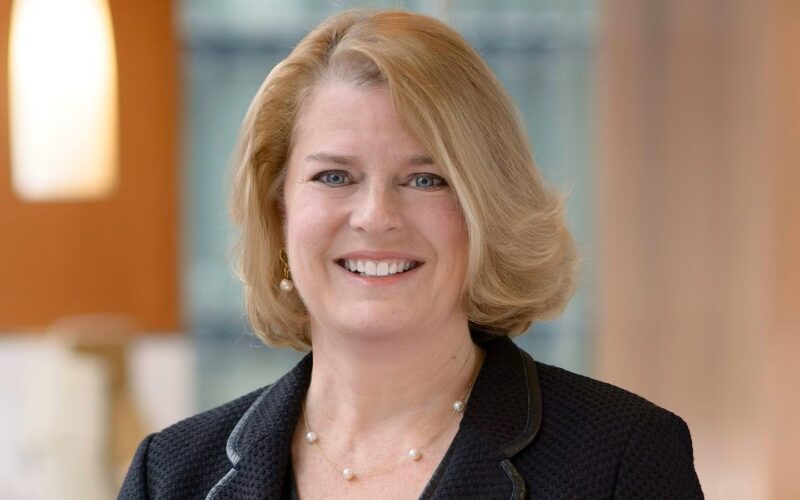
In the meantime, said former Rep. Kathy Manning (D-NC), who is now the board chair of Democratic Majority for Israel, the party still boasts a number of pro-Israel elected officials as well as candidates, including some her group recently announced it is endorsing in a range of contested House primaries.
“There is no doubt that we are living through very difficult times for American Jews,” she told JI in a recent interview, pointing to what she described as “unprecedented condemnation” of the U.S. alliance with Israel from both sides of the aisle. “What gives me hope,” she said, “is I know from my experience campaigning in a purple state in a competitive seat that the vast majority of Democrats still believe that Israel has the right to exist as a Jewish state and has the right to defend itself and its people.”
“We don’t have to love Israel,” but voters should understand the strategic benefits of working with a key Middle East ally, Hank Sheinkopf, a veteran Democratic strategist in New York City, said. “It ain’t about Jews,” he told JI. “It’s about the future of the United States of America.”
As the midterms near, Manning maintained that nominating pro-Israel Democrats will be a crucial step toward reclaiming the House. “The seats that are going to make the difference to taking back the majority are seats where candidates have to appeal not just to Democrats but also to independents and Republicans,” she said. “I think that it’s important for us to understand where voters are, regardless of what the loudest voices online or on the stage might be saying.”
Hank Sheinkopf, a veteran Democratic strategist in New York City, agreed with that sentiment, arguing that pro-Israel party members should be seeking to push the debate “back to the middle” and pressing a “straightforward geopolitical argument” to highlight the advantages of the U.S.-Israel relationship rather than relying on expenditures that have proven to be divisive in primaries.
“We don’t have to love Israel,” but voters should understand the strategic benefits of working with a key Middle East ally, Sheinkopf said. “It ain’t about Jews,” he told JI. “It’s about the future of the United States of America.”
Please log in if you already have a subscription, or subscribe to access the latest updates.
 Continue with Google
 Continue with Apple