














































































The letter, released by JINSA on the third anniversary of Oct. 7, argues that such allegations may affect the way the U.S. and its allies conduct future conflicts
Majdi Fathi/NurPhoto via Getty Images
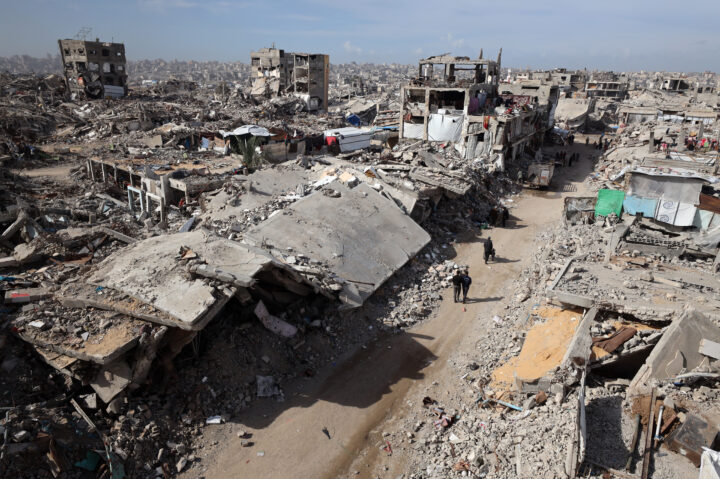
A photograph shows destroyed buildings in Jabalia, in the northern Gaza Strip, on December 9, 2025.


 Add JewishInsider on Google
A group of more than 75 American military leaders is pushing back against allegations that Israel has committed genocide in Gaza, arguing in a letter released Wednesday that the accusation is unsupported by the legal standard for genocide and contradicted by the conduct of the Israeli military during the war.
“As retired senior military leaders and legal experts, on this, the third anniversary of Hamas’s October 7, 2023 brutal attack on Israel, we reject claims that Israel committed genocide in Gaza,” the letter, released by the Jewish Institute for National Security of America, says. “The allegations that Israel committed this crime do not meet the established definition and standards of genocide, are unsupported by established facts, nor do they stand up to common sense scrutiny.”
The signatories argue that a finding of genocide requires evidence that a protected national, ethnic, racial or religious group was targeted for destruction, in whole or in part, and contend that Israel’s actions in Gaza do not meet that standard.
“Israel has neither intended to, nor destroyed, Palestinians as a group in Gaza,” the letter reads. “All the evidence, in fact, points to the contrary conclusion: that, after suffering a barbaric, indiscriminate massacre by Hamas terrorists on October 7, 2023, the Israel Defense Forces (IDF), acting in justified self-defense, went to extreme lengths to protect civilians in Gaza, including from Hamas.”
The authors also dispute arguments that the number of civilian deaths establishes genocide, saying casualty figures from Gaza are unreliable.
“Genocide is not a quantitative crime; there is no number of civilian casualties that constitutes genocide,” the letter says. “Nor are the claimed casualty numbers from Gaza credible. Issued by Hamas themselves and, at the very least, not distinguishing between civilians and combatants, they cannot be relied upon.”
They argue that the war must be viewed in the context of fighting an enemy that operates among civilians, drawing on their own experiences commanding U.S. forces in similar combat environments.
“We understand that the loss of civilian life in Gaza is tragic, but we also know that such tragic outcomes do not necessarily violate the law of armed conflict,” the letter says. “Further, established legal precedent makes clear that civilian deaths occurring during combat, however tragic, are insufficient, by themselves, to support a finding of genocidal intent.”
“Many of the signatories to this letter have commanded United States armed forces in combat against enemies who regularly hide behind civilians and put those civilians intentionally in harm’s way,” the letter continues. “Fighting under those complexities is especially difficult.”
The letter then points to the extensive measures taken by the IDF to reduce civilian casualties as evidence that the military took precautions and lacked genocidal intent during its operations in Gaza.
“The IDF has provided civilians with numerous advance warnings, leaflets, phone calls, text messages, radio and TV broadcasts, and social media notices, evacuation instructions, protected corridors, and tactical pauses to help move them out of harm’s way,” the letter says. “Repeatedly, Israel has called off strikes because of the presence of civilians.”
The authors also cite Israel’s provision of humanitarian and medical assistance to Gaza as evidence that its conduct is inconsistent with an intent to destroy Palestinians as a group.
“More than 3.5 million tons of food, 48,000 tons of medical supplies, 5,000 tons of baby food, and up to 15,000 cubic meters per day of water desalinated by Israel have been sent into Gaza,” the letter says. “Over half a million Gazan children were vaccinated during the war and some 5,000 Gazans evacuated for medical treatment abroad.”
“These are not the actions of a genocidal state but of a professional military ethically and legally committed to the protection of civilian life,” the authors add.
They condemned “inflammatory statements” by some Israeli political officials that have been cited as evidence of genocidal intent, while arguing that those remarks do not reflect the conduct of the Israeli military. The letter did not point to any specific officials, though leaders including former Israeli Defense Minister Yoav Gallant, Finance Minister Bezalel Smotrich and National Security Minister Itamar Ben-Gvir have been accused of such incitement.
“Such inflammatory statements are disgraceful,” the letter says. “Yet, while it deserves unequivocal condemnation, rhetoric from politicians uninvolved in military decision-making is in no way reflective of actual IDF operations.”
The signatories warn that how the Gaza war is judged could affect the way the U.S. and its allies conduct future conflicts, urging readers to apply what they describe as the established legal standards of the 1948 genocide convention.
“Failure to do so incentivizes future adversaries to deliberately endanger civilians and then exploit civilian suffering to portray lawful operations as genocide, weaken public support, and divide our alliances,” the letter says. “The precedent established today regarding Israel will shape the conditions under which American forces fight tomorrow.”
The Brandeis Center summit comes one day after the Department of Education announced it would transfer its Office for Civil Rights to the Department of Justice
Shulamit Photo + Video
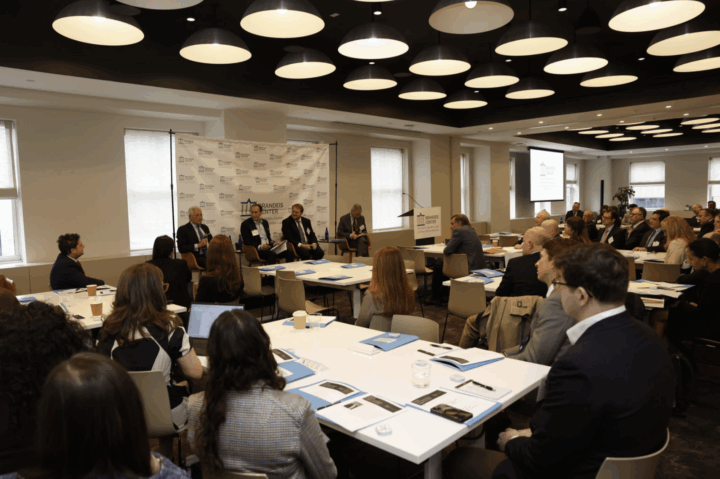
Brandeis Center legal summit
More than 50 leading litigators and legal experts were set to gather at the Capital Jewish Museum in Washington on Wednesday to address the legal challenges of defending Jewish students and employees amid the historic surge in antisemitism following Hamas’ Oct. 7, 2023, terrorist attacks and the ensuing war in Gaza.
Hosted by the Louis D. Brandeis Center for Human Rights Under Law, which has filed numerous cases on behalf of Jewish students since the Oct. 7 attacks, the National Legal Strategy Summit features speakers including Harmeet Dhillon, the assistant U.S. attorney general for civil rights; Jeffrey Morrison, the deputy assistant U.S. attorney general; U.S. District Judge Roy Altman; and Noah Pollak, a senior advisor at the Department of Education.
The conference comes one day after the Trump administration announced that the Education Department’s Office of Civil Rights, which handles Title VI discrimination cases, would be housed in the Justice Department, part of President Donald Trump’s efforts to dismantle the Education Department.
“We’re looking forward to getting the Justice Department perspective because coordination between the government and private organizations are so important,” Ken Marcus, founder and chairman of the Brandeis Center, told Jewish Insider. On Tuesday, Marcus called the OCR move “a significant and promising step forward for civil rights enforcement.”
Critics have argued that the transfer would weaken civil rights protections because the DOJ focuses on litigation rather than improving systemic issues in schools.
“OCR has long served as the federal government’s primary guardian of students’ civil rights. At the same time, the Justice Department possesses powerful investigative and litigation tools that can strengthen enforcement when institutions fail to comply with the law. A more integrated approach could bring additional resources, greater consistency, and stronger accountability to civil rights enforcement,” said Marcus.
Panels will focus on legal strategies to address antisemitism on college campuses, in K-12 classrooms and in the workplace. The summit will also address concerns that have intensified over the past year, such as the growing influence of foreign funding in American education.
“This is an opportunity to bring together many of the leading litigators in our space. We are now in a place where there are several law firms and legal organizations that have seen the importance of using litigation as one of the central tools for addressing the surge of antisemitism we’ve seen over the last couple of years,” Marcus told JI. “Many of them started with the campus antisemitism lawsuits, but have also expanded to dealing with an array of other issues from elementary and secondary schools to labor unions in the workplace to healthcare.”
In November 2025, the Brandeis Center hosted its first legal summit in Manhattan for attorneys and heads of Jewish legal organizations. Marcus said the group plans to make the convenings a regular occurrence “in order to avoid problems of discoordination and to make sure everybody is getting the value of the experience and best practices of others.”
EEOC Chair Andrea Lucas: ‘At some point, either the government will know information related to individuals’ religion, or we will not be able to enforce the laws on their behalf’
Dillon Meyer Media
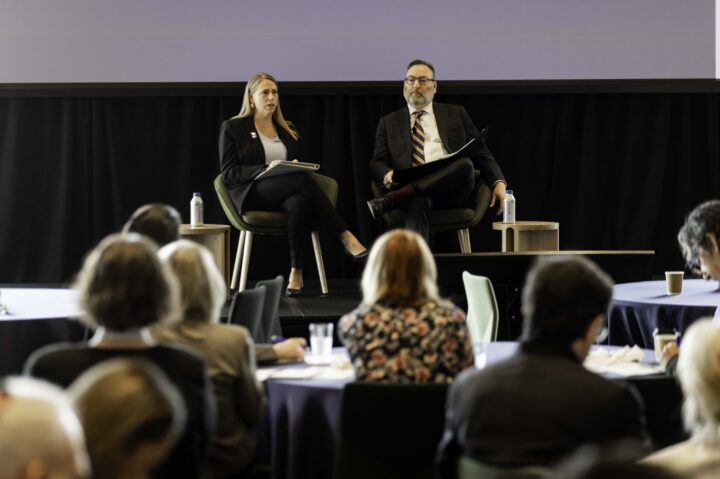
EEOC Chair Andrea Lucas and Brandeis Center founder Kenneth Marcus speak at the inaugural conference on antisemitism and civil rights law at Harvard University on April 16, 2026.
The Trump administration official leading a controversial probe into antisemitism at the University of Pennsylvania told Jewish leaders and legal experts on Thursday that compiling a list of Jewish faculty with their detailed personal information was necessary to identify and protect victims.
“There is no other way to protect victims of harassment or discrimination unless you collect information about them,” Andrea Lucas, chair of the United States Equal Employment Opportunity Commission, said at the Louis D. Brandeis Center for Human Rights Under Law’s inaugural conference on antisemitism and civil rights law, held at Harvard University.
“We never collect information to contact someone on their work system,” she said. “The EEOC’s long-standing practice is to collect personal information because we want to make sure that there is not any clear monitoring of your email systems … that when you speak to a government agency you feel completely not pressured.”
Last month, a federal judge ordered Penn to comply with a subpoena from the Trump administration requesting detailed information about Jewish university affiliates as part of the EEOC’s ongoing investigation into Penn’s handling of antisemitism. The subpoena had requested the school turn over lists of Jewish employees and members of Jewish organizations — including their identifying details and phone numbers — which the school called “extraordinary and unconstitutional.” Critics on campus have likened the move to Nazi-era methods of collecting information about Jews.
During a fireside chat with Kenneth Marcus, founder of the Brandeis Center and former assistant secretary of education for civil rights under the first Trump administration, Lucas noted she was speaking generally and not about the Penn case specifically, as litigation is ongoing.
“At some point, either the government will know information related to individuals’ religion, or we will not be able to enforce the laws on their behalf,” continued Lucas, who is not Jewish but emphasized a personal interest in religious liberty as “a core thing the EEOC needs to be focusing on.”
“I understand the sensitivities around this issue … but fundamentally the Jewish community does have to decide: do you want to have civil rights enforcement in this space? If you do, there is no other way we can get money for victims.”
Experts told Jewish Insider in January that a more typical investigation might involve agency officials interviewing people who issued complaints directly with the agency, then visiting the campus and publicizing their investigation, calling the EEOC’s methods in the Penn case “incredibly unusual, if not completely unprecedented.”
Lucas asserted that the same standard applied for helping members of any race, religion or gender. None of the event’s speakers publicly disagreed with Lucas’ statements.
The daylong conference was born out of last year’s settlement between the Brandeis Center and Harvard over a Title VI lawsuit, and was framed around this year’s U.S. Semiquincentennial.
It opened with an address from Marcus and a benediction from Harvard Chabad’s Rabbi Hirschy Zarchi. Attendees included Harvard community members, Jewish activists, lawyers and scholars.
The plenary session, “Towards a Jewish Civil Rights Movement,” moderated by Marcus, featured William Daroff, CEO of the Conference of Presidents of Major American Jewish Organizations; Elan Carr, CEO of Israeli-American Council and former special envoy to monitor and combat antisemitism; and Miriam Elman, executive director of the Academic Engagement Network.
Carr called the battle against antisemitism “a war for the soul of America and the soul of civilization,” and advocated for a shift in classroom curriculums and federal funding.
“Jew-hatred is history’s greatest barometer of human ruin and suffering. We are fighting for the future of our country and American values. So we need to get serious about teaching American values … we can’t safeguard this republic unless we teach American kids what this republic is, why it was founded, what our values are and constitutional structures are,” he said. “This is a national crisis with national implications. The federal government needs to say ‘no money goes anywhere to any educational institution unless there’s Western values, American civics, basic principles of the United States as part of the curriculum.’”
After the session, Daroff told JI that “today’s conference brought a united American Jewish community together, aligned in action. We are not standing back. We are organizing, building and acting together with shared purpose and resolve.”
The conference also featured a panel titled “Defining Anti-Semitism at America’s 250th: New Challenges for a New Century.” Speakers debated the importance of pushing states to codify the International Holocaust Remembrance Alliance’s working definition of antisemitism, as many mainstream Jewish groups are using resources to do. Critics of IHRA say the definition chills political speech and criticism of Israel.
Nathan Diament, executive director for the Orthodox Union Advocacy Center, said that IHRA is not only important for combating campus antisemitism — as several of the speakers emphasized — but also regarding legislation in Washington.
At the same time, “in the political arena, vagueness around questions [of what is antisemitism] is unhelpful. The most important currency in politics is votes. Advocates and voters need to be able to say with clarity to politicians [what they will and will not support]. This is the most important need for the definition of antisemitism, to draw a line as clearly as we can and make clear to politicians that if they cross this line, there will be consequences,” said Diament.
“Even as the OU has, and continues to, support legislation to codify the IHRA definition, I don’t think at this stage in the game that’s the most important way to further the definition and to use our political capital,” he continued. “We don’t need Congress’ approval of how we want to define antisemitism. We don’t need them to codify it and we don’t need them to give us permission to use it to hold members of Congress and other politicians accountable. We can use the IHRA definition because we say that’s the definition.”
Alyza Lewin, president of U.S. affairs for the Combat Antisemitism Movement and former president of the Brandeis Center, pushed back by highlighting how the law enforcement trainings she provides varies based on local adoption of the IHRA definition. She noted a stark difference between training in states where it is codified, such as Georgia, and those where it is not, such as New York.
Law enforcement in Georgia “has a very concrete reason now to understand and use” the training, said Lewin. “In New York, especially after [Mayor Zohran Mamdani] reversed the executive order on IHRA, I can try to explain it to them but it’s just a nice thing I teach them. They are under no obligation to actually engage with it and utilize it. So I do think on a state by state level, it does make a difference whether or not a state has adopted the IHRA definition.”
In a separate panel, moderated by Anat Alon-Beck, a visiting professor at Harvard Law School, speakers explored new avenues for litigation against antisemitism.
“Nearly two years after the largest massacre of Jews since the Holocaust, the Jewish community still lacks unified messaging, coordinated toolkits and a clear strategy. At a time when antisemitic actors are highly organized and aligned, our disunity is a serious vulnerability,” Alon-Beck told JI following her session. “We need to come together — with clarity, courage and coordination — because the stakes could not be higher.”
According to the Brandeis Center, this conference was the first in an annual three-part series.
Charles Dabda, a third-year student at Touro Law Center and law clerk with National Jewish Advocacy Center, told JI he was leaving the conference with a clear sense that “antisemitism is rising in real time with real consequences across campuses, professional spaces and beyond. At the Brandeis Center, and NJAC, our commitment remains resolute and steadfast; we will confront antisemitism wherever it manifests — through advocacy, and, when necessary, the courtroom.”
Please log in if you already have a subscription, or subscribe to access the latest updates.
 Continue with Google

 Continue with Apple