





























Kimberly Richey previously held the role on an interim basis

David Ake/Getty Images
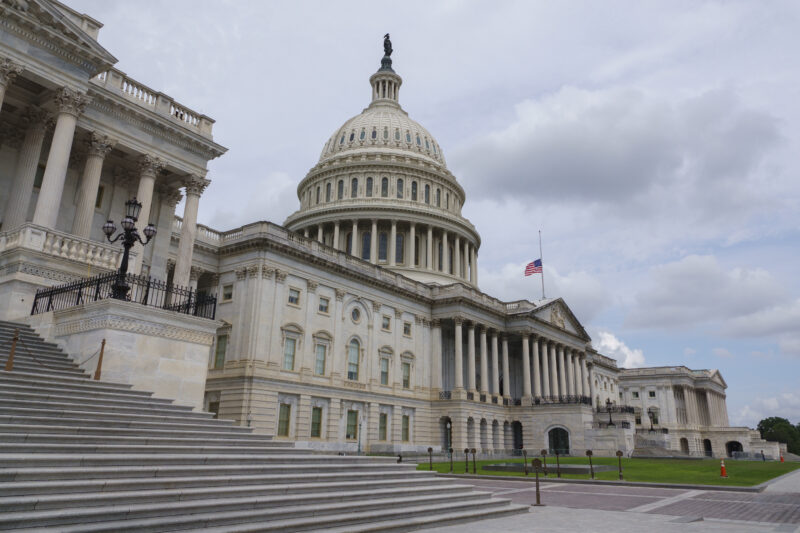
U.S. Department of Education headquarters building in Washington, DC.


 Add JewishInsider on Google
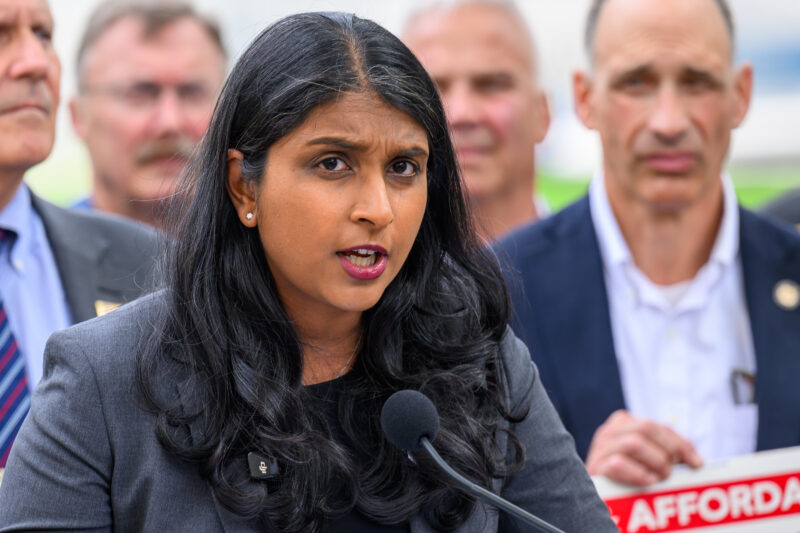
The Senate voted this week to confirm Kimberly Richey as the assistant secretary for civil rights at the Education Department, eight months after President Donald Trump named her to the role.
The Education Department’s Office for Civil Rights, which Richey will lead, is responsible for overseeing investigations into antisemitism at American schools and universities. The Trump administration laid off more than half of the division’s investigators earlier this year, sparking sharp criticism from congressional Democrats.
Richey previously served in the same role on an interim basis for the final months of Trump’s first term. For much of that administration, she was deputy assistant secretary of the office that oversees special education issues.
She first worked at the Education Department in the George W. Bush administration after being hired by Ken Marcus, now the chairman of the Louis D. Brandeis Center for Human Rights Under Law.
Richey comes to Washington from Florida, where she had been serving as senior chancellor for Florida’s Department of Education. Before that, she was deputy superintendent of the Virginia Department of Education.
Richey was one of more than 100 Trump nominees confirmed on Tuesday night, after Senate Republicans changed chamber rules last month to allow senators to vote on their nominations as a group.
One of the additional nominees confirmed was Stephanie Hallett to be U.S. ambassador to Bahrain. Hallett was previously the chargé d’affaires ad interim at the U.S. embassy in Jerusalem, serving as acting ambassador during the Oct. 7 attacks in 2023.
Jacob Helberg, a former top Palantir official, was confirmed as under secretary of state for economic growth, energy and the environment. In 2020, Helberg was a major donor to President Joe Biden’s campaign, but he cited anti-Israel trends in the Democratic Party as a reason for supporting Trump in 2024.
The Senate also confirmed Sergio Gor as U.S. ambassador to India. Gor, a former senior aide to Sen. Rand Paul (R-KY), served until August as head of the Presidential Personnel Office at the White House, where he was known for his isolationist leanings.
Kim Richey said that Title VI regulations could be amended ‘to specially address antisemitism … in a post Oct. 7 world’

Screenshot: C-SPAN
Kimberly Richey
Kimberly Richey, the nominee to be the assistant secretary of education for civil rights, said that the Department of Education should look at amending Title VI regulations and issuing new guidance to address the surge of antisemitism on campuses nationwide since the Oct. 7, 2023, Hamas attacks on Israel.
Richey, speaking at a confirmation hearing on Thursday before the Senate Health, Education, Labor and Pensions Committee, said that regulations could be amended “to specifically address antisemitism,” and the Department of Education could issue new guidance “in a post-Oct. 7 world. The climate is very different than what it was five years ago, four years ago, three years ago.”
Currently, antisemitic discrimination is considered a violation of Title VI of the Civil Rights Act as a form of discrimination based on shared ancestry, under an executive order from the first Trump administration. Enacting a formal regulation would give further force of law to the issue.
The Biden administration had been expected to issue a regulation providing further guidance around that executive order by December 2024.
Richey said she would also partner with other offices within the Department of Education to enforce civil rights laws to further protect Jewish students.
The nominee described the recent antisemitic terror attacks in Boulder, Colo., and Washington as “emblematic of the horrific acts that the Jewish students are facing across the country,” and praised the actions the Trump administration has taken thus far.
She said that she believes the antisemitic environment on campus has gotten worse than it was when she first served in the Office for Civil Rights in the early 2000s, during the George W. Bush administration, having evolved into threats, violence and exclusion targeting Jewish students.
Richey, pressed by Democrats about the administration’s decision to cut half of OCR’s staff and more than half of its regional offices, said she couldn’t speak to the decisions previously and currently being made but said she is “always going to advocate for OCR to have the resources that it needs to do its job.”
“I’m going to have to be really strategic … helping to come up with a plan where we can address these challenges,” Richey said.
Sen. Tammy Baldwin (D-WI) said the Department of Education recently informed the committee that, as of earlier this year, OCR had a backlog of 25,000 cases.
Asked about efforts to reorganize and shut down the Department of Education, including transferring OCR to the Department of Justice, Richey said that “the current structure is not meeting the needs of students … so what I appreciate and what I agree with is the conversation for us to stop and look at, how can we better meet the needs of students? How can we better serve families?”
She emphasized that she has a long history in OCR, having served in the office for almost seven years under previous administrations, and said that she understands “the vital role it plays for so many students and families across our great nation. Students cannot gain the knowledge and skills they need to be successful in life if they can’t access educational programs and activities.”
In addition to her service in the Bush administration, Richey served as acting assistant secretary of education for civil rights in 2020 and 2021.
“If I’m confirmed, the department will not stand idly by while Jewish students are attacked and discriminated against,” Richey said.
Kenneth Marcus, the founder of the Brandeis Center for Human Rights Under Law who served as assistant secretary of education for civil rights under the first Trump administration, said he was pleased that Richey had raised the prospect of formal and informal guidance, as well as a Title VI regulation, which he noted would be “the first ever formal Title VI regulation on antisemitism.”
He explained that a Title VI regulation would “be important for giving durability, not only to the government’s use of [the International Holocaust Remembrance Alliance’s working definition of antisemitism], but also to the fundamental notion that Jewish civil rights are protected under Title VI. That’s something that doesn’t yet have the status of a formal regulation, which is why federal agencies have been promising for the last several years to issue a regulation.”
He said that a regulation might go further than the original executive order issued in the first Trump administration declaring that antisemitism is a prohibited form of discrimination, and could cover issues like masking, encampments and the ways that Zionism has been used as a euphemism for Jews.
“Kim Richey was passionate and eloquent in describing how the world has changed since Oct. 7, 2023 in ways that need to be addressed by the federal government,” Marcus said. “She appropriately noted the forcefulness of the Trump administration’s response to date, but it also candidly indicated that more needs to be done, and I think that she was 100% right about that.”
Please log in if you already have a subscription, or subscribe to access the latest updates.
 Continue with Google
 Continue with Apple