














































































Norman Goda, a Holocaust historian at the University of Florida, said that modern remembrances of the Holocaust that fail to mention Jews are 'a soft form of denial'
Jim Watson - Pool/Getty Images
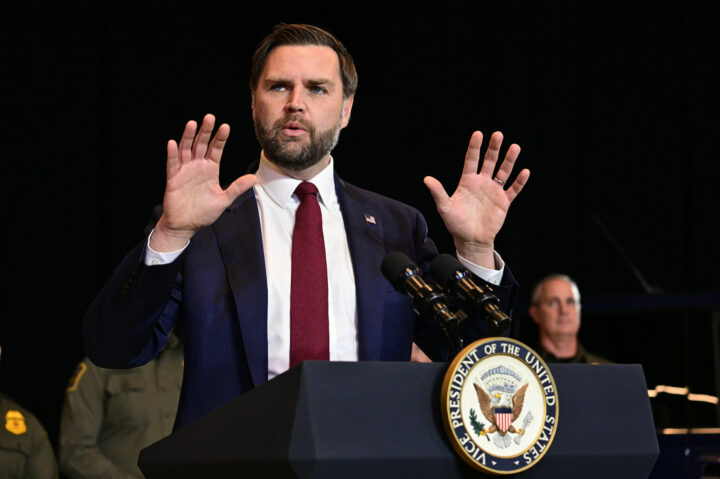
U.S. Vice President JD Vance gives remarks following a roundtable discussion with local leaders and community members amid a surge of federal immigration authorities in the area, at Royalston Square on January 22, 2026 in Minneapolis, Minnesota.


 Add JewishInsider on Google
A week after President Donald Trump took office for the first time in 2017, the White House ignited a political and media firestorm by releasing a statement commemorating International Holocaust Remembrance Day that failed to mention Jews.
The omission was covered in major media outlets like CNN and Politico; the Anti-Defamation League called it “puzzling and troubling.”
Nearly a decade later, Trump released another Holocaust Remembrance Day post this week, with a far more specific message: “Today, we pay respect to the blessed memories of the millions of Jewish people, who were murdered at the hands of the Nazi Regime and its collaborators during the Holocaust,” the statement read, “as well as the Slavs and the Roma, people with disabilities, religious leaders, persons targeted based on their sexual orientation, and political prisoners who were also targeted for systematic slaughter.”
Meanwhile, Vice President JD Vance’s post commemorating the day, which marks the anniversary of the 1945 liberation of Auschwitz by Allied Forces, did not mention Jews or antisemitism, leading political rivals on the left to pounce. (Democratic Majority for Israel called it “indefensible.”)
But despite the visibility of Vance’s tweet — which his defenders pointed out included pictures of him and his wife at Dachau, standing in front of a sign that said “Never again” in Yiddish — he was far from the only politician that failed to mention the fact that the Holocaust targeted Jews. Among them were: Sen. Roger Wicker (R-MS) and Rep. James Walkinshaw (D-VA), both of whom pledged to remember the victims of the Holocaust without referring to Nazis’ targeting of Jews.
Multiple presenters at the U.K.’s BBC also failed to mention Jews in their coverage of Holocaust Remembrance Day — drawing backlash and a subsequent apology from the national broadcaster.
Does it matter that these politicians or media don’t reference Jews if they are still highlighting the significance of the Holocaust? It’s possible to argue that, definitionally, the Holocaust was about Jews, so one could assume that any reference to the Holocaust is itself a reference to the killing of Jews and the antisemitism that led to it.
“If I talk about the potato famine, do I have to say Irish? How many other potato famines were there?” asked Deborah Lipstadt, a Holocaust historian who served as President Joe Biden’s antisemitism envoy. “But this is part of a greater whole in an age of rising antisemitism.”
For years, Americans’ knowledge of basic facts about the Holocaust has been declining, particularly as fewer Holocaust survivors are alive each year to share their stories. A 2023 survey conducted by the Claims Conference found that 21% of Americans believed that 2 million Jews or fewer were killed. Eight percent of Americans, and 15% of 18- to 29-year-olds, said the number of Jews who were killed during the Holocaust has been greatly exaggerated.
“Holocaust history has the power to teach vital, timeless lessons about why our choices matter — but only when it is approached with the precision, historical integrity and respect it rightfully deserves,” the U.S. Holocaust Memorial Museum said in a statement this week that called for an end to “the abuse and exploitation of Holocaust memory.”
In the 81 years since the Holocaust, political leaders and movements have exploited the memory of the genocide to serve their own ends, particularly by shifting the focus of who its victims were.
In the former Soviet Union, where more than 2 million Jews were killed during the Holocaust, memorials to those killed called them “peaceful Soviet citizens” — stripping them of their Jewish identity, as if their killers had targeted Russians rather than Jews. Some right-wing politicians in modern Poland have attempted to quash historical scholarship documenting that Poles were involved in Nazis’ killing of Jews, and that the Nazis targeted Jews, in particular, rather than just the Poles (though Poles were targeted, too).
Norman Goda, a Holocaust historian at the University of Florida, said that modern remembrances of the Holocaust that fail to mention Jews are “a soft form of denial.”
“The Nazis certainly knew who they were deporting. The Nazis certainly knew who they were gassing,” Goda told Jewish Insider on Wednesday. “The ignorance is such that you have to remind people that the Nazis called this Die Endlösung der Judenfrage, the final solution of the Jewish question. They weren’t just killing random people.”
The politicians posting about the Holocaust almost surely know that, as do most of their constituents. But rising antisemitism coupled with declining knowledge about a genocide that targeted and killed 6 million Jews means that reminding people of the facts — the specifics — remains crucial.
“Do we do this with any other mass catastrophe? Do we discuss the Armenian Genocide without mentioning the Armenians? Do we discuss slavery in the United States without mentioning who the slaves were?” Goda questioned. “We don’t do it, and anybody who would do that is engaged in an almost willful misunderstanding, either a profound historical ignorance, on the one hand, where you almost have to try to be that ignorant, or something that is simply more nefarious.”
The Portland Trail Blazers forward has emerged as one of Israel’s all-time top athletes
Thearon W. Henderson/Getty Images
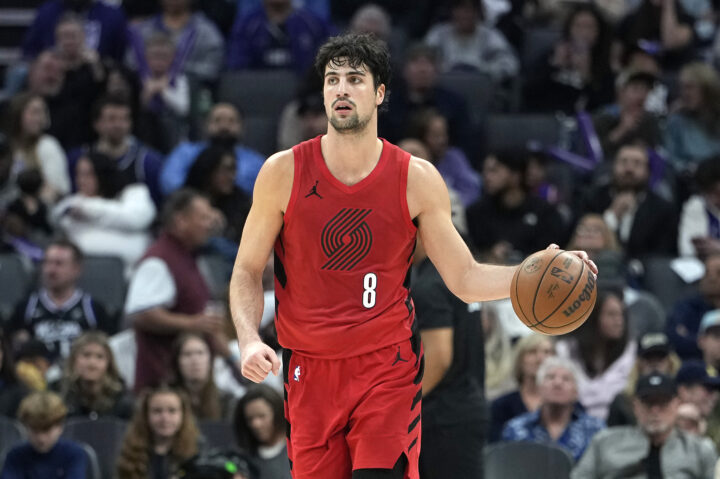
Deni Avdija #8 of the Portland Trail Blazers dribbles the ball up court against the Sacramento Kings in the second half of a NBA basketball game at Golden 1 Center on January 18, 2026 in Sacramento, California.
On Tuesday night, the Washington Wizards will host the Portland Trail Blazers for Jewish Heritage Night in a game that carries significance beyond the standings. The matchup coincides with International Holocaust Remembrance Day, giving it added weight amid heightened antisemitic sentiment across the political spectrum.
But despite that backdrop, the evening’s focal point for the local Jewish community may actually be what transpires on the court. Deni Avdija, the 6-foot-8 small forward from Beit Zera, Israel, returns to Capital One Arena, where his NBA career began, no longer as a developing young player, but as one of Israel’s — and the NBA’s — breakout sensations.
Selected ninth overall by Washington in the 2020 NBA Draft, Avdija spent the first four seasons of his NBA career with the Wizards before being traded to Portland in July 2024. This season, he has found his footing in the league, making a dramatic leap that has drawn attention from fans and NBA stars alike.
With that higher profile, however, has come online backlash — “hate,” he has called it — focusing on his Israeli roots.
“It’s frustrating to see all the hate,” Avdija told The Athletic in an interview released last week. “I have a good game or get All-Star votes and all the comments are people connecting me to politics. Why can’t I just be a good basketball player? Why does it matter if I’m from Israel, or wherever in the world, or what my race is?”
Avdija said the backlash comes “for no reason,” and he’s judged as if he were “deciding things in the world.”
“What do people expect me to do?” said Avdija. “[Israel] is my country, where I was born, where I grew up. I love my country.”
He noted that as an athlete he doesn’t “get into politics,” but encourages people to become more educated on the Middle East before speaking on the subject.
“Not everyone is educated and knows what is going on, and that’s what pisses me off,” Avdija said. “If you are not educated and you are not part of the Middle East … just don’t say anything.”
Avdija has long carried the weight of representing his country on basketball’s biggest stages. At just 16 years old, he became the youngest player ever to appear for Maccabi Tel Aviv. At the international level, he led Israel to back-to-back FIBA U20 European Championship titles in 2018 and 2019, earning tournament MVP honors in 2019 and later becoming the youngest Israeli League MVP.
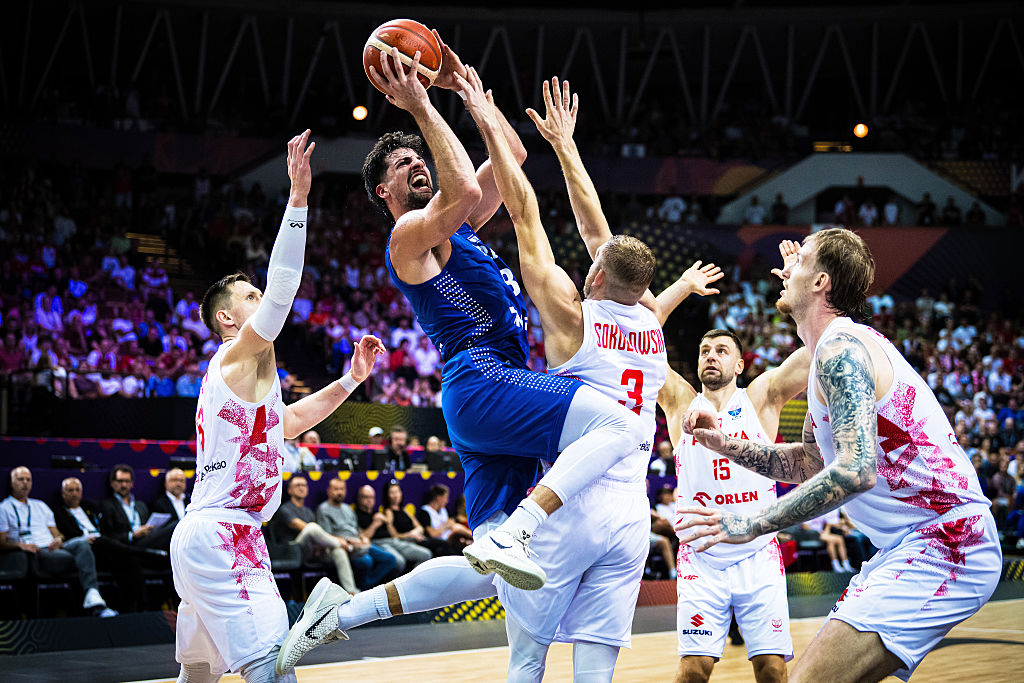
Now, midway through the NBA season, Avdija is averaging 26 points, 7.1 rebounds and 6.9 assists per game, placing him among the league’s top scorers (top 15 in average PPG and top five in total points) this season. The jump has vaulted Avdija into league-wide conversations — even earning him a commemorative cup night on Jan. 5, during the Blazers game against the Utah Jazz.
That same week, Avdija erupted for a season-high 41 points in a narrow 103-102 home win over the Kevin Durant-led Houston Rockets. Avdija’s record night drew prominent attention across the league and generated several highlight packages that spread across social media. After the game, Durant praised Avdija, stating: “He’s going to be a star.”
Avdija has also etched his name into Israeli basketball history. In March 2025, he became the only player from Israel to record a triple-double in the league, a milestone he reached playing against the Cleveland Cavaliers. Last month, he surpassed Omri Casspi as Israel’s all-time leading scorer in the NBA.
“This is a guy who, when he gets downhill, is a problem,” said Steve Nash, a member of the Naismith Memorial Basketball Hall of Fame, speaking about Avdija’s ability to drive to the basket during his “Mind the Game” podcast, which he co-hosts with NBA superstar LeBron James.
James called Avdija a “physical driver to the rim,” stating that he believes the Wizards are “kicking themselves” for trading him away.
“This year in particular, I’ve seen him expand his range and make some shots from the perimeter at a more consistent rate,” said James. “It’s resulted in him having a breakout career year so far.”
The Israeli phenom has even hit franchise records, becoming the fastest player in Trail Blazers’ history to reach 1,000 points, 250 rebounds and 250 assists in a single season and just the seventh player in the last 35 NBA seasons to do so over a season’s first 39 games or quicker — a notable milestone for a team long defined by the legacy of prolific scorer Damian Lillard.
Avdija’s surge has placed him in contention for major individual recognition and the potential to reach new heights for Israeli athletes in professional American sports.
No Israeli basketball player has ever been named as an NBA All-Star. Avdija could change that and is viewed as a serious candidate to make an appearance — finishing seventh in Western Conference All-Star voting and gaining over 2 million fan votes.
Avdija also holds the highest odds to win NBA Most Improved Player, a prestigious award and potentially another first for an Israeli-born player.
As Avdija chases history, he has a simple message for the critics: “Just respect me as a basketball player. You don’t have to love what I stand for or how I look, but if I’m a good player, give props.”
Please log in if you already have a subscription, or subscribe to access the latest updates.
 Continue with Google

 Continue with Apple