












































































The real impact is likely the ‘special strategic partnership,’ as the countries are calling it, that bolsters Israel's global position at a time when many of the Jewish state's traditional partners have turned away
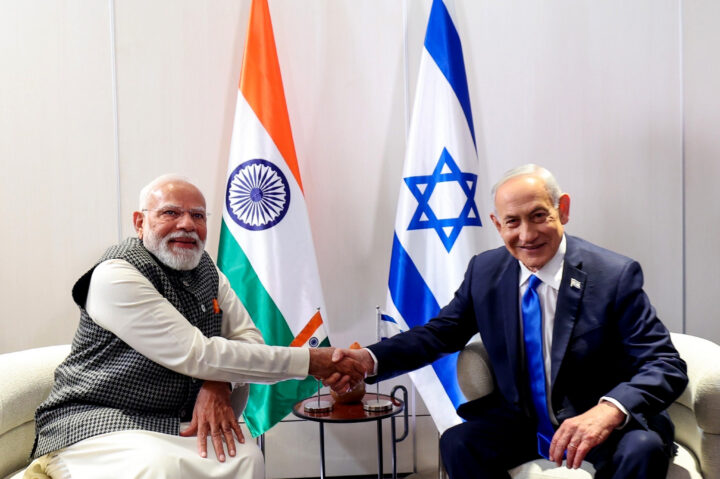
(Press Information Bureau (PIB)/Anadolu via Getty Images)
Indian Prime Minister Narendra Modi meets with Prime Minister of Israel Benjamin Netanyahu in New Delhi, India on February 25, 2026.


 Add JewishInsider on Google
Indian Prime Minister Narendra Modi’s visit to Jerusalem this week was an important geopolitical moment for Israel.
The biggest tangible outcome of the visit is that, according to Indian media, Israel plans to transfer Iron Dome and Iron Beam missile-defense technology to India, as part of a defense deal reaching as much as $8 billion-$10 billion. The governments only officially acknowledged “significant growth made in defense cooperation … both in scope and scale.”
As for confirmed deliverables, Israel launched expedited free-trade negotiations with the world’s most populous country and fastest-growing economy. The governments released a nine-page statement announcing agreements in a range of areas, including mineral exploration, AI, agriculture, cultural exchange and recruitment of up to 50,000 Indian workers to Israel in the next five years — fulfilling a major need for Israel, which revoked most work permits for Palestinians after the Oct. 7, 2023, attacks.
But the real impact is likely greater than any specific agreement. It’s the alliance on display between Israel and India — a “special strategic partnership,” as the countries are calling it — that bolsters Israel’s global position at a time when many of the Jewish state’s traditional partners have turned away.
Lauren Dagan Amoss of Bar-Ilan University’s Begin-Sadat Center for Strategic Studies and a leading India analyst in Israel, characterized Modi’s speech to the Knesset as “a threshold moment … designed to justify an upgrade from cordial relations to a partnership with strategic depth and deliverables. … The message was aimed at external stakeholders … especially Washington, the Gulf states, and the broader economic-technological community … rather than treating Israel as a standalone bilateral track.”
That dovetails with Israeli Prime Minister Benjamin Netanyahu’s remarks at a Cabinet meeting on Sunday, where he described his vision of a “hexagon of alliances around or within the Middle East. This includes India, Arab nations, African nations, Mediterranean nations (Greece and Cyprus), and nations in Asia that I won’t detail at the moment.” That “hexagon” creates “an axis of nations that see eye-to-eye on the reality, challenges, and goals against the radical axes, both the radical Shia axis, which we have struck very hard” — i.e. Iran — “and the emerging radical Sunni axis,” meaning Qatar, Turkey, and perhaps India’s historic adversary Pakistan, which signed a defense pact with Saudi Arabia less than six months ago.
Modi’s visit came as the world is watching the U.S. and Iran to try to understand if a military conflict is on the way, and while he did not make any specific reference to the Islamic Republic or nuclear weapons, the Indian leader spoke about terrorism, of which Iran is the leading state sponsor. Modi spoke about Israel and India both having “endured the pain of terrorism for a long time,” and said that “countering terrorism requires sustained and coordinated global action, because terror anywhere threatens peace everywhere. That is why, India supports all efforts that contribute to durable peace and regional stability.”
At a time of acute security needs for Israel, the Indian prime minister showed his understanding of Israel’s “security ethos,” Dagan Amoss wrote, and Modi signaled a shift towards deepening the countries’ defense ties, “from a procurement-centric logic to a capability-building approach: industrial integration, supply-chain resilience, and strategic connectivity through corridors, critical infrastructure, and technology as an enabling platform rather than one-off transactions.”
Plus, Modi heads to Israel to deepen defense ties
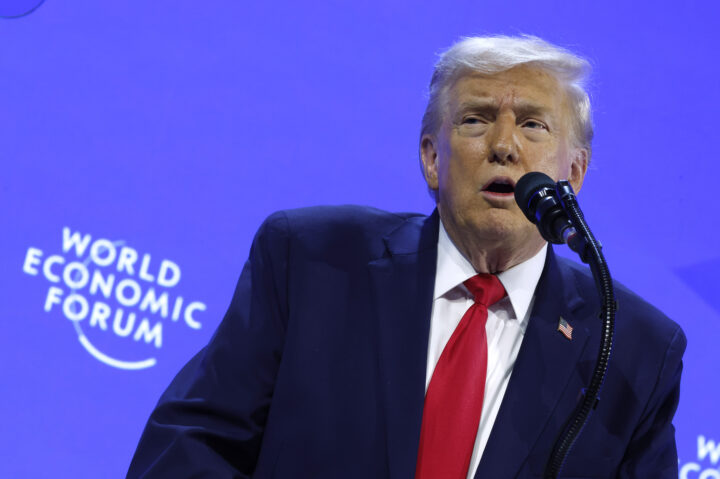
Chip Somodevilla/Getty Images
U.S. President Donald Trump gives a speech at the World Economic Forum (WEF) on January 21, 2026 in Davos, Switzerland.
👋 Good Tuesday morning!
In today’s Daily Kickoff, we preview tonight’s State of the Union address, and look at the debate taking shape among New York City officials over new legislation providing protest buffer zones around places of worship ahead of a hearing on the issue tomorrow. We interview Israeli Ambassador to India Reuven Azar about Indian Prime Minister Narendra Modi’s upcoming visit to Israel, slated for tomorrow, and talk to Sen. Chris Coons about a potential U.S. strike on Iran. Also in today’s Daily Kickoff: Michael Sacks, Richard Baker and Sue Altman.
Today’s Daily Kickoff was curated by JI Executive Editor Melissa Weiss and Israel Editor Tamara Zieve, with assists from Danielle Cohen-Kanik and Marc Rod. Have a tip? Email us here.
What We’re Watching
- President Donald Trump will deliver the State of the Union address at 9 p.m. ET. More below on what we’ll be looking out for tonight.
- Secretary of State Marco Rubio is slated to brief Senate and House leaders at 3 p.m. ET.
- Ali Larijani, the head of Iran’s National Security Council who in recent weeks has been designated by Iranian Supreme Leader Ayatollah Ali Khamenei to try to ensure the regime’s continued survival in the event of military conflict, is in Muscat today to deliver Tehran’s response to U.S. negotiators through Omani interlocutors.
- The House Foreign Affairs Committee will hear from Jacob Helberg, the Trump administration’s under secretary of state for economic growth, energy, and environment, in a hearing this morning set for 10 a.m.
- AIPAC’s Congressional Summit wraps up today in Washington.
What You Should Know
A QUICK WORD WITH JI’S MARC ROD
President Donald Trump is set to address Congress for his State of the Union speech tonight, with U.S. forces amassing in the Middle East and administration officials engaged in an ongoing flurry of diplomacy with the Iranian regime.
We’ll be watching for how Trump will address the situation with Iran in his speech, if at all. Will he set red lines or negotiate demands for the regime? Will he lay out his plan or goals for a potential military attack? The White House, as of now, isn’t previewing his remarks.
Trump took to Truth Social yesterday afternoon with a post rejecting as “fake news” reporting from a series of outlets that Gen. Dan Caine, chairman of the Joint Chiefs of Staff, had raised concerns about a sustained military campaign against Iran.
The president said that Caine “like all of us, would not like to see War” but also believes that a military conflict would be “easily won.” Although talks have reportedly centered around limits on Iran’s nuclear program, Trump continued to insist that the regime’s nuclear development is “no longer, but rather, was blown to smithereens.” He called reports that the administration is considering limited strikes on Iran “fake.”
It’s not out of the question that Trump, who loves a made-for-TV moment, breaks major news on Iran during the speech — last year, he announced in the middle of his speech that the U.S. had apprehended a terrorist allegedly involved in the bombing that killed 13 U.S. servicemembers during the pullout from Afghanistan.
On the other hand, Trump, with midterms on the horizon, might steer clear of the topic entirely as he focuses on domestic issues dominating the headlines, such as tariffs and immigration.
We’ll also be keeping an ear out for whether Trump tries to draw any boundaries for the conservative movement on Israel policy and antisemitism in his speech. The president has largely stayed out of the ongoing fight over Israel roiling the right, but the GOP’s most prominent Israel critic, Tucker Carlson, visited the White House on Monday after an interview with U.S. Ambassador to Israel Mike Huckabee that grabbed headlines.
BUFFER BATTLE

A bill introduced in the New York City Council in response to pro-Hamas demonstrations outside New York synagogues and slated for a hearing on Wednesday has sparked a battle between mainstream Jewish advocacy organizations and protest groups and their allies — and leaves New York City Mayor Zohran Mamdani and the NYPD in an awkward spot, Jewish Insider’s Will Bredderman reports. At the center of the agenda to counter antisemitism that Council Speaker Julie Menin unveiled in January was her proposal directing the NYPD to establish a plan for “security perimeters,” demarcated with police barriers or tape, up to 100 feet from entrances and exits at religious facilities to prevent protesters from obstructing or harassing people attempting to enter or exit.
State of play: In response to feedback from the police department, the speaker’s office stripped out any specific reference to distance, and a new draft of the bill simply compels NYPD Commissioner Jessica Tisch to propose her own plan for “buffer zones” of sizes she deems appropriate “to address and contain the risk of injury, intimidation, and interference, while preserving and protecting protest rights.” Like the previous bill, the zones in the updated legislation could extend from both doorways and driveways.
Bonus: In The New York Post, Marvin Gerber, who has faced protesters outside his Ann Arbor, Mich., synagogue for more than two decades, argues in favor of a federal law prohibiting protests within a certain range of houses of worship: “A federal baseline sets one clear line everywhere and lets the Justice Department step in when locals can’t or won’t. Congress should pass a law barring targeted protests within a reasonable distance of entrances, driveways or parking lots of houses of worship during service hours, with authority for local police to extend that perimeter when necessary for safety or crowd control.”
DELHI DIPLOMACY
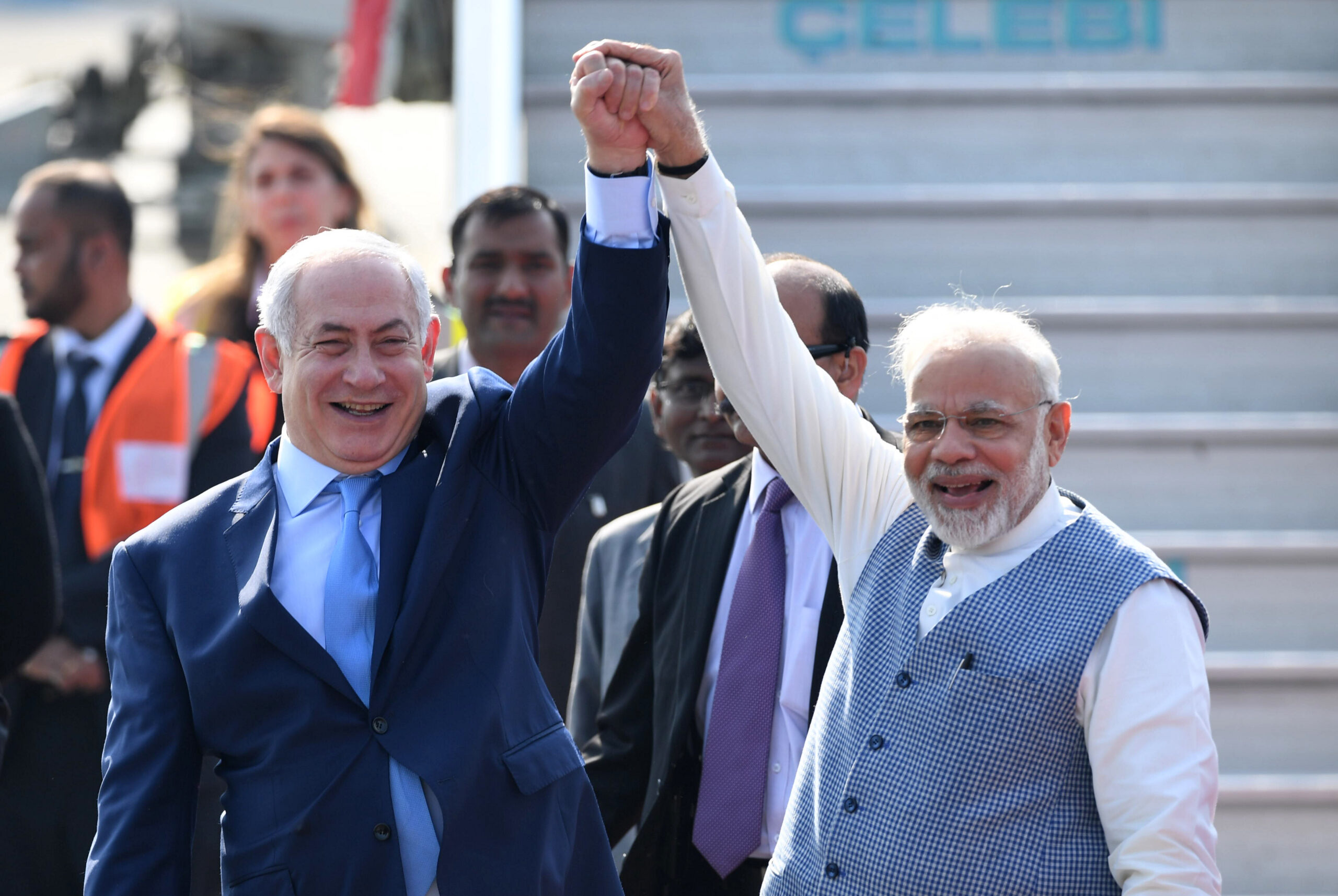
Indian Prime Minister Narendra Modi is set to arrive in Israel on Wednesday to address the Knesset and head an innovation event in Jerusalem, as part of what Israeli Ambassador to India Reuven Azar told Jewish Insider’s Lahav Harkov is an “upgrade” in relations between the countries “to a new, strategic level.” The visit of the head of the world’s most populous nation, whose relations with Israel have grown stronger since Modi became prime minister in 2014, has important implications for the Jewish state’s security, geopolitics and trade, Azar said.
Friends in arms: India has been the Israeli defense industry’s largest customer in recent years, with arms sales totaling $20.5 billion during 2020-2024. The countries have reportedly closed deals worth $8.6 billion since the beginning of 2026. During his visit, Modi plans to sign an “updated security agreement to allow the private sector to work on more sensitive products when it comes to joining production,” Azar, who has been Israel’s envoy to India since September 2024, said. “The updated protocols will allow us to work on more sensitive technology. It will create a lot of action.”
Bonus: Globes does a deep dive into the defense cooperation between Israel and India.
SHIFTING STANCE

Progressive activist Sue Altman shook up the race in New Jersey’s 12th Congressional District earlier this month when she announced she was entering the already packed field of Democratic candidates to replace retiring Rep. Bonnie Watson Coleman (D-NJ) in the House, immediately becoming the presumptive front-runner, Jewish Insider’s Marc Rod reports.
Now and then: Altman ran as a pro-Israel progressive when she was the Democratic nominee in the neighboring district, where she lost to Rep. Tom Kean Jr. (R-NJ). In audio shared by the anti-Israel publication Drop Site, Altman said she’s reassessing elements of her position towards Israel from 2024 and working on a new position paper. “A lot has happened since then. It has been a horrific tragedy,” Altman said, in an unknown setting. “I always looked up to Israel as a young person. … Israel is an important ally to the United States, but what has happened in Palestine is just horrific, and I don’t want our taxpayer money being used to kill children and women who are innocent.”
PRAIRIE STATE OF PLAY
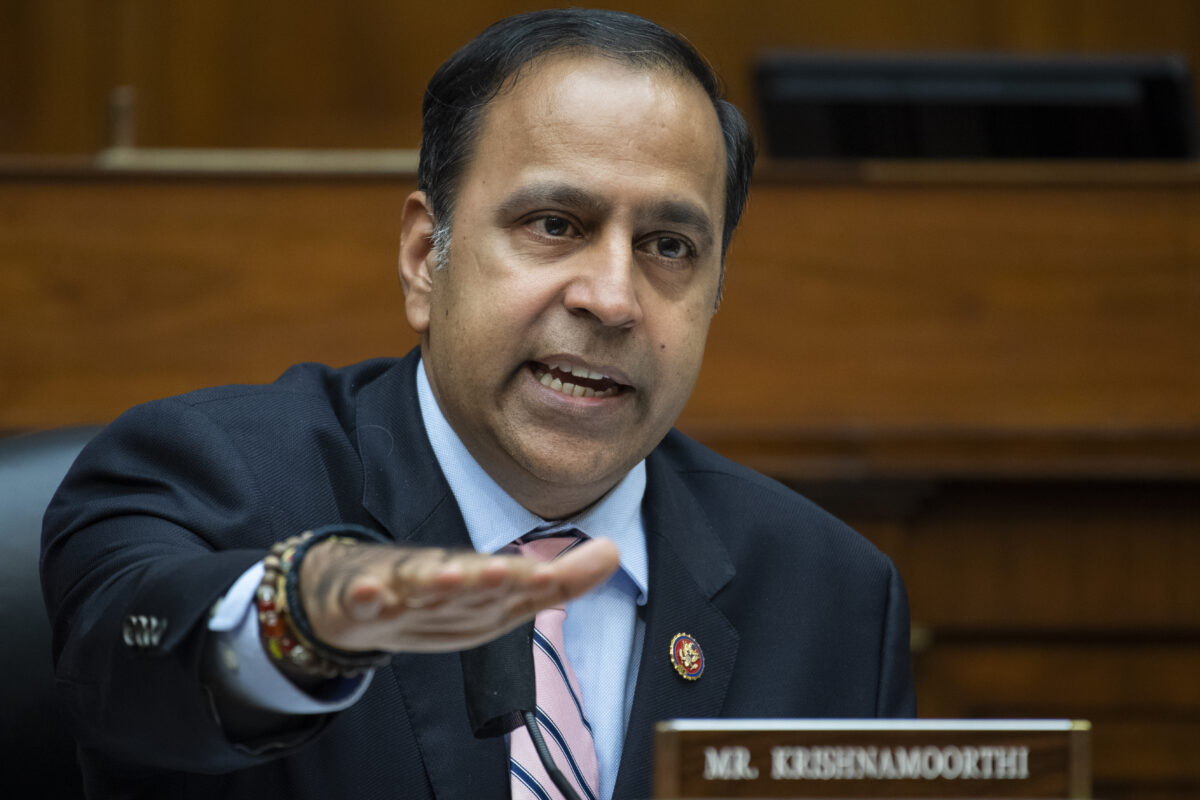
Democrats running for the open Senate seat in Illinois are increasingly trying to differentiate themselves on Israel policy ahead of next month’s primary, Jewish Insider’s Marc Rod reports. In the final weeks of the campaign, Illinois Lt. Gov. Juliana Stratton appears to be trying to straddle a line on Israel policy between Rep. Raja Krishnamoorthi (D-IL), who has a largely pro-Israel record, and Rep. Robin Kelly (D-IL), who has been increasingly critical of Israel.
Debate watch: Stratton, of the three, has the least established record on Middle East policy issues, and her approach was on display at a debate last week with fellow candidates, where she did not offer direct answers to questions on whether additional conditions should be applied to U.S. aid to Israel or whether the war in Gaza constitutes a genocide. “I can tell you that as our democratic ally in the Middle East, I believe that Israel has a right to safety and security, but at the very same time, I totally disagree with the way that [Israeli Prime Minister Benjamin] Netanyahu has responded to those attacks, and I believe that he should be removed from power, or he should step down, and there should be elections, as the people have been calling for,” Stratton said. Israel is set to go to elections in October.
AID ARRANGEMENT
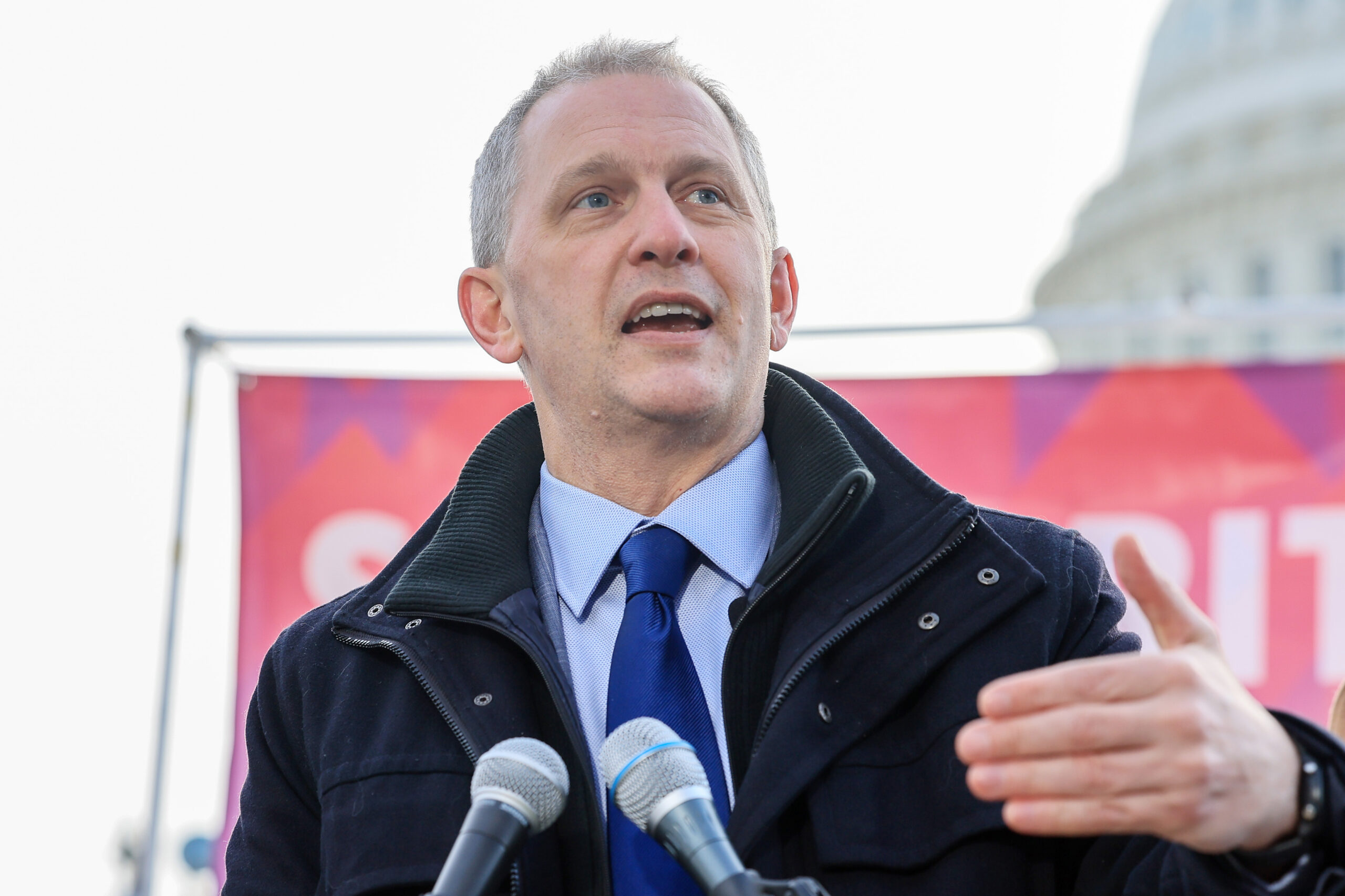
Rep. Sean Casten (D-IL) and 25 Democratic co-sponsors introduced a bill on Monday that would implement wide-ranging new conditions and restrictions on U.S. aid to Israel, Jewish Insider’s Marc Rod reports.
Conditions: The “Ceasefire Compliance Act” would require the administration to assess and report to Congress every 90 days on whether Israel is complying with the ceasefire agreement in Gaza, including halting military operations and bombing campaigns, as well as a raft of other conditions related to Gaza and the West Bank. If Israel does not meet any of the conditions included in the law, the U.S. would be banned from selling or transferring any U.S. military systems to Israel for use in Gaza or the West Bank. In addition, any further transfers would be subject to a specific agreement by Israel that the weapons would not be used in Gaza or the West Bank and the administration would be required to reach an agreement with Israel that U.S.-origin systems already in Israel’s possession would also be banned from use in Gaza or the West Bank.
DELAWARE DISPOSITION
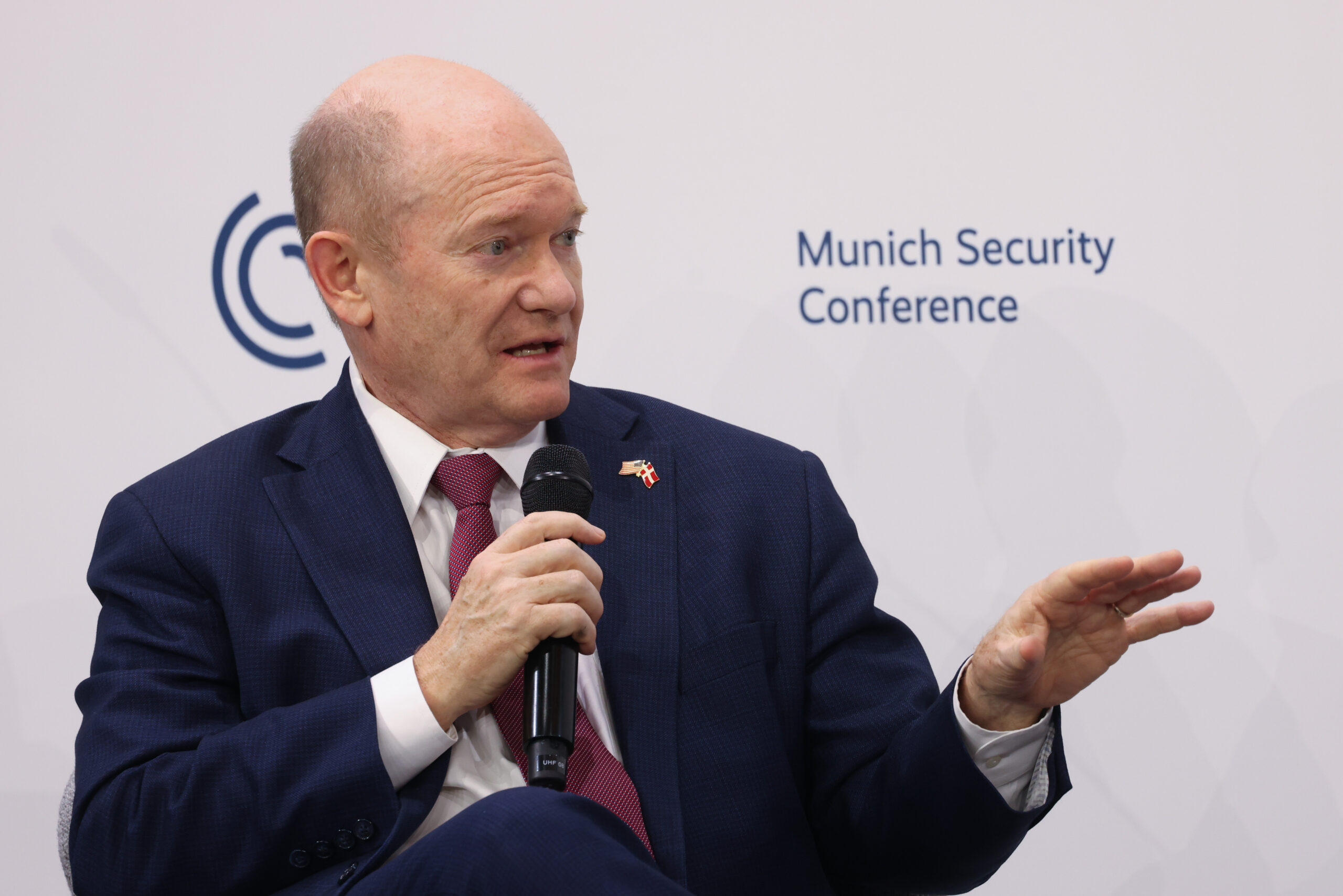
Sen. Chris Coons (D-DE), one of the leading foreign policy voices in the Democratic Party’s moderate wing, expressed concern over the weekend that any White House decision to move ahead with military action against Iran would deeply alienate leading European allies of the United States. “There are pretty stark early warning signs of some challenges where core allies do not share our priorities,” Coons told Jewish Insider’s Emily Jacobs following a weeklong trip to Europe, which included stops at the Munich Security Conference, along with meetings in Ukraine and Moldova with top European diplomats.
Coons’ concerns: “It leaves me genuinely concerned that if Trump goes ahead with a strike against Iran, it is not going to enjoy support from any of our core allies,” he continued. “That will make it harder, and it may deepen this growing challenge for us.” Asked how he would like to see the Trump administration address the Iranian regime’s violent crackdown on protesters and its nuclear program, Coons urged the president to work with close allies to “ramp up pressure” on Tehran and explain his approach to the public. The Delaware senator also encouraged Trump to include Congress in his deliberations.
Worthy Reads
Class Warfare: Semafor’s Ben Smith reviews the “bad ideas” that have emerged since the start of the year, citing as one the phrase “Epstein class” that was popularized by Rep. Ro Khanna (D-CA) and Sen. Jon Ossoff (D-GA) to describe a specific, largely Jewish set of power brokers. “The notion that there is a ‘class’ that includes Noam Chomsky and Howard Lutnick makes little sense except to lunatic antisemites. But hustlers of various sorts have long targeted elites for their own purposes. Take the crypto founder Sam Bankman-Fried, who contributed to Ossoff and Khanna’s political campaigns. It would be absurd to see Ossoff, Khanna, Tom Brady — a paid spokesman for Bankman-Fried’s crypto exchange — and me as part of an ‘SBF class.’” [Semafor]
Trump and Tucker: The Bulwark’s Will Sommer spotlights the relationship between President Donald Trump and Tucker Carlson and the “seeming impunity” the commentator, who platforms Holocaust deniers and antisemitic conspiracy theorists, enjoys even as he complicates relations between the White House and traditional conservatives. “Ultimately, Carlson’s perseverance in Trump’s orbit is a remarkable testament to his staying power. Lesser media luminaries would have been pushed to the outskirts of punditry. The question now is how long the alliance between the administration and Carlson can hold. After all, there are several major factions now tugging at Trump, including Israel supporters like [Laura] Loomer and Ben Shapiro, and the [Vice President JD] Vance faction that Carlson is close to. As 2028 gets closer, expect many more fights over the White House guest list — and a whole lot more drama.” [TheBulwark]
Word on the Street
The Trump administration’s Board of Peace is considering using a form of cryptocurrency known as stablecoin in Gaza as an alternative to cash, which is in short supply after more than two years of war…
The State Department ordered non-essential personnel at the U.S. Embassy in Beirut, as well as their family members, to leave Lebanon, and is restricting the in-country travel of diplomats still stationed in the country…
Michael Sacks, a prominent Jewish Chicago-area Democratic donor and philanthropist, lamented rising anti-Israel sentiment and antisemitism after a progressive Illinois congressional candidate, union organizer Anthony Driver Jr., issued a public statement saying he would reject the donor’s contribution to his campaign due to his ties to AIPAC, Jewish Insider’s Marc Rod reports…
City & State New York profiles New York City Council Speaker Julie Menin as she settles into her new role, describing her as “someone who hopes to steer the council with a firm hand, notching real accomplishments” as well as “a structural counterweight to Mamdani and his fledgling administration”…
Organizers of the Atlanta Jewish Film Festival issued an apology following an uproar over the inclusion of a film festival student judge with an extensive history of criticizing Israel and comparing the war in Gaza to the Holocaust; the Israeli consulate in the Southeast, based in Atlanta, had withdrawn its support of the festival over the AJFF’s initial defense of the juror, who is the leader of the Morehouse College Muslim Student Association…
The New York Times profiles Saks Global head Richard Baker, whose newly formed company filed for bankruptcy just over a year after it was created in a merger between Saks Fifth Avenue, Neiman Marcus and Bergdorf Goodman…
The Nate D. Sanders auction house announced the upcoming sale of a letter signed by Ze’ev Jabotinsky written in 1938 as part of the Revisionist Zionism founder’s efforts to raise funds for a mass evacuation of European Jews ahead of Germany’s annexation of Austria…
Former U.K. Ambassador to the U.S. Peter Mandelson was arrested on suspicion of misconduct while in office, charges connected to Mandelson’s relationship with Jeffrey Epstein…
France is blocking U.S. Ambassador Charles Kushner from directly accessing government officials after Kushner did not appear in response to a summons from French Foreign Minister Jean-Noël Barrot over the U.S. envoy’s comments earlier this month about the death of a far-right French activist…
In The New York Times, music critic Anthony Tommasini reflects on Anne Frank’s love of music as he experiences the arts in the diarist’s adopted city of Amsterdam, where she and her family lived until they went into hiding…
Australia began a royal commission, its highest form of federal inquiry, into the December 2025 terror attack targeting a Hanukkah party at Sydney’s Bondi Beach…
Internal investigators at Binance found that roughly $1.7 billion had been sent from Binance accounts to Iranian entities with ties to terror groups…
Pic of the Day
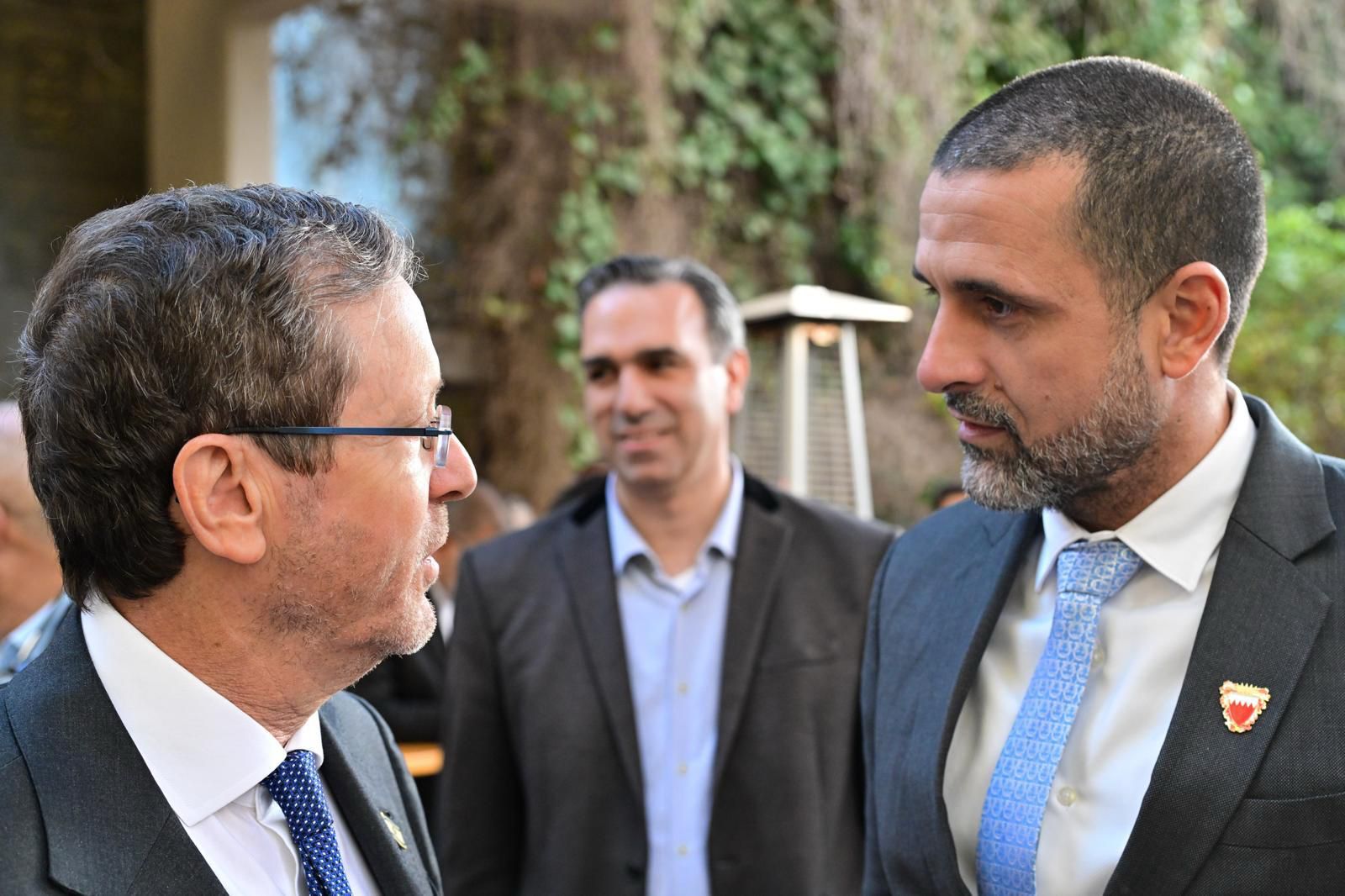
Israeli President Isaac Herzog hosted an iftar at the President’s Residence in Jerusalem last night for diplomats, religious leaders and Arab-Israeli community leaders. Among those in attendance were Bahraini Ambassador to Israel Khaled Yousif al-Jalahma (at right, with Herzog) and Emirati Ambassador to Israel Mohamed al-Khaja.
Birthdays
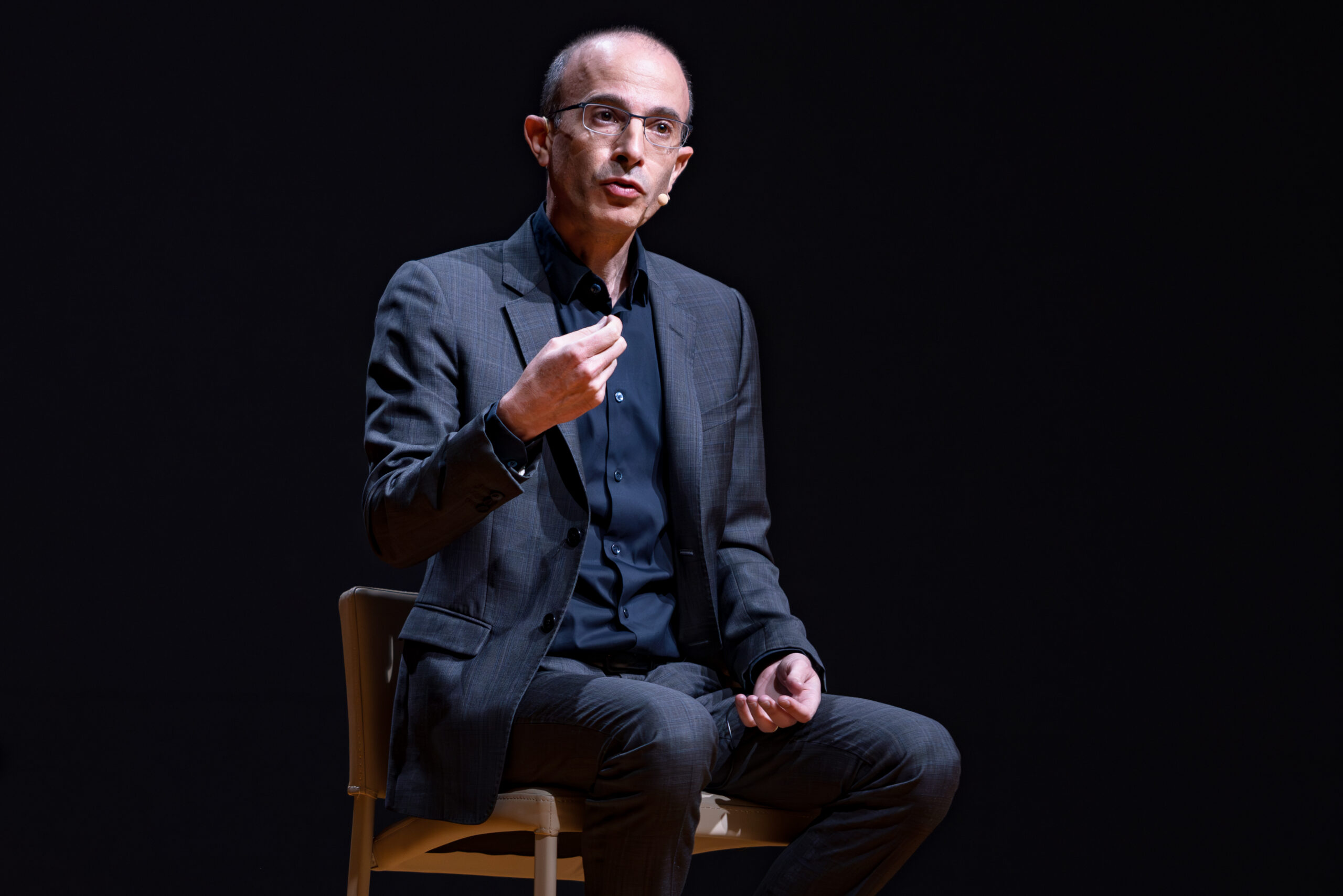
Professor of history at the Hebrew University, his books have been translated into 65 languages and have sold over 45 million copies, Yuval Noah Harari turns 50…
Chairman and CEO of Warner Bros until 2001, then chairman and CEO of Yahoo, Terence Steven “Terry” Semel turns 83… Moscow-born professor of mathematics at Yale University since 1991, Grigory Margulis turns 80… Encino, Calif., resident, Faye Gail Waldman… Rabbi and author of a book about chocolate and Judaism, she has held leadership positions in the national and regional Reform movement, Deborah R. Prinz turns 75… President of the Foundation for Defense of Democracies, Clifford D. May turns 75… Member of the New Jersey Senate (R-21) since 2022 following 18 years in the N.J. General Assembly, Jon M. Bramnick turns 73… Head basketball coach in a Puerto Rican league, he coached in the Israeli Premier League and has been on NBA and college basketball staffs in the U.S., Brad Greenberg turns 72… Film critic for Entertainment Weekly and then for Variety magazine, Owen Gleiberman turns 67… Founder of the Baltimore Center of Advanced Dentistry, Gary H. Bauman, DDS… Former member of the Knesset for the Likud party, Nurit Koren turns 66… Managing director at SKDKnickerbocker, Karen Olick… Former Israeli minister of health and leader of the Meretz party, Nitzan Horowitz turns 61… Professor of piano and artist-in-residence at the University of Alabama at Birmingham, Yakov Kasman turns 59… Author, survival expert, anthropologist and TV host, Josh Bernstein turns 55… Member of the Knesset for the Likud party, now serving as minister of science, technology and space, Gila Gamliel turns 52… Kyiv-born founder of WhatsApp in 2009, he sold the company to Facebook in 2014 for $19 billion, Jan Koum turns 50… NYC-based independent filmmaker, who, together with his older brother Joshua, directed and wrote the 2019 film “Uncut Gems” starring Adam Sandler, Benjamin Safdie turns 40… Partner at MizMaa Ventures Limited, Aaron Applbaum… Israeli actress and model, she has appeared in advertising campaigns for Urban Outfitters, Samsung and Sephora, Dar Zuzovsky turns 35… YouTube beauty guru known as RCLBeauty101 with 14.3 million subscribers, Rachel Claire Levin turns 31… Mitchell Brown…
In an interview with JI, Amb. Reuven Azar says joint manufacturing ‘means that, during times of need, we can supply things to each other, unlike what happened [with other countries] during the war’
PRAKASH SINGH/AFP via Getty Images
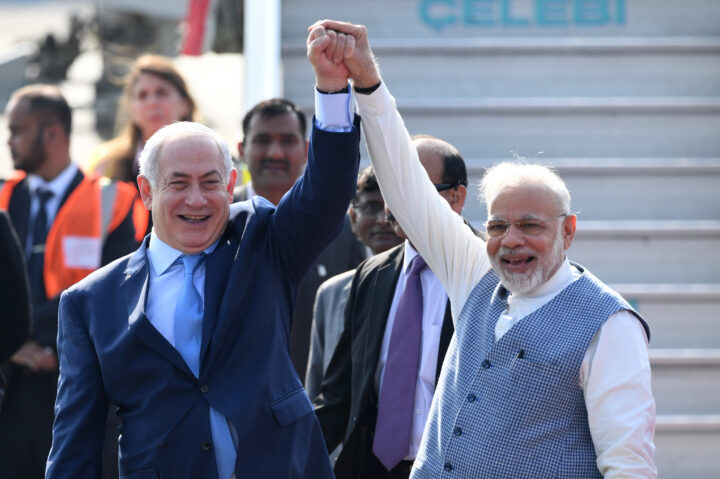
Indian Prime Minister Narendra Modi (R) and Israeli Prime Minister Benjamin Netanyahu pose for photographers after Netanyahu arrived at the Air Force Station in New Delhi on January 14, 2018.
Indian Prime Minister Narendra Modi is set to arrive in Israel on Wednesday to address the Knesset and head an innovation event in Jerusalem, as part of what Israeli Ambassador to India Reuven Azar told Jewish Insider is an “upgrade” in relations between the countries “to a new, strategic level.”
The visit of the head of the world’s most populous nation, whose relations with Israel have grown stronger since Modi became prime minister in 2014, has important implications for the Jewish state’s security, geopolitics and trade, Azar said.
Modi last visited Israel eight years ago. At the time, a photo of the Indian leader and Israeli Prime Minister Benjamin Netanyahu wading barefoot in the Mediterranean Sea during a visit to a desalination plant went viral.
His trip this week, during which he will address Israel’s Knesset, comes amid rising tensions across the Middle East — and as Israelis prepare for a potential attack from Iran.
India has been the Israeli defense industry’s largest customer in recent years, with arms sales totaling $20.5 billion during 2020-2024. The countries have reportedly closed deals worth $8.6 billion since the beginning of 2026.
During his visit, Modi plans to sign an “updated security agreement to allow the private sector to work on more sensitive products when it comes to joining production,” Azar, who has been Israel’s envoy to India since September 2024, said. “The updated protocols will allow us to work on more sensitive technology. It will create a lot of action.”
Netanyahu and leading Israeli defense figures have spoken about moving toward greater self-sufficiency in arms manufacturing. Delhi has long had a “Make in India” campaign to increase local production, requiring Israeli arms companies to open production lines in India in order to sell to the country, and the agreement means that joint production “will get a significant upgrade, because we are expanding both the scope and range of technologies we can apply,” Azar said.
“Both Israel and India want to be more independent and self-reliant when it comes to production and less reliant on foreign supply. Producing things together means that, during times of need, we can supply things to each other, unlike what happened during the war [in Gaza] … in which we had interruptions in supply from different countries,” Azar said.
Economically, Israel and India are working on a free-trade agreement, and hope to expand their cooperation on emerging technologies, as well as large infrastructure projects. Azar said that he worked to bring Indian companies to bid on tenders relating to the ongoing Tel Aviv Metro subway project, and that 15 have already applied.
The U.S. has long expressed concern about security risks related to Chinese companies working on major infrastructure projects in Israel. Companies from India, which views China as an adversary, have been considered as a potential competitive alternative.
Though Azar, a former deputy national security advisor for foreign policy, served as head of the Israel-U.S.-China Internal Task Force Israel’s Foreign Ministry at the beginning of the decade, he declined to comment on that aspect, preferring to focus on Israel-India bilateral relations.
With regard to the India–Middle East–Europe Economic Corridor (IMEC), a trade route meant to pass through Israel, among other countries in the region, and compete with China’s Belt and Road Initiative, Azar said that “we need to wait for the right geopolitical moment to make it happen. … It needs to happen, but evidently, it won’t now.”
“Currently, there is some movement of merchandise, but to see it become massive, we need some change in Saudi Arabia,” Azar said.
Saudi Arabia and the U.A.E., both points on the IMEC route, are facing increased tensions between them. Riyadh has pointed some of its ire at Jerusalem, and has been growing closer to India’s historic foe, Pakistan.
Azar was enthusiastic about an Israeli Cabinet decision approved on Sunday in which Israel plans to allocate over $48 million to cooperation with India in a variety of spheres. Half of the funds come from individual government ministries seeking the cooperation, and the other half was specially allocated by the Finance Ministry.
“The most important is upgrading research and development with funds from the Israel Innovation Authority, and academic cooperation. Israeli universities are all over India now, getting into agreements to exchange students and transfer technology and innovation offices. They feel very welcome in India,” he said.
Asked if that means India has become an alternative to much of the West, where Israeli academics have faced hostility in recent years, Azar said that India and Israel “don’t have challenges in this realm and continue working together to discover the joint resilience so needed in times of war.”
At the same time, he added, “it’s important for any country to diversify. We feel we have so much in common with India, which is a rising force in the world. It’s natural, and it’s not only Israel. Last week, 20 heads of state and 50 foreign ministers went to an AI summit in India. … Everybody is chasing India now.”
Though India-Israel relations were worse before Modi’s rise, Azar said they have the potential for longevity.
“We are now building the pillars of relations that are going to last,” he said. “We are trying to get bipartisan support. There is a lot of support for Israel, not just in [Modi’s Bharatiya Janata Party]. The general public feels it, and we have a high appreciation of that. There are some parties, like the communists, that are more critical, but I think this relationship is going to last.”
Please log in if you already have a subscription, or subscribe to access the latest updates.
 Continue with Google

 Continue with Apple
