










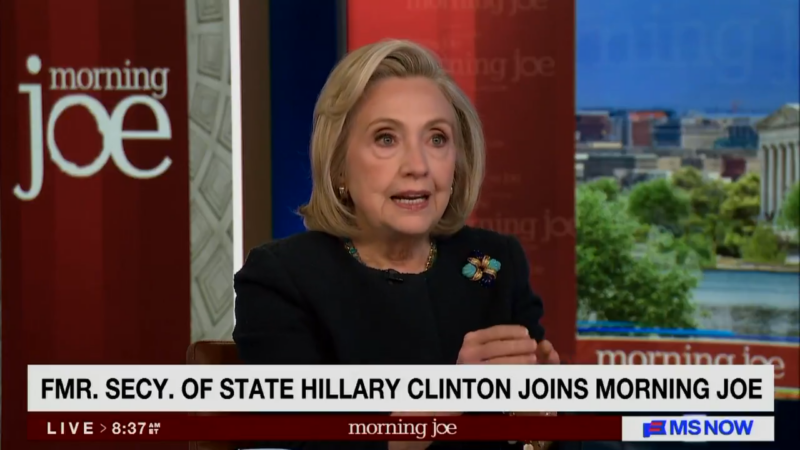

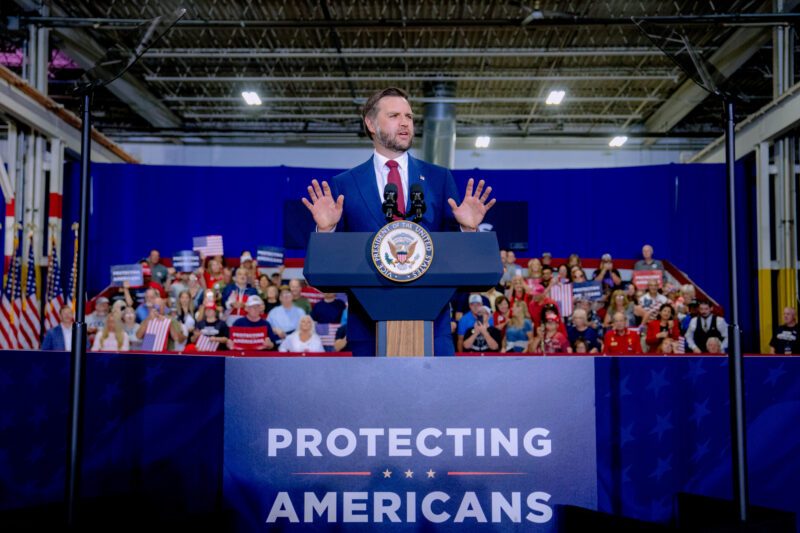

















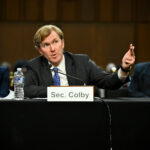





Sen. Richard Blumenthal (D-CT): ‘There are very serious, potential negative impacts on our national security and they include changing the qualitative edge for Israel’
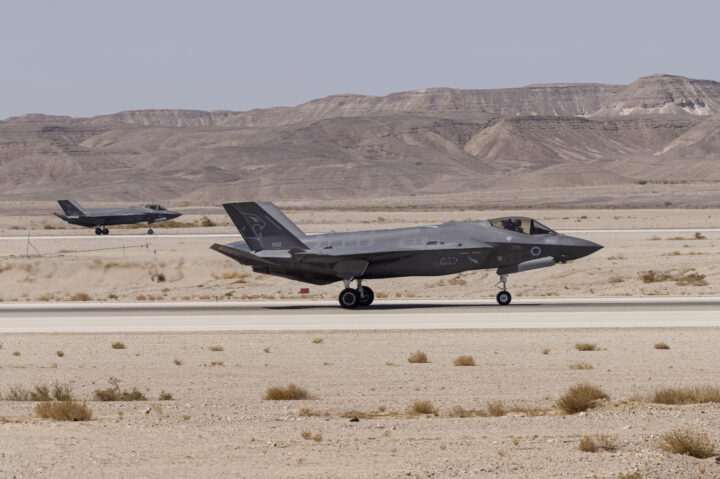
Tsafrir Abayov/AP Photo
An Israeli F-35 lands at Ovda airbase during the bi-annual multi-national aerial exercise known as the Blue Flag, at Ovda airbase near Eilat, southern Israel, Sunday, Oct. 24, 2021.


 Add JewishInsider on Google
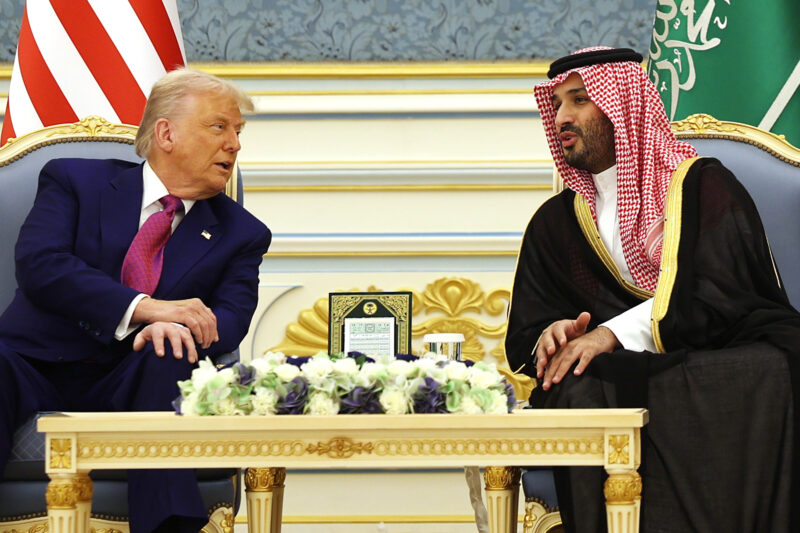
Senate Democrats echoed their House counterparts on Tuesday in expressing concern about President Donald Trump’s announcement of a deal to sell advanced F-35 fighter jets to Saudi Arabia.
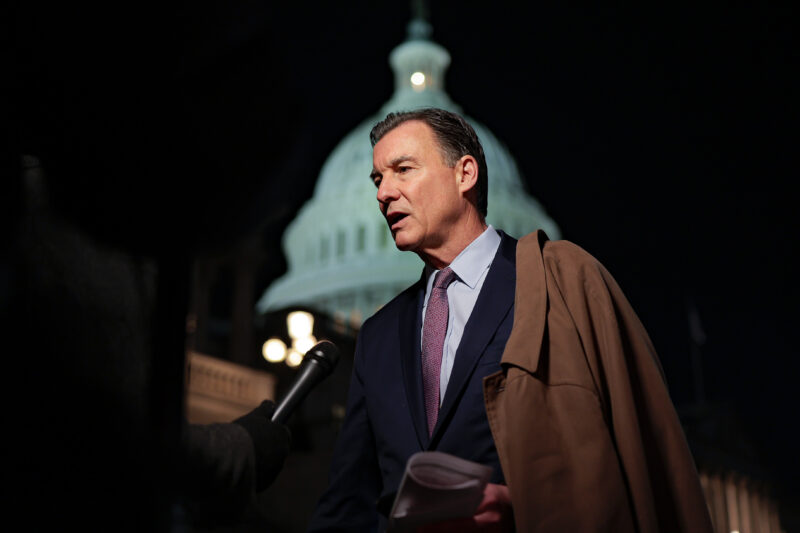
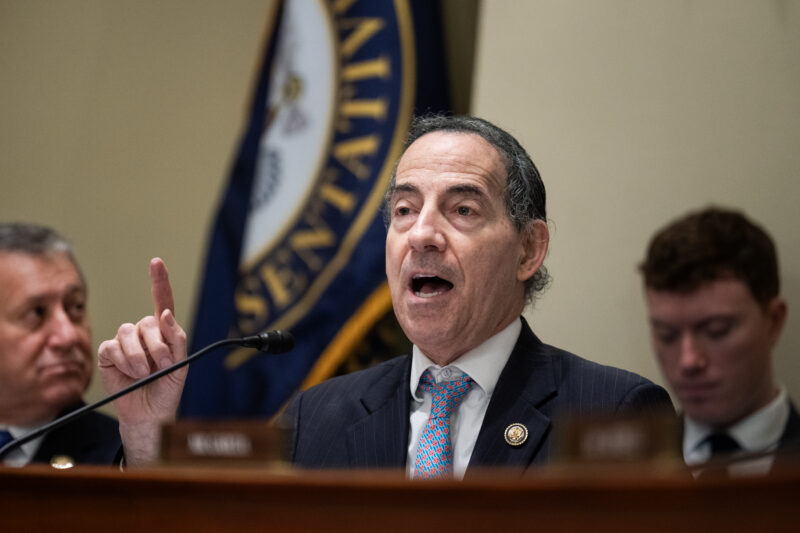
Sen. Richard Blumenthal (D-CT), who serves on the Armed Services Committee, told Jewish Insider, “I think there are very serious, potential negative impacts on our national security and they include changing the qualitative edge for Israel, the possibility of a hostile use of them [the jets], the absence of any normalization agreement, which should be part of it, so I think there ought to be very close, critical scrutiny.”
The prospect of advanced weapons sales to Saudi Arabia — along with several other deals announced by Trump on Tuesday with Saudi Crown Prince Mohammed bin Salman — had previously been linked to Saudi Arabia joining the Abraham Accords, something the kingdom is unwilling to do without a “clear path to a two-state solution,” MBS said.
Blumenthal said he was unsure if he would meet with the crown prince during his visit to Washington this week, citing scheduling conflicts. The Connecticut senator said that he’d like to ask MBS about the path forward toward normalization with Israel and the kingdom’s role in the future of Gaza.
“What’s the path to normalization? Realistically how can we get there as quickly as possible? Because it’s so important to peace and stability in the region,” Blumenthal told JI. “What are the Saudis willing to commit to do for the international security force and for reconstruction of Gaza and financial peace?”
Sen. Mark Kelly (D-AZ) described the jets as an “incredibly capable airplane” and noted that “Israel has F-35s, [as do] some of our other allies.” The Arizona senator said that while he supports the U.S. engaging with the Saudis, he had reservations about selling them the jets.
“Is this the step to some kind of bigger security arrangement in the Middle East? We’ll have to see. I think there’s some benefits for Israel and for Saudi Arabia and for the United States if that’s the case,” Kelly told JI. “I am always concerned about our best technology winding up in the proximity of any of our adversaries. The Chinese have been attempting to build a port there in the UAE, that’s pretty close. So I do worry about these things.”
Some in the Defense Department have reportedly expressed concerns that a sale of the jets to Saudi Arabia would provide China with an opportunity to take or compromise sensitive American technologies.
“I have concerns about it, and also about how the Saudis are going to use these planes,” he added.
Kelly said that if he were a member of the Foreign Relations Committee he would want assurances that China would not have access to U.S. technology before approving the sales.
“If I was on SFRC and had the ability to approve this, I’d want a lot of assurances that the Saudis are going to protect that technology,” Kelly said. “The Chinese would love to get close to these airplanes, to get the radar signatures, if they’re not stealing it from us already.”
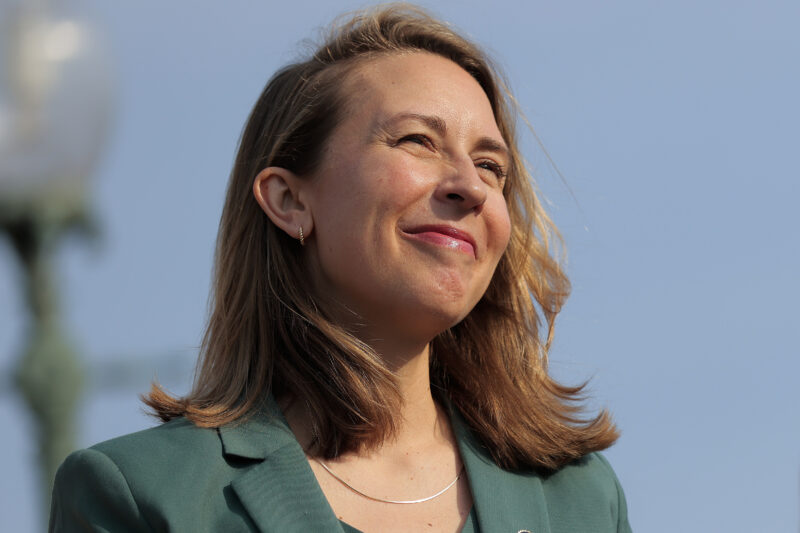
Sen. Jeanne Shaheen (D-NH), the ranking member of the Senate Foreign Relations Committee who will have some ability to obstruct or slow the deal, was deeply critical of multiple announcements made by Trump during his White House summit with MBS.
Shaheen said in a statement that the F-35 deal “raises major concerns about protecting U.S. military technology and the military edge America shares with our allies” and demanded the administration “fully explain to the Senate Foreign Relations Committee why this sale is in the vital national interest of the United States.”
The senior Democrat also said that any security agreement made with Saudi Arabia without Senate approval “is very troubling” and would be non-binding and “easily reversed” by a future administration.
“Bypassing Congress on commitments of this scale sets a dangerous precedent, especially after a similar agreement with Qatar without Senate approval,” Shaheen said.
She also said that any nuclear deal with Riyadh, which Trump said on Tuesday he is pursuing, must ensure that it cannot enrich or reprocess nuclear material and include stringent inspections, and warned that “Saudi Arabia’s stated intention to acquire nuclear weapons if Iran does demands extreme caution.”
Shaheen also warned that any deal to provide advanced computer chips to Saudi Arabia must be made in consultation with Congress to protect America’s AI and technological edge over China.
Republican Sen. Markwayne Mullin (R-OK), an Armed Services Committee member, indicated support for the deal, saying, “we have strategic partners around the region and this has been a discussion going on for a long time. … It’s, I think, a [move] in the right direction.”
Other Republicans have also backed the president on the issue.
Mullin said he’d also like to see the United Arab Emirates acquire F-35s. During his first term, Trump sealed a deal to sell the jets to the UAE — in connection with the signing of the Abraham Accords — but the Biden administration suspended the deal due to concerns about the UAE’s relationship with China.
The UAE has since expressed it is no longer interested in reopening the deal.
Mullin said he’s planning to meet with the Saudi crown prince on Wednesday if their schedules allow, to “continue [the] conversation” from past meetings.
Please log in if you already have a subscription, or subscribe to access the latest updates.
 Continue with Google
 Continue with Apple