































Cheney, seen as a particularly powerful vice president, was a key voice in the George W. Bush administration during the War on Terror
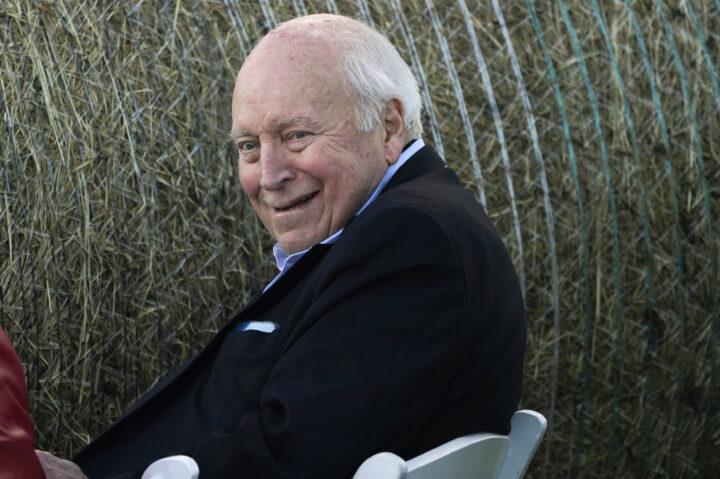
AP Photo/Jae C. Hong
Former Vice President Dick Cheney attends a primary election night gathering for his daughter, Rep. Liz Cheney, R-Wyo., Aug. 16, 2022, in Jackson, Wyo.


 Add JewishInsider on Google
Former Vice President Dick Cheney, who died Monday, was remembered by former officials and pro-Israel leaders as a supporter of the Jewish state and a strong voice on U.S. national security issues throughout his time in public service.
Cheney, seen as a particularly powerful vice president, was a key voice in the George W. Bush administration during the War on Terror and also served as secretary of defense under President George H.W. Bush, chief of staff to President Gerald Ford and a leader in the House Republican Conference as a representative from Wyoming.
“He was always a big supporter of Israel while he was in the Bush administration but also before, as a congressman and as defense secretary in the first Bush years,” Tevi Troy, a presidential historian who served in the George W. Bush White House, told Jewish Insider, also highlighting the prominent pro-Israel voices with whom Cheney surrounded himself as vice president.
“I was always very impressed by how well-prepared he was, how knowledgeable he was and how focused he was,” Troy continued. “In meetings with President Bush, he usually didn’t say much — because he knew that if he said something, it might color how the room reacted. But he would give his views. He would listen attentively in the meetings and he would give his views to Bush afterwards. … He was revered in the administration, and if he did weigh in on an issue, you knew that he was going to have a lot of sway on that issue. But he also knew what the role of vice president was.”
Troy, reflecting on the dynamics between the president and vice president in several recent administrations, said that Cheney stands out in both his skill and knowledge but also in the fact that he had no ambitions to run for president — which Troy said gave his counsel “more weight.”
“It wasn’t about what his long-term ambitions were, but what he thought was best for the administration and the country,” Troy said.
Danielle Pletka, a distinguished senior fellow at the American Enterprise Institute, said that like other Republicans of his generation, Cheney’s support for Israel deepened in the wake of the 9/11 attacks, as the U.S. and Israel faced a shared threat. She described him as a “great guy” who was “never confused about what was right.”
“I think he recognized that the Middle East that we had nurtured over decades was one that in many ways allowed for the growth of Al-Qaida and he set about helping to change those things,” Pletka said. “People excoriate him for the Iraq War — but I can assure you the people of Iraq don’t excoriate him.”
“At the end of the day, he was always an extremely fierce patriot and did what he thought was best for American interests, and like a lot of conservatives understood very clearly that our friendship and our partnership with Israel was part and parcel of that,” she continued.
Pletka also described Cheney as “very clear-eyed” about the threats the U.S. faced in the Middle East, including from Iran, and that he “believed in seizing opportunities” to disrupt Iran and other adversaries.
“When I think about how Iran was allowed to exploit the situation in Iraq — I know he did his utmost to ensure that we pushed back, often without success in the second half of the Bush administration,” she continued. “When we were losing in Iraq, he was absolutely instrumental in ensuring that the policy got turned around.”
Israeli Ambassador to the U.S. Yechiel Leiter said on X that the “passing of former U.S. Vice President Dick Cheney marks the loss of a great American patriot, a devoted public servant and a dear friend of Israel.”
“His leadership and his belief in the strength of the U.S.-Israel alliance will not be forgotten,” Leiter continued.
The Jewish Federations of North America, in a statement, described Cheney as a “a dedicated public servant who was a friend to the Jewish community and played a significant role in strengthening the strategic partnership between the United States and the State of Israel.”
JFNA said that Cheney “maintained enduring relationships with Jewish communal leaders and institutions, engaging in serious dialogue on matters of global security and the protection of Jewish communities worldwide,” “demonstrated an unwavering commitment to the security of Israel” and helped expand military ties between the U.S. and Israel.
AIPAC said in a statement that Cheney, in his various roles, “worked to strengthen the ties between” the United States and Israel and was “a strong supporter of the U.S.-Israel partnership.”
The Republican Jewish Coalition praised Cheney as “an American patriot and an unwavering friend of Israel and the Jewish community.”
“Vice President Cheney had a substantial role in meeting the greatest challenges our country faced in the last 40 years, including 9/11,” RJC Chairman Norm Coleman and CEO Matt Brooks said. “He understood the threats against the U.S. and the valuable role of U.S. allies, including Israel, in combatting them.”
Sen. Mitch McConnell (R-KY) said that Cheney’s “intellect, experience, and resolve made America safer” throughout his years in government service.
“As grave threats to our security continue to loom, his commitment to American leadership will remain a lesson,” McConnell continued.
In the latter years of his life, Cheney stood staunchly by his daughter, former Rep. Liz Cheney (R-WY), as she emerged as one of the most vocal critics of President Donald Trump in the Republican Party following the Jan. 6, 2021, attack on the U.S. Capitol.
Like his daughter, Cheney endorsed former Vice President Kamala Harris in the 2024 presidential election, describing Trump as a threat to democracy.
Former Rep. Jim Moran and his team have held dozens of meetings with members of Congress since the Oct. 7 Hamas terror attacks in 2023, mainly to talk about the Qatari role in the Middle East peace process
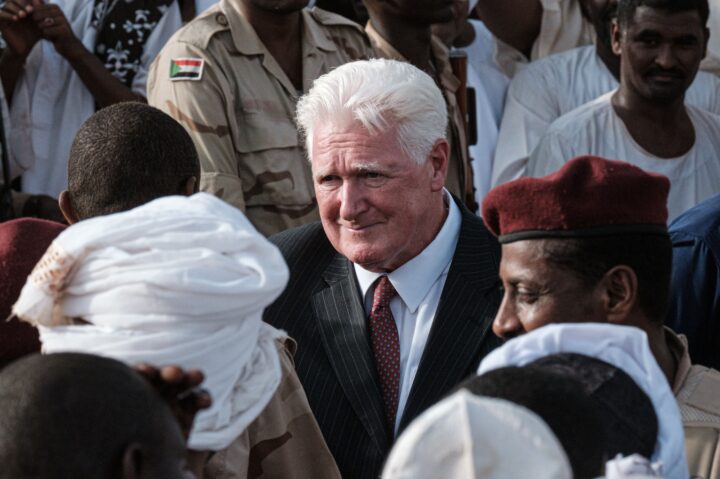
YASUYOSHI CHIBA/AFP via Getty Images
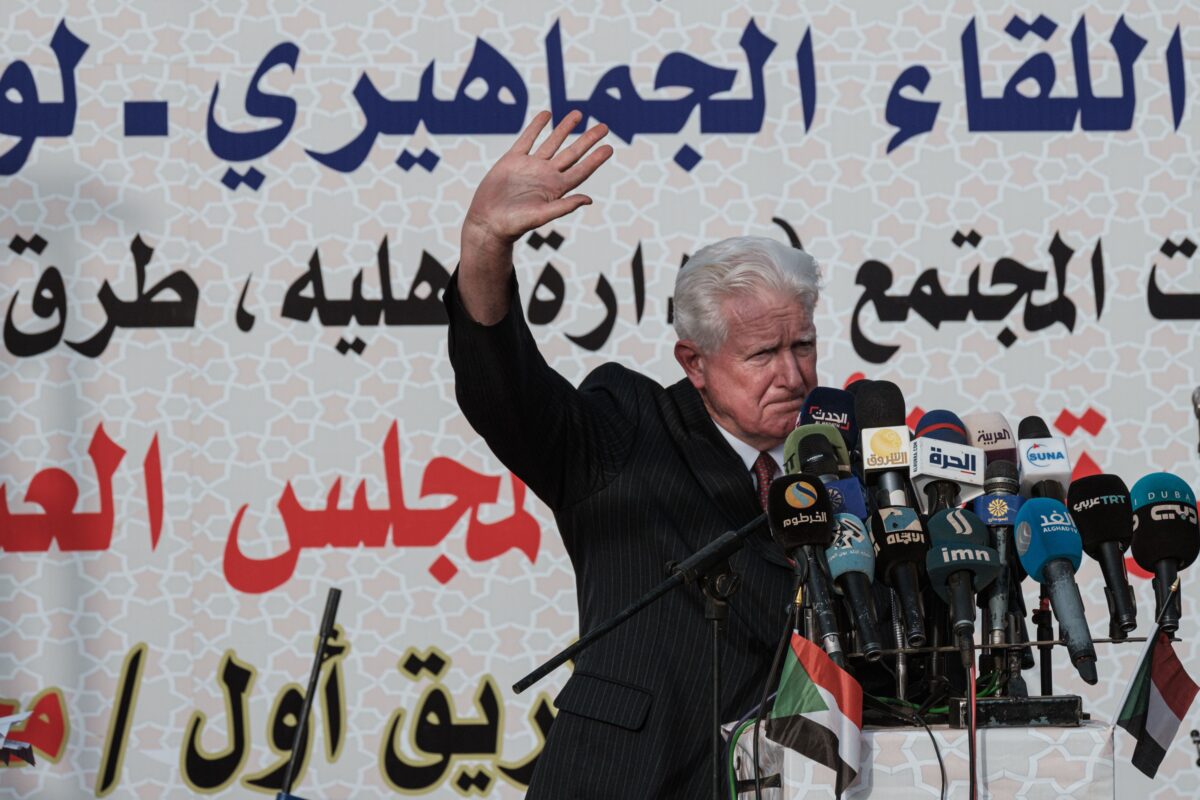
Former Rep. Jim Moran (D-VA) arrives to address a rally attended by supporters of Sudan's ruling Transitional Military Council (TMC) in the village of Abraq, about 60 kilometers northwest of Khartoum, on June 23, 2019.
During Jim Moran’s 24 years in Congress, the Virginia Democrat had a habit of putting his foot in his mouth, particularly when it came to his Jewish constituents.
In 2003, he blamed the Jewish community for President George W. Bush’s decision to invade Iraq, prompting several local rabbis to call for his resignation. Four years later he blamed AIPAC for the war. The blowback was so strong that when then-Sen. Barack Obama accepted Moran’s endorsement of his presidential campaign in 2008, he stated plainly that he disagreed with Moran’s views of the Jewish community.
Moran retired from Congress in 2015, but the 80-year-old still walks the halls of Capitol Hill. Now, he’s there as a lobbyist — primarily as a registered foreign agent lobbying on behalf of the government of Qatar.
He is a regular in the offices of high-ranking members of Congress and senators. And last month, during a House Education Committee hearing about antisemitism in higher education, Moran was conspicuously seated directly behind Robert M. Groves, the president of Georgetown University, which has a campus in Doha and has received more than $1 billion from the Gulf monarchy.
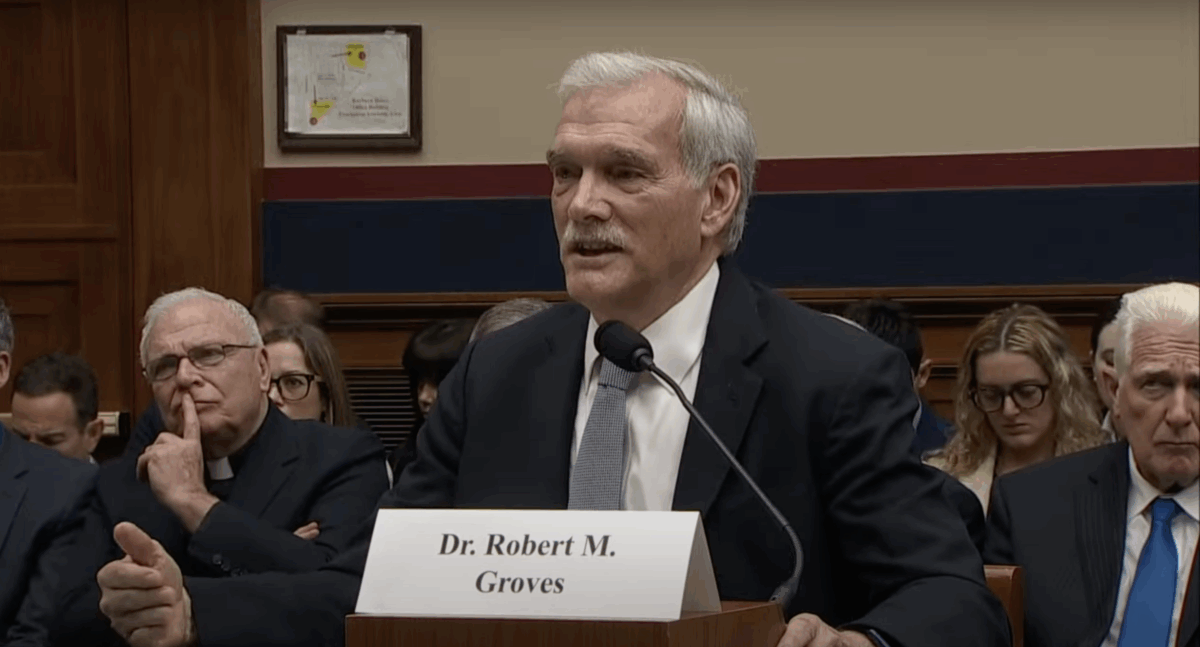
“Jim is one of these guys that people seem to like on both sides of the aisle. He’s been able to keep in contact with a lot of members when needed,” Tom Davis, a former Republican congressman from Virginia who Moran hired to help represent Qatar, told Jewish Insider.
A Georgetown source said Moran was not working with the university or sitting in one of Georgetown’s three allotted seats at the hearing. Still, there’s no doubt he is a highly influential foreign policy voice in Washington on behalf of a country with which America has a complicated relationship.
Qatar is a major non-NATO ally of the U.S., an official designation conferred by President Joe Biden, and is home to the largest U.S. military base in the Middle East. But it also has financial and diplomatic ties with Hamas and other terror groups. Qatar’s leaders say that is necessary so the country can maintain its role as a trusted mediator, while its critics say Qatar’s close relationship with Hamas makes it unlikely to put real pressure on the terror group to make a deal with Israel or to release the hostages. Some on Capitol Hill and in the pro-Israel community have expressed concerns that Qatar’s massive investment in American universities has fueled anti-Israel activism and antisemitism on campuses.
With a Boston accent leftover from his childhood, Moran has a penchant for talking tough — and acting tough, too. In the 1990s, at the start of his time in Congress, he occasionally threatened to brawl with fellow lawmakers, and once shoved another member of Congress off the House floor.
Moran was an early and consistent critic of Israel, long before the wave of anti-Israel sentiment that has exploded on the far left over the past two years. He has kept up ties with Jewish leaders in Northern Virginia, but those relationships grew strained as Moran repeatedly criticized pro-Israel advocates and Jewish activists.
“Jim is an extraordinarily compassionate man. He has trouble with suffering. His judgment about what constitutes suffering and who’s causing it is not always accurate, and so that has gotten him in a considerable amount of trouble over the course of his long political career,” said Rabbi Jack Moline, who served for 27 years as the rabbi at Agudas Achim Congregation in Alexandria. Moline met regularly with Moran until the rabbi called for Moran’s resignation in 2003, after Moran blamed Jews for the Iraq war, a comment the former congressman later said he “deeply regret[s].”
“His relationship with the Jewish community fell apart,” Moline told JI. “It didn’t surprise anybody when, after he finally did retire from Congress, he was offered and accepted work lobbying for Qatar.” He first registered as a lobbyist for Qatar in 2017. His firm, Moran Global Strategies, has been paid more than $2 million by Qatar in the last two years, according to data compiled by OpenSecrets. A spokesperson for the Qatari Embassy did not respond to a request for comment, nor did Moran Global Strategies.
Though Moran expressed contrition for his antisemitic remarks during the lead-up to the Iraq war, his rhetoric toward the Jewish community has only grown more inflammatory in the decade since he left Congress. In recent years, he has appeared on several virtual panel discussions held by the Arab Organization for Human Rights in the U.K., a London-based NGO led by Mohammad Jamil Hersh, a former Hamas activist who has been sanctioned by Israel and was deported by the country more than three decades ago. In those conversations, he regularly blasted the influence of American Jews and the “pro-Israel lobby.”
During a February 2023 AOHR event, Moran tried to explain Washington’s support for “apartheid” in Gaza by pointing the finger at American Jews and suggesting that they are unduly involved in the American political system.
“It’s about domestic politics and it always has been. The majority of people who contribute to the Democratic Party in America have Jewish surnames. Now think about that,” said Moran. He described them as people “whose principal reason for contributing to the political system in America has been the sine qua non of support for Israel, and unqualified support for Israel.”
In this and several other interviews, Moran recognized that his language was rather impolitic.
“I don’t want to sound antisemitic, and Palestinians are a Semitic people,” Moran said. “I’m just saying that let’s deal with the political reality in the United States that’s driving and reinforcing the injustice that’s occurring within Palestine.”
Moran and his team have held dozens of meetings with members of Congress since the Oct. 7 Hamas terror attacks in 2023 that spurred the ongoing war in Gaza, mainly to talk about “Qatar’s role in the Middle East peace process,” according to documents he filed with the Justice Department as required by the Foreign Agents Registration Act. At the same time, he has continued to question Jewish involvement in the American political system — including just days after Oct. 7, in a call hosted by the Muslim Public Affairs Council.
“The reality is that campaign contributions have corrupted the United States Congress. One of the motivating factors is, ‘How do I please my political supporters, particularly my financial supporters?’ The reality is that the Jewish community, and frankly to their credit, is deeply engaged in the American political process,” Moran said in the MPAC call. “That’s one of the motivating factors that causes the Congress to look the other way where the Middle East is concerned.”
Although he expressed skepticism about the supposed influence of American Jews in electoral politics, he encouraged Muslim, Palestinian and Arab Americans to increase their own influence. But his prognosis for their potential efficacy was grim. “I’m not sure they’re ever going to be able to successfully catch up,” Moran said.
Even as Moran took aim at Jews’ participation in the political process, he routinely downplayed accusations of antisemitism that have been lobbed at him directly and at the broader anti-Israel movement.
In September 2024, in another AOHR virtual briefing, Moran acknowledged that he would likely be called antisemitic for his comments accusing Israel of committing war crimes “daily” and for describing the situation in Gaza as “comparable to the Holocaust.”
“Foreign aid going into committing war crimes on a daily basis because of the politics, because of the campaign financing, because of the control of the media — it’s inexcusable. It’s an indictment of what has become of this democracy,” said Moran, without saying who, exactly, he thinks controls the media. “It’s an indictment of the fact that our foreign policy has been Israeli-centric, and let me say one other thing so that people don’t particularly accuse me of being antisemitic, although I’m sure many will: Many of those protests across the country were led by Jewish students.”
This spring, after President Donald Trump returned to office and began targeting universities, Moran was dispatched to Capitol Hill to talk to Democrats on the Senate Health, Education, Labor and Pensions Committee about Qatar’s funding of American higher education, which has come under the microscope.
It is notable that one of the people tasked with advocating for a country that is close to both America and Hamas seems to have a deeply rooted hostility to Israel and even to American Jews, particularly at a moment when Qatar’s dealings in the U.S. are facing greater scrutiny — such as when Trump said earlier this year that the U.S. would accept a Qatari gift of a luxury jet to use as Air Force One.
But Qatar has a suite of lobbyists who span the political spectrum. Moran primarily deals with Democrats. Qatar has in the past also targeted hundreds of conservative “influencers” to reach Trump’s inner circle, and employs several Republicans as lobbyists. Partisan politics is at play, too; Democratic lawmakers blasted the Air Force One move, while Republicans fell in line behind Trump.
Several prominent Trump administration officials have ties to Qatar, including Attorney General Pam Bondi, who said in her January Senate confirmation hearing that she remains “very proud” of the lobbying work she did for Qatar ahead of the 2022 World Cup. Steve Witkoff, Trump’s Middle East envoy and chief negotiator, has a history of business dealings with the country.
“If you take a look at the folks they’ve got representing them, they’ve been all over the lot on that issue. It’s certainly not a pro-Arab versus Israel issue,” said Davis, the Virginia Republican who works with Moran on the Qatar file. “There’s nothing there to indicate that their lobbyists have any kind of ideological bent on that issue.”
Correction: This story has been corrected to reflect that Moran began lobbying for Qatar in 2017, not 2023.
The conservative-leaning network has grown its audience in large liberal cities in the wake of Oct. 7 and campus protests

Erik McGregor/LightRocket via Getty Images
Sign at the main entrance to the FOX News Headquarters at NewsCorp Building in Manhattan.
For Fox News host Dana Perino, supporting Israel has been a given since the early days of her career, when she visited the Jewish state multiple times with President George W. Bush as his press secretary. Perino, who first arrived at the White House while the nation was reeling from the Sept. 11 terrorist attacks, worked alongside Bush, initially as his deputy press secretary, throughout the early years of the war on terror.
Two decades later, as co-anchor of Fox’s “America’s Newsroom,” Perino finds herself frequently drawing on those experiences, especially in the past year and a half as she’s reported on the aftermath of another crisis — Hamas’ Oct. 7, 2023, terrorist attacks in Israel, the ensuing war in Gaza and record-breaking levels of antisemitism in the U.S.
“Once you learn those issues, they are ingrained in you,” Perino told Jewish Insider, referring to the threats Jews face, in Israel and around the world. “Plus, if you care about doing the right thing — and an additional plus is working for a place that encourages you to do the right thing, that news comes first. To me, it was an obligation and an honor to tell the story the way it needed to be told: bluntly with really engaging guests that did not gloss over the complexities of the situation, but that [are] very honest about drawing a line between right and wrong.”
The sentiment has increasingly caught the eye of liberal-leaning American Jews who believe that much of the mainstream media’s coverage is unfairly hostile to Israel. Weeks after Oct. 7, Fox Corp.’s CEO, Lachlan Murdoch, told shareholders at the annual meeting that the network must “stand-up” to antisemitism.
It was then that even some staunchly liberal Jews found refuge in Fox’s coverage, which by the end of October 2023 had debuted a newsletter — and running section on its website — called “Antisemitism Exposed.”
Fox has also garnered attention for its Middle East coverage, with Tel Aviv-based chief foreign correspondent Trey Yingst leading the network’s coverage of the Israel-Hamas war. Yingst, who was the first reporter from a major American network on the scene on Oct. 7, 2023, following Hamas’ terrorist attack in southern Israel, detailed his firsthand account of the attacks and experience on the ground in Gaza in “Black Saturday,” his book published last fall.
Even as Fox has long been the leading news source for conservatives, ratings data from liberal-leaning major metropolitan areas show a spike in viewership that surpasses its rivals and has remained consistent since October 2023. (There is no publicly available data on the religious affiliation of the cable news viewing audience.)
According to Nielsen Ratings, between Oct. 8, 2023, and April 14, 2025, Fox News Channel viewership increased among its target demographic of 25-54 year-olds by 46% in L.A., 42% in New York, and 62% in Philadelphia. Comparatively, in those same cities, CNN viewership increased by 1%, 8% and 19%, respectively. MSNBC viewership declined by 8% in New York over the same period.
Fox News commentator and “The Five” co-host Jessica Tarlov, who is Jewish and one of the network’s liberal commentators, told JI she frequently hears from like-minded Jewish friends and peers in New York City that they’re increasingly watching Fox.
“A bunch of friends who are all Democratic voters, not part of the cohort who even switched over to voting for Trump on the issue of Israel in the 2024 election — I hear quite regularly people say they are making a choice to consume content that reflects the world they see — which is that there was a massive terrorist attack against the Israeli people and that’s the most important component of this and Hamas is the one that is regularly breaking these ceasefires,” Tarlov said.
“They are feeling underrepresented, and sometimes completely unrepresented, in some of the left-leaning coverage [at other networks]. They have found a home at Fox and are enjoying the rest of the coverage that we do on top of that.”
Reporting on college campus protests was “a huge lightning-bolt issue” on the topic of antisemitism, Tarlov said. But as university protests fizzle out in 2025 and other global and domestic events are taking attention away from the war in Gaza, Fox News has remained focused on the issue.
Earlier this month, its subscription service, Fox Nation, premiered “Rebound: A Year of Triumph and Tragedy at Yeshiva University Basketball,” a documentary that tells the story of YU’s basketball team’s challenges and successes in the wake of Oct. 7.
Perino said she’s made it a personal and professional goal to “never forget every day that there are hostages being held [in Gaza]. The story is not over.”
And it appears that more Jewish viewers are taking note of it these days — including in Israel, where an IDF soldier who accompanied Fox’s leadership on a visit to the Jerusalem bureau last year asked for a message to be delivered to “The Five” co-hosts in New York. “We love you all very much,” the soldier said in a video message. “Thanks for supporting Israel. This is a blessing from the IDF. Please come and visit us anytime. It is safe here. And when you come, you’re always welcome to each and every home.”
Please log in if you already have a subscription, or subscribe to access the latest updates.
 Continue with Google
 Continue with Apple