
































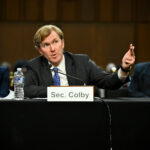


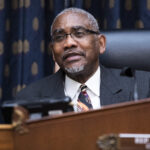



Rep. Debbie Wasserman Schultz said that Steve Witkoff denied that Iran had received any sanctions relief, and ended the call when pressed

Samuel Corum/Getty Images
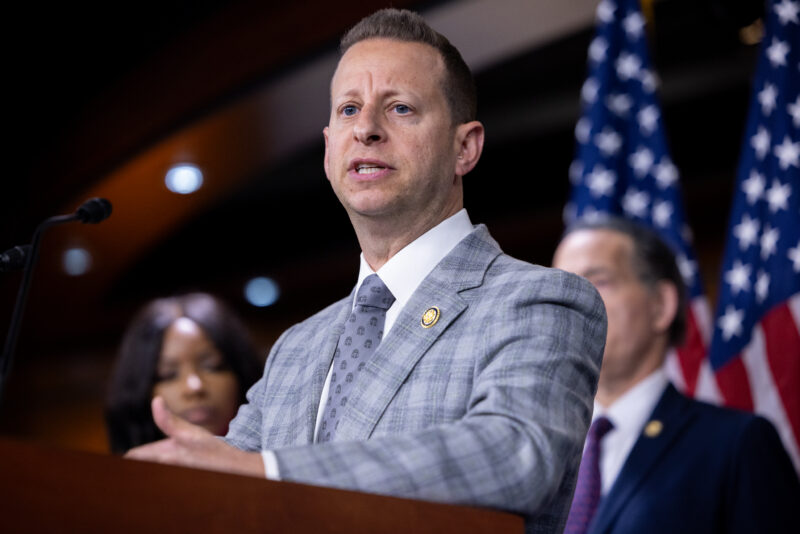
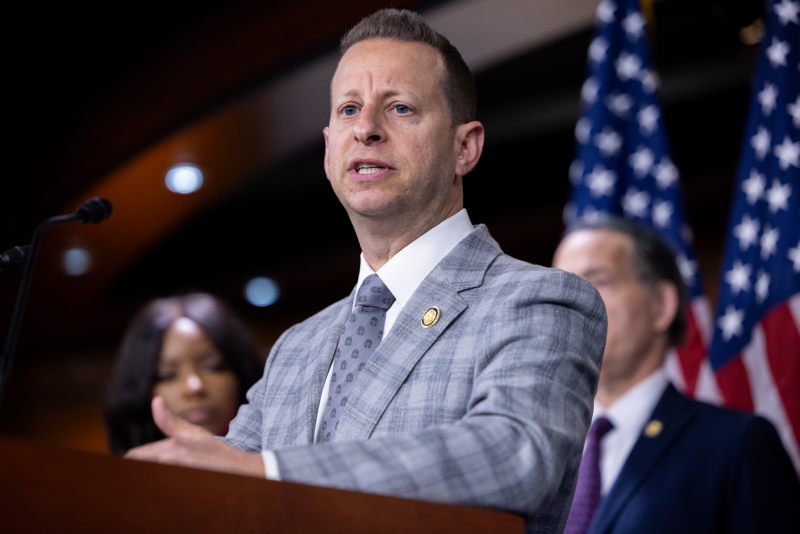
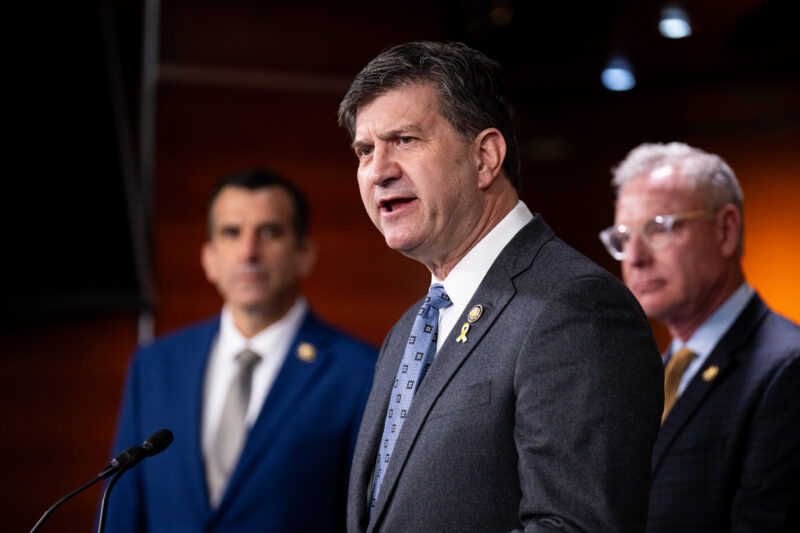
Rep. Brian Mast (R-FL) speaks during a House Committee on Foreign Affairs hearing on Capitol Hill on January 11, 2024 in Washington, DC.


 Add JewishInsider on Google
Rep. Brian Mast (R-FL), the chair of the House Foreign Affairs Committee, suggested following both unclassified and classified briefings from the Trump administration on Iran on Monday that talks with the regime for a final agreement could continue past the 60-day timeline laid out in the U.S.-Iran memorandum of understanding finalized earlier this month.
“I think [the] 60-day window … is probably more of a fluid thing, just like you think about some of the stuff that went on with the Gaza-Israel [negotiations and the] Board of Peace, right?” Mast said.
“You get to some things, you don’t necessarily get to everything … over a 60-day window,” Mast said. “I think you get to some, I don’t think you get to everything. I don’t think that it just ends after 60 days by any means.”
He said that the briefings didn’t specifically touch on whether there had been any reassurances that a final deal would be reached.
“There are reassurances that people want in specific sectors,” Mast said, including that Iran will not return to pursuing nuclear weapons. “That would be important to have inked.”
Talks over and efforts to implement the ceasefire plan in Gaza have continued long beyond their original timeline, particularly efforts to disarm Hamas — which the group continues to resist — and to deploy an international military force to stabilize the territory, both of which are lynchpins to moving the peace process forward.
Some in Washington have worried about similar stagnation in the U.S.-Iran talks, and that the MOU might become the new status quo.
The administration held an unclassified briefing open to all House members on the phone on Monday afternoon, which included Secretary of State Marco Rubio and White House Special Envoy Steve Witkoff. Immediately after, the top lawmakers on key House committees, including Mast, received a classified briefing from Deputy National Security Advisor Andy Baker.
Senate lawmakers, who are in recess, also participated in a separate phone briefing on Monday afternoon.
Rep. Debbie Wasserman Schultz (D-FL) told Jewish Insider she pressed Witkoff at the end of the unclassified phone briefing about comments he had made earlier in the briefing claiming that no waivers had been used to allow Iran to sell oil.
Wasserman Schultz pointed out to Witkoff that the Treasury Department issued a license last week to allow the sale and importation of Iranian oil and petrochemical products, and said Witkoff “really was taken aback and [he] had difficulty answering.”
She said Witkoff had initially denied that any sanctions had been waived or any oil sales had been permitted since the MOU was signed. But when confronted about the waiver, she said Witkoff “acted like he wasn’t aware of it.” She said that Witkoff said he would follow up with her and officials subsequently “turned tail and cut off the call.”
“What was clear to me was that Mr. Witkoff either, disturbingly, had no idea that what he was saying was not true, or he did know what he was saying wasn’t true,” she said. “I don’t know which it was. … We’ll see if they actually get back to me …. But really it’s part of a larger pattern with this administration of misleading Congress on Iran. They’re constantly moving the ball.”
Rep. Greg Meeks (D-NY), the ranking member of the House Foreign Affairs Committee, offered a similar account of confusion among administration officials over the sanctions relief, and said Rubio told lawmakers Iran would not receive any money if it did not comply with the MOU, something he said was out of step with the actual terms of the MOU.
“The secretary of state indicated that there was no money going to Iran, but when you look at the MOU, it says money would start going to Iran at the implementation of the MOU,” Meeks said. “The Iranians are claiming they are receiving some funds now. … The Treasury Department has made ways for money to go to Iran, and unfortunately I think that Mr. Witkoff in the [unclassified] briefing did not realize that.”
Both Meeks and Wasserman Schultz said the call indicated that Witkoff and others involved in the talks are not qualified to handle the negotiations.
Mast called the MOU a “work in progress” and said there are “reasons to be hopeful and reasons to be skeptical” about the deal. Chief among the reasons for skepticism, he said, is that Iran is untrustworthy and does not act in good faith.
But he said that the damage done through U.S. operations against Iran — burying Iran’s nuclear program and doing hundreds of billions of dollars of damage to the country and critical industries — provides reasons for optimism.
Asked about the sanctions relief already provided to Iran, and the potential additional financial benefits Iran stands to gain, Mast told JI it’s a question of “math” — he estimated that the U.S. did half a trillion dollars in damage to Iran, and said that any reconstruction funding or investments from other countries or released frozen assets “subtracts from that math.”
Mast also argued that reconstruction funding would be going to companies involved in the effort, including potentially American companies, rather than the regime, but acknowledged that money is fungible and “it affects the math equation.” He also argued that any release of frozen assets would be based on a “behavior change.”
Pressed on whether he thought Iran’s behavior to this point merited the oil sanctions waiver, Mast said that depends on the timeline of Iranian behavior examined — Iran’s pace of attacks on commercial shipping has slowed from its peak during the war, but its behavior now is “very similar” to “what was a year, or three years ago.”
“I think [the Iranians are] doing everything to prove they are who they are,” Mast said. “They will lie about everything and, you know, say they agree to something and then not [follow through]. It’s a very good reason to be skeptical of anything about them, but again, it’s a different world post-[Operation] Epic Fury.”
Rep. Adam Smith (D-WA), the ranking member of the House Armed Services Committee, emerged from the classified session pessimistic that the administration is in a position to achieve the goals it has set out for the talks.
“We know where they want to go, what they want to negotiate. The evidence that they’re progressing towards that outcome isn’t great,” Smith said. “They’re hoping to get the Strait [of Hormuz] open and reach some sort of economic deal with Iran and negotiate on the nuclear program, which they sort of outlined, and they said they’re optimistic about it. I don’t see as much cause for optimism personally.”
He said that the information provided in the classified briefing was not substantially different from that which was shared on the unclassified call.
Meeks said he left the classified briefing with “some of the same questions I had before I went in.” He said that he thinks the U.S. is in a worse position after the war, and said he wants to have additional briefings.
“I can’t tell you that I got information that says you’ve done anything or made any great progress subsequent to the war that had not already been accomplished before the war, and much of what they have talked about has been or was in the JCPOA,” Meeks said, referring to the 2015 Iran nuclear deal.
Mast said he does not plan to call any public hearings with administration officials on Iran in the Foreign Affairs Committee, but wants to hear in a classified setting from senior administration officials. He also said that administration officials said they would convey lawmakers’ desire for additional briefings.
Wasserman Schultz criticized the administration for calling the open briefing in the late afternoon on a day when many members are traveling to Washington, and holding it in an unclassified setting where they would be unable to discuss many substantive details.
The board's charter describes a body concerned with peace worldwide, not with removing Hamas’ terror threat in Gaza
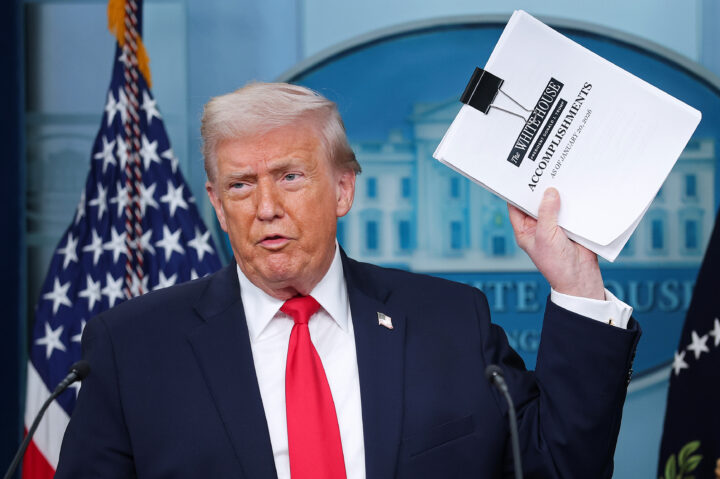
Kevin Dietsch/Getty Images
President Donald Trump gives a press briefing at the White House on January 20, 2026 in Washington, DC.
When President Donald Trump first raised the idea of establishing a Board of Peace in October, it was as part of his 20-step ceasefire plan for Gaza. The board was meant to oversee a committee of Palestinian technocrats — whose composition was announced last week — and “set the framework and handle the funding for the redevelopment of Gaza … [and] call on best international standards to create modern and efficient governance that serves the people of Gaza and is conducive to attracting investment.”
The following month, the U.N. Security Council passed a resolution supporting the ceasefire plan and “welcom[ing] the establishment of the Board of Peace,” authorizing it to operate in Gaza until the end of 2027.
But the board’s charter describes a body concerned with peace worldwide, not with removing Hamas’ terror threat in Gaza, and in fact, it does not mention Hamas, Gaza or Israel at all. Its expansive, stated role is to “promote stability, restore dependable and lawful governance, and secure enduring peace in areas affected or threatened by conflict.”
Indeed, it appears to be an attempt to compete with the United Nations. Its preamble says: “Declaring that durable peace requires pragmatic judgment, common-sense solutions, and the courage to depart from approaches and institutions that have too often failed … Emphasizing the need for a more nimble and effective international peace-building body.” Asked at a press conference on Wednesday if he intends for the body to replace the U.N., Trump said it “might.” “I wish the United Nations could do more. I wish we didn’t need a Board of Peace,” he said.
Israeli Prime Minister Benjamin Netanyahu also acknowledged, in a speech to the Knesset on Monday, that the Board of Peace is meant to serve as a kind of alternative U.N. — something that Israel is unlikely to have a problem with, considering the deep anti-Israel bias in Turtle Bay, Geneva and beyond — and he announced on Wednesday that Israel would be joining.
The problem for Israel is that the Board of Peace’s mission creep could distract from what is, for Israel, the most important part of the ceasefire plan, which is to dismantle Hamas as a governing and fighting force.
As Netanyahu put it in the Knesset this week: “In Gaza, we are before Stage 2 of the Trump plan. Stage 2 says one simple thing: Hamas will disarm and Gaza will be demilitarized. We are sticking to these goals and they will be achieved, either the easy way or the hard way.”
In the lengthy announcement about the various committees and boards involved in Gaza reconstruction and its oversight, the White House did not even mention Hamas, let alone demilitarization.
Please log in if you already have a subscription, or subscribe to access the latest updates.
 Continue with Google
 Continue with Apple