
























AIPAC betting big on pro-Israel Democrat and party favorite in Maryland
State Del. Adrian Boafo is Steny Hoyer’s favored candidate, and is getting support from Democratic leaders across the state
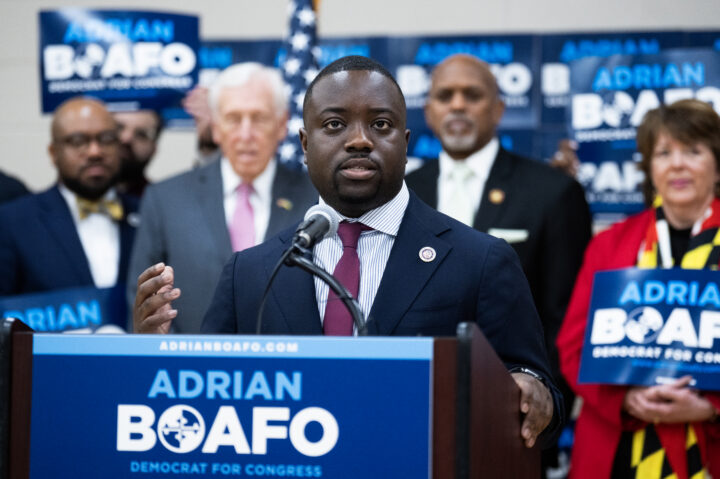
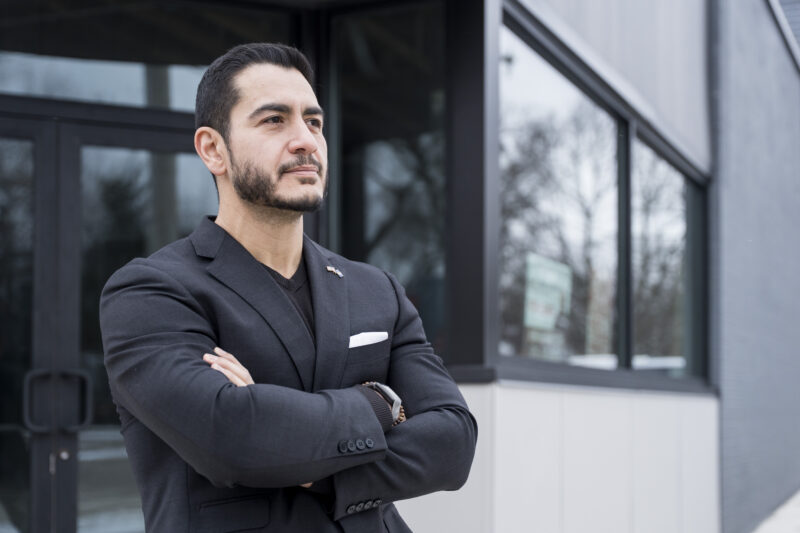
Tom Williams/CQ-Roll Call, Inc via Getty Images
Del. Adrian Boafo, Democratic candidate for Maryland's Fifth Congressional District, speaks during a press conference to kick off a series of meet-the-voter events, at Kenhill Center in Bowie, Md., on Monday, March 2, 2026.


 Add JewishInsider on Google
In one of its largest independent expenditures of the campaign cycle, the super PAC affiliated with AIPAC spent nearly $1.2 million this weekend to help boost Adrian Boafo, a Maryland state delegate running in a packed Democratic primary to succeed longtime Rep. Steny Hoyer (D-MD).
While the super PAC, United Democracy Project, has invested heavily in several House primaries this year, its latest salvo is particularly notable because AIPAC has frequently avoided engaging openly in contested races — instead using several cutouts — as a growing number of Democratic candidates have disavowed accepting funds from the pro-Israel group.
In Maryland’s 5th Congressional District, which spans southward from the eastern Washington suburbs of Prince George’s County, UDP’s aggressive play suggests that it is comfortable openly courting a more moderate constituency that Hoyer has represented as a prominent supporter of Israel and close AIPAC ally.
The primary, where Boafo is well-poised to prevail later this month thanks to his institutional support from prominent state party leaders, could deliver a major victory for AIPAC after its negative publicity over a series of recent Democratic contests in which its involvement or potential engagement was a lightning rod for progressive voters.
UDP began spending in the race in mid-May with a modest direct mail investment of $50,000 to bolster Boafo, who has consolidated endorsements from the state’s Democratic leadership. In addition to Hoyer, for whom Boafo served as a campaign manager, the 32-year-old claims backing from Gov. Wes Moore as well as Sen. Angela Alsobrooks (D-MD), among other establishment officials.
The super PAC significantly added to its investment over the weekend with a new television ad buy exceeding $1 million. The ads cite Boafo’s legislative efforts to counter federal immigration and customs agents while promoting support from Hoyer, Moore and Alsobrooks.
“We’re proud to be working alongside Gov. Wes Moore, Sen. Angela Alsobrook and Congressman Steny Hoyer to help elect Adrian Boafo,” Patrick Dorton, a spokesperson for UDP, said in a briefly worded statement to Jewish Insider on Tuesday.
AIPAC, whose affiliated political action committee has not officially backed Boafo, declined to comment on the June 23 primary election.
Prior to Maryland, UDP had most recently devoted its considerable resources to unseating Rep. Thomas Massie (R-KY), an anti-Israel Republican who lost to a Trump-backed primary challenger in Kentucky last month. UDP and affiliated shell PACs ended up winning two of the four congressional races in Illinois they engaged in, helping nominate former Rep. Melissa Bean (D-IL) and Cook County Commissioner Donna Miller but falling short in a high-profile and expensive contest to succeed retiring Rep. Jan Schakowsky (D-IL).
Earlier this year, UDP faced Democratic blowback for opposing a moderate former congressman running in New Jersey who entertained conditioning U.S. aid for Israel — in a failed foray that inadvertently elevated a far-left candidate holding far more antagonistic views on Israel.
With nearly $95 million on hand heading into May, according to the latest federal campaign filings, UDP has a massive war chest at its disposal, but the group has been reticent about discussing how it plans to use its reserves in the remaining months of the campaign season.
While Boafo has drawn scrutiny from some rivals who have questioned his support from UDP, most experts who spoke with JI said they did not believe those investments alone would prompt major voter backlash of the sort that has driven other primaries in Illinois and New Jersey, where AIPAC found itself on the defensive.
“In contrast to some other races,” UDP’s spending “won’t be as much of a tension except from the other candidates who are going to blast it,” Susan Turnbull, a Jewish Democratic leader in Maryland, told JI in an interview. “I wouldn’t be surprised,” she added, “if AIPAC feels that it could be out front in the district because Steny always was.”
Still, she suggested that Boafo’s ties to the tech industry as a former lobbyist for Oracle, owned by the billionaire Republican donor Larry Ellison, and support from crypto-linked spending could stoke suspicion if voters draw a connection to AIPAC’s outside investment. “It could be a problem,” she predicted.
Turnbull said, however, that AIPAC likely did not need to engage in the multi-candidate race, given what Boafo’s supporters interpret as his favorable position just under three weeks before the election. There is no public polling available on the primary.
A prominent Jewish leader in Maryland, who was granted anonymity to speak candidly, likewise said that AIPAC’s “money likely isn’t needed to put Boafo in first place” in what is expected to be a “low-turnout election,” citing Hoyer’s ability to call in “well-earned chits” with high-profile Democrats who followed his lead in backing the retiring congressman’s preferred candidate. “I don’t know of bad candidates who could win the seat now.”
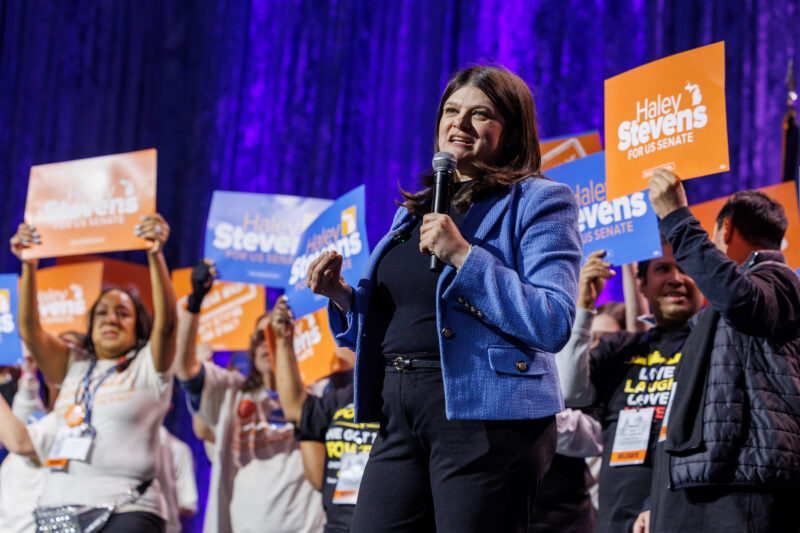
“AIPAC would be better off spending money to back good candidates in races where bad candidates could win,” the Jewish leader told JI this week, referring to Michigan’s Senate race as well as a House primary in New York City where a pro-Israel Democrat is facing a formidable challenger from the left.
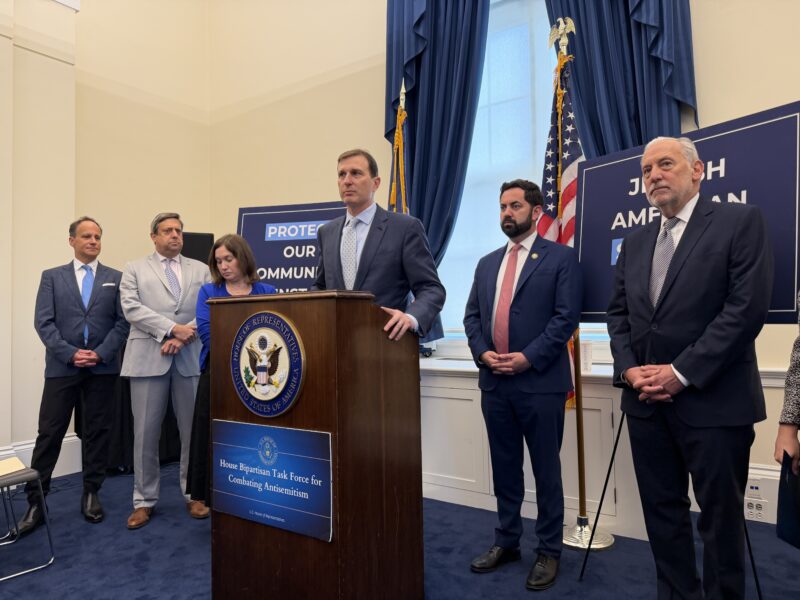
In other races, though, where candidates backed by AIPAC are running, the group is viewed negatively by Democrats, raising questions about whether it would hurt their prospects if it engaged openly or even with a shell PAC. UDP is not expected to spend in support of Reps. Dan Goldman (D-NY) and Adriano Espaillat (D-NY), two Democrats endorsed by AIPAC who are facing anti-Israel challengers in progressive districts.
Boafo, for his part, has been more openly supportive of Israel, vowing on his campaign site to “strengthen the U.S.–Israel alliance and ensure” the country “has the security assistance it needs to defend itself.”
A spokesperson for Boafo’s campaign did not return a request for comment regarding UDP’s support for his bid. He is also endorsed by Democratic Majority for Israel, whose CEO, Brian Romick, is a former chief of staff to Hoyer.
More than 20 candidates are now running in the Democratic primary, including Rushern Baker, a former Prince George’s County executive; state Sen. Arthur Ellis; Quincy Bareebe, who challenged Hoyer in 2024; and Harry Dunn, the former Capitol police officer who ran for a separate House seat in Maryland last cycle and drew outside attacks from UDP that are now inflecting his criticism of Boafo’s support.
Echoing his past complaints about UDP’s spending, Dunn, who also maintains his support for Israel on his campaign site, denounced the group in a recent statement that accuses Boafo of “benefiting from the MAGA donors who fund AIPAC.”
In a possible reflection of voter sentiment in the district, however, Dunn said in an interview with JI on Tuesday that he did not mean to single out AIPAC for its involvement in the race.
“This isn’t just about AIPAC,” he explained. “I feel the same way about Coca-Cola or Walmart,” he said. “This is about special interests” influencing elections.
“I just wanted to make that clear,” he added, because “AIPAC gets a bad rap sometimes.”
More Stories
IN DEFENSE
Rubio defends Israeli operations in Lebanon, despite Trump-Netanyahu spat
CREATING DISTANCE
Columbia denies connection to student group posting ‘death to America’ over Iran strikes

Fuentes’ following
New report documents foreign engagement driving online antisemitic activity
UNION LABEL
Beyond the assembly line: Auto workers’ labor union emerges as key player in anti-Israel activism
SHELL GAME
Publisher of Drop Site News pushes conspiracy theory about a California Jewish family-owned business
BARAKA'S BACKING
In progressive pivot, N.J. congressional candidate Brian Varela secures Newark Mayor Ras Baraka’s endorsement
Please log in if you already have a subscription, or subscribe to access the latest updates.
 Continue with Google
 Continue with Apple