


















































Iranian regime is ‘intact but largely degraded’ amid strikes, DNI Tulsi Gabbard says
Gabbard also said Tehran has the ‘intention to rebuild’ its nuclear capabilities that were ‘obliterated’ in last summer’s strikes
Graeme Sloan/Bloomberg via Getty Images
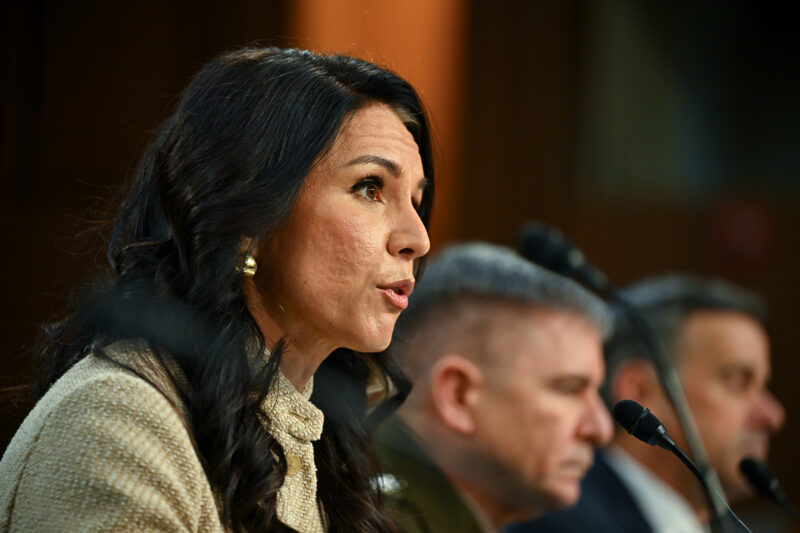
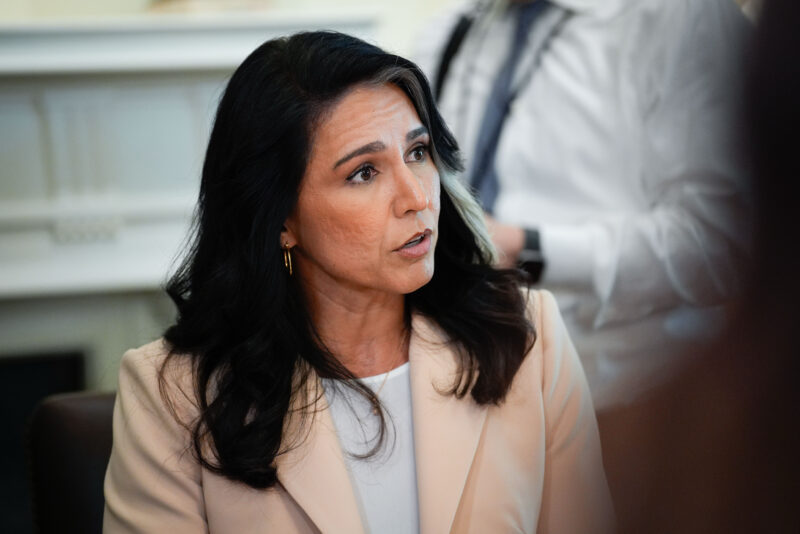
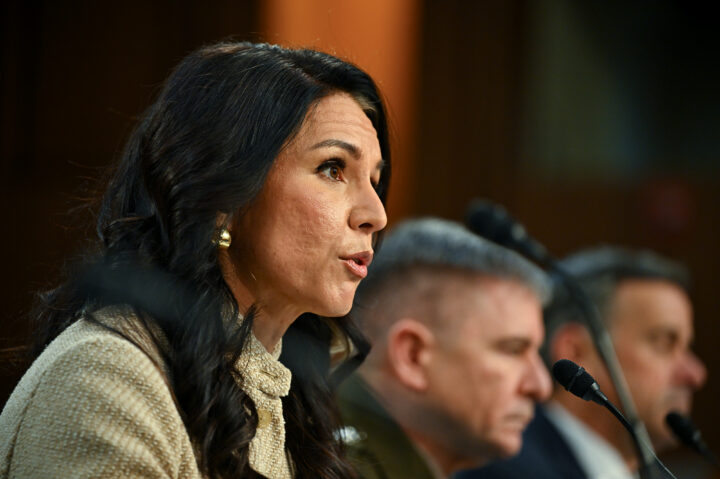
Tulsi Gabbard, director of National Intelligence, speaks during a Senate Intelligence Committee hearing on worldwide threats in Washington, DC, US, on Wednesday, March 18, 2026.


 Add JewishInsider on Google
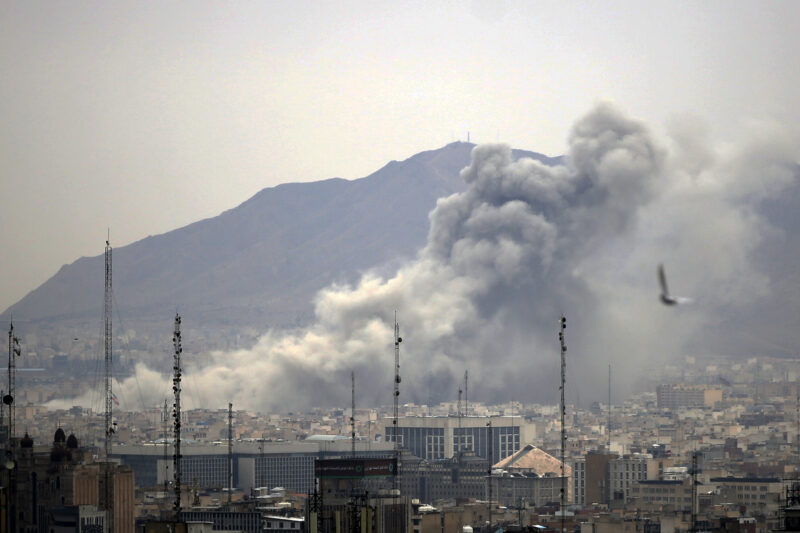
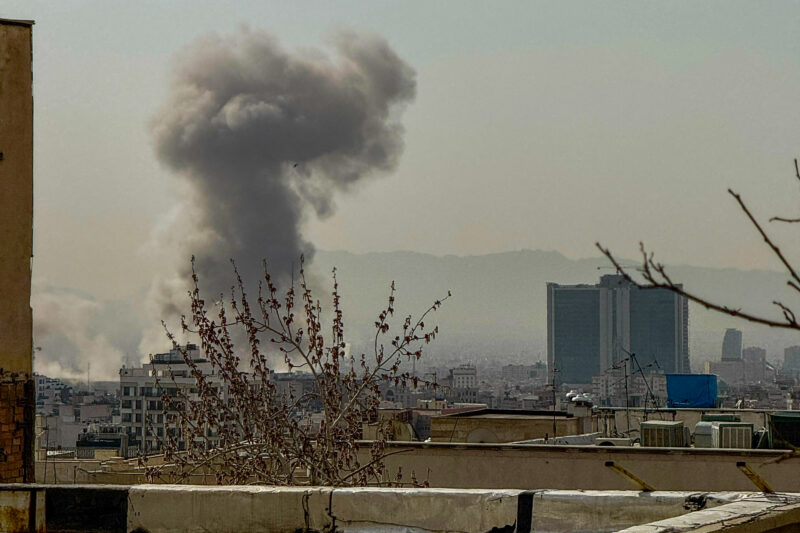
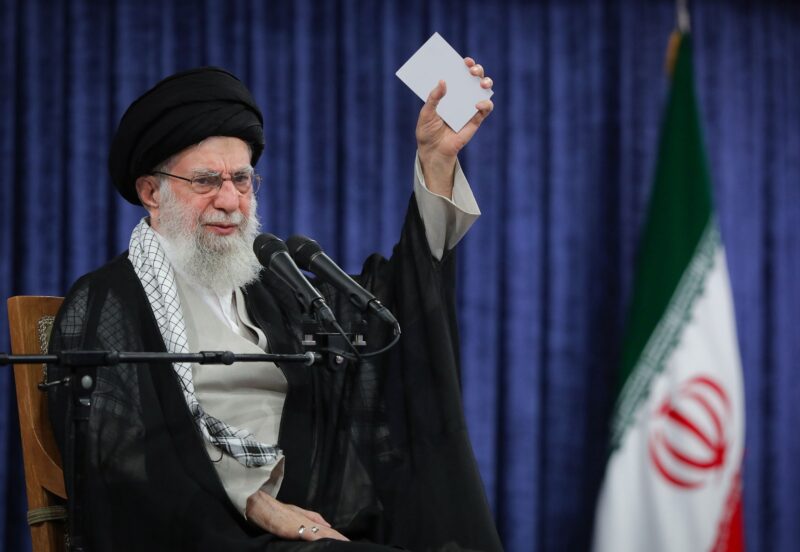
Director of National Intelligence Tulsi Gabbard said that the U.S. and Israeli operations against Iran have largely destroyed Tehran’s “power projection capabilities” in the region, but that the regime remains standing, if weakened.
“The [intelligence community] assesses that Operation Epic Fury is advancing fundamental change in the region that began with Hamas’ attack on Israel on Oct. 7, 2023, and continued with the 12-day war last year, resulting in weakening Iran and its proxies,” Gabbard said at a hearing of the Senate Intelligence Committee on worldwide threats on Wednesday.
“The IC assesses the regime in Iran appears to be intact but largely degraded due to attacks on its leadership and military capabilities,” she continued. “Its conventional military power projection capabilities have largely been destroyed, leaving limited options. Iran’s strategic position has been significantly degraded.”
If the Iranian regime survives the current war, Gabbard said that it would “seek to begin a yearslong effort to rebuild its military, missiles and UAV forces.”
She further said that, if the regime remains standing, internal tensions and resistance to the regime inside Iran are likely to increase as the country’s economy continues to struggle under U.S. and international sanctions.
Gabbard said in her opening statement that Iran “was trying to recover from the severe damage to its nuclear infrastructure sustained during the 12-day war, and continued to refuse to comply with its nuclear obligations” to the International Atomic Energy Agency.
Democratic senators pressed her throughout the hearing on apparent differences between those comments and her written remarks provided to the committee before the hearing, in which Gabbard said that Iran’s nuclear enrichment program was “obliterated” and that it had made “no efforts since then to try to rebuild” its enrichment capacity.
Under questioning, Gabbard affirmed that stance, but said Iran “maintained the intention to rebuild” its nuclear capabilities. She said she had omitted those remarks from her oral testimony for time reasons.
CIA Director John Ratcliffe throughout the hearing appeared to take a more aggressive and assertive stance on Iran than Gabbard, an isolationist and longtime opponent of war with Iran, offering a clear explanation and justification for the U.S. strikes.
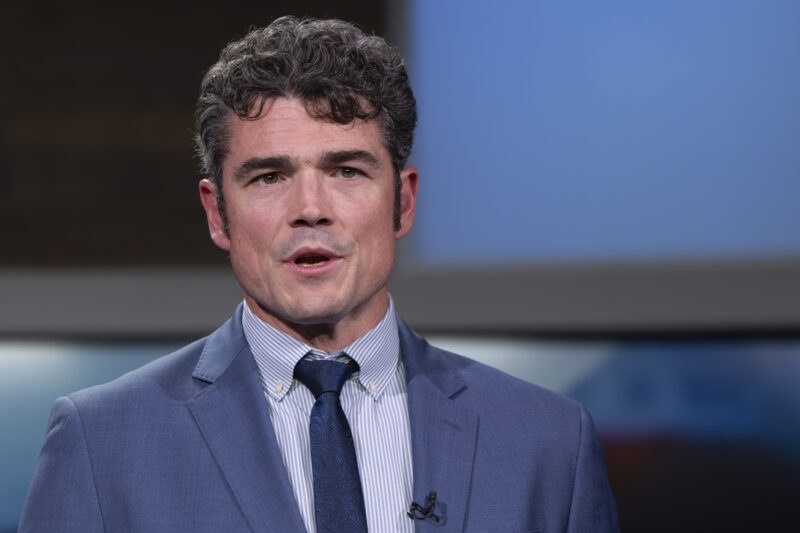
Ratcliffe said that Iran was continuing its nuclear and ballistic missile development, and that he disagreed with an assessment by former National Counterterrorism Center Director Joe Kent that Iran did not pose an imminent threat, which Kent alleged in his resignation letter.
“I think Iran has been a constant threat to the United States for an extended period of time, and posed an immediate threat at this time,” Ratcliffe said.
Ratcliffe said that the U.S. operation was “detailed” and “thoughtful” with specific goals to address a long-running and growing threat.
He said that Iran was continuing to build and develop missiles “at alarming rates” such that its offensive capabilities were on track to outpace and overwhelm the U.S.’ ability to build defensive weaponry.
At the same time, Ratcliffe said the U.S. strikes last summer were a “wild success” and that Iran was “unwillinging and incapable” of enriching uranium to 60% purity since those strikes.
Gabbard, meanwhile, repeatedly declined to say whether the intelligence community had assessed Iran to be an imminent threat to the United States, asserting that only the president has the ability to determine whether any threat is imminent, to the frustration of committee Democrats.
In her opening statement, Gabbard also said that Iran’s space launch capabilities would allow it to develop an intercontinental ballistic missile by 2035, if Iran decided to pursue that, though that assessment is pending updates after U.S. military operations.
Sen. Tom Cotton (R-AR), the chair of the Intelligence Committee, suggested in his question that the timeline was much shorter, and that Iran actually could have had an ICBM that could threaten the homeland in six months.
Ratcliffe did not explicitly confirm that timeline, but emphasized that Iran’s missile program was a present and growing threat, which “if left unimpeded … would have the ability to range missiles to the continental U.S.”
“It’s one of the reasons why degrading Iran’s missile production capabilities that is taking place right now in Operation Epic Fury is so important to our national security,” Ratcliffe continued.
Pressed repeatedly by Democrats on whether the intelligence community had warned the President Donald Trump of the likelihood — as previously assessed by intelligence officials — that Iran would attack Gulf states and close the Strait of Hormuz in the event of a war, Gabbard and Ratcliffe both emphasized that the administration was aware of and had taken steps to prepare for those threats, despite comments by Trump that such moves by Iran were unanticipated.
Gabbard also described “the spread of Islamist ideology, in some cases, led by individuals and organizations associated with the Muslim Brotherhood” as “a fundamental threat to freedom and the foundational principles that underpin Western civilization.”
She said that Islamists are using such ideologies to recruit and solicit financial support for terrorism globally, and that such activity has been increasing in Europe.
Gabbard called the Trump administration’s designation of certain Muslim Brotherhood branches as terrorist organizations, “a mechanism to secure Americans.”
Ratcliffe said the CIA is “very focused” on counterterrorism, including the Muslim Brotherhood, and that the administration has had significant success, which he could share further in a classified setting.
More Stories

TWO-WAY STREET
J Street contends with challenges to its dogma on Iran at national conference

school of thought
New Seattle school superintendent claims tikkun olam as central leadership value
Congressional reax
Partisan divide emerges on Iran strike, centering on congressional authorization

data diaries
New Yale Youth poll finds Gen Z fueling rise in antisemitic views
HEZBOLLAH HIT
Israel kills Hezbollah chief of staff in Beirut airstrike
MAKING IT OFFICIAL
Trump signs executive order pledging to designate chapters of Muslim Brotherhood as terrorist orgs
Please log in if you already have a subscription, or subscribe to access the latest updates.
 Continue with Google
 Continue with Apple