












































Former Education Dept. OCR officials warn of weakened enforcement as Trump allies defend sweeping approach
Trump’s campus crackdown dominates U.S. civil rights commission’s first campus antisemitism hearing in 20 years
Caroline Gutman for The Washington Post via Getty Images
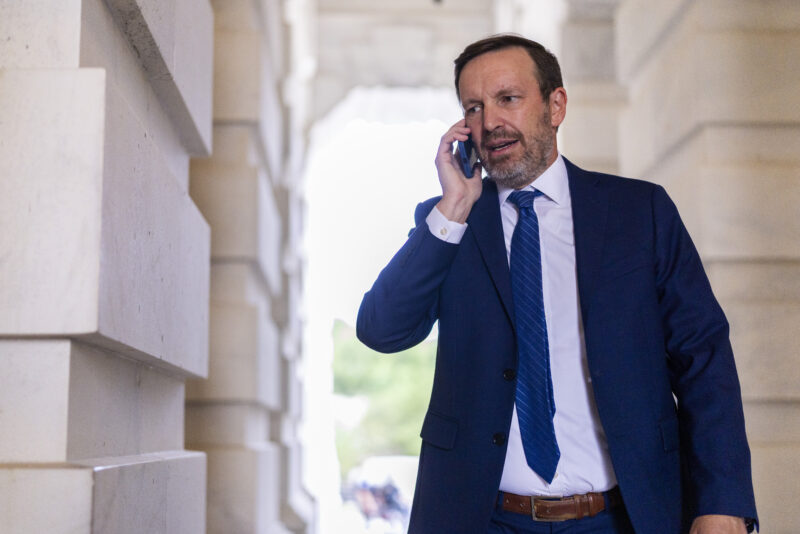
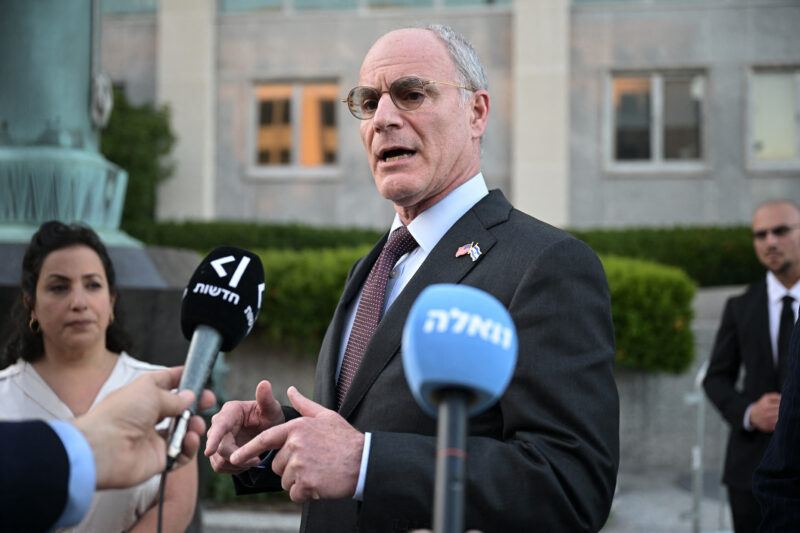
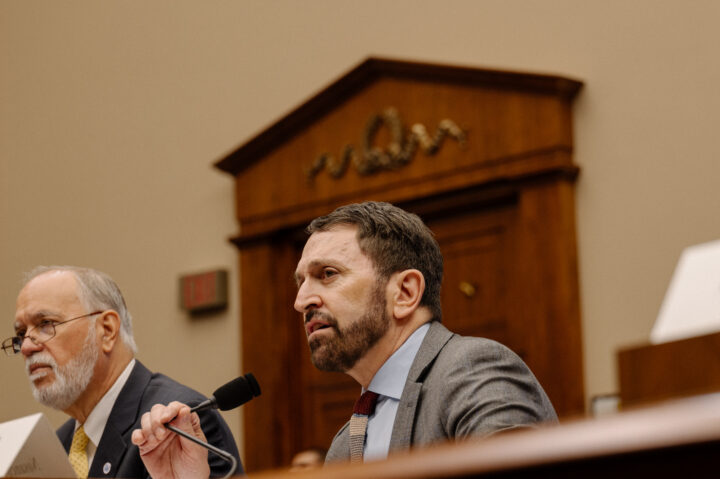
Matt Nosanchuk speaks at the House Education and Workforce Committee hearing on "Antisemitism in Higher Education: Examining the Role of Faculty, Funding, and Ideology, in the Rayburn House Office Building.


 Add JewishInsider on Google
The U.S. Commission on Civil Rights met in Washington on Thursday to hold its first hearing on campus antisemitism in more than 20 years.
The commission — a bipartisan federal fact-finding agency established in 1957 — is chaired by a Democrat and also includes two Republicans appointed by President Donald Trump, yielding a diverse group of witnesses who sparred over Trump’s approach to campus antisemitism and his administration’s firing of more than half of the attorneys in the Education Department’s Office for Civil Rights.
The 22 witnesses included Craig Trainor, who served as acting director of OCR during Trump’s first year in office; several former OCR attorneys; Matt Nosanchuk, a former deputy assistant secretary at DOE during the Biden administration now at The George Washington University Law School; Brandeis Center CEO Ken Marcus, who led OCR during Trump’s first term; National Jewish Advocacy Center CEO Mark Goldfeder; Jewish Council for Public Affairs CEO Amy Spitalnick; J Street U Director Erin Beiner; and students from Harvard, American University and Cal Poly San Luis Obispo.
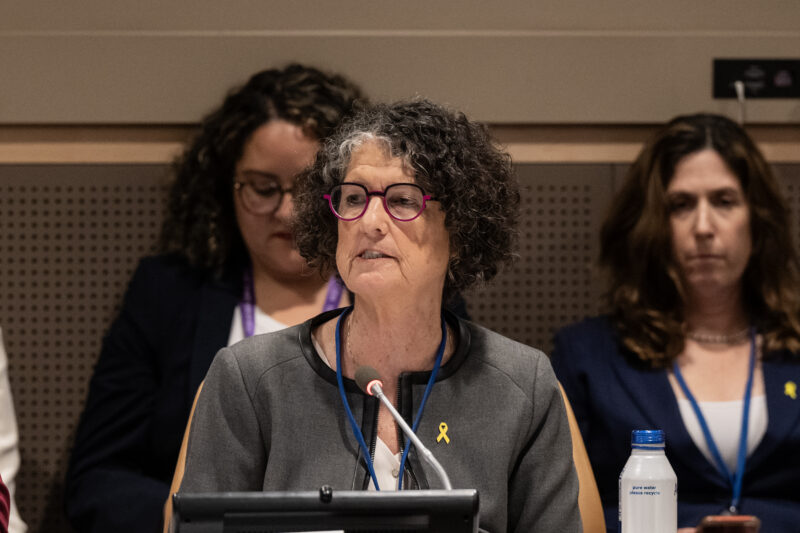
Two former OCR attorneys who lost their jobs last year after Trump slashed thousands of jobs at the Education Department, which he has said he hopes to shutter entirely, testified that the office’s civil rights monitoring and enforcement team had been pulverized, leaving the agency less equipped to investigate complaints of antisemitism at schools and universities.
“The issue now, in the wake of these cuts, is whether sufficient resources remain to combat the ongoing threat of antisemitism in our nation’s schools,” said Linda Mangel, who served as enforcement director at OCR until last March. “Unless immediate and significant steps are taken now to rebuild the agency so it can respond to complaints from students in harm’s way, hate will win.”
Beth Gellman-Beer, who was director of OCR’s Philadelphia office until it was shuttered last year, said she worried the dramatic reduction in staff in the civil rights office would lead to a diminished ability to monitor universities’ handling of antisemitic discrimination.
“I didn’t have the opportunity to complete the monitoring for all of the cases that my office helped resolve, and that is going to weigh heavily on me into my career in the future, because I know, from my 18 years of experience at OCR, that the power doesn’t lie in the terms of the agreement, but in rigorous enforcement of that agreement,” Gellman-Beer said.
Nosanchuk — who was a political appointee at the Department of Education during Biden’s term — said that an effective, if bureaucratic, approach to combating antisemitism that he argued was working had since been abandoned for political reasons.
“What has replaced this approach? In the name of combating antisemitism, the current administration has built a Trojan horse to unleash a frontal ideological attack on higher education,” said Nosanchuk.
A cadre of more conservative witnesses pushed back, arguing that fewer staff at OCR does not mean less enforcement of federal civil rights statutes, particularly when it comes to antisemitism. Instead, they said the onus has now been taken up by a slew of other federal agencies, including the Justice Department and the Department of Health and Human Services. Even if OCR’s team has resolved fewer cases related to antisemitism than the Biden administration, the forceful strategy by Trump has been more impactful, they argued.
“If we need to understand what’s happening with the Trump administration, we’re seeing a whole of government approach using not just the Education Department, but also HHS, Justice, the Federal Acquisition [Service] and other agencies in an extraordinary way,” said Marcus. “It’s far more comprehensive than anything we’ve seen before.”
Trainor, who led OCR until he left for a position at the Department of Housing and Urban Development this month, clapped back at critics of Trump’s approach and his cuts to OCR.
“What I just hear is sort of desperate attempts to justify being complicit in a failed OCR operation that was politicized under the Biden administration, and the results and the efforts that were taken by the Trump administration speak for themselves,” said Trainor. “The Biden OCR’s response to these hateful hordes was equivocal, craven and pathetic.”
At other sessions, witnesses addressed the constitutionality of Trump’s higher education policies, particularly as he has cut funding from universities. A group of law professors debated whether certain efforts to combat antisemitism infringe on students’ and professors’ constitutionally protected free speech. Students discussed whether they felt their concerns had been taken seriously by government officials.
The members of the commission told witnesses that they intended to use the testimony from Thursday’s hearing, as well as public testimony gathered over the coming weeks, to publish a bipartisan report about federal civil rights laws as related to antisemitism. One of the Trump-appointed commissioners said that the witnesses criticizing Trump’s cuts to the Education Department jeopardized that task.
“I think the problem that is sought to be addressed here is so wicked and evil that bickering about federal bureaucrats losing their jobs is not serving any purpose,” said J. Christian Adams, the Trump-appointed commissioner, who is the president and general counsel at the conservative Public Interest Legal Foundation. “I think complaining about Donald Trump is not going to get a report passed by this commission, because you won’t get the votes.”
The last time the commission produced a report on campus antisemitism was in 2006. One of its findings proved particularly prescient, as witnesses on Thursday discussed the antisemitism that followed the Oct. 7, 2023, attacks in Israel: “Anti-Semitic bigotry is no less morally deplorable when camouflaged as anti-Israelism or anti-Zionism,” the commission wrote 20 years ago.
More Stories
Go Blue, but blue and white?
Michigan Hillel’s break with Israel advocacy groups raises questions about where it stands

FUNDRAISER FALLOUT
Attendee at El-Sayed fundraiser bragged about beating up pro-Israel demonstrator
NOT ON BOARD
Lansing Mayor Andy Schor, a Jewish Democrat, says he’s not supporting El-Sayed
EXCLUSIVE
Lawmakers call for Congress to mandate creation of Pentagon hate symbols policy

GOING GLOBAL
Israeli, Lebanese leaders expressed interest in Michigan Senate race, Sen. Lankford says
CITY HALL CRITICISM
Mamdani’s Oct. 7 statement assailing ‘genocide in Gaza’ provokes outrage from Jewish groups
Please log in if you already have a subscription, or subscribe to access the latest updates.
 Continue with Google
 Continue with Apple