

























The red line that wasn’t: Will Trump back down from attacking Iran?
Analysts still think it’s possible that Trump will take action against Iran, but worry his backtracking on providing help to Iranian protesters could hurt American deterrence
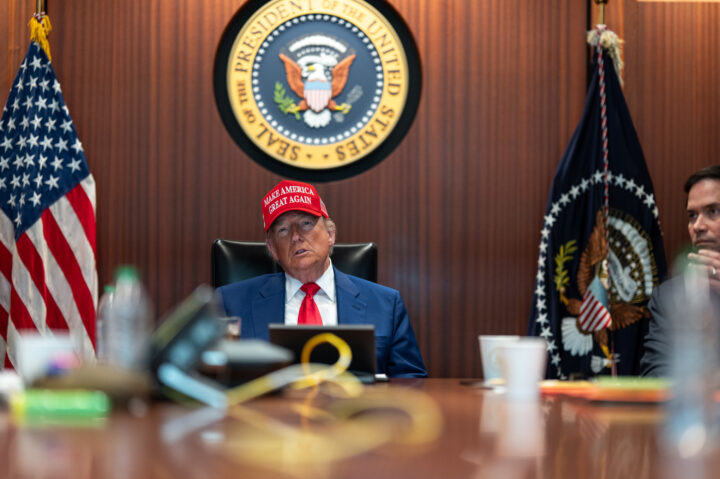
Daniel Torok/The White House via Getty Images
President Donald Trump and Secretary of State Marco Rubio (R) sit in the Situation Room as they monitor the mission that took out three Iranian nuclear enrichment sites, at the White House on June 21, 2025 in Washington, DC.


 Add JewishInsider on Google
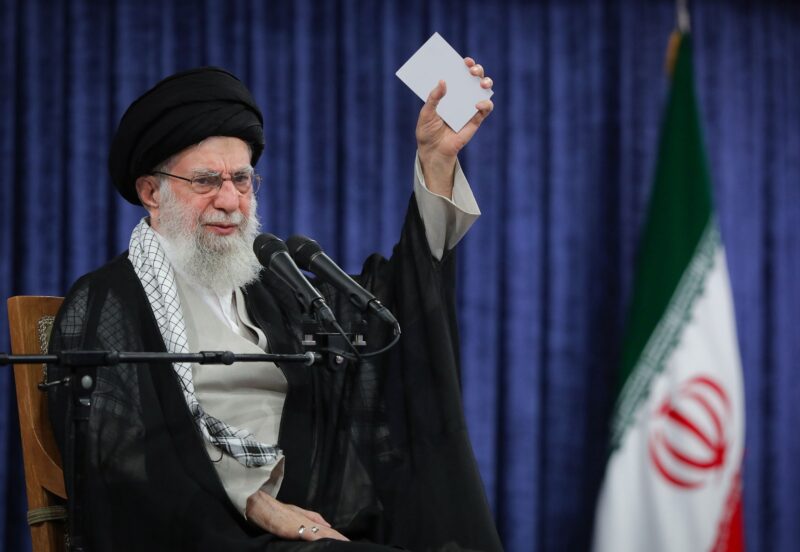
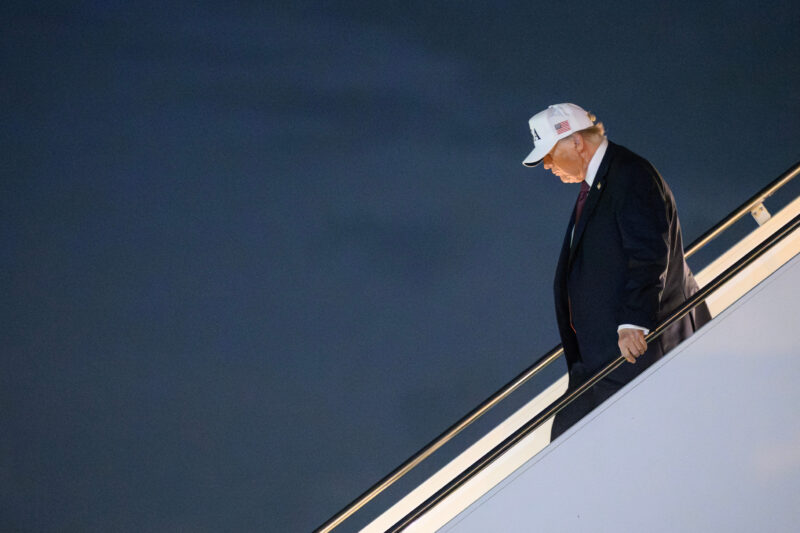
Even as President Donald Trump backed away from taking immediate military action against Iran, several leading foreign policy analysts believe a U.S. strike against the Islamic Republic remains a possibility, arguing that the administration may be deliberately keeping Tehran off balance and preserving its military options.
Trump appeared to ease off on striking Iran after being advised by administration officials that a large-scale attack is unlikely to bring about regime change and could instead trigger a broader regional conflict, and hearing concerns from allies — including Israel, Turkey, Qatar and Saudi Arabia — who have urged him not to carry out military action. U.S. officials said Washington is now monitoring to see whether Tehran is backing down from its violent crackdowns against protesters before determining whether to act.
“Even though Trump did not direct strikes on Wednesday, he is keeping options open,” said Dana Stroul, the research director at The Washington Institute for Near East Policy, pointing to the administration’s decision to reposition the USS Abraham Lincoln aircraft carrier from the Indo-Pacific to the Middle East. “The buildup of military posture in the region over the coming weeks keeps plenty of military options on the table and maintains pressure on the Iranian regime.”
Stroul said the president appears to be taking additional time to ensure the U.S. is prepared not only to act against Iran, but also to defend regional partners in the event Iran attacks U.S. allies or military bases in the region, in retaliation.
Analysts cautioned that the delay should not be interpreted as a decision against military action altogether. Aaron David Miller, a senior fellow at the Carnegie Endowment for International Peace, told Jewish Insider that he believes a strike is still on the table, putting the odds at “60–40 [percent]” in favor of a strike.
“There’s still a very real possibility of a strike,” Miller said. “I don’t see how the president gets out of the box he put himself in,” referring to Trump’s public calls for Iranians to continue protesting and his promise of U.S. assistance. “When an American president emboldens demonstrators and then says ‘We will help you’ without the capacity to really protect them, you have to wonder whether that’s morally conscious.”
Andrea Stricker, a research fellow at the Foundation for Defense of Democracies, also noted that Trump’s rhetoric has made the administration’s hesitation striking.
“It’s puzzling and upsetting that President Trump would call on the Iranian people to continue protesting in the midst of gunfire and then wait so long to act,” Stricker said. She suggested the delay could reflect a deliberate effort to gain military or intelligence advantages before a strike.
“I lean more toward a possible deception campaign designed to expose IRGC [Islamic Revolutionary Guard Corps] movements and preparations before an actual U.S. attack,” Stricker said, adding that the administration may prefer to wait until additional U.S. naval assets arrive in the region, which she said would “happen in the coming days.”
Other analysts were more skeptical that Trump’s hesitance is a cover for an impending operation. Elliott Abrams, a senior fellow at the Council on Foreign Relations and a former Iran envoy in the first Trump administration, said it’s possible the president won’t act at all.
“As of noon today, it seems Trump will not do anything, which is extraordinary after he urged Iranians to protest and seize institutions at the risk of their lives,” Abrams said on Thursday. “It is unconscionable to say ‘Help is on the way’ and then do nothing. I hope the president will change his mind.”
While the Iranian regime has faced unprecedented pressure at home and abroad, Stroul warned that Iranian retaliation could be significant in the event of a strike — potentially another factor in Trump’s hesitation.
“The regime still has substantial missile and cyber capabilities,” she said. In the event of a strike, “the U.S. and Israel would need to prepare for the possibility of a sustained, destructive conflict that could be extremely costly in human life, military platforms and infrastructure.”
Concerns over retaliation have fueled lobbying by Arab states, including Saudi Arabia and Qatar, urging Trump to avoid military action, and Israeli Prime Minister Benjamin Netanyahu reportedly conveyed a similar message to the president on Wednesday
“Arab governments recognize that the regime in Tehran is destabilized but still dangerous,” Stroul said. “Desperate leaders often take unpredictable, aggressive actions. For a region trying to turn the page after years of conflict, leaders are wary of another escalation that could jeopardize economic and security priorities.”
Even among experts who believe military action remains possible, there is broad agreement that it’s not clear what the consequences of a strike would be or that sustained military engagement would lead to the collapse of the regime.
“Any military strike has to answer the question of how it actually changes the balance between a repressive regime and protesters who have very limited means to push back,” Miller said. “There’s no guarantee that even massive strikes would lead to regime change.”
Miller and Stricker both noted that the administration has also not articulated a clear plan for alternative political leadership in Iran should the regime fall — an issue that complicates any decision to intervene.
“Penalizing the regime enough to support the Iranian people could produce unclear outcomes in terms of who provides order and security afterward,” Stricker said. “At the same time, if Trump ultimately does not act, it will be seen by many Iranians as a historic betrayal — and by U.S. adversaries as weakness.”
More Stories

STREAMER SAYS
Hasan Piker blames Israel for Oct. 7 at Qatar’s Web Summit
ON THE AGENDA
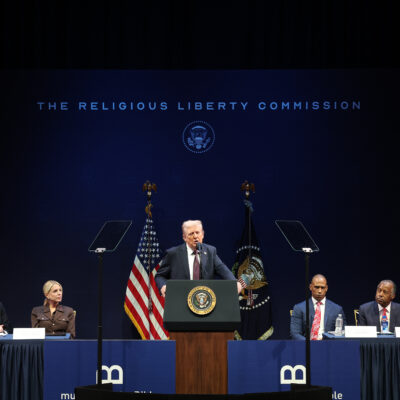
White House religious liberty commission to hold first antisemitism hearing next month
SCOOP
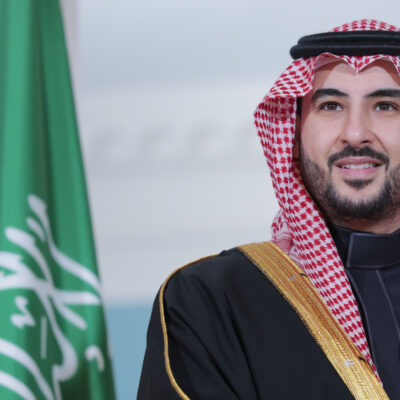
Jewish leaders invited to meet with Saudi Defense Minister Khalid bin Salman in D.C.
JOHNSON'S JOURNEY
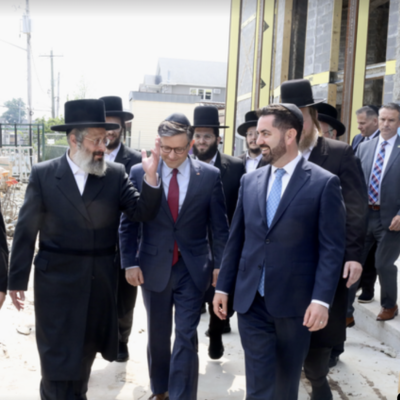
House Speaker Mike Johnson headed to New Square on Sunday to help Mike Lawler

AI ALERT
ADL study finds leading AI models generate extremist content after antisemitic prompts
LAYING DOWN THE LAW
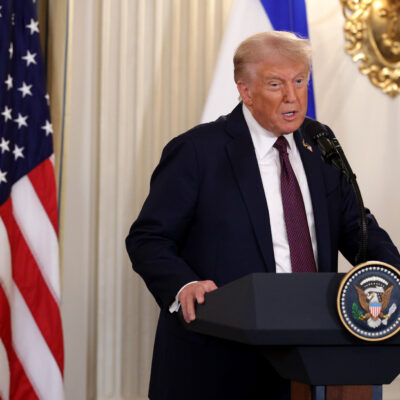
Trump: ‘Final documents are being drawn’ to designate Muslim Brotherhood as terrorist group
Please log in if you already have a subscription, or subscribe to access the latest updates.