







































































At least six prominent Jewish organizations hosted events at the Qatari-owned Plaza Hotel in the past year
Getty Images
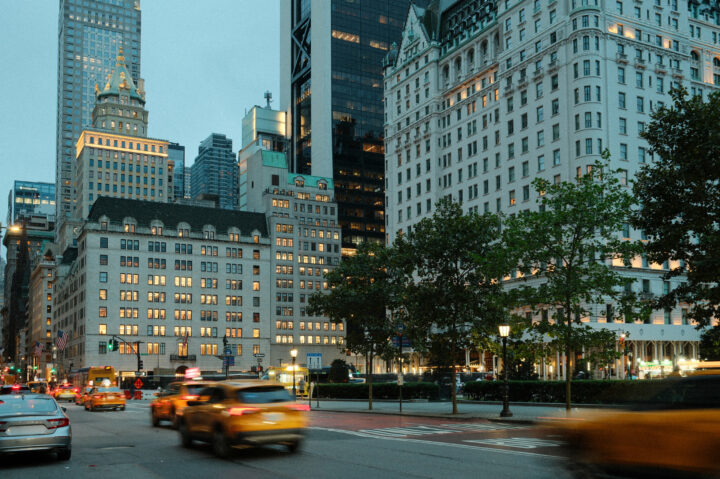
Yellow cabs driving on busy street with the pierre hotel and other skyscrapers in the background at dusk in new york city


 Add JewishInsider on Google
Few settings for a charity gala are more quintessentially New York than the Plaza Hotel. Under glittering chandeliers, philanthropists and civic leaders in tuxedos and gowns sip champagne, dine lavishly and raise millions of dollars for their chosen causes, all inside a landmark synonymous with old-world Manhattan elegance. Some of its grandest evenings belong to Jewish organizations, when the banquet is kosher and the pledges to Jewish and Israeli causes climb into the millions.
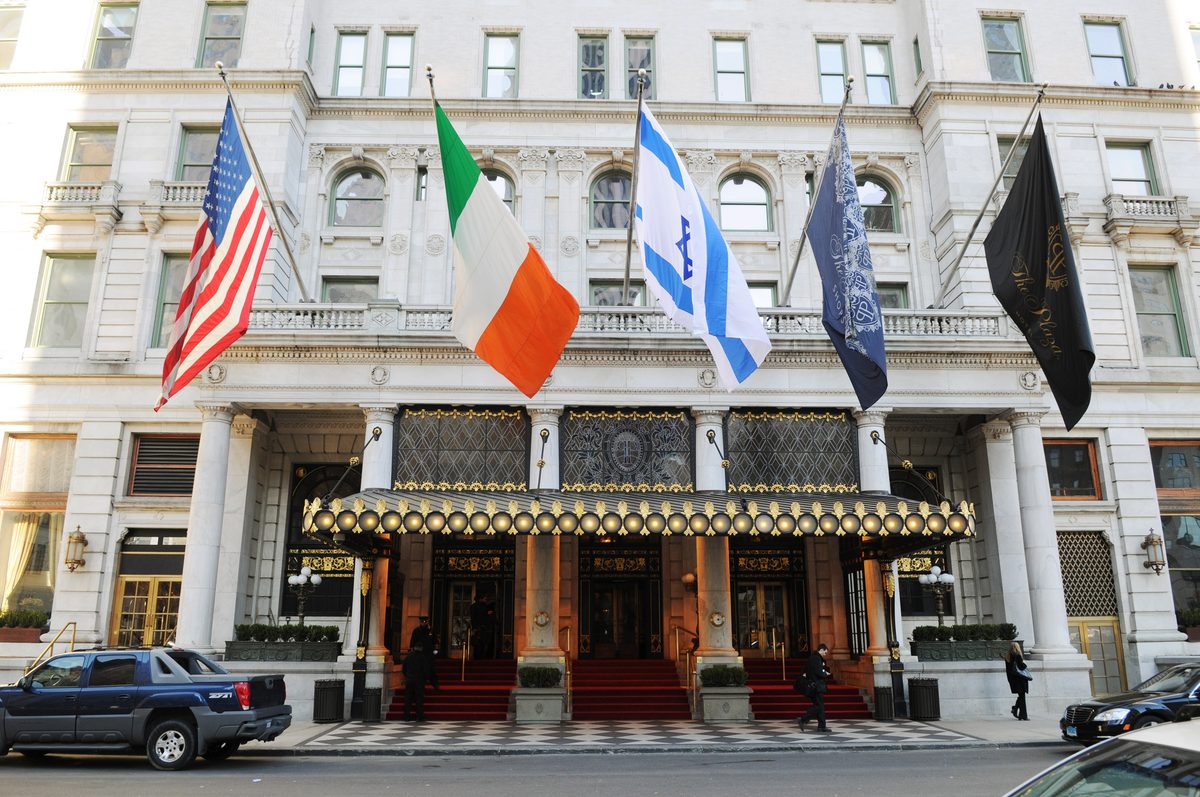
Since 2018, the Plaza has been owned by Katara Hospitality, a subsidiary of the Qatar Investment Authority, Doha’s flagship sovereign wealth fund. That means the Jewish organizations booking its ballrooms are sending some of their charitable dollars to a Qatari state-owned enterprise. Qatar funds Al Jazeera, a news network frequently hostile to the Jewish community’s interests, and has long hosted Hamas’ leaders in Doha.
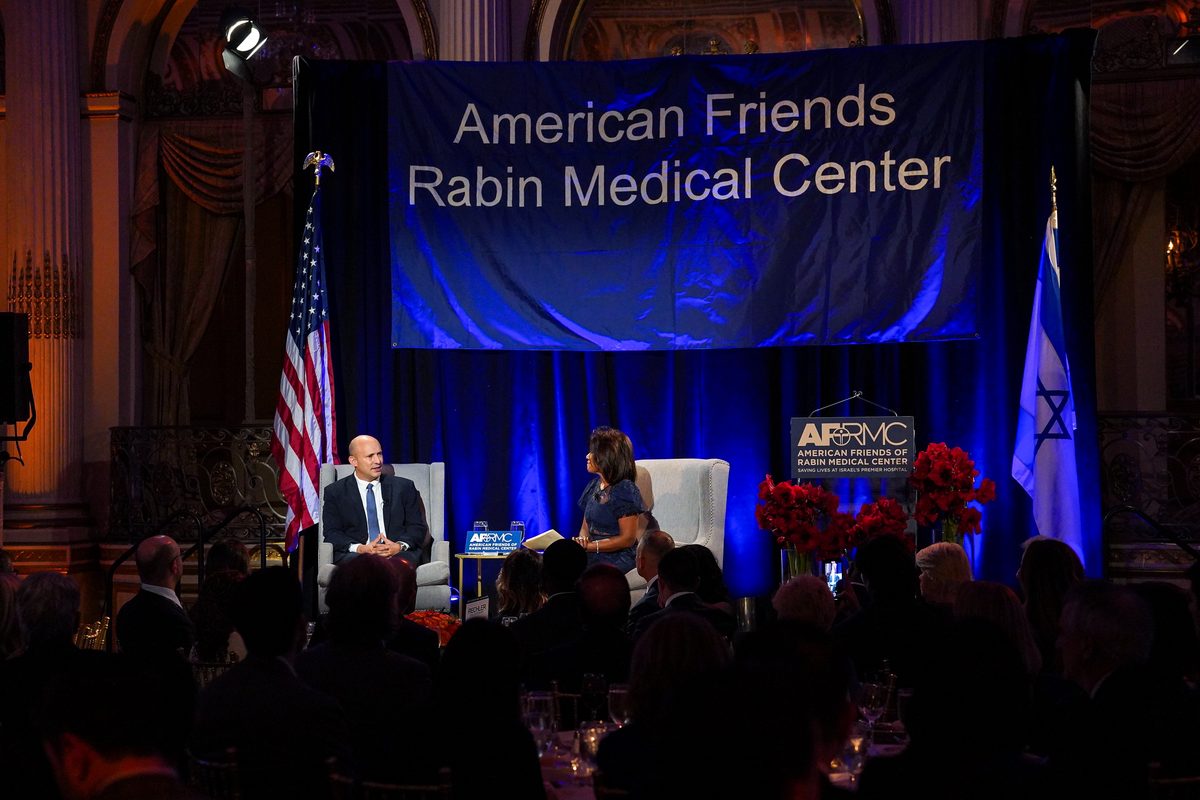
Among the groups that return year after year is the American Friends of Rabin Medical Center, which has held its annual New York gala at the hotel since at least 2022. The group was back on Nov. 9 for its 2026 gala, which drew prominent figures from real estate, finance and philanthropy to raise money for the Israeli hospital. It declined to comment for this story.
American Friends of Rabin is not alone in bringing Jewish communal philanthropy to the Plaza, where renting the Grand Ballroom typically requires a stand-alone space rental fee of $12,000 to $15,000, according to an event planner.
Jewish Insider asked six Jewish organizations that hosted events at the Plaza in the past year whether they knew of the hotel’s Qatari ownership, whether they had considered the implications of spending their charitable dollars there and whether they planned to keep booking it. (The Plaza is set to close in January for at least four years of facade restoration.)
The Jewish Museum, American Friends of Soroka Medical Center, Commentary Magazine and the Weitzman National Museum of American Jewish History all held fundraising events at the venue in 2026. None responded to requests for comment for this article.
The Jewish Community Relations Council of New York, which held a gala at the Plaza in May, was the only group to answer the questions.
“Our event venues are selected based on a range of considerations, including accessibility, availability, and various other preferences,” said Mark Treyger, CEO of JCRC-NY.
“Ownership has not previously been a consideration, and we did not know about the Qatari interest in the Plaza. We will take ownership into account as part of future planning, consistent with our mission and values.”
The Plaza’s draw reaches into the policy world as well. The Washington Institute for Near East Policy, a think tank long backed by prominent Jewish philanthropists and focused on Middle East policy, has also hosted events at the hotel, including its Scholar-Statesman Award gala dinner honoring former Secretary of State Hillary Clinton on Thursday night. The institute, which has published research scrutinizing Qatar’s regional role, declined to comment.
The Plaza has changed hands a number of times in its nearly 120-year history. The original hotel on the site opened in 1890, and the current French chateau-style building opened in 1907. It has since passed through a long list of prominent owners including Conrad Hilton and Donald Trump.
In 2004, the hotel was purchased by the Elad Group, a luxury real estate development firm headed by Israeli billionaire Yitzchak Tshuva. Tshuva’s firm had purchased the property, which has held national historic landmark status since 1986, from a group of investors that included Saudi Prince Alwaleed bin Talal. The Elad Group’s ownership of the property, a period that included major renovations, lasted until 2012. During that period, Israeli Prime Minister Benjamin Netanyahu joined a long list of notable figures who have passed through the hotel, speaking at a July 2010 event arranged by the Conference of Presidents of Major American Jewish Organizations.
In 2012, the Elad Group sold its share in the hotel to Sahara India Pariwar, and in 2018, Katara Hospitality purchased 100% of the property from Sahara and other investors that include bin Talal’s Kingdom Holding Co. and Israeli-American billionaire developer Ben Ashkenazy’s Ashkenazy Acquisition Corp. Katara is a hotel company owned by the Qatar Investment Authority, the country’s sovereign wealth fund, which invests Qatar’s oil and gas earnings in businesses and property around the world. Fairmont Hotels and Resorts, the third-party operator of the property, receives a portion of the hotel’s revenue. The profits go to Katara, as the owner.
The Plaza is part of a much broader pattern of Qatari investment in American real estate and institutions, said Jonathan Schanzer, executive director of the Foundation for Defense of Democracies, a nonprofit research institute that has long criticized Qatari influence in the U.S. He argued that Jewish and pro-Israel organizations have not sufficiently reckoned with the extent of Qatar’s influence in the U.S. or the implications of doing business with Qatari-owned entities.
Qatar has been a major non-NATO ally of the U.S. since 2022, and hosts the largest U.S. military base in the Middle East. In June, FDD published an analysis tracking at least $400 billion in Qatari investments, contracts, grants and spending in the U.S. since 2000.
“This problem is pervasive. It’s everywhere,” Schanzer told JI, pointing to what he called “the enormous portfolio” of U.S. real estate, including hotels, restaurants and buildings, owned by Qatar where Jewish groups and philanthropists do business.
“But it’s only a problem to the extent that the Jewish or pro-Israel communities want to recognize that it is,” said Schanzer. “There is not a wide enough grasp of the problem. The Qataris have bought an enormous amount of influence in this country, they’ve done so through influence peddling in Washington, through sportswashing, through foreign money in higher education and K-12. The extent of this is enormous.”
“It is not on anyone’s radar in any real sense,” continued Schanzer. “The Jewish and pro-Israel community in this country is going to have to decide whether they are OK with any of this. I don’t see the community pushing back in any real way against Qatari influence.”
“I think there is a fair amount of apathy and a fair amount of ignorance,” said Schanzer, adding that the “Jewish community is shrugging or looking the other way.”
Charles Asher Small, founder of the Institute for the Study of Global Antisemitism and Policy, a nonprofit that investigates undisclosed foreign donations from Qatar to the U.S., called on Jewish and all American organizations to be more deliberate about ownership of the businesses they patronize.
“The research is out there, raising alarm bells on this not only antisemitic, but anti-American and anti-democratic entryism into the United States,” Small told JI. “If we want to fight antisemitism and defend democratic principles, I think we should be boycotting businesses calling for the destruction of democracy.”
A similar story plays out in the Plaza’s lobby, where the boutique of the luxury publisher Assouline gives pride of place to “Tel Aviv Spirit,” its new coffee-table tribute to the Israeli city, on sale for $105 under a Qatari state-owned roof.
If approved, the move would make the Weitzman National Museum of American Jewish History a part of the Smithsonian Institution

Courtesy
The National Museum of American Jewish History
A congressionally created commission studying the potential transfer of the Weitzman National Museum of American Jewish History in Philadelphia to the Smithsonian Institution held its first meeting on Tuesday, the start of a two-year process to produce recommendations for Congress and the Trump administration on whether to move forward with the merger.
The commission, appointed by congressional leaders, includes Weitzman Chairman Emeritus Philip M. Darivoff, author and historian Dara Horn, Washington Free Beacon publisher Michael Goldfarb, former University of Pennsylvania President Amy Gutmann, former Rep. Kathy Manning (D-NC), The New York Historical President Louise Mirrer, former chairman of the U.S. Commission for the Preservation of America’s Heritage Abroad Paul Packer and presidential historian Tevi Troy.
Darivoff, appointed by House Minority Leader Hakeem Jeffries (D-NY), and Horn, appointed by Senate Majority Leader John Thune (R-SD), serve as chair and vice chair of the commission, respectively.
Commissioners were sworn in on Tuesday by Sens. David McCormick (R-PA) and John Fetterman (D-PA).
“Jewish American history is American history. It should absolutely be shared now and for generations to come,” Fetterman said. “I’m proud to support this commission in its efforts to bring the Weitzman into the Smithsonian and as the first Pennsylvania-based museum in this iconic American institution.”
Darivoff told Jewish Insider in a joint interview with Horn last week that the Weitzman is the only museum that “seeks to tell the full story of American Jews, the history of American Jews, and their broad contribution to America and to inform the visitors on Jewish history and culture.”
Horn agreed that “this is a time when there’s a new urgency to this topic,” given the “ignorance” about American Jewish history and American Jews today. “I am excited to be part of this process and also delighted that this is a possibility that Congress is taking seriously.”
While the United States Holocaust Memorial Museum in Washington is a federal entity, it is not a part of the Smithsonian Institution and, Horn emphasized, there’s more to Jewish life and culture than the Holocaust. The Weitzman, she said, can help change the conversation around the American Jewish story.
“This is about America … and this is an important part of American history that has been very neglected, and also this is about a living Jewish culture and civilization,” Horn continued. “It’s a story that not a lot of Americans have access to.”
Both Horn and Darivoff emphasized that Jewish culture and civilization are deeply entwined through American history over the course of hundreds of years.
The commission is charged with examining whether the Weitzman’s collection would enhance the Smithsonian’s collection — something Darivoff said will require hiring experts to conduct research — whether the Weitzman would be a financial burden or benefit for the Smithsonian and how governance of the museum would be handled if a transfer were completed. Darivoff and Horn emphasized that the commission is not prejudging the process.
Becoming part of the Smithsonian would make the Weitzman’s mission to educate people about Jewish culture, history and contributions to the country and the world part of the federal government’s mission, Darivoff explained, “and that’s a huge injection of momentum and an elevation on the project that the mission is dedicated to.”
He said that becoming part of the Smithsonian can also make the Weitzman a more attractive institution for potential donors of precious artifacts, given the prestige that the Smithsonian carries.
“We’re living in an era where you have a crisis of credibility in institutions, and the Smithsonian is an institution that is associated with serious scholarship, serious history, finding ways to translate that history to be accessible to the public, to be accessible to students,” Horn added. “People who are looking for resources about American Jewish history, people who are looking for ways to make this accessible to a broader audience — it would be a way of putting that history in that place.”
The study comes at a time of turmoil for the Smithsonian as a whole. The Smithsonian’s secretary, Lonnie G. Bunch III, is set to resign at the end of the year as President Donald Trump attempts to assert authority over the historically independent institution.
The administration is reportedly attempting to condition funding to the institution on its compliance with the Trump administration’s priorities and preferred narratives.
Asked whether those developments might factor into the commission’s considerations, Darivoff and Horn emphasized that the commission was appointed in a bipartisan fashion and that the questions it is examining are bigger than any political moment.
Darivoff described the Smithsonian as “one of the great and important cultural and educational institutions in our country” and said it will remain so into the future.
“These are things that come and go in our political life,” Horn said. “Regardless of whether it becomes a Smithsonian institution, the Weitzman is going to continue to be here, and this opportunity to examine this as part of the Smithsonian is really something that’s above the fray because it is a generational opportunity.”
Please log in if you already have a subscription, or subscribe to access the latest updates.
 Continue with Google

 Continue with Apple