













































































The chair of the Jewish caucus said the 2026 convention was ‘night and day’ compared to last year's, when Jewish delegates reported being harassed on the floor

Getty Images
Notebook with a pen on a table in a classroom at a school


 Add JewishInsider on Google
Major Jewish organizations expressed “reason for optimism” that the National Education Association, the nation’s largest teachers union, is taking meaningful steps to address rising antisemitism following its annual Representative Assembly, which concluded in Denver on Tuesday.
The organizations credited NEA’s Jewish Affairs Caucus (JAC) with pushing through three amendments to the NEA Constitution and a resolution on Jewish education at this year’s RA.
The Jewish Council for Public Affairs said in a statement that it “welcomed the implementation of new rules and policies that better protected the safety and First Amendment rights of Jewish and all members during the National Education Association’s annual meeting.” JCPA said it worked with the JAC to lobby the NEA for the rule changes.
The Jewish groups noted a safer and more inclusive environment for Jewish members at this year’s gathering, marking a stark contrast from last year, when delegates voted to boycott Anti-Defamation League materials in a measure Jewish groups condemned as antisemitic, among other disruptive events. The changes also come following the Equal Employment Opportunity Commission opening an investigation into NEA in June over alleged failure to address antisemitism.
“We commend the important steps the NEA took to foster a more inclusive Representative Assembly this year. Those efforts reflect the union’s stated commitment to the core values of solidarity and belonging for all,” the ADL, American Jewish Committee, Conference of Presidents of Major American Jewish Organizations, Hadassah and StandWithUs said Wednesday in a joint statement.
Ahead of the gathering, aiming to avoid the misconduct seen at the 2025 RA, the NEA adopted several new rules, including stricter conduct enforcement for delegates, electronic voting to prevent shouting on the floor, de-escalation training for staff and regular public reminders of assembly rules.
The 2026 RA — attended by some 6,000 educators — was “night and day” compared to last year’s, the chair of the JAC, Alyson Brauning, told Jewish Insider, recalling that she called security at last year’s convention when some Jewish delegates were allegedly being harassed by other attendees.
After last year’s controversies, Brauning said she spent “six months working with NEA [leadership] on delegate safety and participation protections.”
“The reality was that NEA came through. Building relationships is, to me, the absolute key to making sure we as Jewish delegates can, and did, participate fully at RAs … and I believe our relationships we were able to build with Jewish organizations and the support that they were able to give us is also extremely important,” she continued.
Out of 88 business items for the convention, Brauning viewed two as potentially concerning to Jewish educators, but said this marked an improvement over years past.
“Did they write some things that I as a Jewish person know their intent was probably antisemitic? Sure. Does the body understand that? Probably not. They didn’t outright say [anything antisemitic] which is a win because in the past they would literally say it,” she said.
One of those items mentioned war and genocide — “I’m sure that was about the genocide that they think was in [Gaza], but that’s up to the interpretation of all 6,000 delegates. That one was completely defeated on the floor,” she said.
A second business item called for NEA to add resources on its website including some from Jewish Voice for Peace. “[The majority] of the delegates had no idea who JVP is,” said Brauning. “It was referred to the executive committee because NEA has a policy that they must vet any curriculum before they can use it or recommend it as a resource. That gives us the opportunity to write to NEA and explain why it might be harmful or anti-Jewish hate.
The convention was held one month before a leadership change at JAC, a caucus established five decades ago as a social group that began taking on advocacy work following Oct. 7. Naomi Rodriguez, a Pennsylvania math teacher and first-time delegate who helped organize this year’s RA, will succeed Brauning as the caucus’ chair.
“Going into it, I was intimidated,” Rodriguez told JI of the convention. “I didn’t know how I would be received. Many issues are important to me but I came to this RA with an agenda, to protect Jewish students and teachers. I found myself speaking up about that a lot. It was the most amazing and heartwarming experience. I received so much support from my own state caucus. I felt so loved.
“Our union is simply a reflection of society. Whatever problems we’re having in society, you’re going to see in our union, too, because there are so many members and our union is a place where people exchange ideas,” she continued.
Among the most helpful new policies, Rodriguez said, was the implementation of clickers to vote. “One of the problems last year was voting was done standing up and down or holding a card in the air so everyone in your caucus could see how you vote, so sometimes you could get pushback from the people you’re working with. We could vote more confidentially with the clickers — that made a huge difference,” she said.
Although Rodriguez declined to share the specifics of the three new amendments JAC helped pass, she said the purpose of each “was to ensure that the values of our union are accurately reflected in NEA’s governing documents. The amendments included language to address discrimination and ensure equal participation access for all member communities.”
Jay Goldfischer, a teacher in Los Angeles County who has been an NEA member for 26 years, told JI that it was “overall a very positive and effective RA for Jewish teachers,” where “allies from across America stood up with the Jewish community on the floor of the RA when it counted.”
Though Goldfischer applauded the new guidelines, he noted that the improvements could have also stemmed from the majority of delegates growing “tired of the divisive and distracting issues related to Israel and things unrelated to education.”
Alongside JAC, several Jewish leaders pushed for NEA to adopt new guidelines after last year’s RA.
“Everything we’ve heard from Jewish delegates and educators has been reflective of them feeling that this was a safer and more inclusive convention and that these rules had an impact,” said JCPA CEO Amy Spitalnick, who led a presentation titled “How Educators Can Confront Antisemitism & Hate and Defend Democracy” at the convening.
“There is obviously a lot more to do,” she told JI. “We’ll continue to work with NEA on workshops, programs and trainings to address antisemitism and ensure the union and our schools are as inclusive and safe as possible. But this is definitely an important step in the right direction.”
To support JAC, the ADL and Conference of Presidents also deployed representatives to be on the ground at this year’s convention.
“I was so proud to see Naomi [Rodriguez] use her voice and play such a critical role in shaping a very different narrative at this year’s RA,” Sara Colb, ADL’s director of advocacy, told JI. “Empowering Naomi and teachers like her was ADL’s very purpose for doing this work. Watching these teachers advocate for themselves, their students and the Jewish community is truly inspiring.”
“We started working with JAC after last year to help make [the RA] better for the year ahead,” Stephanie Hausner, chief operating officer of the Conference of Presidents, who attended for the first time on behalf of the organization, told JI.
“Some of that included rules changes, multiple organizations talking to the NEA about helping the tenor of the conference. For sure there was more security [this year]. The overall vibe of the conference was much calmer than we heard from last year. Jewish delegates weren’t afraid to be present and speak, which was also an improvement. They were able to get a lot done.”
Hausner continued, “Some of the resolutions that were put forward that would have done harm to the Jewish community didn’t pass, which says a lot about the body as a whole.”
The focus this year, said Hausner, was “on education and issues of importance for teachers.”
Kay will assume the role on Oct. 5, as Eric Goldstein departs after 12 years atop the country’s largest Jewish federation
Courtesy
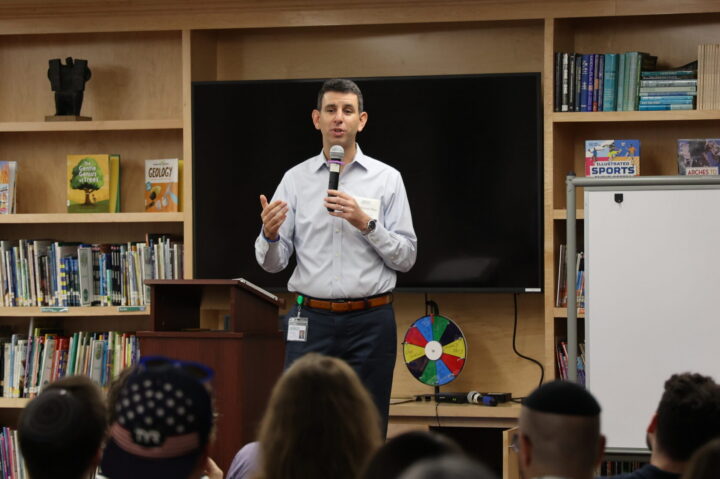
The country’s largest Jewish federation, UJA-Federation of New York, has reached into the day school world to tap its next leader, naming longtime Jewish educator Michael Kay as CEO, Jewish Insider has learned.
In a generational change that signals the growing importance of day schools on the Jewish communal agenda, Kay, who currently serves as head of school at The Leffell School in Westchester County, N.Y., will succeed Eric Goldstein, 66, a former Wall Street lawyer who announced last June that he was stepping down after 12 years in the role. Kay, 46, will enter the position on Oct. 5.
Goldstein steered New York’s Jewish community through a series of crises, including the COVID-19 pandemic, the Oct. 7, 2023, Hamas terror attacks and the surge in antisemitism and multiple wars that followed. Though last year’s announcement set Goldstein’s departure for the end of the fiscal year in June, he will now remain in the role until Oct. 4.
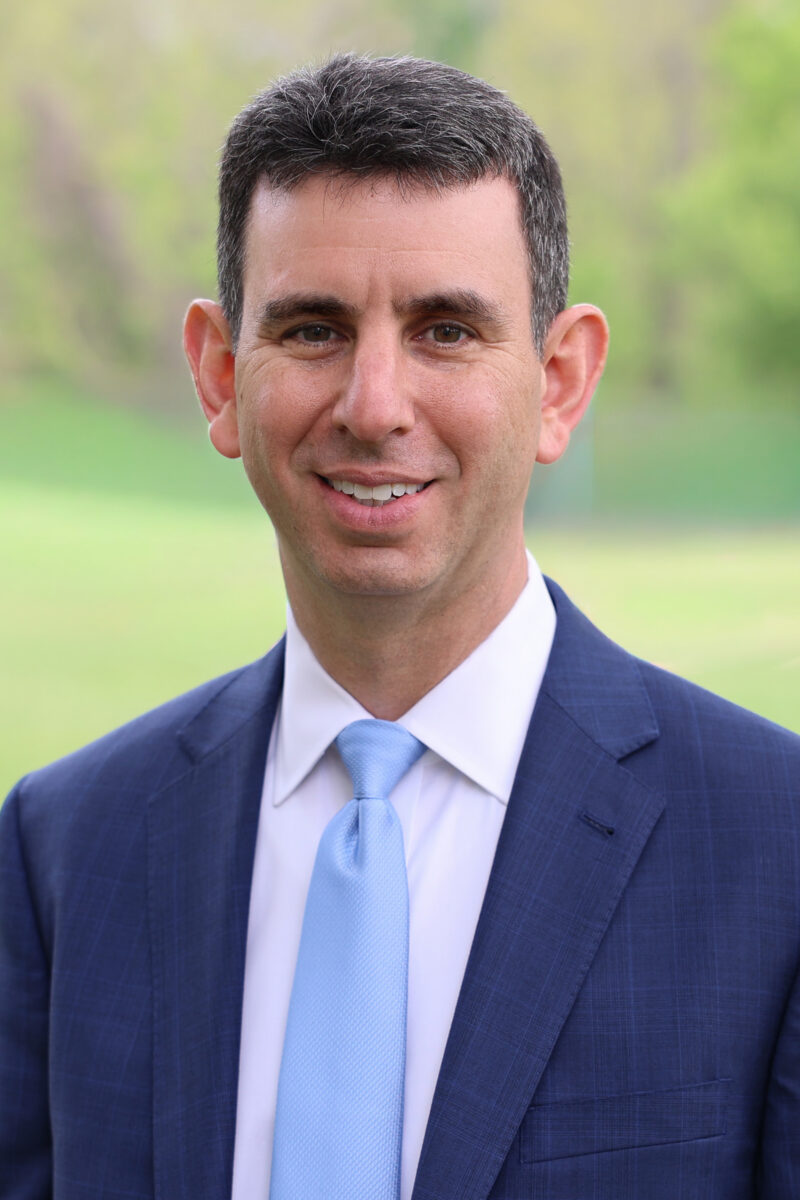
Kay inherits a key leadership position in a complex, often divided New York Jewish community. Over the last three years, new cracks have emerged and old ones have widened within the community in the aftermath of the Oct. 7 attacks. In November, exit polls showed that 33% of Jewish voters cast their ballots for New York City Mayor Zohran Mamdani, an outspoken critic of Israel who has clashed with Jewish leaders and organizations, including UJA-Federation of New York.
Asked how he wants UJA’s relationship with Mamdani to look under his leadership during an interview with Jewish Insider announcing his appointment, Kay emphasized UJA’s commitment to advocating for the well-being of the Jewish community with local officials, “no matter who they are.”
“We have an obligation and a responsibility to work with our local elected officials no matter who they are to ensure that our needs are met and they are accountable for meeting those needs, as I said, well-being, thriving, safety, security,” Kay said. “I start the job in five months, I’m sure that there will be a lot of conversation between now and then with our government relations team about the specific best way to interact with City Hall to achieve that, but we’re not going to lose sight of what those goals are.”
Joining the New York federation after 13 years at the Leffell School, an independent K-12 school with nearly 900 students — formerly a Solomon Schechter school — Kay brings decades of experience in Jewish education to the role.
Prior to Leffell, Kay also served as Upper School principal and director of Judaic studies at the Charles E. Smith Jewish Day School in Rockville, Md., and led Camp Givah, a Jewish summer camp in upstate New York — both pluralistic institutions. He is also an alumnus of the Wexner Graduate Fellowship.
Kay’s appointment comes as Jewish education and day school affordability have become priorities for the Jewish Federations of North America. Recently, the organization has lobbied governors to adopt a federal tax credit that could reduce the financial burden of Jewish day school tuition, marking JFNA’s growing foray into issues of day school affordability and school choice. Earlier this week, New York Gov. Kathy Hochul stated her intention to opt-in to the tax credit.
Asked what he thinks the New York federation should do to advance day school affordability and Jewish education in New York, Kay acknowledged the role of childhood Jewish education in fostering long-term relationships with Judaism, stating that UJA has a responsibility to promote “Jewish engagement in all its forms.”
“I think it’s critically important. We have data showing that students who grow up experiencing Jewish education at a young age are substantially more likely to support Israel on their college campuses, and to take on roles of leadership in the Jewish community,” he said.
Kay is also a senior lay leader and member at Temple Israel Center of White Plains, the egalitarian Conservative congregation that he attends with his wife, Rachel, and their two children.
Announcing his appointment, UJA-Federation highlighted Kay’s work in expanding and strengthening philanthropic support for The Leffell School, including through UJA’s Day School Challenge Fund, and his capabilities as a unifying leader, skilled in bringing people together across differences and partisan divides “through respectful dialogue.”
“It has been the privilege of a lifetime to lead UJA-Federation,” Goldstein said in a statement. “Michael has proven throughout his career an ability to bring the full spectrum of our community together, building trust across differences and harnessing our diversity as a source of strength. That experience will be invaluable to UJA’s next chapter.”
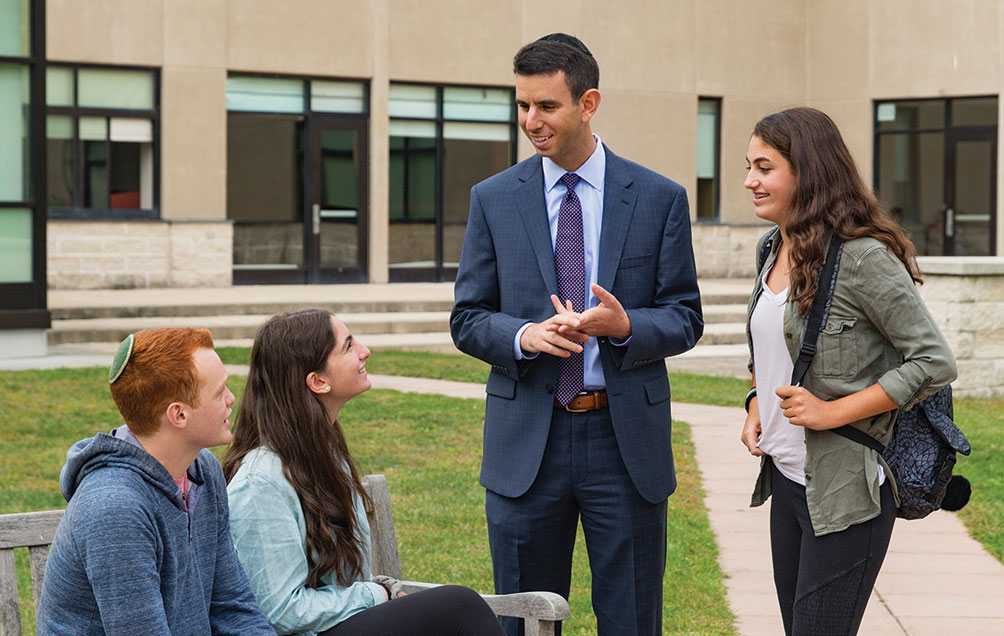
Entering his role the day after the bodies of three kidnapped and slain Israeli teenagers were recovered in the West Bank, Goldstein’s 12-year tenure as CEO of the continent’s largest Jewish federation provided a constant in a particularly tumultuous period for North American Jewry.
Goldstein, whose appointment — as the first Orthodox head of the organization — raised eyebrows within the New York community, led the organization through a period of rising domestic antisemitism. That period was bookended by 2017’s Unite the Right rally in Charlottesville, Va., and the 2018 deadly shooting at Pittsburgh’s Tree of Life Synagogue that killed 11 congregants — and the recent set of deadly attacks on Jewish institutions following the Israel-Hamas war. Under Goldstein, in late 2019, the UJA-Federation of New York and the Jewish Community Relations Council of New York launched the Community Security Initiative, a program designed to protect the Jewish community from violent threats and antisemitic incidents. Since its inception, as threats against the community have continued to mount, the program has grown significantly.
Goldstein also steered the organization both through funding shortfalls during the COVID-19 pandemic, forgoing his own salary for the 2021 fiscal year, and a massive influx of donations for emergency relief after the Oct. 7 attacks.
“We are deeply grateful to Eric S. Goldstein, whose 12 years of leadership leave UJA in a position of strength as we look to the future,” Marc Rowan, the federation’s board chair, said in a statement.
According to the federation, more than 40 candidates were considered for the role, in a search conducted by a 14-member search committee, led by Linda Mirels, the federation’s board president, and supported by global search firm Heidrick & Struggles. Kay’s selection was unanimous.
“Michael is the right leader for this defining moment,” said Rowan. “He is battle-tested — unflappable under pressure and willing to take on the most pressing challenges facing our community, from the safety and security of the Jewish people to the urgent work of strengthening Israel as a Jewish and democratic state.”
At the end of June, Mirels and Rowan, will both conclude their three-year terms. Suzanne Peck and David Wasserman, both of whom served on the search committee, will succeed Rowan and Mirels as president and chair, respectively.
“Michael distinguished himself as a singular and compelling leader — a truly original thinker whose intellect, moral seriousness, and vision for Jewish life set him apart,” said Mirels. “He is an eloquent and persuasive communicator with a long record of inspiring the next generation of proud Jews and Zionists. The work ahead is real — strengthening Jewish identity and pride, deepening commitment to Israel, confronting rising antisemitism, and caring for global Jewry and New Yorkers in need. Michael is the leader our community needs for the work ahead.”
Please log in if you already have a subscription, or subscribe to access the latest updates.
 Continue with Google

 Continue with Apple