



























































Israelis uncertain if Iran war made them safer after ceasefire brings combat to an inconclusive halt
After the ceasefire went into effect, there was a pervading feeling in Israel that the war with Iran was not complete, and the return to routine life may be short-lived

Alexi Rosenfeld/Getty Images
People run to take shelter as sirens sound during incoming missile fire, without an early warning, from Hezbollah, just after midnight on the third day of the U.S. Israel Iran Ceasefire on April 10, 2026 in Tel Aviv, Israel.


 Add JewishInsider on Google
For many Israelis who were awoken by rocket sirens just before 3 a.m. Wednesday, only to see the headline on their phones that a two-week ceasefire between the U.S. and Iran had been reached, the news was met with mixed feelings of relief and concern.
For most Israelis, the ceasefire has brought tangible relief: an end to regular missile alerts, the prospect of uninterrupted sleep (though Hezbollah swiftly shattered that hope for many on Thursday night), and children back in school. Yet for residents of Israel’s north who continue to live under frequent Hezbollah rocket fire, even this fragile respite remains out of reach.
After the ceasefire went into effect, there was a pervading feeling in Israel that the war with Iran was not complete, and the return to routine life may be short-lived. An overwhelming majority of Israelis supported the war a month after its late-February start, and just over half supported its continuation, according to the Israel Democracy Institute. Those views remained relatively steady after Iran stopped shooting missiles: A poll broadcast on Israel’s Channel 13 news on Thursday found that 51% of Israelis opposed President Donald Trump’s agreement to a ceasefire.
Israelis’ support for the war effort despite the challenges on the home front was strong because its aims — eliminating the Iranian nuclear threat and severely degrading the ballistic missile threat — were meant to ultimately make them safer, along with the hope, bolstered by statements from Israeli Prime Minister Benjamin Netanyahu and President Donald Trump, that the mullahs’ regime would be toppled.
Yet, according to the Channel 13 poll, Israelis ranked their sense of security after the war at 5.36 out of 10, and gave Israeli Prime Minister Benjamin Netanyahu a grade of 5.56. Only slightly more Israelis (33%) thought that Israel and the U.S. won the war, as opposed to Iran (28%); a plurality (39%) were not sure.
“Israel did not meet its war aims, and the cost is expected to be high,” Yoav Limor, the main military analyst of Adelson-owned Israel Hayom wrote on Thursday. The Times of Israel’s Lazar Berman lamented that “another war ends without a decisive win.” Even the pro-Netanyahu Channel 14 featured the headline “This is how wars are lost: Stopping a moment before victory” on its homepage, and another, more positive, article about the war’s achievements, still admitted “‘total victory’ was not reached.”
Israeli opposition leader Yair Lapid went as far on Wednesday as to call the ceasefire “a diplomatic disaster at a level that I cannot remember. … Of all possible results, Netanyahu reached the worst.”
Shas leader Aryeh Deri, a Security Cabinet observer and one of Netanyahu’s closest political allies, accused Lapid and others who made similar comments of “acting against the country for narrow, short-term political gain.”
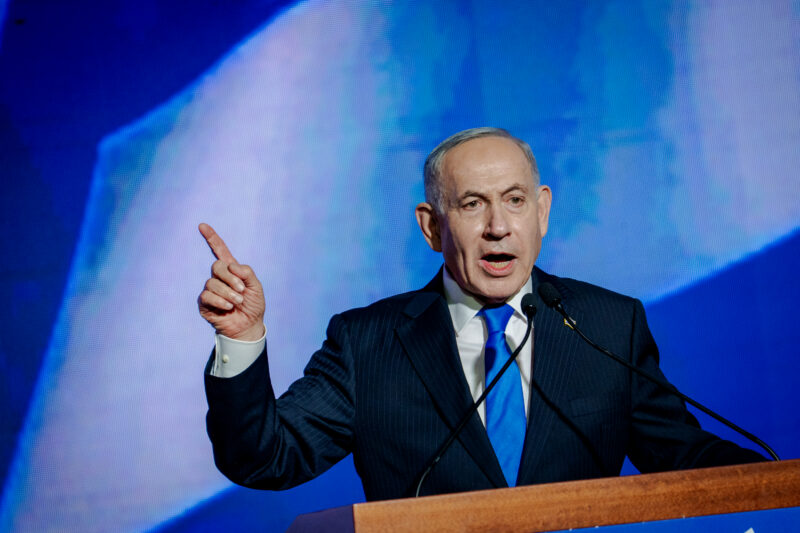
On Wednesday evening, Netanyahu made a live statement to reassure the public.
“Iran is weaker than ever, and Israel is stronger than ever,” the prime minister said. “This is the bottom line … We have set the terrorist regime in Iran back many years. We have shaken its foundations. We have crushed it.”
However, Netanyahu added, “We still have goals to complete, and we will achieve them either by agreement or by the resumption of fighting. We are ready to return to combat at any necessary moment. … This is not the end of the campaign; this is a way station on the way to achieving all of our goals.”
The mixed feelings from the public and the mixed messages from Netanyahu were backed up by experts who spoke to Jewish Insider on Thursday.
Brig.-Gen. (res.) Amir Avivi, chairman of the Israel Defense and Security Forum, told JI that “it’s too early to sum up, because we need to see the results of the negotiations over the next two weeks, and what happens in Iran when the dust settles.”
Brig.-Gen. (res.) Assaf Orion, a senior researcher at the Institute for National Security Studies at Tel Aviv University, said that it is “too early to say” whether Israel is safer now than it was six weeks ago.
“We are at halftime,” Orion said. “The first part was military … but wars are not just a military competition, they are diplomatic and military. …The reality after exhausting the negotiations is how we will judge the war.”
Brig.-Gen. (res.) Amir Avivi, chairman of the Israel Defense and Security Forum, told JI that “it’s too early to sum up, because we need to see the results of the negotiations over the next two weeks, and what happens in Iran when the dust settles.”
That being said, Avivi was confident that Israel is safer than before the war began.
“The last six weeks were a huge drama, a total military defeat of a regional power,” he said. “Iran’s military industry, steel plants, petrochemical plants, navy, were almost entirely eliminated. … Essentially, Israel and the U.S. did whatever they wanted for the past month and a half. They attacked wherever they wanted. If they wanted to turn off the country’s electricity, they could have. … [Iran is] crushed militarily and economically.”
Avivi did not view Israel as having been stopped by the U.S. mid-fight, citing the IDF as saying that they hit all the targets they had defined as important and reached a stage where the remaining targets were energy and economic sites. “That’s why the Iranians broke and wanted a ceasefire,” Avivi said.
“The nuclear project was harmed, but the enriched uranium is still in Iran, and it is unclear if they are closer to giving it up than before,” Brig.-Gen. (res.) Assaf Orion, a senior researcher at the Institute for National Security Studies at Tel Aviv University, said. “That needs either a military solution or a deal, or the situation will get worse. … [Iran] may change its nuclear strategy for the worse, because with fewer capabilities, they are more motivated [to break out to nuclear weapons], and the knowledge and materials remain.”
This was the right time for a ceasefire, Avivi posited, because the fighting had gotten to a point where the remaining targets were Iran’s economic abilities, and the Islamic Republic “basically surrendered,” and decided to agree to the U.S. demand to reopen the Strait of Hormuz without concessions from the U.S.
Orion, however, said that “Israel did very serious damage to Iran [which will last] for many years,” but still viewed the results of that damage as inconclusive.
“The nuclear project was harmed, but the enriched uranium is still in Iran, and it is unclear if they are closer to giving it up than before,” he said. “That needs either a military solution or a deal, or the situation will get worse. … [Iran] may change its nuclear strategy for the worse, because with fewer capabilities, they are more motivated [to break out to nuclear weapons], and the knowledge and materials remain.”
As for Iran’s ballistic missile capabilities, Orion said, “their industry is damaged and unable to produce large quantities … [but] they still retain about half of their capabilities, something like 1,200 missiles and over 200 launchers. It’s clear they can still create the terror effect and harass Israel and neighboring countries. … They can buy [drones] from Russia to threaten the Gulf states.”
A central question pertaining to Iran’s ballistic missiles and other conventional capabilities, Orion said, is what it will rebuild, how quickly and whether China will help Tehran.
Avivi said he views Iran’s ballistic missile strategy as “totally ineffective, influencing nothing … sporadic and not targeted,” and noted that it did not damage Israeli military capabilities, while “every Israeli strike is a death blow to the regime, its industries or senior officials.”
As for regime change, which was not an official war aim, Orion argued that it’s too early to know whether it will happen. “Trump said it already happened, but it’s really just a shift change. The [remaining] people are no less extreme,” he said.
Avivi said that reaching a ceasefire with the regime does not undermine the effort to change it: “The people can still take to the streets, and Israeli and American drones can back them up. This regime will crumble in the end, but it’s a process. It won’t happen in a day.”
One major downside of the war for Israel may be a deterioration in U.S. public opinion towards the Jewish state.
“On the one hand,” Orion said, “Israel proved itself as a military partner with capabilities and prowess to significantly help the U.S. with what it wanted to achieve. Israel was there from day one and took on most of the mission of clearing out Iran’s air defenses … It did a lot of the work when NATO didn’t want to.”
However, Orion pointed to a recent New York Times article that portrayed Israel as “dragging the U.S. into the war, even though it was a presidential decision in the end, contrary to the stances of senior [American] figures and public opinion on the left and right. It will take time to see the aftershocks.”
As to whether the ceasefire will last, Orion said that, while nothing is certain, a ceasefire is generally called when both sides “estimate that conditions would be improved by talking,” and noted that at the outset of the war, the Trump administration said it would likely take four to six weeks.
Avivi said that “Israel and the U.S. now have two weeks to regroup and rearm, which Iran isn’t able to do because it doesn’t have a military industry anymore.”
Iran can spend the ceasefire “taking stock of the disaster that happened to them,” Avivi added.
House Dems call for steps to restore communications access in Iran, but stay mum on military strikes
Rep. Yassamin Ansari: ‘To the people of Iran: know that you are not alone. Members of Congress and the United States see your incredible courage’

Marc Rod
Rep. Yassamin Ansari (D-AZ) speaks at a press conference outside the Capitol on Tuesday, Jan. 20, 2026
At a press conference outside the Capitol on Tuesday, House Democrats called for action by the U.S. government to ensure free internet access and telecommunications for Iranians amid a crackdown by the Iranian regime, but largely withheld comment on whether the administration should undertake military strikes on the regime in support of the protesters, as President Donald Trump has floated.
“People cannot reach loved ones, plan and organize or reach unbiased information. They are literally being kept in the dark by their own government, and it could very well be permanent,” Rep. Yassamin Ansari (D-AZ), the daughter of Iranian immigrants and the first Iranian-American Democrat in Congress, said. “It’s why long-standing bipartisan efforts to ensure internet access in Iran cannot be left on the back burner. This access could save lives, and this is all very personal to me.”
She thanked colleagues for signing on to a bipartisan resolution expressing support for the Iranian protesters, condemning the Iranian regime, calling for unrestricted internet access and urging the U.S. and allied governments to “implement concrete measures” to deter further killings of protesters.
“To the people of Iran: know that you are not alone. Members of Congress and the United States see your incredible courage, and your resolve, your fight for freedom, democracy and self determination has inspired millions around the world. The future of Iran belongs to you and to no one else. The United States and the international community must continue to stand with the people of Iran and support a democratic Iran free from the tyrannical Islamic Republic,” Ansari continued.
Rep. Brad Schneider (D-IL) highlighted the bipartisan support for the protesters and asked the administration to take “concrete action to break through the communications blackout, to allow the people to succeed and to allow the people of Iran to control its destiny.”
He said that restoring communications access is critical to allowing Iranian dissidents to coordinate with each other and to share their experiences with the rest of the world, and for them to be able to see the support they have received from around the world.
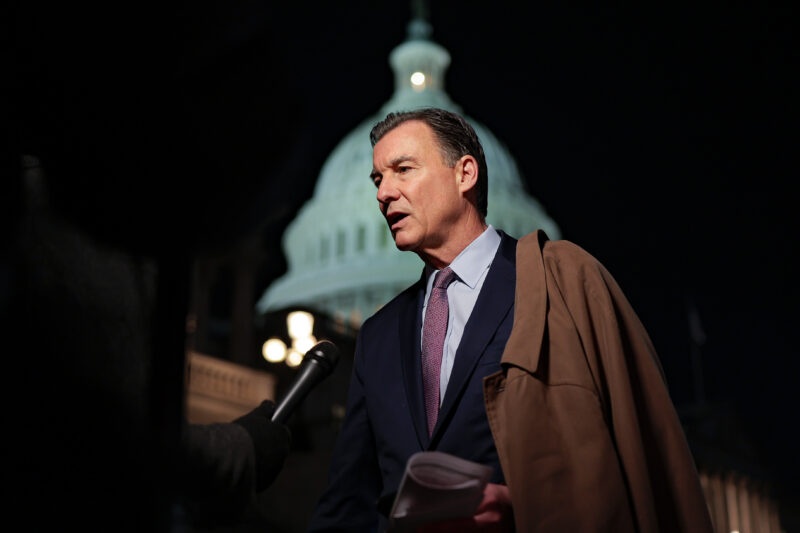
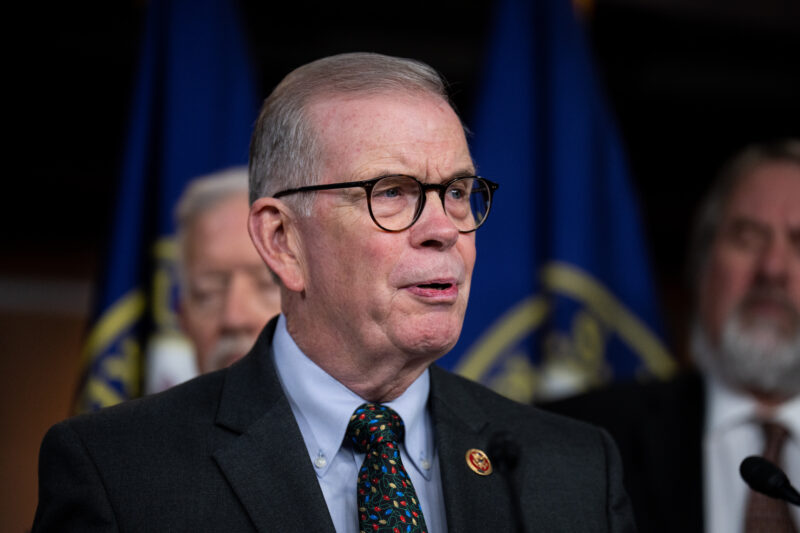
Rep. Tom Suozzi (D-NY) praised the protesters, referencing slogans used in previous Iranian protest movements, and accused the Iranian regime of depriving and stealing from its own citizens in order to “serve as a terrorist banker” and “destabilize the Middle East and terrorize the world.”
“I hope that we can breach the internet blackout so the people will know that their protests these past three weeks have been [an] inspiration to us all,” Suozzi continued.
Rep. Greg Stanton (D-AZ) said, “We, the United States, this Congress, in a bipartisan way, has a moral obligation to amplify [the protesters’] voices when their own government tries to silence them, and we will make clear that we see them, we hear them, and we stand unequivocally with them.”
Asked by reporters about the possibility of military action, the Democratic lawmakers largely deflected.
“My personal belief is that any military action needs to come before Congress. That is the law of the United States within our Constitution,” Ansari said. “But no such action has been proposed or has been put forward by the president. No briefing has been had, no real formal proposal by the president of the United States has come to Congress when it pertains to Iran. So if he has any proposals, I know that many colleagues would be interested in hearing them.”
Trump has dialed back his rhetoric about the immediacy of the situation and the likelihood of strikes in recent days.
When pressed on whether she would support a proposal for military action if it were presented, Ansari reiterated that her “focus is the fact that there is no internet in Iran, and Donald Trump has done absolutely nothing to support internet freedom in the country,” criticizing the president for pulling funding from organizations supporting Iranian dissidents as part of the USAID shutdown last year.
She called for that funding to be “resumed immediately” and for Congress to act on legislation to restore internet and cellular access and her resolution in support of the Iranian people. She said she’s hopeful for a vote on the resolution this week.
“Right now we’re holding together a bipartisan coalition so we can’t go off in all different directions,” Suozzi said. “Right now, we have very strong support for the United States Congress standing by the people of Iran in their protest, and we have strong bipartisan support for providing internet access to the people of Iran. We need to hold that coalition together and get those steps done. And then we can move on to the next.”
Please log in if you already have a subscription, or subscribe to access the latest updates.
 Continue with Google

 Continue with Apple