
































































Wikipedia has failed to systematically review or correct edits to pages on Hamas, Zionism, the Oct. 7 terror attacks and Israel’s war in Gaza, even after banning editors involved in the alleged campaign, according to the report

Nikolas Kokovlis/NurPhoto via Getty Images
The Wikipedia logo is being displayed on a smartphone screen in Athens, Greece, on December 24, 2023.


 Add JewishInsider on Google
A year after the Anti-Defamation League exposed what it described as a coordinated campaign to inject antisemitic and anti-Israel narratives into Wikipedia entries, 91% of one banned editor’s contributions to six prominent articles on issues related to Israel remain in the live text, according to a new report.
The report, released Thursday by the ADL Center for Technology and Society, found that Wikipedia has failed to systematically review or correct edits to pages on Hamas, Zionism, the Oct. 7, 2023, terrorist attacks and Israel’s war in Gaza, even after banning editors involved in the alleged campaign.
The online encyclopedia is maintained by volunteer editors, some of whom spend years mastering the site’s complex guidelines to keep its content accurate and up to date. On Wikipedia, coordinated editing occurs when multiple accounts work together to shape an article’s narrative. This typically involves repeatedly altering text, reversing other editors’ changes or steering discussions toward a preferred viewpoint. While coordinated editing is standard practice, it can violate site rules when used to manipulate content or circumvent its consensus-based editorial process.
The ADL’s analysis focuses specifically on activity involving articles about Israel, Jewish history and the Israeli-Palestinian conflict. It found that while coordinated editing activity declined by about 95% since last year, 11 new editors continue to shape articles on Israel and the Palestinians, warning that the disputed content can also influence search results and AI-generated responses.
The ADL examined revision histories and editing patterns across prominent Wikipedia articles and their associated discussion pages, tracking the contributions of banned editors and identifying accounts that continued to shape content on Israel- and Palestine-related topics. The report analyzed 229 articles edited by at least two of the identified accounts.
Among the report’s examples, the ADL found that an October 2023 restructuring of Wikipedia’s “Hamas” article moved the bulk of material about the group’s antisemitism, use of human shields and human rights abuses to a separate, less-read article titled “Criticism of Hamas.”
On a “Gaza war” article, editors removed thousands of words documenting the Oct. 7 attacks, including evidence of sexual violence. The report also highlighted disputed language in a “Zionism” article that described the movement as achieved “through colonization,” as well as edits that maintained a skeptical framing of sexual violence during the Oct. 7 attacks and questioned the circumstances of the Bibas family’s deaths in captivity.
The report follows the ADL’s March 2025 investigation, which documented coordination among approximately 30 editors who sought to reshape articles on Israel, Jewish history and the Israeli-Palestinian conflict by emphasizing criticism of Israel while downplaying Palestinian terrorist violence and antisemitism.
An ADL spokesperson told Jewish Insider that Wikipedia has not engaged with the group since the 2025 report. The Wikimedia Foundation, the nonprofit that operates Wikipedia, did not respond to a request for comment.
In 2024, a group of Wikipedia editors voted to rate the ADL as an unreliable source on matters related to the Israeli-Palestinian conflict and antisemitism, which led to concerns about reliability and editorial integrity at the world’s largest encyclopedia in the public eye.
ADL CEO Jonathan Greenblatt called on the Wikimedia Foundation to audit the published work, and for companies that build search and AI products to stop presenting contested framing as settled fact.
“Banning individual editors was never going to be enough,” said Greenblatt. “The pages that millions of people read, and that AI tools learn from, still bear the marks of a systematic disinformation campaign that Wikipedia itself has sanctioned but never cleaned up. The most visited online encyclopedia that claims neutrality has to be willing to repair its own record.”
‘Fortnite’ was rated the best at implementing safeguards to combat antisemitism, with ‘Grand Theft Auto Online,’ ‘Call of Duty’ and ‘Minecraft’ following closely behind
Thomas Fuller/NurPhoto via Getty Images
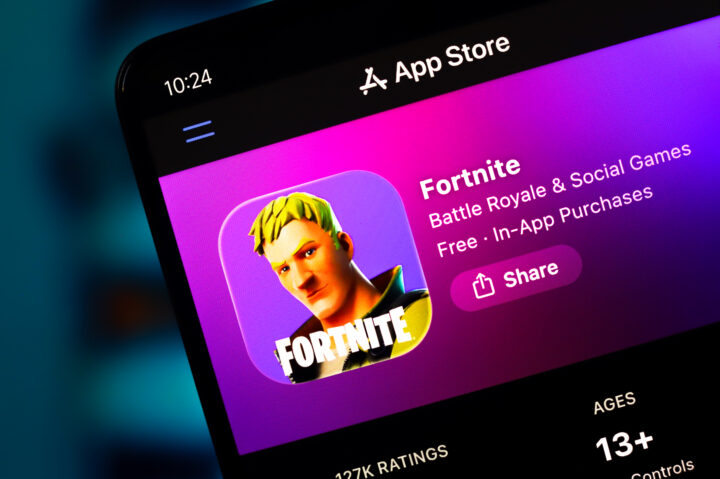
The Fortnite logo is displayed on a smartphone screen in the Apple app store on March 6, 2026.
A first-of-its kind leaderboard evaluating how major video game companies address antisemitism and extremism in online games was released on Wednesday by the Anti-Defamation League, Jewish Insider has learned.
The leaderboard assessed 10 of the most popular games and their respective companies on their policies and in-game safety features. “Fortnite” was rated the best at implementing safeguards to combat antisemitism, with “Grand Theft Auto Online,” “Call of Duty” and “Minecraft” following closely behind. Other major games evaluated included “Roblox,” “Valorant,” “Clash Royale,” “Counter-Strike 2” and “PUBG: Battlegrounds.”
ADL evaluated the product features of each individual game and the relevant policies that govern that game — for some games, the policies that govern them were specific to the game, while for some it was the company policies that apply to all of their games.
The leaderboard, created by the ADL Center for Technology and Society in partnership with the ADL Ratings and Assessment Institute, builds on the annual survey work that CTS did in partnership with gaming analytics firm NewZoo, from 2019-2023.
Games received labels of advanced, moderate or limited protections based on criteria including: antisemitism and hate policy; extremism/terrorism policy; in-game display of code of conduct; documentation of escalation to law enforcement; and in-game tooling.
The latter criteria, which accounts for 60% of a game’s overall score, includes players’ ability to block and/or mute other players; players’ ability to report players for voice, text, usernames and user-generated content; and the game’s prevention of antisemitic and hateful extremist usernames.
Bonus points were awarded for clear appeals processes and engagement with ADL, and points were deducted for harmful content on public-facing game stores. The antisemitism watchdog shared detailed findings with each gaming company and invited them to discuss the assessment before the leaderboard’s release, to which Epic Games, Supercell and Minecraft responded.
Popular online games boast hundreds of thousands of players, with 85% of U.S. teens reporting playing video games in 2024, according to the Pew Research Center. The Pew study found that 80% of all teens think harassment over video games is a problem for people their age, and 41% of those who play them say they’ve been called an offensive name while playing.
The leaderboard comes one year after ADL conducted a study where it asked 15 participants (university students, recent graduates and young adults) to play four leading online games (“Valorant,” “Counterstrike 2,” “Overwatch 2” and “Fortnite”) in one-hour increments with different identities (Jewish and Muslim religious and ethnic identities, as well as in national identities such as Chinese, Mexican and Israeli). It found that almost half of game play experiences included some form of harassment, such as slurs, trash-talking or disrupted play, and one-third included identity-based harassment, such as “gas the Jews” or calling people the “N-word.”
The ADL said it plans to feature the results in an online Gaming Leaderboard, designed to be a resource that will track how gaming companies manage their online multiplayer ecosystems over time to guide parents, gamers, policymakers and the gaming industry itself.
“When a parent wants to know if an online game is safe for their child, there has been no one-stop shop to understand how a particular game approaches online safety,” Daniel Kelley, senior director of the ADL Center for Technology and Society, said in a statement. “This leaderboard addresses that critical gap by offering the most comprehensive evaluation of safety measures in online multiplayer games to date, with a focus on how companies manage antisemitism and extremism.”
Please log in if you already have a subscription, or subscribe to access the latest updates.
 Continue with Google

 Continue with Apple