





































































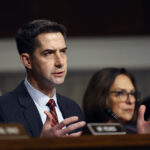






‘I’m not an investment advisor, but you can see that if you were not in Israel in the past two years, you probably missed out, if Israel was not part of your portfolio,’ Seffy Zinger, chair of the Israel Securities Authority, told JI

Patrick T. Fallon / AFP via Getty Images
Laurence D. Fink (R), co-founder, chairman and CEO of BlackRock, speaks next to Milken Institute chairman Michael Milken during the 29th annual Milken Institute Global Conference at the Beverly Hilton in Beverly Hills, California on May 5, 2026.


 Add JewishInsider on Google
LOS ANGELES — The Israeli financiers, investors and entrepreneurs who attended last week’s Milken Institute Global Conference in Beverly Hills almost couldn’t make it. Just weeks earlier, after all, the country’s airspace had been largely closed as war raged with Iran.
But aside from their slight fear that the fragile ceasefire would fall apart and leave them stranded in the United States, the Israelis who participated in the marquee conference of global finance brought an upbeat attitude about Israel’s economy, even two-and-a-half years into near-constant war that began with Hamas’ Oct. 7, 2023, attacks.
“When the war began, I think none of us — none of the regulators in Israel, and almost none of the players or the investors in Israel — thought or believed that after two-and-a-half years of war, Israel would show such growth, such resilience,” Seffy Zinger, chair of the Israel Securities Authority, told Jewish Insider in an interview. (The ISA is Israel’s equivalent of the U.S. Securities and Exchange Commission.)
Zinger was at Milken to spread the message that global financiers should consider investing in the Israeli economy, and in particular the Tel Aviv Stock Exchange, despite the doom-and-gloom headlines about the Middle East.
“I’m not an investment advisor, but you can see that if you were not in Israel in the past two years, you probably missed out, if Israel was not part of your portfolio. So I think Israel is becoming a very interesting place economically,” he said.
The shift away from Israel in American politics did not appear to be reflected at this gathering of global business elites: Natti Ginor, a managing director at Jefferies and the bank’s head of Israel investment banking, pitched Israel at the conference as a financial capital in the Middle East. Blackstone’s Tel Aviv-based senior managing director, Yifat Oron, was also there talking about her work leading the firm’s investments in Israel.
“When we are talking to investors and the big players, what I see is a lot of interest in Israel, and I think the economy and the numbers speak for themselves,” said Zinger.
Dror Barak traveled to Los Angeles from Israel to meet developers and investors from across the Middle East, including Saudi Arabia, the United Arab Emirates and the Palestinian territories. He is the founder of Align Capital, an infrastructure-focused private equity firm that is working on projects related to IMEC, the India-Middle East-Europe Economic Corridor — a planned project meant to further economic cooperation across wide swathes of the world. Its development has stalled since the Oct. 7 terror attacks and the ensuing war, but behind the scenes, progress is being made.
“The war, I don’t like to say it, but with all the bad things it also pushed us toward a new era of cooperation,” Barak told JI last week. “The war made us on the same side. It’s the first time in history that we, the UAE [and] Saudi are on the same side. We are all against, publicly or less publicly, Iran. With the United States, of course. So this is a very, very, very dramatic thing, and it’s changed dramatically the nature of our relationship.” IMEC has been floated as an alternative for global shipping amid turbulence in the Strait of Hormuz.
Barak acknowledges that Israel’s reputation has suffered: “Yes, it’s an issue,” he said. But he argued that the work of investing in cross-regional infrastructure must happen, even if the geopolitical situation remains unresolved.
“I’m not waiting for the American public to dedicate my direction, and I’m not waiting for [Israeli Prime Minister Benjamin Netanyahu] or [President Donald Trump] to do some peace,” said Barak. “We promote Arabs and Jews working together. So everywhere that you are looking, I think that we are doing the right thing — the right thing for Israel, the right thing for the region and the right thing for the global politics that want to support the right forces.”
Last year was a banner one for Israeli startups, and the country’s GDP rebounded last year after slowing in 2023 and 2024. But challenges remain. Bentzion Levinson, founder and CEO of Heven AeroTech, an American company with a large Israeli workforce, said there were times that more than one-third of his employees were out of the office doing reserve duty in the Israeli military.
“To this day, we have an average of 10 to 20% of our employees in reserves, around the clock. So I think it’s a challenge. But challenges build strength,” Levinson told JI in Los Angeles. His company’s creation of pioneering long-range stealth drones has driven contracts with the U.S. military and earned a unicorn valuation.
“A lot of things are taking a toll on families [and the] personal, but I think people are strong and they realize that there’s no other choice,” said Levinson. “I think it’s gonna be a decade of significant growth in Israel, especially in the defense tech world … it’s a challenge, but I think the Israeli people can overcome it.”
Zinger, the ISA chair, was attending Milken with his chief of staff, who spent nearly 400 days serving in the reserves after Oct. 7. Responsibilities got juggled; some days the staffer would work three days and do reserve duty for two days. There was no choice but to adapt. And that flexibility, Zinger argued, is part of why Israel’s economy has performed better than anyone expected during the war.
“I think this is part of the strength of the Israeli community and society, exactly these kinds of things, and of course, without that strength, the performance that we see could not have happened,” said Zinger. “It’s something that I think we learn how to live with.”
The executives, philanthropists and politicians who attended the gathering took note of the increasingly populist moment while discussing how to remedy some of the legitimate concerns of Americans

Patrick T. Fallon / AFP via Getty Images
US musician and tech entrepreneur Will.i.am shakes hands with Editorial Director of Bloomberg, Erik Schatzker, during the 29th annual Milken Institute Global Conference at the Beverly Hilton in Beverly Hills, California on May 5, 2026.
The country’s consummate insiders gathered at the Milken Institute Global Conference in Beverly Hills this week. But far away from the five-star hotels where attendees closed business deals and mingled over salmon bento boxes, there is concern over an anti-elite sentiment that is dominating American politics.
The executives, philanthropists and politicians who attended the gathering took note of this increasingly populist moment while discussing how to remedy some of the legitimate concerns of Americans.
There were sessions focused on protecting the workforce in the face of disruption from AI, and on retirement planning for gig economy workers who cannot contribute to a typical 401(k). Behind the scenes, Trump Accounts — tax-advantaged savings accounts for American children, with $1,000 kicked in from Uncle Sam — were a big topic of conversation.
As some of America’s most important decision-makers discussed the turbulent downstream impacts of the AI boom, and the sense that many people are feeling left behind, a related topic that animated the many Jewish executives and investors who attended the conference.
They worry that the intermingling of populism and antisemitism, already heightened following the Oct. 7 Hamas attacks on Israel two and a half years ago, represents a dangerous combination.
“Antisemitism is a manifestation of extremism and populism,” TD Bank Vice Chair Jeffrey Solomon told Jewish Insider. “Extremism on the left and extremism on the right, neither one of those is good for us as Jews, but it’s not good for a lot of people.”
Solomon, a major Jewish philanthropist who chairs the board of the Foundation for Jewish Camp, spoke on a panel at Milken about macroeconomic trends. He said that fighting antisemitism requires also understanding that the problems in society run deeper than just anti-Jewish hate.
“Our job isn’t necessarily to just cure antisemitism. The job is to get at the root cause of what’s causing there to be stress in society. We have to acknowledge that the policies that have gotten us to this place have not been inclusive enough for enough people,” said Solomon, which requires “enabling [people] to be able to find their own path and be successful. The people that can make that happen are at this conference, and if we do that, antisemitism will take care of itself, because there will be no need for it.”
Sara Eisen, a CNBC reporter who was at the conference to moderate several conversations with big-name principals like Citadel CEO Ken Griffin, told JI she heard concerns about antisemitism, and the broader political environment, raised in conversation with other high-profile attendees.
“They see what’s happening in the political world. They see what’s happening in geopolitics,” she said. “This is the sideline conversation.”
At a Tuesday panel about antisemitism, Steven Weitzman, director of the Center of Advanced Judaic Studies at the University of Pennsylvania, made the case that antisemitism is itself anathema to the ideals espoused by Milken attendees.
“Not only is antisemitism the hatred of the Jews,” said Weitzman, “it’s also opposition to globalization, it’s opposition to what this very conference represents, which is peaceful cooperation across national borders.”
Please log in if you already have a subscription, or subscribe to access the latest updates.
 Continue with Google

 Continue with Apple