
























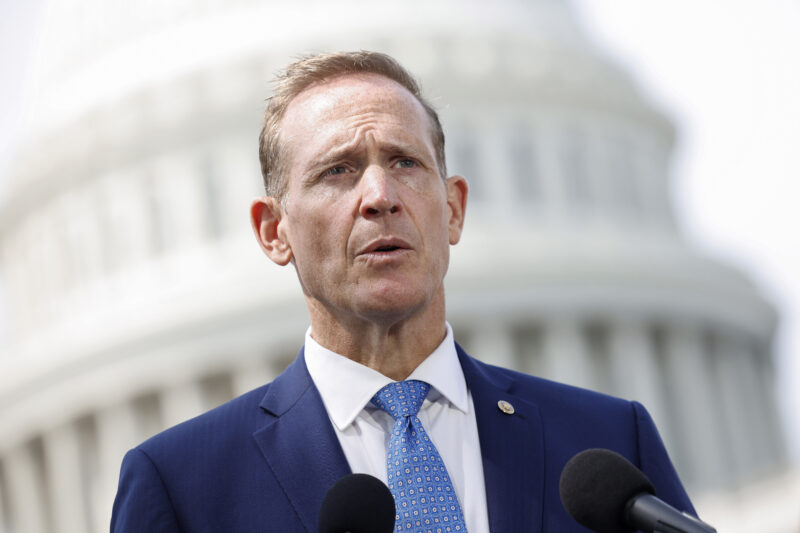








The two victims said they were approached by three assailants while speaking Hebrew

JCRC Bay Area/X
Video shows assailants attacking two Israeli-Americans in San Fransisco on March 9, 2026.


 Add JewishInsider on Google
Police in San Jose, Calif., are investigating a violent attack against two adult men outside an upscale restaurant as an antisemitic hate crime, a spokesperson for the police department confirmed on Tuesday.
On Sunday afternoon, three assailants approached the two victims outside Augustine, a restaurant and cafe located in the Santana Row shopping mall. The two men — Israeli Americans — were speaking Hebrew when the attackers allegedly overheard them, according to the San Francisco Jewish Community Relations Council.
“The victims alleged that the suspects used antisemitic language during the altercation. The incident is currently being investigated by the Assaults Unit as a possible hate crime,” a spokesperson for the San Jose Police Department told Jewish Insider.
A video shows the three young men repeatedly punching and kicking the victims directly in front of other diners and as bystanders walked past. The assailants then fled before police arrived.
Tali Klima, a spokesperson for the grassroots advocacy group Bay Area Jewish Coalition, urged elected officials in the Silicon Valley community to speak out against the attack.
“We call on our local elected officials to finally take a strong stand against this hatred using not only their words but also concrete actions. It is time to take threats to the Jewish community seriously,” Klima said on Tuesday.
The survey also found solid support for the U.S.-Israel alliance, even as the level of backing has slightly declined
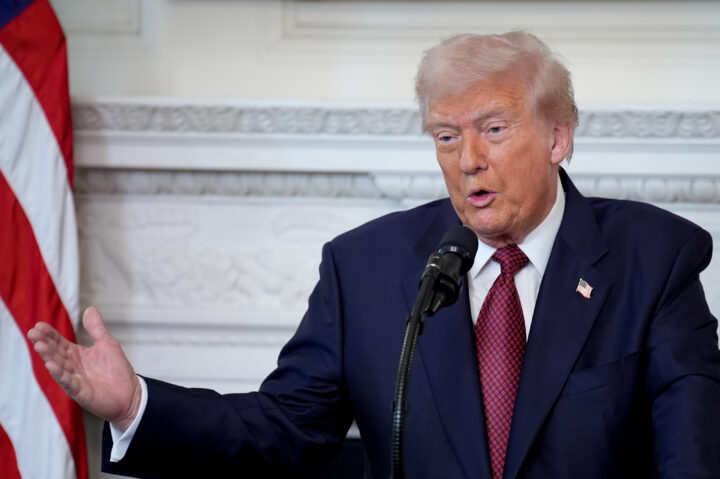
Yuri Gripas/Abaca/Bloomberg via Getty Images
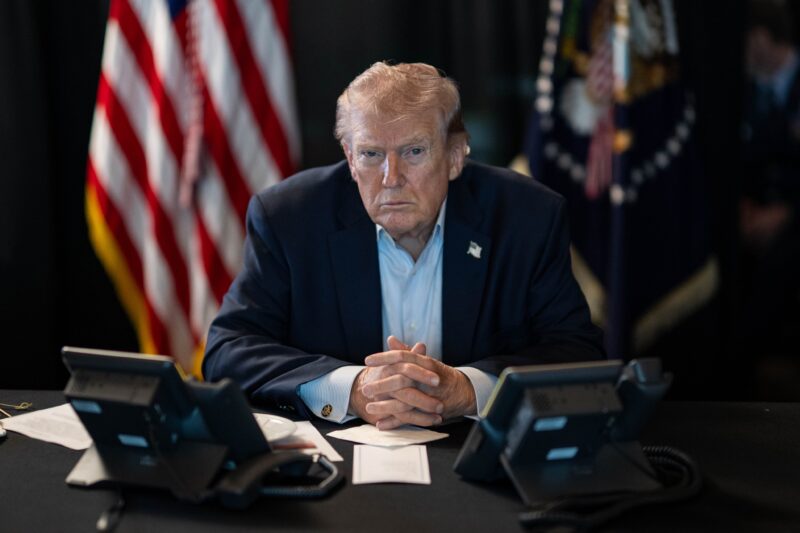
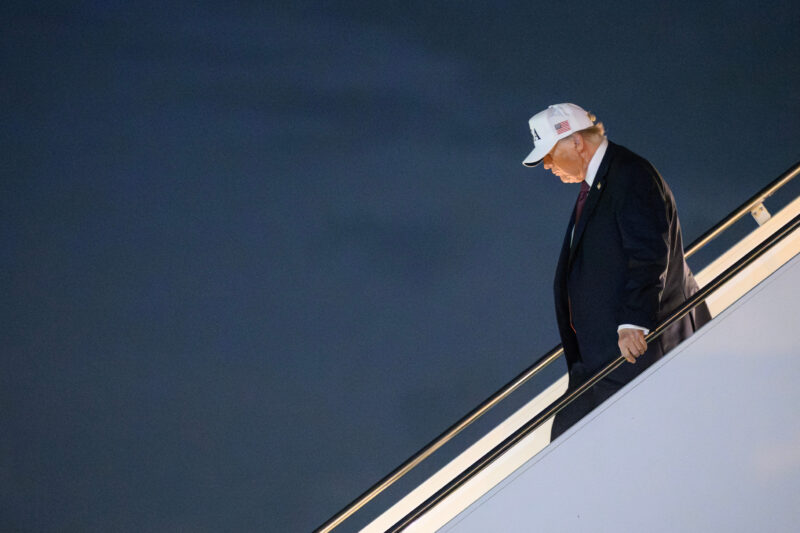
US President Donald Trump during a breakfast with Senate Republicans in the State Dining Room of the White House in Washington, DC, US, on Wednesday, Nov. 5, 2025.
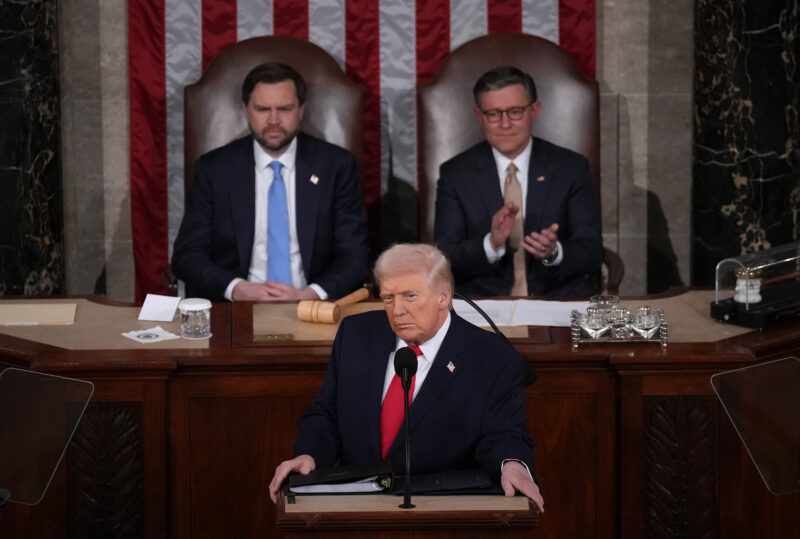
President Donald Trump’s decision to strike Iran’s nuclear facilities in June, dealing a significant blow to the Islamic Republic’s weapons program, is viewed favorably by 60% of Americans, according to a newly released survey commissioned by the Ronald Reagan Institute.
The decision to bomb Iran’s nuclear program was one of the most popular policies the Pentagon has made in Trump’s second term, according to the survey. Of the 10 policies tested, only two (using force against drug traffickers in Latin America and issuing gender-neutral standards for combat roles) had a higher net approval rating.
Despite the widespread support for the airstrikes, there is a partisan divide in support. Republicans overwhelmingly supported the military action, while 39% of Democrats did so.
The survey also painted a mixed picture about the state of U.S.-Israel relations, finding that two-thirds of Americans consider Israel to be an ally, including 57% of Democrats. The share of respondents calling Israel an ally is down six points from the institute’s survey last year. When it comes to sending weapons to Israel, half of respondents were supportive — with a 68% supermajority of Republicans, but just 35% of Democrats.
If Hamas refuses to demilitarize Gaza, however, 54% of Americans would favor further Israeli military action, including 42% of Democratic voters.
“Overall, the American people know who is the ally and who the adversary is in the Middle East,” Roger Zakheim, the director of the Ronald Reagan Presidential Foundation & Institute, told Jewish Insider. “Even after the impact of Israel’s lengthy war against Hamas in Gaza, you still have close to a supermajority [in the U.S.] viewing Israel as a strong ally, which is reassuring for Jerusalem.”
The findings are part of a wide-ranging examination of American public opinion on national security issues, indicating a consistent American preference to maintain engagement in the world. Nearly two-thirds (64%) of respondents said the “it is better for the United States to be more engaged” in international affairs, with just 33% disagreeing.
Notably, support for the U.S. sending weapons to Ukraine as it defends itself from Russian attacks wins widespread support, with 64% in favor — a nine-point jump from last year’s survey. Ukraine is also viewed as an ally by three-fourths of respondents. Only 17% said they thought Russia was an ally, while 79% viewed the country as an enemy.
When asked which country poses the greatest threat to the U.S., China held a sizable lead, with nearly half of respondents naming Beijing, while 26% ranked Russia at the top. Only 3% said Iran posed the greatest threat.
The poll of 2,507 adults was conducted jointly by Beacon Research, a Democratic firm, and Shaw & Company Research, a Republican firm, between Oct. 23-Nov. 3. The two polling firms also conduct Fox News’ polling.
It was released in the run-up to this year’s Reagan Defense Forum, which is being held this Friday and Saturday at the Ronald Reagan Presidential Library in Simi Valley, Calif.
At a conference hosted by the conservative National Task Force to Combat Antisemitism, activists reckoned with the reality that antisemitism is not limited to the political left
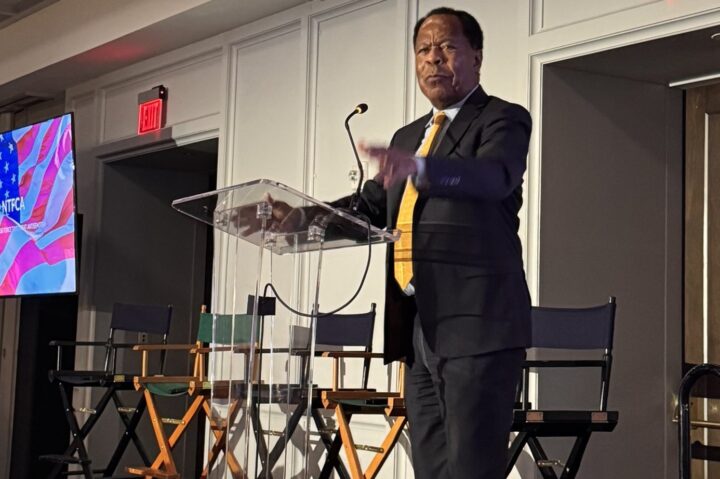
Ellie Cohanim/X
Justice Department senior counsel Leo Terrell addresses National Task Force to Combat Antisemitism conference, November 18th. 2025
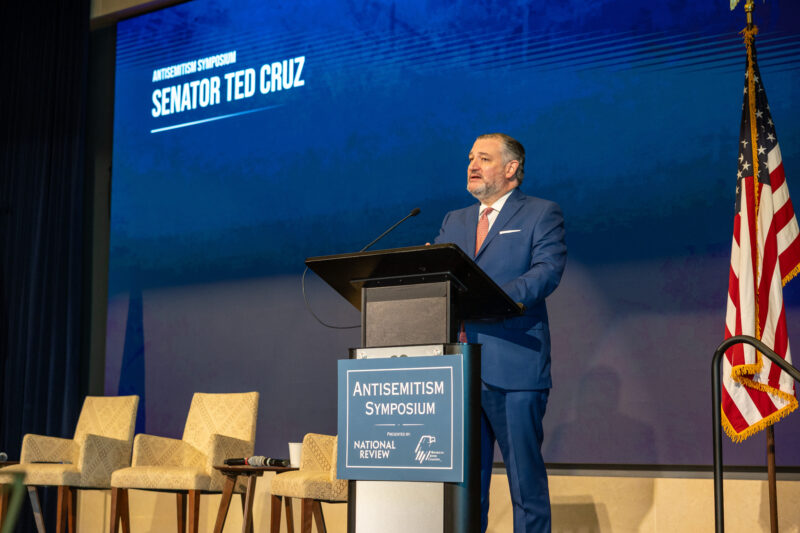
As 2,000 Jewish philanthropists, activists and professionals prepared to leave Washington on Tuesday as the Jewish Federations of North America’s General Assembly wrapped up, they heard a stern warning from Sen. Ted Cruz (R-TX): Americans must confront antisemitism on both sides, including the right; if they don’t, the nation will face an “existential crisis.”
“I do not want to wake up in five years and find that both major parties in America have embraced hatred of Israel and have tolerated, if not embraced, antisemitism,” Cruz said.
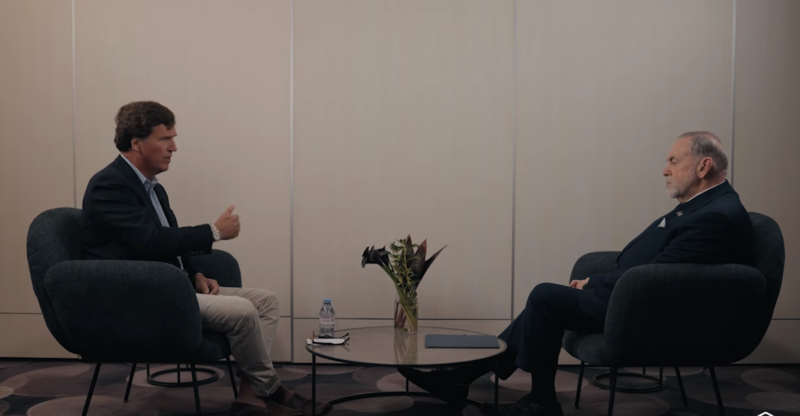
Cruz has become the most prominent Republican elected official speaking out against a rising tide of right-wing antisemitism. But the weeks following podcaster Tucker Carlson’s interview with neo-Nazi provocateur Nick Fuentes have sparked a reckoning for Republicans, including some who until recently considered antisemitism to be primarily a left-wing phenomenon.
That internal tension was on full display at a Tuesday afternoon conference hosted by the conservative National Task Force to Combat Antisemitism. The group was until recently affiliated with the Heritage Foundation, until the conservative think tank’s president came to Carlson’s defense. Earlier this month the task force members voted to cut ties with Heritage.
The NTFCA gathering, arranged in less than two weeks after the group’s split from Heritage, took place in a basement ballroom at The Line Hotel in Washington. About 100 people were in attendance, among them representatives from Jewish advocacy groups including the Anti-Defamation League, Jewish Federations of North America and Combat Antisemitism Movement.
The event’s organizers — NTFCA co-chairs Ellie Cohanim, who served as deputy antisemitism special envoy in the first Trump administration; Mario Bramnick, a Florida pastor and president of the Latino Coalition for Israel; and Luke Moon, a pastor and executive director of the Philos Project — took the opportunity to forcefully reject Carlson and other far-right media figures who are gaining clout among conservatives by attacking Israel and its backers, and to issue a call for conservatives to join them in calling out growing animosity toward Jews. They don’t think enough people are doing so.
“I remember Luke, early on, said, ‘Mario, keep your eye on the right.’ I said, ‘Well, look, that’s a fringe. It’s not really important,’” Bramnick said. “But now we’re seeing a very troubling development during President Trump’s second administration within the MAGA movement: antisemitic acts coming from MAGA movement leaders.” The Project Esther report that the task force developed with Heritage last year was focused solely on left-wing antisemitism.
U.S. Ambassador to Israel Mike Huckabee delivered remarks via video. “There is so much antisemitism around the world today. But what perhaps is most troubling to me is that it is not just rising up on the far left,” Huckabee said.
Two other Trump administration officials also spoke: Justice Department senior counsel Leo Terrell, who said combating antisemitism “is the American thing to do,” and former Rep. Mark Walker (R-NC), Trump’s nominee for international religious freedom ambassador.
Trump, meanwhile, defended Carlson this week when he was asked about the right-wing podcaster’s interview with Fuentes.
The convening was a launchpad for a new movement of conservative activists willing to take on antisemitism within their own party. It saw staunch partisans stake out surprising positions, like when Zionist Organization of America President Morton Klein said he was “disappointed” that Trump claimed not to know much about Fuentes.
“The fight on the left is still happening. That is not done. That is a work that still has to go on. But we now have an emergent threat on the right,” Moon said. “It’s the early days of this war. I don’t feel like we did win the last battle, but we didn’t lose yet either.”
In an interview with JI, Nunn says the U.S.-Israel military relationship is crucial to pushing the boundaries of defensive technological development, keeping Americans safe and staying ahead of global adversaries
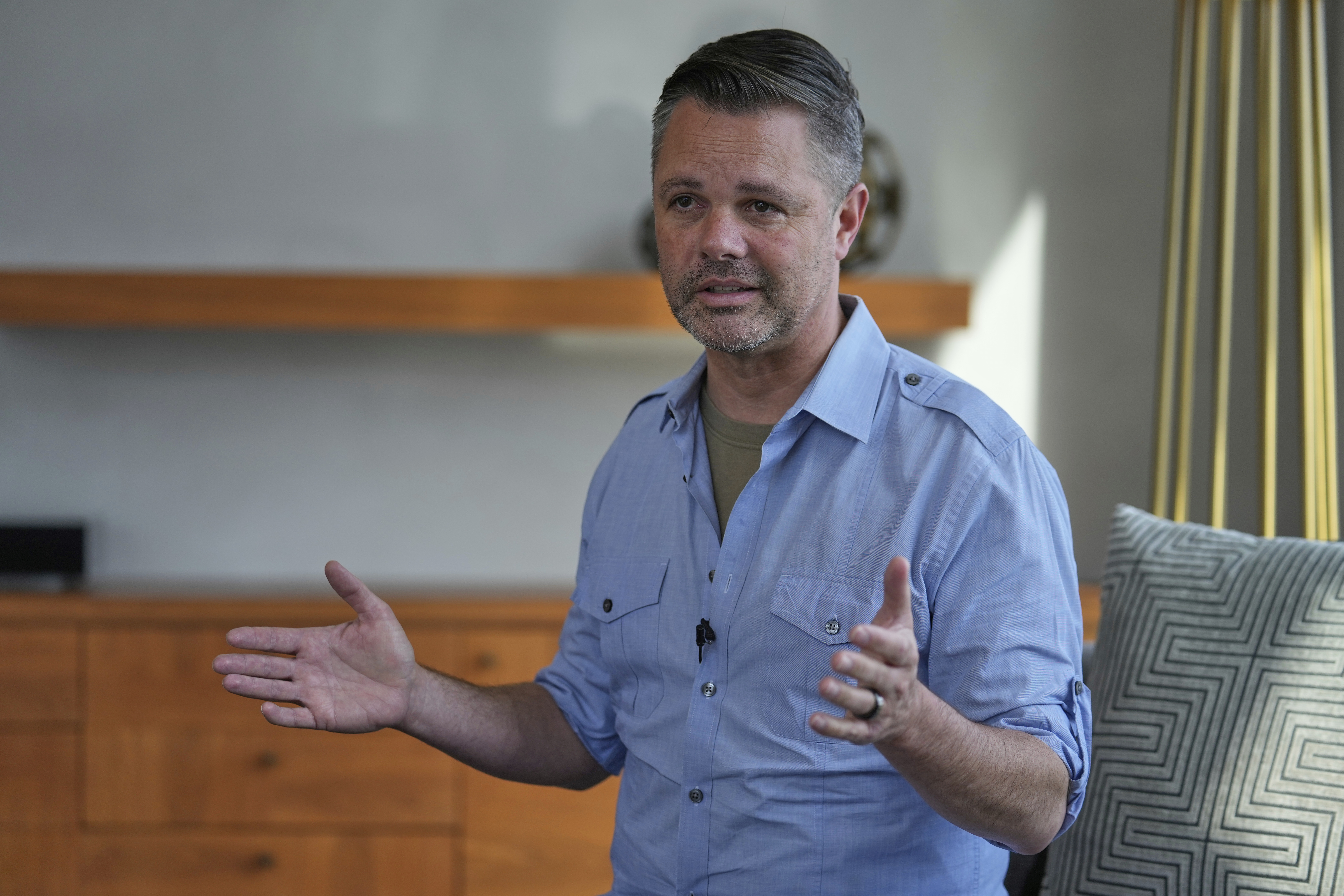
AP Photo/Altaf Qadri
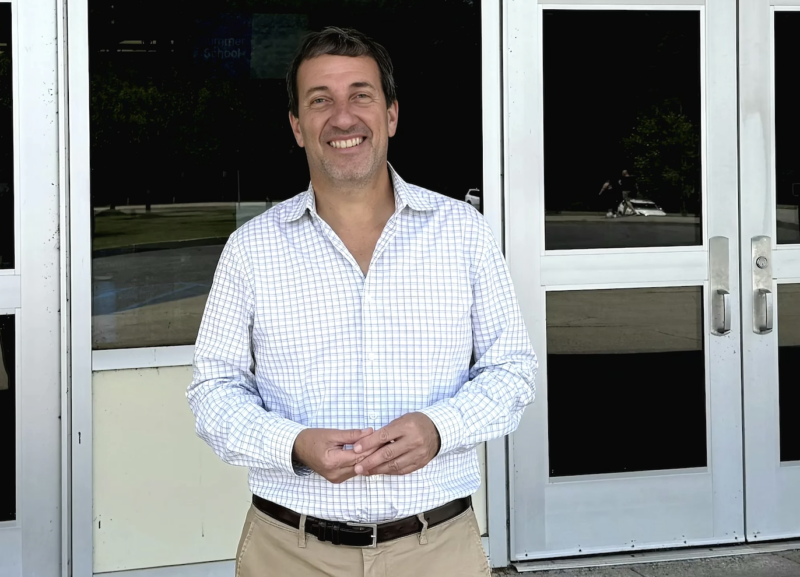
U.S. Congressman Zach Nunn speaks to the Associated Press at a hotel in Dubai, United Arab Emirates, Wednesday, June 18, 2025.
For Rep. Zach Nunn (R-IA), the U.S.-Israel military relationship is crucial to pushing the boundaries of defensive technological development, keeping Americans safe, staying ahead of global adversaries and even providing advancements in sectors far removed from the battlefield.
Nunn is a rising national security voice on Capitol Hill, chairing the national security task force of the Republican Study Committee, is an Air Force veteran with experience in the Middle East and is also a longtime former intelligence officer. He hails from a competitive district in southwest Iowa, which includes much of Des Moines and stretches to the state’s southern border.
“We know that not only is Israel our best military partner for the region, it is the best stabilizing force,” Nunn, who led a pair of successful amendments in last week’s National Defense Authorization Act markup on the House floor aimed at improving U.S.-Israel military cooperation, told Jewish Insider in a recent interview. “Not only is Israel a force for good in the region, it’s one of our best innovative partners out here, and national defense begins with a tech and human capability that’s able to execute on it. And that really is funded through democracies that allow this type of innovation to take place.”
One of Nunn’s amendments, cosponsored by Reps. Josh Gottheimer (D-NJ) and Don Davis (D-NC), would establish a Defense Innovation Unit field office in Israel.
The DIU, which has offices throughout the U.S. and is headquartered in Silicon Valley, is a relatively new Pentagon body aimed at allowing the military to move more quickly to adopt emerging commercial and dual-use technologies — a “fast-track for a largely challenged defense apparatus … to onboard new technologies more quickly,” Nunn explained.
The tech sector, he said, starts on the West Coast, in Silicon Valley, and extends to “the East Coast, which in my mind is Tel Aviv.”
“I think that we have seen some of the best innovations coming out of Israel. Part of it is need, part of it is just the innovative spirit that Israel has brought to the fight on this,” he continued. “How do we onboard this so that the best technologies — and, candidly, the best tactics, techniques and procedures that Israel is literally field testing right now — can be replicated so that we help defend the men and women in uniform?”
He said that such efforts will save U.S. taxpayer money, help the U.S. keep ahead of its key adversary in Beijing and even provide advances in civilian technology. Precision-guidance weapon capabilities that Israel is developing can also be applied in precision agriculture techniques in Iowa, Nunn said.
Nunn’s other amendment, cosponsored by Davis, would require the Pentagon to review and report to Congress on progress made toward an integrated air and missile defense infrastructure in the Middle East, strategies and options for expanding those efforts and lessons learned from recent attacks throughout the region. Both amendments were incorporated into larger packages of amendments and passed by voice votes.
Of all the U.S.’ global allies, Nunn said, Israel is providing the most practical proving ground for new defensive technologies.
“It’s one thing to be able to do drills, to do innovation, to come up with new technologies. It’s another thing to be able to have to deploy them in the field … find out how they work and then be able to change your … tactics and employment in real time,” Nunn said. “That makes us much safer than just having the ideal weapons system on the shelf, to know how it’s going to work in battle and how our men and women in uniform can be best protected by it.”
Nunn noted that he was tied for the record of most amendments, nine in total, secured in the 2026 NDAA on the House floor.
Asked more broadly about the push from some, on both sides of the aisle, for the U.S. to reduce its focus and posture abroad, Nunn argued that relationships like the one with Israel pay dividends for the U.S.
“Peace through strength matters, and a peaceful Middle East is a lower cost to the American taxpayer,” Nunn said. “At the same time, it’s Israel who took out Iran’s missile defense systems. It’s Israel who’s provided the intelligence that has allowed us to not only save money, but save lives here on the home front. It’s Israel and the Mossad and IDF, who have taken out Iranian proxy groups, whether they be Houthi rebels, Hamas or Hezbollah, that have sent death squads after great leaders here in the United States.”
Efforts like the amendments he led, Nunn said, create American jobs, save the U.S. money, create technologies that can be used in both military and civilian applications and reduce the burden on the U.S.’ own forces.
“The United States is getting the best possible return when we partner with allies,” Nunn said, a position on which he said President Donald Trump and most members of Congress should be able to agree.
“Peace through strength matters, and a peaceful Middle East is a lower cost to the American taxpayer,” Nunn said. “At the same time, it’s Israel who took out Iran’s missile defense systems. It’s Israel who’s provided the intelligence that has allowed us to not only save money, but save lives here on the home front. It’s Israel and the Mossad and IDF, who have taken out Iranian proxy groups, whether they be Houthi rebels, Hamas or Hezbollah, that have sent death squads after great leaders here in the United States.”
Nunn noted that he was in the region, visiting Saudi Arabia, Bahrain and the United Arab Emirates on the eve of the U.S. strikes on Iran’s nuclear program in June.
He said that the U.S. strikes would not have seen the same level of success without Israel “doing all of the prep work on the front end,” and that the U.S. bombings sent a strong message to Iran and other adversaries.
“Clearly, President Trump is in a different league of presidents when it comes to negotiation,” Nunn said. “He’ll offer you peace. If you say no to it, he’s prepared to make sure that you can no longer be a threat to the world. I think that that sends a very important message to the next iteration of negotiations here with Iran. … The president has emboldened our allies, but also sent a very clear message to Iran that this is where it ends.”
“That’s a message that saves lives, saves taxpayer dollars and advances us when we look at emerging threats, whether they be in Moscow, Pyongyang and certainly Beijing,” Nunn continued. “The amount of investment that we have to make on the front end is much lower because we have those partnerships that amplify our ability, than if we were to have to do this all on our own, whether it’s domestically or internationally.”
Asked about the path forward with Iran, Nunn said that Trump’s approach to the conflict is distinctly different than that of past presidents. He said he was told by an Arab leader the day before the American strike on the Fordow nuclear facility that the Iranians had told that Arab leader that they believed they would secure further concessions from the U.S. by dragging out talks.
“Clearly, President Trump is in a different league of presidents when it comes to negotiation,” Nunn said. “He’ll offer you peace. If you say no to it, he’s prepared to make sure that you can no longer be a threat to the world. I think that that sends a very important message to the next iteration of negotiations here with Iran. … The president has emboldened our allies, but also sent a very clear message to Iran that this is where it ends.”
Nunn said that Iran now “has the opportunity” to cease its malign activities — funding for terrorism, weapons sales and development of nuclear and conventional weapons — and turn toward peace and collaboration with Israel and the United States.
The Iowan is also leading a bill to codify and build upon the maximum-pressure sanctions on Iran and ensure the enforcement of U.S. oil sanctions, describing it as a companion to the administration’s military strikes. He said the broad Republican support for the effort shows the conservative support for holding Iran accountable, for backing Israel and for providing relief to the Iranian people.
Nunn said he’s personally flown missions out of the Al-Udeid airbase in Qatar — the largest U.S. airbase in the Middle East — and that he agrees with the stance Trump took on the Israeli strike on Hamas officials in that country.
“In many ways there’s a shared concern here that Iran is the real radical, unhinged aggressor in the region, and there’s greater security by standing up not to a fellow Islamic state, but a state that is truly an autocrat and intends to threaten the rest of the world,” Nunn said.
“Qatar has been a great ally to us for decades now,” Nunn said. “They are a recognized partner in this. At the same time, there are bad actors everywhere. And as the president highlighted, I fully endorse — when Hamas is operating knowingly or unknowingly in a region — we’ve got to be able to decapitate that threat so it can’t reconstitute.”
He said he wants to see the U.S., Israel and the U.S.’ Arab partners pull closer together to counter threats from Hamas and other adversaries through the Abraham Accords and similar mechanisms.
“In an ideal situation, we never would have had these strikes to take place in the first place. We would have been able to share the intelligence and we would have eliminated this Hamas node working together,” Nunn said. “That’s the vision where I want to get to.”
The Abraham Accords, Nunn said, are helping to create a pathway for the region that Arab leaders remain excited about, based on recent visits to the region. He added that while many Arab countries’ populations remain hostile toward Israel, the tenor of anti-Israel public discourse has improved.
“In many ways there’s a shared concern here that Iran is the real radical, unhinged aggressor in the region, and there’s greater security by standing up not to a fellow Islamic state, but a state that is truly an autocrat and intends to threaten the rest of the world,” Nunn said.
Please log in if you already have a subscription, or subscribe to access the latest updates.
 Continue with Google
 Continue with Apple