



















































The amendment, led by Sen. Joni Ernst, highlights the ‘serious and growing’ missile threats from Iran and its proxies

Kevin Carter/Getty Images
U.S. Capitol Building on January 18, 2025 in Washington, DC.


 Add JewishInsider on Google
The Senate Armed Services Committee’s draft of the 2026 National Defense Authorization Act, passed out of committee this week, includes provisions aimed at furthering coordinated air and missile defense efforts in the Middle East.
Moves to strengthen military cooperation among the U.S., Israel and Arab countries have been part of several recent NDAAs, starting with the DEFEND Act, which first pushed for coordinated air and missile defense efforts in 2022, as an outgrowth of the Abraham Accords.
The new amendment, led by Sen. Joni Ernst (R-IA), a co-chair of the Abraham Accords Caucus, instructs the Defense Department to submit to Congress a new report on implementing integrated air and missile defense infrastructure in the Middle East, including an assessment of threats; a summary of U.S. priorities and capabilities; and lessons learned from the Iranian ballistic missile attacks on Israel and the Houthi attacks in the Red Sea.
The amendment highlights the “serious and growing” missile threats from Iran and its proxies, which puts U.S. forces and allies in danger, and states that the U.S. has an “obligation” to protect its own forces and its partners.
“My DEFEND Act created unprecedented cooperation between Israel and its Abraham Accords allies and has played an intricate role in defending against missile attacks from Iran and its network of terrorist proxies,” Ernst said in a statement regarding the amendment. “October 7th was a reminder that our enemies are constantly evolving and scheming new ways to carry out their malign ‘Death to America’ mission. We must stay one step ahead and ensure that America and our partners are fully equipped and prepared to defend themselves in the post-October 7th world.”
The bill would also require the Defense Department to lay out for Congress its plans for assisting the Jordanian and Lebanese militaries, would extend U.S.-Israel anti-tunnelling cooperative programs and would authorize increased funding for U.S.-Israel counter-drone and missile cooperative efforts, according to a summary released by the Armed Services Committee.
Ron Dermer and David Barnea will meet Steve Witkoff on Friday ahead of the sixth round of talks with Iran in Oman on Sunday 'in an additional attempt to clarify Israel's stance.'

ATTA KENARE/AFP via Getty Images
A picture taken on November 10, 2019, shows an Iranian flag in Iran's Bushehr nuclear power plant, during an official ceremony to kick-start works on a second reactor at the facility.
Since the Israeli strike on Iran’s air defenses in October, Jerusalem has sought a green light, or something close to it, from Washington to strike the Islamic Republic’s nuclear sites. President Donald Trump, however, repeatedly told Israel to hold off as he pursued a diplomatic agreement with Tehran to stop its enrichment program.
Now, after the Iranian nuclear program has continued apace and Trump has voiced frustration over Tehran’s intransigence, it seems that Jerusalem’s patience for diplomacy is running out.
Israeli Strategic Affairs Minister Ron Dermer and Mossad chief David Barnea will be meeting Trump’s top negotiator Steve Witkoff on Friday ahead of the sixth round of talks with Iran in Oman on Sunday “in an additional attempt to clarify Israel’s stance,” an official in Jerusalem said, amid persistent reports and strong indications that Israel is prepared to strike Iran.
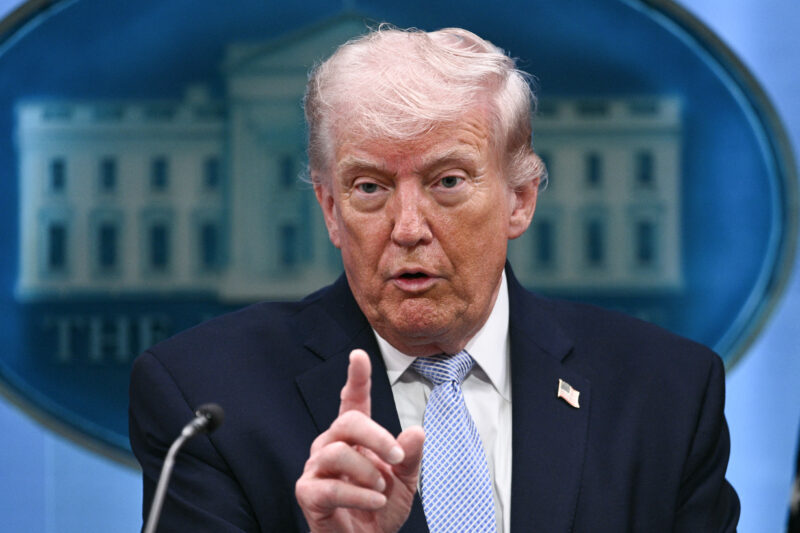
After a call with Israeli Prime Minister Netanyahu last week, Trump said that if Tehran does not agree to give up uranium enrichment, the situation will get “very, very dire.” On Wednesday, Secretary of Defense Pete Hegseth said that “there have been plenty of indications” that Iran is moving towards weaponization of its nuclear program, and Gen. Michael “Erik” Kurilla, the chief of CENTCOM, said that he presented Trump and Hegseth with numerous options to attack Iran if nuclear talks break down.
Hours later, the State Department began to move some personnel out of Iraq and the military suggested that servicemembers’ families depart the Middle East, while the U.K. warned about a potential “escalation of military activity” in the region. Such evacuations are often the first step to reduce risk ahead of a large-scale military operation.
Trump told reporters that the evacuations are happening because the Middle East “could be a dangerous place, and we’ll see what happens.” More on this from Jewish Insider’s Marc Rod here.
Kurilla postponed his testimony before the Senate planned for Thursday. Staff at U.S. embassies and consulates throughout the Middle East were told to take safety precautions, and those stationed in Israel were told not to leave the Tel Aviv metropolitan area, Jerusalem or Beersheva.
Multiple news outlets published reports citing anonymous American officials that Israel is ready to strike Iran without help from the U.S. One possible reason for the timing — moving forward even as Washington and Tehran are set to enter a sixth round of talks on Sunday — is that Iran has reportedly begun to rebuild the air defenses that Israel destroyed last year. Iranian Armed Forces Chief of Staff Mohammad Bagheri reportedly said last month: “We are witnessing a remarkable improvement in the capability and readiness of the country’s air defense.”
Ynet’s well-sourced military analyst Yoav Zitun reported early Wednesday that Israel’s threat to attack Iran’s nuclear program is serious, and the most likely scenario is that Israel would strike Iran on its own but coordinate with the U.S. to receive air defense support. That scenario appears consistent with both Trump’s stated reticence to launch an attack, and the events that took place later that day.
In light of the negotiations set to continue on Sunday, some American analysts told JI that Washington could be acting as though it’s preparing for a possible attack to pressure Iran into concessions.
If the latest moves successfully pressure Iran, Shira Efron, Israel Policy Forum’s director of policy research, told JI that she hoped it would be “an opportunity to get to a bigger, better deal.”
However, in Israel, it looks like the moves towards a strike on Iran are serious.
The fact that Netanyahu is expected to go on a two-day vacation in northern Israel this weekend and his son is getting married next week have been counterintuitively pointed to as indications that a strike is imminent — after all, the Hezbollah pager operation happened when the prime minister was in New York, and the strike on Syria’s nuclear facilities in 2007 took place when then-Prime Minister Ehud Olmert was set to go on vacation in Europe.
“Yesterday, I thought there was no way something is going to happen,” Efron said, but now, “I think we’re at the money time. It’s more serious than we had thought.”
“Israel clearly no longer thinks an agreement can work, so it all depends on whether Trump told Israel it can do something before” negotiations between Iran and the U.S. break down, Efron said.
Please log in if you already have a subscription, or subscribe to access the latest updates.
 Continue with Google
 Continue with Apple