

























White House Press Secretary Karoline Leavitt said the deal, which was already signed, is ‘still being finalized’
Win McNamee/Getty Images
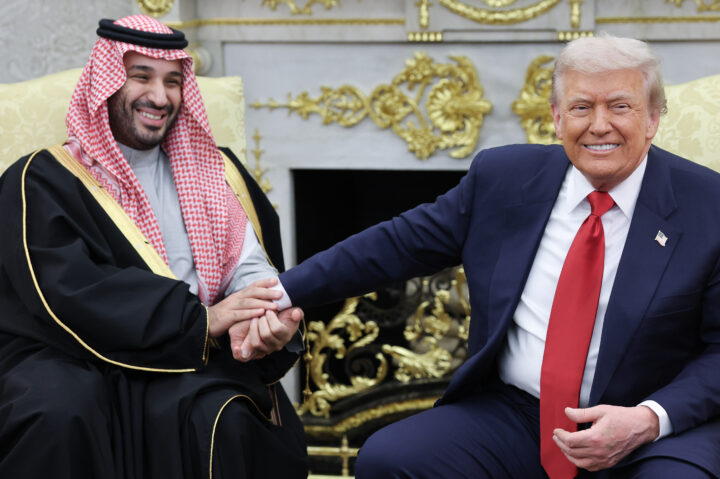
President Donald Trump (R) meets with Crown Prince and Prime Minister Mohammed bin Salman of Saudi Arabia during a bilateral meeting in the Oval Office of the White House on November 18, 2025.


 Add JewishInsider on Google
The new civilian nuclear cooperation agreement already signed between the U.S. and Saudi Arabia is now contingent on Riyadh joining the Abraham Accords, President Donald Trump announced on Thursday morning.
The president’s Truth Social post — in which he said the deal is “totally subject” to Saudi Arabia normalizing relations with Israel, a provision not previously disclosed by the administration — was quickly affirmed by the White House.
“Yes, this deal with Saudi Arabia, the energy deal, is contingent on this condition as far as the president is concerned,” White House Press Secretary Karoline Leavitt said during a press briefing on Thursday. “So we’ll continue to talk with our Saudi counterparts to get the deal finalized, and hopefully see them joining the Abraham Accords very soon.”
It appeared that Trump thought to add the provision only after the signing ceremony, which took place on Wednesday afternoon between Energy Secretary Chris Wright and Saudi Energy Minister Prince Abdulaziz bin Salman.
Asked if Trump had spoken to Saudi Crown Prince Mohammed bin Salman about it, Leavitt said, “As you know, the president just put out this statement a few hours ago. I don’t believe he’s had a call with MBS in the hours since.”
The new addition may have thrown a wrench in the agreement: Leavitt said the deal is “still being worked out,” despite already having been signed by the parties, and “will eventually, hopefully, be finalized with the condition that the president spoke about this morning.”
Leavitt also said she did not believe the provision was requested by Israeli Prime Minister Benjamin Netanyahu.
The bill is supported by a bipartisan group of 26 lawmakers
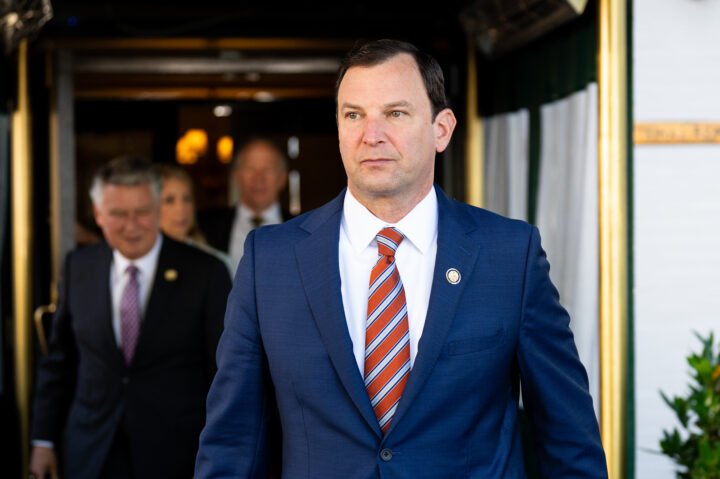
Bill Clark/CQ-Roll Call, Inc via Getty Images
Rep. Craig Goldman, R-Texas, leaves the House Republican Conference caucus meeting at the Capitol Hill Club in Washington on Wednesday, May 13, 2026.
A new bill introduced by the House Abraham Accords Caucus instructs the administration to work to expand the Abraham Accords to include nations in Central Asia and the South Caucasus.
The bill is supported by a bipartisan group of 26 lawmakers, including the co-chairs of the caucus, Reps. Craig Goldman (R-TX), Ann Wagner (R-MO), Brad Schneider (D-IL) and Debbie Wasserman Schultz (D-FL). It follows an announcement earlier this year that Kazakhstan, which has for decades maintained relations with Israel, would be joining the Abraham Accords.
“The more countries that are involved with Abraham Accords … then the more opportunity we [have] to guarantee peace in the Middle East,” Goldman told Jewish Insider. “That’s the overall goal, is to have peace, less war and more peace in the Middle East.”
Goldman said the push was inspired by Trump’s efforts and comments about expanding the agreements into that region, “so we’re following the president’s lead on this” with the goal of providing further momentum, though he said it’s also a “truly bipartisan piece of legislation” that should not be controversial on either side of the aisle.
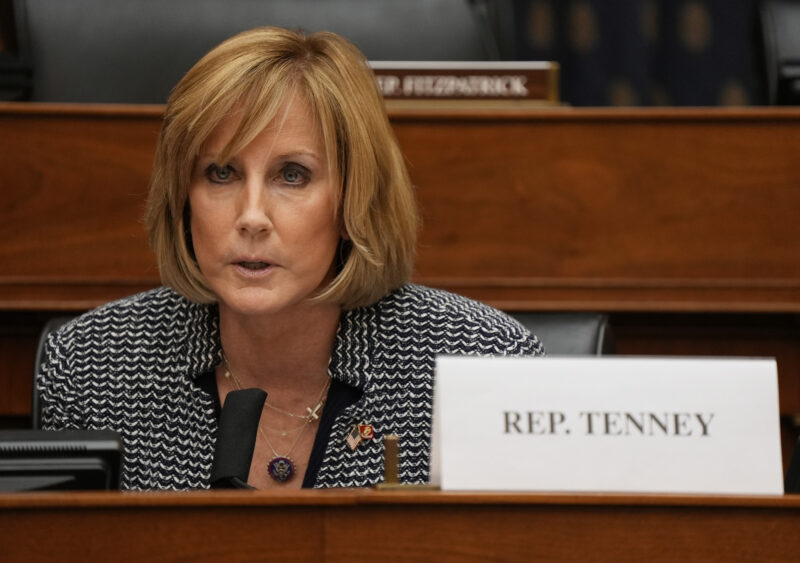
The legislation is co-sponsored by Reps. Mike Lawler (R-NY), Joe Wilson (R-SC), Earl “Buddy” Carter (R-GA), Don Bacon (R-NE), Dan Newhouse (R-WA), Maria Elvira Salazar (R-FL), Rudy Yakym (R-IN), Randy Weber (R-TX), Addison McDowell (R-NC), Gus Bilirakis (R-FL), Brian Fitzpatrick (R-PA), Claudia Tenney (R-NY), Darrell Issa (R-CA), Mark Messmer (R-IN), Derrick Van Orden (R-WI), Pete Stauber (R-MN), Don Davis (R-NC), Josh Gottheimer (D-NJ), Jimmy Panetta (D-CA), Jared Moskowitz (D-FL), Dan Goldman (D-NY) and Lois Frankel (D-FL).
In addition to the provisions urging the expansion of the Abraham Accords into a new region, the legislation authorizes the ambassador-level special envoy for the Abraham Accords — a position created several years ago by Congress that has not yet been filled — to designate a deputy special envoy with relevant regional expertise, and bring on other necessary staff.
Lawmakers have urged President Donald Trump to fill the still-vacant ambassador post. Goldman, the Republican, said he hopes that the nomination comes “sooner rather than later.”
Trump administration officials made early promises of quick expansion of the agreements, and Trump briefly called for Saudi Arabia and the Gulf states to join the Abraham Accords as a condition for ending the war with Iran. Gulf states have demanded progress toward a Palestinian state before joining the Abraham Accords.
Goldman firmly rejected the idea that looking at other regions for potential expansion of the Abraham Accords was an acknowledgement that Saudi Arabia or other Arab states were unlikely to join in the near future.
He said that the caucus has spoken to ambassadors from some of those countries, and said that expanding the agreements further would trigger a “domino” effect. “The more we can reach out, the more countries will join, we think other countries then will be able to — and will.”
Goldman also said that, coming into Congress, he wasn’t expecting to join many or any caucuses — following the precedent he established during his dozen years in the Texas Statehouse — but he was recruited early on by Wagner to be a co-chair of the caucus, and has ultimately dedicated a significant amount of time and attention to it.
“The Abraham Accords Caucus has been absolutely unbelievable, completely bipartisan, incredibly educational,” Goldman said. “The amount of knowledge — what I know now compared to what I knew a year and a half ago is like night and day.”
He said he’s also prioritized working to grow the caucus, which has picked up more than 30 new members.
‘I'm not sure we should make the deal if they don't sign,’ the president said at a Cabinet meeting
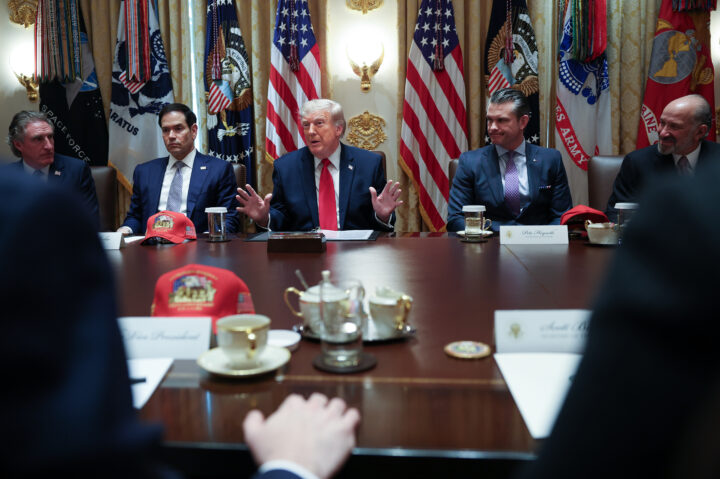
Win McNamee/Getty Images
President Donald Trump speaks during a Cabinet Meeting in the Cabinet Room of the White House on May 27, 2026 in Washington, DC.
President Donald Trump signaled on Wednesday that he may not agree to a deal to end the war with Iran if Saudi Arabia, Qatar and other countries in the region do not join the Abraham Accords, arguing that the Gulf nations “owe that to us.”
The president made the comments while taking questions from reporters during a Cabinet meeting at the White House, where he was asked if he would accept a peace agreement with Iran that did not address uranium enrichment. Trump responded that he would agree to a deal that allows for continued negotiations on some issues, though he repeatedly said he would not allow for “a crummy agreement.”
He expressed hesitation about moving forward with any peace deal with Iran that did not include commitments from Saudi Arabia, Qatar, Kuwait and others to normalize relations with Israel.
“I would like to have the countries we were talking about — Saudi Arabia, UAE, Qatar and the others — we’d like to have them immediately join, and [White House Special Envoy] Steve Witkoff is working on that with Jared [Kushner] and some others, but I would like to have them join the Abraham Accords,” Trump said. “It would be historic if they do it. I think they owe that to us, to be honest, because that really would be a tremendous sign. I think those countries owe it to us.”
Addressing Witkoff, the president said, “I’m not sure we should make the deal if they don’t sign, if you want to know the truth. If they don’t sign to join the Abraham Accords, I don’t know.”
When pressed if that meant he viewed an Iran deal as contingent on those countries joining the Abraham Accords, Trump responded: “I don’t know. I don’t want to say that. I’m not going to give you what’s contingent, what’s not. I can say that we can make a good deal right now, but maybe not a great deal, and if it’s not a great deal, we’re not making it.”
“We can make a great deal with this guy right here,” he continued, pointing to Defense Secretary Pete Hegseth. “But that’s a lot nastier, probably wouldn’t go as quickly … but it would be foolproof.”
Addressing reports from Iranian state media that Oman may assist Iran in overseeing the Strait of Hormuz once the war is over, Trump later said, “Oman will behave just like everybody else or we’ll have to blow them up.”
The prime minister’s office said Netanyahu’s meeting with MBZ ‘resulted in a historic breakthrough’; the UAE called the report ‘entirely unfounded’
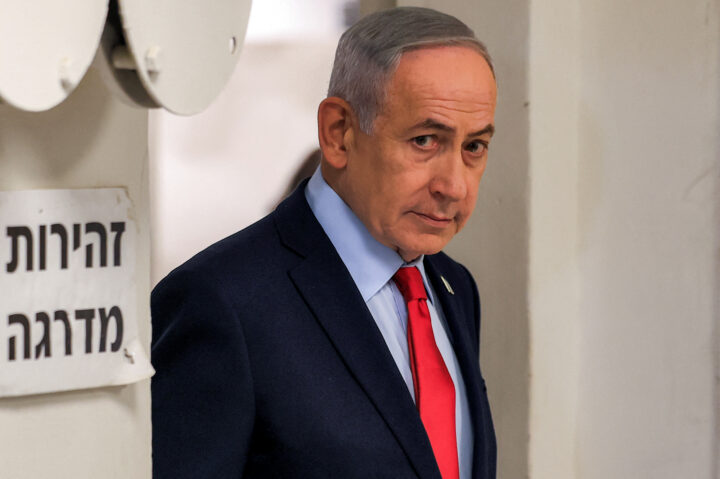
POOL/AFP via Getty Images
Israeli Prime Minister Benjamin Netanyahu arrives for a press conference in Jerusalem on March 19, 2026.
The United Arab Emirates denied a report by Israeli Prime Minister Benjamin Netanyahu’s office on Wednesday that the Israeli leader secretly traveled to the UAE during the war with Iran to meet with Emirati President Mohammed bin Zayed, which would have marked the first known meeting between the two leaders since the signing of the Abraham Accords in 2020.
The Prime Minister’s Office said that the meeting “resulted in a historic breakthrough in relations between Israel and the United Arab Emirates.” However, the UAE’s ministry of foreign affairs released a statement hours later calling the claims “entirely unfounded.”
“The United Arab Emirates denies reports circulating regarding an alleged visit by Israeli Prime Minister Benjamin Netanyahu to the UAE, or receiving any Israeli military delegation in the country,” the statement read. “The UAE reaffirms that its relations with Israel are public and conducted within the framework of the well-known and officially declared Abraham Accords, and are not based on non-transparent or unofficial arrangements.”
According to Ziv Agnon, who was Netanyahu’s chief of staff until early April, bin Zayed picked Netanyahu up in his own car and drove him to the palace.
During the conflict in Iran, Israel and the UAE have seen a marked increase in military and intelligence cooperation. Mossad chief David Barnea also quietly visited the UAE at least twice over the course of the war with Iran to directly coordinate regional security strategies, sources told The Wall Street Journal.
U.S. Ambassador to Israel Mike Huckabee confirmed this week that Jerusalem dispatched an Iron Dome missile-defense battery to the UAE along with Israeli military personnel to operate it in order to shield the Gulf nation from Iranian ballistic missile and drone attacks.
Two Israeli jets landed in the city of Al-Ain in Abu Dhabi in late March, according to flight radars, and headed back to Israel after an apparent four-hour visit.
The Israeli and Emirati leaders also reportedly met in secret in 2018, two years prior to the signing of the Abraham Accords.
Dozens of GOP lawmakers sent a letter last year urging the president to fill the position created in 2023
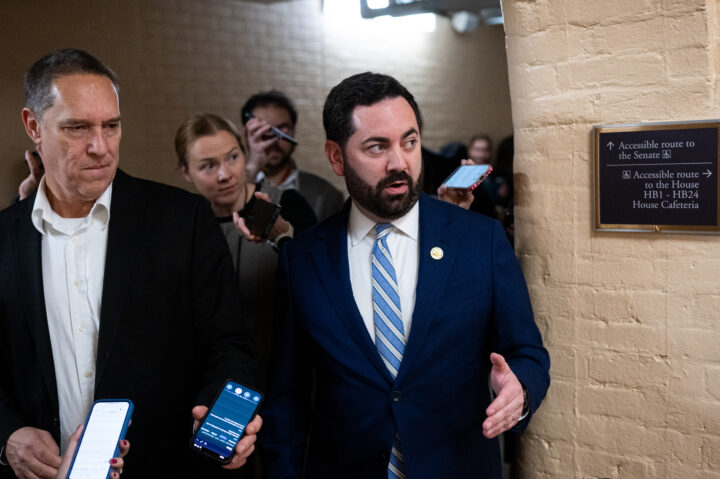
Bill Clark/CQ-Roll Call, Inc via Getty Images
Rep. Mike Lawler (R-NY) speaks to reporters as he leaves the House Republican Conference meeting in the U.S. Capitol on December 10, 2025.
Rep. Mike Lawler (R-NY) expects Congress to make another “big push” to urge President Donald Trump to fill the role of special envoy for the Abraham Accords once the Iran conflict subsides.
The role was created in 2023, when Lawler and Rep. Ritchie Torres (D-NY) introduced a bill to establish a Senate-confirmed, ambassador-level special envoy position dedicated to expanding the Abraham Accords and Middle East normalization. The measure was ultimately signed into law as part of the FY2024 National Defense Authorization Act (NDAA).
Tasked with strengthening and expanding regional normalization, the special envoy would be responsible for coordinating U.S. strategy across regional embassies, nongovernmental organizations, and international stakeholders.
But despite the legal mandate, the position has remained open. The vacancy has drawn frustration from congressional Republicans, with 47 House GOP members sending a letter in January 2025 urging Trump to immediately fill the post while condemning former President Joe Biden’s failure to do so during his term.
Lawler told Jewish Insider that he would “like to see it filled,” noting that the evolving situation in the region has increased the need for the position. He said it is something he will “continue to advocate for.”
“Obviously there’s been a lot happening in the Middle East over the last year and a half. As we see the situation in Iran get resolved, I do think the Abraham Accords is going to critical moving forward,” Lawler said. “I would like to see somebody fill that position and be entirely dedicated to that work, which I think is going to be a key part of keeping stability in the region.”
Asked whether he expects House Republicans to make another push similar to the January 2025 letter urging Trump to fill the position, Lawler replied: “I do. I think we will.”
“As you see the situation in the Middle East, from the standpoint of Iran, resolve, there will be a big push again on the special envoy.”
“Look, obviously a lot of the focus has been on the role of Steve Witkoff, the [White House] special envoy, and he has been hyper-focused on a lot of these issues that are covered in the Abraham Accords. So I think in some capacity they have been doing this work,” Lawler added. “But I think long term, this was a position we created to accentuate one of the president’s biggest achievements of his first term.”
During an appearance on the ‘On The Record’ podcast, Sen. Lindsey Graham urges Gulf nations to prioritize regional stability and make tough choices on Iran
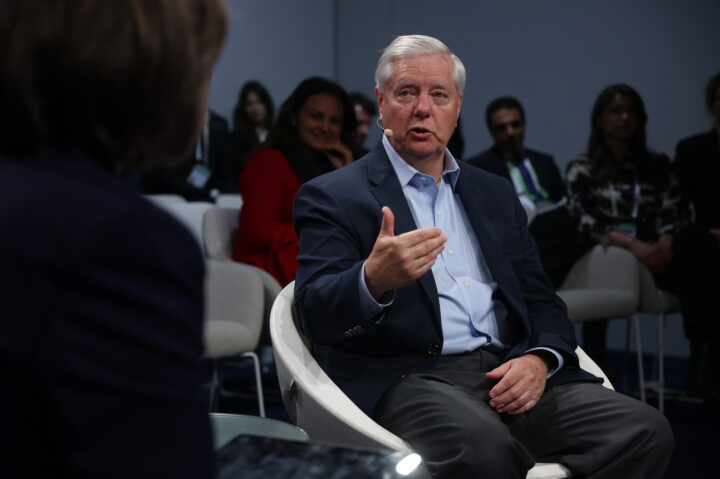
Sean Gallup/Getty Images
Sen. Lindsey Graham (R-SC) speaks at the 62nd Munich Security Conference on February 13, 2026 in Munich, Germany.
Sen. Lindsey Graham (R-SC) on Thursday rejected the suggestion from some in the Arab world that the deaths of civilians in Gaza does not align with Christian values. Graham made the comments during an appearance on an episode of the “On The Record” podcast with Hadley Gamble, while discussing how Israel’s war in Gaza had impacted regional stability in the Mideast and delayed normalization efforts with the Saudis.
“I just don’t buy that at all, because what did we do in World War II? Did we think for one minute about starving the Germans? Did we bomb every city into smitherreens?” Asked if that meant he was comparing Israel’s response to Hamas’ Oct. 7, 2023, attacks on the Jewish state to how the U.S. responded in World War II, Graham responded affirmatively.
“This is an absolute, existential threat to the Jewish people. What happened on October the 7th was 1,200 people were slaughtered, raped and murdered, and filmed by radical Islamists who would kill every Jew if they could.”
Gamble then pressed Graham on Israel “flattening Gaza,” which the South Carolina senator said he took no issue with.
“Just flatten it. We flattened Berlin. We flattened Tokyo,” Graham said. “Were we wrong to drop an atomic bomb to end the Japanese reign of terror? Were we? In my view, if I were Israel, I would have probably done it the same way. Without military victory, there is no hope of breaking radicalism. We flattened Germany. We flattened Japan.”
“It’s a TV war. We didn’t have TV in World War II. The behavior of the United States was to pursue total destruction of the enemy. That was our behavior. Take Tokyo and Berlin,” he added. “Those people who are trying to say this is just another conflict, it’s not another conflict. It’s existential to the Jewish state.”
Graham, who is in the Middle East for meetings with Israeli, Emirati and Saudi officials, also criticized Saudi Arabia for “attacking the United Arab Emirates pretty viciously for being in the Abraham Accords” and questioned assertions that the kingdom’s ongoing dispute with the Emiratis was solely based on differences in Sudan and Yemen.
“Saudi Arabia is now moving backward. They’re attacking the United Arab Emirates pretty viciously for being in the Abraham Accords,” Graham said. “There is no good reason for this. You can have disputes about Sudan and Yemen, but they’re basically declaring war.”
Asked if he believed the dispute “is all about Israel,” Graham replied: “I don’t know what this is about. I know the consequences. [Mohammed bin Zayed], the president of the United Arab Emirates, I’m going to meet him, you could not ask for a better partner. You could not ask for a better partner than the United Arab Emirates. They’ve stuck with the Abraham Accords through Gaza.”
In a post on X after his meeting on Thursday with Saudi Crown Prince Mohammed bin Salman, Graham praised the kingdom while acknowledging his concerns about achieving normalization with Israel.
“The Crown Prince is dealing with the aftereffects of October 7 like all leaders in the region, particularly with the tremendous loss of life in Gaza,” Graham wrote. “Having said that, his vision for the region is for conservative Islam to coexist — with tremendous economic opportunity — for the people of Saudi Arabia, the Middle East, and the entire world. He is the first Arab leader in modern history that’s expressed a vision not only for the faith, but for economic empowerment that is simply stunning when absorbed, and will set the tone for the region for generations to come.”
Graham criticized Gulf state opposition to regime change in Iran over fears about potential fallout as politically weak.
“That is a short-sighted view of the problems you face over here,” he said. “You’ve got domestic problems, so do I. I’ve got domestic problems. It’s probably better for me to be at home than it is here, so I don’t have a lot of tolerance anymore for people having to make uncomfortable decisions, because I have to make them all the time.”
Pressed on Saudi concerns about oil prices and regional instability, Graham said all of the Gulf states needed to “suck it up.”
“I’m telling everybody over here to suck it up. You’ve got to suck it up to bring about real change. Real change doesn’t come without sacrifice. Now, this region is going to change one way or the other,” Graham said. “There are two scenarios. … The inflection point is weeks away, not months away. That’s why I’m here. That’s why I haven’t slept, because it’s either going to go really good or really bad.”
Later Thursday, Graham warned in a post on X that the U.K. should not deny the U.S. the ability to use British military bases to attack Iran.
“If it turns out to be true that Britain is denying the United States the ability to use British bases against Iran if there is a necessity for an attack – it would be beyond surprising,” Graham tweeted. “I’ve been a military lawyer most of my adult life. What they’re saying about the status of Diego Garcia, the joint US-UK military base, is a huge question.”
“To my friends in Britain, sitting this one out puts you on the wrong side of history and is yet another example of how much our alliances throughout Europe have degraded,” the tweet concluded.
The GOP senator also told JI he doesn’t believe Iran will abide by ‘one sentence, one word of any negotiated agreement’ with the U.S.

Kayla Bartkowski/Getty Images
Sen. John Cornyn (R-TX) speaks with press in the Hart Senate Office Building on April 07, 2025 in Washington, DC.
Sen. John Cornyn (R-TX) warned on Thursday that the U.S. needs to continue to monitor the “shifting loyalties” of Saudi Arabia, amid concerns that Riyadh is pivoting away from its traditional allies and toward Islamist actors.
The Texas senator, who serves on the Senate intelligence Committee and foreign relations committees, told Jewish Insider that while he supports the Trump administration working to add Saudi Arabia to the Abraham Accords, the U.S. should be cognizant of “shifting loyalties and alliances there.”
“The Abraham Accords were a huge and important development, and I think it’s something worth continuing to try to expand and encourage, but I think we have to go in with our eyes open and realize there’s a lot of shifting and maybe even divided loyalties occurring in this region,” Cornyn told JI.
“Qatar has been problematic for all sorts of reasons that we all know, playing both ends against the middle, and I think Saudi Arabia is probably looking to figure out how to gain advantage, but my hope would be that we continue to put pressure on Iran and its proxies, which we’ve done,” he continued.
Talking to JI a day after Israeli Prime Minister Benjamin Netanyahu’s White House sitdown with President Donald Trump that largely focused on Iran, Cornyn said that he was skeptical of the regime’s ability to conduct diplomacy with the U.S. or honor the terms of any agreement.
“I think diplomacy is destined to fail because they’re not going to live up to one sentence, one word of any negotiated agreement, so they can be depended on to cheat. They are determined to destroy Israel and start a war in the Middle East. I know the president is taking it very seriously,” the GOP senator said. “I think the president is preserving all of his options, but again, how do you negotiate with somebody who cheats and who will not abide by any part of any negotiated agreement?”
“I don’t think it necessarily hurts at least to suggest that there may be some negotiations that could occur, but again, I don’t expect Iran to stand behind any negotiated outcome. I think given their commitment to the destruction of Israel, and obviously they are an ideological movement, a theocracy,” he added. “Negotiating with somebody like that is asking them to change who they are, and that will never happen.”
Despite this, Cornyn argued that it was important for the U.S. to “acknowledge that any military action against the regime in Iran would likely spill over to other places.”
In recent weeks, prominent Saudi social media figures and media outlets have amplified sharply critical and often inflammatory rhetoric aimed at countries that joined the Abraham Accords

BRENDAN SMIALOWSKI/AFP via Getty Images
A color guard holds Saudi Arabia's flag while waiting for Saudi Vice Minister of Defense Prince Khalid bin Salman arrival for an honor cordon at the Pentagon August 29, 2019, in Washington, DC.
Jewish and pro-Israel organizations that have celebrated the Abraham Accords in recent years appear slow to recognize the role they could be playing within the Abrahamic coalition — particularly by leveraging their Washington clout and decades of experience engaging Congress — as countries in the accords face increasing criticism for their participation in the normalization framework.
In recent weeks, prominent Saudi social media figures and media outlets have amplified sharply critical and often inflammatory rhetoric aimed at countries that joined the Abraham Accords, particularly the United Arab Emirates, portraying normalization with Israel as a betrayal of regional interests and casting Abu Dhabi as a proxy for Israeli power.
Countries that joined the Abraham Accords do not have comparable grassroots advocacy in Washington, making the role of established Jewish and pro-Israel organizations potentially consequential to the broader normalization effort. Yet despite those longstanding relationships, the groups have mounted little effort to inform the conversation in Washington as the Abraham Accords and their signatories face growing attacks. This was evident from Jewish Insider’s reporting earlier in January, when pro-Israel lawmakers from both parties largely downplayed concerns about Saudi Arabia’s shift when asked for comment.
Several of the groups have voiced growing discomfort with the kingdom’s pivot away from what was perceived as its moderating force in the region. But their relatively cautious responses, particularly around Riyadh’s increasingly hostile posture toward Israel and traditional alliances, have also highlighted an awkward tension as they seek to maintain support for the long-sought but elusive goal of bringing Saudi Arabia into the Abraham Accords.
That dynamic has come into sharper focus as a few major Jewish and pro-Israel organizations prepare to attend a sensitive meeting in Washington on Friday with Saudi Arabia’s defense minister, raising questions about how — or whether — the groups will more forcefully confront the growing rhetoric against the Abraham Accords.
Among the groups invited to the meeting were the American Jewish Committee, the Anti-Defamation League, the Conference of Presidents of Major American Jewish Organizations and the Zionist Organization of America, multiple sources familiar with the situation told Jewish Insider on Thursday, though it remains unclear which will attend. The Foundation for Defense of Democracies confirmed it would be attending a separate sit-down with the defense minister in the morning.
Notably, representatives from the pro-Israel lobbying group AIPAC weren’t set to attend, according to some sources familiar with the dynamics, hinting at some possible internal debate in the community regarding the wisdom of engaging with Saudi Arabia in spite of its troubling recent behavior. AIPAC declined to comment on the meeting when reached by JI on Thursday afternoon.
The AJC and ADL also declined to comment, and the Conference of Presidents did not respond to a request for comment. The Republican Jewish Coalition was invited to the meeting, one informed source told JI, but the group would not confirm its involvement.
The varying approaches suggest that Jewish organizations are strategically sensitive to alienating Saudi Arabia — as they hope for a change of heart on normalization with Israel. In turn, many groups haven’t directly confronted the antisemitic vitriol among influential figures in the kingdom.
Even as these organizations champion the advantages of joining the Abraham Accords, their responses appear to neglect a key regional signatory, the UAE; a prominent Saudi columnist recently called the UAE “an Israeli Trojan horse in the Arab world” in one of the latest public attacks now regularly targeting their neighboring country, as Riyadh reportedly turns away from its traditional moderate alliances and towards Islamist countries hostile to Israel, including Qatar and Turkey.
None of the organizations had publicly commented on Saudi Arabia’s new direction until reached by JI late last week, reflecting a possible early blind spot concerning a major regional shift that threatens to have far-reaching consequences not only for Israel but Jewish safety more broadly in the Middle East.
The largely reactive tenor of the engagement so far indicates that Jewish advocacy groups have yet to formalize a strategy for preemptively tackling such challenges and raising awareness among legislators and other policymakers to build an infrastructure to help advance the Abraham Accords amid dwindling Saudi support.
Jonathan Schanzer, FDD’s executive director, said the “worsening” rhetoric on Jews and Israel “has left U.S. organizations that previously advocated for warmer engagement with Saudis at an interesting crossroads.”
“Some will double down and attempt to embrace the Saudis with a bear hug,” he told JI on Tuesday. “Others will begin to criticize the kingdom sharply. This natural dichotomy may actually be healthy, showing the regime that there are two paths it can take. One will obviously be more advantageous to the regime than the other.”
“The priority now must be rapid de-escalation between Saudi Arabia and Israel, two close American allies, whose widening rift is being aggressively exploited by Muslim Brotherhood governments in Turkey and Qatar, as well as the Islamists in Iran,” FDD CEO Mark Dubowitz said. “Allowing this crisis to bleed into the Saudi-Israeli normalization process — and incitement against Israel and Jews — would be a strategic setback, particularly given its central importance to President Trump’s regional agenda.”
In addressing the shift, some Jewish groups have pushed back on Riyadh’s problematic language. The ADL, for example, condemned state-aligned media channels and regime mouthpieces for promoting “openly antisemitic dog whistles” while opposing the Abraham Accords, rhetoric it called “harmful” to “the prospect of peaceful coexistence in the region.”
AIPAC, meanwhile, struck a more diplomatic note in a statement to JI that made no explicit mention of Riyadh’s turn to open antisemitism, saying that “America would be stronger and our interests would be better served if more nations, including Saudi Arabia,” normalized ties with Israel.
That view was echoed by Democratic Majority for Israel, which glancingly alluded to “recent political frictions and unhelpful rhetoric” from Saudi voices, while characterizing normalization as “an enduring strategic imperative,” even as the kingdom has been increasingly hostile to a rapprochement with Israel.
For its part, the American Jewish Committee, which has actively pushed for normalization, has refrained from publicly commenting on the issue, only noting that it is “keeping a close eye on any developments.”
The COP, which in 2020 led a historic delegation to Saudi Arabia in what was then interpreted as a sign of warming ties with Israel, has likewise declined to publicly weigh in on the situation, in advance of the meeting on Friday.
Mort Klein, the national president of the conservative Zionist Organization of America, said he was also invited to the meeting on Friday by a caller “with an Arabic name,” but was unable to join due to a scheduling conflict. “I received a strange phone call asking me to attend,” he told JI on Thursday. He would not elaborate on the conversation or why another ZOA official would not be participating.
The ZOA has sharply criticized Saudi Arabia’s evolution as a “dangerous” development, urging the Trump administration to reconsider its plans to sell F-35 fighter jets to Riyadh, among other policies.
Some Middle East analysts familiar with Saudi Arabia’s recent maneuvering have raised doubts about whether the meeting will amount to more than a PR stunt for the kingdom. Both Qatar and Turkey have similarly engaged in past discussions with Jewish leaders that have done little to change their approaches to Israel or ties to Islamist groups.
“This meeting will be complete window dressing,” one expert told JI on Thursday. “The Saudis may try and rationalize their way out of their new alignment with Pakistan, Qatar and Turkey and say everything is fine with the UAE when evidence says otherwise.”
Daniel Shapiro, a U.S. ambassador to Israel in the Obama administration who served as a top defense official in the Biden administration, said that it was “wise and understandable” for Jewish organizations “to keep the door open to normalization” with Saudi Arabia, while stressing a need to “draw some bright lines about what’s not acceptable” with regard to its rhetoric and policies.
Citing the unpredictability of the situation, Shapiro also suggested that Jewish groups should seek to engage in proactive outreach “to get members of Congress and other officials focused on trying to figure out” Saudi Arabia’s motivations. That could result in “direct and frank conversations with” Riyadh to better understand its new thinking and potentially “draw some red lines.”
“People are really still making an adjustment to it,” Shapiro told JI in an interview on Wednesday. “It’s wise to use diplomacy, in real time, to try to put up some guardrails.”
In some ways, the hesitant manner in which some Jewish groups have contended with Saudi Arabia shows how the kingdom’s sudden realignment has confounded even the most seasoned Gulf watchers.
“The thoughts coming from Saudis are horrific and apparently at total odds with the public messages of the last few years,” Simon Henderson, a Middle East expert at the Washington Institute for Near East Policy, told JI. “Without a corrective comment from a senior Saudi figure, they should be taken seriously. Put simply, forget normalization anytime soon. Analysts are in a state of shock trying to work out the why and how permanent the damage may be.”
Still, Abe Foxman, the former longtime national director of the ADL, stressed that efforts to court Saudi involvement in a diplomatic agreement with Israel need not obscure a broader commitment to strenuously denouncing the kingdom’s “anti-Israel expressions and antisemitism.”
“As much as we may want Saudi Arabia to join the Abraham Accords, that hope and desire should not inhibit our ability to criticize” its recent policies, Foxman told JI on Tuesday. “I recall that during the years we pursued peace between Israel and Egypt and Israel and Jordan, we did not refrain from being critical of their anti-Israel policies or their embrace of antisemitism.”
Brian Katulis, a senior fellow at the Middle East Institute, cast the differing positions from Jewish groups as a “reflection of the wide diversity of views inside of the Jewish American community,” arguing that some of their responses are a demonstration of their “proximity” to Saudi Arabia or the rival UAE.
The Anti-Defamation League said it is ‘alarmed’ by leading Saudi voices using openly antisemitic dog whistles while peddling conspiracy theories
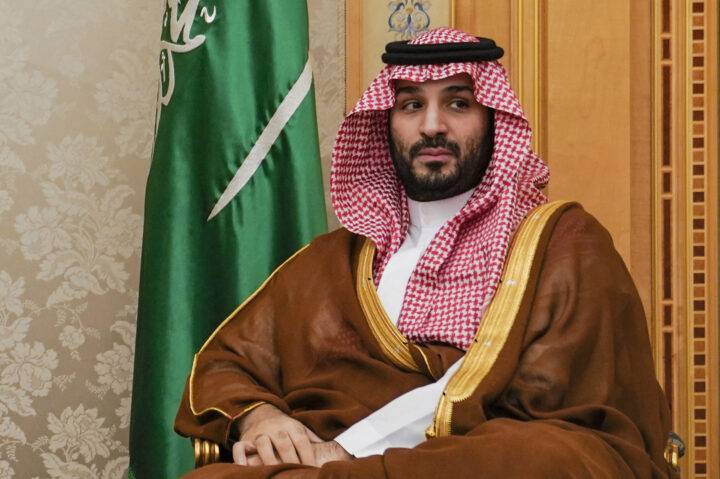
NATHAN HOWARD/POOL/AFP via Getty Images
Saudi Arabia's Crown Prince Mohammed bin Salman looks on during his meeting with the US Secretary of State in Riyadh on October 23, 2024.
Several leading Jewish and pro-Israel advocacy groups are expressing concerns about the impact of the recent rise in antisemitic and Islamist messaging out of Saudi Arabia, as the Gulf kingdom’s rhetoric is increasingly raising questions about its standing as a reliable U.S. ally in the region.
In recent weeks, Saudi Arabia has ratcheted up its anti-Israel rhetoric through state-sanctioned media and other regime mouthpieces, amid a widening rift with the United Arab Emirates and closer alignment with Islamist-oriented forces that are hostile toward Israel, such as Turkey and Qatar.
The new posturing, part of a broader pivot from what national security experts had seen as Saudi Arabia’s moderating influence in the region, has fueled surprise and frustration among Jewish American advocacy organizations that have pushed for the kingdom to normalize relations with Israel, an objective now regarded in some circles as unlikely for the foreseeable future.
Last week, the Anti-Defamation League said in a sharply worded social media statement that it was “alarmed by the increasing frequency and volume of prominent Saudi voices — analysts, journalists and preachers — using openly antisemitic dog whistles and aggressively pushing anti-Abraham Accords rhetoric, often while peddling conspiracy theories about ‘Zionist plots.’”
“This is harmful on many levels, diminishing the prospect of peaceful coexistence in the region and weakening regional initiatives promoting tolerance, understanding and prosperity,” the ADL added.
The pro-Israel lobbying group AIPAC, for its part, amplified a recent X post by Barak Ravid, a global affairs correspondent for Axios, who flagged what he called Saudi Arabia’s “information war against the UAE” and said “the Saudi press is full of articles that include anti-Israeli conspiracies, anti-Abraham Accords rhetoric and even antisemitic language.”
In a statement to Jewish Insider on Monday, Deryn Sousa, a spokesperson for AIPAC, emphasized that “America would be stronger and our interests would be better served if more nations, including Saudi Arabia, joined the Abraham Accords and worked together with our democratic ally Israel to promote regional peace, security and prosperity.”
Brian Romick, the president and CEO of Democratic Majority for Israel, echoed that sentiment, calling the Abraham Accords “a landmark diplomatic achievement” whose expansion, “especially through Saudi-Israeli normalization, should be a bipartisan pillar of U.S. policy.”
“A breakthrough between Israel and Saudi Arabia would be the most consequential step the region can take toward lasting peace, security, and prosperity, and the Trump administration should pursue it relentlessly while linking any upgrade in the relationship to measurable progress toward Saudi-Israeli normalization,” Romick said in a statement to JI. “Despite recent political frictions and unhelpful rhetoric, deep mutual interests in security, economic integration and technology make normalization an enduring strategic imperative.”
The American Jewish Committee, which has also promoted Saudi participation in the Accords, said it is “keeping a close eye on any developments” tied to the kingdom’s shift, but declined further comment.
While experts have linked Saudi Arabia’s recent animus toward Israel to such issues as the war in Gaza, Israeli recognition of Somaliland and unrest in Iran, Michael Makovsky, the president and CEO of the Jewish Institute for National Security of America, suggested that one unexplored motivating factor may be the Trump administration’s friendly relations with Islamist leaders in Turkey, Qatar and Syria.
“It sends a signal to the Saudis that you could take more Islamist positions, and it won’t hurt you with the United States,” Makovsky said in an interview with JI on Monday, arguing the administration will need to “reorient” its engagement in the region if it wants to help shape Saudi policies to align more closely with American interests.
But Makovsky said he has not seen interest among Trump officials in pursuing that path — even as the administration has long encouraged Saudi Arabia to join the Abraham Accords.
“I think the administration needs to step back and reflect on the fact that, if the Saudis are acting like this now, and they’ve been more of a moderating influence,” he said, “it should lead to a rethink of how they’re approaching all these other countries.”
The lunch, where both praised the Abraham Accords, was hosted by Meta President Dina Powell McCormick and philanthropist David Rubenstein
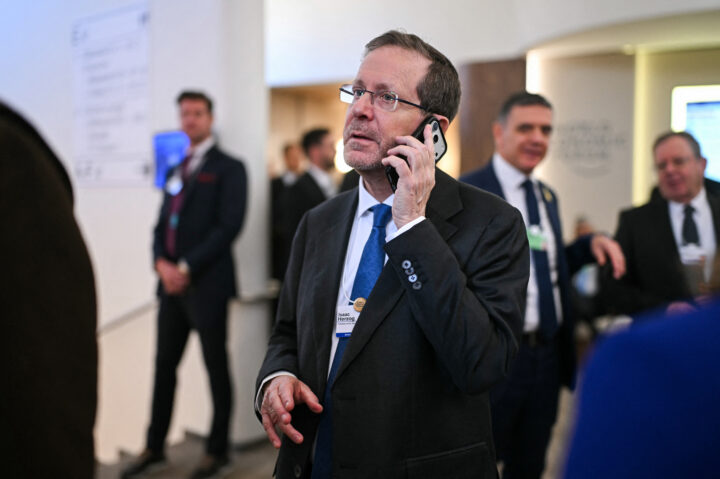
Fabrice COFFRINI / AFP via Getty Images
Israeli President Isaac Herzog at the World Economic Forum (WEF) annual meeting in Davos on January 21, 2026.
After President Donald Trump wrapped up a signing ceremony inaugurating his new Board of Peace in Davos, Switzerland, on Thursday, several of the highest-profile attendees of the event hustled to a private lunch where they spoke hopefully about the future of the Abraham Accords.
Saudi Ambassador to the U.S. Princess Reema Bandar Al Saud and Israeli President Isaac Herzog both shared optimistic remarks about the region’s future, according to one guest. Also in the room were Bahraini Crown Prince Salman bin Hamad Al Khalifa and Khaldoon Al Mubarak, the CEO and managing director of the Mubadala Investment Company, an Emirati sovereign wealth fund.
Hosted and moderated by new Meta President Dina Powell McCormick and philanthropist David Rubenstein, the event honored Lally Weymouth, a former longtime Washington Post journalist who died in 2025. Her daughter, Katherine Weymouth, and brother, Don Graham, both former publishers of the Post, invited a long list of World Economic Forum dignitaries who had known Weymouth. She was described at the lunch as a “force of nature,” the attendee told Jewish Insider.
Participants also toasted Lutnick’s wife, Allison Lutnick, who was a leading advocate within the Trump administration for the release of the Israeli hostages held in Gaza.
Other guests included Commerce Secretary Howard Lutnick, Treasury Secretary Scott Bessent, CNN host Fareed Zakaria, Post columnist David Ignatius, Bank of America CEO Brian Moynihan, JPMorgan Chase CEO Jamie Dimon, Dell Technologies CEO Michael Dell, Bridgewater CEO Nir Bar Dea, International Monetary Fund Managing Director Kristalina Georgieva and Israeli entrepreneur Yossi Vardi.
The central Asian country, which has had relations with Israel for decades, has long sought the repeal of a Cold War-era law restricting its trade with the U.S.
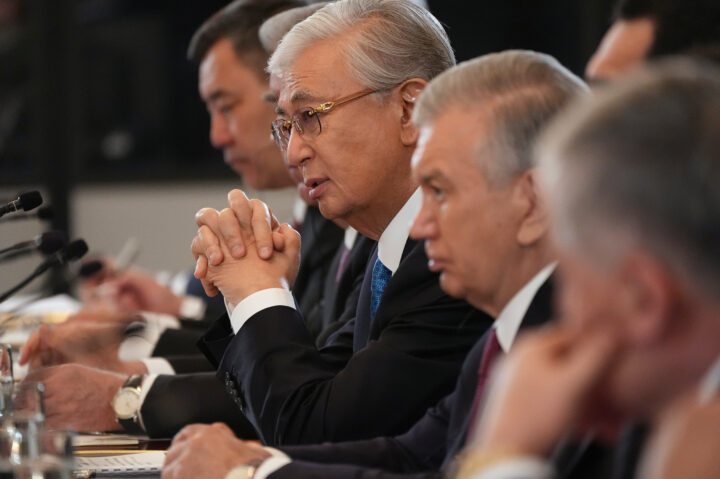
(AP Photo/Jacquelyn Martin)
Kazakhstan's President Kassym-Jomart Tokayev speaks alongside Kyrgyzstan's President Sadyr Japarov, left, and Uzbekistan's President Shavkat Mirziyoyev during a dinner with leaders from countries in Central Asia and President Donald Trump, Thursday, Nov. 6, 2025, in the East Room of the White House in Washington.
Kazakhstan, which has maintained diplomatic relations with Israel since 1992, will join the Abraham Accords, President Donald Trump announced on Thursday.
The announcement, made during Kazakh President Kassym-Jomart Tokayev’s visit to the White House, came shortly before a planned visit to Washington by Syrian President Ahmad a-Sharaa on Monday, and Saudi Crown Prince Mohammed bin Salman on Nov. 18.
In a post on Truth Social, Trump said he had held a call between Tokayev and Israeli Prime Minister Benjamin Netanyahu and that he will “soon announce a Signing Ceremony to make it official, and there are many more Countries trying to join this club of STRENGTH.” The Kazakh Embassy in Washington characterized the meeting as a discussion of “strengthening the Enhanced Strategic Partnership” between the countries. As of Friday morning Israel had not issued any official statement on the announcement.
The Trump administration has sought to bring Riyadh into the Abraham Accords and normalize relations with Israel since the Accords were announced in 2020, and has been negotiating an agreement between Damascus and Jerusalem, which reportedly may fall short of full diplomatic relations.
A Trump administration official told Axios that bringing Kazakhstan into the Abraham Accords is meant “as a first step in repairing Israel’s standing in the Arab and Muslim world” and that the White House wants to build momentum ahead of MBS’ visit.
Israel and Kazakhstan, a Muslim-majority country, have had diplomatic relations for 33 years, in contrast to the countries that previously joined the Abraham Accords — the United Arab Emirates, Bahrain and Morocco — which had not had open diplomatic relations with Israel. The accords marked a positive shift in Israel’s stature in the Middle East, and the relations have endured through the two-year war in Gaza.
Since Trump’s return to office, his administration has sought to expand the Abraham Accords with an eye on normalization between Israel and Saudi Arabia or Indonesia, the world’s most populous Muslim-majority country.
But they have also pushed Muslim-majority countries like Kazakhstan and Azerbaijan, which already have ties with Israel, to join the accords. Earlier this year, Farid Shafiyev, chairman of the Azerbaijan government-backed think tank the Center for Analysis of International Relations, told Jewish Insider that his country was “way ahead” of the Abraham Accords with its decades-long close relations with Israel, and dismissed American requests for Baku to join as “a bit of media buzz, but that’s it.”
As for Kazakhstan’s motivation, the central Asian nation has long lobbied Washington to cancel a Cold War-era law that has hindered its access to American markets, and could benefit from currying favor with the Trump administration.
For over a decade, Kazakhstan has lobbied to repeal the Jackson-Vanik Amendment to the U.S. Trade Act of 1974, which required the U.S. to downgrade trade with non-market economies — at the time, the Soviet bloc — that restricted emigration and other human rights. The amendment was intended to penalize the Soviet Union for not allowing Soviet Jews to leave.
In 2012, then-President Barack Obama signed the Magnitsky Act, which normalized trade relations between the U.S. and Russia and Moldova. However, the Jackson-Vanik Amendment continued to apply to Kazakhstan and other former Soviet republics, which have to receive an annual waiver in order to have normal trade ties with the U.S.
As far back as 2013, Kazakhstan’s Jewish community has worked with the country’s government and American Jewish organizations to lobby Congress to repeal Jackson-Vanik. Leading Jewish organizations working on the issue came out in strong support of Kazakhstan’s move to join the Abraham Accords.
Mark Levin, CEO of the National Coalition Supporting Eurasian Jewry (NCSEJ), formerly the National Council for Soviet Jewry, said the group has been “supportive for decades” of Kazakhstan’s “graduation from Jackson-Vanik” and that the country has “more than met the requirements to be graduated.”
“We hope that the Trump administration will come out in full support of the U.S.-Kazakhstan Trade Modernization Act and encourage Congress to pass it,” Levin said, referring to the bipartisan legislation introduced by Reps. Jimmy Panetta (D-CA), Robert Aderholt (R-AL), Dina Titus (D-NV), Darin LaHood (R-IL), Ami Bera (D-CA) and Tom Suozzi (D-NY) in February.
William Daroff, CEO of the Conference of Presidents of Major Jewish Organizations, which was instrumental in getting Jackson-Vanik passed, said that the group “has long advocated for Kazakhstan’s graduation from the Jackson-Vanik Amendment, recognizing its sustained commitment to Jewish life, religious tolerance, and strong bilateral ties with both Israel and the United States. Repealing Jackson-Vanik would be both symbolically and strategically significant: affirming Kazakhstan’s modern record while strengthening the framework of partnership that the Abraham Accords embody.”
Daroff also said that “the reported decision by Kazakhstan to join the Abraham Accords represents a meaningful step toward deepening cooperation between Israel and the broader Muslim world.”
Daniel Mariaschin, CEO of B’nai B’rith International, said the repeal of Jackson-Vanik would be “a long overdue course correction for both the country itself, and for our community. Working for years in tandem with others in our Jewish community, we have long called for the removal of trade restrictions on a country that has demonstrated respect for its Jewish community, established ties over 30 years ago with the State of Israel, and seeks a strong relationship with the United States. Kazakhstan will be an important player in what we hope will be an ever-expanding group of Abraham Accords countries in the months to come.”
This story was updated at 2 a.m. ET.
The former Trump deputy national security advisor made the comments at the FII Summit
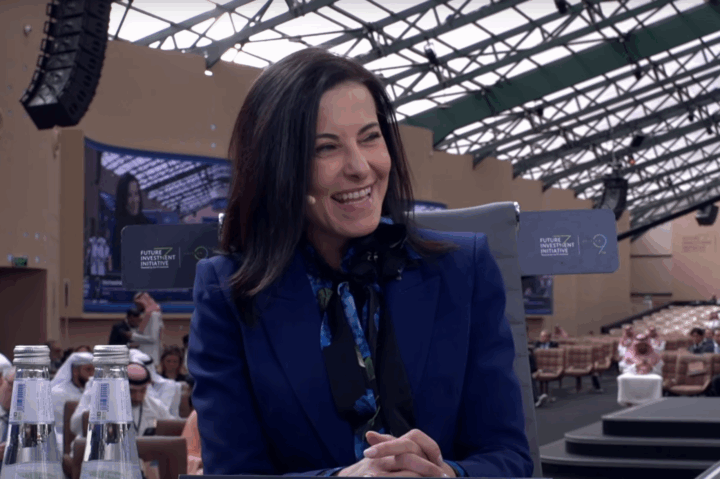
Screenshot
Former Deputy National Security Advisor Dina Powell McCormick speaks at the Future Investment Initiative Summit in Riyadh, Saudi Arabia, Oct. 28, 2025
Former Deputy National Security Advisor Dina Powell McCormick said on Tuesday that recent regional reforms and alliances, including the 2020 Abraham Accords, have been instrumental in the Middle East’s development and its response to the Oct. 7, 2023, Hamas terror attacks and ensuing war in Gaza.
“I think we are moving too fast sometimes, and don’t pause on how critical it is that even after October 7, not one of the signatories of that peace treaty got out,” Powell McCormick said in comments made at the Future Investment Initiative Summit in Riyadh, Saudi Arabia. “And I believe it’s thanks to President [Donald] Trump, thanks to Jared Kushner, thanks to [Special Envoy] Steve Witkoff, the reason that we saw the ceasefire happen, the release of the hostages and Inshallah, God-willing, a more stable Gaza so the humanitarian suffering can end.”
“I think it’s because, in many ways, the seeds were planted to have last week that announcement not just by the United States, but over 50 countries, again, from Egypt and Jordan, the Emiratis, the Qataris, the Turks, the Pakistanis,” Powell McCormick continued. “This is remarkable.”
Powell McCormick, who served in the first Trump administration and is now vice chairman and president of global client services at BDT-MSD, reflected on a trip to the region nearly a decade ago while working for the White House. “I think if you had told us then that nine years later, you would have seen the economic, social and political gains and transformation that we have seen,” she said, “it would have been hard to believe economically … it would have been hard to imagine that this kingdom and this region of the world is now the dominant source of capital for innovation, the dominant source of capital for the change that we’re witnessing in every industry, artificial intelligence, biotech, robotics, longevity.”
Plus, Mandela's granddaughters visit Israel, Gaza
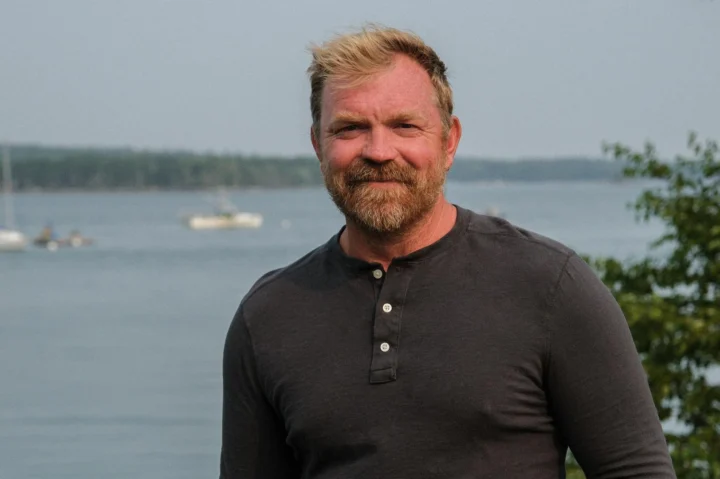
Graham Platner campaign
Graham Platner
Good Friday morning.
In today’s Daily Kickoff, we report on Rep. Seth Moulton’s plans to return money bundled by AIPAC following his entry into Massachusetts’ Senate race, and cover White House Special Envoy Steve Witkoff’s prediction that the Abraham Accords will “significantly expand” as the Israel-Hamas war winds down. We talk to the granddaughters of Nelson Mandela about their recent trip to Israel and Gaza, and report on Zohran Mamdani’s efforts to distance himself from far-left streamer Hasan Piker. Also in today’s Daily Kickoff: Jacob Helberg, Ari’el Stachel and Rep. Mikie Sherrill.
Today’s Daily Kickoff was curated by Jewish Insider Executive Editor Melissa Weiss and Tamara Zieve with assists from Marc Rod and Danielle Cohen-Kanik. Have a tip? Email us here.
What We’re Watching
- Ukrainian President Volodymyr Zelensky returns to Washington today for a sit-down at the White House with President Donald Trump.
- We’re keeping an eye on the fragile ceasefire between Israel and Hamas, amid reports that Sunni Arab states, including Saudi Arabia, the United Arab Emirates and Bahrain, have warned senior White House officials that Hamas’ ongoing refusal to disarm could collapse the agreement.
- Republican Party leaders in New York State are set to hold a vote to disband the state’s Young Republicans chapter today, after the publication of racist text messages shared in a chat of the national Young Republican leaders that implicated members of New York’s delegation. The state party plans to eliminate the group’s charter and rebuild the group with new leadership.
- On Sunday, Americans for Ben-Gurion University is holding a benefit in New York City featuring former Israeli hostage Sasha Troufanov and comedian Alex Edelman.
What You Should Know
A QUICK WORD WITH JI’S JOSH KRAUSHAAR
With all of the living hostages released from Gaza and an end (at least for the time being) of Israel’s war in the Palestinian territory, the coming months could offer the mainstream Jewish community something of a breather to assess the changed political landscape.
In the war’s final months, the anti-Israel far left gained a foothold in Democratic Party politics, most prominently in the New York City mayoral race with Zohran Mamdani, but also in urban contests ranging from Seattle to Somerville, Mass. The antisemitic forces on the far right have been less of a political force, but have gained strength on podcasts and among younger right-wingers, and have been embraced to a greater extent by a few populist lawmakers like Rep. Marjorie Taylor Greene (R-GA).
With the return of the living hostages, Israel’s success in degrading Hamas and additional enemies, and the apparent end of the Gaza war, Jewish optimists can plausibly argue that some degree of normalcy could creep back in the political sphere. Israel should become a less salient issue for low-information scrollers, with the war’s end reducing the constant anti-Israel and antisemitic propaganda being fed on so many screens.
With a ceasefire finally achieved, the anti-Israel forces have been remarkably silent, and have been exposed for the Hamas-sympathizing extremists that they always have been. That faction of the anti-Israel Democratic left is as politically exposed as it’s been since the immediate aftermath of Oct. 7, 2023.
There’s also the possibility that, with Israeli elections being held next year, a new Israeli prime minister would get elected, bringing with him or her a new Israeli government that may not be as polarizing to liberal critics of Israel back in the U.S.
Jewish pessimists also have a plausible case to make. Support for Israel has declined in the past year, with the most significant slippage coming from Democratic Party voters and some independents. It’s hard to imagine it will rebound anytime soon. The youngest Gen Z voters are the most hostile towards Israel and have been even before Oct. 7. It’s reasonable to expect their future growth in the electorate will only grow the pool of anti-Israel voters.
Furthermore, the rise of anti-Israel and antisemitic sentiment isn’t happening in isolation; it’s a symptom of the rise of larger illiberal and extreme forces within both parties. The fact that polls show an upward tick in the toleration of political violence, growing antipathy to capitalism on the left, and growing sympathy for authoritarianism on the right is the broader context of the growing hostility Jews are facing, and it’s not showing any signs of abatement.
In the coming year, it will be important to track whether the political outlook for Jews is getting better or whether the trends we’ve seen worsen in the last couple years are accelerating.
We’ll be debuting an election scorecard next week, examining the most meaningful elections in the coming year that will test the influence of the political mainstream against the extremes. Stay tuned: it will be worth bookmarking and tracking as we approach Election Day this November, and in the runup to next year’s congressional primaries.
CUTTING TIES
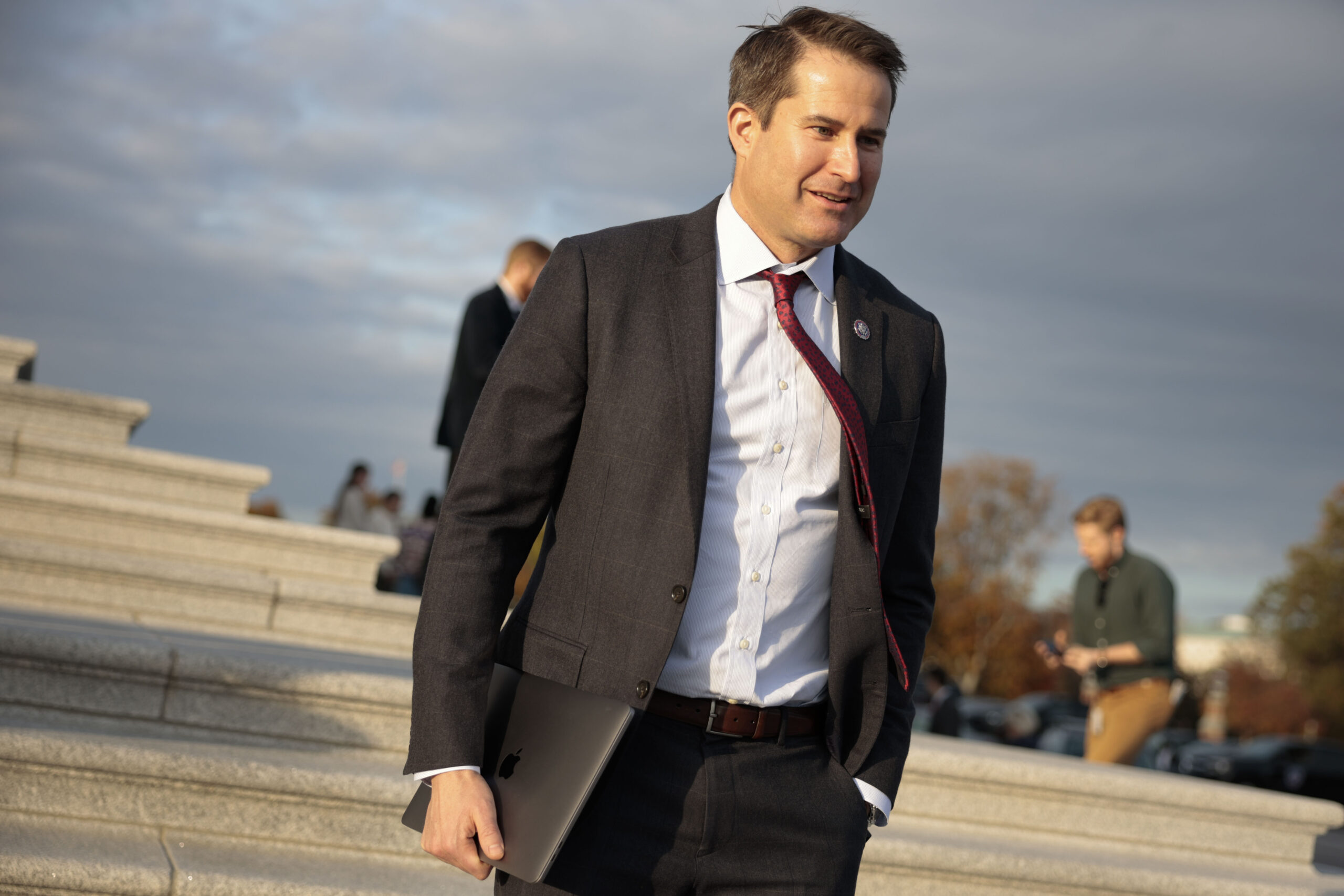
Rep. Seth Moulton (D-MA), who on Wednesday announced a primary challenge to Sen. Ed Markey (D-MA), announced Thursday that he will return donations he has received from AIPAC and will reject further donations from the group, Jewish Insider’s Marc Rod reports. Moulton’s changed stance on accepting support from AIPAC is a sign of how even more-moderate Democrats are facing pressure from the party’s activist base to distance themselves from embracing Israel.
What they’re saying: “I support Israel’s right to exist, but I’ve also never been afraid to disagree openly with AIPAC when I believe they’re wrong. In recent years, AIPAC has aligned itself too closely with Prime Minister [Benjamin] Netanyahu’s government,” Moulton said in a statement. AIPAC spokesperson Marshall Wittmann responded, “Rep. Moulton is abandoning his friends to grab a headline, capitulating to the extremes rather than standing on conviction.”
DEBATE DISPATCH
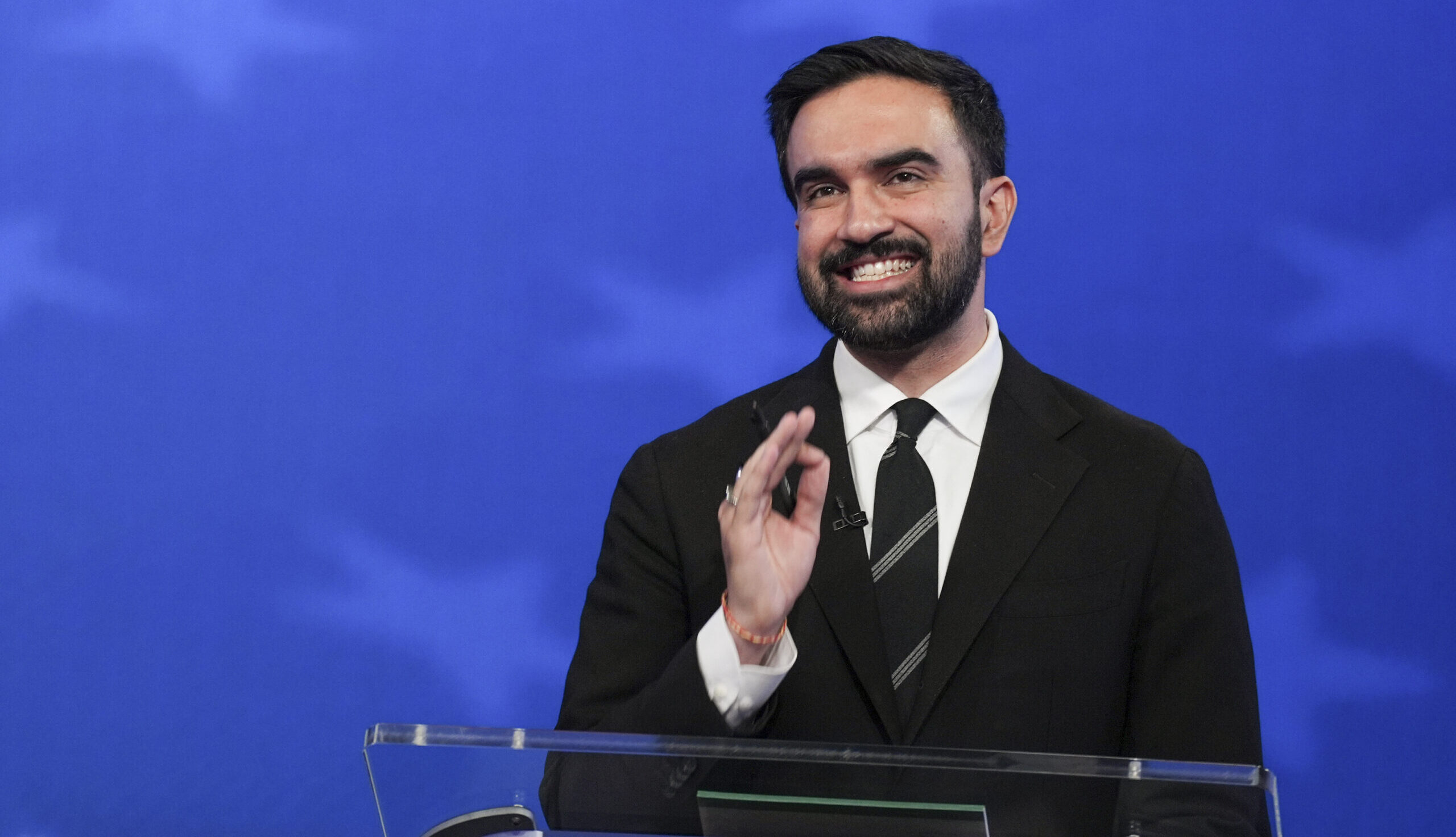
Zohran Mamdani, the Democratic nominee for mayor of New York City, expressed disagreement on Thursday with comments by Hasan Piker, a far-left streamer who has said “America deserved 9/11,” after several months in which the state assembly member had declined to condemn such rhetoric, Jewish Insider’s Matthew Kassel reports. “I find the comments that Hasan made on 9/11 to be objectionable and reprehensible,” Mamdani said during the first general election debate on Thursday night, where he traded barbs with former New York Gov. Andrew Cuomo, who is trailing in the polls as he mounts an independent run following his primary loss to Mamdani in June.
More from Mamdani: Elsewhere during the debate, Mamdani, an outspoken critic of Israel who was arrested in October 2023 during a ceasefire demonstration outside the Brooklyn home of then-Senate Majority Leader Chuck Schumer (D-NY), declined to confirm that he would not participate in protests if he is elected mayor. “The important thing is to lead from City Hall,” Mamdani said. “That’s what I’ll be doing.” Mamdani had faced intense backlash before the debate for comments during a Fox News interview released on Wednesday in which he avoided directly answering a question about whether Hamas should disarm and relinquish its leadership role in Gaza. He clarified at the debate that Hamas, as well as “all parties,” “should lay down” their arms but did not comment on its future role in the conflict.
PROXY BATTLE
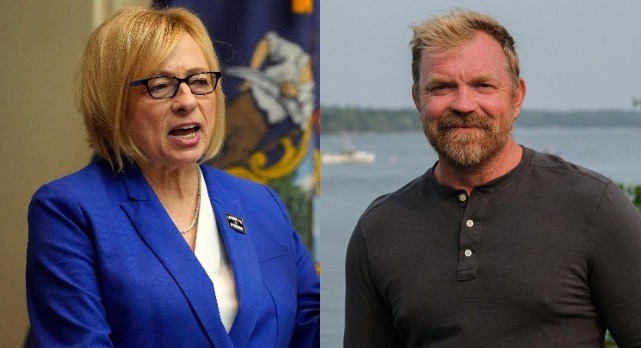
The Democratic Senate primary in Maine is shaping up to be among the most significant proxy battles over Israel in the upcoming midterm elections, pitting the state’s moderate two-term governor against a left-wing populist upstart who has vocally embraced an anti-Israel platform. Gov. Janet Mills, who announced her campaign to unseat Sen. Susan Collins (R-ME) on Tuesday and is backed by Senate Democratic leadership, is set to face a well-funded challenge from Graham Platner, a veteran and oyster farmer who boasts high-profile support from Sen. Bernie Sanders (I-VT), Jewish Insider’s Matthew Kassel reports.
Platner’s positions: In contrast with Mills, who has criticized anti-Israel divestment efforts in her state and warned against a “deeply troubling” rise in antisemitic incidents after Hamas’ Oct. 7, 2023, attacks, Platner has promoted more hostile views on Israel and its alliance with the United States. Since entering the race in August, Platner has accused Israel of genocide in Gaza and endorsed measures to block U.S. arms sales to Israel. His campaign did not respond to a request for comment regarding the recently brokered ceasefire and hostage-release deal between Israel and Hamas. Platner has also been an outspoken critic of the pro-Israel advocacy group AIPAC, whose affiliated political arm is supporting Collins, one of the most vulnerable Republicans now seeking reelection — in a state President Donald Trump lost by seven points in 2024.
SHERRILL SAYS
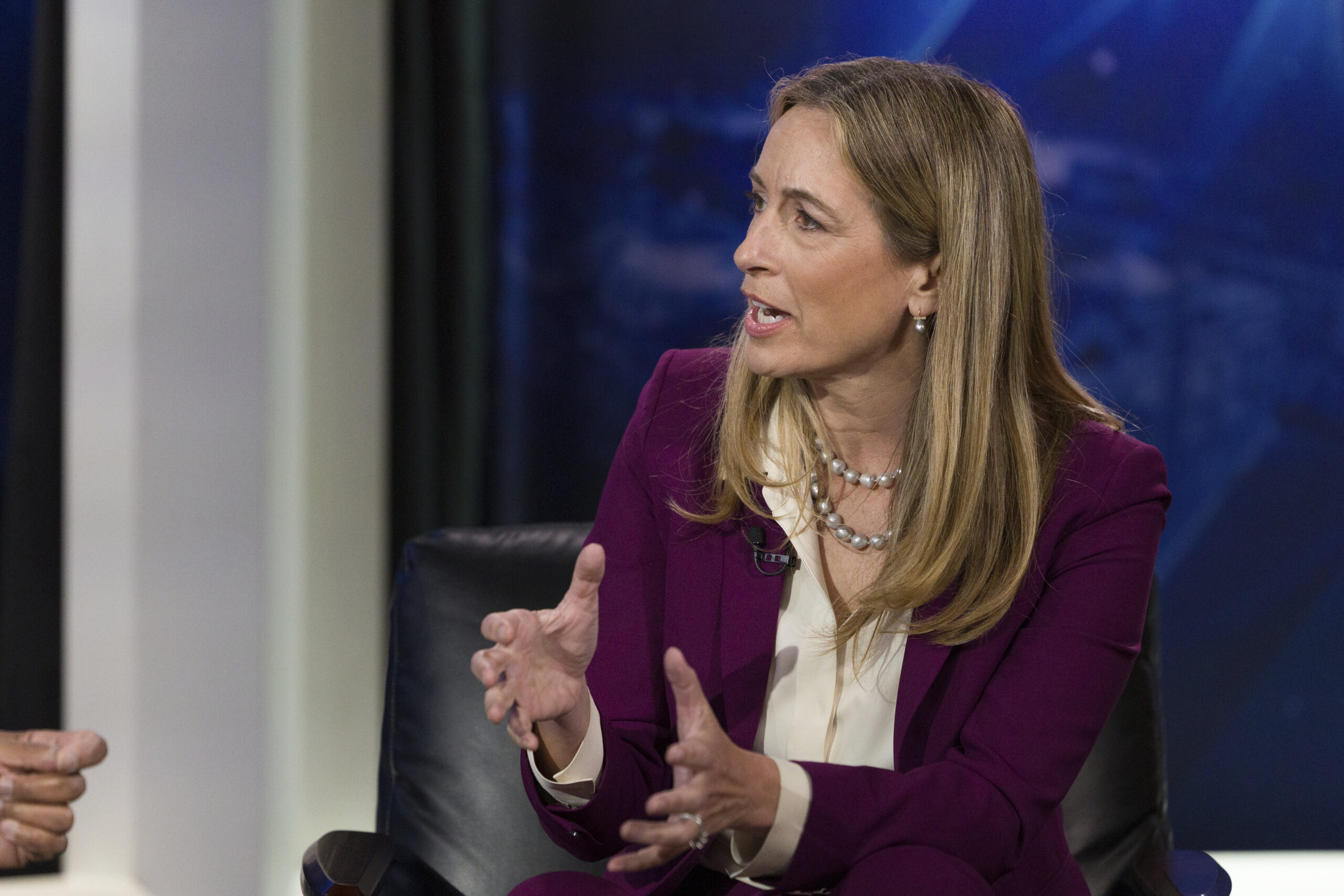
Speaking on a Jewish Democratic Council of America webinar on Thursday, Rep. Mikie Sherrill (D-NJ) outlined a plan of action on antisemitism she said she would implement statewide if she wins next month’s gubernatorial race in the Garden State, Jewish Insider’s Marc Rod reports. Sherrill and Republican nominee Jack Ciattarelli look likely to split the Jewish vote in next month’s election.
Notable quotable: She emphasized her willingness to call out antisemitism among her political allies, pointing to the example of an employee of the New Jersey Educational Association — which endorsed Sherrill — who had made “horrible antisemitic [comments] online.” Sherrill said she had condemned the individual and demanded she be fired. “I’m going to call out anybody in this space that is promoting hate in any way against all of our citizens, but especially our children,” Sherrill said.
WITKOFF’S WORDS
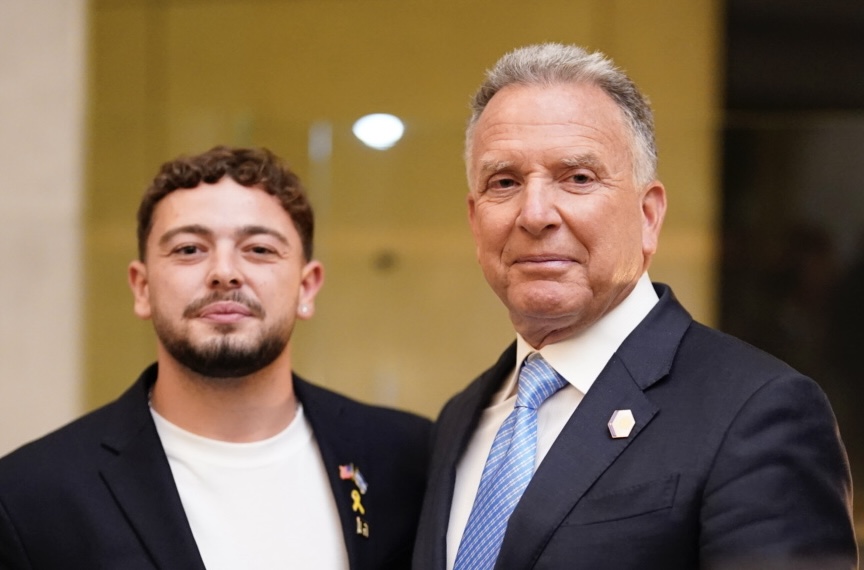
White House Special Envoy Steve Witkoff predicted on Thursday that the Abraham Accords will “seriously expand” in response to the end of fighting in Gaza. Witkoff was addressing attendees at an event commemorating the second anniversary of the Oct. 7, 2023, Hamas terror attacks, Jewish Insider’s Emily Jacobs reports.
What he said: “No leader has done more for the Jewish people or the State of Israel than President Trump,” Witkoff, speaking at an event at the U.S. Holocaust Memorial Museum in Washington, said. “He moved our embassy to Jerusalem, he recognized Israel’s sovereignty over Judea and Samaria [the West Bank] and the Golan Heights. He forged the Abraham peace Accords, which will seriously expand now,” Witkoff said. The White House envoy, who returned from the region earlier this week after the implementation of the first phase of the ceasefire, posited that Trump winning a second term last November was “the major breakthrough of this conflict.”
HERITAGE OF HOPE
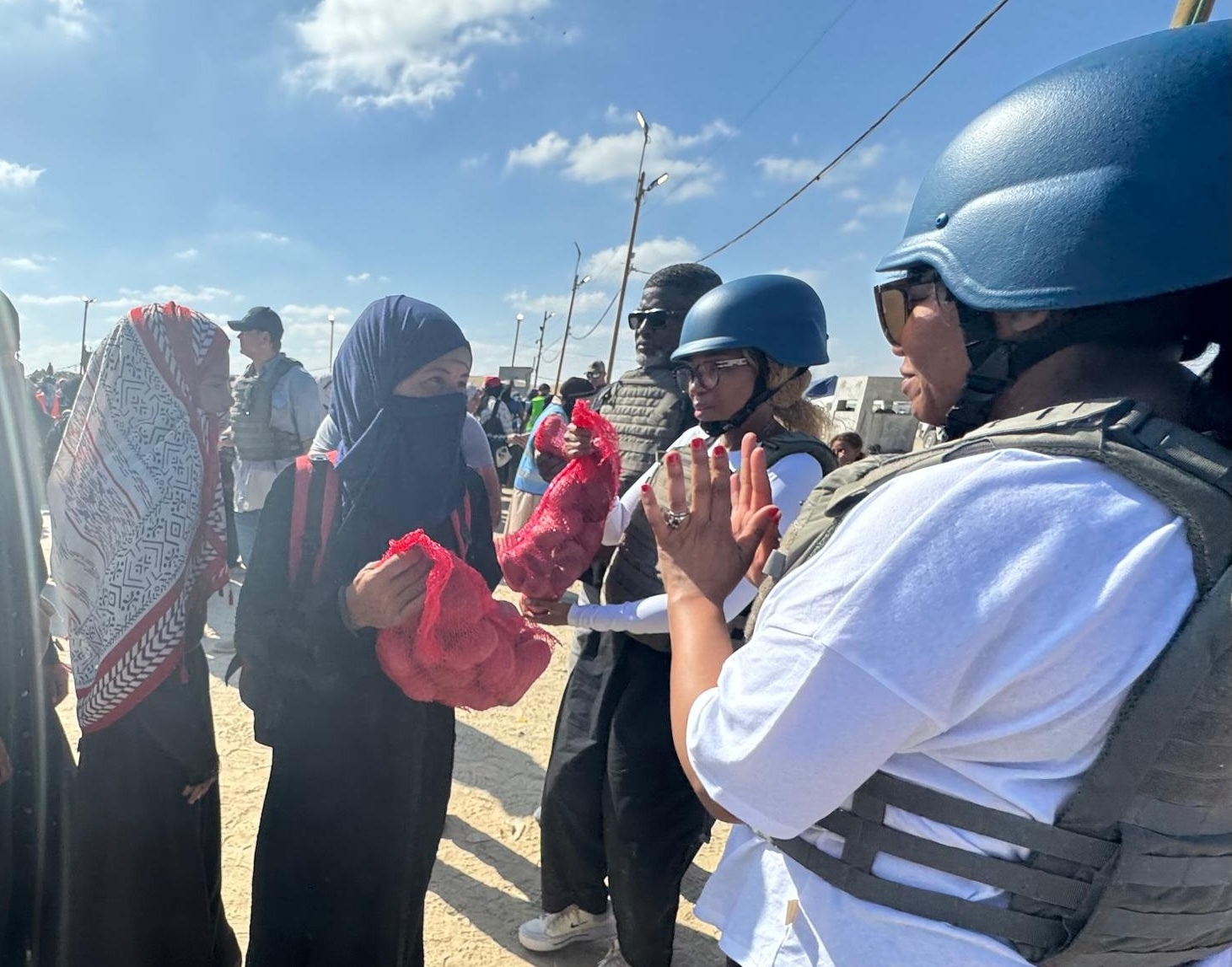
“What has emerged from all my conversations is that the yearning for peace is very intense,” former South African President Nelson Mandela, visiting Israel in 1999 as part of a broader Middle East, said as he reflected on his meetings with leaders across the region. More than a quarter century later — despite the ceasefire between Israel and Hamas, the degradation of Iran and its proxy network and numerous wars between Israel and its neighbors — that peace remains elusive. It was against that backdrop that two of Mandela’s granddaughters, Zamaswazi (Swati) Dlamini-Mandela and Zaziwe Dlamini-Manaway, traveled to Israel and the Gaza Strip earlier this month. Dlamini-Manaway and Dlamini-Mandela spoke to Jewish Insider’s Melissa Weiss about their trip.
Mutual motivation: “For us, it’s important to actually go and actually experience the story for yourself,” Dlamini-Mandela said of the trip, which was organized by the National Black Empowerment Council and included meetings with Israeli hostage families and survivors of the Oct. 7, 2023, Hamas terror attacks, as well as a day on the ground in Gaza where Mandela’s granddaughters assisted the Gaza Humanitarian Foundation in its efforts to distribute aid in the enclave. “Coming from a high-profile family like ours, and also living in the media for years, all our lives have been pretty much lived in public, it’s very interesting what type of bias or viewpoints the news can take. So we always felt like, ‘Let’s go and see for ourselves. Let’s experience for ourselves, and let’s actually go on humanitarian missions to try and understand and really get to know what’s going on.’
Worthy Reads
Political Cover: In The New York Times, Dana Stroul, who served as deputy assistant secretary of defense for the Middle East in the Biden administration, posits that President Donald Trump’s “key intervention” in the Israel-Hamas war “was to give a political lifeline” to Israeli Prime Minister Benjamin Netanyahu, who had faced threats from the far-right members of his government over efforts to reach a ceasefire. “Many analysts assumed Mr. Netanyahu, constrained by his far-right coalition, would not accept any end to the war without a complete Hamas surrender. Any compromise in which Hamas could reassert itself could have triggered early elections in Israel, costing Mr. Netanyahu the premiership and exposing him to his ongoing trials for corruption. Mr. Trump flipped the script. Mr. Trump lavished praise on his counterpart, extending him the political protection of Trump’s overwhelming popularity in Israel. In return, Mr. Netanyahu agreed to Trump’s proposal to free the hostages and let Hamas survive, for now.” [NYTimes]
JD’s Deflection: The Atlantic’s Jonathan Chait considers what Vice President JD Vance’s response to leaked racist text messages sent by Young Republican leaders portends for the future of the party. “Some Republicans, including those who have directly employed the people in these chats, condemned these messages. But Vice President J. D. Vance had a different, and more telling, response. ‘I refuse to join the pearl clutching,’ he posted on X defiantly. … Given Vance’s evident ambitions to succeed Donald Trump as the Republican standard-bearer, his response is revealing. The vice president apparently grasps that openly defending references to Black people as ‘watermelon eaters’ and quips about sending political rivals ‘to the gas chamber’ would hurt his political standing, but he also clearly needs these Young Republican leaders if he hopes to consolidate the Trump base behind him. Deflection is a calculated response.” [TheAtlantic]
Rabbi Hauer’s Chavruta: In eJewishPhilanthropy, Rabbi Rick Jacobs reflects on his friendship with Rabbi Moshe Hauer, the Orthodox Union leader who died earlier this week. “A few years back, Rabbi Hauer sent me a marked-up copy of a statement I had published. My words were covered with his voluminous comments in red ink. He took issue with pretty much every point I had made. Rather than just thanking him for ‘sharing his thoughts,’ I asked if we could sit and discuss his rather extensive rebuttal. How could I not be impressed by the seriousness with which he debated my views about the latest news from Israel? With his characteristic humility, he took me to task, never once raising his voice or dismissing my deeply held convictions. As consummate students of Torah, our session felt like a chavruta, an intense one-on-one learning session with a wise colleague. I thanked him for his thoughtful critique.” [eJP]
Word on the Street
Former National Security Advisor John Bolton was indicted by a federal grand jury on a combined 18 counts of transmitting or retaining national defense information, stemming from his keeping and sharing of digital diaries — according to the indictment, more than 1,000 pages of entries, some including confidential information — that detailed his work during the first Trump administration…
Jacob Helberg was sworn in as under secretary of state for economic growth, energy and the environment…
Rep. Dave Taylor (R-OH) blamed the appearance of an American flag bearing a swastika in his office on an orchestrated “ruse” to distribute such flags that were “initially indistinguishable from an ordinary American flag to the naked eye.” But Politico reported that a staffer from another office that received such a flag in the mail said that “it was plainly obvious to us that there was a swastika on the flag with the naked eye.” Taylor denied any intentional wrongdoing by any of his staff…
California state Sen. Scott Weiner is reportedly planning to announce a bid for the congressional seat held by former House Speaker Nancy Pelosi (D-CA)…
Claudia Milne, who served as head of standards at CBS News since 2021, is departing the media company; Milne is the first senior CBS News executive to leave the network following CBS parent company Skydance’s acquisition of Bari Weiss’ The Free Press and installation of Weiss as editor-in-chief of CBS News…
Warner Bros. Discovery rejected calls for the media company to boycott Israeli film institutions, saying that such a move would run afoul of its nondiscrimination policy…
Pomona College opened an investigation on Thursday after an on-campus event held Wednesday commemorating the second anniversary of Hamas’ Oct. 7, 2023, terrorist attacks was disrupted by four masked and keffiyah-clad individuals who barged in chanting “Zionists not welcome here,” Jewish Insider’s Haley Cohen reports…
The owners of the Washington-area vegetarian chain Shouk, which served Israeli fare in the capital region for a decade, closed all its locations, citing financial losses resulting from a sustained boycott of the chain; Shouk is co-owned by Dennis Friedman and Israeli entrepreneur Ran Nussbacher…
The New York Times interviews actor Ari’el Stachel about his new one-man, off-Broadway show “Other,” about his conflicting identities as an Arab Jew…
Australia’s National Gallery of Victoria quietly restituted a 17th-century Gerard ter Borch painting to the descendants of Max Emden, a Swiss-German art collector who was forced to sell some of his pieces under financial duress in the lead-up to World War II…
U.K. Prime Minister Keir Starmer ordered a review of antisemitism within the country’s National Health Service, citing “too many examples, clear examples, of antisemitism that have not been dealt with adequately or effectively”; 10 Downing Street is also asking the NHS to adopt the International Holocaust Remembrance Alliance’s working definition of antisemitism…
Starmer also condemned the decision by English Premier League team Aston Villa to prohibit attendance by Maccabi Tel Aviv supporters at an upcoming match in Birmingham and called on Aston Villa to reverse the decision, which the team said was due to “a number of physical and safety factors”; Emily Damari, a British-Israeli former hostage and a fan of Maccabi Tel Aviv, called on Aston Villa to “come to your senses and reconsider”…
A court in Oslo convicted a Norwegian man who worked as a guard at the U.S. Embassy of espionage on behalf of Russia and Iran…
The Iran-backed Houthis in Yemen confirmed that the terror group’s chief of staff, Maj. Gen. Muhammad Abdul Karim al-Ghamari, had been killed in an Israeli airstrike in August…
The Washington Post spotlights the difficult and traumatic conditions, including beatings, starvation and uncertainty over the fates of their loved ones, that the last group of living Israeli hostages, who remained in Gaza until earlier this week, endured while in captivity…
The Wall Street Journal reports on the challenges in repatriating the bodies of the remaining Israeli hostages, citing both the difficulty in locating all of the bodies as well as Israel’s allegations that Hamas is holding onto some bodies as future leverage…
The New York Times does a deep dive into the whereabouts of former Syrian officials who have fled the country or otherwise evaded officials amid a broader crackdown on Assad-era officials believed to be complicit in the regime’s atrocities…
Michael Ratney, Nimrod Novik, Farah Bdour, Ibrahim Dalalsha, Elisa Ewers, Garrett Nada and Neri Zilber were named as members of a new Israel Policy Forum policy council…
Susan Stamberg, an early employee of NPR who hosted its “All Things Considered” from 1972-1986, died at 87…
Arts journalist Milton Esterow, whose brand of investigative journalism focused on artwork looted by the Nazis, died at 97…
Independent film distributor Toby Talbot, who with her husband operated art-house cinemas in New York City from 1960-2018, died at 96…
Pic of the Day

Birthdays

Emmy Award-winning film and television music composer, Nicholas Britell turns 45…
FRIDAY: Chair emeritus of the board of directors of NYC’s 92nd Street Y, Jody Gottfried Arnhold turns 82… Judge of the U.S. Court of Appeals for the 9th Circuit since 1999, Ronald Murray Gould turns 79… Filmmaker and novelist, Michael L. Tolkin turns 75… U.S. district judge for the District of Connecticut since 1994, he took senior status in 2017, Robert Neil Chatigny turns 74… Movie and television producer, Lawrence Bender turns 68… Rochester, N.Y., resident, Peggy Futerman… Number theorist and professor at the University of Waterloo in Ontario, he has written a highly critical report on the world’s leading Holocaust deniers, Jeffrey Shallit turns 68… Partner in Becker & Poliakoff, she has been a member of both houses of the Florida Legislature, Ellyn Setnor Bogdanoff turns 66… Rosh yeshiva at Yeshiva University, he is a son of professor Isadore Twersky and a grandson of Rabbi Joseph B. Soloveitchik, he also serves as the rebbe of the Talne Hasidic dynasty, Rabbi Mayer E. Twersky turns 65… Former Northwest regional director of J Street, Andrew Straus… Professor of economics at Harvard, he served as a member of the Board of Governors of the Federal Reserve System, Jeremy Chaim Stein turns 65… Ramsey, N.J.-based licensed professional counselor, Shemsi Prinzivalli… Member of the California state Senate until last November, Josh Newman turns 61… Co-founder of AQR Capital Management, Cliff Asness turns 59… Jerusalem bureau chief of The New York Times, David Halbfinger turns 57… Founder of Maniv Investments in 1997 and Maniv Mobility, Michael Granoff turns 57… U.S. senator (D-NM), Martin Heinrich turns 54… CEO and founder of Crosscut Strategies, a D.C.-based public affairs firm, Kenneth Baer… Rheumatologist and director of the rehabilitation division of Arthritis and Rheumatism Associates in the D.C. area, Dr. Shari B. Diamond… Author and staff writer at The New Yorker magazine, Ariel Levy turns 51… VP and head of U.S. public policy at TikTok, Michael Beckerman turns 47… Los Angeles-based consultant to the beauty industry and former CEO of several companies, Jessica Goldin turns 46… CEO at Citizen AI, Tomer Kagan turns 42… D.C.-based director of federal affairs for New York University, Katharine Nasielski… Co-founder and executive director at the Constructive Dialogue Institute, Caroline Mehl… Member of the Maryland state Senate since early this year following seven years in the Maryland House of Delegates, Dalya Attar turns 35… Staff software engineer at Zocdoc, Adam Greenspan…
SATURDAY: Co-founder and former chairman of Qualcomm, Irwin M. Jacobs turns 92… Former mayor of Amsterdam and leader of the Dutch Labour Party, Marius Job Cohen turns 78… Linguist, he is a professor emeritus at the University of Chicago, Victor A. Friedman turns 76… Former U.S. ambassador to Morocco, he is president of the Coalition for a Safer Web, Marc Ginsberg turns 75… Physician and political activist In Henrico County, Va., Dr. Max S. Maizels turns 74… Professor of intelligence and global security studies at Capitol Technology University, Joshua B. Sinai, Ph.D…. Bakersfield, Calif.-based attorney focused on adoption and reproductive law, Marc Dennis Widelock… Television director, writer, producer, composer and actor, Chuck Lorre (born Chaim Levine) turns 73… Film producer and founder and head of Dimension Films, Robert “Bob” Weinstein turns 71… President of the Economic Future Group, a consulting firm, Jonathan Bernard Yoav Tasini turns 69… Award-winning illustrator and writer of books for children, Eugene Yelchin turns 69… Chair of the U.S. Securities and Exchange Commission during almost all of the Biden administration, Gary Gensler turns 68… Retired NFL running back, he writes of his conversion in From Rose Bowl to Rashi: My Unique Journey to Judaism, Leon Calvin (now Yosef) Murray turns 67… Israeli journalist, political commentator and author of two books highly critical of PM Benjamin Netanyahu, Ben Caspit turns 65… Retired in 2021 after 20 years as the director at Rutgers Hillel, followed by a year at Harvard Hillel, Andrew Getraer… Founder of Coalesce Advisors, he is a former president at Birthright Israel Foundation, David Fisher… Professor and director of Jewish studies at the University of Pennsylvania, Steven Phillip Weitzman turns 60… Weather anchor for NBC 4 New York, David M. Price turns 59… Former ESPN television host, sports reporter and anchor, Rachel Nichols turns 52… CEO of Future Today Strategy Group, she is an adjunct professor of strategic foresight at NYU, Amy Lynn Webb turns 51… Fashion designer, stylist and art director, Maryna Asauliuk turns 45… SVP and COO at the American Enterprise Institute, Suzanne Gershowitz… Academy Award-winning screenwriter and author, Graham Moore turns 44… Founding partner and Washington correspondent for Puck News, Julia Ioffe turns 43… Congressional correspondent for The New York Times, Annie Karni… Support team leader at Moovit, Ayal Kellman… Popular Israeli singer, Idan Yaniv turns 39… Staff writer at The New Yorker, Emma Green…
SUNDAY: Professor emeritus and first-ever Jewish president of the University of Minnesota, Kenneth Harrison Keller turns 91… CEO of Aramark Corporation for 34 years ending in 2014, he is a past chairman of the University of Chicago’s Board of Trustees, Joseph Neubauer turns 84… Founder and former ringmaster of the Big Apple Circus, Paul Binder turns 83… Pulmonologist in Plano, Texas, he is also the author of six mystery novels, Dr. Kenneth L. Toppell turns 83… Writer, scholar and former Israeli ambassador, Yoram Ettinger turns 80… Obstetrician and gynecologist at the Center for Fetal Medicine in Los Angeles, Lawrence David Platt, MD… Retired hospitality executive, Michelle Fischler… Pulitzer Prize-winning reporter, she directed the journalism program at the Massachusetts Institute of Technology until this past July, Deborah Blum turns 71… Founder and president of Americans for Tax Reform, Grover Norquist turns 69… Retired supervisor for Minnesota’s Pollution Control Agency, David Alan Cera… Israel’s minister of the economy and former mayor of Jerusalem for 10 years, both positions following a successful high-tech career, Nir Barkat turns 66… Co-owner of the NFL’s Tampa Bay Buccaneers and English soccer club Manchester United, Avram A. “Avie” Glazer turns 65… Social psychologist and professor at New York University focused on the psychology of morality and moral emotions, Jonathan David Haidt turns 62… Canadian business executive and board member of Toronto’s Mount Sinai Hospital, David Cynamon turns 62… Chief rabbi of Ukraine, Rabbi Yaakov Dov Bleich turns 61… Founder of Global Policy Associates where he is now an advisory board member, he was the White House Jewish Liaison in the Clinton administration, Jay Footlik… Ritual coordinator at Congregation Emanu El in Houston, Shira Kosoy Moses… Actor, director, producer and screenwriter, his television production company is Golem Creations, Jon Favreau turns 59… Former mayor of Portland, Maine, now a non-profit executive, Ethan King Strimling turns 58… Technology journalist and record producer, Joshua Ryan Topolsky turns 48… Film director, screenwriter and producer, Jason R. Reitman turns 48… Chief growth officer at itrek, Evan Majzner… Executive at Nefco, David Ochs… Pittsburgh-based founder and CEO of Mamalux, Lindsay Applebaum Stuart… Founder of iTrade[dot]TV, equities trader and financial marketer, Elie Litvin… Infielder in the Athletics organization, he played for Team Israel in the 2023 World Baseball Classic, Zack Gelof turns 26… Jim Vespe…
The White House envoy spoke at an event at the U.S. Holocaust Memorial Museum in Washington, D.C, commemorating two years since the Oct. 7 Hamas attacks on Israel
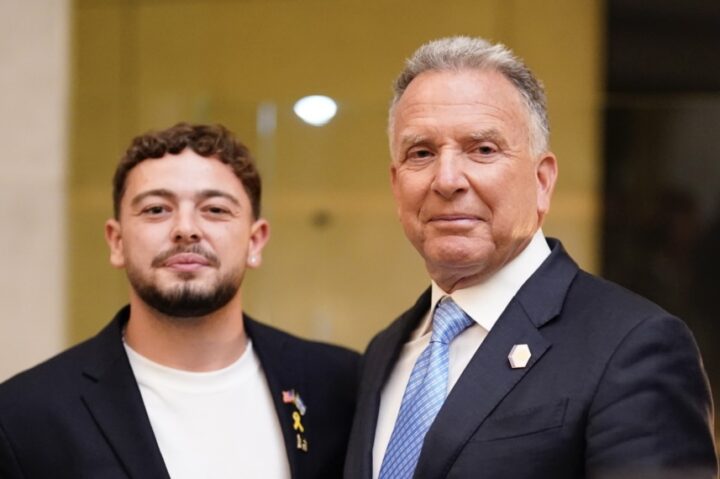
United States Holocaust Memorial Museum
White House Special Envoy Steve Witkoff and Almog Meir Jan
White House Special Envoy Steve Witkoff predicted on Thursday that the Abraham Accords will “seriously expand” in response to the end of fighting in Gaza. Witkoff was addressing attendees at an event commemorating the second anniversary of the Oct. 7, 2023, Hamas terror attacks.
“No leader has done more for the Jewish people or the State of Israel than President Trump,” Witkoff, speaking at an event at the U.S. Holocaust Memorial Museum in Washington, said. “He moved our embassy to Jerusalem, he recognized Israel’s sovereignty over Judea and Samaria [the West Bank] and the Golan Heights. He forged the Abraham peace Accords, which will seriously expand now,” Witkoff said.
The White House envoy, who returned from the region earlier this week after the implementation of the first phase of the ceasefire, posited that Trump winning a second term last November was “the major breakthrough of this conflict.”
“The moment that result was declared, the world changed, and so did the negotiations. Hamas and every party in the region understood that President Trump, his return to office, meant strength, accountability and action,” Witkoff explained. “Even before taking office, President Trump made it clear he wanted progress by the day he stepped into the Oval Office, and shortly thereof, we struck a ceasefire and hostage release deal that began to turn the tide.”
“The success of that first hostage release was made possible by President Trump’s 20-point plan, a strategy that united the Arab world behind this effort. Nations like Egypt, Turkey, Qatar, Saudi Arabia, the UAE, Jordan and many others came aboard because peace and civility are in everybody’s interests,” he added.
Witkoff went on to commend the Arab state negotiators and Jared Kushner, Trump’s son-in-law and former senior advisor, arguing that they collectively pressured Hamas to release the remaining hostages. All 20 living hostages were freed on Monday, while the terror group has slow-walked the repatriation of the bodies of deceased hostages
“In the final phase, at President Trump’s directive, Jared Kushner, a great American, and I flew to Sharm el-Sheikh, Egypt, for the last round of negotiations, led by Qatari, Egyptian and Turkey’s mediators. They were incredible and without them we would not be where we are today,” Witkoff said. “Jared was tremendous. Together, we convinced Hamas that keeping the remaining 20 hostages was no longer an asset, it was a liability, and they began to believe it.”
Witkoff acknowledged that Israel has yet to receive the remains of the deceased hostages still being held by Hamas in Gaza, but said the administration was working toward their release.
“We didn’t get everybody back. We’ve gotten [nine deceased hostages] back and we will pursue the return of the … deceased until they all go home, and I’m confident that they will,” Witkoff said.
Witkoff also referenced his several recent visits to Gaza during his remarks, pointing out that Gazans he’s engaged with “want peace too. They want stability, opportunity, a better life for their children. A future for Gazans must include jobs, education, hope, aspirations, not just guns and violence. Israel should never have to live under the threat of rockets flying at its people or the fear of terrorist attacks, but Gaza’s people must be able to live a decent life as well.”
“We have to be clear, Hamas must unequivocally disarm. They have no future in Gaza,” he continued. “Only when extremism ends does prosperity begin.”
Rabbi Yehuda Kaploun, Trump’s nominee to serve as antisemitism envoy; Ben Ladany, a former IDF sergeant in the elite Oketz K-9 Unit who was shot seven times in November 2023 while fighting Hamas in Gaza; and Almog Meir Jan, an Israeli hostage held by a Palestinian journalist after being taken from the Nova music festival, also spoke at the event.
Nat Shaffir, a Holocaust survivor and USHMM volunteer, and 18 other Holocaust survivors, were among those in attendance, in addition to Rep. Randy Fine (R-FL); Andrew Giuliani, the son of former New York City Mayor Rudy Giuliani and the executive director of the White House task force overseeing the 2026 FIFA World Cup whom Trump appointed in his first term to sit on the U.S. Holocaust Memorial Council; Alex Witkoff, the son of Steve Witkoff and CEO of the Witkoff Group who also sits on the council; Rabbi Levi Shemtov, executive vice president of American Friends of Lubavitch (Chabad); and Alina Habba, the acting U.S. attorney for New Jersey and the president’s former personal attorney.
To mark the second anniversary of the Oct. 7 attacks in Israel, the Jewish Insider team asked leading thinkers and practitioners to reflect on how that day has changed the world. Here, we look at how Oct. 7 changed Israel’s relations with the world
NEW YORK — October 13, 2023: The Israeli flag flies outside the United Nations following Hamas’s deadly attack on Israel (Photo by Noam Galai/Getty Images)
Greenblatt spoke at AJC’s Global Jewish Diplomacy Reception, where former Amb. Shapiro also decried Palestinian statehood recognition as a ‘mistake’

U.S. Mission to the U.N.
Jason Greenblatt, Special Representative for International Negotiations Delivers Remarks at a UN Security Council Briefing on the Middle East
Jason Greenblatt, a key architect of the Abraham Accords, joined President Donald Trump in coming out against the Israeli government’s reported plans to annex portions of the West Bank, saying on Thursday evening that it was the wrong time to do so.
“I think Israel has so many challenges right now, militarily, [with the] hostages. There’s enormous things going on. The world is turned against Israel. I don’t agree with those that are pushing Bibi. I don’t know if it’s Bibi himself, but I hope that Bibi could figure out a way to get out of that political space that he’s in. And I think President Trump is making the right call,” Greenblatt said, using Israeli Prime Minister Benjamin Netanyahu’s nickname.
Greenblatt made his remarks during an onstage interview with Jason Isaacson, the American Jewish Committee’s chief policy and political affairs officer, at the AJC’s annual Global Jewish Diplomacy Reception at Manhattan’s Harmonie Club on the sidelines of the United Nations General Assembly, which is being held this week. Shortly before the reception, Trump told reporters that he was firmly against Israeli annexation of the West Bank.
Greenblatt preceded his opposition to annexation by noting his right-wing bona fides.
“My answer is coming from somebody who’s on the right politically, both in Israel and here. In fact, some of my Palestinian friends would say that sometimes I was Bibi’s mouthpiece,” he said.
“But I agree with President Trump and what he said earlier today … I don’t think this is the time. I don’t think it’s the place. And I was part of the team that wrote the paperwork that would have allowed Israel to … apply Israeli sovereignty,” Greenblatt said, using the term the Israeli government prefers to refer to annexation. “I don’t think this is the time to do it.”
In addition to Greenblatt, speakers at the reception included Daniel Shapiro, former U.S. Ambassador to Israel under President Barack Obama, and Serge Berdugo, president of the council of Jewish communities of Morocco, who received AJC’s Akiba Award during the event. At least ten hostage family members were also present, some of whom offered staunch criticism of the Israeli government’s handling of the war in Gaza.
Responding to the growing number of Western countries recognizing Palestinian statehood, Shapiro called these moves an ineffectual “mistake.”
“It’s a purely rhetorical step that changes nothing and probably does little, if anything, to advance the stated goal of some sort of resolution of the Israeli-Palestinian conflict. And in many ways it may actually set it back in part because of the way it appears to — and certainly many Israelis understand it to, and I’m sorry to say, many Arabs understand it to — reward Hamas,” Shapiro said.
He also described the development, in part, as a response by world leaders to Israel’s refusal to develop a “day after” plan in Gaza.
“What is that vision of the day after? Not only when does it start, but what does it look like afterwards? And is it something that Arab states and European states can buy into and get behind,” Shapiro said. “That could have been a way of satisfying some of the domestic pressures, but it wasn’t really available. And so I think some of the leaders turned to this ill-advised move instead.”
Speaking on behalf of hostage families, Ruby Chen, father of slain American Israeli hostage Itay Chen, whose remains are still being held captive by Hamas in Gaza, thanked the AJC for their advocacy on behalf of the hostage families and criticized the Israeli government for the ongoing hostage crisis.
“I think I’m still in shock that … it wasn’t obvious that it should have been the number one objective of the government of Israel. But it’s unfortunate that there were other objectives, such as the disbanding of Hamas and making sure that Oct. 7 does not happen again, which are all legitimate,” said Chen.
Chen continued, “We call on President Trump to bring all the parties together and put on the table a deal that is acceptable by everybody, and we pray to God that… those of you who are meeting with [Netanyahu]… are able to send a message saying we hope that he shares the same conviction that President Trump has shown, as well as President Biden and the previous administration to bring all these hostages home.”
As the hostage family members gathered for a photograph following Chen’s speech, the father of Israeli hostage Nimrod Cohen, Yehuda Cohen, stepped up to the microphone and delivered a fiery impromptu speech criticizing Netanyahu.
“After two years, Netanyahu is prolonging an unneeded war. If you really want to help us as a Jewish organization, please help us advocating the push on Netanyahu, making Netanyahu, forcing Netanyahu to end the war and get a hostage deal,” he said.
Cohen, who came out in support of the countries recognizing Palestinian statehood — breaking ranks with the Hostages and Missing Families Forum and nearly all of Israel’s political leaders, which described it as a reward for Hamas — defended his position as a form of leverage over the prime minister.
“We are using the Europeans — their declaration of the Palestinian state, their sanctions of Netanyahu’s government … We have no choice. We are at war with Netanyahu. So if you really want to help us, that’s forcing Netanyahu to end the war and get a hostage deal, this is the real help,” said Cohen.
Amir Hayek: ‘We all need to be very, very wise in order to protect, I think, one of the most important things that we have in our region’
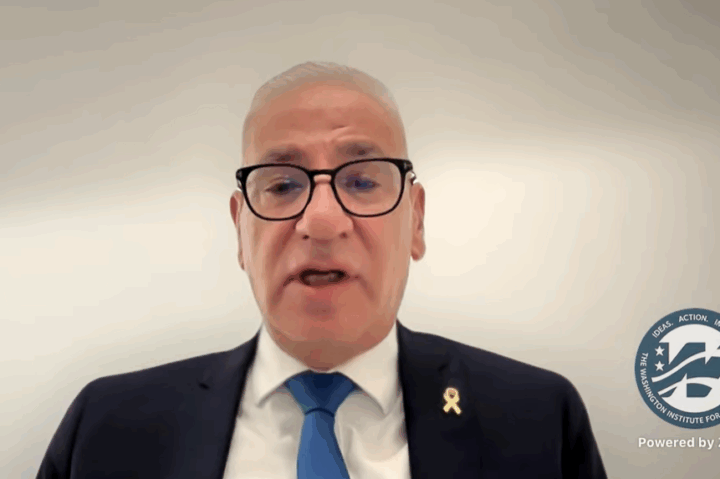
Screenshot
Former Israeli Ambassador to the UAE Amir Hayek speaks at a Washington Institute for Near East Policy event on the Abraham Accords on Sept. 11, 2025.
Israel’s first ambassador to the United Arab Emirates said on Thursday that he is “very, very worried” about the future of the Abraham Accords, as Israel’s ties in the Gulf are coming under strain following an Israeli attack on Hamas leaders in Qatar earlier this week.
“For the last week, I am almost not sleeping. I’m very, very worried,” Amir Hayek said at a webinar hosted by the Washington Institute for Near East Policy marking the five-year anniversary of the signing of the Accords, when Israel normalized ties with the UAE.
UAE President Mohamed bin Zayed flew to Doha this week in a show of support for Qatar after the Israeli attack. Reports have indicated that Israel did not successfully hit the terror leaders it targeted, instead killing several lower-level Hamas officials. Other Gulf leaders, including Jordan’s Crown Prince Hussein and Saudi Arabia’s Crown Prince Mohammed bin Salman, also planned visits to Doha, and Qatar will host an emergency summit with Arab leaders on Sunday.
A barrage of criticism directed at Israel — including from President Donald Trump — has sparked fears that its goal of regional integration could now be even farther away.
“I believe that Israel should look at our partners as partners, and talk to them, and not let this situation and the Abraham Accords collapse,” said Hayek, who was ambassador to the UAE from 2021 to 2024. “I think that it will be very hard to rebuild the Abraham Accords if we will pass a point of breaking them, even if we think that we can do it for a few months. No. No. We need to do everything to protect the Abraham Accords.”
Hayek did not specifically reference Israel’s actions in Qatar, nor did he mention Israeli Prime Minister Benjamin Netanyahu’s decision on Thursday to move forward with a controversial new settlement expansion plan, known as the E1 corridor, in the West Bank. But he suggested “internal Israeli politics” may be at play.
“We [Israel] didn’t start the war, but we need to know when to finish the war,” said Hayek. “Maybe it’s related to the internal Israeli politics. But we all need to be very, very wise in order to protect, I think, one of the most important things that we have in our region.”
Hayek, a businessman who is now a fellow at the Atlantic Council, said he is still doing everything in his power to promote Israel’s ties with the UAE and with Bahrain.
“To be an ambassador, it’s not a lifetime job, but it’s a lifetime mission,” said Hayek. “I’m talking not only to the Emiratis, Bahrainis and other countries. I’m talking to my government as well, saying we need to do everything needed in order to keep those relations.”
Hayek maintains hope in the future of the Accords. But if their promise was already being tested by the war in Gaza, it has grown even more fraught this week.
“Hope is my middle name, and I think that I will need a lot of hope these days when we see some difficulties with the Abraham Accords,” said Hayek. “I hope that the Abraham Accords will stand … and we’ll go forward with our partners and friends in the Middle East.”
Rep. Brad Schneider said the UAE ‘has made clear’ that Israeli moves toward annexation of the West Bank could cause the ‘cleaving’ of the Abraham Accords
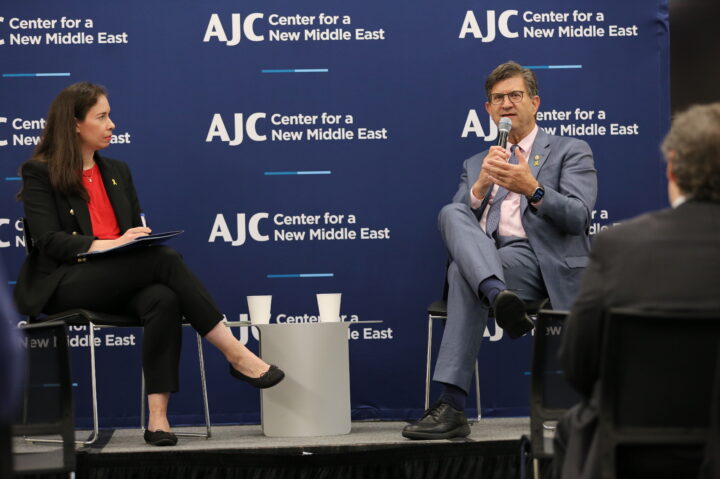
Martin H. Simon/AJC
Rep. Brad Schneider (D-IL) speaks at AJC's Abraham Accords 5th Anniversary Commemoration on Capitol Hill in Washington on Sept. 10, 2025.
Two senior pro-Israel House Democrats, who are co-chairs of the House Abraham Accords Caucus, warned on Wednesday that any moves that would prevent the ultimate establishment of a two-state solution could endanger the survival of the Abraham Accords.
Rep. Brad Schneider (D-IL) said at an American Jewish Committee event in Washington that his concerns about Israeli movements toward annexing the West Bank remain. Israel agreed to put those moves on hold five years ago when it sealed the Abraham Accords with the United Arab Emirates. Schneider said that any attempt at a one-state solution would create a permanent violence and conflict.
“Jump ahead five years, there are still folks in Israel who are again talking about annexation,” Schneider said. “The UAE has made clear that if Israel goes down that path it has the likelihood — not the possibility, but the likelihood — of cleaving the Abraham Accords to such a point that they may not be recoverable.”
At the same time, Schneider said he also opposes moves by European countries to unilaterally recognize a Palestinian state.
“Recognizing a Palestinian state before the elements necessary to be successful as a state — the institutions, having elections, having responsive government, having control of all security under one authority — it’s not there yet,” Schneider said. “To even be talking about recognizing a Palestinian state before other steps have been taken, giving the perception [to Israelis] of rewarding the actions of Hamas on Oct. 7, that creates a dynamic that is also a threat.”
He said that the U.S. should be offering “more robust leadership” to sideline “extremists” and “maximalists” on both sides.
Rep. Debbie Wasserman Schultz (D-FL) similarly said at the AJC event that “we are at a crossroads with the Abraham Accords” and warned that “progress could be squandered by any steps that permanently foreclose a two-state future.”
“We should seize diplomatic opportunities to expand the Abraham Accords and think carefully before taking any actions that would cause setbacks,” she continued.
She noted that a key threat to the Abraham Accords is that acceptance of those agreements has not filtered down from the government into the public in the Arab states that have normalized relations with Israel — which in many places continue to hate Israel and would not mourn the death of the Abraham Accords.
“Making sure that we are fostering those dialogues and being able to have that harmony and those relationships seep deeper down into society will make it easier and take the pressure off of those leaders to issue statements that some of them issued after Oct. 7 that were less than condemnation and that were even worse than that,” Wasserman Schultz said.
The Florida lawmaker also said that the U.S. and its partners should pursue “near-term openings with countries like Mauritania and with Azerbaijan,” countries that already have ties with Israel, to bring them into an “[Abraham] Accords Plus framework,” as well as continue “patient, serious tracks of engagement with Saudi Arabia, Indonesia and Oman.”
Bill Clark/CQ-Roll Call, Inc via Getty Images
Rep. Mike Lawler (R-NY) leaves the House Republicans' caucus meeting at the Capitol Hill Club in Washington on Tuesday, May 23, 2023.
The House Foreign Affairs Committee voted on Tuesday to advance legislation that aims to expedite arms sales to U.S. partners that are members of the Abraham Accords, as well as bills to review the U.S.-South Africa relationship and to combat the proliferation of Western-made parts in Iranian drones.
The arms sales bill comes as part of a broader push by House Republicans to speed up military transfers to U.S. allies. It would cut the congressional review period for sales to Abraham Accords partners that work with the U.S. on countering Iran and its proxies from 30 days to 15, in line with the review period for key U.S. defense partners including NATO members.
The bill, led by Rep. Mike Lawler (R-NY), advanced by a 31-19 vote, with Republican Reps. Scott Perry (R-PA), Tim Burchett (R-TN) and Warren Davidson (R-OH) voting against the bill and Democratic Reps. Ted Lieu (D-CA), Sheila Cherfilus-McCormick (D-FL), Greg Stanton (D-AZ), Jared Moskowitz (D-FL), Jim Costa (D-CA), George Latimer (D-NY) and Brad Schneider (D-IL) supporting it.
Rep. Brian Mast (R-FL), the committee chairman, argued that arms sales to the countries in question, which comprise a significant portion of U.S. military sales globally, suffer from “egregious delays,” prompting U.S. partners to consider buying from other countries, despite the U.S.’ interests in supporting its partners and ensuring their systems are compatible with those of the United States.
“There is a clear recognition that it’s simply not enough for our equipment to be the best,” Mast said. “Those procuring U.S.-origin weapons must also have the confidence that our equipment will be delivered on time in a transparent manner. Streamlining the foreign military sales process is critical if the U.S. is to remain the partner of choice, particularly in the Middle East and North Africa.”
Rep. Greg Meeks (D-NY), the ranking member of the committee, and other Democrats argued that the legislation would create “quid pro quo arrangements or enticements” for countries to join the Abraham Accords and would overlook human rights issues and other malign behavior by some Middle East partners, as well as diminish the role of Congress in the arms sales process.
“I don’t believe it is appropriate to equate long-standing allies like the U.K., like France or Canada, all countries with which the United States has detailed comprehensive defensive agreements, to countries who have thus far had inconsistent and checkered records regarding the use of U.S. weapons and conflicts and protections of sensitive defensive technologies,” Meeks said. “We do provide an expedited timeline to our closest allies because of the presumption of approval. I can’t say that we have a presumption of approval, in this case.”
He also described the legislation as an extension of the Trump administration’s business deals with Middle East nations.
By voice votes, the committee approved two amendments by Schneider, one of which would set a 20-year sunset for the bill. The other makes reference to the U.S.’ goal of expanding the Abraham Accords.
The South Africa legislation would require a review of the bilateral relationship between Washington and Pretoria, given South Africa’s deepening ties with authoritarian U.S. adversaries and its genocide case against Israel at the International Court of Justice. It would require the administration to assess whether to impose sanctions on South African officials for corruption or human rights abuses.
The bill advanced by a 34-16 vote, with Democratic Reps. Brad Sherman (D-CA), Bill Keating (D-MA) and Johnny Olszewski (D-MD) joining Lieu, Moskowitz, Costa, Latimer and all Republicans in supporting it. It advanced through the committee by a similar vote in the previous Congress.
Mast argued that, given South Africa’s increasing alignment with authoritarian regimes and its posture since the Oct. 7, 2023, attacks on Israel, the U.S. needs to “reset the expectations” it has in its relationship with South Africa, but “not sever ties.”
“This bill is not anti-South Africa, it is pro-accountability. For too long, we’ve watched a key partner drift closer to authoritarian regimes,” Mast said, adding that South Africa’s “actions raise serious questions about the ANC’s alignment with the democratic values and U.S. interests.”
Other Republicans, including the bill’s sponsor, Rep. Ronny Jackson (R-TX), said that “South Africa has abandoned America and our allies and increasingly aligned itself with our adversaries,” and is working to undermine U.S. interests and partners, particularly Israel.
Meeks argued that the bill would set the U.S. and South Africa, which are longtime partners, on the wrong path, and that the U.S. should prioritize “diplomacy and dialogue” to address concerns, rather than punitive action.
“I do not believe Congress should further enable or double down on President [Donald] Trump’s misguided approach when we disagree with our partners, including on the continent of Africa. We should handle that responsibly by using diplomacy and presenting convincing arguments,” Meeks said. “Unfortunately, this bill fails to do that, so I strongly oppose this legislation and urge all of us to look for future opportunities to steer United States-South Africa relations in a more productive direction.”
Other Democrats said that the bill would undermine U.S. interests on the African continent and globally.
The committee rejected, along party lines, a series of amendments introduced by Democrats focused on issues including refugee resettlement, refuting claims of white genocide and persecution of white farmers in South Africa, the history of aparthied in South Africa and the results of U.S. AIDS prevention funding to South Africa.
Republicans largely dismissed those amendments as unnecessary or attacks on Trump and his administration’s policies.
An amendment specifying that the Russian invasion of Ukraine was “illegal” — language included in last year’s version of the bill — was approved by a 48-2 vote, with only Rep. Keith Self (R-TX) and Davidson voting no.
The Iranian drone bill, which requires the administration to develop a strategy to prevent Iran from obtaining sensitive American and other Western-made technologies for use in Iran’s attack drones, passed the committee unanimously.
With no long-term ceasefire in Gaza and a strategy of trying to contain and balance Iran’s power in the region, the Saudis are in no rush to normalize relations with Israel, experts told JI

Win McNamee/Getty Images
President Donald Trump and Saudi Crown Prince Mohammed bin Salman interact with officials during a “coffee ceremony” at the Saudi Royal Court on May 13, 2025, in Riyadh, Saudi Arabia.
One of the original drivers of the 2020 Abraham Accords, in which the United Arab Emirates and Bahrain normalized relations with Israel, was Israel’s vocal, public stance against Iran’s nuclear program and regional aggression. That stance also brought Israel and Saudi Arabia closer, a relationship that developed to the point that in the summer of 2023, it seemed like normalization was just around the corner — which officials, including former Secretary of State Tony Blinken, have since confirmed.
By extension, it might make sense for the Abraham Accords and a Saudi-Israel rapprochement to be back in the headlines after Israel took the ultimate stand against Iran’s nuclear program last month, bombing it with assistance from the U.S. President Donald Trump has expressed hope to expand the accords in recent weeks, ahead of and during his meetings with Israeli Prime Minister Benjamin Netanyahu last week.
Yet there has been almost no serious talk about Saudi Arabia joining the Abraham Accords in recent weeks.
Riyadh has also been publicly signaling that its relationship with Tehran is still on track since China brokered a deal between the two countries in 2023. Saudi Arabia, like other Gulf States, spoke out last month against the Israeli and American airstrikes on Iran. Last week, Iranian Foreign Minister Abbas Araghchi met with Saudi Crown Prince Mohammed bin Salman in Jeddah.
With no long-term ceasefire in Gaza and a strategy of trying to contain and balance Iran’s power in the region, the Saudis are in no rush to normalize relations with Israel, experts told Jewish Insider.
Bernard Haykel, a professor of Near Eastern Studies at Princeton University, told JI that the Saudis’ statements came out of a fear that “if Iran is attacked by Israel and the U.S., the Iranians would retaliate against them … The public statements are all basically defending Iran’s right as a sovereign state to get the Iranians not to see them as an ally or a proxy of America and Israel.”
But, “in fact, they are allies of America,” he added.
“There’s all this public condemnation of the attacks on Iran,” Haykel said, “but when the U.S. pulled its forces from the Air Force base in Qatar [due to Iran’s retaliation], they moved their planes to a Saudi base. So they condemned the U.S. for attacking Iran, but they also gave the U.S. protection.”
In addition, he noted, Saudi Arabia is in CENTCOM, as is Israel, such that if any Iranian drones or missiles were detected over Saudi territory, the information would be relayed to Washington and Jerusalem. “It is a fact that [the Saudis] are part of a security architecture that protects Israel as much as it protects them.”
Haykel said there is a sense of relief in Riyadh from how the 12-day Israel-Iran war played out, but Saudi officials are still concerned about Iran’s remaining ballistic and cruise missiles: “[Iran is] very close and can swarm Saudi Arabia. Unlike Israel, the Saudis don’t have an Iron Dome. They’re much more vulnerable.”
The meeting between bin Salman and Araghchi is “part of the strategy to protect themselves from an Iranian attack,” Haykel added.
Hussein Aboubakr Mansour, a senior fellow at the Jerusalem Center for Security and Foreign Affairs and a researcher at the Institute for the Study of Global Antisemitism and Policy, told JI that “the Gulf states are immediate neighbors of Iran and will always have to live with them.”
“Iran will always be a problem for them no matter who is in power. It is a huge, advanced state, and they are these tiny Gulf states. They can’t stop Iran’s ambition and wish for hegemony,” he said.
Aboubakr Mansour argued that the Saudis have an interest in keeping the current Iranian regime in place, because a more liberal Iranian regime may turn itself into Washington’s favored Middle Eastern power, as it was in the 1960s and ‘70s, threatening the close relationship Riyadh has with the Trump administration.
“They have an interest in Iran remaining the pariah that it is,” he said.
Haykel said that the Saudis “are not going to shed tears for Iran, regardless of their public statements.”
“They sound like they’re anti-Israel, but in actual fact, the Israeli military capability that has been on display vis-a-vis Iran, the attack on the Iranian nuclear facilities and the Israeli capability to defend itself from Iranian attacks are all things the Saudis want,” he added. “They want an Iran chastened, that doesn’t use non-state actors and doesn’t have a nuclear program. They want a contained Iran.”
Saudi Arabia’s strategy has been “trying to get Iran to behave more responsibly,” rather than as a “hugely destabilizing factor in the region through its proxies,” Haykel said. That was also the motivation behind the 2023 China-mediated detente between Saudi Arabia and Iran, he explained.
Aboubakr Mansour said that balancing the other major powers in the Middle East — Iran, Israel and Turkey — is a priority for Riyadh.
A decade ago, “standing up to Iran was one of the main attractions of Israel [for the Saudis], that was true then,” Aboubakr Mansour said. “Now there’s a main factor they need to calculate, that the U.S. is not reliable and maybe it isn’t going to be again … [The Saudis] had four good years with Trump and the Abraham Accords, and then the Biden administration [and the Saudis] couldn’t stand each other.”
In addition, he said that the Gulf states “have a complete lack of hard power compared to Israel, Iran and Turkey,” and bin Salman has big ambitions for his country and its economy.
“All of these elements together lead them to calculate their national interests and strategy in a way that gives them maximum leverage over everyone all the time,” he said. “It’s about balancing everyone against everyone else … The Saudis’ ambition is huge and they can’t allow the Iranians, Turks or Israelis to become a hegemonic force in the region.”
As such, Aboubakr Mansour posited that “the Saudis are in a place where they want to see neither the Israelis nor the Iranians win. [The Saudis] want them to put each other in check, which will give [the Saudis] more leverage.”
As for what the means for Saudi-Israel normalization, Aboubakr Mansour argued that “the Saudis are comfortable playing the normalization game for as long as they can … because they can gain more from their current position than actually normalizing.”
Normalization talk gives the Saudis positive attention from the media, attracts investment and makes them look better in Washington, but “it’s a good show. There’s no reality to it,” Aboubakr Mansour said.
“They cooperate with the Israelis — they have a new class of statesmen who are [Millenials], they are not interested in the ‘resistance’ and see the positive in Israel — but interests dictate everything. They will play the game as long as they can extract more leverage from it … Normalizing with Israel doesn’t have the incentives for the Saudis that it did five years ago,” he said.
Haykel similarly said that “the Saudis are very good at temporizing, kicking the can down the road until they feel the time is right,” he added.
The Saudis “have their own constraints — domestic, regional and the Islamic public – that they have to keep in mind,” Haykel said. “They are insisting first and foremost on a ceasefire … They seem to be talking less about irreversible steps towards Palestinian statehood, but I think it is still a condition for normalization.”
Still, he said, “Palestinian statehood is seen in Israel as rewarding terrorism and not something the Israeli public is willing to entertain at the moment, and the Saudis know this well.”
Because of that, the Saudis have been “pushing for more cosmetic things … [such as] working with France to get as many states as possible to recognize a Palestinian state through the U.N.”
According to Haykel, the Saudis want to be able to say that a solution for Palestinian self-determination has been found, without making specific demands of what that means, whether the Palestinians would have an army or not, or if they would have full or partial sovereignty.
In that regard, not much has changed since Oct. 7, 2023, in that the Saudi leadership “never had much respect for the Palestinian Authority, with a few exceptions,” and as such, Riyadh does not want to be saddled with the bill for Gaza’s reconstruction because they do not think the PA is up to the task, Haykel said.
“They want some kind of face-saving solution with the ceasefire being a precondition,” he said. “They’re waiting for President Trump to put pressure on Netanyahu to reach a ceasefire and then make gestures toward the Palestinians.”
At the same time, Haykel warned that there is some talk in Riyadh of pushing for a U.N. Security Council resolution that would enshrine a right for the Palestinians to have sovereignty over the West Bank and to have a capital in east Jerusalem. The idea, he said, came from former PA Prime Minister Salam Fayyad.
“They would like the U.S. to push for this regardless of what Israel says or thinks or does,” he added, “but they have not moved to do this yet.”
Meanwhile, the only recent public movement toward Israeli-Saudi normalization was the appearance last week of Saudi journalist Abdulaziz Alkhamis in the Knesset for a meeting of the Caucus to Advance a Regional Security Arrangement.
Alkhamis said that the Oct. 7 terrorist attacks and subsequent war, along with the Israeli strikes on Iran, are a sign that the region’s “tectonic plates” are moving, and that Israel exposed Iran’s strategic limitations. However, he emphasized that “normalization, from a Saudi point of view, is not just a bilateral agreement. It is a regional alignment and must include a credible, irreversible path to Palestinian sovereignty.”
Former Israeli Defense Minister Benny Gantz said in the caucus meeting that “there is too much weight given to the Palestinian matter and it is being turned into [an excuse] to stay in place. We must be daring and make advances — we must, but we should also demand this courage from neighboring countries that want to advance normalization.”
Rep. Lawler: ‘I am committed to strengthening our relationships with regional partners and putting our ally Israel in the best position possible to do the same’

Kevin Carter/Getty Images
The U.S. Capitol Building is seen at sunset on May 31, 2025 in Washington, DC.
Rep. Mike Lawler (R-NY) introduced bipartisan legislation on Thursday that would expedite arms sales to U.S. partners that normalize relations with Israel and work with the U.S. in its efforts to counter Iran and its terrorist proxies.
The Abraham Accords Defense Against Terror Act would “narrow the timeline for congressional consideration after arms sales are accepted, while maintaining existing eligibility criteria for arms sales themselves,” according to a press release on the bill. The legislation would provide “the same preferential treatment that our NATO allies receive” to eligible countries.
Reps. Jared Moskowitz (D-FL), Ryan Zinke (R-MT), Don Davis (D-NC), Bryan Steil (R-WI), Don Bacon (R-NE), Michael Baumgartner (R-WA), Buddy Carter (R-GA), Jeff Crank (R-CO), Chuck Edwards (R-NC), Brian Fitzpatrick (R-PA), Brad Finstad (R-MN), Chuck Fleischmann (R-TN), Andrew Garbarino (R-NY), Josh Gottheimer (D-NJ), Abe Hamadeh (R-AZ), Dave Kustoff (R-TN), Anna Paulina Luna (R-FL), Michael McCaul (R-TX), Mark Messmer (R-IN), Zach Nunn (R-IA), John Rose (R-TN), Maria Salazar (R-FL), Pete Stauber (R-MN), Elise Stefanik (R-NY) and Joe Wilson (R-SC) signed on to the bill as co-sponsors.
“This legislation will … [provide] greater benefits to our Abraham Accords and counterterrorism partners. It represents a key step toward implementation of the Abraham Accords and turning shared diplomatic commitments into real-world cooperation. Lastly, it sends a strong message to adversaries: the United States and its allies will not allow Iran’s proxies to destabilize the region unchecked,” Lawler, who chairs the House Foreign Affairs subcommittee on the Middle East and North Africa, said in a statement.
He continued, “I am committed to strengthening our relationships with regional partners and putting our ally Israel in the best position possible to do the same. There is no question that fostering deeper security relationships is key here.”
“The Abraham Accords have been a historic model for peace between Israel and its neighbors, and we should be doing everything we can to expand it and bring more states into the fold,” Moskowitz said.
“This common-sense bill builds on the progress of the Abraham Accords to incentivize others to normalize relations with Israel and cooperate against the threat of Iran and Iranian proxies, safeguarding our ally Israel’s very right to exist in the process,” he added.
Efforts to expedite arms sales to U.S. partners has been a long-term priority for lawmakers and administrations on a bipartisan basis, and the House currently has a dedicated task force on overhauling the military sales process.
“There are too many bureaucratic barriers that prevent us from assisting our closest allies in global security,” Zinke, who chairs that task force, said in a statement. “This bill strengthens the ties forged by the Abraham Accords by ensuring our partners have expedited access to the tools they need to stand against Iran and its terrorist proxies. Israel is one of our closest and most vital allies, and peace through strength is the only way to secure the region and protect American interests.”
A senator in attendance told JI that Netanyahu took a different tone discussing negotiations with Hamas: ‘It sure felt like he'd been told by Trump to get to a ceasefire’
Tom Williams/CQ Roll Call via AP Images
Israeli Prime Minister Benjamin Netanyahu, center, is seen during photo op before a bipartisan meeting with senators in the U.S. Capitol on Wednesday, July 9, 2025. Also appearing are, from left, Sen. Bill Cassidy, R-La., Senate Majority Leader John Thune, R-S.D., Sen. Jim Risch, R-Idaho, and Senate Minority Leader Charles Schumer, D-N.Y.
Israeli Prime Minister Benjamin Netanyahu gathered with Senate leaders on Capitol Hill on Wednesday to discuss the ongoing efforts to reach a ceasefire in Gaza and expand the Abraham Accords.
Among those in attendance at the meeting, which was rescheduled from Tuesday, were Senate Majority Leader John Thune (R-SD), Senate Minority Leader Chuck Schumer (D-NY), Sens. Jim Risch (R-ID), Ted Cruz (R-TX), Steve Daines (R-MT), Bill Cassidy (R-LA), Chris Coons (D-DE), Jacky Rosen (D-NV), Maria Cantwell (D-WA), Amy Klobuchar (D-MN), Cory Booker (D-NJ) and Adam Schiff (D-CA).
The prime minister was joined by Israeli Ambassador to the U.S. Yechiel Leiter, Israeli Strategic Affairs Minister Ron Dermer and advisor Caroline Glick.
Netanyahu projected unity with President Donald Trump in comments to reporters just before the meeting, dismissing media reports “about the great tension between us, about the great disagreements between us” in the lead-up to Israel launching its attack on Iran’s nuclear facilities and on the ongoing ceasefire and hostage-release talks with Hamas, which Trump has been eager to finalize.
“President Trump and I have a common goal. We want to achieve the release of our hostages. We want to end Hamas rule in Gaza. We want to make sure that Gaza does not pose a threat to Israel anymore. In pursuing this common goal, we have a common strategy. Not only do we have a common strategy, we have common tactics. This doesn’t involve pressure, doesn’t involve coercion, it involves full coordination,” Netanyahu said.
“President Trump wants a deal, but not at any price. I want a deal, but not at any price. Israel has security requirements and other requirements, and we’re working together to try to achieve them. Everything else that you hear and are being briefed on is folly,” Netanyahu continued.
Behind closed doors, Netanyahu spoke for around 30 to 40 minutes about the rationale for Israel’s actions in Iran and Gaza and his vision for the Middle East, including the normalization of ties with Saudi Arabia and Syria through an expanded Abraham Accords, before taking questions from the group, two senators in attendance told Jewish Insider on condition of anonymity.
On Gaza, Netanyahu said that he and the U.S. were trying to reach a ceasefire deal with Hamas and did not suggest he had any opposition to the push, something one of the senators described as a shift in tone for the Israeli prime minister.
The senator noted that Netanyahu was “very clear [that] we are actively negotiating towards a ceasefire without the usual, predictable litany of reasons why we can’t [agree to a deal]. It sure felt like he’d been told by Trump to get to a ceasefire. It felt that way.”
Netanyahu also addressed criticisms of how Israel has handled the distribution of humanitarian aid in Gaza by pointing to Hamas’ seizure of relief packages and criticizing what he called the “humanitarian aid industrial complex,” according to the senators.
“Netanyahu said that one of the sticking points with Hamas is that they want to control the distribution of food. That’s how they make their money and get their recruits, and so they don’t want them to have control of the distribution of food,” one senator said.
“He told us, ‘We don’t want anyone to starve. We’re going to be delivering more humanitarian aid. We recognize people here are critical of how we’ve delivered humanitarian aid.’ But it was all wrapped in Hamas stealing everything we send in,” the other senator quoted Netanyahu as saying, adding that Dermer also answered several questions on the subject.
On the issue of Saudi normalization, Netanyahu outlined a plan for new energy cooperation through the region.
“He said if there was not the destabilization of Iran, without their proxies in Gaza, Syria and Lebanon, then the Saudis could run a pipeline through the desert, through Israel, to the Mediterranean,” one senator told JI. “So instead of having to go through the Suez Canal, you could just take it straight to the Mediterranean. Think about what that would do to international energy security and even to energy prices.”
Other topics touched upon were ways to address the threats from the Houthis and Hezbollah, as well as the best approach to Iraq.
Publicly, lawmakers said little about the sit-down. Thune called it “good,” while Schumer said that “there were a lot of comments back and forth,” declining to comment further.
Schiff said the meeting was “fine” and “informative.” He said he hadn’t had a chance to ask questions because the meeting was cut short by a Senate vote. “We covered the waterfront of issues.”
Sen. John Fetterman (D-PA) met privately with the Israeli leader on Tuesday.
“My meeting with Netanyahu was a great opportunity to discuss and congratulate Israel’s total domination over Iran and its proxies,” Fetterman told JI. “I expressed my admiration for the sacrifices of the IDF, my support for bringing the hostages home and my hope for the possibility of true peace in the region.”
Earlier Wednesday, Netanyahu met off Capitol Hill with Sens. Lindsey Graham (R-SC), Tom Cotton (R-AR) and Richard Blumenthal (D-CT).
“We discussed the importance of keeping the Iranian regime in a weakened state until they change their behavior toward Israel and the region, and toward the United States,” Graham said on X. ”We also talked about the mutual desire to continue to integrate the region politically and economically, moving toward the light away from the darkness. I completely support Israel’s position that Hamas must be removed from Gaza as part of any peace agreement and that Iran should recognize Israel’s right to exist as a prerequisite to any peace negotiations.”
Graham said that Netanyahu had also celebrated Graham’s birthday — his 70th — with cake and a rendition of “Happy Birthday.”
A new report by Israel Hayom says the two leaders also agreed that the U.S. would recognize Israeli sovereignty in parts of the West Bank and Israel would voice support for a two-state solution

SAUL LOEB/AFP via Getty Images
President Donald Trump with Israeli Prime Minister Benjamin Netanyahu during the signing of the Abraham Accords.
President Donald Trump and Israeli Prime Minister Benjamin Netanyahu agreed to terms to end the war in Gaza and advance other shared interests in a telephone call held shortly after the U.S. struck nuclear sites in Iran earlier this week, according to a new report by Israel Hayom.
A source familiar with the conversation told the right-leaning Israeli daily that Trump and Netanyahu were joined on the call by Secretary of State Marco Rubio and Israeli Minister of Strategic Affairs Ron Dermer, where the four determined that Israel would end the war in Gaza within two weeks.
This process would include the exiling of what remains of Hamas’ leadership from Gaza, voluntary emigration for Gazans who elect to leave the territory — though which countries would host them was not specified in the report — and the release of the 50 hostages remaining in Gaza, less than half of whom are thought to be alive.
Under the terms of the agreement, the UAE and Egypt, along with two other Arab countries, would jointly govern the Gaza Strip after Hamas’ removal.
In addition, the Abraham Accords would be expanded to include Syria and Saudi Arabia, as well as additional Arab and Muslim states.
The plan would also see U.S. recognition of “limited” Israeli sovereignty in the West Bank, while Israel would express support for a future two-state solution premised on reforms within the Palestinian Authority.
Shortly after the publication of the Israel Hayom report, Netanyahu released a statement saying, “We fought valiantly against Iran — and achieved a great victory. This victory opens up an opportunity for a dramatic expansion of the peace agreements. We are working hard on this.”
“Along with the release of our hostages and the defeat of Hamas, there is a window of opportunity here that must not be missed,” Netanyahu added. “Not even a single day must be wasted.”
The following morning, however, Netanyahu’s office released a new statement saying, “The conversation described in the ‘Israel Today’ report did not happen. The diplomatic proposal described in the article was not presented to Israel and Israel obviously did not agree to it.”
The feasibility of this plan remains in question. The Israeli government has been firm in its opposition to a two-state solution and public opposition to a Palestinian state grew after the Oct. 7, 2023, Hamas terror attacks. In April, as French President Emmanuel Macron moved to recognize a Palestinian state, Netanyahu “expressed fierce opposition” to the move in a phone call with Macron and conveyed to him that “a Palestinian state established a few minutes away from Israeli cities would become an Iranian stronghold of terrorism; that the vast majority of the Israeli public opposes that categorically — and that this has been the PM’s consistent and longstanding policy,” according to a readout from the Prime Minister’s Office.
Even the potential acceptance of a future Palestinian state could put Netanyahu’s governing coalition at risk, with not only the parties led by Finance Minister Bezalel Smotrich, National Security Minister Itamar Ben-Gvir and Foreign Minister Gideon Sa’ar adamantly opposing one, but most Likud lawmakers, as well.
U.S. lawmakers told Jewish Insider last week after a trip to the region that the normalization process between Saudi Arabia and Israel had been dealt setbacks by and since Oct. 7 and that the Saudis were demanding concrete progress toward a two-state solution before moving forward with normalization.
Egypt and Saudi Arabia in March condemned moves by the Israeli government to encourage migration from Gaza. The Arab League, meeting earlier that month, also adopted a plan for Gaza’s reconstruction put forward by Egypt where a committee of Gazan professionals would manage the Strip for a period of time until the Palestinian Authority would take over its governance.
JI’s Tamara Zieve contributed to this report.
Plus, Persian Jews on what’s happening in Iran
Andrew Harnik/Getty Images
U.S. President Donald Trump speaks during a swearing in ceremony for interim U.S. Attorney for Washington, D.C. Jeanine Pirro in the Oval Office of the White House on May 28, 2025 in Washington, DC.
Good Monday morning.
In today’s Daily Kickoff, we report on the latest developments in Israel’s war with Iran and cover reactions on the Hill to Israel’s preemptive strikes on the Islamic Republic’s nuclear facilities. We talk to foreign policy experts about how the military action might impact diplomacy efforts, and interview Persian Jews in the U.S. about their response to the war. Also in today’s Daily Kickoff: Anne Wojcicki, Leonard Lauder and Tracy-Ann Oberman
What We’re Watching
- We’re continuing to follow and report on the ongoing military conflict between Israel and Iran. Sign up for email alerts and WhatsApp updates to stay up to date with the latest news.
- A bipartisan group of lawmakers led by Rep. Brad Schneider (D-IL) is in the Middle East this week for an Abraham Accords-focused trip that is slated to include stops in Saudi Arabia, Bahrain, the United Arab Emirates and Israel. Read more here.
- President Donald Trump is in Alberta, Canada, today, where he will meet with world leaders at a G7 summit. We expect the president to address questions about potential U.S. involvement in the Israel-Iran conflict.
- A France-led conference on Palestinian statehood and the two-state solution, slated to take place this week, was postponed following Israel’s strikes on Iran late last week. Read more here.
What You Should Know
A QUICK WORD WITH ji’s MELISSA WEISS
Israeli Prime Minister Benjamin Netanyahu has staked everything — his legacy, his global standing, his relationships with world powers — on defending Israel against the threat of a nuclear-armed Iran.
The topic has dominated nearly every major address the prime minister has given, from U.N. General Assembly speeches to addresses to Congress, for the last 15 years. And over the last four days, Israel has been forced to put into action a plan that was years in the making — one that could profoundly reshape the Middle East in the days and months to come.
The writer Douglas Murray forecasted exactly this situation 13 years ago, speaking at the Cambridge Union: “When Israel is pushed to the situation it will be pushed to of having to believe [Iran] mean[s] it, and when every bit of jiggery pokery behind the scenes runs out, and when the U.N. and distinguished figures have run out of time, and Iran is about to produce its first bomb,” Murray said at the time, “Israel will strike.”
Israel’s Friday morning strikes came as the Trump administration’s announced 60-day deadline for negotiations expired, and following intelligence reports indicating that Iran was weeks away from nuclear capabilities — as Murray predicted.
What has ensued is the deadliest and most destructive direct conflict between Israel and Iran in history.
war with iran

Eight Israelis were killed by Iranian missile strikes in five locations that occurred Sunday night and early Monday morning. In the central Israeli city of Petach Tikva, five people were killed in a residential building, and in adjacent Bnei Brak, an 80-year-old man was found dead at the site of a missile strike. Two of the people killed in Petach Tikva were inside their safe room, which was directly hit by a missile. Petach Tikva Mayor Rami Grinberg said that the residence was struck by a ballistic missile carrying hundreds of kilograms of explosives, Jewish Insider’s Lahav Harkov reports.
Additional hits: Tel Aviv sustained two direct missile strikes, one of which lightly damaged the U.S. Embassy Branch Office. U.S. Ambassador to Israel Mike Huckabee clarified that “the minor damage to the property were from the shock waves … from the nearby blast … No injuries, thank God!” Among the residents evacuated from buildings in Tel Aviv was a 6-day-old baby, whose mother was found alive minutes later. In Haifa, three people were found dead under the rubble of a burning building where a missile hit, and about 300 people were evacuated. The Israel Electric Corporation said that the strike damaged its power grid, and that “teams are working on the ground to neutralize safety hazards, in particular the risk of electrocution ” Maritime risk assessment company Ambrey reported a fire at the Haifa Port.
TUCKER’S TIRADE

Talk show host Tucker Carlson broke with President Donald Trump on Iran on Friday, writing in a scathing commentary in his daily newsletter that the United States should “drop Israel” and “let them fight their own wars.” Carlson wrote of Israel’s preemptive strike on Iran’s nuclear facilities, “If Israel wants to wage this war, it has every right to do so. It is a sovereign country, and it can do as it pleases. But not with America’s backing.” Trump, for his part, has endorsed Israel’s attacks, which he called “very successful,” and underscored in an interview with Fox News on Thursday night that the U.S. would defend Israel if Iran retaliates. He also warned that the situation “will only get worse” if Iran does not agree to a nuclear deal “before there is nothing left,” Jewish Insider’s Matthew Kassel reports.
Tucker talk: In recent days, Carlson has argued that fears of Iran obtaining a nuclear weapon in the near future are unfounded and said that a war with the Islamic Republic would not only result in “thousands” of American casualties in the Middle East but “amount to a profound betrayal of” Trump’s base and effectively “end his presidency.” Carlson reiterated that claim in his newsletter, accusing Trump of “being complicit in the act of war” through “years of funding and sending weapons to Israel.”
Trump hits back: Trump defended his “America First” worldview as in line with his support for Israel’s strikes, telling The Atlantic in regards to his critics: “Well, considering that I’m the one that developed ‘America First,’ and considering that the term wasn’t used until I came along, I think I’m the one that decides that. For those people who say they want peace — you can’t have peace if Iran has a nuclear weapon.”
Envoy response: U.S. Ambassador to Israel Mike Huckabee noted on X that “700,000 AMERICANS live in Israel. That is equivalent to a full House District. More Americans here than in any other country except Mexico! Iran isn’t just attacking Israel but your fellow Americans who live here.”
hope prevails

As grainy videos of Israel’s strikes on Iran spread in WhatsApp groups and Telegram channels used by the Iranian diaspora, Persian Jews in the U.S. are viewing this moment with a mix of trepidation and excitement — the first time in decades, some say, that the Iranian regime truly appears vulnerable. That has prompted cautious optimism about a future in which Iranians might live free from the oppression of the Ayatollah, several activists in the Persian Jewish community told Jewish Insider’s Gabby Deutch on Friday, and where they might be able to bring their children to visit their native land. But the escalation has also brought fear about what comes next, and that even an Israeli military success might not effect change on the ground for Iranians.
Mixed emotions: Sharon Nazarian, a philanthropist and Jewish communal leader in Los Angeles who left Tehran with her family in 1978, said she has felt “two striking, opposing feelings” since Israel’s attacks began. “One of utter hope and the possibility that maybe one day we can go back to our country of birth to bring our children,” Nazarian said. “We are [also] very fearful that this regime, although it’s at its weakest point it’s been since 1979, it will survive, and it will, yet again, find a mechanism both to manipulate and to force its way into maintaining the stranglehold it has on the Iranian people and the country of Iran.”
ON THE HILL
Israel’s strikes on Iranian military and nuclear targets are prompting fractured responses from Senate Democrats, with a few offering full support for Israel and others forcefully condemning the strikes, while some have sought to carve out a path somewhere in the middle, Jewish Insider’s Marc Rod reports.
What they’re saying: “The Iranian regime and its proxies have been very public about their commitment to the destruction of Israel and Jewish communities around the world. We should take them at their word,” Sen. Jacky Rosen (D-NV) said. “Israel acted in self-defense against an attack from Iran, and the U.S. must continue to stand with Israel, as it has for decades, at this dangerous moment.” Sen. Jeanne Shaheen (D-NH), the ranking member of the Senate Foreign Relations Committee, said that the strikes are “an escalation that is deeply concerning and will inevitably invite counterattacks.” She added that they endanger nuclear talks and U.S. servicemembers. Read the full story here with additional comments from Chris Murphy (D-CT), Mark Warner (D-VA) and Chris Coons (D-DE).
Schumer’s support: Senate Minority Leader Chuck Schumer (D-NY) stood strongly behind Israel in his first public comments on its strikes on Iran and its nuclear program on Friday afternoon — a response that was notably more forceful in its support for Israel than those of many prominent members of the Senate Democratic Caucus, JI’s Marc Rod reports.
Straight talk: Sen. John Fetterman (D-PA) criticized his Democratic colleagues in Congress who have spoken out against Israel’s attack on Iran, telling JI’s Emily Jacobs it was “astonishing” to see members of his party treat Israel’s actions as escalatory.
Republican voice: Sen. Lindsey Graham (R-SC) told JI’s Emily Jacobs that he’s urging U.S. support for Israel’s campaign to destroy Iran’s nuclear program as a means of “substantially undoing the damage caused by the disastrous Afghanistan withdrawal” during the Biden administration.
Pressure push: A bipartisan group of nine House members wrote to the Trump administration on Friday emphasizing — as the administration continues to push for a nuclear deal — that U.S. negotiators must not allow Iran to maintain any nuclear enrichment capacity if a deal is reached, JI’s Marc Rod reports.
OUT IN LEFT FIELD

Minnesota Gov. Tim Walz, criticizing Israel’s strikes on Iran and the Trump administration’s global posture, suggested on Friday that China might be better positioned than the United States to broker peace in the Middle East, Jewish Insider’s Marc Rod reports.
China First: “Who is the voice in the world that can negotiate some type of agreement in this, who holds the moral authority? Who holds the ability to do that? Because we are not seen as a neutral actor, and maybe we never were, I don’t want to tell anybody that … but I think there was at least an attempt to be somewhat of an arbitrator in this,” Walz said at a Center for American Progress event. “Consistently, over and over again, we’re going to have to face the reality, it might be the Chinese and that goes against everything [the Trump administration] say they’re trying to do in terms of the balance of power.”
BARUCH DAYAN EMET

Leonard Lauder, arts patron and billionaire heir of Estée Lauder Companies, died on Saturday at 92. Remembered as an innovative thinker and a connoisseur of the arts, Lauder was born in 1933 to Joseph Lauter and Josephine Esther Mentzer, the founders of the Estée Lauder Companies cosmetic firm, eJewishPhilanthropy’s Nira Dayanim reports.
A giant in philanthropy: The descendant of Jewish immigrants to New York, the first-born Lauder grew up alongside the budding business. He earned his bachelor’s degree from University of Pennsylvania and served in the U.S. Navy before eventually joining Estée Lauder Companies in 1958. Alongside his parents, he helped scale the company from making under $1 million in sales annually to a multibillion-dollar prestige brand. Lauder went on to become a giant in American philanthropy — gifting over $2 billion throughout his lifetime — particularly focused on science, education and the arts. As an influential art collector and patron, in 2013, Lauder famously gifted over $1 billion in Cubist paintings to the Metropolitan Museum of Art — one of the most significant gifts in the museum’s history, according to The New York Times. In 2008, Lauder, a longtime chairman and chairman emeritus of the Whitney Museum of American Art, donated $131 million to support the museum’s endowment.
Read the full story here and sign up for eJewshPhilanthropy’s Your Daily Phil newsletter here.
Worthy Reads
What’s at Stake In Iran: In Politico, Axel Springer CEO Mathias Döpfner pens an op-ed titled “Iran’s Target Isn’t Just Israel. It’s Us,” in which he warns that Iran, alongside China and Russia, has global ambitions that extend beyond its war with Israel. “It is therefore surprising that Israel is not being celebrated worldwide for its historic, extremely precise and necessary strike against Iranian nuclear weapons facilities and for the targeted killing of leading terrorists, but that the public response is dominated by anti-Israel propaganda. The intelligence and precision of Israel’s actions are not admired but are instead used here and there to perpetuate blatantly antisemitic stereotypes. This attitude is characterized not only by racist undertones, but also by a strange self-forgetfulness.” [Politico]
Oldest Hate, Renewed: The New York Times editorial board warns against the country’s “worst surge of anti-Jewish hate in many decades,” citing agitators on both the left and right that have stoked tensions. “Americans should be able to recognize the nuanced nature of many political debates while also recognizing that antisemitism has become an urgent problem. It is a different problem — and in many ways, a narrower one — than racism. Antisemitism has not produced shocking gaps in income, wealth and life expectancy in today’s America. Yet the new antisemitism has left Jewish Americans at a greater risk of being victimized by a hate crime than any other group. Many Jews live with fears that they never expected to experience in this country.” [NYTimes]
Iran on the Ropes: In The Wall Street Journal, former National Security Advisor John Bolton considers how Israel, the U.S. and Arab allies could potentially deal a death knell to the Iranian regime. “Despite outward appearances of solid authoritarianism, the regime in Tehran faces widening discontent. The opposition extends across Iran, in the smaller cities and countryside, far beyond Tehran, where the few Western journalists congregate. Iran’s economy has been parlous for decades, and Israeli strikes on oil refineries may weaken it further. Citizen protests in 2018-19 provoked heightened nationwide repression. International antiproliferation and antiterrorism sanctions caused part of the distress, but the fundamental lesson is plain: Never trust your economy to medieval religious fanatics.” [WSJ]
The Rising Lion Inside Iran: In The Free Press, Masih Alinejad reacts to Israel’s military campaign against Iran, which has conducted numerous attempts in recent years to kill or kidnap the Iranian dissident and writer. “Now, the world faces a choice. It can focus solely on missiles and maps, treating this as another geopolitical chess move. Or it can recognize the human story unfolding beneath the surface, the story of a nation rising from the shadow of its captors. The story of a rising lion. Israel’s strike may have taken out top military figures. But the real victory is still ahead: the day the Islamic Republic falls under the weight of its own crimes and the strength of the people it has tried so hard to suffocate and silence.” [FreePress]
What else we’re reading: “Israel Had the Courage to Do What Needed to Be Done” by The New York Times’ Bret Stephens… “Israel’s Nuclear Good Deed Against Iran” by The Wall Street Journal editorial board… “Bombs Rain Down — and a Divided Israel Unites Behind the War” by The Free Press’ Matti Friedman… “We’re witnessing a historic test of two assumptions about Israel” by Natan Sharansky in The Washington Post… “Zionism Has Been Vindicated” by Commentary’s John Podhoretz…
Word on the Street
Israeli Prime Minister Benjamin Netanyahu gave his first interview since Israel began its operation in Iran on Fox News’ “Special Report” with Bret Baier on Sunday. He confirmed Iran had actively tried to assassinate President Donald Trump, calling Trump Iran’s “enemy No. 1,” and said Israel had shared intelligence with the U.S. that Iran was working to weaponize its enriched uranium: “They would achieve a test device and possibly an initial device within months, and certainly less than a year. That was the intel we shared with the United States”…
U.S. officials told Reutersthat Trump vetoed an Israeli plan to kill Iranian Supreme Leader Ayatollah Ali Khamenei; Israeli National Security Advisor Tzachi Hanegbi denied the reports outright, calling it “fake news of the highest order”…
Israel’s leadership is concerned that international pressure may force the IDF to stop striking Iran before its mission is complete, an Israeli security source told Jewish Insider’s Lahav Harkov on Sunday…
Jewish Insider spoke to Jason Brodsky, the policy director for United Against Nuclear Iran; Daniel Shapiro, a deputy assistant secretary of defense in the Biden administration, U.S. ambassador to Israel in the Obama administration and senior fellow at the Atlantic Council; and former Kamala Harris Middle East advisors Phil Gordon and Ilan Goldenberg about their views on Israel’s military strikes against Iran…
International Atomic Energy Agency head Rafael Grossi said on Monday that no additional damage had been done to the Natanz or Fordow nuclear enrichment sites in Iran since Israel’s initial strikes on Friday…
Police in Minnesota arrested the man alleged to have shot two state lawmakers last week, killing one of them as well as her husband…
The Christian Science Monitor interviews Illinois Gov. JB Pritzker, formerly the chair of the board of trustees of the Illinois Holocaust Museum, about rising antisemitism and his personal connection to Judaism as he emerges as one of the most vocal public figures opposing the Trump administration…
The U.S. Agency for Global Media instructed employees of Voice of America’s Persian-language service, who had been placed on administrative leave amid the Trump administration’s degradation of the agency, to return to their positions to provide programming to counter Iranian state-run media…
Pennsylvania state Rep. Malcolm Kenyatta was reelected as a Democratic National Committee vice chair after the DNC revoked the results of an earlier election in which Kenyatta and activist David Hogg had been elected; Hogg, who opted not to run again, had riled DNC officials with his super PAC’s plans to back challengers to sitting Democrats, prompting calls for a new election based on concerns over the demographics of the newly elected leadership…
New York City Mayor Eric Adams c0-hosted a livestream with Sneako, a far-right internet personality who has a history of making offensive and antisemitic comments; last spring, the livestreamer said “Down with the yahud [Jews]” and had previously appeared on livestreams with white nationalist Nick Fuentes and Ye…
Police in Brookline, Mass., are investigating after a brick painted with “Free Palestine” was thrown through the window of a kosher grocery store in the city…
Anne Wojcicki’s nonprofit TTAM Research Institute won a bid to purchase 23andMe, which Wojcicki had co-founded and led until earlier this year, when the company filed for Chapter 11 bankruptcy and Wojcicki tendered her resignation…
The Wall Street Journal spotlights Simon Property Group CEO David Simon, the country’s largest mall operator, who is continuing to work as he battles pancreatic cancer…
Former Hillary Clinton political aide Huma Abedin and Alex Soros were married at Soros’ Water Mill, N.Y., estate on Saturday…
Two French teenagers convicted of raping a Jewish girl in 2024 were sentenced to seven and nine years in prison; a third teenager, who was 12 at the time of the assault, was sentenced to five years in foster care due to his age…
Israeli officials confirmed that the IDF had recovered the body of hostage Aviv Atzili from Khan Younis, Gaza, last week; Atzili, a resident of Kibbutz Nir Oz, was killed battling terrorists who had overrun the kibbutz and his body taken to Gaza…
The Wall Street Journal looks at how the Mossad smuggled drone parts into Iran for use in its preemptive attack on Iranian military and nuclear sites last week…
Elon Musk said he activated his Starlink internet service in Iran after the government cut off civilian internet access across the country…
A former senior Syrian general told U.S. investigators in Beirut that American journalist Austin Tice, who disappeared in Syria in 2012, was dead, and provided a possible location of Tice’s body…
Saudi Arabia executed a journalist who had been convicted of treason for his alleged running of a social media account that accused members of the Saudi royal family of corruption…
“Eastenders” actress Tracy-Ann Oberman was awarded an MBE for her services to Holocaust education and combating antisemitism in the U.K….
Stage and film actor Harris Yulin, who was often cast in villain roles, died at 87… Marthe Cohn, a Jewish nurse who worked with the French resistance as a spy in Germany, died at 105… Video artist Dara Birnbaum died at 78… Sculptor Joel Shapiro, best known for his life-size stick figures, died at 83… Civil rights litigator Alex Polikoff, who won a landmark Supreme Court housing desegregation case and spent decades advocating to have the ruling enforced, died at 98…
Pic of the Day

Israeli President Isaac Herzog and First Lady Michal Herzog visited the site of an Iranian missile attack in Petach Tikvah earlier today.
Addressing the media, Herzog said, “What I’ve seen upstairs in the destroyed apartment is evil, pure evil in and of itself. It’s evil aimed at innocent civilians all over Israel. But I have news to for the Iranian regime. You think you’re going to tire us or fatigue us, you’re absolutely wrong. We’re a very strong, resilient nation with very strong capabilities in all fields. I think you’re feeling it out there in Iran, and I think the Iranian people are fed up, and they want change. And so, of course, do the entire region, we deserve change.”
Birthdays

Pitcher for Team Israel in the 2023 World Baseball Classic, he is now in the St. Louis Cardinals organization, Zachary D. “Zack” Weiss turns 33…
Professor of theoretical physics at Stanford University, Leonard Susskind turns 85… Brigadier-general (ret.) in the IDF, then a member of Knesset, then chairman of Ha’aguda Lema’an Hachayal, a nonprofit IDF veterans group, Avigdor Kahalani turns 81… Former dean of Yeshiva College, U.S. ambassador to Egypt for President Bill Clinton, and U.S. ambassador to Israel for President George W. Bush, Daniel C. Kurtzer turns 76… Professor at Nanjing University and China’s leading professor of Jewish studies, Xu Xin turns 76… Rickey Wolosky Palkovitz turns 76… Investigative reporter who worked for Newsweek, NBC News and then Yahoo News, Michael Isikoff turns 73… UC Berkeley professor and WSJ columnist, Alison Gopnik turns 70… Professor of Jewish studies at the University of Freiburg (Germany), Gabrielle Oberhänsli-Widmer turns 68… Distinguished fellow in Jewish studies at Dartmouth College, in three weeks he will start as a tenured professor at Harvard Divinity School, Shaul Magid turns 67… Southern California resident, Roberta Trachten-Zeve… Senior project executive at Kansas-based Stuart & Associates Commercial Flooring, Matthew Rafael Elyachar… Pulitzer Prize-winning business reporter and bestselling author, he is a past president of Washington Hebrew Congregation, David A. Vise turns 65… Former chair of the Broward County, Fla., JCRC, he is the co-founder of The Alliance of Blacks & Jews, Keith Wasserstrom… Actor, screenwriter, producer and director, Daniel Zelman turns 58… Senior correspondent for military and intelligence affairs for Yedioth Ahronoth and contributor to the NYTimes, Ronen Bergman turns 53… Judge of the U.S. Court of Appeals for the 1st Circuit, Julie Rikelman turns 53… CEO and founder of NYC-based Marathon Strategies, Philip Keith (“Phil”) Singer… Israeli photographer, digital artist and artificial intelligence researcher, Dina Bova turns 48… Geographer and writer, Joshua Jelly-Schapiro turns 46… Singer and songwriter, Benjamin Lev Kweller turns 44… Comedian, actor and YouTuber with almost 100 million views, Adam Ray turns 43… Portfolio manager on the Jewish life and Israel grantmaking team at One8 Foundation, Alyssa Bogdanow Arens… Head video producer at Ocean One Media, Perry Chencin… Catcher on Israel’s National Baseball Team at the 2020 Tokyo Olympics, now a business transformation consultant for EY, Tal Erel turns 29… Israeli artistic gymnast who won a gold medal at the 2020 Tokyo Olympics and a silver medal at the 2024 Paris Olympics, Artem Dolgopyat turns 28…
'I think the timing just becomes all that much more important,' Rep. Brad Schneider (D-IL), who is leading the trip, told JI

Alex Brandon/AP Photo
Israeli Prime Minister Benjamin Netanyahu, United Arab Emirates Foreign Minister Abdullah bin Zayed al-Nahyan and Bahrain Foreign Minister Khalid bin Ahmed Al Khalifa, stand on the Blue Room Balcony during the Abraham Accords signing ceremony on the South Lawn of the White House, Tuesday, Sept. 15, 2020, in Washington.
A bipartisan group of lawmakers is departing today for Saudi Arabia, the first leg of an Abraham Accords-themed congressional delegation that also plans to visit Bahrain, the United Arab Emirates and Israel and meet with leaders in each country. Rep. Brad Schneider (D-IL), who is leading the delegation, told Jewish Insider that the trip will take place even as Israeli strikes against Iran continue.
“I think the timing just becomes all that much more important,” Schneider said in an interview on Friday. “Last night, Iran took a significant hit to its nuclear program and its military. So I think and hope maybe it opens up possibilities. We’ll find out.”
Other members attending the trip, which is hosted by the Atlantic Council’s N7 Initiative, include Reps. Don Bacon (R-NE), Jimmy Panetta (D-CA) and Zach Nunn (R-IA).
“During these times of instability in the region, support for the Accords is necessary to enhance Israel’s security and stability, as well as a way to counter threats posed by Iran,” Bacon said in a statement.
It has been nearly five years since Israel normalized ties with the UAE, Bahrain and Morocco in the Abraham Accords, which were widely viewed not just as a diplomatic accord but also a counterweight to Iran’s influence in the region.
“The Arab countries around Israel remain committed to this idea of a better future, a pathway to peace, and I believe the Abraham Accords are that path,” said Schneider. “The purpose of the trip, before the strikes against Iran, was to talk about that. That doesn’t change.”
At the National Security Council, top officials focused on Israel and the Middle East were pushed out last month as President Donald Trump seeks to centralize foreign policy decision-making in the Oval Office
Andrew Harnik/Getty Images
U.S. President Donald Trump speaks during a swearing in ceremony for interim U.S. Attorney for Washington, D.C. Jeanine Pirro in the Oval Office of the White House on May 28, 2025 in Washington, DC.
Another week, another round of evidence showing that a growing faction of isolationist-minded foreign policy advisors — or, in the parlance of some on the MAGA right, the “restrainers” — are slowly but surely gaining influence in the Trump administration’s second term.
If personnel is policy, it suggests the second Trump term will feature a markedly different approach to the Middle East than his record from 2017-2021, which included the signing of the Abraham Accords between Israel and four Arab countries, the elimination of Iranian Revolutionary Guard leader Qassem Soleimani and the withdrawal from former President Obama’s nuclear deal with Iran.
We reported this week that the Senate will soon consider the nomination of Justin Overbaugh to be deputy undersecretary of defense for intelligence and security. Overbaugh is just the latest of several senior Pentagon nominees who come from Defense Priorities, a Koch-backed think tank that has generally argued the U.S. should scale back its involvement in global conflicts, including in the Middle East.
It’s not just at the Defense Department. A senior State Department official told Jewish Insider that at Foggy Bottom, too, the “restrainers” are ascendant. Morgan Ortagus, an Iran hawk who has been serving as deputy Middle East special envoy under Steve Witkoff, plans to depart the office. At the National Security Council, top officials focused on Israel and the Middle East were pushed out last month as President Donald Trump seeks to centralize foreign policy decision-making in the Oval Office.
This story is more than just a gossipy tale of White House palace intrigue. This factional foreign policy battle is set to have major global consequences. The impact is already clear: Trump is pursuing nuclear negotiations with Iran, led by Witkoff, that may result in a deal — one that reportedly could allow Iran to at least temporarily continue enriching uranium, a position that would have been unimaginable in Trump’s first term.
The ongoing, ever-extending negotiations and apparent concessions to Iran — along with occasional leaks from unnamed American officials telegraphing Israel’s military plans — have reduced the leverage to pressure Iran to make significant concessions. While Trump has threatened military action if the talks break down, the actions from the U.S. side suggest they’re eager to make a deal at any cost.
It’s not a coincidence that malign actors are taking advantage of American goodwill. Last month, Trump abruptly abandoned a bombing campaign against Yemen’s Houthi militia, announcing a truce with the Iranian proxy even as the group continues to threaten Israel with missiles. While Trump claimed to have reached a ceasefire with the Houthis to make the trade lanes safer, commercial shipping companies are continuing to avoid the Red Sea and Suez Canal shipping lanes, according to The New York Times.
Trump’s reassignment of hawkish former National Security Advisor Mike Waltz to serve as ambassador to the United Nations last month was the first of a series of moves that have since diminished the influence of those advocating a more traditional conservative foreign policy worldview of peace through strength, and projecting military power to deter American enemies.
Secretary of State Marco Rubio, who is also serving as U.S. national security advisor, would’ve been considered firmly in that camp until this year. But since joining the Trump administration, Rubio has managed to maintain his influence by accommodating the ascendant faction of isolationists in the administration.
The meeting was the third of the Abraham Accords Interparliamentary Strategic Dialogue and the largest yet
Kevin Carter/Getty Images
The U.S. Capitol Building is seen at sunset on May 31, 2025 in Washington, DC.
A group of lawmakers from more than 30 countries came together on Wednesday to discuss ways that the Abraham Accords can be leveraged to address energy security issues in the Middle East, the Caspian Sea Basin and the Eastern Mediterranean, Jewish Insider has learned.
The event, hosted by AIPAC and the European Jewish Association, was the third such meeting of the Abraham Accords Interparliamentary Strategic Dialogue, which has focused on energy issues. The meeting was the largest yet in the series, in terms of the number of countries represented.
Participants included Abraham Accords Caucus co-chairs Sens. James Lankford (R-OK) and Jacky Rosen (D-NV) and Reps. Brad Schneider (D-IL) and Debbie Wasserman Schultz (D-FL) and parliamentarians from Israel, Morocco, Jordan, Azerbaijan, Greece, Cyprus, Japan, Paraguay, Bahrain and a range of European Union nations.
Richard Goldberg, a senior energy official in the Trump administration and former senior advisor at the Foundation for Defense of Democracies, briefed the group on behalf of the Trump administration.
“Advancing normalization between Israel and its Arab neighbors and strengthening the U.S.-Israel relationship are two of my top priorities,” Rosen said in a statement. “As one of the co-founders and co-chairs of the Senate Abraham Accords Caucus, I’ve seen firsthand how these agreements are reshaping the Middle East — improving regional security, expanding economic opportunity, and creating people-to-people ties that make peace real and lasting. Today’s conversation made clear the importance of continuing our efforts to strengthen these ties, fostering cooperation, and widening the circle of peace and progress.”
The secretary of state also assured lawmakers that all Trump administration officials are unified in their opposition to Iran maintaining domestic nuclear enrichment capabilities
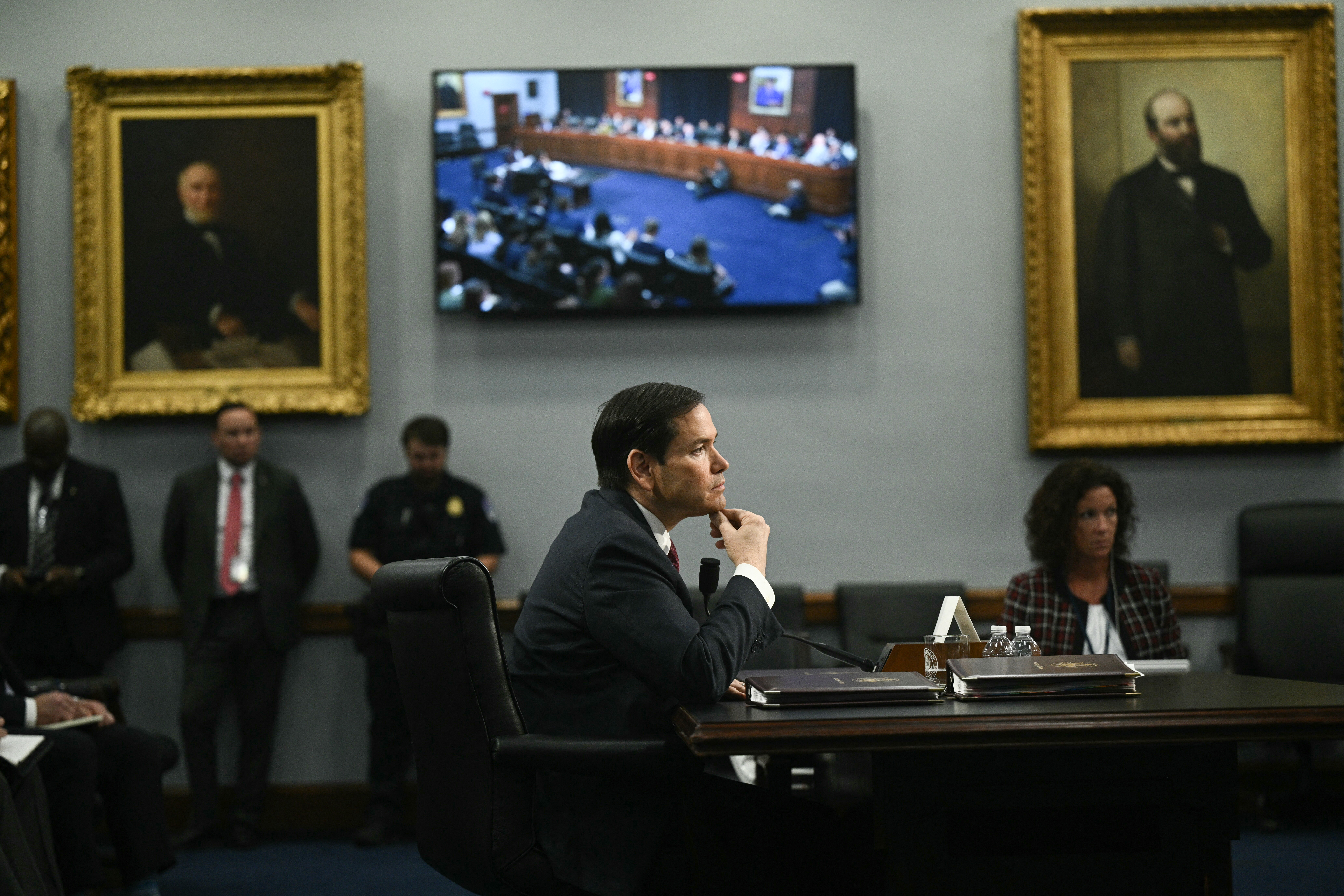
BRENDAN SMIALOWSKI/AFP via Getty Images
Secretary of State Marco Rubio testifies before a House Subcommittee on National Security, Department of State, and Related Programs hearing on the budget for the Department of State, on Capitol Hill in Washington, DC on May 21, 2025.
In his second consecutive day of hearings on Capitol Hill, Secretary of State Marco Rubio said that he expects that additional Arab countries will join the Abraham Accords by the end of the year, if not earlier.
“We do have an Abraham Accords office that is actively working to identify a number of countries who have lined up and already I think we may have good news, certainly before the end of this year, of a number of more countries that are willing to join that alliance,” Rubio said a House Foreign Affairs Committee hearing on Wednesday.
The comments are consistent with other recent remarks by President Donald Trump and Middle East envoy Steve Witkoff.
Rubio added that the administration is currently working on selecting an ambassador for the Abraham Accords, as required under law, to submit for congressional confirmation.
He said that there is “still a willingness” in Saudi Arabia to normalize relations with Israel, but “certain conditions are impediments,” including the Oct. 7, 2023, Hamas attacks on Israel and the ensuing war.
Rubio’s testimony largely reinforced and added on his comments the day before, on issues including Iran and Syria.
He again insisted that all elements of the Trump administration, including Vice President JD Vance and Witkoff, are unified behind the position that Iran cannot be allowed to maintain its capacity to enrich uranium.
And he affirmed that U.S. law requires that any deal with Iran be submitted to Congress for review and approval, noting that he had been in Congress when that law was passed.
At an afternoon hearing with the House Appropriations Committee, Rubio again said that sanctions relating to Iranian proxy terrorism or other malign activities will not be impacted by a nuclear deal that does not address those subjects. Republicans in the past have questioned the distinction between nuclear and non-nuclear sanctions, particularly as part of the original 2015 nuclear deal, which took a similar approach. And they’ve argued that any sanctions relief would allow Iran to expand its support for regional terrorism.
Rubio said the administration is continuing to ramp up sanctions on Iran, and said that European parties to the deal are “on the verge” of implementing snapback sanctions on Iran. He said that the administration would support legislation to implement additional sanctions on Iran’s oil sector.
He denied knowledge of a Tuesday leak by administration officials that Israel was making plans to strike Iran’s nuclear program, adding, “I also don’t think it’s a mystery, though … that Israel has made clear that they retain the option of action to limit Iran from ever gaining a nuclear capability.”
Expanding on comments he made the day before, Rubio said that he favors moving the mission of U.S. security coordinator for Israel and the Palestinian territories under the authority of the U.S. ambassador to Israel so that it can be a better-integrated part of the U.S.’ Israel policy. But he vowed that the core function of the office will continue.
Rubio denied reports of talks between the United States and Saudi Arabia about potential nuclear cooperation outside of a “gold standard” deal, which would include banning domestic enrichment.
The secretary of state reiterated comments about the critical necessity of providing sanctions relief to Syria to help contribute to stability, but he said that continued sanctions relief “does have to be conditioned on them continuing to live by the commitments” that the Syrian government has made verbally, including to combat extremism, prevent Syria from becoming a launchpad for attacks on Israel and form a government that represents, includes and protects ethnic and religious diversity.
He indicated that the U.S. is not actively working to shut down the United Nations Relief and Works Agency, but pledged that the United States will not be providing any further aid to or through that organization and will use its power and funding to look for alternatives.
He said it will be up to other countries whether they continue working with UNRWA, though he noted that the U.S. has been the agency’s largest donor.
Rubio said that he would be supportive, in concept, of legislation to expand current U.S. anti-boycott laws to include compulsory boycotts imposed by international organizations. That legislation was pulled from a House floor vote after right-wing lawmakers falsely claimed it would ban U.S. citizens from boycotting Israel.
Pushing back on calls for the U.S. to withhold weapons sales to the United Arab Emirates over its support for one of the parties involved in the Sudanese Civil War that the U.S. has found is committing genocide, Rubio said that the U.S. is not fully in alignment with the UAE but argued that it’s critical for the U.S. to continue engaging with and maintain a strong relationship with the UAE for its broader foreign policy goals in the Middle East.
He said that maintaining such a relationship and expanding the U.S.’ diplomatic and economic relationship with Abraham Accords countries is also important to ensuring that the Accords continue to be successful.
Rubio said that the State Department had approved restarting aid programs for Jordan that remained frozen — though he noted most were initially exempted from the administration’s blanket freeze. He acknowledged that the frozen programs had been “a source of frustration for [Jordan], and frankly for me.” He continued, “Ultimately, we’re going to get all those programs online, if they’re not online already.”
In a heated back-and-forth with Rep. Pramila Jayapal (D-WA), who was brandishing a pocket Constitution, Rubio again defended the administration’s policy of revoking student visas from individuals accused of involvement in anti-Israel activity on college campuses, saying that they are coming to the United States to “tear this country [apart]” and “stir up problems on our campuses.”
Addressing the case of Rümeysa Öztürk, a Tufts University graduate student that supporters have said was detained solely for writing an op-ed in a student newspaper criticizing Israel, Rubio claimed the situation is not as has been represented. “Those are her lawyers’ claims and your claims, those are not the facts,” Rubio said.
Asked by Jayapal about a comment — “Jews are untrustworthy and a dangerous group” — made by an Afrikaner refugee recently admitted to the United States from South Africa, Rubio said that he would “look forward to revoking the visas of any lunatics you can identify.”
But when presented with the fact that the individual in question was admitted as a refugee, not on a visa, Rubio said that refugee admissions are “a totally different process,” adding “student visas are a privilege.”
Plus, Trump's Gulf tour underscores Israel’s diplomatic disadvantage

White House Press Secretary Karoline Leavitt/X
Saudi Crown Prince Mohammed bin Salman, President Donald Trump and Syrian President Ahmed al-Sharaa meet in Riyadh, May 14th, 2025
Good Wednesday morning.
In today’s Daily Kickoff, we report on President Donald Trump’s meeting earlier today with Syrian President Ahmed al-Sharaa, and analyze the findings of a new poll from the Jewish Voter Resource Center. We also talk to Sen. Katie Britt about recent attacks on Sen. John Fetterman, and spotlight the Zachor Legal Institute’s call for the IRS to investigate a key fiscal sponsor of anti-Israel agitators. Also in today’s Daily Kickoff: Dan Senor, former Vice President Mike Pence and Rabbi Noam Marans.
What We’re Watching
- President Donald Trump continues his Middle East trip today as he flies to Qatar this afternoon. Earlier today, Trump met with Gulf Cooperation Council leaders in Riyadh, Saudi Arabia, including a side meeting with Syrian President Ahmed al-Sharaa. Read more about the meeting between Trump and al-Sharaa here.
- The House Homeland Security Committee is holding a hearing this morning with Homeland Security Secretary Kristi Noem.
- The Department of Justice is holding its 32nd Annual Federal Interagency Holocaust Remembrance Program this morning.
- The Israeli American Council is holding a Yom Ha’atzmaut celebration tonight at the Library of Congress.
What You Should Know
A QUICK WORD WITH JOSH KRaushaar
A new poll commissioned by a Democratic Jewish group suggests that concerns over antisemitism have receded a bit since post-Oct. 7 record levels, with younger voters notably less concerned than their parents and older generations. The survey, conducted by GBAO, also finds the depth of attachment for Israel, while still at high levels, has also dipped somewhat as time has passed since Hamas’ attacks, Jewish Insider Editor-in-Chief Josh Kraushaar writes.
The big toplines from the Jewish Voter Resource Center survey, which polled 800 Jewish voters between April 22 and May 1: Only one-quarter of Jewish voters view President Donald Trump favorably. Among respondents, Democrats hold a commanding 70-22% lead on next year’s generic congressional ballot. Israeli Prime Minister Benjamin Netanyahu’s standing among American Jewish voters is also low, with only 34% viewing him favorably, while 61% see him unfavorably.
Over two-thirds (69%) of Jewish voters profess an attachment to Israel, which is down from 82% a month after Oct. 7 but at a similar level to the years preceding the attack. Nearly two-thirds of Jewish respondents (62%) said they’re very concerned about antisemitism — a historically high number, but a marked dropoff from the 79% who expressed the same sentiment in November 2023. Notably, only 33% of younger Jewish voters ages 18-34 said they’re concerned about antisemitism.
Asked whether right-wing or left-wing antisemitism was a bigger threat, respondents were more divided. Nearly half (47%) said right-wing individuals and groups were more responsible, while 34% viewed left-wing groups as a bigger problem. And Democrats fared relatively poorly on which party is better equipped to handle antisemitism, holding just a seven-point edge (34-27%) over Republicans despite a much greater overall partisan advantage.
The most significant takeaway from the survey is the gaping divide within the Jewish community when it comes to Jewish observance — secular and less observant Jews hold diametrically opposing views on many issues compared to their more observant coreligionists.
For instance, 75% of Orthodox Jewish respondents said they approved of Trump’s job performance, compared to only 18% of Reform Jewish voters. While 69% of Orthodox Jews and 60% of Conservative Jews have a “very strong” attachment to Israel, that number falls to 35% among Reform Jews (and 22% among those unaffiliated).
On domestic policy issues, the gap is similar. Most Orthodox voters (78%) favor eliminating DEI initiatives that receive federal funding, while only 21% of Reform respondents say the same. The poll also found two-thirds of Orthodox Jews backing the president’s original punitive tariffs against China, while just 14% of Reform voters agreed.
The results underscore that one of the biggest challenges in both Israel and the United States’ Jewish community is internal divisions that make it harder to present a united front externally. Those divisions are slowly, but notably, percolating even on issues that once united the Jewish world post-Oct. 7.
ON THE SIDELINES

If there was any doubt about President Donald Trump’s increasing reliance on checkbook diplomacy, and his disapproval of America’s past approach to the Middle East, he left little room for dispute in a keynote address on Tuesday in Saudi Arabia that sharply critiqued “interventionalists” and “neo-cons” while calling for an end to regional wars. The message in Trump’s speech, and the optics of a visit to the Middle East that doesn’t include a stop in Israel, were met with concern by pro-Israel Republicans and hawkish foreign policy experts, who worry that his turbo-charged dealmaking with the oil-rich Gulf nations — cemented this week with trade deals in the hundreds of billions of dollars — puts Israel at a diplomatic disadvantage, Jewish Insider’s Gabby Deutch reports.
Dollar signs: “His approach is obviously completely transactional. If he has a view about the U.S. national interest, that view revolves around financial and commercial interests, and that obviously diminishes the value of the alliance with Israel, which is not primarily financial and commercial,” said Elliott Abrams, a former longtime Republican official who served as Iran envoy in Trump’s first term. “It’s based on values. It’s based on military cooperation. It is based also on high-tech cooperation, but Trump seems to be less interested in that and more interested in the dollar signs.”
Presidential address: “The gleaming marvels of Riyadh and Abu Dhabi were not created by the so-called nation-builders, neo-cons, or liberal nonprofits like those who spent trillions failing to develop [Kabul], Baghdad, so many other cities,” Trump said in a speech on Tuesday at a U.S.-Saudi Arabia investment forum event in Riyadh. “In the end, the so-called nation-builders wrecked far more nations than they built and the interventionalists were intervening in complex societies that they did not even understand themselves. Trump also condemned American presidents who “have been afflicted with the focus that it’s our job to look into the souls of foreign leaders and use U.S. policy to dispense justice for their sins.”
AIRING CONCERNS

A handful of congressional Republicans voiced fresh concerns on Tuesday about President Donald Trump’s plans to accept a gift of a Qatari luxury jet worth $400 million to join the Air Force One fleet, Jewish Insider’s Marc Rod and Emily Jacobs report. Democrats, meanwhile, stepped up their efforts to block the gift.
Growing worries: Senate Majority Leader John Thune (R-SD), expanding on comments he’d made the previous day, said that there “will be plenty of scrutiny” for the transfer if it occurs. “There are lots of issues around that that I think will attract very serious questions if and when it happens.” But he also downplayed the gift as purely “hypothetical” at this point. Sen. Ted Cruz (R-TX) came out more strongly against the gift, saying, “I’m not a fan of Qatar, I think they have a really disturbing pattern of funding theocratic lunatics who want to murder us, funding Hamas and Hezbollah and that’s a real problem. I also think that the plane poses significant espionage and surveillance problems, so we’ll see how this issue plays out, but I certainly have concerns.”
Bonus: Bloomberg looks at the potential security risks associated with Qatar’s proposed gift of a luxury jet to the Trump administration, citing expert concerns over “opportunities for surveilling, tracking or compromising communications.”
FAIR-WEATHER FRIENDS

Sen. Katie Britt (R-AL) is criticizing Senate Democrats for declining to challenge media reports about Sen. John Fetterman’s (D-PA) mental health, attributing their reticence to the Democratic senator’s independent approach to Israel and immigration, and his support for several of President Donald Trump’s Cabinet nominees, Jewish Insider’s Emily Jacobs reports.
Independent streak: Britt, who has grown to be one of Fetterman’s closest personal friends in the Senate since both were elected in 2022, raised concerns about the implications of Senate Democrats remaining silent as one of their own is targeted over his highly publicized mental health struggles during National Mental Health Awareness Month. “John has been a voice for Israel. He has been a voice for the Jewish people. He has been willing to take a look at nominees and approach things in a common-sense way. He understands the need for a secure border and interior enforcement. He was out front on the Laken Riley Act. I would say that part of [Democrats’] silence has to do with his independence,” Britt told JI.
STATE OF THE JEWS

Jewish day schools and summer camps as well as gap years in Israel are some of the strongest contributors of a solid Jewish identity — ones that provide the tools that are needed at this precarious moment to “rebuild American Jewish life” — podcast host and author Dan Senor said on Tuesday night as he delivered the 45th annual State of World Jewry address at the 92NY in Manhattan, Jewish Insider’s Haley Cohen reports for eJewishPhilanthropy.
Jewish giving: “But here’s the uncomfortable truth,” Senor said, pointing to a statistic that of the 33 Jewish individuals on the Forbes 400 list with publicly reported charitable giving, no more than 11% of their giving went to Jewish causes. “I am not suggesting Jewish generosity to the broader civic square come to an end,” Senor said. “But I am arguing that it is time for a recalibration in favor of our community’s needs. We need to invest so that we can look back on this moment decades from now and say: American Jewish life was not the same after that. It was better.”
Read the full story here and sign up for eJewishPhilanthropy’s Your Daily Phil newsletter here.
scoop

A Syrian diaspora conference in a House office building meeting room was abruptly canceled on Monday after a lawmaker raised concerns about the group and its leadership, sources familiar with the situation told Jewish Insider’s Marc Rod.
What happened: A member of Congress reserved the room on the group’s behalf, but that member withdrew their sponsorship on Monday after the event had begun, a source said. Per House policy, the group would have been required to leave the room once it lost that sponsorship. The group in question denied that the event had been canceled or disrupted. In the days before the conference, Rep. Joe Wilson (R-SC) wrote to the chair and ranking member of the Committee on House Administration urging them to intervene to cancel the event, citing concerns about alleged ties to the Assad regime and comments the group’s counsel had shared in support of the Houthis and about Israel.
Bonus: Sen. Lindsey Graham (R-SC), a close ally of President Donald Trump, called for a cautious and deliberate approach to removing sanctions on Syria and emphasized that Congress has a significant oversight role to play, hours after Trump announced in a speech in Riyadh that he plans to lift “all” U.S. sanctions on Syria, Jewish Insider’s Marc Rod reports. Reactions from others on Capitol Hill to the news have been decidedly mixed across both parties.
money matters

The Zachor Legal Institute, a legal think tank in Montana focused on combating antisemitism and boycott campaigns against Israel, is calling on the IRS to review the tax-exempt status of a nonprofit group involved in fundraising for pro-Palestinian activism, claiming its fiscal sponsorship of a radical anti-Zionist organization accused of advocating for political violence may be in violation of federal law, Jewish Insider’s Matthew Kassel reports.
The argument: In a complaint filed Wednesday morning, Marc Greendorfer, the president and co-founder of the Zachor Legal Institute, formally urged the IRS to begin an investigation of the WESPAC Foundation, a nonprofit organization based in White Plains, N.Y., over its ties to Within Our Lifetime, an extreme activist group at the forefront of anti-Israel demonstrations across New York City in the wake of Hamas’ Oct. 7, 2023, attacks. “Through its fiscal sponsorship of Within Our Lifetime, a violent, radical and anti-Israel organization, WESPAC may have violated both the public policy doctrine and the illegality doctrine that the IRS uses to analyze and discern whether a 501(c)(3) charitable organization can maintain their tax-exempt status,” Greendorfer wrote in a letter to Michael Faulkender, the acting commissioner of the IRS, arguing that a “thorough investigation” of the matter “is warranted.”
Worthy Reads
Doha’s Dollars: The Free Press’ Jay Solomon and Frannie Block do a deep dive into Qatar’s efforts to establish footholds across American society. “Qatar has spent almost $100 billion to establish its legitimacy in Congress, American colleges and universities, U.S. newsrooms, think tanks, and corporations. Over the past two decades, it has poured those billions into purchases of American-made weapons and business investments ranging from U.S. real estate to energy plants. It built — and still pays for — the Al Udeid Air Base, even as the American wars in Iraq and Afghanistan have ended. Doha finances research and campuses at prestigious American universities. And its lobbyists have the connections needed to open all the right doors in Washington. Since 2017, it has spent $225 million on lobbying and public-relations efforts in the nation’s capital. … The influence built by Qatar in the U.S. has no modern parallel, The Free Press found, whether compared with large American companies seeking to influence antitrust policy, energy firms trying to win new drilling rights, or other foreign governments aiming to shape U.S. policy—or shield themselves from it. For comparison, Qatar spent three times more in the U.S. than Israel did on lobbyists, public-relations advisers, and other foreign agents in 2021 — and nearly two-thirds as much as China did, according to the government’s latest reports.” [FreePress]
Dealmaker or Wrecker?: The Washington Post’s David Ignatius looks at President Donald Trump’s unconventional approach to foreign policy as he balances multiple conflicts and a trade war with China while in the middle of his first trip abroad. “‘America has no ‘permanent enemies,’ Trump said in his discussion of Iran. That simple statement will reverberate across the region, especially in Israel, which views Iran as a deadly adversary. Israeli anxieties might be eased by Trump’s warning that if Iran didn’t agree to a nuclear deal and make peace, it would face ‘massive maximum pressure.’ Trump’s comments in Saudi Arabia cap a remarkable few weeks in which he has bent policies, including his own, to accommodate what he evidently concluded were limits imposed by global reality. … My takeaway: Trump remains a disrupter and a dealmaker — with big ambitions for ending global conflicts and boosting America’s economy. He can also be a wrecker, as in many of his domestic policies that have savaged universities, law firms, medical research, government agencies and anyone on Trump’s retribution list. But abroad, he appears to have recognized the constraints imposed by the financial markets, the resistance of China and other big trading partners, the danger of wasting money on inconclusive wars, and the inescapable fact of global economic interdependence.” [WashPost]
Full-Court Press: In an essay adapted from a speech he gave at the Notre Dame Kellogg Institute for International Studies, New York Times Publisher A.G. Sulzberger reflects on the role a free press plays in society. “And the press is far from the only American institution that finds itself under pressure. We’re seeing direct efforts to go after government agencies, universities, cultural institutions, research organizations, advocacy groups and law firms. We’re even seeing challenges to the authority of Congress and the courts to serve as a check on executive power. Like all of those institutions, the free press is imperfect. And like all of those institutions, the free press is a load-bearing pillar in a free society. … Let me pause to say plainly that as a champion of independent journalism, I believe our job is to cover political debates, not to join them. We’re not the resistance. We are nobody’s opposition. We’re also nobody’s cheerleader. Our loyalty is to the truth and to a public that deserves to know it.” [NYTimes]
Word on the Street
Iranian officials said that Iranian Foreign Minister Abbas Araghchi proposed a joint nuclear-enrichment venture in its negotiations with the U.S.; a representative for Middle East envoy Steve Witkoff denied the report…
Israeli Prime Minister Benjamin Netanyahu and Witkoff held a meeting on Wednesday in Jerusalem, the second time in three days the two have met…
Speaking at an event hosted by the Buckley Institute, former Vice President Mike Pence expressed “concerns” about the Trump administration’s revocation of Harvard’s tax-exempt status, stating, “What’s good for the goose is good for the gander. If we establish the precedent of taking away tax-exempt status from certain institutions that reflect discriminatory practices or antipathy toward right-wing views, we might find ourselves in an America where subsequent administrations think the same”…
The Trump administration announced it is cutting an additional $450 million in federal grants to Harvard, citing the school’s “pervasive race discrimination and anti-Semitic harassment”…
Former Transportation Secretary Pete Buttigieg said he would “assess” a 2028 presidential run, after declining to mount bids for Senate and governor in Michigan, where he resides…
A legal watchdog group sent a warning letter to Microsoft on Monday alleging that it is violating Title VII of the Civil Rights Act of 1964 by refusing to recognize a Jewish Employee Resource Group, Jewish Insider’s Haley Cohen has learned…
Brownstein Hyatt Farber Schreck hosted a 30th anniversary reception in its new office in Washington; speaking to the dozens of Capitol Hill legislators in attendance — including Senate Minority Leader Chuck Schumer (D-NY), , Chair John Barrasso (R-WY), NRSC Chair Tim Scott (R-SC), Sens. Michael Bennet (D-CO), Mitch McConnell (R-KY), Richard Blumenthal (D-CT), Ted Budd (R-NC), Susan Collins (R-ME), Chris Coons (D-DE), Steve Daines (R-MT), Tammy Duckworth (D-IL), Deb Fischer (R-NE), Kirsten Gillibrand (D-NY), Maggie Hassan (D-NH), John Hickenlooper (D-CO), Ron Johnson (R-WI), Tim Kaine (D-VA), Amy Klobuchar (D-MN), James Lankford (R-OK), Cynthia Lummis (R-WY), Ben Ray Luján (D-NM), Ed Markey (D-MA), David McCormick (R-PA), Jeff Merkley (D-OR), Jerry Moran (R-KS), Alex Padilla (D-CA), Gary Peters (D-MI), Jack Reed (D-RI), Jim Risch (R-ID), Mike Rounds (R-SD), Tina Smith (D-MN), Dan Sullivan (R-AK), Thom Tillis (R-NC) and Sheldon Whitehouse (D-RI); House Minority Leader Hakeem Jeffries (D-NY), Reps. Nancy Pelosi (D-CA), Rosa DeLauro (D-CT), Steny Hoyer (D-MD), Jeff Hurd (R-TX), Lisa McClain (R-MI), Chris Pappas (D-NH), Greg Stanton (D-AZ), Ritchie Torres (D-NY), Rob Wittman (R-VA) and Ann Wagner (R-MO) as well as Hill staff, administration officials, clients and friends of the firm — founder and Chairman Norm Brownstein reflected on the firm’s start “in a small office above the Capital Grille”…
New York City Mayor Eric Adams announced the creation of the city’s Office to Combat Antisemitism, staffed by Executive Director Moshe Davis…
A community garden in the Ridgewood neighborhood of Queens, N.Y., is facing eviction after requiring prospective members to sign a “statement of values” that included opposing Zionism…
In a letter to Rabbi Noam Marans, the American Jewish Committee’s director of interreligious affairs, Pope Leo XIV pledged “to continue and strengthen the Church’s dialogue and cooperation with the Jewish people.” Prominent Jewish Italian journalist Maurizio Molinari commented to Jewish Insider’s Lahav Harkov that the letter shows the new pope’s “deep understanding of the damage caused by his predecessor. … He understands that the very base of the dialogue with the Jews was put at risk” by his predecessor, Pope Francis….
U.K. broadcaster Gary Lineker is again facing criticism after sharing a social media post comparing Israel to a rat…
Workers in Argentina discovered a trove of Nazi-era documents in the basement of the country’s Supreme Court, where the propaganda materials had been kept for eight decades after being seized by the government during a customs search in 1941…
The IDF targeted Hamas leader Mohammad Sinwar in a strike on the European Hospital in southern Gaza yesterday, Jewish Insider’s Danielle Cohen reports…
Israel intercepted Houthi ballistic missile attacks on Tuesday evening and Wednesday morning; the missiles set off sirens in central Israel, including Tel Aviv and Jerusalem…
Natan Sachs, formerly the director of Brookings’ Center for Middle East Policy, is joining the Middle East Institute…
Pic of the Day

Birthdays

Actress who has appeared in 13 movies, she is the daughter of Steven Spielberg, Sasha Rebecca Spielberg turns 35…
Born in Casablanca and raised in Paris, Midtown NYC hair stylist and owner of La Boîte a Coupe salon, Elie Laurent Delouya turns 77… Physician and social activist, she was the Green Party’s nominee for POTUS in 2012, 2016 and 2024, Jill Stein turns 75… Professor emerita of computer science at Technion, Orna Grumberg turns 73… Dean of UC Berkeley Law School, he is one of the most frequently cited American legal scholars on constitutional law and federal civil procedure, Erwin Chemerinsky turns 72… Los Angeles city attorney from 2013 until 2022, Mike Feuer turns 67… Author of seven international bestsellers on topics such as strategy, power and seduction, Robert Greene turns 66… Head of School at the Gideon Hausner Jewish Day School in Palo Alto, Calif., Daniel L. Lehmann turns 63… Former member of Knesset for the Meretz party and a major general (reserves) in the IDF, he now leads the Democrats party, Yair Golan turns 63… Former ESPN SportsCenter anchor and football sideline reporter, Suzanne Lisa “Suzy” Kolber turns 61… Retired U.S. Air Force lt. colonel, now serving as director of the U.S. Office of Global Shield, Robert Levinson turns 60… CEO of the Jewish Federation of Greater New Haven, she is a former seven-term Connecticut state senator, Gayle Slossberg turns 60… Education program lead of Bloomberg Philanthropies, Howard Wolfson… Record producer, multi-instrumentalist and songwriter, he has won nine Grammy Awards, Greg Kurstin turns 56… Managing partner of Alexandria, Va.-based MVAR Media and a leading strategist in Democratic politics, Jon Vogel… Political director for the Northeast region at AIPAC, Jason Koppel… Emmy Award-winning executive producer at NBC’s “Meet the Press,” David Philip Gelles… Director of media relations and a spokesman at Chabad Lubavitch, Rabbi Mordechai “Motti” Seligson… Chairman, CEO and co-founder of Meta / Facebook, Mark Zuckerberg turns 41… Bloomberg News and Bloomberg Businessweek reporter, Josh Eidelson… Senior managing director of government relations at The Blackstone Group, Alex I. Katz… Associate at O’Melveny & Myers, he is a former track star and then football player at Harvard, Andrew Ezekoye… Former pitcher for Yale and then Team Israel, he is now a senior associate on the Surveyor Capital team at Citadel, Eric Brodkowitz turns 29… Center for the NHL’s New Jersey Devils, he was the first pick in the 2019 NHL Entry Draft and is the son of hockey star Ellen Weinberg-Hughes, Jack Hughes turns 24…
‘We think [we] will have some, or a lot of announcements, very, very shortly, which we hope will yield great progress by next year,’ the Middle East envoy said

CHIP SOMODEVILLA/GETTY IMAGES
White House special envoy Steve Witkoff briefly speaks to reporters as he walks back into the West Wing following a television interview on the North Lawn of the White House on March 19, 2025 in Washington, D.C.
Speaking at an event celebrating Israeli Independence Day on Monday, Middle East envoy Steve Witkoff suggested that he expects additional countries will join the Abraham Accords in the coming year.
“We think [we] will have some, or a lot of announcements, very, very shortly, which we hope will yield great progress by next year,” Witkoff said of the prospects for additional normalization between Israel and Arab states, at an event organized by the Israeli embassy in Washington.
Witkoff only gave a glancing mention of Iran, with which he is the lead U.S. negotiator, in his brief remarks, pledging that Tehran would never obtain a nuclear weapon, but not elaborating on the talks beyond that.
The U.S. envoy emphasized the need for Israeli unity, saying, “I urge the Israeli people to choose unity over division, vision over disagreement and hope over despair. When you do, Israel’s future will shine brighter than ever.”
Witkoff also said that one of the most joyous moments of his life was visiting with recently freed hostages from Gaza and singing Am Yisrael Chai with them and their families. He pledged to work “tirelessly this year” toward “peace, prosperity and for Israel, unity.”
The event for Yom Ha’Atzmaut also featured remarks from Secretary of Energy Doug Burgum.
The lawmakers lambasted Biden for failing to nominate someone to fill the position, which was created in December 2023

GPO
Bahrain Foreign Minister Khalid bin Ahmed Al Khalifa, Israeli Prime Minister Benjamin Netanyahu, President Donald Trump, and United Arab Emirates Foreign Minister Abdullah bin Zayed al-Nahyan during the Abraham Accords signing ceremony at the White House on Sept. 15, 2020.
A group of 47 House Republicans led by Rep. Mike Lawler (R-NY) urged President-elect Donald Trump to immediately nominate an ambassador-rank special envoy for the Abraham Accords, a position that has been left empty since it was created by Congress in late 2023.
Lawler and Rep. Ritchie Torres (D-NY) introduced legislation in 2023 to create a new ambassador-level position for the Abraham Accords, Negev Forum and Middle East regional normalization, which was incorporated into and passed into law through the 2024 National Defense Authorization Act in December 2023.
But the position was left empty as normalization efforts became a secondary priority in the wake of the Oct. 7, 2023 Hamas attack on Israel.
In a letter to Trump on Thursday, the lawmakers said that they’re confident Trump will “prioritize” expanding normalization agreements between Israel and the Arab world in his second administration, and said that having a dedicated official leading those efforts would be “key to a cohesive, effective, and long-lasting normalization effort.”
The lawmakers said that the Biden administration’s failure to fill the slot — in spite of bipartisan pressure to do so — showed “clear indifference to the Abraham Accords,” which they described as “incomprehensible, bad policy, and after the NDAA’s passage in 2023, unlawful.”
“In light of President Biden’s shortcomings, we urge you to make this nomination an immediate priority,” the lawmakers continued. “We know expanding the Abraham Accords remains a key priority for your Administration and having a Presidential Envoy will be a key player in spearheading these efforts. We look forward to working with both you and the Presidential Envoy in the future to strengthen Israel’s role in the Middle East and reach long-lasting stability in the region.”
Lawler, in a statement, again condemned Biden, calling it “unacceptable” that he had not nominated an ambassador.
“This willful ignorance of a position designed to support our closest ally, Israel, in formalizing normalization agreements with its neighbors and other nations around the world speaks volumes about the Biden Administration,” Lawler said. “I am hopeful that President Trump will take swift action on day one to right this wrong and begin to work towards a lasting peace between Israel and its neighbors.”
It’s not clear how responsibilities would be divided in the incoming Trump administration among Steve Witkoff, Trump’s special envoy for the Middle East; Massad Boulos, Trump’s senior advisor for Arab and Middle East Affairs; and the prospective Abraham Accords ambassador.
Prior to the Oct. 7 attack and passage of the Lawler-Torres bill, the Biden administration had named former Ambassador Dan Shapiro as a senior advisor for regional integration in the State Department, filling a similar role to the ambassador post, without Senate confirmation. But Shapiro moved to the Defense Department in January 2024 amid the growing war in the Middle East, and the State Department did not announce a replacement for Shapiro.
Trump adds that Israeli Prime Minister Benjamin Netanyahu will listen to him more than President Biden

MANDEL NGAN/AFP via Getty Images
President Donald Trump (L) and Israeli Prime Minister Benjamin Netanyahu shake hands after delivering press statements before an official dinner in Jerusalem on May 22, 2017.
Former President Donald Trump said in an interview released on Sunday that expanding the Abraham Accords would be “an absolute priority” if he wins the election.
“Everyone wants to be in it,” he said in an interview with Al Arabiya, the Saudi-owned news channel, claiming he would have added “12 to 15 countries literally within a period of a year” if he had won the 2020 presidential election. “If I win, that will be an absolute priority,” he added. “It’s peace in the Middle East — we need it.”
Trump also reiterated his controversial claim that Iran would have joined the Accords, which normalized relations between Israel and several Arab neighbors, during a hypothetical second term.
“I make the statement, and it sounds foolish but it’s not foolish — I think even Iran would have been in, because Iran was desperate to make a deal,” he said. “They had no money.”
He declined to elaborate on how he would address Iran’s efforts to create a nuclear weapon while in office, even as he recently suggested he is open to talks with the Islamic Republic about a renewed nuclear deal that he himself ended while in office.
“They won’t acquire it,” he said. “Now they may get it if they get it very quickly. I’m not president, so I won’t have much to do with that.”
Trump also did not discuss whether he would seek to include Saudi Arabia in the Accords, as the Gulf kingdom has indicated that forging diplomatic ties would be contingent on Israel accepting a Palestinian state.
In the interview, focused on Middle East policy, Trump described Saudi Crown Prince Mohammed Bin Salman as a “visionary” and a “great guy” who is “respected all over the world.” He vowed to bolster U.S. ties with Saudi Arabia, saying Vice President Kamala Harris would damage the relationship.
Trump argued that U.S. relations with Israel would be strengthened under his leadership, suggesting that Israeli Prime Minister Benjamin Netanyahu is more receptive to hearing from him than President Joe Biden. “He does listen to me,” Trump said of Netanyahu, speaking after the killing last week of Hamas leader Yahya Sinwar in Gaza.
Trump speculated that many of the hostages still being held by Hamas in Gaza have already been killed. “I’m sure many of them are dead,” he said in the interview. “It’s a very sad thing. What’s going to happen when they find out that there are very few hostages, which is probably what they’re going to find out.”
“Even early on, I think a lot of those hostages were dead,” he added. “It’s not even believable when you think about it, but I think pretty early on, there were a lot that were gone.”
Repeating a claim he has made several times during the campaign, Trump said that Hamas’ Oct. 7 attack would never have occurred if he had been president.
Without elaborating on a plan, he said he would stop the war in Gaza if elected and that he would bring stability to the region. “If I win, we’re going to have peace in the Middle East, and soon,” he said.
The UAE ambassador to the U.S. discussed the deal on a Jewish Insider webcast with Haim Saban and Dina Powell McCormick

Screenshot
Dina Powell McCormick (left), Haim Saban (top), and Yousef Al Otaiba (bottom).
United Arab Emirates Ambassador to the United States Yousef Al Otaiba on Tuesday hailed the Trump administration for working to finalize a normalization agreement between the UAE and Israel, which he said came as a result of Emirati efforts to halt Israel’s planned annexation of parts of the West Bank.
During a Jewish Insider webcast alongside Israeli-American businessman Haim Saban — moderated by former White House deputy national security advisor Dina Powell McCormick — Al Otaiba described the behind-the-scenes efforts that culminated in the groundbreaking Abraham Accords.
One of the first steps in the process, Al Otaiba said, came when he asked Saban to help him publish an op-ed aimed at the Israeli public during the time that annexation was being considered. “Haim told me where it should be placed, when it should be placed and, the most important piece of advice on this was, you have to do it in Hebrew,” the ambassador said. “If you really want to speak to the Israelis, it has to be translated in Hebrew.”
“I remember a subsequent conversation with [Saban], asking, ‘Hey, do you think this article made an impact?’” Al Otaiba recalled. “He started laughing at me, like laughing loudly. He’s like, ‘You have no idea how much impact this article had.’ And it was shortly after the article we then started thinking of actual concrete ideas to avoid annexation.”
Al Otaiba said he remembered “having a really serious conversation with [White House Mideast peace envoy] Avi Berkowitz on July 2, right after he returned from Israel, and figuring out what we can do to prevent [annexation], how do we trade this? How do we give something better?”
The deal, which was formally signed earlier this month during a ceremony on the White House South Lawn, jump-started the normalization of relations between the two countries in exchange for Israel’s commitment to shelve a planned annexation of West Bank territory.
The panelists noted that while the threat of annexation may have brought the sides to the negotiating table, there was little doubt that the larger threat posed by Iran was also a driving force. “There is no question that when you have a common enemy that is, basically, a cancer in the region, you unite forces against that enemy,” remarked Saban, who explained that “people have realized that there is much more upside, aligning with Israel, and forming a front against Iran.”
Both Saban and Al Otaiba credited U.S. leadership for helping to manage the negotiation process and deliver on the agreements. “I think the United States government came through every single time,” Al Otaiba said. “And that’s the reason we had the signing ceremony two weeks ago at the White House.”
The Emirati ambassador lauded Berkowitz, Jared Kushner and Brig. Gen. Miguel Correa for their efforts. “I spoke and talked to them and met with them, probably more in that four weeks than I did with anybody else, including my own family. If it wasn’t for them, I’m not sure this deal would be done,” Al Otaiba said, adding: “for anything like this to happen, it takes an incredible amount of trust.”
Saban, a longtime donor to Democratic candidates and causes, including the presidential campaign of former Vice President Joe Biden, also praised Kushner, Al Otaiba, UAE Foreign Minister Abdullah Bin Zayed, Emirati Crown Prince Mohamed Bin Zayed and Mossad director Yossi Cohen for paving the way for the deal. The Israeli-American businessman called the agreement “game-changing,” explaining: “There was no precedent for public commitment to normalization… Israelis would give their right arm to have peace with all its Arab neighbors.”
Al Otaiba echoed a similar interest in bilateral peace on the Emirati side, telling the webcast: “People always think we do not pay attention to public opinion inside the Emirates because we’re not a democracy. And it’s actually quite the opposite. Because we’re not a democracy, we have to be very in tune with what our people want, and what the streets feel. And people really wanted this. This is not something that we are forcing against the popular will of the parties that live in the country. There is a genuine energy, that people are excited about this.”
The three participants also sought to emphasize the economic benefits of the recent agreement.
Powell McCormick, who serves on Goldman Sachs’s management committee, noted that “we’re already having clients call us and ask about investment opportunities.”
Al Otaiba said he thinks “people forget about the immediate benefits that we’re going to have once you have direct commercial flights and tourism, about trade, investment, research, development, COVID research.” The ambassador added: “It is not a coincidence that when Jared Kushner came from Tel Aviv to Abu Dhabi on that historic flight, the first set of MOUs that we submitted to the United States to get done were on consular affairs, civil aviation, trade, prevention of double taxation, protection of investments — what we feel is the foundation, the infrastructure for any healthy relationship, so we can have mutual wins, so you can have trade investment R&D.”
Saban said at least five Israeli entrepreneurs have reached out to him with ideas to invest in the UAE. “Even my chief investment officer and the head of my VC division, they came to me and they said, ‘We have an idea that we can do with the Emiratis.’”
Al Otaiba noted how much has already occurred in just the few weeks since the accord was announced.
“We’ve already seen MOUs on AI, on COVID research, on health care and just today, a very prominent soccer club in Dubai bought an Israeli soccer player,” he noted. “Once an Emirati investor feels that he can invest in Israel safely, and an Israeli investor feels that he can invest in the UAE safely and not get taxed twice… I think the stars are the limit.”
Please log in if you already have a subscription, or subscribe to access the latest updates.
 Continue with Google
 Continue with Apple