













































Trump WH sends mixed signals over response to European sanctions against Israeli settlements
Assistant Attorney General Harmeet Dhillon warned last week that countries participating in boycotts of Israel could face U.S. retaliation
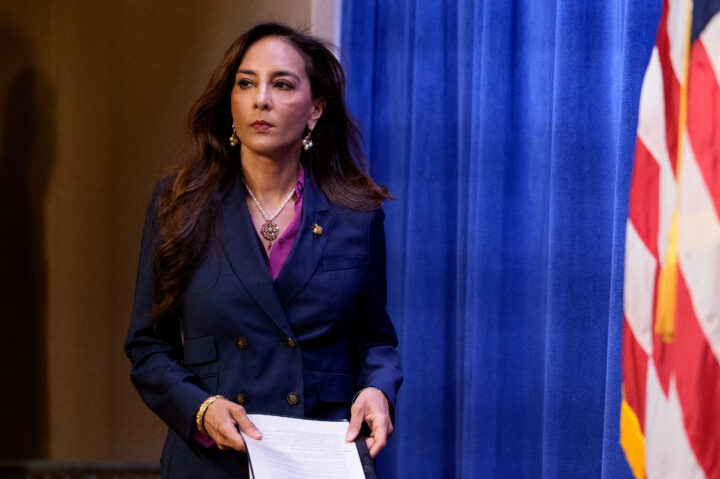
Andrew Harnik/Getty Images
Assistant Attorney General for Civil Rights Harmeet Dhillon arrives for a news conference at the Justice Department on September 29, 2025 in Washington, DC.


 Add JewishInsider on Google
Assistant Attorney General for Civil Rights Harmeet Dhillon warned last week that countries participating in boycotts of Israel could face U.S. retaliation, raising the prospect of sanctions against Britain and other European governments.
But Washington still has yet to clarify its policy, and it remains unclear whether the Trump administration plans to move forward with retaliatory measures.
Speaking in Washington D.C., last week, Dhillon sharply criticized the measures taken by European countries, describing the actions as involvement in BDS and a form of antisemitism. European officials, however, have argued that the sanctions are different from the BDS movement.
“What we call this in the United States is the BDS movement. It is antisemitism,” Dhillon said while speaking in D.C. on Oct. 6. “And I think every country that is doing that is going to risk, while President Trump is in power, retaliatory or corresponding sanctions potentially.”
One Republican congressional source told Jewish Insider that Treasury Department and Commerce Department officials had told their office that the departments were prepared to add those countries that announced sanctions targeting Israeli settlements last month to the Treasury’s international boycott list, but the State Department was refusing to grant the clearance necessary to do so.
Reached for comment, a State Department spokesperson told JI: “We are not going to comment on internal deliberations speculated on by an anonymous source.”
The U.K. announced an import ban on settlement goods and sanctions on related entities on Sept. 9.
The Netherlands introduced stricter measures on Sept. 22, including penalties of up to six years in prison for violations. Israel responded by revoking the diplomatic credentials of Dutch envoys in Ramallah.
France, Canada and other countries have also enacted or pledged similar restrictions involving the West Bank, east Jerusalem and the Golan Heights. The measures have drawn condemnation in Israel. U.S. Ambassador to Israel Mike Huckabee has warned that Britain could face economic repercussions.
Secretary of State Marco Rubio had previously indicated that the U.S. would not join the sanctions. Republicans in Congress have also told JI they oppose them. Before Dhillon’s remarks, the administration had not publicly condemned the measures.
A former U.S. administration official, speaking on background, confirmed the sanctions are not yet “settled administration policy” and noted that Dhillon’s comments could be strategic.
“Dhillon’s comment does not necessarily reflect settled administration policy. A decision to impose such sanctions would need consideration by Treasury, State, USTR, and above all the President; it’s not a DOJ decision,” the former official said. “It may reflect a decision to sanction the UK, or a warning shot meant to deter others from following the UK, or her view but not a final policy decision.”
The distinction between the European measures and the broader BDS movement could also become significant as the administration determines how to respond. European governments have presented their restrictions as measures targeting Israeli settlements rather than participation in the broader BDS campaign against Israel.
Jonathan Ruhe, a fellow at the Jewish Institute for National Security of America, said the uncertainty comes against a complicated history of U.S. policy toward Israeli settlements and BDS.
“Israeli settlements have always existed in a gray area when it comes to U.S. opposition to BDS. President Obama excepted West Bank settlements from his enforcement of anti-BDS laws, and Biden sanctioned certain settler activities while officially opposing BDS.”
He said that ambiguity appears to have carried into the Trump administration as tensions between Israel and European governments over settlement policy have increased.
“This gray area now seems to be carrying over to the Trump administration, where coherent and consistent policymaking has never been a strong suit, precisely as the West Bank and U.S.-European ties become particularly tense more generally,” Ruhe said.
Ruhe also pointed to the administration’s previous responses to European actions targeting Israel as a possible indication of how Washington could respond to the latest measures.
“Though Amb. Huckabee repeatedly called settler violence ‘acts of terror’ and ‘criminal activity’ over the summer, Europe’s latest threats follow a pattern where the administration jumps at the opportunity to retaliate for sanctions, embargoes, and arrest warrants aimed at Israel from Europe,” Ruhe said.
Jason Greenblatt, who served as White House Middle East envoy in the first Trump administration, did not clarify whether he expects the policy to be officially implemented, however he noted that he would “strongly support such a policy.”
“Countries that do that should understand there can be consequences, even if they are long standing friends of the United States,” Greenblatt said. “When governments turn the BDS movement’s anti-Israel agenda and antisemitic ideology into policy, the United States has every reason to respond.”
Greenblatt further argued that just because certain countries are U.S. allies, it should not shield them from consequences when acting against Washington’s interests.
“Ambassador Huckabee publicly warned of consequences before Britain announced these measures last month, and Britain proceeded anyway,” he continued. “Friendship and history should not provide immunity when a government acts against U.S. interests and principles, and against one of our closest and most important allies.”
More Stories
chesapeake challenge
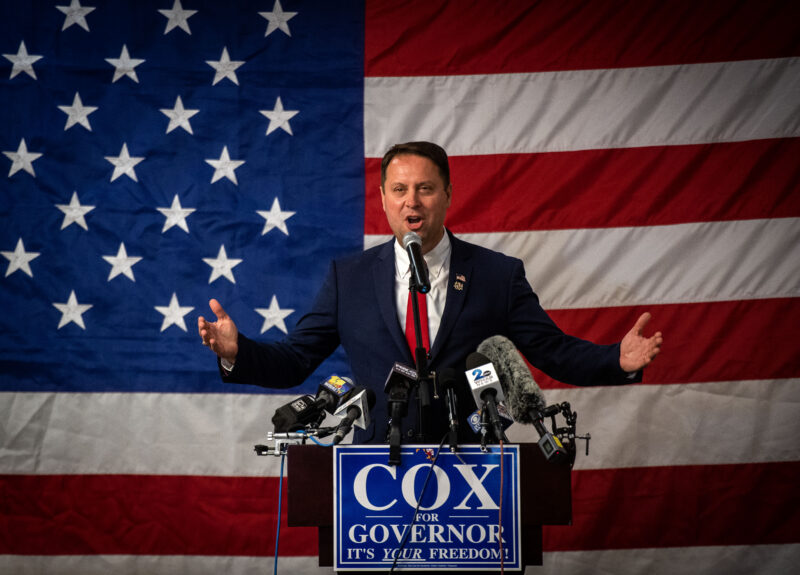
Maryland GOP gubernatorial nominee Dan Cox says he disagrees with son’s antisemitic posts

CAMPAIGN BLITZ
AIPAC’s super PAC wades into Michigan Senate race
speaking out
In open letter, dozens of retired U.S. military leaders reject genocide allegations against Israel

Daily Kickoff
Chris Murphy’s Doha double standard

Go Blue, but blue and white?
Michigan Hillel’s break with Israel advocacy groups raises questions about where it stands
POLICY PIVOT
On Oct. 7 anniversary, senior Democrats call for changes in U.S.-Israel policy
Please log in if you already have a subscription, or subscribe to access the latest updates.
 Continue with Google
 Continue with Apple