














































































The group identified four bills in the House’s online safety push that it felt could play a role in addressing online antisemitism, which were ultimately packaged into the KIDS Act

Getty Images
Illustrative


 Add JewishInsider on Google
In a bid to protect Jewish children from rampant antisemitism on the internet, the Jewish Federations of North America is pushing lawmakers to support the KIDS Act, a major bipartisan package of legislation focused on children’s safety online that passed the House late last month by a 267-117 vote.
Omer Yarden-Oppenheim, director of government relations at JFNA, told Jewish Insider that online antisemitism has been a major conversation and challenge for Jewish families, especially since the Oct. 7, 2023, Hamas attacks on Israel. He said the group identified four bills in the House’s online safety push that it felt could play a role in addressing online antisemitism, which were ultimately packaged into the KIDS Act.
“No single bill will solve these challenges right away, but we know that the KIDS Act is a meaningful bipartisan step towards making these platforms safer and more accountable for protecting young users, which includes Jewish users,” Yarden-Oppenheim said.
The four bills include the AWARE Act, which would develop educational resources on the safe and responsible use of AI chatbots; the Protecting a Safe Internet for Minors Act, which would create a public awareness campaign on safe internet use and best practices for minors; the Assessing Safety Tools for Parents and Minors Act, which would assess the effectiveness of existing safety tools; and the Kids Internet Safety Partnership Act, which would help identify online risks to children and develop recommendations for best practices.
The group endorsed the four pieces of legislation when they were first released several months ago and urged local federations to contact their members to support the bills, as well as advocate for them on fly-ins to Washington. Yarden-Oppenheim said he believes that work helped ensure the bills were included in the final KIDS Act package.
“There’s a lack of understanding of a lot of things that are happening online, and for Jewish families it’s the same. Parents feel like maybe they’re losing control a little bit of the things that their kids are being exposed to online,” Yarden-Oppenheim said. “These will give parents [and] educators the tools and more clarity and information on how to deal with these things in the future.”
Yet there’s still plenty of work ahead for supporters of the legislation, as Congress has struggled for years to reach a consensus on children’s online safety legislation, and the Senate and House have been advancing competing versions of the legislation.
“There’s still a meaningful divide on policy and approach between the House and the Senate, but we look forward to working with our partners, and we’ve already had those meetings, and we continue to have them,” Yarden-Oppenheim said. “We need to work with our partners in both chambers to elevate the importance of online safety and the need to ensure that Jewish families remain part of the national conversation, and be a willing partner along the way.”
JFNA and a coalition of other Jewish groups are also making a separate push to address online antisemitism through the Jewish American Security Act, which addresses online antisemitism, campus antisemitism and security threats to Jewish institutions.
Niv Elis, the associate vice president of external communications at JNFA, said that “there’s a huge question” of how society and the country should deal with social media, the internet and AI, and the KIDS Act is “just the tip of the iceberg.”
“What we’re seeing is that this is an excellent entry point to make sure … that the antisemitism piece isn’t left out, and a recognition that the tools that we need to protect the children are going to have extra levels of meaning for Jewish children who are facing different kinds of harm online because they’re not just facing the same bullying as everybody but they’re also facing an additional level through through the antisemitism,” Elis said.
Yarden-Oppenheim added that there are other threats that the Jewish community also aims to counter, including foreign influence, AI deep fakes and other issues that have impacted the Jewish community. The group is working with lawmakers to introduce legislation next year to study how algorithms and other platform features can spread hate, harassment and radicalization.
‘Fortnite’ was rated the best at implementing safeguards to combat antisemitism, with ‘Grand Theft Auto Online,’ ‘Call of Duty’ and ‘Minecraft’ following closely behind
Thomas Fuller/NurPhoto via Getty Images
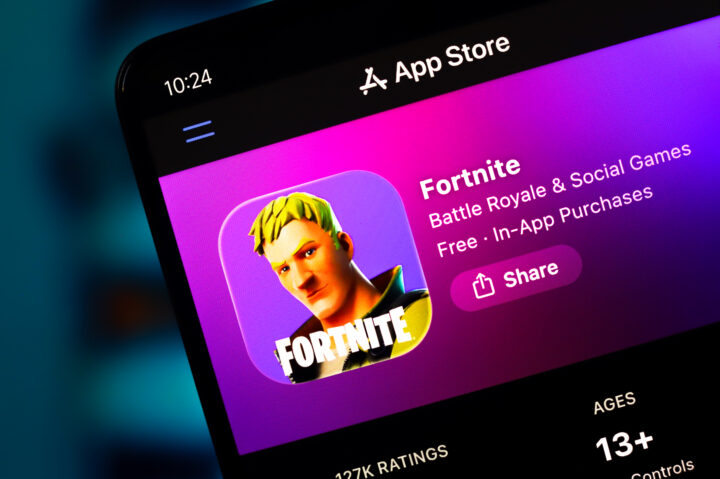
The Fortnite logo is displayed on a smartphone screen in the Apple app store on March 6, 2026.
A first-of-its kind leaderboard evaluating how major video game companies address antisemitism and extremism in online games was released on Wednesday by the Anti-Defamation League, Jewish Insider has learned.
The leaderboard assessed 10 of the most popular games and their respective companies on their policies and in-game safety features. “Fortnite” was rated the best at implementing safeguards to combat antisemitism, with “Grand Theft Auto Online,” “Call of Duty” and “Minecraft” following closely behind. Other major games evaluated included “Roblox,” “Valorant,” “Clash Royale,” “Counter-Strike 2” and “PUBG: Battlegrounds.”
ADL evaluated the product features of each individual game and the relevant policies that govern that game — for some games, the policies that govern them were specific to the game, while for some it was the company policies that apply to all of their games.
The leaderboard, created by the ADL Center for Technology and Society in partnership with the ADL Ratings and Assessment Institute, builds on the annual survey work that CTS did in partnership with gaming analytics firm NewZoo, from 2019-2023.
Games received labels of advanced, moderate or limited protections based on criteria including: antisemitism and hate policy; extremism/terrorism policy; in-game display of code of conduct; documentation of escalation to law enforcement; and in-game tooling.
The latter criteria, which accounts for 60% of a game’s overall score, includes players’ ability to block and/or mute other players; players’ ability to report players for voice, text, usernames and user-generated content; and the game’s prevention of antisemitic and hateful extremist usernames.
Bonus points were awarded for clear appeals processes and engagement with ADL, and points were deducted for harmful content on public-facing game stores. The antisemitism watchdog shared detailed findings with each gaming company and invited them to discuss the assessment before the leaderboard’s release, to which Epic Games, Supercell and Minecraft responded.
Popular online games boast hundreds of thousands of players, with 85% of U.S. teens reporting playing video games in 2024, according to the Pew Research Center. The Pew study found that 80% of all teens think harassment over video games is a problem for people their age, and 41% of those who play them say they’ve been called an offensive name while playing.
The leaderboard comes one year after ADL conducted a study where it asked 15 participants (university students, recent graduates and young adults) to play four leading online games (“Valorant,” “Counterstrike 2,” “Overwatch 2” and “Fortnite”) in one-hour increments with different identities (Jewish and Muslim religious and ethnic identities, as well as in national identities such as Chinese, Mexican and Israeli). It found that almost half of game play experiences included some form of harassment, such as slurs, trash-talking or disrupted play, and one-third included identity-based harassment, such as “gas the Jews” or calling people the “N-word.”
The ADL said it plans to feature the results in an online Gaming Leaderboard, designed to be a resource that will track how gaming companies manage their online multiplayer ecosystems over time to guide parents, gamers, policymakers and the gaming industry itself.
“When a parent wants to know if an online game is safe for their child, there has been no one-stop shop to understand how a particular game approaches online safety,” Daniel Kelley, senior director of the ADL Center for Technology and Society, said in a statement. “This leaderboard addresses that critical gap by offering the most comprehensive evaluation of safety measures in online multiplayer games to date, with a focus on how companies manage antisemitism and extremism.”
Please log in if you already have a subscription, or subscribe to access the latest updates.
 Continue with Google

 Continue with Apple