




































The vice president said the U.S. would welcome direct dialogue with Iran ‘about how we move this thing forward’

(Photo by Andrew Spear/Getty Images)
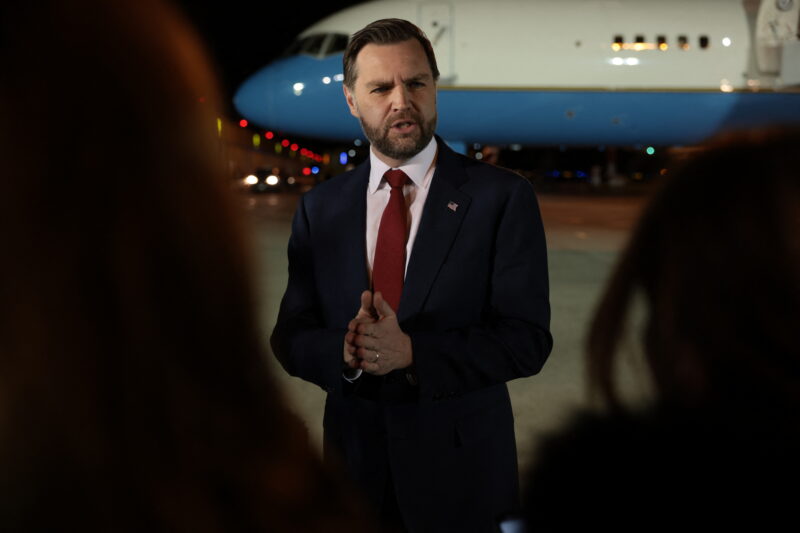
Vice President JD Vance, shown here at a Fox News town hall with Bret Baier and Martha MacCallum in November 2022, appeared with Baier on Monday night.


 Add JewishInsider on Google
When Fox News anchor Bret Baier scored a primetime interview with Vice President J.D. Vance for Monday evening, he likely hoped that Vance would have news to share with him. Instead, Baier was the one to break the news to Vance that President Donald Trump had brokered a ceasefire deal between Israel and Iran, which Trump announced in a post on Truth Social moments before Vance went on air.
“That’s good news that the president was able to get that across the finish line,” Vance told Baier, noting that he was aware those conversations were happening as he left the White House to head to the Fox News studio.
“I knew that he was working the phones as I was on the way over here, so I knew exactly what we were going to do,” Vance said on “Special Report,” after acknowledging that the statement Trump posted on Truth Social was different from a draft that Vance had viewed hours earlier.
“And look, I love that about this presidency and this administration, because he’s always working. He doesn’t say, you know, ‘The vice president’s going to do an interview, so I’m going to stop doing anything.’ He says, you know, ‘We’re going to do the American people’s business.’”
Trump said on Monday night that Israel and Iran had agreed to bring what he called the “12 day war” to an end, with the promise that both sides “will remain PEACEFUL and RESPECTFUL.” He did not say if there would be any binding promises on either side.
Before Iran fired missiles at an American military base in Qatar on Monday, Iran telegraphed to the U.S. that it planned to attack in a symbolic measure. That message was delivered through an intermediary, but Vance said the U.S. would welcome direct dialogue with Iran “about how we move this thing forward.”
Vance has advocated for a more restrained approach to U.S. intervention abroad, including with respect to Iran. But on Fox News, he telegraphed his support for Trump’s actions, which he said “obliterated the Iranian nuclear program.”
“The president has been very clear, and I’ve always agreed with the president, that Iran can’t have a nuclear weapon,” said Vance. “You try to run the diplomatic process as much as you possibly can. When the president decided that wasn’t going to work, he took the action that he had to take. Now we’re in a new phase. That action was successful.”
Vance deflected when asked if he knew where all of Iran’s highly enriched uranium was located, amid reports that the Iranians had removed a large quantity of uranium enriched to 60% from the underground Fordow site ahead of the U.S. strikes on the compound this weekend.
“I think that’s actually not the question before us. The question before us is, Can Iran enrich the uranium to a weapons-grade level, and can they convert that fuel to a nuclear weapon?” Vance responded. “We know that they cannot build a nuclear weapon.”
He reiterated that the U.S. “destroyed” their “ability to enrich uranium,” calling it a “mission success” in Trump’s goal to stop Iran from building a nuclear weapon. Vance warned that the U.S. military stands in the way of Iran following through on its goal of building a nuclear weapon.
“If Iran is desperate to build a nuclear weapon in the future, then they’re going to have to deal with a very, very powerful American military,” said Vance.
Vance said that the U.S. military’s mission is not regime change, and that Trump’s Sunday post expressing support for regime change was a message to the Iranian people to make a choice about it, which is “between the Iranian people and the regime.”
“What the president is saying very clearly, Bret, is, if the Iranian people want to do something about their own leadership, that’s up to the Iranian people. What the American national security interest is here is very simple: It’s to destroy the nuclear program. That’s what we’ve done, and now that the 12-day war appears to be effectively over, we have an opportunity, I think, to restart a real peace process,” said Vance.
The vice president said the U.S. made the decision to strike Iran after assessing it was only using negotiations as a stalling tactic

Screenshot/NBC News
Vice President JD Vance speaks on NBC News' "Meet the Press" on June 22, 2025.
Vice President JD Vance emphasized that the United States is “not at war with Iran” but instead “at war with Iran’s nuclear program,” in an interview with NBC News’ “Meet the Press” Sunday.
Vance also denied that the U.S. is seeking regime change in Iran but is instead seeking peace with a non-nuclear Iran. He said it’s up to Israel whether it wants to take its own action to kill Iran’s supreme leader, Ayatollah Ali Khamenei.
“Our expectation is we’re going to learn a lot about what the Iranians want to do, how they want to proceed over the next 24 hours,” the vice president said. “The president has said he wants, now, to engage in a diplomatic process. But if the Iranians are not going to play ball here, they didn’t leave as many options as it pertains to last night, and they won’t leave as many options in the future.”
He said that if Iran continues its nuclear program, continues to fund international terrorism and attacks U.S. forces, “it will be met with overwhelming force,” but it has the opportunity to rejoin the international community if it changes course.
“What would make sense is for them to come to the negotiating table, to actually give up their nuclear weapons program over the long term,” he reiterated. “And, again, if they’re willing to do that, they’re going to find a willing partner in the United States of America.”
He said the U.S. only took action after it became clear Iran was “stonewalling” in talks and was not serious about negotiations, instead using them as a tactic to build out their nuclear program. “Diplomacy never was given a real chance by the Iranians,” Vance said.
He said that Iran had “stopped negotiating in good faith” and that was “the real catalyst” for the U.S. strikes. Vance said the administration came to the conclusion that talks were stagnant in mid-May.
Vance added that the U.S. had a “limited window” in which to strike Fordow, and that such an operation may not have been feasible in six months.
Asked about the possibility of Iran closing the Strait of Hormuz, a key waterway for the international oil trade, Vance said that such a decision would be “suicidal” for Iran. The Iranian parliament voted Sunday to close the waterway, but that decision will have to be approved by others in the regime.
“Their entire economy runs through the Strait of Hormuz. If they want to destroy their own economy and cause disruptions in the world, I think that would be their decision,” Vance said. “But why would they do that? I don’t think it makes any sense.”
Vance, who has been aligned with the “restrainer” foreign policy camp within the GOP wary of American military interventions, defended Trump’s actions from those critical that the strikes could lead the U.S. to get enmeshed in a protracted conflict in the Middle East once again.
”The difference is that back then, we had dumb presidents, and now we have a president who actually knows how to accomplish America’s national security objectives. So this is not going to be some long, drawn-out thing,” Vance said.
He said the U.S. has “no interest in boots on the ground.”
Vance emphasized on ABC News’ “This Week” that allowing Iran to achieve a nuclear weapon would not have generated peace in the Middle East.
“We can achieve peace much more fully than if we sort of sit on our hands and hope that somehow, if the Iranians get a nuclear weapon, they’re going to be more peaceful,” the vice president said. “That is a stupid approach, and the president rejected it.”
Vance asserted on “Meet the Press” that the raid had “substantially delayed” the regime’s ability to build nuclear weapons by “many, many years.”
“I’m not going to get into sensitive intelligence about what we’ve seen on the ground there in Iran, but we’ve seen a lot, and I feel very confident that we’ve substantially delayed their development of a nuclear weapon, and that was the goal of this attack,” Vance said. The vice president’s comments match an initial assessment provided by Pentagon leaders Sunday morning.
Vance added on “This Week” that the U.S. will have to “work in the coming weeks to ensure” that Iran’s stockpiles of highly enriched uranium are addressed.
“One of the things that we’re going to have conversations with the Iranians about. But what we know is they no longer have the capacity to turn that stockpile of highly enriched uranium to weapons grade uranium, and that was really the goal here,” Vance said, emphasizing that Iran’s enrichment capacity was the primary U.S. target.
“We’re now going to have a serious conversation about how to get rid of Iran’s nuclear weapons program permanently, meaning they have to choose not to have a nuclear weapons program, and they have to give this thing up,” Vance continued.
With congressional Democrats, and a small group of Republicans, denouncing the strikes as lacking the proper congressional authorization, Vance argued on “Meet the Press” that the president has the authority to “act to prevent proliferation of weapons of mass destruction.”
“The idea that this was outside of presidential authority, I think any real serious legal person would tell you that’s not true,” Vance said.
Asked about previous U.S. intelligence assessments that Iran was not actively building a nuclear weapon, Vance said, “There’s of course an open question about whether they were weeks away, whether they were months away. But they were way too close to a nuclear weapon for the comfort of the president of the United States, which is why he took this action.”
He said that the final decision had been made based on American, not Israeli, intelligence, and that U.S. intelligence concluded Iran was not interested in serious negotiations.
The vice president also defended Middle East envoy Steve Witkoff as ‘a guy with a heart who's trying to prevent the killing'

Kevin Dietsch/Getty Images
Vice President JD Vance delivers remarks to the Munich Leaders Meeting, hosted by the Munich Security Conference, at the Willard Hotel on May 07, 2025 in Washington, DC.
Vice President JD Vance defended Israel against an accusation of genocide from podcaster Theo Von on Saturday, but said “this whole debate” around the Israel-Hamas war “has caused us to lose our humanity.”
Speaking on the comedian’s podcast, Vance called the images coming out of Gaza “very heartbreaking” and said the administration is trying to “solve two problems here.” The first, he said, is that “you’ve got innocent people, innocent Palestinians and innocent Israeli hostages, by the way, who are like caught up in this terrible violence that’s happening as we speak. OK? And we’re trying to get as much aid and as much support into people as humanly possible.”
The second, Vance said, is that “Israel’s attacked by this terrible terrorist organization … So I think what we’re trying to do in the Trump administration with that situation is to get to a peaceful resolution.”
He laid out his vision of that resolution: “You’ve got to give Israel confidence that Hamas is never going to attack them and kill a bunch of civilians. And then you’ve got to get as much aid and support into these innocent Palestinians as possible, because in some ways, they’re caught in the middle of this thing too.”
Vance opined that “one thing that I don’t love about the whole Israel-Palestinian debate is, I think it kind of degrades our humanity a little bit. Because I’ve seen people on the left, mostly on the left, who will … completely ignore that all these innocent Israelis were killed in this terrorist attack. And you have some people, usually on the right, who will completely ignore that there are, like, kids who are caught up in this violence.” He continued, “And I think it’s why the president has been — you know, I call him the president of peace — it’s why he cares about solving this problem. Because the longer this goes on, the more suffering, the more death. So we’re trying to solve it as much as we can.”
Vance described Middle East envoy Steve Witkoff as “a Jewish guy, very pro-Israel. He’s done more to try to bring this conflict to a close than anybody. And you sometimes have people who say that they’re pro-Israel who attack Steve for not being pro-Israel enough. And I think it’s totally bogus. I see this guy operate every single day. … He’s a Jewish guy who believes in the purpose of the State of Israel. He also is a guy with a heart who’s trying to prevent the killing. … When I talk about, ‘this whole debate has caused us to lose our humanity,’ I think of the people who are constantly going after Steve.”
Von characterized the conflict as a genocide, saying, “We’re seeing all these videos of people, like, picking up pieces of their children and it’s the sickest thing I think that’s ever been televised. … It feels like a massacre, and it feels like, you know, I’ve called it a genocide.” Von said the U.S. is “complicit” in the conflict “because we help fund military stuff, you know, and that’s where it’s, like, as a regular guy, you’re like, ‘Well, I’m paying these taxes, and they’re going towards this.’”
“Do I think it’s a genocide? No,” Vance replied. “Because I don’t think that the Israelis are purposely trying to go in and murder every Palestinian. I don’t think that’s what they’re doing. I think they got hit hard. And I think they’re trying to sort of destroy this terrorist organization. And war is hell, and that is true.”
But Vance criticized some on the right for a lack of empathy for Palestinians: “I mean, I’ve seen people on my side of the political aisle … who will see these videos of these innocent Palestinian kids and say, ‘Oh, well, they had it coming to them.’ No, no. If you have a soul, your heart should break when you see a little kid who’s suffering, which is why we have the policy that we have, which is we’re trying to stop, eliminate the conflict, eliminate the source of the conflict, so that we can actually bring some peace and some some humanitarian assistance in to people.”
Israeli Ambassador Yechiel Leiter shared pictures of the vice president signing a condolence book at the embassy

Israel's Ambassador to the United States Yechiel Leiter/X
Vice President JD Vance signs a condolence book at the Israeli Embassy in Washington in memory of Yaron Lischinsky and Sarah Lynn Milgrim on May 27, 2025.
Vice President JD Vance visited the Israeli Embassy in Washington on Tuesday to pay his respects following last Wednesday’s killing of two staffers outside the Capital Jewish Museum in the nation’s capital.
Vance was seen in photos posted on X by Israeli Ambassador to the U.S. Yechiel Leiter signing a condolence book at the embassy honoring the memories of Yaron Lischinsky and Sarah Lynn Milgrim, the two staffers killed in the May 21 attack following a museum event for young diplomats and Jewish professionals hosted by the American Jewish Committee.
“Thank you @VP Vance for coming to the Embassy to honor our dear colleagues and friends, Sarah and Yaron. The care and compassion you and the Trump administration have shown in the wake of this murderous attack are testaments to the enduring friendship between our two countries and peoples, and our mutual battle against terrorism,” Leiter wrote on the social media platform.
Leiter said at a press conference immediately following the shooting that Lischinsky and Milgrim met while working at the embassy and that Lischinsky planned to propose on an upcoming trip to Jerusalem.
The alleged shooter, Elias Rodriguez, has been charged with two counts of first-degree murder, the murder of foreign officials, causing death with a firearm and discharging a firearm in a violent crime. The interim U.S. attorney for the District of Columbia, Jeanine Pirro, said last week that the 31-year-old Chicago native, who was seen on video shouting “free Palestine” and “I did it for Gaza” after the attack, is eligible for the death penalty.
A Vance spokesperson did not respond to Jewish Insider’s request for comment on the visit, though the vice president wrote on X the morning after the shooting that, “My heart breaks for Sarah Milgrim and Yaron Lischinsky, who were murdered last night at the Capital Jewish Museum.”
“Antisemitic violence has no place in the United States. We’re praying for their families and all of our friends at the Israeli Embassy, where the two victims worked,” Vance said at the time.
The secretary of state also assured lawmakers that all Trump administration officials are unified in their opposition to Iran maintaining domestic nuclear enrichment capabilities
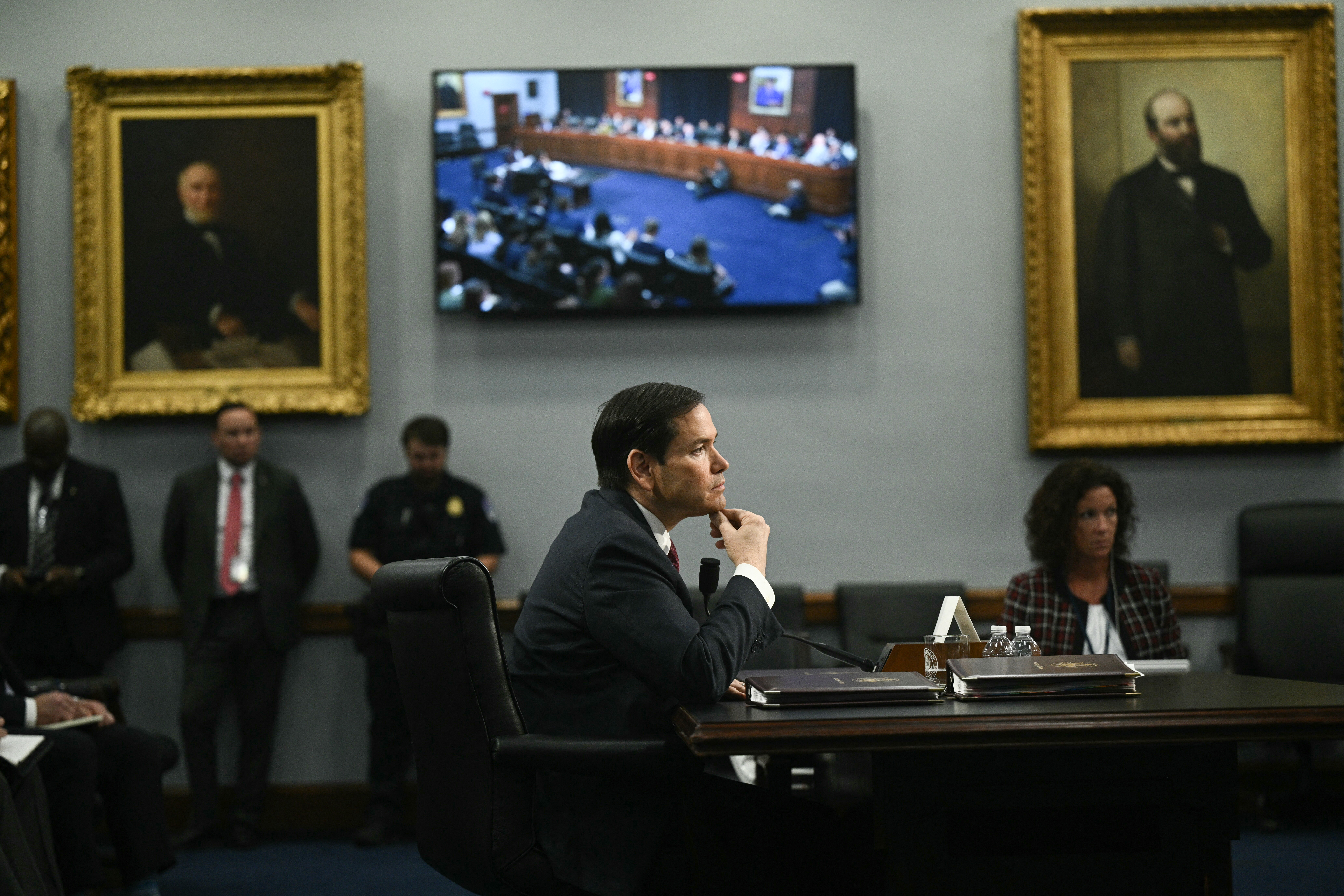
BRENDAN SMIALOWSKI/AFP via Getty Images
Secretary of State Marco Rubio testifies before a House Subcommittee on National Security, Department of State, and Related Programs hearing on the budget for the Department of State, on Capitol Hill in Washington, DC on May 21, 2025.
In his second consecutive day of hearings on Capitol Hill, Secretary of State Marco Rubio said that he expects that additional Arab countries will join the Abraham Accords by the end of the year, if not earlier.
“We do have an Abraham Accords office that is actively working to identify a number of countries who have lined up and already I think we may have good news, certainly before the end of this year, of a number of more countries that are willing to join that alliance,” Rubio said a House Foreign Affairs Committee hearing on Wednesday.
The comments are consistent with other recent remarks by President Donald Trump and Middle East envoy Steve Witkoff.
Rubio added that the administration is currently working on selecting an ambassador for the Abraham Accords, as required under law, to submit for congressional confirmation.
He said that there is “still a willingness” in Saudi Arabia to normalize relations with Israel, but “certain conditions are impediments,” including the Oct. 7, 2023, Hamas attacks on Israel and the ensuing war.
Rubio’s testimony largely reinforced and added on his comments the day before, on issues including Iran and Syria.
He again insisted that all elements of the Trump administration, including Vice President JD Vance and Witkoff, are unified behind the position that Iran cannot be allowed to maintain its capacity to enrich uranium.
And he affirmed that U.S. law requires that any deal with Iran be submitted to Congress for review and approval, noting that he had been in Congress when that law was passed.
At an afternoon hearing with the House Appropriations Committee, Rubio again said that sanctions relating to Iranian proxy terrorism or other malign activities will not be impacted by a nuclear deal that does not address those subjects. Republicans in the past have questioned the distinction between nuclear and non-nuclear sanctions, particularly as part of the original 2015 nuclear deal, which took a similar approach. And they’ve argued that any sanctions relief would allow Iran to expand its support for regional terrorism.
Rubio said the administration is continuing to ramp up sanctions on Iran, and said that European parties to the deal are “on the verge” of implementing snapback sanctions on Iran. He said that the administration would support legislation to implement additional sanctions on Iran’s oil sector.
He denied knowledge of a Tuesday leak by administration officials that Israel was making plans to strike Iran’s nuclear program, adding, “I also don’t think it’s a mystery, though … that Israel has made clear that they retain the option of action to limit Iran from ever gaining a nuclear capability.”
Expanding on comments he made the day before, Rubio said that he favors moving the mission of U.S. security coordinator for Israel and the Palestinian territories under the authority of the U.S. ambassador to Israel so that it can be a better-integrated part of the U.S.’ Israel policy. But he vowed that the core function of the office will continue.
Rubio denied reports of talks between the United States and Saudi Arabia about potential nuclear cooperation outside of a “gold standard” deal, which would include banning domestic enrichment.
The secretary of state reiterated comments about the critical necessity of providing sanctions relief to Syria to help contribute to stability, but he said that continued sanctions relief “does have to be conditioned on them continuing to live by the commitments” that the Syrian government has made verbally, including to combat extremism, prevent Syria from becoming a launchpad for attacks on Israel and form a government that represents, includes and protects ethnic and religious diversity.
He indicated that the U.S. is not actively working to shut down the United Nations Relief and Works Agency, but pledged that the United States will not be providing any further aid to or through that organization and will use its power and funding to look for alternatives.
He said it will be up to other countries whether they continue working with UNRWA, though he noted that the U.S. has been the agency’s largest donor.
Rubio said that he would be supportive, in concept, of legislation to expand current U.S. anti-boycott laws to include compulsory boycotts imposed by international organizations. That legislation was pulled from a House floor vote after right-wing lawmakers falsely claimed it would ban U.S. citizens from boycotting Israel.
Pushing back on calls for the U.S. to withhold weapons sales to the United Arab Emirates over its support for one of the parties involved in the Sudanese Civil War that the U.S. has found is committing genocide, Rubio said that the U.S. is not fully in alignment with the UAE but argued that it’s critical for the U.S. to continue engaging with and maintain a strong relationship with the UAE for its broader foreign policy goals in the Middle East.
He said that maintaining such a relationship and expanding the U.S.’ diplomatic and economic relationship with Abraham Accords countries is also important to ensuring that the Accords continue to be successful.
Rubio said that the State Department had approved restarting aid programs for Jordan that remained frozen — though he noted most were initially exempted from the administration’s blanket freeze. He acknowledged that the frozen programs had been “a source of frustration for [Jordan], and frankly for me.” He continued, “Ultimately, we’re going to get all those programs online, if they’re not online already.”
In a heated back-and-forth with Rep. Pramila Jayapal (D-WA), who was brandishing a pocket Constitution, Rubio again defended the administration’s policy of revoking student visas from individuals accused of involvement in anti-Israel activity on college campuses, saying that they are coming to the United States to “tear this country [apart]” and “stir up problems on our campuses.”
Addressing the case of Rümeysa Öztürk, a Tufts University graduate student that supporters have said was detained solely for writing an op-ed in a student newspaper criticizing Israel, Rubio claimed the situation is not as has been represented. “Those are her lawyers’ claims and your claims, those are not the facts,” Rubio said.
Asked by Jayapal about a comment — “Jews are untrustworthy and a dangerous group” — made by an Afrikaner refugee recently admitted to the United States from South Africa, Rubio said that he would “look forward to revoking the visas of any lunatics you can identify.”
But when presented with the fact that the individual in question was admitted as a refugee, not on a visa, Rubio said that refugee admissions are “a totally different process,” adding “student visas are a privilege.”
At odds with the Trump administration’s foreign policy, Vance called the strikes a ‘mistake’ that would constitute ‘bailing out Europe’

Michael M. Santiago/Getty Images
Vice President J.D. Vance and President Donald Trump
Vice President J.D. Vance expressed deep reservations about the U.S. conducting strikes against Houthi targets in Yemen earlier this month in a private group chat with other senior administration officials, according to a bombshell report by The Atlantic.
Jeffrey Goldberg, The Atlantic’s editor-in-chief, reported on Monday that National Security Advisor Mike Waltz had inadvertently added him to a group chat on Signal, an encrypted messaging application, with Vance and numerous Cabinet-level officials. Goldberg reported that Vance told the group chat, which debated and detailed the Trump administration’s plans to launch the strikes, that he thought they should hold off on the mission.
“Team, I am out for the day doing an economic event in Michigan. But I think we are making a mistake,” Vance reportedly texted the group on the morning of March 14. “3 percent of US trade runs through the suez. 40 percent of European trade does. There is a real risk that the public doesn’t understand this or why it’s necessary. The strongest reason to do this is, as POTUS said, to send a message.”
“I am not sure the president is aware how inconsistent this is with his message on Europe right now,” Vance continued. “There’s a further risk that we see a moderate to severe spike in oil prices. I am willing to support the consensus of the team and keep these concerns to myself. But there is a strong argument for delaying this a month, doing the messaging work on why this matters, seeing where the economy is, etc.”
Defense Secretary Pete Hegseth pushed back on Vance’s arguments, explaining why he believed it would be a mistake to wait to conduct the strikes.
“Waiting a few weeks or a month does not fundamentally change the calculus. 2 immediate risks on waiting: 1) this leaks, and we look indecisive; 2) Israel takes an action first – or Gaza cease fire falls apart – and we don’t get to start this on our own terms. We can manage both. We are prepared to execute, and if I had final go or no go vote, I believe we should,” Hegseth wrote to the group.
“This [is] not about the Houthis. I see it as two things: 1) Restoring Freedom of Navigation, a core national interest; and 2) Reestablish deterrence, which Biden cratered. But, we can easily pause. And if we do, I will do all we can to enforce 100% OPSEC,” Hegseth continued, referring to operational security.
Vance replied directly to Hegseth shortly after, writing: “[I]f you think we should do it let’s go. I just hate bailing Europe out again.”
The comments underscore that Vance’s views are at odds with the prevailing foreign policy view in the Trump administration, and aligned with an isolationist wing of GOP foreign policy circles that has sought to expand its influence. By suggesting that Europe benefits more than the United States from the U.S. Navy’s protection of the Red Sea shipping lanes, he downplayed the national security threat posed by the Houthis in threatening international waterways.
(After the strikes against the Houthis, the Trump White House issued a statement reiterating the American interest in the region: “No terrorist force will stop American commercial and naval vessels from freely sailing the Waterways of the World.”)
A user with the initials SM — believed to be Stephen Miller, the deputy chief of staff for policy at the White House and a close Trump advisor — replied to these messages by suggesting the U.S. expects some recompense from its allies for carrying out the strikes.
“As I heard it, the president was clear: green light, but we soon make clear to Egypt and Europe what we expect in return,” the user wrote. “We also need to figure out how to enforce such a requirement. EG, if Europe doesn’t remunerate, then what? If the U.S. successfully restores freedom of navigation at great cost there needs to be some further economic gain extracted in return.”
A spokesperson for Vance said in a statement to Jewish Insider on Monday, “The Vice President’s first priority is always making sure that the President’s advisers are adequately briefing him on the substance of their internal deliberations. Vice President Vance unequivocally supports this administration’s foreign policy. The President and the Vice President have had subsequent conversations about this matter and are in complete agreement.”
The statement did not address whether the vice president did believe or still believes that striking the Houthis serves U.S. national security interests.
A spokesperson for the National Security Council said in a statement, “At this time, the message thread that was reported appears to be authentic, and we are reviewing how an inadvertent number was added to the chain. The thread is a demonstration of the deep and thoughtful policy coordination between senior officials. The ongoing success of the Houthi operation demonstrates that there were no threats to our servicemembers or our national security.”
The leaked messages also revealed that senior Pentagon advisor Dan Caldwell and Joe Kent, the nominee to be director of the National Counterterrorism Center — subordinate to the Office of the Director of National Intelligence — had been named as the lead deputies coordinating the operation for the Defense Department and ODNI.
Caldwell, a Koch network alumnus, took a leading role in the Pentagon transition process, helping to bring on a series of isolationist foreign policy hires into the Pentagon. Caldwell himself faced scrutiny for calls for the U.S. to pull back from the Middle East.
Kent, who is reportedly acting in an advisory role at ODNI before his confirmation, has past ties to white supremacists and neo-Nazis and promoted conspiracy theories.
The revelations have prompted immediate backlash from both sides of the aisle on Capitol Hill.
“Classified information should not be transmitted on unsecured channels — and certainly not to those without security clearances, including reporters. Period,” Rep. Mike Lawler (R-NY) said. “Safeguards must be put in place to ensure this never happens again.”
Rep. Don Bacon (R-NE) said that the messages should not have been shared on unclassified systems, adding that U.S. adversaries are likely monitoring Hegseth’s personal phone.
“If true, this story represents one of the most egregious failures of operational security and common sense I have ever seen,” Sen. Jack Reed (D-RI), the ranking member of the Senate Armed Services Committee said.
Leaders of multiple intelligence agencies are set to appear before the Senate and House Intelligence committee on Tuesday and Wednesday of this week, where they’re likely to face fierce scrutiny from Democrats over the security breach.
Sen. Mark Warner (D-VA), the vice chairman of the Senate Intelligence Committee, posted an image mocking Hegseth. Rep. Jim Himes (D-CT), the ranking member of the House Intelligence Committee, said he was “horrified” by the reports and that they were illegal and posed “calamitous risks.”
Please log in if you already have a subscription, or subscribe to access the latest updates.
 Continue with Google
 Continue with Apple