




































Protecting the country from terror threats sparked by the Iran war likely to be a major focus for the new homeland security secretary
Anna Moneymaker/Getty Images
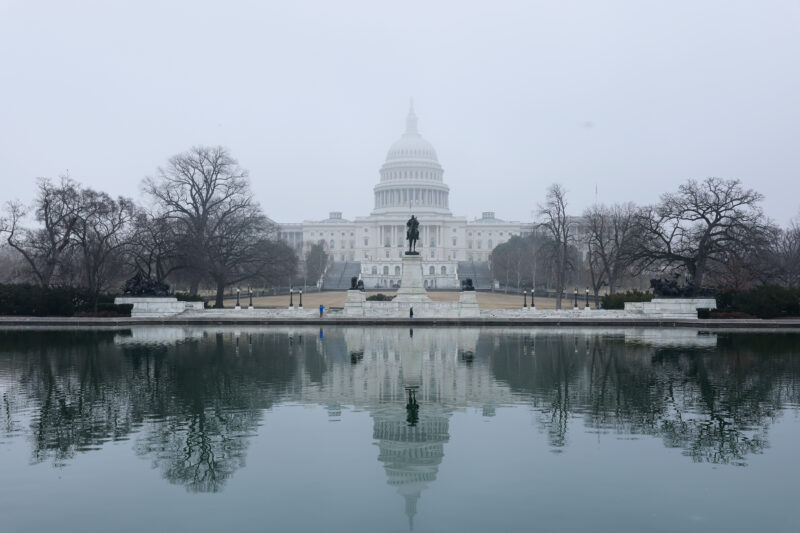
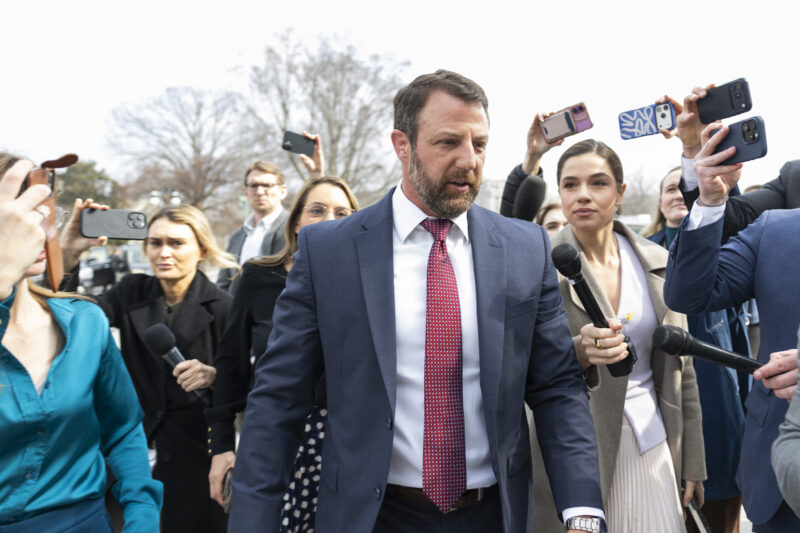
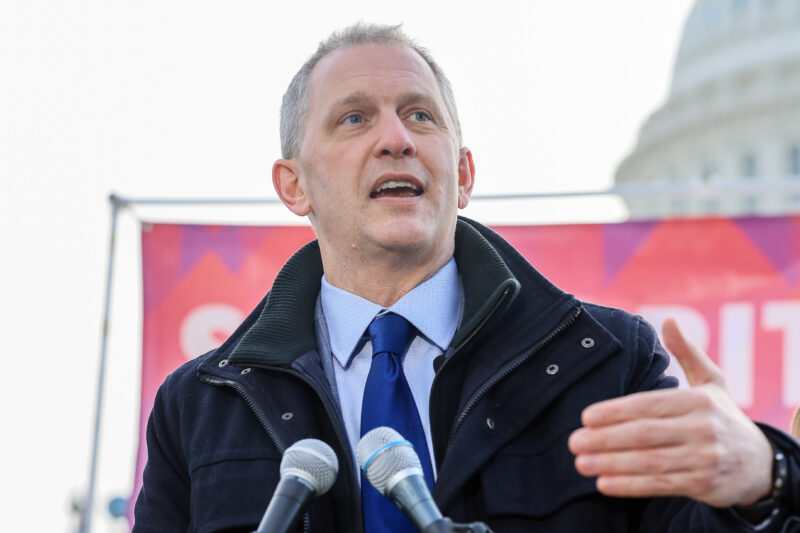
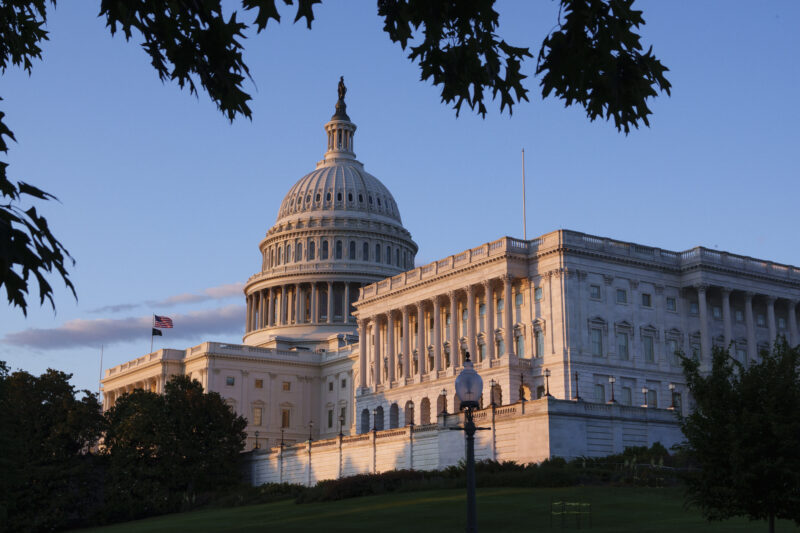
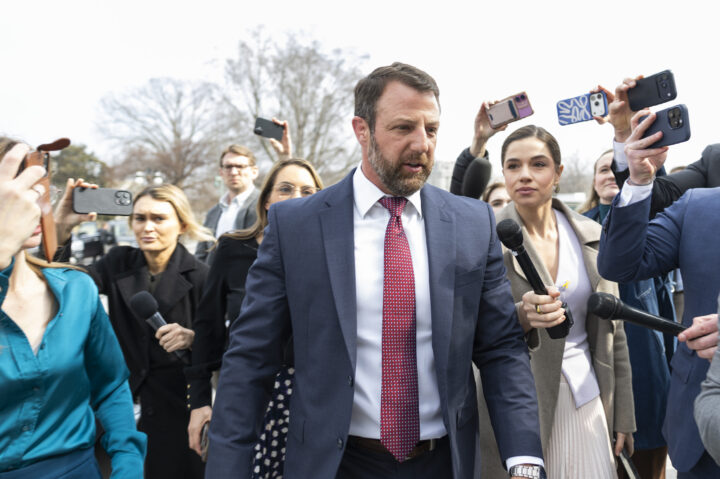
Sen. Markwayne Mullin (R-OK) speaks to reporters as he arrives at the U.S. Capitol Building on March 05, 2026 in Washington, DC.


 Add JewishInsider on Google
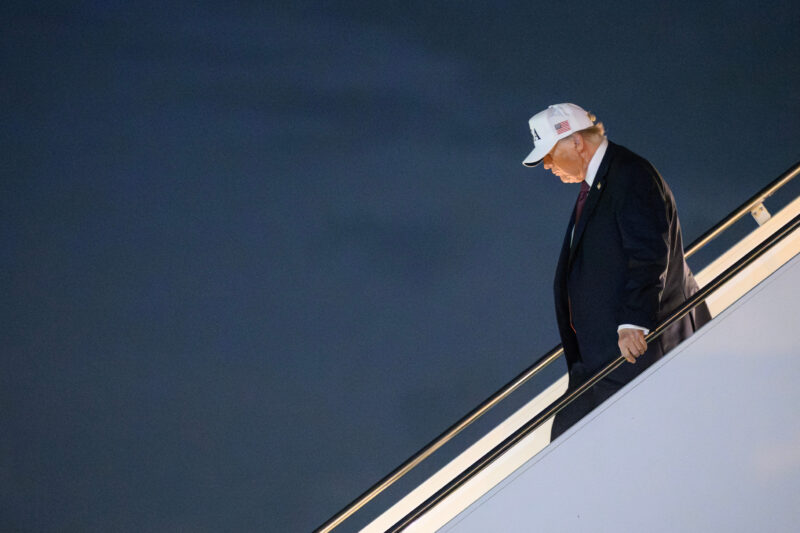
Amid an increasing storm of controversy, President Donald Trump announced Thursday he was removing Secretary of Homeland Security Kristi Noem from her post, replacing her with Sen. Markwayne Mullin (R-OK).
Noem has come under fire for a series of issues, including her handling of immigration enforcement operations, her response to immigration agents’ shootings of two U.S. citizens, an alleged affair with a senior aide and what critics have characterized as self-promotion. Most recently, Noem claimed under oath this week that Trump had personally approved a $200 million ad campaign starring Noem herself, something that Trump has since publicly denied.
Trump said on Truth Social that the switch would take place effective March 31 — though Mullin will still need to face Senate confirmation proceedings.
Mullin could face a contentious path to confirmation. DHS remains without full funding in a partial shutdown — a result of Democratic outrage over immigration operations. Democratic lawmakers will likely grill Mullin during confirmation proceedings, and many would likely vote against him in protest of Trump’s immigration policies. But Mullin’s stature in the Senate and familiarity with his colleagues could give him an inside track to confirmation, as opposed to other potential picks.
Sen. John Fetterman (D-PA), the top Democrat on the Senate Homeland Security and Governmental Affairs Subcommittee on Border Management, Federal Workforce and Regulatory Affairs, told Jewish Insider on Thursday that he would vote to confirm Mullin. Fetterman, who was one of seven Democrats who voted to confirm Noem last January, publicly urged Trump to consider firing Noem and nominating Mullin in her place earlier Thursday.
Fetterman was the only Democrat to immediately commit to supporting Mullin’s nomination, and expressed skepticism that many of his Democratic colleagues would consider doing the same in a post on X announcing his plan to vote for Mullin.
The sometimes-combative Mullin could face some issues on his own side of the aisle as well — the Senate Homeland Security Committee, which would oversee his confirmation, is chaired by Sen. Rand Paul (R-KY), whom Mullin recently called a “freaking snake,” saying he had told Paul he understood why a neighbor attacked the Kentucky senator in 2017, breaking several of his ribs.
Oklahoma Republican Gov. Kevin Stitt similarly cheered the news of Mullin’s nomination, saying in a statement, “Markwayne Mullin has been a fighter for Oklahoma and will fight to keep our nation secure. There isn’t a better choice to lead the Department of Homeland Security..”
Stitt, who is responsible for appointing Mullin’s replacement in the Senate to serve through the next election, added that he “will be looking to appoint a strong, small government conservative voice to support President Trump and protect Oklahomans’ way of life.” Under Oklahoma law, his appointee will not be permitted to run for the seat in the next election.
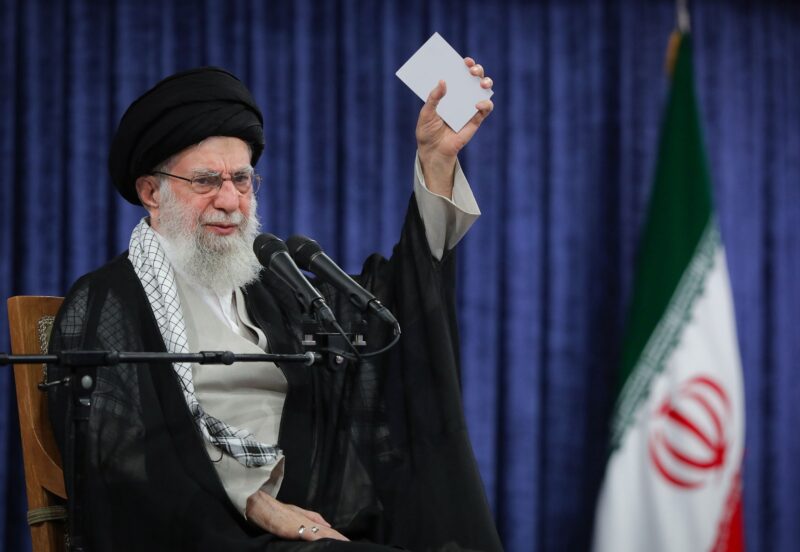
With the central role of immigration in Trump’s messaging and political agenda, immigration enforcement would likely remain at the top of the priority list for any DHS director he selects. But the war in Iran has raised concerns about homeland threats linked to or inspired by the Iranian regime.
Noem told senators in a hearing this week that the administration was preparing for potential homeland attacks by Iran, including “revetting” individuals who entered the country during the Biden administration.
Mullin, in the Senate, has been hawkish on Iran and its proxies, and is a stalwart supporter of Trump, but has been less involved in discussions related to antisemitism domestically — though he indicated he would have been supportive of the Antisemitism Awareness Act.
He said after a House hearing where three college presidents refused to say that calling for the genocide of Jews would be banned under their policies, “The rise of antisemitism on college campuses was on full display yesterday as Ivy League presidents refused to say whether calling for the mass murder of Jewish people constitutes harassment on their campuses. This vile, hateful, and cowardly behavior is completely despicable.”
The 48-year-old senator took office in 2023, after serving a decade in the House.
“We look forward to working with Mr. Mullin when he takes the helm at DHS to support the security of the Jewish community and all American faith communit[ies],” Nathan Diament, the executive director of the Orthodox Union Advocacy Center, told JI.
Noem is the first Cabinet official to leave her post during the second Trump administration. Observers generally see Trump as less eager to remove top aides during his second term, an effort to counter the perception of chaos that pervaded his first term in office from frequent high-level turnover.
Under Noem, DHS has repeatedly come under fire for its handling of issues related to antisemitism from lawmakers on both sides of the aisle and Jewish community groups, though it’s not clear to what extent Noem was directly involved in those issues.
The department added new conditions to Nonprofit Security Grant Program funding which may compel religious institutions to agree to eliminate Diversity, Equity and Inclusion programs and cooperate with immigration enforcement efforts in order to qualify for funding.
NSGP funding itself has also repeatedly been delayed and waylaid, with unclear deadlines provided to grantees and the state agencies that administer the grant program. Lawmakers have said that they also have not received information usually provided to them about the program. It remains unclear whether grants from the 2025 grant cycle have been awarded yet.
Applications for 2025 grants also opened months late, and funding from supplemental grant rounds that organizations applied for in 2024 was delayed by months, well into 2025.
Noem instituted a policy at DHS that required her personal signoff on any expenditures of more than $100,000, which may have contributed to the slowdowns in NSGP funding.
Mullin, as a member of the House, voted with a majority of Republicans against the bipartisan Nonprofit Security Grant Improvement Act, which proposed increased funding for the program and a dedicated structure at DHS to oversee and manage the growing program, but does not otherwise appear to have been actively involved in discussions around the program.
Separately, DHS has repeatedly come under scrutiny over guidelines issued by the Coast Guard regarding displays of swastikas and nooses. Previous policy had described such displays as banned hate symbols, whereas a new policy first reported in November characterized them instead as “potentially divisive” and mandated a lesser investigation.
The Coast Guard assured lawmakers that the policy would be corrected, but weeks later, the Guard apparently broke that pledge and instituted the “potentially divisive” language anyway. Days later, it again walked back the policy change.
Throughout, Noem and the department denied any wrongdoing and attacked critics.
Noem, a former South Dakota governor, is now rumored to be considering a primary challenge to Sen. Mike Rounds (R-SD), a moderate Republican and pro-Israel stalwart. She is also believed to have presidential ambitions. For now, Noem will become special envoy to a new security initiative for the Western Hemisphere being launched by Trump on Saturday, the president said in his Truth Social post.
‘I would say there’s a difference between not liking Israel (or disagreeing with a given Israeli policy) and anti-semitism,’ the vice president added
JONATHAN ERNST / POOL / AFP
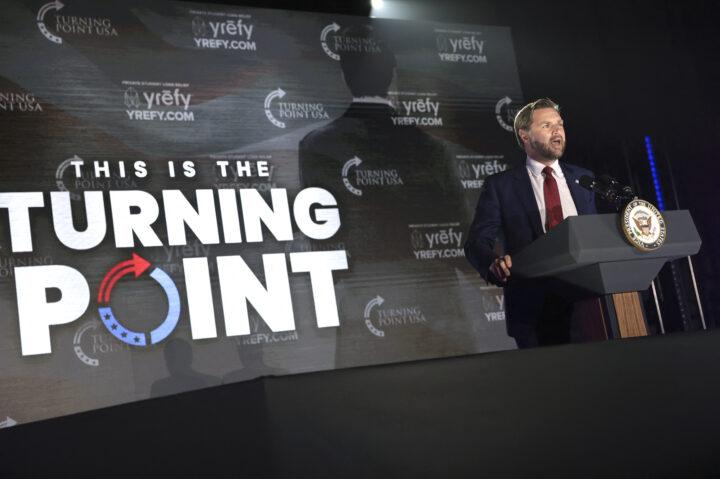
Vice President JD Vance speaks during a Turning Point USA event at the University of Mississippi, in Oxford, Mississippi, October 29, 2025.
In a series of social media posts, Vice President JD Vance linked data finding increased antisemitism among young people on both sides of the aisle to immigration, and said that there is a difference between “not liking Israel” and being antisemitic.
Responding to excerpts from an Atlantic story highlighting the increase in antisemitic attitudes among young people, Vance said, “Mainstream journalism is just profoundly uninteresting and lame, consumed by its own pieties.”
“To write an article about the ‘generational divide’ in anti-semitism without discussing the demographics of the various generations is mind boggling,” Vance continued.
He blamed the increase in antisemitism on immigration and the demographic makeup of younger Americans.
“‘We imported a lot of people with ethnic grievances prior generations didn’t have. We celebrated this as the fruits of multiculturalism. Now we’re super surprised that the people we imported with ethnic grievances still have those ethnic grievances,’” Vance wrote, arguing that “the most significant single thing you could do to eliminate anti-semitism and any other kind of ethnic hatred is to support our efforts to lower immigration and promote assimilation.”
He concluded, “these guys won’t do that, because they all lack curiosity and introspection,” Vance continued.
He also linked to an analysis cited by Manhattan Institute fellow Charles Fain Lehman supporting those conclusions, indicating that foreign origin is more closely correlated to antisemitism than age or ideology.
Responding to a reply from a right-wing influencer who stated that “White conservative zoomers don’t really like Israel anymore either, JD,” Vance said, “I would say there’s a difference between not liking Israel (or disagreeing with a given Israeli policy) and anti-semitism.”
The comments are some of Vance’s first and most notable following the divisions on the right over rising antisemitism in the conservative movement. Vance, who many see as a leader among younger and “New Right” elements of the GOP, had largely avoided engaging in the debate until now.
Owner Manny Yekutiel: ‘There is no justification for attacking me other than the fact that I am Jewish’

Screenshot/JCRC Bay Area on X
Manny's, a Jewish-owned community center, is vandalized during anti-ICE riots in San Francisco on June 9, 2025.
Protests against Immigration and Customs Enforcement deportations that have engulfed San Francisco’s streets this week took an antisemitic turn on Monday night when a local Jewish-owned civic engagement hub and community space had its windows smashed and walls defaced with slurs including “Die Zio,” “The Only Good Settler is a Dead One,” “Death 2 Israel is a Promise” and “Intifada.”
“There is no justification for attacking me other than the fact that I am Jewish,” Manny Yekutiel, owner of the Mission District event space Manny’s, which is in disrepair following the vandalism and break-in, told Jewish Insider. “My business is not a pro-Israel business. I am not Israeli. This is not a space that represents Israel in any way.”
The space was also the target of antisemitic graffiti in October around the one year anniversary of the Oct. 7, 2023 terrorist attacks. The most recent attack is currently being investigated as a hate crime.
In the Bay Area, over 150 people were arrested on Sunday and Monday following protests against President Donald Trump’s travel ban, latest immigration policies and ICE raids. Similar protests spread across the country — including in Los Angeles where 4,000 National Guard members and 700 U.S. Marines were deployed on Monday.
Yekutiel believes the protests against ICE are “necessary” because ongoing deportations are “stoking hatred” and “we need to stand with immigrants.” While Yekutiel says he will continue identifying with left-wing causes, he also said the attack on his business makes the protests concerning for Jews.
The attack on Manny’s “undermines the very values such movements claim to uphold” such as “justice and welcome the stranger,” the Jewish Community Relations Council Bay Area said in a statement.
Monday’s vandalism in San Francisco comes as the Jewish community faces an “elevated threat” following a surge of violent antisemitic attacks across the country in recent weeks, the FBI and Department of Homeland Security warned last week. Last month, two Israeli Embassy employees were killed in a shooting in Washington. Days later in Boulder, Colo., 15 people advocating for the release of hostages in Gaza were injured in a firebombing by an Egyptian national who overstayed his visa in the U.S.
Trump announced his travel ban — which bars nationals of 12 countries from entering the U.S. — last week following the Boulder attack.
“The recent terror attack in Boulder, Colorado has underscored the extreme dangers posed to our country by the entry of foreign nationals who are not properly vetted, as well as those who come here as temporary visitors and overstay their visas,” Trump said. “We don’t want them.”
Please log in if you already have a subscription, or subscribe to access the latest updates.
 Continue with Google
 Continue with Apple