






















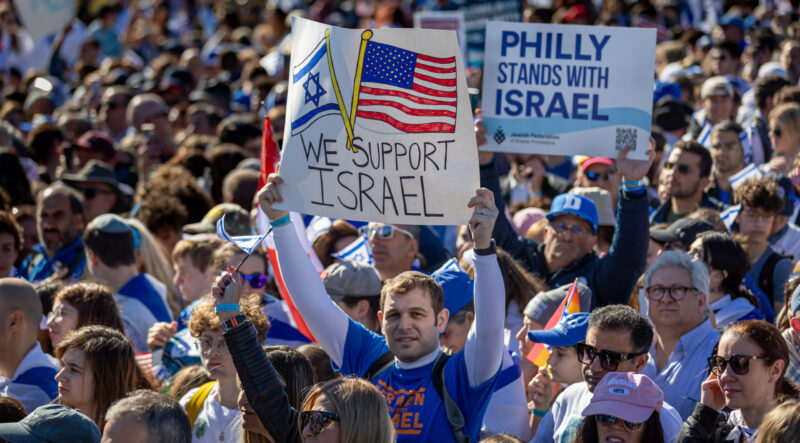


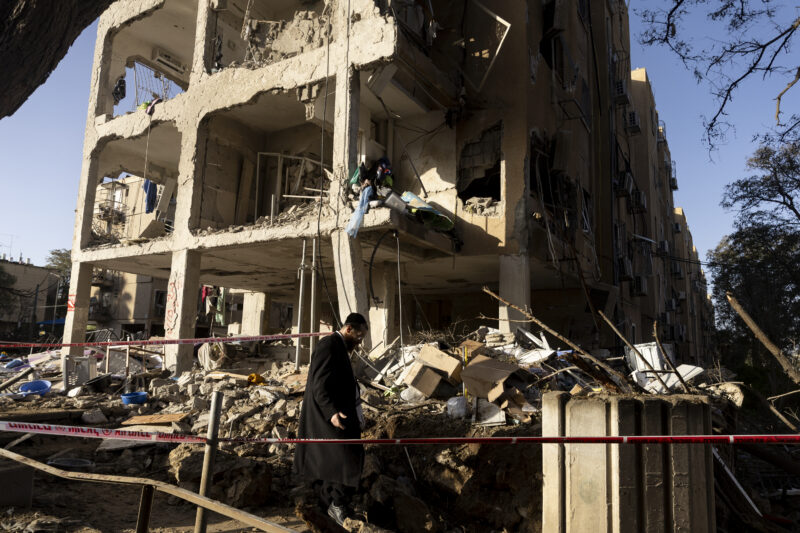










The New Jersey Democrat asked, ‘Is it really worth throwing Jews under the bus to advance your political ambitions?’
Tom Williams/CQ-Roll Call, Inc via Getty Images/PATRICK T. FALLON/AFP via Getty Images
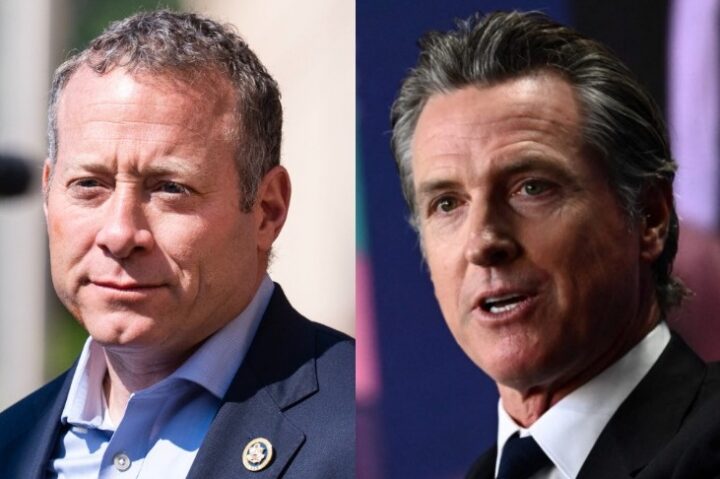
Rep. Josh Gottheimer (D-NJ) and California Gov. Gavin Newsom


 Add JewishInsider on Google
As the Democratic Party’s internal schism over Israel policy continues to deepen, Rep. Josh Gottheimer (D-NJ) called out California Gov. Gavin Newsom, a leading 2028 presidential contender, for recent comments characterizing Israel as an apartheid state and questioning future military aid.
“These comments are not only wrong, but they are dangerous and will feed more antisemitism in our country,” Gottheimer said on X this weekend. “Is it really worth throwing Jews under the bus to advance your political ambitions?”
Newsom and other 2028 contenders, including some who have strong pro-Israel voting records and close ties with the Jewish community, have increasingly shifted left on the U.S.-Israel relationship amid pressure and scrutiny from the progressive wing of the party.
Newsom, whose staff met with Jewish leaders in California after he made the comments, said subsequently that he was speaking about a potential Israeli annexation of the West Bank in reference to a February column by The New York Times’ Thomas Friedman that used the term “apartheid.”
Plus, can Saudi keep its $1 trillion pledge to Trump?
LM Otero/Associated Press
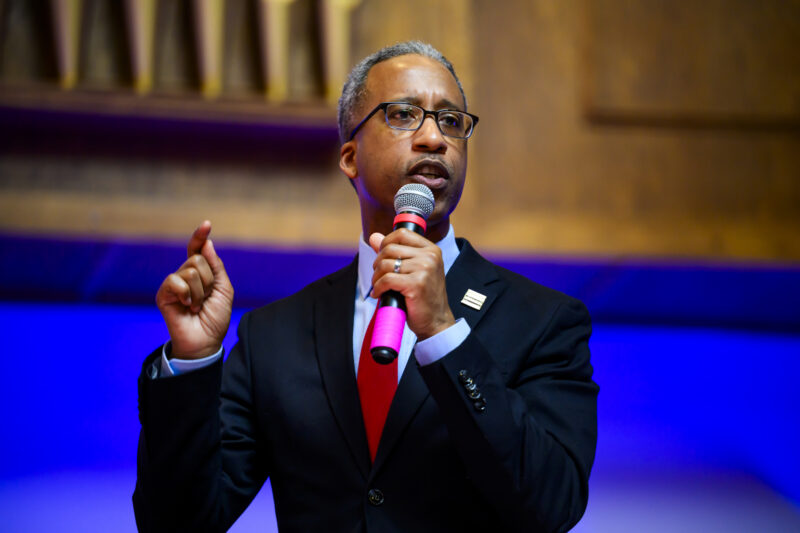
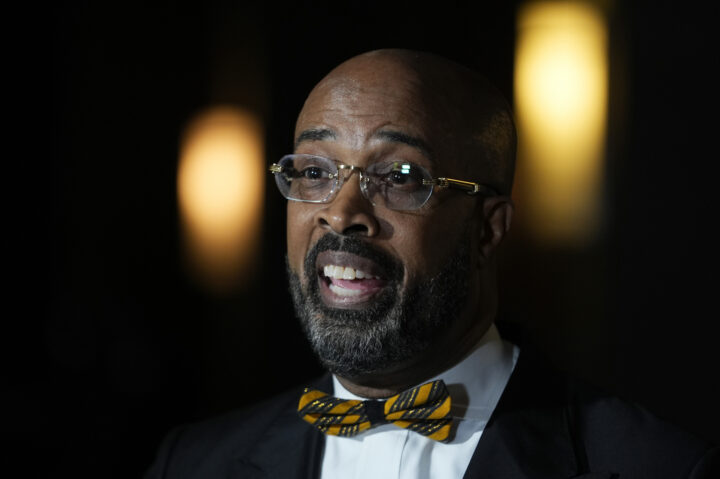
Rev. Frederick D. Haynes III speaks to reporters on Feb. 1, 2024, in Dallas, Texas
👋 Good Thursday morning!
In today’s Daily Kickoff, we report on a sermon blasting Israeli “apartheid” given the day after the Oct. 7 Hamas terror attacks by a Texas pastor now running for Congress, and talk to former Rep. Elaine Luria about her bid for her old Virginia congressional seat. We have the scoop on a call from a bipartisan group of senators for Secretary of State Marco Rubio to “surge resources” to restore internet access in Iran, and look at how Saudi Arabia’s economic challenges are sowing doubt that it can maintain its fiscal commitments to the U.S. Also in today’s Daily Kickoff: Masih Alinejad, Amir Tibon and Carl Kaplan.
Today’s Daily Kickoff was curated by JI Executive Editor Melissa Weiss and Israel Editor Tamara Zieve, with assists from Danielle Cohen-Kanik and Marc Rod. Have a tip? Email us here.
What We’re Watching
- Saudi Defense Minister Prince Khalid bin Salman is in Washington today and tomorrow to meet with senior Trump administration officials as the White House weighs strikes on Iran. Earlier this week, White House officials met with Israeli military intelligence chief Gen. Shlomi Binder in Washington, who briefed the administration on intelligence regarding Iran.
- The Hudson Institute is hosting a briefing with Under Secretary of State for Economic Affairs Jacob Helberg on the Trump administration’s AI-focused Pax Silica initiative. During Helberg’s trip to the Middle East earlier this month, he participated in signing ceremonies with officials from Israel, Qatar and the United Arab Emirates, which have all joined the pact in recent months.
- Elsewhere in Washington, Gov. Josh Shapiro is speaking about his new memoir, Where We Keep the Light, at the Sixth and I Synagogue.
- More than two dozen European foreign ministers are meeting today in Brussels to discuss the potential designation of Iran’s Islamic Revolutionary Guard Corps as a terror organization, as well as to move forward with the implementation of sanctions on Iranian entities in response to the Islamic Republic’s crackdowns on protesters in recent weeks. France, which had previously expressed reluctance to designate the IRGC, yesterday reversed its opposition to the designation — which will require a unanimous vote to be implemented.
- Ahead of the meeting, Reps. Claudia Tenney (R-NY) and Brad Sherman (D-CA) led a bipartisan group of legislators urging the EU to designate the IRGC as a terrorist organization, Jewish Insider’s Emily Jacobs reports.
What You Should Know
A QUICK WORD WITH JI’S GABBY DEUTCH
A week after President Donald Trump took office for the first time in 2017, the White House ignited a political and media firestorm by releasing a statement commemorating International Holocaust Remembrance Day that failed to mention Jews.
The omission was covered in major media outlets including CNN and Politico; the Anti-Defamation League called it “puzzling and troubling.”
Nearly a decade later, Trump released another Holocaust Remembrance Day post this week, with a far more specific message: “Today, we pay respect to the blessed memories of the millions of Jewish people, who were murdered at the hands of the Nazi Regime and its collaborators during the Holocaust,” the statement read, “as well as the Slavs and the Roma, people with disabilities, religious leaders, persons targeted based on their sexual orientation, and political prisoners who were also targeted for systematic slaughter.”
Meanwhile, Vice President JD Vance’s post commemorating the day, which marks the anniversary of the 1945 liberation of Auschwitz by Allied Forces, did not mention Jews or antisemitism, leading political rivals on the left to pounce. (Democratic Majority for Israel called it “indefensible.”)
But despite the visibility of Vance’s tweet — which his defenders pointed out included pictures of him and his wife at Dachau, standing in front of a sign that said “Never again” in Yiddish — he was far from the only politician that failed to mention the fact that the Holocaust targeted Jews. Among them were: Sen. Roger Wicker (R-MS) and Rep. James Walkinshaw (D-VA), both of whom pledged to remember the victims of the Holocaust without referring to Nazis’ targeting of Jews.
Multiple presenters at the U.K.’s BBC also failed to mention Jews in their coverage of Holocaust Remembrance Day — drawing backlash and a subsequent apology from the national broadcaster.
Does it matter that these politicians or media don’t reference Jews if they are still highlighting the significance of the Holocaust? It’s possible to argue that, definitionally, the Holocaust was about Jews, so one could assume that any reference to the Holocaust is itself a reference to the killing of Jews and the antisemitism that led to it.
“If I talk about the potato famine, do I have to say Irish? How many other potato famines were there?” asked Deborah Lipstadt, a Holocaust historian who served as President Joe Biden’s antisemitism envoy. “But this is part of a greater whole in an age of rising antisemitism.”
For years, Americans’ knowledge of basic facts about the Holocaust has been declining, particularly as fewer Holocaust survivors are alive each year to share their stories. A 2023 survey conducted by the Claims Conference found that 21% of Americans believed that 2 million Jews or fewer were killed. Eight percent of Americans, and 15% of 18- to 29-year-olds, said the number of Jews who were killed during the Holocaust has been greatly exaggerated.
RAMMING ATTACK
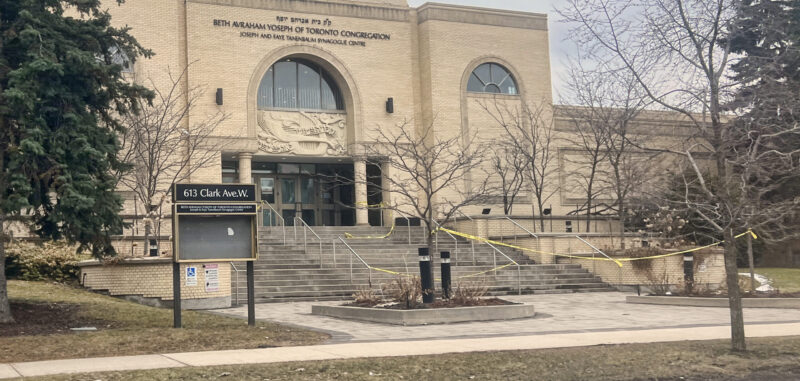
Driver repeatedly crashes car into Chabad Lubavitch HQ; no injuries reported

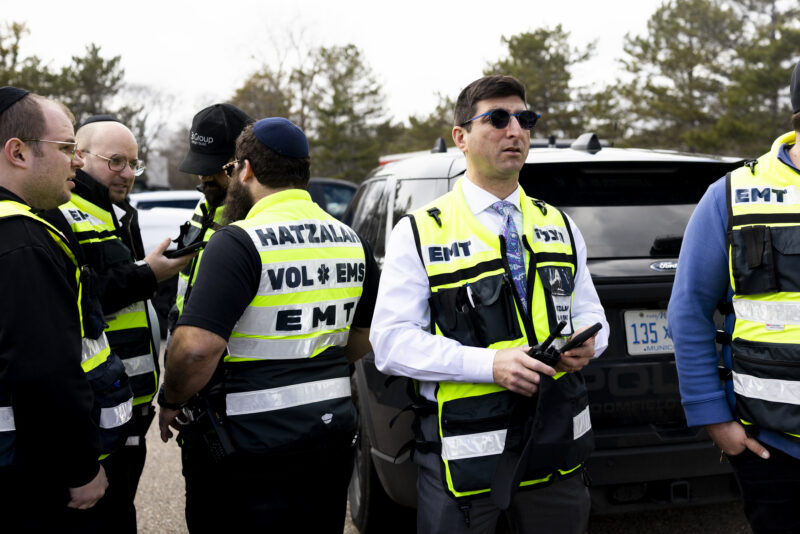
A man drove a Honda Accord sedan “intentionally and repeatedly” into an entryway of the Chabad Lubavitch world headquarters in Brooklyn on Wednesday night, New York City Mayor Zohran Mamdani confirmed. The NYPD responded to an 8:46 911 call on Wednesday at 770 Eastern Parkway in Crown Heights, the home and center of leadership of the late Lubavitcher Rebbe, Rabbi Menachem Mendel Schneerson, now a major spiritual, symbolic and organizational hub for Chabad. No persons were injured in the incident, captured on video, and police took the driver into custody, Jewish Insider’s Will Bredderman reports.
Under investigation: “We’re grateful to the Almighty that no one was hurt,” said Rabbi Motti Seligson, a spokesman for Chabad, adding that damage initially appeared limited. “It houses one of the most significant synagogues in the Jewish world.” Mamdani and Police Commissioner Jessica Tisch went to the scene in the hours following the incident, and a Chabad source told JI that the White House reached out and reported that it was monitoring the situation. Tisch said at a press conference outside 770 later Wednesday night that the incident is being investigated as a hate crime and that the NYPD bomb squad had searched the vehicle, finding no explosive devices. Chabad’s social media editor, Rabbi Mordechai Lightstone, whose son was in the synagogue at the time of the incident, said, “Antisemitism does not appear to be a factor in this.”
PATOR’S POLEMIC
Contender to succeed Jasmine Crockett blasted Israeli ‘apartheid’ in sermon on Oct. 8
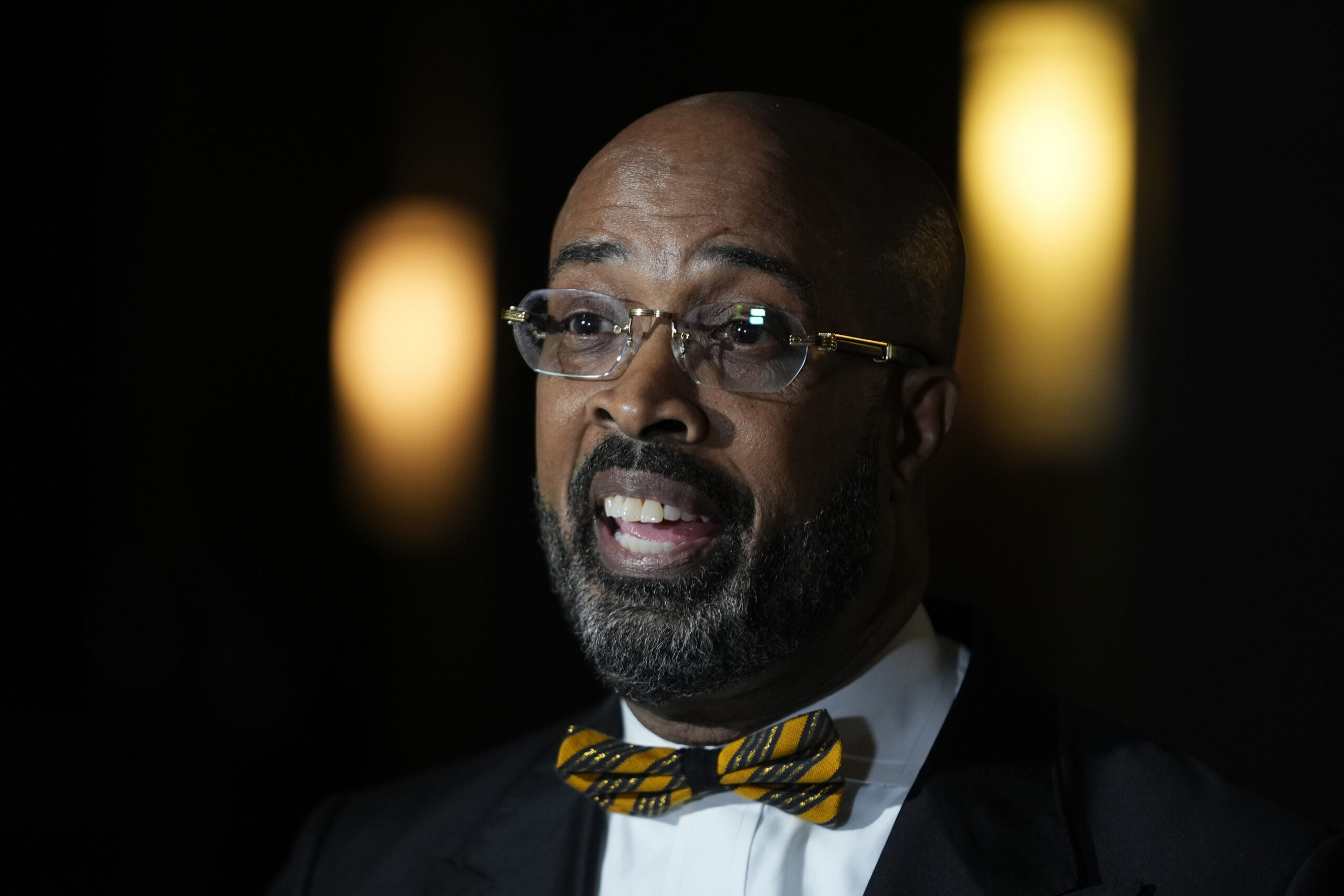
Rev. Frederick D. Haynes III, the longtime pastor at the Friendship-West Baptist Church in Dallas who is running to replace Rep. Jasmine Crockett (D-TX) in her Dallas-area House seat, delivered an anti-Israel polemic from the pulpit on Oct. 8, 2023, the day after Hamas’ attack on Israel, Jewish Insider’s Marc Rod reports, and has a record of other anti-Israel comments since then.
Notable quotable: “The Palestinians, who don’t have the weaponry of Israel, the Palestinians don’t have the financial backing from the United States that Israel has, and so they throw their rocks and shoot their arrows, and Israel is able to bomb them and kill them,” Haynes said. “Watch in the news a disparity between Palestinians being killed and Israelis being killed,” he continued. “It is totally unfair, but this country is going to stand on the side of apartheid because that’s its track record. It stood by apartheid in South Africa, because it created apartheid in this country.”
COMEBACK BID
Moderate Democrat faces off against anti-Israel challengers in suburban Chicago battleground
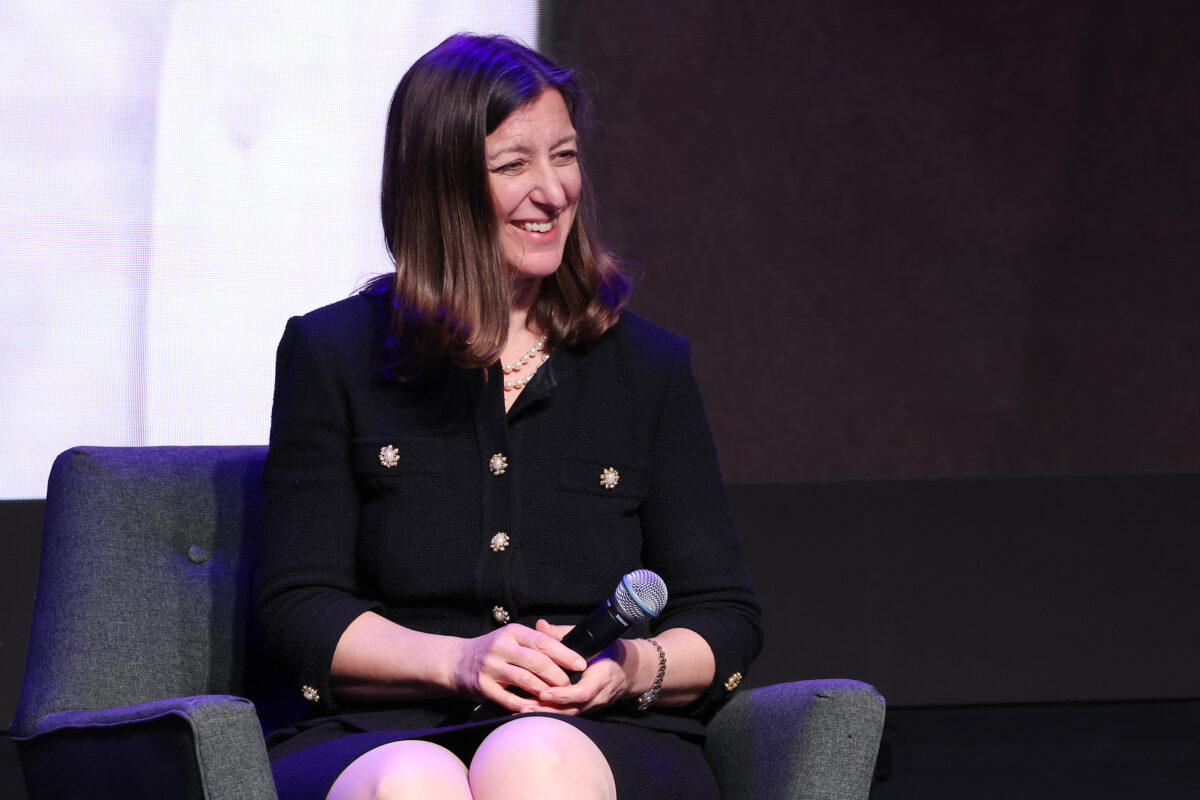
As she launches a bid to reclaim her seat in the House, former Rep. Elaine Luria (D-VA) said that she wants to help lead the effort to push back against anti-Israel voices in the Democratic Party, Jewish Insider’s Marc Rod reports.
What she’s saying: “Having more people like me who are willing to speak up on that issue, in support of maintaining security assistance through the memorandum of understanding and continuing to maintain a strong relationship with Israel is important,” Luria said, adding that she wants to be a “leader” among new members and former colleagues “to show that the support [for Israel] remains strong.” Luria also said that she’d support any action necessary to prevent Iran from obtaining nuclear weapons, but warned that the administration had overstated the efficacy of its strikes last summer.
exclusive
Senators urge Rubio to ‘surge resources’ to support Iranian internet freedom
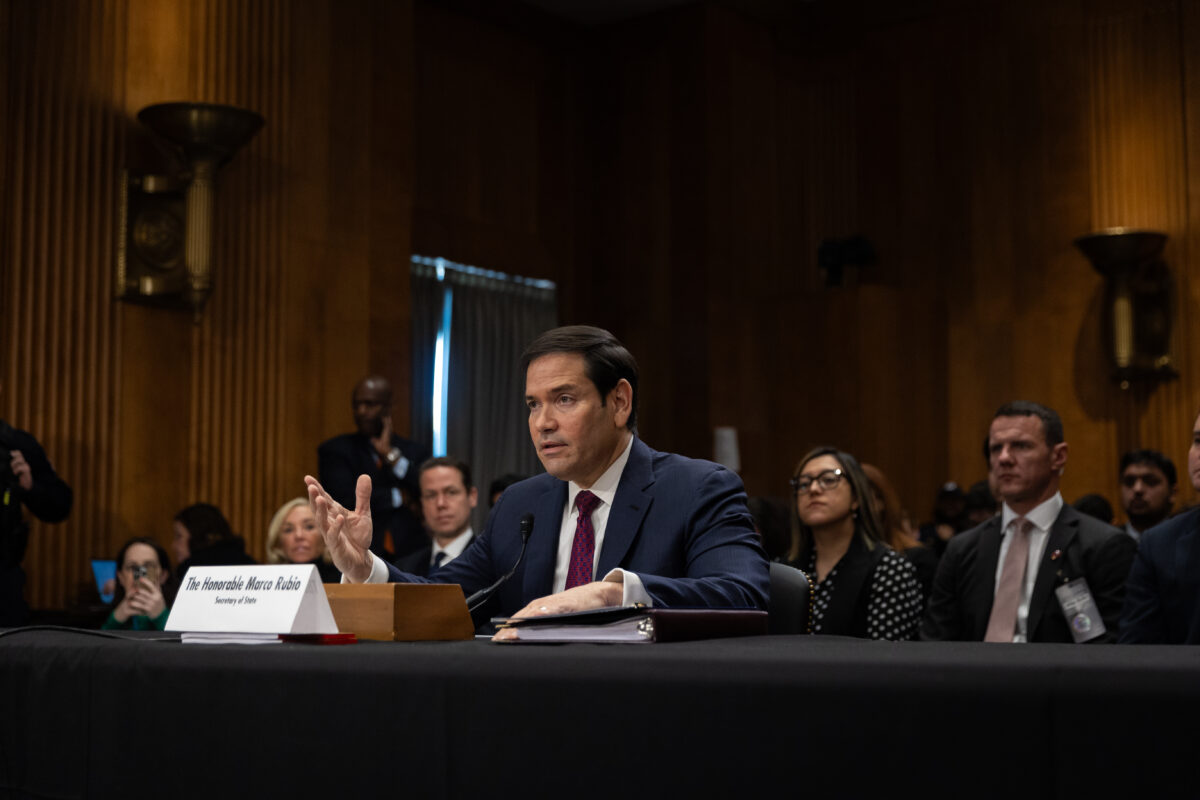
A bipartisan group of senators wrote to Secretary of State Marco Rubio on Wednesday urging him to “surge resources to quickly enable critical internet freedom support” to protesters in Iran, noting funding cuts that have stretched resources for such programs thin, Jewish Insider’s Marc Rod reports.
Notable quotable: “Today, many of the NGOs and technology providers that maintain these tools are facing closure due to funding cuts and more importantly, fewer Iranian citizens can share their videos and messages with the world and each other,” the letter warns. “Without the continuous operation of internet freedom programming carried out by the State Department and Open Technology Fund, millions of Iranians will lose their last secure window and voice to the outside world.”
State of play: Rubio said at a hearing before the Senate Foreign Relations Committee on Wednesday that the Iranian regime is historically weak due to serious economic troubles, but also said that Tehran’s violent crackdown on protesters has appeared to have successfully quelled the demonstrations that have swept the country in recent weeks.
CASH CRUNCH
Saudi Arabia’s economic challenges raise doubts about commitments to U.S.
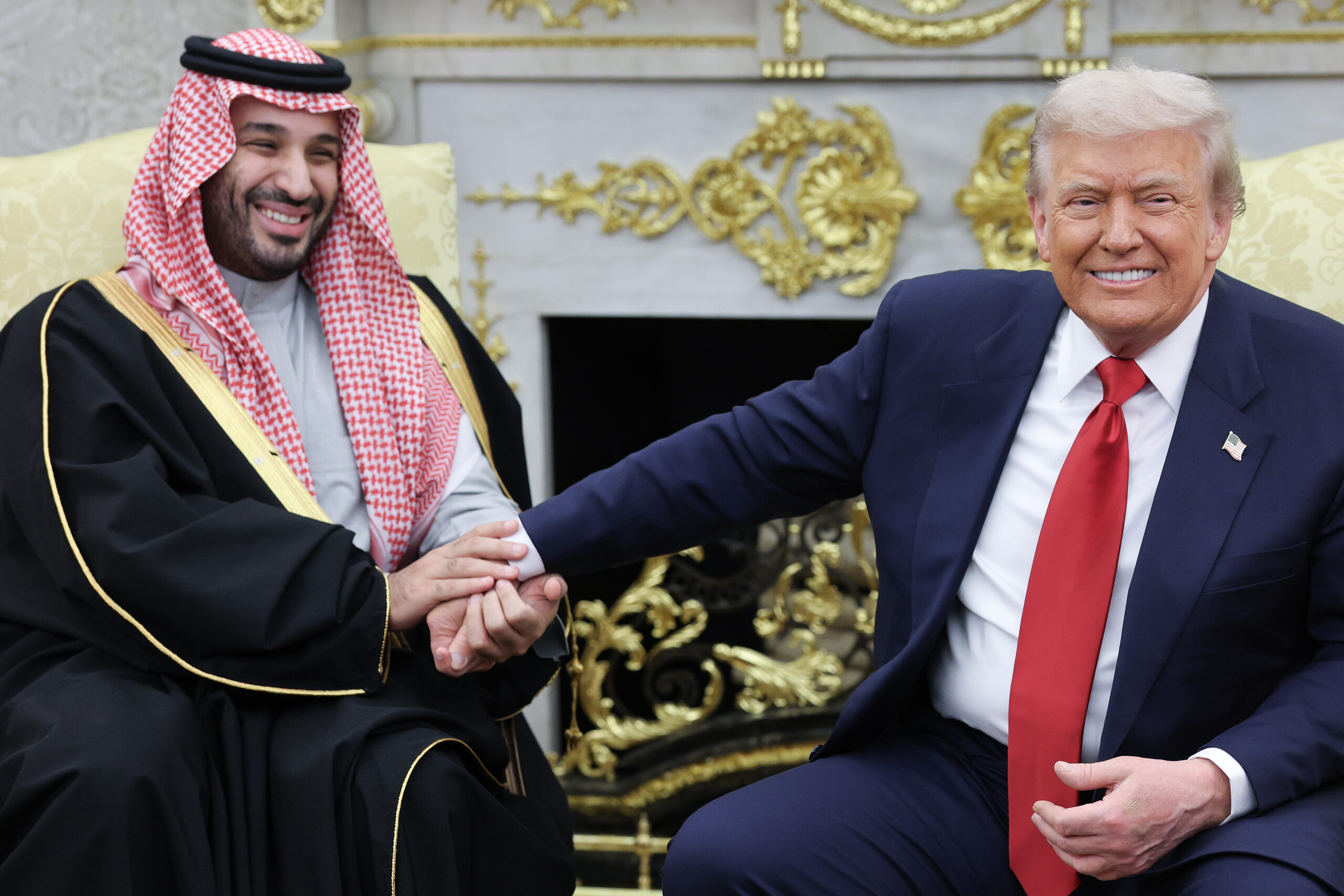
Saudi Arabia’s growing economic struggles have raised doubts among foreign policy experts about whether Riyadh can fulfill its sweeping monetary commitments to the United States. During Saudi leader Mohammed bin Salman’s visit to the White House last November, the crown prince pledged to increase his country’s investments in the U.S. to nearly $1 trillion, committing funds to projects spanning artificial intelligence, energy, defense and infrastructure. But the kingdom is now facing significant financial strain, driven by persistently low oil prices and the immense funding demands of its domestic development agenda, including Saudi Vision 2030, a major government initiative taken on a decade ago to diversify Saudi’s economy, society and culture, which has since been downsized, Jewish Insider’s Matthew Shea reports.
Oil issue: “It’s an economic challenge, and frankly, crisis is a word which works for it,” said Simon Henderson, a senior fellow at The Washington Institute for Near East Policy. “The Saudi economy requires $100 barrels of oil, and although the price of oil has gone up a bit in recent days, it’s still low and way short of $100.” Henderson emphasized that while Saudi Arabia remains a wealthy country due to its hydrocarbon reserves, declining revenue has forced the government to scale back or cancel marquee projects.
Bonus: Former Masters’ champion Patrick Reed announced he is departing the Saudi-backed LIV Golf and rejoining the PGA Tour, following formerly top-ranked golfer Brooks Koepka, who is returning to the PGA Tour following his departure from LIV earlier this month. The Saudi-backed golf league is now planning to sell minority stakes in its teams.
ON THE AGENDA
White House religious liberty commission to hold first antisemitism hearing next month
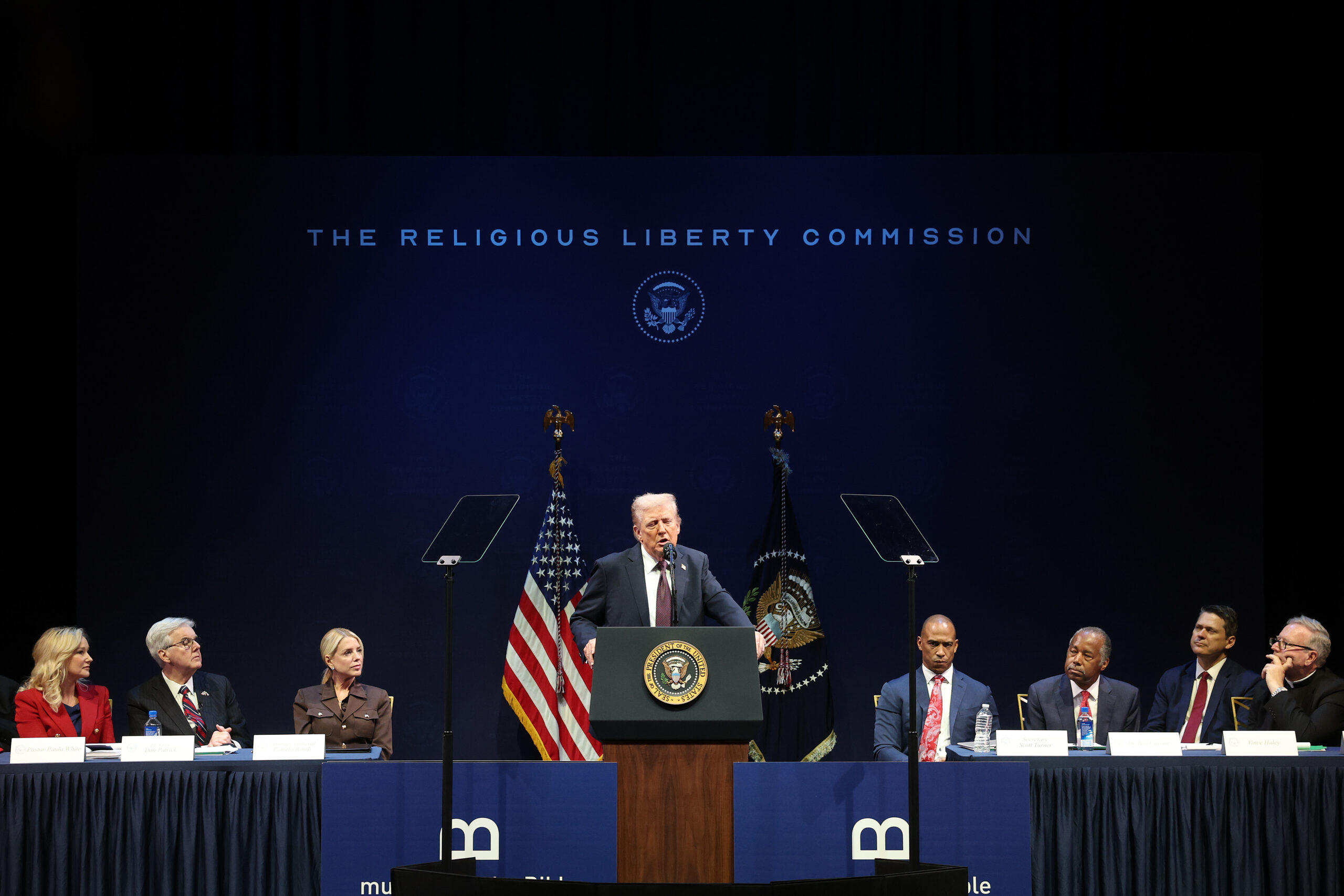
The White House’s Religious Liberty Commission, which was formed by President Donald Trump last spring, plans to hold its first hearing focused specifically on antisemitism next month. The daylong public hearing will be held on Feb. 9 at the Museum of the Bible in Washington, and members of the public are able to testify, Jewish Insider’s Gabby Deutch reports.
In the room: Rabbi Meir Soloveichik, an Orthodox rabbi from New York, is the only Jewish member of the commission, but its advisory board includes four other rabbis, all of whom are Orthodox: Tikvah Fund CEO Rabbi Mark Gottlieb; Rabbi Yaakov Menken, the Coalition for Jewish Values’ executive vice president; Princeton Chabad Rabbi Eitan Webb; and Rabbi Chaim Dovid Zwiebel, executive vice president of Agudath Israel. Alyza Lewin, president of U.S. affairs at the Combat Antisemitism Movement, is a legal advisor to the commission. The commission is chaired by Texas Lt. Gov. Dan Patrick, a Republican.
IHRA adopted: The Chicago City Council unanimously voted to adopt the International Holocaust Remembrance Alliance’s working definition of antisemitism into the city’s declaration of human rights this week, an effort spearheaded by two local university students with no prior political experience, Jewish Insider’s Haley Cohen reports.
Worthy Reads
Ran’s Home, Grief Lingers: In The Free Press, Rachel Goldberg-Polin reflects on the repatriation of the body of Ran Gvili as she continues to mourn the death of her son, Hersh, who was killed by Hamas in 2024. “On Day 843, Ran Gvili’s body was returned to his family. In a bag. I know the experience of having a child returned that way. For me, when Hersh came home, it was not a happy day. At all. It changed the rest of my life forever, and every day is sodden with grief and pain. So it was confusing for me yesterday to receive many messages telling me how happy I must be. But as more and more texts and emails swam to me, I began to understand the messages were because this specific agonizing mission, to get every hostage home, has concluded. … But for us bereaved families, the eternal hurdle is figuring out how to wake up each morning with part of our souls elsewhere. It is doable, because millions of people around the world do it every day. But sadly, this lazy-eight infinity symbol does not end for us; it keeps looping.” [FreePress]
Past is Prologue: In The Washington Post, photographer David Burnett, who covered the 1979 revolution in Iran, reflects on the Islamic Republic’s “full-circle” moment as those who led the fall of the shah nearly half a century ago now find themselves the targets of the country’s anti-government protests. “The protesters of the revolution have become the regime. But the street terror is the same. During the revolution, long before the internet and cellphones, demonstrators and the military alike relied on telephones and the occasional radio to spread word amid the chaos. In the 2020s, word of a protest can spread instantly — unless the internet is cut and the cell network has been shut down. … Now, almost a half-century later, a volatile and angry country ponders where things go from here. The revolutionaries have turned gray, but judging by the deadly serious way they are reacting to the uprising of a new generation, I imagine they still recognize the approach of change when they see it.” [WashPost]
New Regional Rivalry: In Foreign Policy, Firas Maksad posits that two new regional alliances are forming in the Middle East: a moderate grouping led by Israel and the United Arab Emirates, and an Islamic coalition led by Saudi Arabia, Turkey, Qatar and Pakistan. “Tehran is no longer a principal actor shaping the region’s strategic trajectory. Instead, the Middle East is entering a new phase defined by competition between two emerging blocs: an Abrahamic and an Islamic coalition. How this rivalry evolves—rather than Iran’s next move—will do more to determine the region’s future and the U.S. role in it.” [FP]
Qatar on the Quad: In The Wall Street Journal, Ken Marcus, the founder of the Brandeis Center for Human Rights Under Law, raises concerns about the degree to which Qatari influence is playing a role in hiring decisions at American universities, citing a recent lawsuit by Jewish student Yael Canaan at Carnegie Mellon University that alleged she was the target of antisemitism. “Qatari interests in particular contributed to the salary of Elizabeth Rosemeyer, the university’s assistant vice provost for DEI and Title IX coordinator. In light of Qatari investments, Carnegie Mellon was required to ‘consult’ with the Qatar Foundation before hiring her. … At least three other DEI-related officials at Carnegie Mellon involved in Ms. Canaan’s complaints of antisemitism had work-related visits to Qatar, according to the December court order. These included Wanda Heading-Grant, the chief diversity officer, who invoked her Fifth Amendment right against self-incrimination when she was asked about Ms. Canaan’s complaint. Ms. Arscott also worked in Qatar for a time and received funding from Qatar.” [WSJ]
Word on the Street
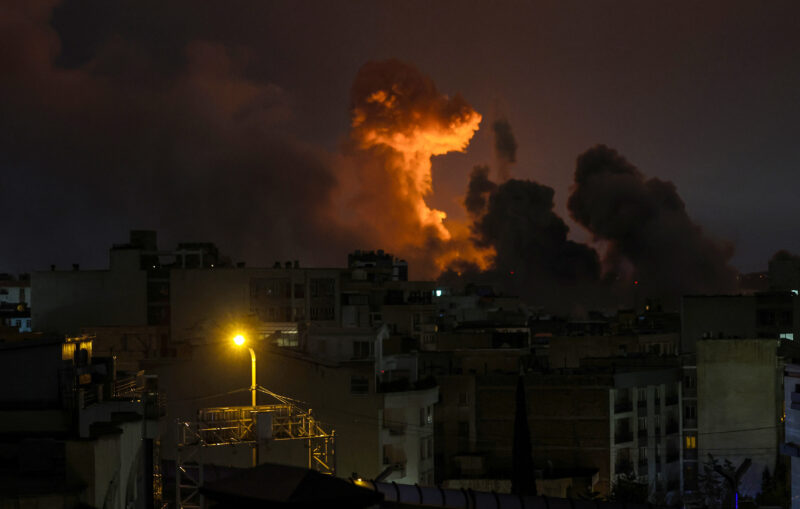
The White House is continuing to weigh the possibility of military strikes targeting Iran, as Tehran threatened to hit the “heart of Tel Aviv” if the U.S. were to mount an attack…
Former Secretary of State Hillary Clinton, who is speaking in Saudi Arabia this week at the Real Estate Future Forum, met on Wednesday with Saudi Crown Prince Mohammed bin Salman in Riyadh…
The Pasadena Jewish Temple and Center, whose campus was destroyed in last January’s Eaton fires, is suing Southern California Edison, alleging the utility company’s negligence failed to follow security protocols that would have mitigated the spread of the fire…
A Brooklyn man was sentenced to 15 years in prison for his role in an assassination plot targeting Iranian dissident and activist Masih Alinejad…
Gamma co-founder Larry Jackson met with Black and Jewish employees of the record label prior to signing Kanye West, also known as Ye, to discuss the rapper’s history of antisemitic and racist comments…
Russian President Vladimir Putin met in Moscow on Wednesday with Rabbi Berel Lazar, the chief rabbi of Russia, and Rabbi Alexander Borodaon, president of the Federation of Communities…
A new report published by UNESCO found that three-quarters of the more than 2,000 teachers in the European Union who responded to a survey from the agency said that they had encountered antisemitism in the classroom, including 61% of respondents who said that Holocaust denial or distortion had been present among students…
A day after International Holocaust Remembrance Day, Pope Leo XIV, speaking to a group of Italian visitors to the Holy See, called for “a world without any more antisemitism, prejudice, oppression or persecution of any human being”…
The Palestinian Authority reportedly paid $200 million in salaries in 2025 to terrorists who committed attacks against Israelis, as well as their families, despite a pledge from Palestinian Authority President Mahmoud Abbas last year to end the PA’s “pay-for-slay” program…
Israel’s Knesset approved the first of three readings of the government’s 2026 budget; if the budget is not passed by the end of March, the Knesset will dissolve, sending the country to elections…
Israeli journalist Amir Tibon was awarded this year’s Wingate Prize for his book, The Gates of Gaza, which recounts his family’s experiences surviving the Oct. 7, 2023, Hamas terror attacks…
The IDF accepted Hamas’ estimate that approximately 71,000 people were killed in Gaza during the Israel-Hamas war…
Airlines operating under the Lufthansa group are extending their cancellation of night flights to and from Israel through Feb. 3 due to ongoing tensions between Israel and Iran…
Bloomberg spotlights the “sprawling investment empire” of Mojtaba Khamenei, a son of and possible successor to Iranian Supreme Leader Ayatollah Ali Khamenei, whose business dealings are conducted by Iranian businessman Ali Ansari…
The Wall Street Journal looks at the split in Washington over the White House’s support for Syrian President Ahmad al-Sharaa following his takeover of Kurdish-held areas of the country, where the U.S.-backed Kurdish Syrian Democratic Forces had been a key component of the U.S.’ strategy to counter ISIS…
Deann Forman was named the executive director of the JCC Association of America’s Center for Innovation and Impact…
Carl Kaplan, the founder and managing director of Koret Israel Economic Development Funds, is retiring more than three decades after founding the organization…
Pic of the Day
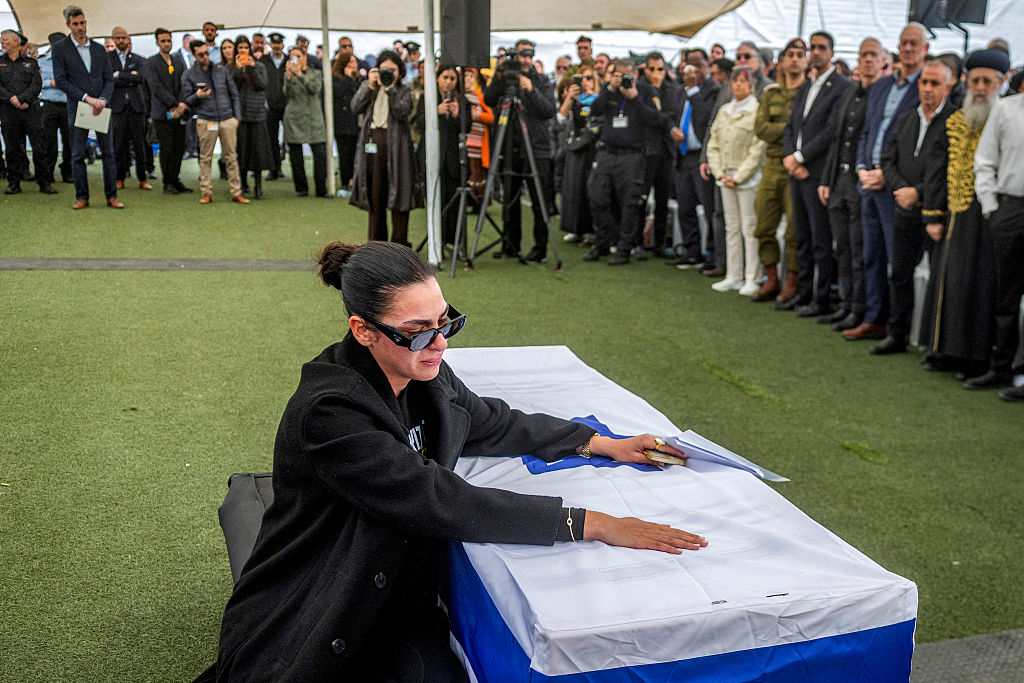
Shira Gvili mourned at the casket of her brother, slain IDF soldier Ran Gvili, at his funeral in Meitar, Israel, yesterday, two days after his body was recovered by the IDF in a cemetery in the Gaza Strip. Gvili was killed in battle on Oct. 7, 2023, and his body was brought to the enclave, where it remained after every other living and dead hostage was repatriated to Israel.
Birthdays
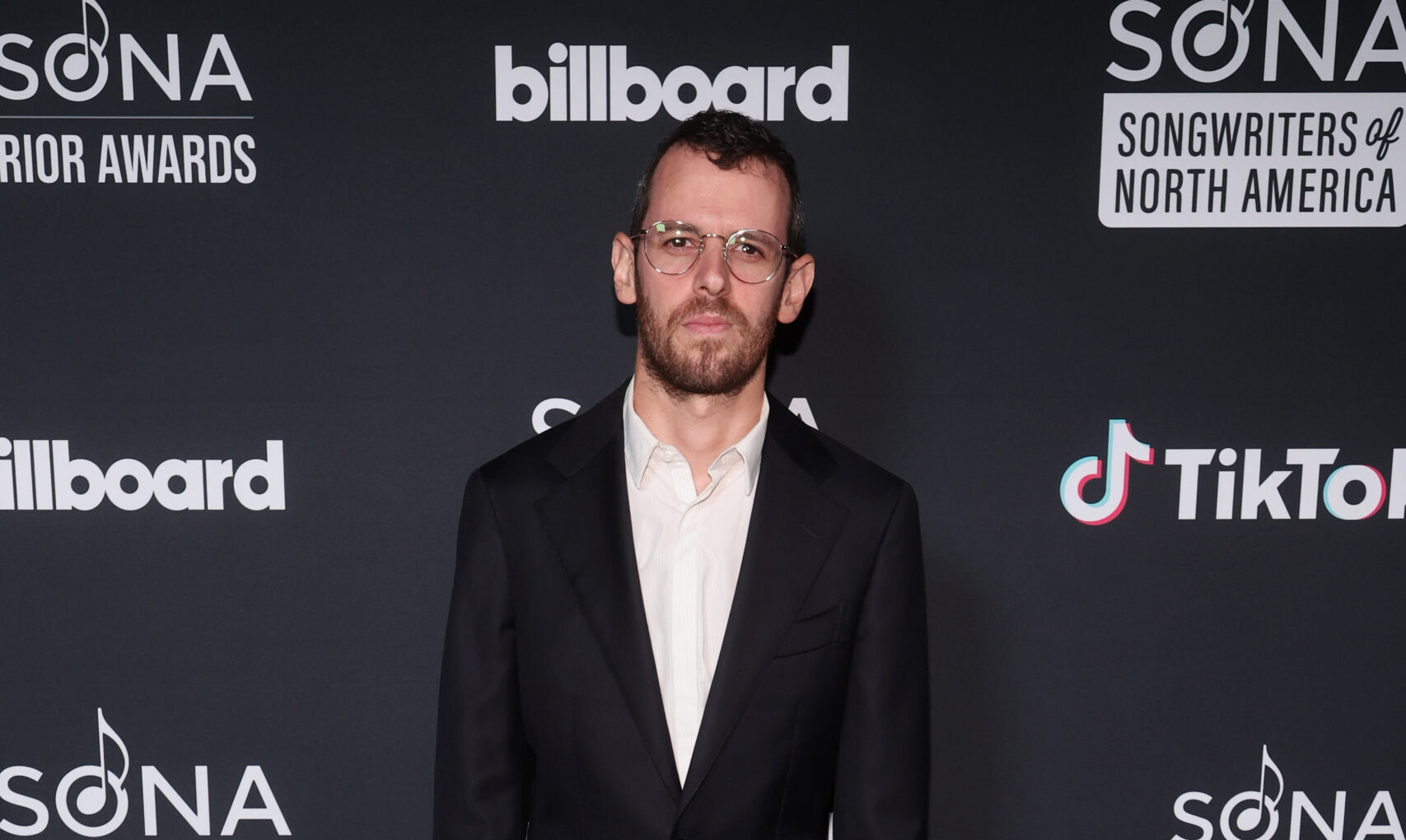
Israeli multi-platinum record producer and songwriter specializing in pop, hip-hop, dance and electronic music, Yonatan “Johnny” Goldstein turns 35…
Rabbi, mohel and public speaker, he is the author of the best-selling Maggid series, Rabbi Paysach Krohn turns 81… Author and first woman ordained by the Reconstructionist Rabbinical College, Sandy Eisenberg Sasso turns 79… Singer-songwriter, he is a two-time gold medal winner in the Maccabiah Games (1985 and 1989) in fast-pitch softball, Steve March-Tormé turns 73… Regional director in Houston for the American Jewish Committee, Randall Czarlinsky… Louisiana resident, Jerry Keller… CEO of the Westchester Jewish Council, Elliot Forchheimer… Senior writer for JCCs of North America, a.k.a. Jane the Writer, Jane E. Herman… Actress known for her role as Amy MacDougall-Barone on the TV sitcom “Everybody Loves Raymond,” Monica Horan turns 63… Former member of the Knesset for Likud and Kadima between 2003 and 2013, Ruhama Avraham turns 62… Physician and an author of four New York Times best-selling books, he is a professor of medicine and engineering at USC, as well as a CBS News contributor, Dr. David Agus turns 61… Former speaker of the U.S. House of Representatives (R-WI), Paul Ryan turns 56… Robyn Cooke Bash… Writer and occasional Bollywood film actor, he is known for his writing of the popular Jewish children’s comic book series “Mendy and the Golem,” Matt Brandstein turns 54… Israeli documentary filmmaker, photojournalist and film producer, winner of two Emmy Awards, Oren Rosenfeld turns 50… Chief impact officer at The Conduit, Denielle Sachs… Former president of the Jewish Federation of Greater Houston, now a D.C.-based philanthropic consultant, Kari Dunn Saratovsky… Israeli actress, model and television host, Yael Bar Zohar turns 46… Former chair of the American Institute in Taiwan, Laura Rosenberger turns 46… Ethiopian-born Israeli fashion model and actress, Esti Mamo turns 43… Associate at Booz Allen Hamilton, Yasha Moz… U.S. Representative (D-MA) since 2021, Jacob Daniel “Jake” Auchincloss turns 38… Mayor of Holyoke, Mass., for nine years starting at age 22, he is now the town manager of Provincetown, Alex Morse turns 37… Associate software engineer at BlackRock, Martha Baumgarten… Swimmer for Israel at the 2016 and 2020 Summer Olympics, Andrea “Andi” Murez turns 34…
Zamaswazi (Swati) Dlamini-Mandela and Zaziwe Dlamini-Manaway traveled to the region earlier this month, ahead of an announced ceasefire between Israel and Hamas
Courtesy
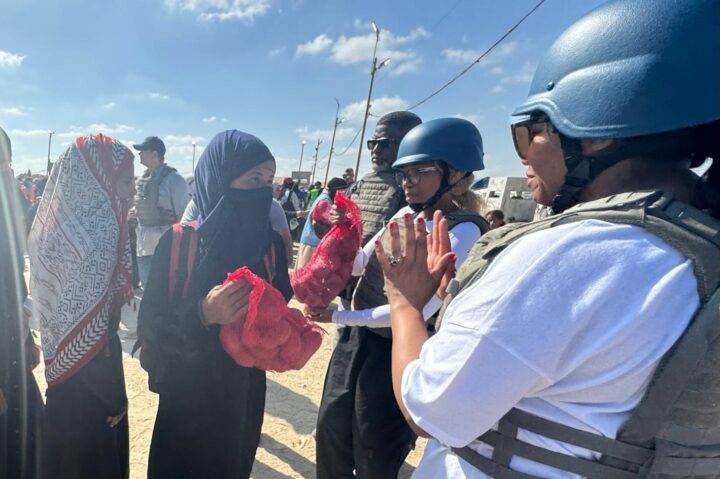
Zamaswazi (Swati) Dlamini-Mandela and Zaziwe Dlamini-Manaway assist the Gaza Humanitarian Foundation in its efforts to distribute aid in the Gaza Strip, Oct. 2025
“What has emerged from all my conversations is that the yearning for peace is very intense,” former South African President Nelson Mandela, visiting Israel in 1999 as part of a broader Middle East trip, said as he reflected on his meetings with leaders across the region. The trip came four months after Mandela, who built his legacy working to dismantle South Africa’s decades-long apartheid system and begin a process of national reconciliation, retired from politics.
More than a quarter century later — despite the ceasefire between Israel and Hamas, the degradation of Iran and its proxy network and numerous wars between Israel and its neighbors — that peace remains elusive. It was against that backdrop that two of Mandela’s granddaughters, Zamaswazi (Swati) Dlamini-Mandela and Zaziwe Dlamini-Manaway, traveled to Israel and the Gaza Strip earlier this month.
Their trip came amid strained relations between Pretoria and Jerusalem, whose leaders and senior officials have been increasingly at odds in recent years. The country’s Jewish community has raised concerns over South Africa’s deepening relations with Iran and aggressive posture toward Israel, which it accused of genocide in a December 2023 International Court of Justice filing.
Dlamini-Manaway and Dlamini-Mandela’s trip to Israel, organized by the National Black Empowerment Council, included meetings with Israeli hostage families and survivors of the Oct. 7, 2023, Hamas terror attacks, visits to Israel’s holy sites and a day on the ground in Gaza where Mandela’s granddaughters assisted the Gaza Humanitarian Foundation in its efforts to distribute aid in the enclave. They left the region days before a ceasefire between Israel and Hamas was announced and the remaining 20 living hostages were released.
The Mandela granddaughters “thought that this could be a unique opportunity to bring necessary attention to what’s being done, while at the same time, as mothers, being able to say that they did something that was in the humanitarian tradition of their grandparents,” Darius Jones, the founder and executive director of the NBEC, told JI.
During the women’s trip, a flotilla, led by anti-Israel activists including Greta Thunberg, made its way through the Mediterranean Sea in an effort to reach the Gaza Strip. Aboard one of the ships was their cousin Nkosi Zwelivelile “Mandla” Mandela, another grandchild of Nelson Mandela. The ships attempting to illegally reach Gaza were intercepted by Israel, and participants were deported to their countries of origin.
The approach taken by Dlamini-Manaway and Dlamini-Mandela was, Jones explained, to “really be a part of something that can have meaningful impact, rather than just try to do a performative stunt, which is not about the people, but more about self-aggrandizement.”
This interview has been edited and condensed for clarity.
Jewish Insider: What made you come to Israel now, in this moment? It’s obviously a very interesting point in time, and not necessarily one that would invite a lot of visitors.
Zamaswazi (Swati) Dlamini-Mandela: Coming to Israel has always been a lifelong dream. Both of our grandparents, Nelson and Winnie, visited Israel. And my grandmother, I remember when she came back, she was like, it’s a trip that we have to take whenever we can, in our own time.
I would have never imagined that I would be going in the middle of a war. When we were telling our families, they were literally shocked. Our kids were horrified, because they have this picture painted in their mind that there’s literally going to be missiles flying over our heads and all kinds of stuff. So it was scary for our family, but I think for us, we were like, what an opportune time to go.
For us, it’s important to actually go and actually experience the story for yourself. Coming from a high-profile family like ours, and also living in the media for years, all our lives have been pretty much lived in public, it’s very interesting what type of bias or viewpoints the news can take. So we always felt like, ‘Let’s go and see for ourselves. Let’s experience for ourselves, and let’s actually go on humanitarian missions to try and understand and really get to know what’s going on.’ For me, there’s no better way than actually physically being in a place to actually experience it. We’ve lived through wars here in South Africa, so that didn’t even scare me. It really wasn’t a thing that deterred me at all.
Zaziwe Dlamini-Manaway: I just knew that if my grandmother was alive, she would have said, ‘You definitely have to go, and make it as balanced as possible, and learn and don’t always take one side, because there’s always different sides to a story.’ So for me, I wanted it to be an experience where I could get both sides — the Israeli side and the Palestinian side. The first thing that I said when this trip came up was, ‘We have to go to Gaza.’ It was instinctive to me. It’s like, I have to go to Gaza, because that’s all we see in South Africa. We only see Gaza. We only see women and children. We only see Gaza flattened. So that was very important for me to see and witness for myself. Our grandmother and our family [have] been ridiculed in the media. So we are very, very cognizant of what we hear and what we take in, because we’ve lived it, and we know that the media can distort things tremendously.
JI: What did you know about Israel and about the region before this trip?
SDM: There’s the obvious history and the long-term conflict between Israel and Palestinians. I think for the most part, for me, I’ve consumed the history on a very high level. I didn’t have the same experiences that my grandparents had, because we were so much younger then, when my grandfather visited. At the time, you know, [Palestinian Authority President] Yasser Arafat was still alive. We were so much younger then. I know it as much as I think the average person knows it. But certainly this was a deep dive into a layered, complicated, complex, difficult history between a few nations.
So I would say before this, I almost didn’t know enough, but I certainly learned a lot, and I’ve come away so much more enriched by my time there. There’s words that you hear, like checkpoints, right? ‘Controlled movements,’ ‘apartheid states,’ those are the things that you always heard and because it’s similar to our history. So in a sense, I was like, ‘Oh, OK, this resonates with our history because of what we went through in apartheid.’ So I think those are the things that you always heard and you always knew about, and you always obviously read about, but when it comes to the actual details of the history, I can’t say I really knew it, but I certainly have come away way more enriched.
ZDM: It was a war. Our kids were terrified for us to go there. It’s a totally different country when you’re actually on the ground. Completely. It’s not what is perceived to us at home, I would say.
JI: You came at a time when we in Israel were approaching, now it’s past, the anniversary of the Oct. 7 attacks.
ZDM: [On Oct. 7, 2023,] I remember all I heard on the news was there was an attack in Israel, and there were hundreds of people killed. But I didn’t actually understand the magnitude and the gravity of what actually happened on Oct. 7. We went to a kibbutz that was literally at arm’s length … to Gaza. It was a complete massacre, a complete massacre of innocent children, parents, people who survived the Holocaust. That was completely horrifying to me, I couldn’t even imagine … the [Nova music] festival. I think Swati cried the whole day at the site.
I did not understand the magnitude of what actually happened on that day. It wasn’t portrayed to me. I was completely horrified by what happened. It was a massacre, it was deliberate, it was calculated. It was a complete obliteration of innocent women and children on one day. It pains me to think that this happened.
But the people that I met — the mothers, the survivors — are still so hopeful, are still so resilient. It’s really something to look up to, because even through so much pain and agony and anguish, they are still hopeful that there could be a place where they can both — both nations, both people, Jewish and Palestinians — can live in a place peacefully, even in their differences. But Oct. 7, for me, was horrific. It was horrific, and it wasn’t told to us South Africans, I can safely say.
SDM: Hearing firsthand accounts of people who actually survived that day and what they experienced and their loss of loved ones, families whose loved ones were kidnapped, dead and alive, children who were kidnapped, and how children were used as pawns to negotiate with the government.
Going into Gaza on that specific day [with the Gaza Humanitarian Foundation] was also incredible, because you heard so many stories about aid not being delivered, aid not getting to the people and malnutrition. And it’s not perfect, right? In any war, nothing is going to be perfect. Aid delivery is never going to be perfect. What we were a part of, what we experienced, was an organization that certainly is trying to make their impact. There were 10,000 or so women and children that we saw that were able to be fed, that, if [they] needed medical care, there was medical care that was available to them.
On the flip side of that, you have [Israeli] families that are still grieving the loss of loved ones who have not even returned, the hostages that still have not returned. The sheer devastation on both sides was very apparent that day. I think that was my biggest takeaway, that there’s suffering on both sides. Like Zaziwe said, to talk to and hear the stories of people who survived and who still have so much hope for the country and who still want peace. They’re desperate for peace.
And I think the fact that we were also there on the day when [President Donald] Trump and [Israeli Prime Minister Benjamin] Netanyahu met to talk about a peace deal and a peace agreement, to us, was a turning point, the fact that there can be peace, and there’s a potential peace that can come to the region. But the healing still needs to come. So we pray for peace. We really pray for peace. We’ve seen what the devastation is firsthand with our own eyes, we’ve seen it, and so we pray that the peace deal will come through, and it will hold.
JI: I saw that you met with Rachel Goldberg-Polin. Swati, before you got on the call, Zaziwe was telling me about her son, and she said he was 25 — he was basically the same age as Rachel’s son, Hersh. What was that meeting like?
ZDM: First of all, this woman is so strong. She is such a strong, strong lady. And what she went through with her only son, I can’t even imagine. She held on for over 300 days knowing that her son was alive, and then literally, right before the IDF was going to rescue him, [Hamas] killed him. Hearing her story was so profound, and really was a moment that I’ll never forget in my life. She literally took me into the day of what happened on Oct. 7. She had a smile on her face the whole time. When she was telling us a story, she was sad, but she had a smile on her face. She was so hopeful, and she was the perfect example of resilience, the perfect example of a person who wants peace, the perfect example of someone who said, ‘I really hope there’s an Israel where Palestinians and Israelis and Jews can live side by side.’ And she even said, ‘I really hope that one day we can have a TRC [Truth and Reconciliation Commission] like you guys.’ She’s like, ‘That’s my wish. I want us to have a TRC in Israel.’
I was in awe of this woman. My son is 25 in two weeks, so I completely resonated with her. I completely connected with her, and she was so loving, and just wanted peace for her country that she loves, and I will never forget that experience. She literally described that day to me, from morning to end, from the moment when she found out that her son was actually held captive, and the message that he sent to her was, ‘Mommy. I’m sorry.’ Can you imagine? I mean, can you imagine knowing that your son has been injured, has been taken captive? Living in agony that your son is in captivity and is injured over 300 days? I can’t even imagine. I can’t even imagine. She is resilience to me, she really is.
SDM: She was so strong, she was so kind, she was so determined to still ensure that the rest of the hostages get home. She gave us so much hope, because she’s like, ‘I want peace.’ It’s not something that you would expect. She’s an advocate for the families who probably don’t have the strength to be able to tell the story or to be able to push and fight. We were just in awe of her. She has hope, and she wants healing for the nations. She really wants healing for the nations. And she spoke about the women and children of Gaza. She spoke about what that means to her and the impact of that. So she spoke about everything. It wasn’t just a one-sided view for her. The human spirit’s ability to be able to live through such trauma and tragedy and still come out and still be so hopeful, for me, she was the epitome of that.
JI: You went to a Gaza Humanitarian Foundation site. What was that experience like? What did you do? What were your interactions like?
ZDM: It was a very hot day, very, very hot. And I think they said that they had about, I think about 4,000-5,000 people before? So on that day they were expecting the biggest crowd. It was about 10,000 people that they were expecting. So, I mean, TV doesn’t do justice. It really doesn’t. When you’re actually on the ground and you actually see people running, literally running for food, it’s something that you can’t even explain.
The men arrive first, they get their supplies, which is pretty chaotic for about 15, 20 minutes, because they’re literally fighting for their aid. So it’s very, very chaotic. And then after that, the women are so organized. The women and children are so organized. They stand in a line, unprovoked, very simple. They just know the order of things. So Swati and I and our team literally spent the whole day giving food, potatoes and eggs to the women, and there were lots of children as well. And I must say, everyone was just so grateful. They were so grateful. They were happy that we were there. There was no interruption. There was nothing untoward. All they came to do was to get food, nourishment and go home. And this happens every single day for these people. You saw the repercussions of what a war entails. Women and children are the biggest casualties, literally, because there were more women and children there.
JI: What was their physical condition?
ZDM: I don’t know what they looked like before. I mean, obviously you could see the desperation. You could definitely see the desperation in them. They definitely do need aid and food, they definitely do. But I’ve seen what the hostages look like when they leave [Gaza], when they’ve been released, and they literally are people who are starving. They’re people who haven’t had anything for months on end. So for me, I compared what I’ve seen to the people, the women and children of Gaza. It’s a totally different image, for me, from what I saw. Obviously they want nourishment. Obviously they would like three meals a day. Obviously. But for me, there’s a difference between what I’ve seen between the hostages who were released and what I saw firsthand in Gaza, I’ll leave it at that.
SDM: It was nice to see that the organization works with Palestinians to facilitate the aid to the community. It’s obviously going to grow over time, which is what was explained to us, because 750,000 people had moved down to that area. GHF is building a bigger facility to actually give more aid, medical care in a way in which it’s safe for the people, as safe as it can be, for the Palestinians who need the aid, as well as the people who are working on the ground. I think from what you heard and what you saw, they’re really doing their best to try and see that they can bring aid to as many people as they can as an organization. I kept saying, ‘Is the food going to run out?’ But they kept bringing trucks. They just kept bringing trucks with potatoes and food packs for the families and nutritional snacks.
And I think seeing firsthand what, like Zaziwe just said, women and children are always the biggest casualties of war, children that are not in school. It was incredibly insightful for us to be able to at least be there and participate and see it and be able to help GHF on that day, because they do so much.
JI: So talking about being in Gaza distributing aid, the irony of the both of you being there distributing aid last week, was that at the same time that was happening, a cousin of yours was on a flotilla headed to Gaza. It’s the irony of ironies that there was a grandchild of Nelson Mandela delivering aid — actually, there were two — and it wasn’t the one who was making splashy headlines.
SDM: We’re a big family, first and foremost. Our grandparents have always, always taught us to carve out our own paths and walk our own journeys. My grandfather, he went to Israel and he went to Gaza. My grandmother didn’t have the opportunity to do the same. So for me, at the end of the day, we’re grateful that he’s back home and he’s safe, he’s fine. We were on a humanitarian mission for ourselves. We are a family that has different ways in which we want to contribute to society and to humanity, and we allow each other room to do that in ways which are befitting to the individual.
So we were on our own mission, and we respect his mission and what he was doing. Ultimately, at the end of the day, the goal is about the people, right? That’s what the goal is, and that’s what the goal should always be. It should be about the people.
ZDM: I think that Swati said it perfectly. We’re a big family, and we all have our own ways of doing things, but the ultimate goal is peace to the region, and we want this war to end. We want all the hostages to come home, and we want the innocent people of Gaza and the Palestinians to also get the aid and food that they need. And we just want this war to end so we all have different ways of doing it, and we’re thankful that he’s home, but for us, we were there as granddaughters of Nelson and Winnie Mandela.
JI: People like to take your grandfather’s words and legacy to shape specific narratives around current events, and this has been going on for many, many years all around the world. When it comes to Israel, the term apartheid gets thrown around a lot. You’ve now been on the ground. You have experienced Israel for yourselves. How do you feel about the politicization of your grandfather’s words when it comes to Israel?
SDM: I’m not a politician. I have been asked many times in my life if I’m going to follow in their footsteps, and I always say, given my personal experience, I don’t really have the desire to. I think that we have a great example to follow in a leader like my grandfather. I’m not here to be a global activist like our grandparents were. I’m just here to make my little, little, little impact in whichever small way that I can, and I think just to be educated. The world has changed so much. Like Zaziwe said, if my grandmother was alive, my grandmother would have come to the region, without a shadow of a doubt, she would have been there because she was — both our grandparents were — those people. But I’m my own person, and I’m here to walk my own path. And people, I think it’s time for us to just walk our own paths.
ZDM: I would say, I think our grandfather’s legacy quotes, what is lived up to is so powerful and so profound, and people can distort it and make it their own. Educate yourself, really educate yourself and really listen, really listen to the words that he spoke, maybe listen to what he said and just do your homework. I just don’t think that you should take and hear everything that you hear from the media, or take what somebody says on a stage and take it for what it really, really is.
This trip was so important to us now, because I thought we have to go there ourselves and see it. And I know most people won’t have the opportunity, but it’s really important to invest time into what you actually believe in, what your conviction tells you about yourself. You need to actually invest. I mean, just not take it at face value, because it can be so distorted, and you can be so deceived, completely deceived, about a situation or about a person.
What I took away was, for me, I literally, if I’m passionate about something, and I can sit there and say, I believe in this, or A, B, C or D, I need to actually put in the time to actually understand what I actually am investing my time and what I’m putting my name behind. Grandad’s name is used and said all over the world, but I find that people don’t really, don’t listen to what he actually really said, both him and my grandmother. You just have to put in time and really invest and educate yourself about what you believe in.
Stein, the state’s first Jewish governor, told JI that he ‘disagree[s]’ with the resolutions and said the state party ‘should focus on issues we’re facing here’
Gary D. Robertson/AP Photo
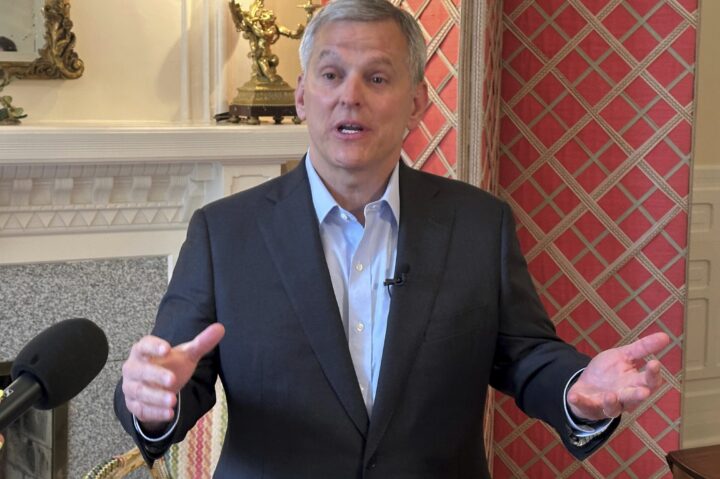
North Carolina Democratic Gov. Josh Stein speaks to reporters after a bill-signing ceremony at the Executive Mansion in Raleigh, N.C., on Tuesday, July 8, 2025.
North Carolina Gov. Josh Stein criticized the resolutions passed by the state’s Democratic Party last month targeting Israel, urging party leaders on Monday to instead prioritize efforts that tackle the problems “we’re facing here in North Carolina.”
One of the adopted resolutions calls for an arms embargo on Israel and accuses the Jewish state of apartheid and genocide, while another draws an equivalence between Hamas and Israel, claiming that both have committed “terrorism” and taken “hostages.” Another resolution calls on the U.S. to exert influence to remove certain Israeli officials from power.
Stein, a Democrat and the state’s first Jewish governor, told Jewish Insider in a statement on Monday that he was not in support of the measures, all of which were approved by the North Carolina Democratic Party’s State Executive Committee in late June.
“I disagree with the party’s anti-Israel resolutions and believe that our state party should focus on issues we’re facing here in North Carolina like the high cost of living, harmful cuts to people’s health care, and rising levels of antisemitism, Islamophobia, and other forms of hate. What’s happening in Gaza is devastating. Israel must allow in food and humanitarian supplies; Hamas must free the hostages; and they must work to achieve a just and lasting peace,” Stein told JI.
The resolutions have faced pushback from other Jewish leaders in the Tar Heel State, including former Rep. Kathy Manning (D-NC), who now chairs the board of Democratic Majority for Israel, and former Gov. Roy Cooper, who announced his bid on Monday for retiring Sen. Thom Tillis’ (R-NC) Senate seat.
Cooper similarly called for Israel to ensure enough humanitarian assistance is allowed into Gaza to support Palestinians on the ground in his statement on the measures, which was provided to JI on Monday.
“I don’t agree with the party resolution, and Israel is an important ally. Israel needs to take seriously the job of getting humanitarian aid into Gaza right now. The hostages must be returned and I continue to pray for a swift end to this war and a meaningful peace in the region,” Cooper told JI.
The resolutions have also highlighted tensions between Jewish Democrats in the state and the NCDP, which voted against recognizing the NCDP Jewish Caucus in 2023 and has been beset by intra-party fights over Israel in its state policy platform.
The NCDP Jewish Caucus said in a statement at the time that it had been trying to work “in good faith with party leaders to promote a balanced, inclusive approach to complex international issues” but that “those efforts have been met with resistance throughout the party’s resolutions process.”
Please log in if you already have a subscription, or subscribe to access the latest updates.
 Continue with Google
 Continue with Apple