
























Daily Kickoff: Israel’s northern border heats up


 Add JewishInsider on Google
👋 Good Thursday morning!
Ed note: The next Daily Kickoff will arrive on Monday morning. Have a great weekend!
In today’s Daily Kickoff,we spotlight a nascent effort to expand ties between Egypt and Iran, and report on concerns from a bipartisan group of lawmakers regarding the seizure of an Iranian oil tanker off the coast of Texas. Also in today’s Daily Kickoff: Elliott Abrams, Frank LaRose and Keren Hajioff.
For less-distracted reading over the weekend, browse this week’s edition of The Weekly Print, a curated print-friendly PDF featuring a selection of recent Jewish Insider, eJewishPhilanthropy and The Circuit stories, including: A new era for the Washington Commanders; American immigrants spice up Tel Aviv’s food scene with family-run cooking studio; For Ilhan Omar, not all foreign influence spending is bad. Print the latest edition here.
Tensions continue to simmer along Israel’s border with Lebanon, as both Israeli officials and leaders of Hezbollah publicly traded barbs in recent days, each threatening to wipe out the other. Earlier this week, a Hezbollah operative hurled a Molotov cocktail at the northern Israeli town of Metulla, damaging water infrastructure but otherwise avoiding casualties.
The U.S. Treasury Department announced sanctions against Lebanese environmental group Green Without Borders and its leader. A release from the department cited the “widely reported” collaboration between GWB and the State Department-designated terror group, and alleged that the organization “has used its resources to support Hizballah activity at GWB outposts and has also publicly partnered with the Hizballah’s construction arm, Jihad al-Bina.”
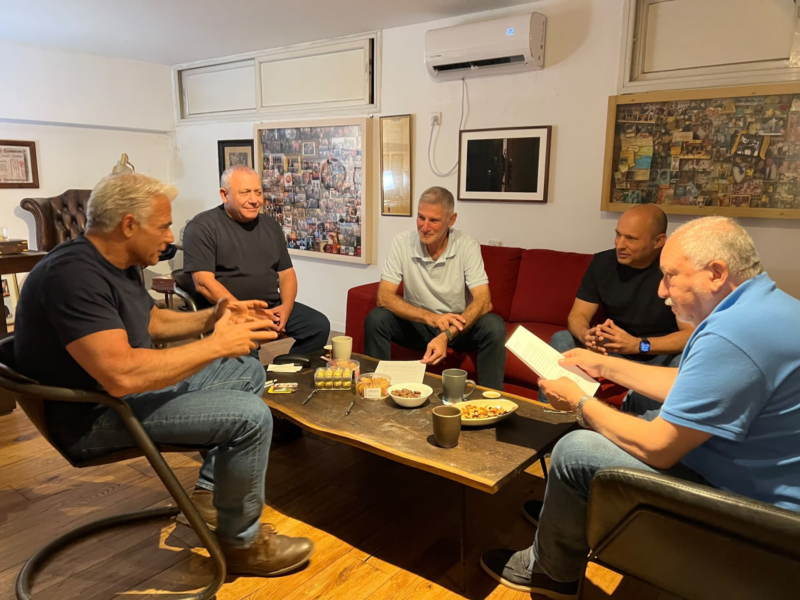
Keren Hajioff, a former senior advisor to Israeli Prime Ministers Naftali Bennett and Yair Lapid, tells us this morning that “diplomatic efforts” are needed to avert a crisis. “The mounting tensions along the Israel-Lebanon border warrant serious attention,” Hajioff, who previously served as IDF spokesperson of the Northern Command, explained. “With Iran-backed Hezbollah intensifying its provocations against Israel, a minor incident could spiral into major conflict. The Lebanese people shouldn’t be held hostage to Hezbollah’s dangerous ambitions. In the powder keg that is the Middle East, the Israel-Lebanon border is a fuse that’s getting shorter by the day.”
Rocky relations, at the moment, appear to remain on the mainland. An offshore drilling rig arrived at its Mediterranean destination — near Lebanon’s recently negotiated maritime border with Israel — this week and is expected to begin exploring for gas in the coming weeks. Lebanese officials are banking on the effort to help extract Beirut from its worst financial crisis in decades.
Israel’s top military brass will meet next week with Gen. Mark Milley. The chairman of the Joint Chiefs of Staff had been slated to visit earlier this summer but canceled due to an escalation between the Wagner group and Russian forces. Milley is expected to meet with Israeli Defense Minister Yoav Gallant and IDF Chief of Staff Herzi Halevi; a meeting with Prime Minister Benjamin Netanyahu has not yet been confirmed.
regional relations

With Middle East observers focused on the chances of normalization between Israel and Saudi Arabia, another more low-profile process of rapprochement appears to be underway in the region: between Egypt, Israel’s oldest regional peace partner, and Iran, Israel’s biggest foe, Jewish Insider’s Ruth Marks Eglash reports. The prospect of closer ties between the world’s most populous Shiite nation and the Sunni-majority Egypt after more than four decades of estrangement serves the interests of both countries, recent think tank reports suggest, and follows a trend of powerful Arab nations forging closer ties with Iran, partly in a bid to bring calm to a tumultuous region.
Baby steps: A research paper published in June by the Institute for National Security Studies (INSS) at Tel Aviv University noted reports in recent months suggesting that the two countries are in the process of drafting a preliminary agreement that would establish, among other things, a joint committee to discuss restoring diplomatic relations and deepening coordination on security issues. Iran’s supreme leader, Ali Khamenei, as well as senior Iranian officials, according to the INSS, have publicly expressed hope for the renewal of bilateral diplomatic ties, although Egypt remains relatively silent on the matter. “The renewal of diplomatic relations accompanied by the exchange of ambassadors between Egypt and Iran still remains uncertain,” Ofir Winter, a senior researcher at the INSS and the co-author of the report, told JI.
Playing both sides: Professor Moshe Ma’oz, a senior research fellow at the Truman Institute at Hebrew University, said that the apparent change in diplomatic strategy in Egypt, which is the most populous Arab state, is likely just “maneuvering” between the countries. “We still don’t know how it’s going to end, but by and large, Egypt is more in the U.S. camp than the Iranian camp,” he said. “Egypt is still very much connected to the United States but is trying to squeeze more concessions from them.” Ma’oz added that while Egypt has certainly been influenced by “the very significant step taken by Saudi Arabia in signing an agreement with Iran, it is more neutral than Saudi Arabia and the other states.”
tanker trouble

A bipartisan and bicameral group of lawmakers sent a letter to President Joe Biden and other administration officials on Wednesday, highlighting concerns that threats from the Iranian government have prevented the U.S. from taking possession of seized Iranian oil, Jewish Insider’s Marc Rod reports.
Details:The letter is focused on the Suez Rajan, a tanker anchored off the coast of Texas. The U.S. seized the Iranian oil onboard the ship in April, in accordance with the U.S.’ sanctions, but the oil onboard has reportedly not yet been off-loaded. The senators link this delay to threats of violence by Iran’s Islamic Revolutionary Guard Corps against any company involved in off-loading the cargo. “The ability for a designated Foreign Terrorist Organization (FTO) to prevent the transfer of seized assets within U.S. territorial waters is an unprecedented intimidation effort that threatens to undermine our Nation’s security,” the letter reads.
On board: The letter was organized by Sen. Joni Ernst (R-IA) and Rep. Elise Stefanik (R-NY) and signed by Sens. Richard Blumenthal (D-CT), Lindsay Graham (R-SC), Bill Hagerty (R-TN) and Kevin Cramer (R-ND) and Reps. Josh Gottheimer (D-NJ), Jim Banks (R-IN), Don Davis (D-NC) and Max Miller (R-OH).
Recommendations: The letter urges Biden to “work expeditiously to resolve the delay” and continue to enforce the law against FTOs, warning that sanctions enforcement “will become irrelevant if American citizens and companies involved live in fear of Iranian retaliation.” The lawmakers request a briefing and other information from the administration by Sept. 15 on the status of the Suez Rajan shipment and U.S. oil sanctions against the IRGC, as well as the companies that have refused to assist with the offloading.
Worthy Reads
💸 Aid Debate: In Commentary, Elliott Abrams counters recent arguments made in Tablet, The New York Times and the National Interest that the U.S. should end aid to Israel. “I’d like to see a world where the Islamic Republic of Iran has fallen and is no longer building nuclear weapons and threatening ‘Death to Israel.’ Where Hamas and Palestinian Islamic Jihad are not murdering Israelis with weapons and money supplied by Iran. Where Hezbollah does not have 100,000 rockets financed by Iran aimed at Israeli cities. Where the United States does not seem, to Israelis and Arabs alike, to be withdrawing from the Middle East and weakening its support for friends and allies there. For the United States to end military aid today would send a message to all of Israel’s enemies that Israel’s greatest friend was stepping away, so they should double down on their plans for more, and more deadly, assaults on the Jewish state. No change in the Middle East would rival the significance, for Israel, of the fall of the Iranian regime and its proxies. Should that occur, I would join these disparate thinkers and say ‘it’s time’ to renegotiate the level of U.S. military aid. But too many of the arguments for ending aid today virtually ignore the real and murderous threats the Jewish state is facing. It is time to be more serious about the lives, and deaths, of our fellow Jews who live in the Jewish homeland.” [Commentary]
☢️ Saudi Strategy: In The Wall Street Journal, Rich Goldberg suggests the Biden administration restore enrichment restrictions on Iran as a way to address Saudi Arabia’s drive for a domestic nuclear enrichment program. “A race to enrich throughout one of the world’s most dangerous and unstable regions is a national-security recipe for disaster. But when any American tells a Saudi official that the U.S. can’t support enrichment on Saudi soil, an obvious question comes back quickly: You’re saying you can support an enrichment program in Iran, which is trying to kill Americans every day, but you can’t support an enrichment program in Saudi Arabia, a close strategic partner? There’s an easy fix for President Biden to deliver Saudi-Israeli peace without giving in to Saudi demands: Restore the international standard of zero enrichment for Tehran. Tantalized by the prospect of a historic peace agreement that could change the face of the Middle East, there is increasing pressure in both Israeli and American circles to accommodate the Saudi request. After all, the 2015 nuclear deal and subsequent negotiations have all but normalized illicit Iranian nuclear activity. But instead of making an already flawed nonproliferation policy even worse, Mr. Biden should opt for the more obvious path: opposing Iran’s enrichment, too.” [WSJ]
🍎 Mister Mayor: The New Yorker’s Ian Parker profiles New York City Mayor Eric Adams a year and a half into Adams’ first term. “By 2018, Adams and [political consultant Evan] Thies were years into discussions about a mayoral run in 2021, when [former Mayor Bill] de Blasio’s second term would end. But they had barely discussed policy. “The message conversation really starts once you’re about to declare,” Thies told me, describing a path to City Hall that would have sounded familiar to a candidate running a hundred years ago. The first objective was viability: “It’s about building support politically, and knowing you’re going to be able to pay for a campaign — you know, the logistics, the machinery.” Adams, who had been registered as a Republican for several years at the turn of the millennium, and whose career had not been defined by sustained ideological commitments, was building an unusual coalition that came to include Black homeowners, Orthodox Jewish communities, and some key unions and real-estate interests. He’d set up an organization, One Brooklyn Fund, that accepted donations to finance events that promoted the borough — and promoted the borough president, too. Between columns of Brooklyn Borough Hall, he’d hung a banner showing his face.” [NewYorker]
💻 Virtual Reality: The New York Times’ Zachary Small interviews Luc Bernard, the creator of a virtual Holocaust museum in the popular video game Fortnite. “The museum’s architecture resembles a modern mansion outside of Miami with large windows and a reflective marble floor. Beyond a small lobby, the exhibit begins with information about Kristallnacht, the 1938 attacks on Jews in Nazi Germany that are widely recognized as the start of the Holocaust. ‘Hate is rising worldwide and I think we need tools to make people more empathetic,’ Bernard said while wearing sunglasses and puffing from a vape during a Zoom call. He noted that hundreds of millions of dollars have been spent on Holocaust museums, but that only 20 percent of Americans have visited one. Most of the pictures and placards within the Fortnite museum focus on lesser-known aspects of the Holocaust — in which about six million Jews were killed — as well as figures who might escape the lens of a traditional institution. Bernard, 37, has dedicated sections to the Tripolitania riots (one of the bloodiest attacks against Jews in North Africa) and Willem Arondéus (a member of the Dutch resistance against the Nazis).” [NYTimes]
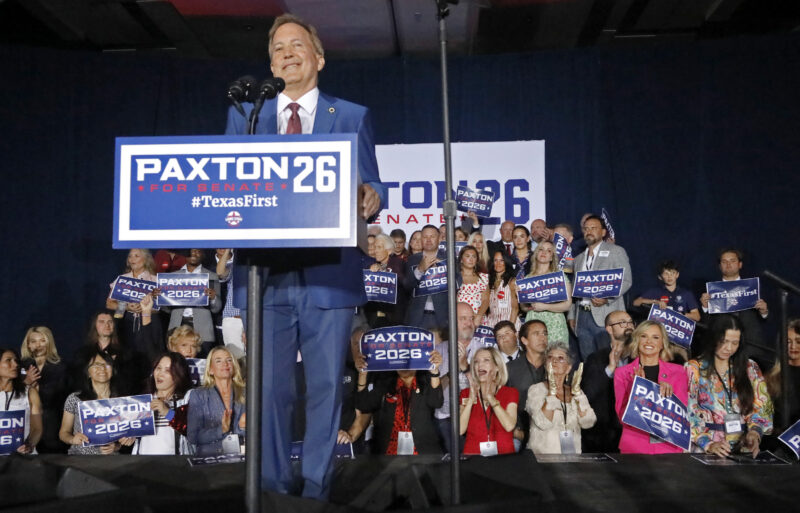
🗳️ A Challenge for Cruz?: RealClearPolitics’ Sean Trende assesses the state of play amid shifting demographics in Texas ahead of Sen. Ted Cruz’s (R-TX) reelection bid. “Instead, Texas is in many ways one giant suburb. Dallas has a surprisingly small downtown area for a city that forms the core of the nation’s fourth largest metropolitan area. The “metroplex” is less densely populated than Louisville, Kentucky, and Buffalo, New York. The city itself isn’t even in the top 100 U.S. cities by population density. In fact, no city in all of Texas falls into the top 100. This yielded benefits for Republicans at a time when the GOP was the party of white suburbanites. It is part of why Texas shifted to the Republican Party relatively early and quickly (in the 1960s), and it is partly why its dominance lasted as long as it did. It’s also a large part of why, until fairly recently, the idea of Blue Texas seemed like a recurring Democratic fever dream. Yes, Hispanic population growth was happening, but it would take a long time before that growth could hope to overwhelm Republican dominance of Texas. But with suburbanites across the South abruptly shifting their voting patterns in the late 2010s and beginning to vote like their northern peers, the cost/benefit calculus for the GOP shifted abruptly. What once disproportionately helped the GOP in a state like Texas now hurt it disproportionately.” [RealClearPolitics]
Around the Web
📺 Scott’s Spots: Sen. Tim Scott (R-SC) is launching an $8 million ad buy in Iowa and New Hampshire, the majority of which will focus on TV ads.
🏌️ Teed Off: Sen. Richard Blumenthal (D-CT) suggested he would use “other legal methods” to force the head of Saudi Arabia’s Public Investment Fund to testify on Capitol Hill over a proposed deal between the Saudi-backed LIV Golf and the PGA Tour.
⛔ Staffer Shuffle: Ohio Secretary of State Frank LaRose, who is mounting a bid for U.S. Senate, fired his press secretary over tweets critical of former President Donald Trump.
👨 Congressional Challenge: Attorney Greg Hach, an Air Force veteran, will challenge Rep. George Santos (R-NY) in the Republican primary in New York’s Third Congressional District. Meanwhile, a former Santos campaign aide was indicted on charges of fraud for allegedly impersonating a staffer to now-House Speaker Kevin McCarthy (R-CA) in Santos’ fundraising emails.
👩 Coming for Omar: Minneapolis attorney Sarah Gad is mounting a primary challenge to Rep. Ilhan Omar (D-MN), who eked out a win against her last primary opponent.
🚨 ATL on Alert: A bomb threat to the Jewish Federation of Greater Atlanta shut down the city’s popular Spring Street for several hours as police investigated the threat.
👃 Prosthetic Problem: Actor Bradley Cooper is facing criticism for his decision to wear a prosthetic nose in an upcoming biopic about conductor Leonard Bernstein.
🇦🇷 Milei’s Milieu: Javier Milei, a far-right candidate for president in Argentina who won the South American nation’s primary earlier this week, has mulled converting to Judaism, and regularly studies with a local rabbi.
🪖 Deutschland Deal: The U.S. approved an Israeli request to sell the Arrow 3 missile-defense system to Germany in a $3.5 billion deal.
🤝 Road to Riyadh: Iranian Foreign Minister Hossein Amirabdollahian is in Saudi Arabia for meetings with officials in Riyadh, his first trip to the kingdom since the two countries restored relations earlier this year.
🗣️ Behind the Scenes:Bloomberglooks at the “shuttle diplomacy” taking place between the U.S. and Iran in the absence of formal talks.
🎞️ Film Folly: Iran sentenced the producer and director of a Cannes-screened film to six months in jail each for creating and screening the film without government approval.
📈 Going Big: China is importing oil from Iran at levels not seen in at least a decade, as Tehran continues to increase its oil exports around the world.
💰 Phoenix Rising: An Emirati investor bought a 2% stake in The Phoenix in a deal worth roughly $50 million.
🛢️ Crisis Averted: The Washington Post spotlights efforts to remove more than 40 million gallons of oil from a moored tanker off the coast of Yemen that for years had threatened a wider environmental disaster in the Red Sea.
Pic of the Day

The University of Arizona men’s basketball team visits the Church of the Holy Sepulchre in Jerusalem’s Old City, as part of a tour organized by Athletes for Israel. The Kansas State University men’s basketball team is also in Israel. Arizona and Kansas State both defeated the Israel Select Team earlier in the week and are finishing off their tours in the UAE, where they will each scrimmage against the national teams from Lebanon and Mexico.
Birthdays

Co-founder of Oracle Corporation, recently listed by Bloomberg as the fourth-wealthiest person in the world, Larry Ellison turns 79…
Leader of the Ponevezh Yeshiva in Bnei Brak, Rabbi Baruch Dov (Berel) Povarsky turns 92… Former U.S. ambassador to Hungary, David B. Cornstein turns 85… Head of Drexler Ventures and 16-year board member of Apple until 2015, Millard “Mickey” S. Drexler turns 79… Former U.S. senator from Minnesota, chair of the Republican Jewish Coalition and Senior Counsel at Hogan Lovells, Norm Coleman turns 74… Partner at Katten Muchin Rosenman, Eliot Lauer… Audiologist in the Boston area, Louise Citron… Senior U.S. District court judge for the Southern District of California, Barry Ted Moskowitz turns 73… Retired special education teacher, Sharon Taksler… Former chairman, president and CEO of Continental Airlines and then United Airlines, Jeffery Alan “Jeff” Smisek turns 69… Associate justice of the Supreme Court of New Jersey, Lee A. Solomon turns 69… Founder and managing partner of SBNY and past president of the Jewish Federation of Greater Buffalo, Jordan Levy… Co-owner and founding partner of The Jackal Group, a television and film production firm, Gail Berman turns 67… Communications coordinator at Temple Beth El in Longmeadow, Mass., Deborah Kessner Peskin… Former CEO at Bridgewater Associates and recent candidate for U.S. Senate, David Harold McCormick turns 58…
Former member of Knesset for the Zionist Union and Labor parties, she is a leading Israeli criminal defense attorney, Revital Swid turns 56… Former MLB baseball player, now an insurance advisor in Baltimore, Brian Kowitz turns 54… Arab affairs correspondent and head of the Arab desk at Israeli News Channel 13, Zvi Yehezkeli turns 53… Emmy Award-winning documentary film director and producer, Judd Milo Ehrlich turns 52… Special assistant for baseball operations at Major League Baseball, Glen Caplin… Partner in the white collar and securities litigation groups at Proskauer Rose, Hadassa Robyn Waxman… Former Obama White House staffer, now a podcaster and comedian, Jon Lovett turns 41… VP of social impact and inclusion at Rare Beauty by Selena Gomez, Elyse Cohen… Comedian, writer, producer and actor, he was a member of Bard College’s Olde English comedy group, Raphael “Raizin” Bob-Waksberg turns 39… Senior M&A reporter at MLex Market Insight, Ben Brody… One of the Sprout Brothers from Great Barrington, Mass., Ari Meyerowitz… Government and public affairs director at BOMA of Greater Los Angeles, Aaron Taxy… Project manager for real estate at BDT & MSD Partners, Amanda Horwitz Langer… Israeli marathon and half marathon runner who represented Israel at the 2016 and 2020 Summer Olympics, Marhu Teferi turns 31… Eli Diamond… Gabriel Berger… John Kohan…
Recent Daily Kickoff Newsletters





Please log in if you already have a subscription, or subscribe to access the latest updates.
 Continue with Google
 Continue with Apple