













































































The group’s open letter calls on political leaders to confront hate within their own coalitions and reject anti-Jewish litmus tests tied to Israel
Andrew Harnik/Getty Images
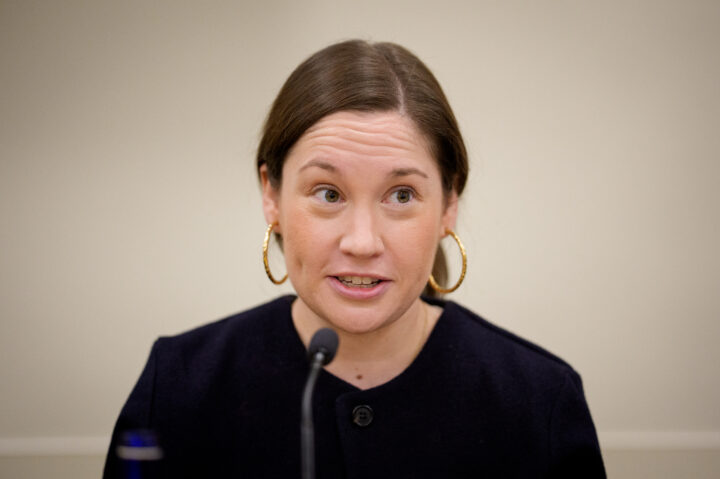
Jewish Council for Public Affairs CEO Amy Spitalnick speaks at an event held by Jewish and Muslim leaders on Capitol Hill on December 16, 2025 in Washington, DC.


 Add JewishInsider on Google
The Jewish Council for Public Affairs called on Democratic and Republican candidates on Thursday to reject antisemitism and political violence, including within their own political coalitions, ahead of November’s midterm elections, warning that conspiracy theories about Jewish influence and efforts to exclude Jews from public life have become increasingly normalized.
In an open letter, the group urged candidates to condemn harassment and intimidation, reject conspiracy theories about Jewish control of government and elections and make clear that those promoting such views have no place in their political coalitions.
JCPA CEO Amy Spitalnick said antisemitism has become normalized in American politics, “with Jews too often treated as political footballs” amid increasing hate and violence. She said leaders in both parties have a responsibility to reject rhetoric and conspiracy theories that can fuel attacks against Jewish communities.
The letter emphasized that criticism of Israel, AIPAC and U.S. aid to Israel is not inherently antisemitic, but warned against holding Jewish Americans responsible for Israeli government policies or invoking conspiracy theories about Jewish money and power. It also criticized political litmus tests that exclude Jews over their connections to Israel and efforts to divide the community into “Good Jew” and “Bad Jew” camps.
While affirming the right to protest, JCPA warned that chanting “globalize the intifada” outside a synagogue or celebrating Hamas could constitute intimidation when directed at Jewish communities rather than policymakers. The letter also urged candidates to reject Nazi symbols, threats and harassment, regardless of the political cause behind them.
JCPA cited as one example Florida Republican state House nominee Marshall Rawson, whose attendance at the 2017 white supremacist rally in Charlottesville, Va., has not largely been condemned by fellow Republicans. The organization also raised concerns about antisemitic tropes and efforts to exclude Jews from political spaces on the left amid debates over Israel and pro-Israel organizations.
The letter cited the firebombing of Pennsylvania Gov. Josh Shapiro’s home and attacks at the Capital Jewish Museum, in Boulder, Colo., and at a Michigan synagogue as examples of violence targeting Jewish communities. JCPA argued that protecting Jewish Americans is inseparable from protecting other minority communities and democratic institutions, calling on political leaders to apply the same standards regardless of party.
Speaking at the Eradicate Hate Global Summit on rising political violence, Shapiro called for ‘peaceful and respectful dialogue’
BRENDAN SMIALOWSKI/AFP via Getty Images
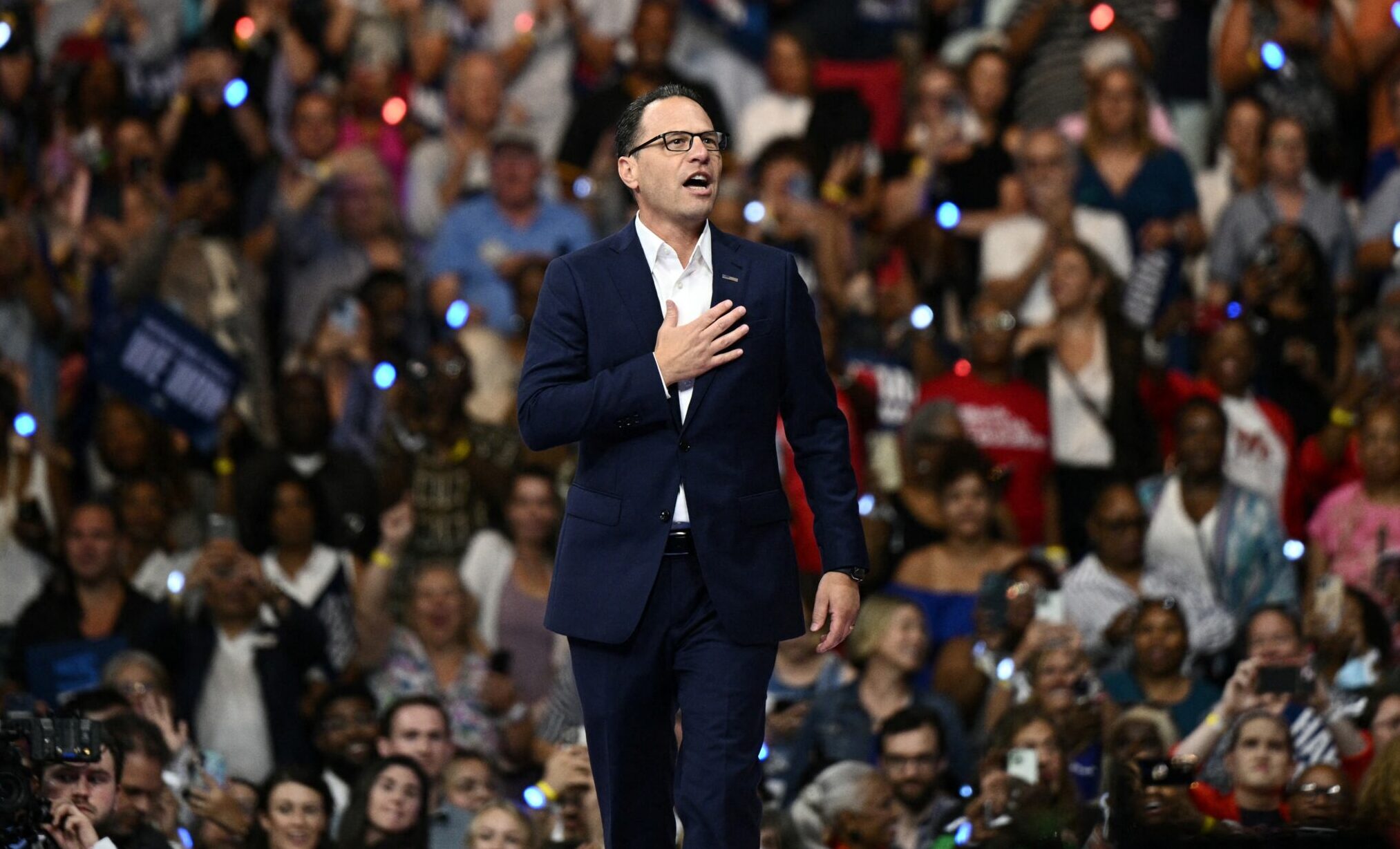
Pennsylvania Governor Josh Shapiro speaks before Democratic presidential candidate Kamala Harris in Philadelphia, Pennsylvania, August 6, 2024.
Amid an alarming rise in political violence, Pennsylvania Gov. Josh Shapiro said Tuesday that the way to combat extremism and division is by bringing people together and restoring their faith in the government — a civic-minded strategy that included some thinly veiled swipes at President Donald Trump and the hardline rhetoric he has adopted since conservative activist Charlie Kirk was killed in Utah last week.
Shapiro and his family survived an April arson attack that damaged the governor’s residence in Harrisburg while they slept, hours after hosting a Passover Seder there. The alleged arsonist acted to protest Shapiro’s stance toward the Palestinians, according to a police search warrant.
“I believe we have a responsibility to be clear and unequivocal in calling out all forms of political violence, making clear it is all wrong,” Shapiro said in a keynote address at the Eradicate Hate Global Summit, a Pittsburgh conference created in the aftermath of the 2018 mass shooting at the Tree of Life synagogue. “Unfortunately some, from the dark corners of the internet all the way to the Oval Office, want to cherry pick which instances of political violence they want to condemn.”
Shapiro called for dialogue and a rejection of the demands for revenge that have permeated social media since Kirk’s murder last week. The speech did not name Trump, although Shapiro called for Trump to act with “moral clarity” in a post on X on Monday.
Widely rumored to be considering a 2028 presidential run, the speech offered Shapiro a chance to deliver a wide-ranging speech to a national audience.
“We need to create more opportunities for peaceful and respectful dialogue, respecting each other’s fundamental rights as Americans,” said Shapiro. “Prosecuting constitutionally protected speech will only further erode our freedoms, deepen the mistrust. That is un-American.” Attorney General Pam Bondi said on Monday that the U.S. would be “targeting” hate speech, which she said was different from free speech — a statement she attempted to walk back a day later after facing bipartisan pushback.
There is a better way, Shapiro added: “That better way is the Pennsylvania way.”
“Those who stoke division will want to have us believe words are important, but we also need action,” said Shapiro. “We need to make sure people are safe here in Pennsylvania and all across America, safe to exercise their fundamental rights and freedoms, whether they’re debating on a college campus, praying at a synagogue or church or spending time at home with loved ones.”
Americans should do more to address hate online, and to teach people to better distinguish “fact from fiction” on the internet, argued Shapiro. But more than that, he said, they need to see and trust that the government actually can make their lives better.
“There’s a deeper issue at the root of this dangerous rise of political violence. Too many people don’t believe that our institutions and the people in them can solve problems anymore. They feel alone, ignored, shut out by a government that isn’t working for them,” said Shapiro. “It leads to a belief among some that the only way they can address their problems is through violence.”
The ways to prove otherwise, Shapiro said, are simple — helping people get driver’s licenses quickly, giving kids free breakfast at school and “building a government that works for Pennsylvanians and gets stuff done.”
Shapiro leaned on Jewish teachings in his speech, referring as he often does to how his faith underpins his public service.
During a speech at the Eradicate Hate Global Summit in Pittsburgh, Pennsylvania Gov. @JoshShapiroPA shared the story of an 82-year-old Christian chaplain of a local fire department, who gave Shapiro and his family a letter signed by each member of their department after an April… pic.twitter.com/jqTD9U7S3U
— Jewish Insider (@J_Insider) September 16, 2025
“My faith has taught me that no one is required to complete the task, but neither are we free to refrain from it. It means that each of us has a responsibility to get off the sidelines, get in the game and do our part,” Shapiro said.
After the attack on the governor’s mansion, Pennsylvanians “were united in speaking and acting with moral clarity, making clear that hatred and violence has no place here in Pennsylvania,” said Shapiro.
He shared the story of the 82-year-old Christian chaplain of a local fire department, who gave Shapiro and his family a letter signed by each member of their department. On the back, the chaplain had written by hand what he said was the most important blessing in his life, from the Book of Numbers.
May the Lord bless you and keep you. May the Lord make His face shine upon you and be gracious to you. May the Lord turn His face toward you and give you peace.
“I wept when I read that prayer that he wrote,” said Shapiro, who recalls then telling the chaplain that he recites that prayer — known as the Priestly Blessing in Judaism — to his children each night. He then proceeded to do so in Hebrew, and offered his own benediction about the power the prayer holds for a nation reeling from violence.
Yivarechecha Adonai v’yishmerecha. Ya’er Adonai panav eilecha v’chuneka. Yisa Adonai panav eilecha v’yasem l’cha shalom.
“Those are words of healing, words of hopefulness to me,” said Shapiro. “They are also words that again remind us of our shared humanity.”
Please log in if you already have a subscription, or subscribe to access the latest updates.
 Continue with Google

 Continue with Apple