












































































There’s widespread interest within the Jewish community to develop efforts to counter the growing populist rage and anti-Jewish hate, city by city

Getty Images
Human crowd forming a big David's star on blue background.


 Add JewishInsider on Google
Until recently, the political strategy of the American Jewish establishment could be summed up in two ways: Elect pro-Israel lawmakers to Congress and, at a much smaller scale, educate state and local officials about Jewish values and causes.
But a new model of Jewish political engagement is emerging to counter growing populist angst and surging antisemitism across the political spectrum: local efforts focused on school boards and city councils and statehouses.
These Jewish activists are not shying away from the messy reality of politics: They aren’t here to make friends with everyone, acknowledging that not everyone is an ally. Their goal is to offer support — through door-knocking, organizing and their checkbooks — to candidates who have stood by the Jewish community in the post-Oct. 7 political firestorm, and to try to unseat those who have not.
If you want to make a difference in the actual day-to-day lives of Jewish Americans, these activists argue, the place to do so is not Congress. It’s Sacramento, or Harrisburg, or the local Democratic Party committee meeting up the street.
“All of these groups are starting to pop up because we realize that the infrastructure that the community has had in the past isn’t enough and isn’t working,” said Stefanie Clarke, a political strategist in Colorado who co-founded the Colorado Jewish Action Alliance.
Like nearly all of the groups now operating in local politics, COJAA was born after the Oct. 7, 2023, Hamas terror attacks, when municipal governments in the U.S. became the newest front in Israeli-Palestinian culture wars. Anti-Israel rhetoric that often veered into outright antisemitism could suddenly be heard regularly in city halls and state legislatures. People who were elected to office because of their views on bike lanes or the environment were suddenly being pressured to weigh in on a contentious issue that originated thousands of miles away.
By law, tax-exempt nonprofits cannot engage in the political system. But a growing consensus is emerging that the apolitical approach necessarily adopted by the Jewish philanthropic world is not enough to address the intense partisanship of the moment, where incendiary antisemitic rhetoric has seeped into all levels of the political system.
In places including Atlanta, Denver and Pittsburgh, first-time Jewish activists such as Clarke are responding with grassroots initiatives like COJAA. Elsewhere, existing Jewish communal institutions are incubating new political organizations that they are spinning off as independent entities — for example, in San Francisco, where the local Jewish Community Relations Council created an affiliated advocacy organization called Bay Area Jewish Action (BAJA).
“We are seeing an increasingly unhinged and violent-prone mob challenging elected officials for standing with the Jewish community, and so there is a risk in standing with us, however unacceptable that reality is,” said Tyler Gregory, the CEO of JCRC and executive director of BAJA. “We need to be able to do more than just verbally say thank you in a situation like that.”
What that looks like in practice differs from place to place. BAJA created a political network where members commit to donating a certain amount throughout the election cycle, and have opportunities to meet candidates in BAJA-organized forums.
Other efforts are bipartisan. COJAA endorsed 13 candidates in Colorado’s primaries this year, a mix of Democrats and Republicans. (The primary results were themselves mixed; seven of COJAA’s preferred candidates won.) Georgia Solidarity Network, based in Atlanta, sees its mission as educating lawmakers about the state’s Jewish community.
“Part of our theory of change is that you cannot meet the moment by just showing up in an election cycle and trying to get messaging out there,” Beacon Coalition founder Jeremy Kazzaz explained. “It requires people on the ground, and it requires conversations going all the time.”
“Our legislators are incredible. But our legislators are blueberry farmers and used car sales lot owners and small-time lawyers in tiny towns who have no familiarity at all with the Jewish community,” Georgia Solidarity Network co-founder Alli Medof told Jewish Insider. “We really recognized that there was a need for us as a community to have a strong voice and presence in the legislature and to represent the concerns of Jewish Georgians.”
In Pittsburgh, a group called the Beacon Coalition spent the past year recruiting moderate Democrats to run for local volunteer positions in official Democratic groups throughout Allegheny County. Forty aligned Democrats won their races for small neighborhood seats that play an outsized role in party endorsements.
“Part of our theory of change is that you cannot meet the moment by just showing up in an election cycle and trying to get messaging out there,” Beacon Coalition founder Jeremy Kazzaz explained. “It requires people on the ground, and it requires conversations going all the time.”
Each of these groups is independent, created and operated — and funded (for the most part) — locally. But they see an opportunity to connect with and learn from each other.
Schusterman Family Philanthropies, the philanthropic behemoth that supports liberal causes and pro-Israel groups, convened a gathering earlier this year that brought together dozens of activists in the burgeoning local Jewish political ecosystem.
“I’m deeply concerned about the rise in extremism that’s playing out in local politics,” the foundation’s senior director for U.S. Jewish grantmaking, David Rittberg, told JI. “I do think that Jewish community leaders as well as everyday Americans are waking up to the challenges that these dynamics are creating in a local political context.”
Schusterman’s involvement in this space is an indication that Jewish philanthropists are taking problems at the local level seriously. Rittberg declined to comment on whether Schusterman has given grants to any of the groups, but said the foundation sees its role as being “a connector.”
Many emerging local activists have looked to a group called New York Solidarity Network for advice. NYSN was formed in 2022 after New York City’s Democratic Socialists of America chapter began pressuring local candidates to pledge not to travel to Israel, a request that at the time was seen as radical but has since become the norm in many Democratic primaries in liberal urban areas.
Sara Forman, the group’s founding executive director, advises them that money is not enough — a pointed message at a moment when, at the national level, AIPAC’s super PAC just spent tens of millions of dollars backing Rep. Haley Stevens (D-MI) in a failed Michigan Senate primary bid, and further damaged its image with Democrats in the process.
“DSA has been incredibly successful at organizing community and at making people feel like they are part of something,” said Sara Forman, founding executive director of NYSN. “I think in the Jewish community, having local organizations mimic some of the same practices of DSA is a good thing. Make people feel included. Make people feel like their voice counts.”
“You can’t build something inorganically. There has to be a reason for people to want to come out and attend events, and want to knock on doors and make phone calls and organize their synagogues,” said Forman, who stepped down from NYSN in January. “Check-writing isn’t what’s going to make the difference here.”
The goal, instead, is building up American Jews’ appetite for grassroots political organizing in support of Jewish causes and candidates who support them. That’s a different position than the one taken by AIPAC in recent years, which has invested at the federal level in high-dollar political fundraising. But when groups such as DSA are able to recruit eager volunteers to campaign for far-left officials and show up to public meetings to voice support for anti-Israel measures, Jewish activists increasingly see a need to fight fire with fire.
“DSA has been incredibly successful at organizing community and at making people feel like they are part of something,” said Forman. “I think in the Jewish community, having local organizations mimic some of the same practices of DSA is a good thing. Make people feel included. Make people feel like their voice counts.”
The success of a DSA-aligned faction in several major Democratic primaries this year has led many of these Jewish activists to now see their fight for communal safety as part of a larger battle within the party, about whether it will move left or to the center ahead of the 2028 presidential election.
“I think the overlap between folks who are concerned about fighting illiberalism, extremism, antisemitism and virulent anti-Zionism deeply intersects with those of us who want to strengthen moderate factions on both sides of the aisle, in particular for us on the Democratic side,” Third Way President Jon Cowan told JI. “A lot of folks are coming to realize that those fights deeply overlap.”
“We know that the next phase for us is focusing more on the creeping threat of DSA,” Medof, from Georgia, said. “The way we think about this work is that the sorts of things that we’re fighting for are not just about what’s good for Jewish Georgians. They’re good for Georgia overall.”
Last week, The New York Times outlined a new effort by the centrist Democratic group Third Way to push back against the growing appeal of DSA-aligned groups and policies within the party. Third Way President Jon Cowan told JI that the organization is, for the first time in its history, working with groups at the local level. Third Way gave a grant to the Beacon Coalition this year to support its work and help the organization expand to Cleveland.
“I think the overlap between folks who are concerned about fighting illiberalism, extremism, antisemitism and virulent anti-Zionism deeply intersects with those of us who want to strengthen moderate factions on both sides of the aisle, in particular for us on the Democratic side,” Cowan said. “A lot of folks are coming to realize that those fights deeply overlap.”
Building support for Israel is not what most of these groups see as their focus. They want efforts targeting Israel — like Boycott, Divestment and Sanctions campaigns — to fail, and for local governments to otherwise stay mum on one of the most intractable foreign policy issues in the world.
“We are about Jewish safety, security and engagement in civil life. We really don’t talk about Israel other than how the rhetoric around it endangers our community,” said Mindy Miller, a co-founder of the Colorado group.
Not that that has stopped opponents from trying to tar the groups as, essentially, mini-AIPACs.
“We’ve seen a trend with a very similar pattern of behavior targeting groups like Beacon, where there are Jewish Americans who are showing up in spaces as Jewish Americans and saying our community is important,” said Pittsburgh-based Kazzaz. “It’s a lot of boogeyman-ing, just name calling, ‘You’re a secret Republican.’”
Mostly, though, the new Jewish activists are finding curiosity, not animosity. People who are eyeing local positions are generally not running with Israel or Palestine as their top issue. But that doesn’t mean they don’t understand how thorny the discourse can be.
“One of the things we say is we will never cancel you. There are no stupid questions,” said Miller, from Colorado.
She wants to be a guide to help local politicians learn about the issues. And with financial and manpower resources that can help candidates in their campaigns, Miller hopes the Jewish community will now have a shot of being the first to reach those politicians.
In the wake of Oct. 7, some in the Jewish community turned to faith, philanthropy or federal advocacy. Others set their sights closer to home, organizing to shape school boards and influence city councils
Michael Nigro/Pacific Press/LightRocket via Getty Images
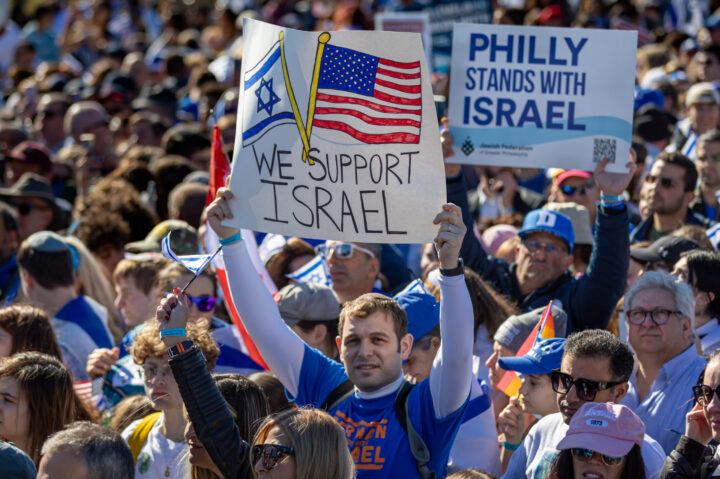
A pro-Israel supporter holds a sign during the "March for Israel" held on the National Mall.
After the Sandy Hook Elementary School shooting in 2012, Norri Leder dedicated herself to fighting gun violence as a founding member of Moms Demand Action, the gun control group created after the shooting.
And last year, there was another single defining moment that pushed her to create something new, just like she did after Sandy Hook: A candidate running in a Houston school board special election in 2025 sent out a mailer showing herself in a photo with a virulently anti-Israel politician. When Leder ran into the candidate at the polls, she told the candidate that she was “unknowingly alienating yourself, potentially, from members of the Jewish community.” The candidate had no idea.
“She asked me if there was a Jewish group that meets with candidates as they’re running,” Leder recalled. “I said, there are Jewish groups, but it occurred to me that many of them don’t have the bandwidth to meet on these races that are at much more of a local, state and county level as [candidates are] running for office.”
So Leder created one. Where she was once a single-issue activist fighting for gun control measures, now she is putting everything else aside to focus on Jewish communal concerns with her new organization, Houston Jewish Women Vote. Less than four months into its existence, the group has met with candidates running in local attorney, city council and judicial races in 2026.
“We are narrowly focusing on physical security for the Jewish community, antisemitism, targeting of Jews in academic and professional settings, prayer in school and staying in your lane for state, local and county offices — just please don’t engage in foreign policy issues that undermine bridge building in the community and accomplish nothing in the world of foreign policy,” said Leder. “There’s a feeling of, we’re Jewish women, and a lot of us feel politically homeless right now. People feel good knowing that they’re participants and that they can exercise their voice.”
Houston Jewish Women Vote joins dozens of other Jewish advocacy efforts that grew out of the desperation people felt in the days after the Oct. 7, 2023, attacks to fill a void in local politics.
In Pittsburgh, the Beacon Coalition was created when community activist Jeremy Kazzaz saw that local politicians were too afraid to criticize a colleague who posted pro-Hamas messages. The group is now urging Jewish Democrats in the Pittsburgh area to run for seats on the Allegheny County Democratic Committee to be able to help shape the party’s endorsements.
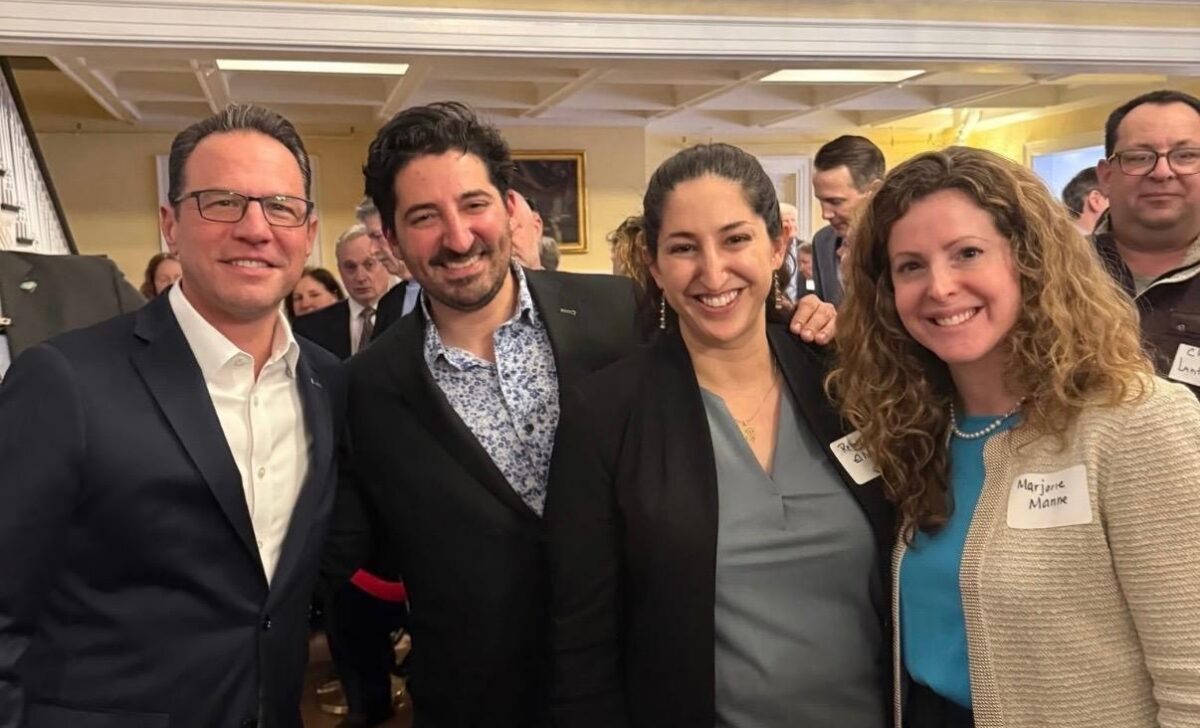
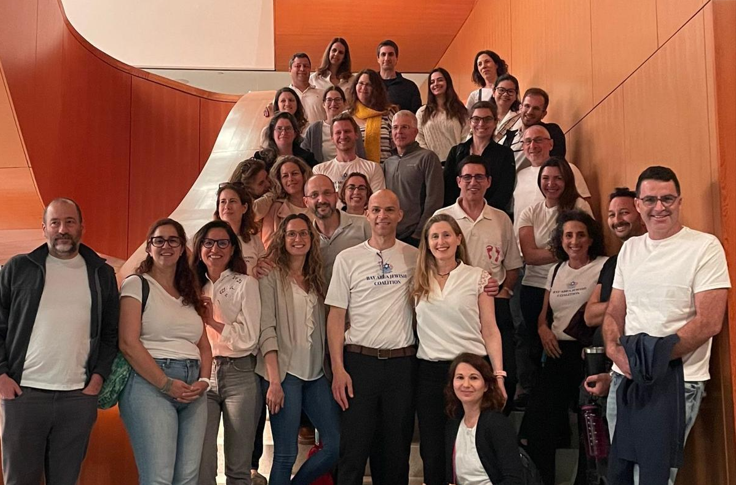
In California, Israeli immigrants helped launch the Bay Area Jewish Coalition (BAJC), in part to help locals make sense of the many local races for positions most people have never heard of.
“Even when we have special elections for things that seem totally unrelated, like the county assessor, which is in charge of property taxes and things like that, at this point, people are reaching out to us and saying, ‘Who do we vote for?’” said BAJC co-founder Keren-Or Reiss, who was born in Israel and now lives in San Mateo, Calif., where she works as a product manager at a tech company. “Is there someone here who’s going to somehow use this platform to spread hate or to normalize antisemitism against us?”
Some in the Jewish community turned to religious practice after Oct. 7, or to supporting charities helping victims of the attacks in Israel, or to pro-Israel political advocacy through establishment groups like AIPAC, or some combination. Leder, Kazzaz and Reiss represent a new class of Jewish American activists: people who were disappointed by the apathy or even outright hostility that some co-workers, teachers, neighbors and local elected officials demonstrated towards Jews and Israelis suffering in the aftermath of Oct. 7, and who felt no one was doing what needed to be done to reach those leaders.
“Local community members can’t just wait for institutions to have enough bandwidth to do everything. People can take responsibility to step up and engage. And that’s what people were doing,” said Jeremy Burton, CEO of the Boston Jewish Community Relations Council. “Part of this revitalization of American Jewish life that we’ve seen has been this emergence of these activists.”
They saw a new kind of opportunity in an American political landscape reshaped by Oct. 7 and the ensuing war in Gaza. Advocating for Congress to vote a certain way on weapons sales to Israel would not do much to affect the swell of antisemitism growing in their communities. Although the war was happening thousands of miles away, they understood that its impact would be local.
“Almost every other community and interest group is doing this on the local level, and not the Jewish community. So we’re really trying to close that gap,” said Tyler Gregory, CEO of the Bay Area Jewish Community Relations Council, which in 2024 became the first JCRC in the country to launch an affiliated advocacy arm to fundraise for candidates and engage in elections. “I think it’s a combination of Congress being sexier and there being fewer issues at the local level.”
After Oct. 7, it became clear that there were not, in fact, fewer issues locally. City council members who were elected to work on municipal governance were now tasked with voting on contentious ceasefire resolutions and calls to divest from Israel. School superintendents and principals had to decide how to respond to teachers who were bringing biased, anti-Israel instruction into the classroom. These were battlefields where existing Jewish communal infrastructure did not have the capacity to fight — either because their nonprofit status kept them from engaging in political races, or because they simply did not have the manpower to reach the hyper-local spaces where debates about Israel, Zionism and antisemitism were now front and center.
“Local community members can’t just wait for institutions to have enough bandwidth to do everything. People can take responsibility to step up and engage. And that’s what people were doing,” said Jeremy Burton, CEO of the Boston Jewish Community Relations Council. “Part of this revitalization of American Jewish life that we’ve seen has been this emergence of these activists.”
The new Jewish activism did not begin in Jewish federation board rooms or congressional office buildings in Washington. It was grassroots campaigns that started in WhatsApp groups and recruited dozens of volunteers through word-of-mouth conversations. These were people who showed up to city hall hearings or met with candidates running for local offices that prior to Oct. 7 may have seemed irrelevant to Jewish concerns.
For Sam Gechter, who works in tech in Boston, a call from a friend in early 2024 alerted him that the city council of Somerville, Mass., where he lives, was trying to pass a resolution calling for a ceasefire in Gaza. The language, Gechter recalled, was “atrocious,” pinning the blame for the war on Israel and hardly mentioning Hamas.
“I got off the phone. I turned to my wife, who was standing next to me, and said, ‘We gotta start a WhatsApp right now of everybody we know in Somerville and get people to come and speak against this,’” Gechter told JI. “That was my moment of being politically activated.”
Soon, that WhatsApp group became Shalom Somerville, a group of Jewish people in the small Boston suburb — an uber-progressive city that neighbors the better-known Cambridge — committed to advancing “a Somerville that is safe for Jews and Israelis.” Despite nominally being an advocacy organization, Shalom Somerville has also become a lifeline for people who otherwise weren’t connected to Jewish institutions.
“For a number of people who haven’t found their place Jewishly in the community, this has become their main Jewish community,” said Gechter. “We had, like, 150 people at our Hanukkah party. It’s gotten to be a pretty big group.”
New organizations that formed to focus on important but unglamorous posts like the county commission and municipal human relations councils are heading into a major election year with ambitious plans to activate Jewish community members to flex their political muscle. They want to show local officials that they ignore Jewish voters at their own peril — and that, conversely, Jewish voters will miss a chance to improve their community if they sit out these races that have a real impact on their day-to-day lives.
“Around the country, there was this awakening, and an understanding that the cavalry wasn’t coming for anybody,” Chicago Jewish Alliance founder Daniel Schwartz told JI.
Each local outfit has a different strategy. Mindy Miller, a former top aide to the Colorado Senate president, co-founded the Colorado Jewish Action Alliance to educate her former colleagues about topics that they never expected to address but that are now everywhere, even in state politics.
“We ask them what they think Zionism means because it’s been so weaponized, and I would say virtually all of them have been appreciative of being able to have those conversations without being fear of being canceled or called out or vilified, because they have to walk a tight rope,” Miller told Jewish Insider.
Chicago Jewish Alliance founder Daniel Schwartz has taken a more confrontational approach. During the city council’s vote on a contentious ceasefire resolution in January 2024, he showed up at City Hall draped in an Israeli flag. He created a WhatsApp group — called the “Zionist Information Group” — to get Chicagoans out to protest.
“Around the country, there was this awakening, and an understanding that the cavalry wasn’t coming for anybody,” Schwartz told JI.
In Lexington, Mass., a suburb of Boston, a group called Lexington United Against Antisemitism, is focused on interfaith work, and connecting members of the town’s Jewish community with Christians.
“Quickly we understood that people, actually, even in Lexington, know very little about Jews altogether. Jews — what do they think? What do they believe?” said Francine Jacobs, a retired Tufts professor who created LUAA.
The group was founded several months before Oct. 7, but its founders have doubled down on their mission, particularly as some liberal Christians who are critical of Israel have taken stances that crossed into antisemitism.
“It took some of the steam out of our effort. There were some folks who just said, ‘Oh, Israel, I’m so angry about it, I just can’t hear the word Jew,’” said Stephen Van Evera, a retired MIT international relations professor, who is Christian and leading LUAA with Jacobs. “I mean, why are you connecting these dots that way? Do you really think that the Jewish community in Lexington is deciding how to fight the Gaza war?”
What drove many people to get involved was their kids. Viviane Safrin became an education activist in San Francisco after the pandemic, when she felt frustrated that public schools were not doing more to reopen. After Oct. 7, parents started calling her to report that their children had experienced antisemitism. So she created SF Jews in School, with the tagline “advancing Jewish inclusion in San Francisco schools.”
“We respond to incidents. We guide families through working with their school. We also engage directly with principals and administrators to support them in ensuring that our schools are welcoming spaces, but we also celebrate our heritage. We build Jewish pride and belonging across the city,” Safrin told JI. “We bring apples and honey for Rosh Hashanah and sufganiyot for Hanukkah.”
Two thousand five hundred miles away, in the Philadelphia suburb of Lower Merion, Dani Shaw created a WhatsApp group for 75 moms soon after Oct. 7. They wrote to the diversity, equity and inclusion director in their school district to ask to talk about ensuring Jewish perspectives were included in the office’s programming. They wound up meeting with the superintendent instead and having a productive conversation. But, shortly after, an op-ed in a high school newspaper that Shaw said spread “blood libels” against Israel caused the moms to step up their activism.
“We created an organization called the Jewish Families Association with a board that consisted at the time of about 15 parents who were all representing different schools in the district,” Shaw told JI. There are now several other Jewish Families Associations in small school districts across Pennsylvania. “It’s really representation — a bridge between the parents and the administration, the school district, to make sure that these incidents, whether they be bullying or problematic curriculum, are dealt with appropriately.”
The group in Lower Merion, a heavily Jewish suburb, supported three Republican candidates for school board last year. They all lost in the liberal town. Keeping activists engaged in the work is hard — “they have to get on with their lives and their livelihoods,” Shaw acknowledged — particularly because the group plans to remain volunteer-led and grassroots, with no fundraising arm.
Fatigue is real. The work of building ties with dozens or even hundreds of local elected officials requires dedicated volunteers and resources. BAJC, the Bay Area group, created a voter guide in 2024 tracking dozens of races — work they want to replicate in 2026, even as they see some people in the community losing interest.
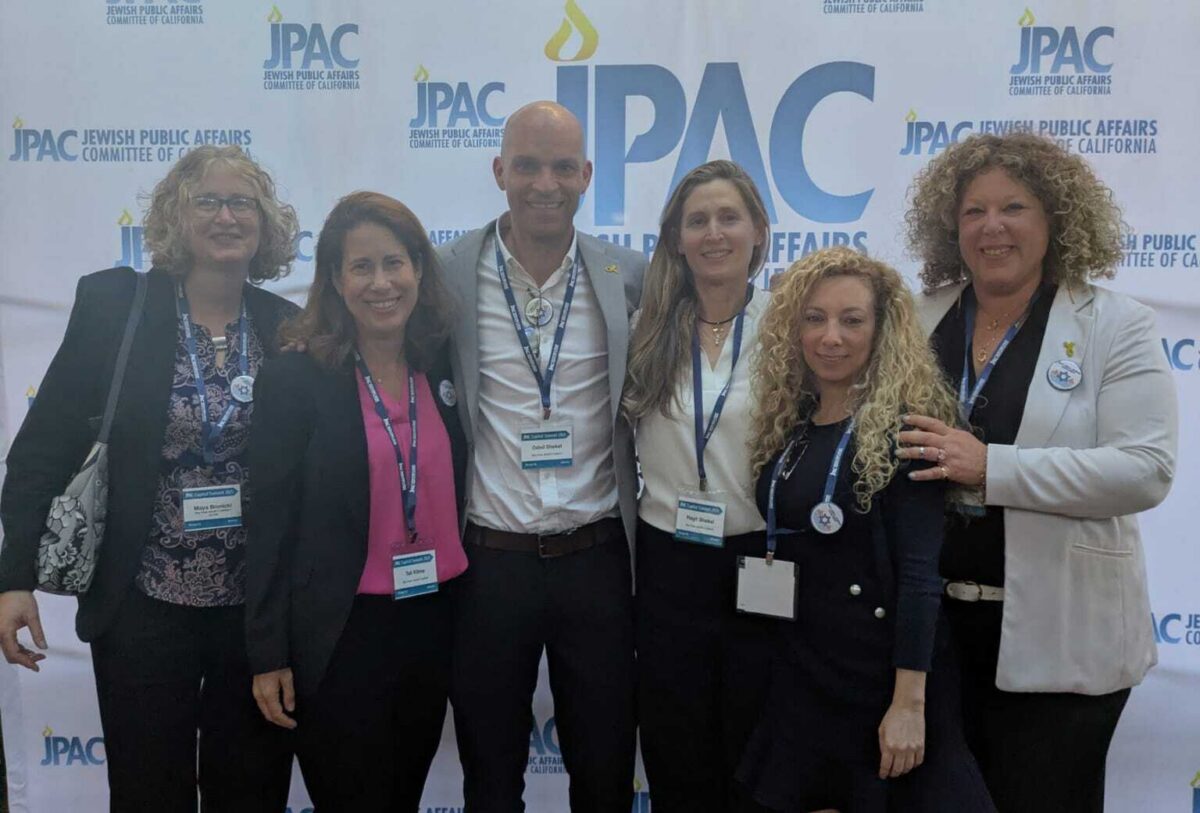
“It’s a constant fight to activate the community. I wouldn’t take that for granted. People prefer to go and watch a football game than to go to a demonstration,” said Oded Shekel, a BAJC leader and an Israeli immigrant who is the CEO of a financial technology startup. “You need to find ways to keep people motivated, activated, connected. I think local fights are easier to connect to than, ‘Would you like to come and support, like, a D.C. bill that we are going to promote?’ Yeah, whatever, I don’t care. ‘Would you like to meet the school boards who actually create policies for the teachers or the kids in your class?’ That’s more likely.”
Not everyone who got involved in this work after Oct. 7 remains involved. But many still are. There is now an entire class of American Jews, many of whom were not engaged politically at all before, who now wholeheartedly believe that the way to make their communities safer and more welcoming is to get involved in local politics. And as both the Democratic and Republican parties face internal fissures over Israel at the national level, an awareness is starting to solidify that reaching politicians at the beginning of their careers, when they are unpolished and open-minded, is a winning strategy.
“We’re not seeking to educate candidates about our issues once they announce for Congress. We want to have multi-year relationships and be able to explain the many nuances of Judaism and Zionism long before they’d like to run for higher office,” said Sam Jefferies, co-chair of The Kids Table, a political action committee in Washington state that is supporting “pro-Jewish” candidates. “You can’t solve antisemitism, but you can prevent antisemites from being in positions of power.”
Please log in if you already have a subscription, or subscribe to access the latest updates.
 Continue with Google

 Continue with Apple